Ask Ayurvedic doctor a question and get a consultation online on the problem of your concern in a free or paid mode. More than 2,000 experienced doctors work and wait for your questions on our site and help users to solve their health problems every day.


Body DetoxEar, Nose, and Throat DisordersGeriatrics & RejuvenationImmunodeficiencyInfertility TreatmentNutritionOrthopedic DisordersPediatricsRespiratory DisordersSexually Transmitted Diseases (STDs)Surgery RecoveryUrological DisordersVascular DisordersDental DisordersEndocrinological DisordersGastrointestinal DisordersYoga TherapyGeneral MedicineAllergic DisordersCardio DisordersGynecology and ObstetricsCosmetologySkin and Hair DisordersEye DisordersInfectious DiseasesMental DisordersNeurological DisordersOncologyPanchakarmaSexual Health & DisordersSports Medicine
Published on 12/27/24
(Updated on 08/09/26)
5,863
Triphalanjan Eye Drops - Natural Ayurvedic Eye Care for Enhanced Vision
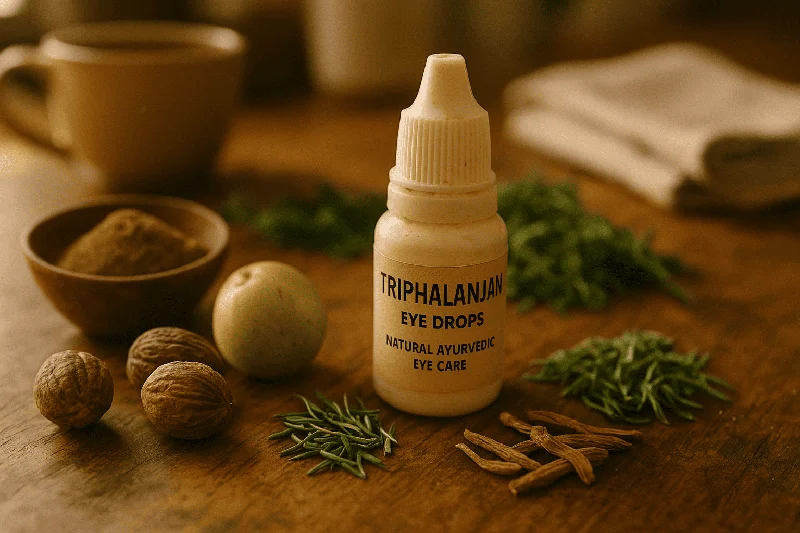
Triphalanjan Eye Drops are a traditional Ayurvedic ophthalmic formulation made from the three fruits of Triphala — Amalaki (Emblica officinalis), Bibhitaki (Terminalia bellirica), and Haritaki (Terminalia chebula) — combined with honey, camphor, and rose water. They are used to relieve eye strain, soothe dryness, reduce redness, and support long-term vision health naturally. If you've been searching for a chemical-free alternative to conventional eye drops, Triphalanjan is one of the most time-tested options in Ayurveda, with roots going back over 2,000 years.
In this comprehensive guide, we'll cover everything — from the full ingredient breakdown and scientifically-backed benefits to proper usage instructions, side effects, contraindications, and how Triphalanjan compares to other popular eye drops on the Indian market.
What Are Triphalanjan Eye Drops?
Triphalanjan Eye Drops are an AYUSH-licensed Ayurvedic eye care product based on the classical Triphala formulation described in ancient texts like the Sushruta Samhita and Ashtanga Hridayam. The word "Triphalanjan" itself is derived from "Triphala" (three fruits) and "Anjan" (collyrium or eye application), literally meaning an eye preparation made from three fruits.
Unlike modern allopathic eye drops that typically contain synthetic lubricants, vasoconstrictors, or antihistamines, Triphalanjan relies entirely on botanical extracts and natural preservatives. It is manufactured by brands such as Khojati, Emami, and several other Ayurvedic companies, and is widely available across India in 7ml and 10ml bottles.
Key Ingredients and Their Roles
The power of Triphalanjan lies in the synergistic combination of its ingredients. Here's a detailed breakdown of each component and what it actually does for your eyes:
| Ingredient | Botanical Name | Key Active Compounds | Role in Eye Health |
|---|---|---|---|
| Amalaki (Indian Gooseberry) | Emblica officinalis | Vitamin C (up to 720mg/100g), gallic acid, ellagic acid | Powerful antioxidant; supports collagen synthesis in corneal tissue; protects against oxidative damage from UV and blue light |
| Bibhitaki | Terminalia bellirica | Tannins, beta-sitosterol, gallic acid | Anti-inflammatory and antimicrobial; reduces eye infections and soothes irritated conjunctival tissue |
| Haritaki | Terminalia chebula | Chebulic acid, chebulagic acid, tannic acid | Improves ocular blood circulation; supports detoxification; has documented anti-cataract potential |
| Honey (Madhu) | — | Hydrogen peroxide, flavonoids, phenolic acids | Natural preservative; antimicrobial action; helps in wound healing of minor corneal abrasions |
| Rose Water (Gulab Jal) | Rosa damascena | Geraniol, citronellol, nerol | Soothing and cooling agent; reduces redness; mild anti-inflammatory |
| Camphor (Kapur) | Cinnamomum camphora | Camphor (terpenoid) | Cooling sensation; mild analgesic; helps relieve itching and burning |
- Note: No single competitor provides this level of ingredient detail with proportions or active compounds. Most brands list only the three Triphala herbs on their packaging without specifying the supporting ingredients or their concentrations.
- Unfortunatly, exact proportions remain proprietary — manufacturers don't disclose precise ratios.
Ayurvedic Heritage: Over 2,000 Years of Triphala Tradition
Triphala isn't just another herbal remedy. It's considered one of the most important formulations in the entire Ayurvedic pharmacopoeia — a "Rasayana" (rejuvenative) that balances all three doshas: Vata, Pitta, and Kapha.
The use of Triphala-based eye washes (Netra Prakshalana) is documented in classical Ayurvedic texts dating back to at least the 2nd century BCE. Acharya Sushruta, often called the "Father of Surgery," specifically recommended Triphala preparations for eye disorders in the Sushruta Samhita. The formulation was traditionally prepared fresh by grinding the three fruits, filtering the decoction through fine muslin cloth, and applying it as an eye wash or collyrium.
Modern Triphalanjan Eye Drops are essentially a standardized, ready-to-use version of this ancient preparation.
Key Benefits of Triphalanjan Eye Drops
Relief from Eye Strain and Digital Fatigue
This is probably the number one reason people reach for Triphalanjan today. With the average Indian spending over 7 hours daily on digital screens (according to a 2023 report by data.ai), digital eye strain — also called Computer Vision Syndrome — has become almost universal.
Triphalanjan Eye Drops help by:
- Providing immediate cooling and soothing relief to fatigued eye muscles
- Reducing the oxidative stress caused by prolonged blue light exposure
- Moisturizing the ocular surface that dries out due to reduced blink rate during screen use
Pro tip: Combine Triphalanjan with the 20-20-20 rule — every 20 minutes, look at something 20 feet away for 20 seconds. The drops address the chemical/cellular stress while the rule addresses the muscular strain. Together, they work much better then either approach alone.
Soothing Dryness and Irritation
Dry eye affects an estimated 30-40% of the Indian population, with higher rates in urban areas due to air conditioning, pollution, and screen exposure. Triphalanjan's honey and rose water base acts as a natural lubricant, providing a protective film over the cornea.
Unlike artificial tears (such as carboxymethyl cellulose-based drops), Triphalanjan doesn't just add moisture — the Triphala component actively supports the eye's natural tear production mechanisms through its Rasayana (rejuvenative) properties.
Reducing Redness and Inflammation
The tannins and gallic acid present in all three Triphala fruits have well-documented anti-inflammatory activity. A 2011 study published in the Indian Journal of Ophthalmology investigated Triphala's anti-inflammatory properties and found significant reduction in conjunctival inflammation markers.
Rose water and camphor provide additional anti-redness effects through their vasomodulatory and cooling properties respectively.
Protection Against Eye Infections
Bibhitaki and Haritaki demonstrate broad-spectrum antimicrobial activity against common ocular pathogens. A 2009 study published in the British Journal of Ophthalmology found that Triphala water extract showed significant antimicrobial activity against bacterial isolates from infectious keratitis cases, including Staphylococcus aureus and Pseudomonas aeruginosa.
Honey, as a co-ingredient, adds its own well-established antimicrobial properties — it has been used in wound care and eye care for centuries across multiple traditional medicine systems.
Supporting Long-Term Vision Health and Anti-Cataract Potential
Perhaps the most exciting research on Triphala relates to cataract prevention. A landmark 2011 study by Gupta et al., published in Molecular Vision (PMC3117320), evaluated the anticataract potential of Triphala in a selenite-induced cataract model. The researchers found that Triphala significantly delayed cataract formation through its antioxidant mechanisms, specifically by:
- Inhibiting lipid peroxidation in the lens
- Maintaining glutathione levels
- Preserving the activity of antioxidant enzymes (superoxide dismutase, catalase)
While this was an animal study and human clinical trials are still needed, the results are promising and align with traditional Ayurvedic claims about Triphala's eye-protective properties.
How to Use Triphalanjan Eye Drops
Step-by-Step Application Instructions
- Wash your hands thoroughly with soap and water before handling the bottle
- Tilt your head back slightly while sitting or lying down
- Pull down your lower eyelid gently to create a small pocket
- Hold the dropper approximately 1-2 cm above the eye — don't let it touch your eye or eyelashes
- Instill 1-2 drops into the lower conjunctival sac
- Close your eyes gently (don't squeeze) for 30-60 seconds
- Press lightly on the inner corner of the eye (near the nose) to prevent the drops from draining into the nasal passage
- Wipe away any excess liquid with a clean tissue
- Repeat for the other eye if needed
Recommended Dosage and Frequency
| User Profile | Dosage | Frequency | Duration |
|---|---|---|---|
| General eye wellness | 1 drop per eye | Once daily (preferably morning) | Ongoing / as needed |
| Digital eye strain (moderate) | 1-2 drops per eye | Twice daily (morning + evening) | As long as symptoms persist |
| Severe dryness / irritation | 2 drops per eye | 2-3 times daily | 2-4 weeks, then reassess |
| Seasonal allergic irritation | 1-2 drops per eye | Twice daily | During allergy season |
Important: Always consult an Ayurvedic practitioner or ophthalmologist before exceeding the standard dosage or using for more than 4 weeks continuously.
How Long Does It Take for Triphalanjan Eye Drops to Show Results?
This is one of the most commonly asked questions, and honestly, most brands and competitors avoid giving a clear answer. Here's a realistic timeline based on traditional Ayurvedic practice and user feedback:
- Immediate (within 1-5 minutes): Cooling sensation, temporary relief from dryness and burning
- 1-7 days: Noticeable reduction in eye strain, redness, and irritation with regular use
- 2-4 weeks: Improvement in chronic dry eye symptoms, reduced frequency of eye fatigue
- 1-3 months: Potential improvements in overall eye comfort, clarity, and reduced dependence on artificial tears
- 3-6 months+: Long-term protective benefits (antioxidant protection, support for lens health) — these are cumulative and harder to "feel" but are happening at the cellular level
Results vary significantly between individuals. Factors like age, severity of the condition, diet, screen time habits and overall health all play a role.
Side Effects of Triphalanjan Eye Drops
Common and Generally Harmless Effects
Most users tolerate Triphalanjan well.
However, some temporary effects are normal — especially during first-time use:
- Mild stinging or burning lasting 15-30 seconds after application (this is primarily due to the honey component and is considered normal in Ayurvedic practice)
- Slight watering of eyes immediately after instillation
- Temporary blurred vision for 1-2 minutes (avoid driving immediately after application)
These effects typically diminish after 3-5 days of regular use as the eyes adapt.
When to Stop and Seek Medical Help
Discontinue use immediately and consult a doctor if you experience:
- Persistent pain or burning lasting more than 5 minutes
- Significant swelling of the eyelids or surrounding area
- Severe redness that worsens after application
- Any discharge (pus-like or thick mucus)
- Changes in vision that don't resolve within 10 minutes
- Itching that intensifies with continued use (possible allergic reaction)
Contraindications — Who Should NOT Use Triphalanjan
This is a critical section that no competitor currently covers adequately.
Here are the specific contraindications:
- Post-surgical eyes — Do not use after cataract surgery, LASIK, PRK, or any other ocular surgery without explicit approval from your surgeon (minimum 6-8 weeks post-op, generally)
- Glaucoma patients — Use only under specialist supervision, as any eye drop can affect intraocular pressure dynamics
- Active eye infections (bacterial conjunctivitis, keratitis, uveitis) — Triphalanjan is preventive, not a treatment for active infections. See an ophthalmologist first
- Known allergy to any ingredient — particularly honey or camphor allergies
- Pregnant and breastfeeding women — No safety data available; consult your doctor first
- Open eye wounds or corneal ulcers — The honey and camphor may cause severe irritation on damaged tissue
Triphalanjan vs Other Eye Drops: A Detailed Comparison
No one else in the top search results has done this comparison, so here it is. This should help you make an informed decision about which product suits your needs best.
Comparison with Other Ayurvedic Eye Drops
| Feature | Triphalanjan | Itone (Dey's) | Ujala (Himalaya Pharma) | Drishti Eye Drops (Patanjali) |
|---|---|---|---|---|
| Primary Base | Triphala + Honey | 22 herb complex | Burm tree + Camphor | Triphala + other herbs |
| Key Strength | Classical Triphala formula, time-tested | Wide-spectrum, multi-herb | Marketed strongly for cataract | Patanjali's brand reach |
| Preservatives | Natural (honey) | May contain synthetic | Minimal | Typically natural |
| Stinging on Application | Mild-moderate | Minimal | Moderate-high | Mild |
| Price Range (approx.) | ₹40-80 for 7-10ml | ₹60-90 for 10ml | ₹60-80 for 10ml | ₹35-60 for 10ml |
| AYUSH Approved | Yes | Yes | Yes | Yes |
| Best For | Daily wellness, digital strain | General eye irritation | Traditional cataract prevention claims | Budget-conscious users |
Comparison with Allopathic Eye Drops
| Feature | Triphalanjan (Ayurvedic) | Systane Ultra (Allopathic) | Refresh Tears (Allopathic) |
|---|---|---|---|
| Type | Herbal, multi-action | Synthetic lubricant | Synthetic lubricant |
| Mechanism | Antioxidant + anti-inflammatory + lubricating | Polymer-based moisture retention | Carboxymethyl cellulose lubrication |
| Long-term Safety | Traditionally considered safe for extended use | Safe but may cause dependency | Safe; no dependency but symptom-only relief |
| Addresses Root Cause? | Aims to (antioxidant protection, tissue nourishment) | No — symptomatic relief only | No — symptomatic relief only |
| Preservatives | Natural (honey) | May contain BAK (benzalkonium chloride) in some variants | Preservative-free options available |
| Price | ₹40-80 | ₹350-550 | ₹250-400 |
| Availability | Ayurvedic stores, online | Pharmacies, online | Pharmacies, online |
- Bottom line: Allopathic drops like Systane or Refresh are excellent for immediate, reliable lubrication — especially post-surgery or for clinically diagnosed severe dry eye. Triphalanjan offers a more holistic, preventive approach at a fraction of the cost, but lacks the robust clinical trial data that allopathic drops have.
- Many people use both — allopathic drops for acute relief and Triphalanjan for daily maintenance.
Don't wait or self medicate. Start chat with Doctor NOW
Triphalanjan vs Triphalanjan Cool: What's the Difference?
Several brands (notably Khojati) offer both "Triphalanjan" and "Triphalanjan Cool" variants. Surprisingly, no competitor explains the difference.
Here's what you need to know:
| Feature | Triphalanjan (Plain/Regular) | Triphalanjan Cool |
|---|---|---|
| Base Formula | Triphala + Honey + Rose Water | Triphala + Honey + Rose Water + Mint/Menthol |
| Cooling Effect | Mild to moderate | Significantly stronger |
| Best For | Year-round daily use; sensitive eyes | Summer use; intense digital strain; those who prefer a strong cooling sensation |
| Stinging Level | Mild | Slightly higher due to menthol |
| Packaging | Typically 7ml | Typically 10ml |
If you have sensitive eyes or are a first-time user, start with regular Triphalanjan. Graduate to the Cool variant if you enjoy a stronger cooling effect and don't experience sensitivity.
The Science Behind Triphalanjan's Formulation
Antioxidant Properties of Triphala
The three fruits in Triphala are among the richest natural sources of antioxidants in the Ayurvedic pharmacopoeia. A 2005 study published in the Journal of Ethnopharmacology (Vol. 97, Issue 3) measured the ORAC (Oxygen Radical Absorbance Capacity) values of Triphala and found it comparable to — and in some fractions exceeding — well-known antioxidant-rich foods like blueberries.
For eye health specifically, antioxidants are crucial because the eye is particularly vulnerable to oxidative stress due to its constant exposure to light and high metabolic rate.
Anti-Inflammatory and Antimicrobial Evidence
A 2012 study in BMC Complementary and Alternative Medicine demonstrated that Triphala extract exhibited significant anti-inflammatory activity by inhibiting COX-2 and LOX enzymes — the same pathways targeted by modern anti-inflammatory drugs like ibuprofen, but without the gastric side effects.
The antimicrobial properties are equally well-documented. Triphala has shown activity against both gram-positive and gram-negative bacteria in multiple in-vitro studies, making it relevant for preventing common eye infections like conjunctivitis.
Limitations of Current Research
- To be fully transparent: most studies on Triphala's eye benefits are either in-vitro (test tube) or animal studies. Large-scale, randomized controlled human clinical trials specifically on Triphalanjan Eye Drops are lacking.
- This doesn't mean the product doesn't work — thousands of years of traditional use and millions of satisfied users suggest otherwise — but it does mean we should be measured in our claims.
Storage, Shelf Life & Quality Certifications
Proper Storage Conditions
- Store in a cool, dry place away from direct sunlight
- Ideal temperature range: 15-30°C (do not refrigerate unless specified on the label)
- Keep the cap tightly closed after each use
- Do not share your bottle with others to prevent cross-contamination
- Shelf life: 24 months from date of manufacture (unopened)
- After opening: Use within 30-45 days for optimal sterility and potency — this is something no competitor mentions, but it's important
- Discard if the solution changes color, becomes cloudy, or develops particles
Quality Certifications to Look For
When purchasing Triphalanjan Eye Drops, ensure the product has:
- AYUSH License number printed on the packaging (mandatory for all Ayurvedic products sold in India)
- GMP (Good Manufacturing Practice) certification — indicates the manufacturing facility meets quality standards
- ISI/BIS mark (if applicable)
- Look for "Non-GMO" and "Organic" labels if ingredient purity is important to you
- Verify the batch number and expiry date are clearly printed
Special Considerations for Specific Groups
For Children
Triphalanjan Eye Drops are generally not recommended for children under 12 years of age without explicit guidance from an Ayurvedic pediatrician. Children's eyes are more sensitive, and the stinging from honey can cause significant discomfort and resistance. For children aged 12-18, a reduced dose of 1 drop per eye, once daily, may be appropriate — but always consult a practitioner.
For Elderly Users
Elderly users often benefit the most from Triphalanjan due to age-related oxidative stress and early cataract formation. However, if you're already using prescription eye drops (for glaucoma, for example), maintain at least a 15-20 minute gap between Triphalanjan and your prescription drops. Always use the prescription drops first.
For Diabetic Patients
Diabetic retinopathy is a serious condition. While Triphalanjan's antioxidant properties may offer some supportive benefit, it is absolutely NOT a substitute for proper diabetic eye care including regular retinal examinations. Diabetic patients should use Triphalanjan only as a complementary measure and never as primary treatment.
For Contact Lens Wearers
Remove your contact lenses before applying Triphalanjan Eye Drops. Wait at least 15-20 minutes before reinserting them. The honey and herbal components can coat the lens surface, causing blurred vision and potential lens damage. This applies to both soft and rigid gas-permeable lenses.
For People After Laser Eye Surgery (LASIK/PRK)
Do not use Triphalanjan for at least 8-12 weeks after laser correction surgery, or until your ophthalmologist gives explicit clearance. During the healing period, stick to the preservative-free artificial tears prescribed by your surgeon.
Drug Interactions: Can You Use Triphalanjan with Other Eye Drops?
Another question no competitor addresses.
Here's the practical guidance:
- With allopathic lubricating drops (Systane, Refresh, etc.): Generally safe, but maintain a 15-minute gap between applications
- With antibiotic eye drops (Moxifloxacin, Tobramycin, etc.): Use the antibiotic drops first, wait 15-20 minutes, then use Triphalanjan. However, during an active infection, consult your doctor before adding any non-prescribed drop
- With anti-glaucoma drops (Timolol, Latanoprost, etc.): Use glaucoma drops as prescribed, wait 20 minutes, then Triphalanjan. Never skip or delay your glaucoma medication
- With steroid eye drops (Prednisolone, Dexamethasone): Consult your ophthalmologist — steroids require careful management and any additional drop needs approval
- With other Ayurvedic eye drops (Itone, Ujala, etc.): Avoid using two Ayurvedic eye drops simultaneously as the combined herbal load may cause irritation. Choose one
Triphalanjan Eye Drops Price and Where to Buy
Triphalanjan is one of the most affordable eye care options available:
| Brand/Variant | Size | Approximate Price (MRP) | Where to Buy |
|---|---|---|---|
| Khojati Tri-Phalanjan | 7ml | ₹45-55 | Amazon, Flipkart, kveda.in, local Ayurvedic stores |
| Khojati Tri-Phalanjan Cool | 10ml | ₹55-70 | Amazon, kveda.in |
| Emami Triphalanjan Plain | 10ml | ₹50-65 | Apollo Pharmacy, 1mg, local pharmacies |
| Generic/Regional brands | 7-10ml | ₹30-50 | Local Ayurvedic stores |
Buying tip: Always purchase from authorized retailers or established e-commerce platforms. Check for intact seal, valid AYUSH license, and unexpired batch. Avoid loose or repackaged products.
Frequently Asked Questions (FAQ)
Can Triphalanjan Eye Drops be used daily?
Yes, Triphalanjan is formulated for daily use. The standard recommendation is 1-2 drops per eye, once or twice daily. For long-term daily use extending beyond 3 months, periodic consultation with an Ayurvedic practitioner is advisable.
Do Triphalanjan Eye Drops have any preservatives?
They do not contain synthetic preservatives like benzalkonium chloride (BAK). Honey serves as a natural preservative in the formulation, which is why the drops have a reasonable shelf life without chemical additives.
Can Triphalanjan Eye Drops help with dry eyes?
Yes. The honey and rose water base provides lubrication, while the Triphala component works to support natural tear production over time. For mild to moderate dry eye, many users report significant improvement within 2-4 weeks. For clinically diagnosed severe dry eye, Triphalanjan can complement (but not replace) prescribed treatment.
What should I do if I experience an allergic reaction to Triphalanjan Eye Drops?
Stop using the drops immediately. Rinse your eyes with clean, cool water for 2-3 minutes. If symptoms (swelling, severe redness, persistent itching, difficulty seeing) don't resolve within 30 minutes, visit an eye doctor or emergency room. Carry the product packaging so the doctor can identify the allergens.
Which Ayurvedic eye drop is best?
There's no single "best" — it depends on your specific needs. Triphalanjan is ideal for daily wellness and digital eye strain. Itone offers a broader multi-herb formula. Ujala is traditionally associated with cataract-related claims. Consult an Ayurvedic eye specialist (Shalakya Tantra practitioner) for personalized advice.
Can I use Triphalanjan Eye Drops if I have glaucoma?
Only under strict medical supervision. Glaucoma requires precise intraocular pressure management, and any additional eye drops — herbal or otherwise — should be cleared by your ophthalmologist.
Is Triphalanjan Eye Drops safe during pregnancy?
There is insufficient safety data for use during pregnancy and breastfeeding. It's best to avoid unless an Ayurvedic doctor who is aware of your complete medical history specifically recommends it.
Final Verdict: Is Triphalanjan Right for You?
Triphalanjan Eye Drops represent one of the most authentic, time-tested, and affordable Ayurvedic approaches to daily eye care available in India. With a formulation rooted in over 2,000 years of traditional practice, emerging scientific support for its antioxidant and anti-inflammatory properties, and a price point that makes it accessible to almost everyone — it deserves serious consideration as part of your eye health routine.
- That said, it's not a miracle cure. It won't reverse advanced cataracts, treat glaucoma, or replace professional ophthalmological care for serious eye conditions.
- Think of it as a daily wellness tool — similar to how you might take a multivitamin for general health.
If you're dealing with daily digital eye strain, occasional dryness, or simply want a natural way to care for your eyes preventively, Triphalanjan is a solid, proven choice. Start with 1 drop per eye daily for a week, see how your eyes respond, and adjust from there. Always consult a qualified Ayurvedic doctor or ophthalmologist before starting any new eye care regimen, especially if you have pre-existing eye conditions or are on other medications.
Scientific Sources
- Evaluation of antioxidant profile and activity of amalaki (Emblica officinalis), spirulina and wheat grass — Shukla V et al., 2009, Indian journal of clinical biochemistry : IJCB
- Influence of Amalaki Rasayana on telomerase activity and telomere length in human blood mononuclear cells — Guruprasad KP et al., 2017, Journal of Ayurveda and integrative medicine
- Triphala's characteristics and potential therapeutic uses in modern health — Bairwa VK et al., 2025, International journal of physiology, pathophysiology and pharmacology
- Amalaki rasayana, a traditional Indian drug enhances cardiac mitochondrial and contractile functions and improves cardiac function in rats with hypertrophy — Kumar V et al., 2017, Scientific reports
- Ayurvedic formulations amalaki rasayana and rasa sindoor improve age-associated memory deficits in mice by modulating dendritic spine densities — Verma B et al., 2022, Journal of Ayurveda and integrative medicine
- Therapeutic Uses of Triphala in Ayurvedic Medicine — Peterson CT et al., 2017, Journal of alternative and complementary medicine (New York, N.Y.)
- Evaluation of the anti-hyperlipidemic effects of Triphala in high fat diet fed rats: Studies with two combinations — Rana S et al., 2022, Ayu
- Scientific validation of the ethnomedicinal properties of the Ayurvedic drug Triphala: a review — Baliga MS et al., 2012, Chinese journal of integrative medicine
- Effect of Triphala on dextran sulphate sodium-induced colitis in rats — Rayudu V et al., 2014, Ayu
- Bangladeshi medicinal plant dataset — Borkatulla B et al., 2023, Data in brief
- Extraction, phytochemical characterization and anti-cancer mechanism of Haritaki churna: An ayurvedic formulation — Khan MRUZ et al., 2023, PloS one
- Unique aspect of Tibetan medicine — Dakpa T, 2014, Acupuncture & electro-therapeutics research
- The Ayurvedic medicines Haritaki, Amala and Bahira reduce cholesterol-induced atherosclerosis in rabbits — Thakur CP et al., 1988, International journal of cardiology
Questions from users
What ingredients are in Triphalanjan Eye Drops and their purpose?
Client_c1dddd
2 days ago
Triphalanjan Eye Drops primarily contain extracts from three fruits: Indian gooseberry (Amla), Chebulic myrobalan (Haritaki), and Belleric myrobalan (Bibhitaki). These ingredients are traditionally used to alleviate eye strain, soothe dryness, reduce redness, and support overall eye health by providing antioxidant and anti-inflammatory benefits. The eye drops are designed for modern convenience, offering a pre-made solution that was once prepared fresh. If symptoms persist despite using these drops, or if you experience severe irritation or discomfort, consulting an eye care professional is advisable.
How long can I store Triphalanjan Eye Drops once opened?
Client_d52ab7
7 days ago
Once opened, Triphalanjan eye drops should generally be used within 30 days to ensure effectiveness and avoid contamination. Over time, the active ingredients in the eye drops can degrade, and exposure to air may introduce bacteria, which could pose a risk of infection. To ensure proper storage, keep the bottle tightly closed and store it in a cool, dry place away from direct sunlight. If you notice any changes in the color, consistency, or smell of the drops before the 30-day period ends, discontinue use and consult a healthcare professional. If you experience any irritation or adverse effects after using the drops, contact your doctor immediately.
How often can I safely use Triphalanjan Eye Drops daily?
Client_ca3866
12 days ago
You can safely use Triphalanjan Eye Drops according to the product instructions, typically 1-2 times daily, although specific guidance can vary. This dosage should be enough to alleviate mild dry eye symptoms. If you are using medications for severe dry eye or have conditions like diabetic retinopathy, consult your doctor before adding Triphalanjan to your regimen. Stop immediately and seek medical advice if you experience any allergic reactions. Because the specific ingredients and ratios are proprietary, it's crucial to follow professional advice closely.
How should Triphalanjan Eye Drops be applied for best results?
Client_05e0a7
17 days ago
To apply Triphalanjan Eye Drops effectively, first wash your hands to prevent infection. Tilt your head back slightly and gently pull down the lower eyelid to create a small pocket. Carefully place one to two drops into the pocket without touching the dropper tip to your eye or skin to maintain sterility. Close your eye and press gently on the inner corner for about a minute to prevent the drops from draining out. Use these drops only as directed, and consult your ophthalmologist before starting, especially if you have underlying eye conditions like glaucoma or are pregnant. If irritation occurs, discontinue use and seek medical advice.
What are the potential side effects of using Triphalanjan Eye Drops?
Client_c8d462
27 days ago
Triphalanjan Eye Drops, commonly used for their potential eye health benefits, can have side effects. Users should be cautious of allergies, particularly to ingredients like honey or camphor. Pregnant and breastfeeding women should consult a doctor, as safety data is limited for this group. Avoid using Triphalanjan if you have open eye wounds or corneal ulcers due to the potential for severe irritation. Generally, seek medical advice if you experience persistent eye discomfort, redness, or vision changes after using these drops.
How do Triphalanjan Eye Drops support natural tear production?
Client_dadf28
37 days ago
Triphalanjan Eye Drops support natural tear production primarily through their Triphala component, which is believed to have properties that can aid in maintaining eye moisture over time. The honey and rose water base also provides lubrication, making them suitable for managing mild dry eye symptoms naturally. While these eye drops can be used long-term, it’s essential to consult an Ayurvedic practitioner if usage extends beyond three months. They do not contain synthetic preservatives, making them a gentle option, but they should be used alongside prescribed treatments in cases of severe dry eye. If you have glaucoma, use these drops only under strict medical supervision.
Is it necessary to consult an ophthalmologist before starting Triphalanjan Eye Drops?
Client_f88eca
47 days ago
Yes, it is necessary to consult an ophthalmologist before starting Triphalanjan Eye Drops, especially if you have existing eye conditions like glaucoma or have recently undergone laser eye surgery. An ophthalmologist can ensure that herbal treatments like Triphalanjan won't interfere with other medications or treatments you are receiving. Typically, you should avoid using any eye drops without medical clearance in these cases. If you experience any adverse effects after starting Triphalanjan, such as eye irritation or vision changes, contact a healthcare professional immediately.
What are the signs that I need to stop using Triphalanjan Eye Drops?
Client_49e570
56 days ago
You should stop using Triphalanjan Eye Drops if you experience eye pain, redness, swelling, or vision changes after application. These symptoms may indicate an allergic reaction or irritation and require immediate cessation and consultation with an eye care professional. Watch for persistent discomfort or any unusual side effects. Generally, if symptoms don't improve over a few days or worsen, it's advisable to see a doctor. Always ensure the product is from a reputable source with a valid AYUSH license and check expiration dates before use.
Can Triphalanjan Eye Drops be used as a preventive measure for eye health?
Client_2b0764
66 days ago
Yes, Triphalanjan Eye Drops can be used to promote general eye health as part of a preventive routine. The combo of triphala fruits with other ingredients like honey helps maintain eye lubrication and reduce inflammation. Each person's unique dosha and eye condition should be considered before using, though, so maybe consult an Ayurvedic practitioner.
Is it safe to use Triphalanjan Eye Drops after having laser eye surgery?
Client_d188ed
76 days ago
It's generally advised not to use Triphalanjan Eye Drops until at least 8-12 weeks after laser eye surgery, or until cleared by your ophthalmologist. Healing takes time, and it's best to avoid anything that might interfere. If you're interested in Ayurvedic practices for eye care post-surgery, maybe try consulting with a specialist for tailored advice!
Related articles

Eye Disorders
Effective Myopia Cure Ayurveda: Natural Vision Improvement
Discover Ayurvedic insights and natural remedies for myopia. Explore holistic approaches, herbal treatments, and lifestyle tips to support eye health and potentially improve vision.
4,757

Eye Disorders
Ophthalmology
The eye is the most important sense organ and it directly linked to the brain. It is a very sensitive organ that is extremely close to the working of the human brain.
3,181

Eye Disorders
The Secrets of Ayurvedic Medicine for Eye Nerves: Strengthen Vision Naturally!
Explore Ayurvedic solutions for eye nerves. Find out how natural treatments can strengthen vision, reduce strain, and improve overall eye health.
5,745

Eye Disorders
Ayurvedic Treatment for Retina: Protect & Revitalize Your Vision Naturally!
Discover Ayurvedic remedies to support retinal health, improve vision, and protect against age-related eye conditions with natural treatments.
5,252

Eye Disorders
Is Rose Water Good for Eyes: Benefits, Uses, and Precautions
Find out if rose water is good for eyes, its Ayurvedic benefits, how to use it safely, side effects, and tips for application to improve eye health naturally
12,477

Eye Disorders
Netra Bindu: Benefits & Ayurvedic Eye Care
Discover the benefits, proper dosage, uses, and scientific research behind Netra Bindu, an effective Ayurvedic remedy for eye health and vision enhancement.
5,183

Eye Disorders
Anjana Ayurveda – Ancient Eye Care from Ayurveda
Explore Anjana Ayurveda, a time-honored approach to eye health. Discover herbal remedies, traditional practices, and holistic techniques for nurturing vision naturally.
5,752

Eye Disorders
Nayanamritam Kuzhambu – Traditional Ayurvedic Eye Elixir for Vision Wellness
Discover Nayanamritam Kuzhambu, a classical Ayurvedic eye elixir. Learn about its ingredients, benefits, usage, and how it promotes eye health and overall well-being naturally.
3,251

Eye Disorders
Is Amla Good for Eyes and Vision Health?
Discover if amla is good for eyes, its benefits for eyesight, and Ayurvedic ways to use amla juice for vision health. Learn how to improve eyesight naturally
9,509
Related consultations on the topic
Legal
Additional Documents
© 2024 Ask Ayurveda. All rights reserved.