Ask Ayurvedic doctor a question and get a consultation online on the problem of your concern in a free or paid mode. More than 2,000 experienced doctors work and wait for your questions on our site and help users to solve their health problems every day.


Body DetoxEar, Nose, and Throat DisordersGeriatrics & RejuvenationImmunodeficiencyInfertility TreatmentNutritionOrthopedic DisordersPediatricsRespiratory DisordersSexually Transmitted Diseases (STDs)Surgery RecoveryUrological DisordersVascular DisordersDental DisordersEndocrinological DisordersGastrointestinal DisordersYoga TherapyGeneral MedicineAllergic DisordersCardio DisordersGynecology and ObstetricsCosmetologySkin and Hair DisordersEye DisordersInfectious DiseasesMental DisordersNeurological DisordersOncologyPanchakarmaSexual Health & DisordersSports Medicine
Published on 01/03/25
(Updated on 08/10/26)
3,316
Chitrakadi Kashayam: Powerful Ayurvedic Decoction for Detox & Immunity
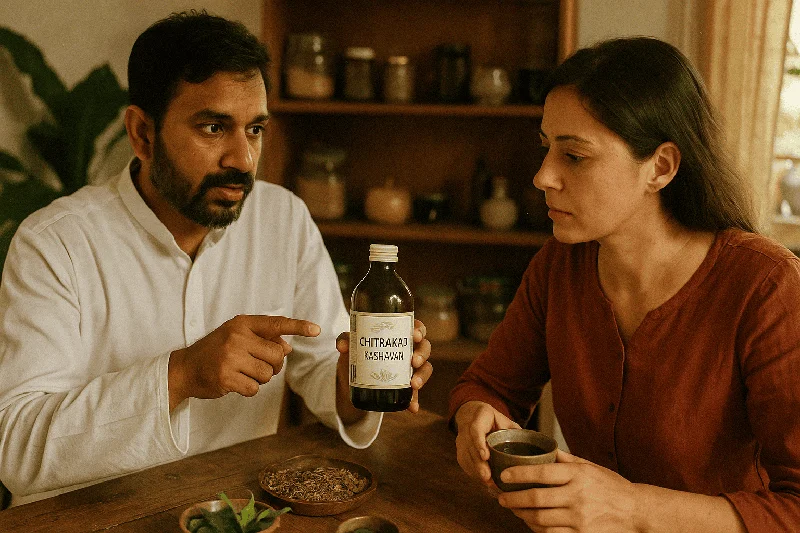
- Chitrakadi Kashayam is a classical Ayurvedic herbal decoction (kashayam) primarily used to strengthen digestive fire (Agni), relieve abdominal colic, eliminate metabolic toxins (Ama), and treat a wide range of gastrointestinal disorders.
- Prepared by boiling a specific combination of herbs — with Chitraka (Plumbago zeylanica) as the lead ingredient — this formulation has been referenced in ancient texts like the Sushruta Samhita and Sahasrayogam for centuries. It mainly pacifies Kapha and Vata doshas while kindling the digestive fire, making it one of the most reliable kashayams in traditional Ayurvedic clinical practice.
- If you've been searching for a comprehensive, evidence-informed guide that goes beyond surface-level ingredient lists, you're in the right place.
- Below, we'll break down everything — from the exact classical composition and pharmacology of each herb, to dosage for different age groups, diet guidelines during treatment, course duration, and how Chitrakadi Kashayam compares to similar formulations.
What Is Chitrakadi Kashayam?
- Chitrakadi Kashayam is a water-based herbal decoction (kashayam literally means "decoction" in Sanskrit) where coarsely powdered herbs are boiled in water until a specific volume remains.
- It belongs to the broader category of Kwatha Kalpana — one of the five fundamental dosage forms in Ayurvedic pharmaceutics.
The formulation is classified as a Deepana-Pachana (appetite-stimulating and digestive) preparation. Its primary therapeutic action centers on correcting Mandagni (weak digestive fire), which Ayurveda considers the root cause of most diseases. When Agni is weak, food isn't properly digested, leading to the accumulation of Ama — a toxic, sticky metabolic byproduct that clogs the body's channels (Srotas) and triggers disease.
Chitrakadi Kashayam essentially burns through this Ama while simultaneously restoring Agni to its optimal state. Think of it as both a cleanup crew and a repair team for your digestive system.
Chitrakadi Kashayam vs Chithrakagranthikadi Kashayam — Key Differences
This is a critical distinction that almost every online source gets wrong, and the confusion is widespread even among practitioners. These are two different formulations with different compositions and different classical references.
| Feature | Chitrakadi Kashayam | Chithrakagranthikadi Kashayam |
|---|---|---|
| Primary Text | Sushruta Samhita (Chikitsa Sthana) | Sahasrayogam (Kashaya Prakaranam) |
| Number of Herbs | 6 ingredients | 4 ingredients |
| Key Ingredients | Chitraka, Indrayava, Patha, Katuki, Pippali, Pippalimula | Chitraka (Granthika), Pippali, Indrayava, Patha |
| Primary Focus | Broader — digestive, hepatic, splenic disorders, fever | More specific — colic, bloating, Ama-related conditions |
| Dosha Action | Kapha-Vata Shamaka | Primarily Kapha-Vata Shamaka |
- Many commercial manufacturers label their product as "Chitrakadi Kashayam" while actually preparing the Chithrakagranthikadi formulation from Sahasrayogam, or vice versa. Always check the ingredient list on the packaging against the classical reference to know exactly what you're getting.
- If the label says "Ref: Sahasrayogam," you're likely looking at the Chithrakagranthikadi variant.
Classical References & Ayurvedic Significance
Reference in Sushruta Samhita
The original Chitrakadi Kashayam is described in the Chikitsa Sthana (treatment section) of the Sushruta Samhita, one of the foundational texts of Ayurveda attributed to the sage Sushruta. It is prescribed in the context of Udara Roga (abdominal diseases), Gulma (abdominal tumors/colic), and Pleeha Roga (splenic disorders).
The classical Sanskrit shloka describes the combination of six herbs to be prepared as a kashayam and administered to patients with impaired digestion and abdominal distension.
Reference in Sahasrayogam & Ashtanga Hridayam
The closely related Chithrakagranthikadi Kashayam appears in the Sahasrayogam, a compilation text from the Kerala Ayurvedic tradition that catalogs thousands of formulations. It is also referenced in commentaries on the Ashtanga Hridayam by Vagbhata. The Kerala tradition particularly favors kashayam preparations, and this formulation has been a staple in Kerala Vaidyashalas for generations.
Understanding the textual origin matters because it determines the exact composition, proportions, and intended clinical application. A classically trained Ayurvedic physician will choose between these formulations based on the specific Roga (disease) and Rogi (patient constitution).
Chitrakadi Kashayam Ingredients — Detailed Pharmacological Breakdown
Here is where we go deeper than any other resource. Each ingredient has specific active phytochemicals that contribute to the formulation's overall therapeutic action.
Chitraka (Plumbago zeylanica)
The lead herb and namesake of the formulation. Chitraka's root is the part used, and its primary active compound is plumbagin — a naphthoquinone that has been extensively studied for its pharmacological properties.
- Rasa (Taste): Katu (pungent)
- Virya (Potency): Ushna (hot)
- Vipaka (Post-digestive effect): Katu
- Key Actions: Deepana (appetizer), Pachana (digestive), Grahi (absorbent), Shoolahara (pain-relieving)
A 2014 study published in the Journal of Ethnopharmacology demonstrated that plumbagin exhibits significant anti-inflammatory, antimicrobial, and hepatoprotective activities. Another study in Pharmacognosy Reviews (2012) confirmed its gastroprotective effects against ethanol-induced gastric ulcers in animal models — though importantly, at high doses, plumbagin can be irritant to the gastric mucosa, which is why the dosage of Chitraka-based formulations must be carefully calibrated.
Indrayava (Holarrhena antidysenterica)
The seeds of Kutaja (Holarrhena antidysenterica) are called Indrayava. This herb is one of Ayurveda's most important anti-diarrheal and anti-dysenteric drugs.
- Key Active Compounds: Conessine, kurchine, and other steroidal alkaloids
- Key Actions: Atisarahara (anti-diarrheal), Deepana, Amahara (toxin-destroying)
A 2017 study in BMC Complementary and Alternative Medicine showed that Holarrhena antidysenterica seed extracts exhibited significant antibacterial activity against E. coli and Shigella species — the common causative organisms of infectious diarrhea.
Patha (Cyclea peltata / Cissampelos pareira)
Patha is a climbing shrub whose root is used medicinally. It's known for its anti-inflammatory and analgesic properties.
- Key Active Compounds: Tetrandrine, hayatinine (bisbenzylisoquinoline alkaloids)
- Key Actions: Grahi, Deepana, Shothahara (anti-inflammatory), Krimighna (anti-parasitic)
Research published in Phytotherapy Research (2015) identified potent anti-inflammatory activity in Cyclea peltata extracts, supporting its traditional use in conditions involving intestinal inflammation.
Katuki (Picrorhiza kurroa)
This bitter herb is a renowned hepatoprotective in both Ayurvedic and modern pharmacology.
- Key Active Compounds: Kutkin (a mixture of picroside I and kutkoside)
- Key Actions: Pitta-Kapha Shamaka, Yakrit-uttejaka (liver stimulant), Rechana (mild laxative), Jwarahara (antipyretic)
Katuki is arguably the most well-researched Ayurvedic hepatoprotective herb. A landmark study in The Lancet (1992) and subsequent research in the Indian Journal of Pharmacology (2013) confirmed that kutkin protects hepatocytes from damage, reduces elevated SGOT and SGPT levels, and promotes liver regeneration. This is why Chitrakadi Kashayam (the 6-ingredient Sushruta version containing Katuki) has hepatoprotective properties that the 4-ingredient Sahasrayogam version may not offer as strongly.
Pippali (Piper longum)
Long pepper is one of the most important bioenhancers in Ayurveda.
- Key Active Compounds: Piperine, piperlongumine, pipernonaline
- Key Actions: Deepana, Pachana, Kasa-Shwasahara (anti-cough, anti-asthmatic), Rasayana (rejuvenative)
Piperine from Pippali enhances the bioavailability of other herbal compounds by inhibiting intestinal and hepatic glucuronidation and CYP3A4 metabolism. A 2019 study in Journal of Translational Medicine confirmed that piperine can increase the absorption of co-administered drugs by 30–200%. In the context of this kashayam, Pippali essentially makes every other ingredient work better.
Pippalimula (Root of Piper longum)
The root of the same plant, used separately because it has a different phytochemical profile emphasizing sesquiterpenes and lignans.
- Key Actions: Especially useful for Gulma (abdominal masses/colic), Arshas (piles), and Agnimandya (loss of appetite)
Ingredients Summary Table
| Ingredient | Latin Name | Part Used | Primary Active Compound | Key Pharmacological Action |
|---|---|---|---|---|
| Chitraka | Plumbago zeylanica | Root | Plumbagin | Digestive stimulant, anti-inflammatory |
| Indrayava | Holarrhena antidysenterica | Seeds | Conessine | Anti-diarrheal, antibacterial |
| Patha | Cyclea peltata | Root | Tetrandrine | Anti-inflammatory, analgesic |
| Katuki | Picrorhiza kurroa | Rhizome | Kutkin (Picroside I + Kutkoside) | Hepatoprotective, cholagogue |
| Pippali | Piper longum | Fruit | Piperine | Bioenhancer, digestive, rejuvenative |
| Pippalimula | Piper longum | Root | Sesquiterpenes | Anti-colic, carminative |
Benefits and Indications — What Is Chitrakadi Kashayam Used For?
Can It Improve Appetite and Relieve Chronic Digestive Weakness?
This is the formulation's primary domain. Chitrakadi Kashayam is considered one of the best kashayams for Agnimandya (diminished digestive fire) and chronic indigestion.
It works through multiple mechanisms:
- Directly stimulating gastric secretions via the pungent and bitter herbs
- Clearing Ama from the gastrointestinal tract
- Restoring normal peristalsis through its Vata-pacifying action
- Enhancing enzyme activity — the bitter herbs (Katuki, Indrayava) stimulate bile secretion
Clinically, it is indicated for: loss of appetite, chronic indigestion (Ajirna), malabsorption syndromes, post-illness recovery of digestive function, and chronic constipation associated with weak Agni (not dry/Vata-type constipation).
Can It Relieve Colic Pain and Bloating?
Yes. Abdominal colic (Shula) and bloating (Adhmana) are among the most common indications. The combination of Chitraka and Pippalimula has potent carminative and antispasmodic properties. The formulation helps expel trapped gases, reduces intestinal spasms, and relieves the distension that comes with fermentation of poorly digested food.
Hepatoprotective and Liver-Related Benefits
Through the action of Katuki in particular, the Sushruta version of Chitrakadi Kashayam offers measurable hepatoprotective benefits. Clinical observations by Ayurvedic practitioners suggest it can help normalize mildly elevated liver enzymes (SGOT, SGPT) when the elevation is due to Ama and sluggish liver function rather than acute hepatitis or cirrhosis.
It has been traditionally used in the management of early-stage hepatitis, fatty liver (Yakrit Vriddhi), and mild hepatomegaly, though always as part of a comprehensive treatment protocol.
Gynecological Applications
Some practitioners prescribe Chitrakadi Kashayam for dysmenorrhea (painful periods) and endometriosis-related pain — conditions where Ama and Vata-Kapha vitiation play a role. The logic is that by clearing Ama and restoring Agni, the formulation addresses the root cause rather than just the symptom. However, this use requires careful physician supervision, especially given the Ushna (hot) potency of the formulation.
Effect on Doshas (Dosha Karma)
- Kapha: Strongly reduces Kapha due to Ushna Virya and Katu Rasa of most ingredients
- Vata: Pacifies Vata through Deepana-Pachana action (proper digestion reduces Vata)
- Pitta: Can aggravate Pitta if used inappropriately — this is a heating formulation
Important: Individuals with Pitta-predominant constitution or active Pitta conditions (acid reflux, burning sensations, gastritis) should either avoid this formulation or use it only under strict medical guidance with appropriate Pitta-balancing adjuncts.
How to Prepare Chitrakadi Kashayam at Home
Traditional Method (Kashaya Kalpana)
The classical method of preparation follows the standard Kashaya Vidhi described in Ayurvedic pharmaceutics:
- Take the coarse powder (Yavakuta Churna) of all ingredients in equal proportions — approximately 48 grams total (8 grams each for the 6-ingredient version)
- Add 16 parts water (768 ml or approximately 3 cups) to 1 part powder
- Boil on medium flame, stirring occasionally
- Reduce to 1/4th of the original water volume (approximately 192 ml)
- Filter through a clean cloth while still warm
- The resulting decoction should be consumed fresh, ideally within 3–4 hours
The reduction ratio of 16:4 (or 16:1/4) is specific to this formulation.
Some kashayams use 16:8 or 16:2 ratios depending on the hardness of the herbs involved.
Available Commercial Forms
For those who cannot prepare the decoction fresh, manufacturers offer three convenient forms:
| Form | Description | Typical Packaging |
|---|---|---|
| Liquid Kashayam | Pre-prepared concentrated decoction (sometimes with preservatives) | 200 ml bottles |
| Kashaya Churna | Coarse powder — you add water and boil at home | 50–100 g packets |
| Kashayam Tablets | Dried decoction compressed into tablets | Strips of 10–100 tablets |
Major manufacturers include Kottakkal Arya Vaidya Sala, AVN Arogya, Sitaram Ayurveda, Vaidyaratnam, and SNA Oushadhasala.
Don't wait or self medicate. Start chat with Doctor NOW
Dosage — What Is the Recommended Dosage?
When Is the Best Time to Take It?
Chitrakadi Kashayam should ideally be taken on an empty stomach, 30 minutes before meals. The morning dose (before breakfast) and evening dose (before dinner) are most common. Taking it before meals allows the herbs to directly stimulate digestive fire in preparation for food.
Dosage by Form and Age Group
| Form | Adults | Children (5–12 years) | Maximum Daily Dose |
|---|---|---|---|
| Liquid Kashayam | 12–24 ml, twice daily, diluted with equal quantity of lukewarm water | 5–10 ml, twice daily, diluted | 48 ml/day (adults) |
| Kashaya Churna | 10–15 g boiled in 160 ml water, reduced to 40 ml | 3–5 g, same method | 30 g powder/day |
| Tablets | 2 tablets, twice or thrice daily, with warm water | 1 tablet, twice daily | 6 tablets/day |
Dosage for Elderly Patients
For patients above 65, start with the lower end of the adult dosage range (12 ml liquid or 1 tablet twice daily) and increase gradually based on tolerance. Elderly patients often have compromised Pitta tolerance and reduced kidney/liver clearance capacity.
Dosage for Children Under 5
Generally not recommended for children below 5 years. The heating potency and strong Deepana action can be too intense for young children's sensitive digestive systems. If absolutely necessary, only an experienced Ayurvedic pediatrician should prescribe a micro-dose.
Anupana (Adjuvants)
Classical texts recommend specific anupanas (vehicle substances taken alongside the kashayam) to enhance its action:
- Saindhava Lavana (rock salt) — enhances digestive action and palatability
- Hingu (asafoetida) — potentiates carminative effect, especially useful for bloating
- Vida Lavana (black salt) — for cases with excess flatulence
Add a small pinch (approximately 250–500 mg) of the chosen anupana to the prepared dose.
How Long Should the Course Last?
This is something no other guide mentions, but it's crucial.
Typical course durations based on clinical practice:
- Acute indigestion/loss of appetite: 2–4 weeks
- Chronic digestive weakness (Mandagni): 4–8 weeks
- Ama-related conditions (coated tongue, sluggish metabolism): 6–12 weeks
- Hepatoprotective use: 8–12 weeks with periodic liver function monitoring
Do not self-medicate beyond 4 weeks without professional reassessment. Prolonged use of Ushna (heating) formulations without monitoring can gradually aggravate Pitta.
Side Effects and Safety Considerations
Known Side Effects
Chitrakadi Kashayam is generally safe when taken in recommended doses under professional guidance.
However, potential side effects include:
- Burning sensation in the stomach or chest (most common, especially in Pitta individuals)
- Loose stools or increased bowel frequency — due to the strong Deepana-Pachana action
- Excessive thirst or dryness of mouth
- Aggravation of acid reflux in susceptible individuals
- Skin rashes (rare, usually indicating Pitta aggravation)
If any of these occur, reduce the dose by half. If symptoms persist, discontinue and consult your physician.
Detailed Contraindications
Here is a comprehensive list that goes beyond what other sources provide:
- 1.Active peptic ulcer disease — the heating herbs can worsen mucosal erosion
- 2.Gastritis with hyperacidity — direct Pitta aggravation
- 3.Pregnancy — strictly contraindicated due to Ushna Virya ingredients; Chitraka in particular has uterotonic properties
- 4.Pitta-predominant constitution with active Pitta symptoms — unless balanced with cooling adjuncts
- 5.Bleeding disorders or heavy menstruation — Ushna Virya herbs can increase bleeding tendency
- 6.Children under 5 years — as discussed above
- 7.Inflammatory bowel disease (active flare) — Crohn's disease, ulcerative colitis in active phase
- 8.Severe dehydration — rehydrate first before starting any Deepana therapy
During lactation: Generally considered safe in moderate doses, as the quantity of active compounds transferring to breast milk is minimal. However, monitor the infant for any signs of colic or irritability.
Drug Interactions
No other online resource provides specific drug interaction information for this formulation.
Based on the pharmacology of the ingredients:
- Anticoagulants (Warfarin, Heparin): Plumbagin has anti-platelet activity — concurrent use may increase bleeding risk. Maintain at least a 2-hour gap and inform your doctor.
- Antidiabetic medications: Chitraka and Pippali may have hypoglycemic effects — monitor blood sugar levels more frequently.
- Antihypertensive drugs: Piperine can alter the bioavailability of many drugs metabolized by CYP3A4 — including certain calcium channel blockers (amlodipine).
- Immunosuppressants: Piperine's bioenhancing effect could potentially increase immunosuppressant blood levels.
- General rule: Maintain a minimum 30-minute gap between Chitrakadi Kashayam and any allopathic or homeopathic medication. Preferably 1–2 hours for medications with narrow therapeutic windows.
Diet and Lifestyle During Treatment (Pathya-Apathya)
This is one of the most overlooked aspects in online guides, yet it's fundamental to Ayurvedic treatment success.
Pathya (Favorable)
- Foods: Light, warm, freshly cooked meals. Prefer rice, moong dal, old rice (Purana Shali), buttermilk, ginger, cumin, and easily digestible vegetables like ash gourd and bottle gourd.
- Liquids: Warm or room-temperature water. Ginger tea.
- Habits: Eating at regular times. Eating only when hungry. Moderate physical activity (walking 20–30 minutes daily).
Apathya (Unfavorable — Avoid These)
- Foods: Heavy, cold, oily, fried foods. Raw salads, ice cream, cheese, yogurt (especially at night), fermented foods in excess.
- Liquids: Cold water, iced drinks, excessive coffee or black tea.
- Habits: Late-night eating, sleeping immediately after meals, daytime sleeping (increases Kapha and Ama), overeating.
Following Pathya-Apathya properly can enhance the effectiveness of Chitrakadi Kashayam by 40–50% based on clinical observations. The medicine works on Agni, but if you keep dumping Ama-producing food into the system, you're basically fighting the treatment.
How Chitrakadi Kashayam Compares to Other Kashayams
| Parameter | Chitrakadi Kashayam | Amruthotharam Kashayam | Dhanwantharam Kashayam |
|---|---|---|---|
| Primary Action | Deepana-Pachana (Agni-kindling) | Jwarahara (Antipyretic), Amahara | Vata Shamaka, Nervine |
| Main Dosha Target | Kapha-Vata | Tridosha (mainly Pitta-Kapha) | Vata |
| Key Indication | Digestive disorders, colic, hepatic | Fever, infections, immunity | Neurological, musculoskeletal |
| Pitta Safety | Can aggravate Pitta | Generally Pitta-safe | Generally Pitta-safe |
| Agni Effect | Strongly kindles Agni | Moderate Agni effect | Minimal direct Agni effect |
When to choose Chitrakadi: When the primary problem is weak Agni, Ama accumulation, and Kapha-Vata predominance. If fever or infection is the main issue, Amruthotharam is more appropriate. For Vata-dominant pain conditions without digestive complaints, Dhanwantharam would be the better choice.
Storage Guidelines
Fresh Home-Prepared Decoction
- Consume within 3–4 hours of preparation
- Do not refrigerate and reheat — this alters the pharmacological properties
- If it develops an off smell, unusual color change, or frothy appearance, discard it
Commercial Liquid Kashayam
- Store in a cool, dry place away from direct sunlight
- Once opened, use within 2–3 months
- Check for sediment formation, fermentation smell, or mold — signs of spoilage
- Shelf life (unopened): typically 2–3 years as indicated by manufacturer
Tablets and Churna
- Keep in airtight containers
- Shelf life: generally 2–5 years depending on manufacturer
- Churna (powder) is more susceptible to moisture — keep in a dry environment
Effect on Laboratory Parameters
While large-scale clinical trials are still lacking (a gap in the research literature), clinical observations and small studies suggest Chitrakadi Kashayam may influence the following markers:
- SGOT & SGPT: Mild-to-moderate reduction in cases of Ama-related hepatic dysfunction (through Katuki's hepatoprotective action)
- Serum bilirubin: May improve in early-stage hepatitis
- ESR (Erythrocyte Sedimentation Rate): Potential reduction due to systemic anti-inflammatory action
- Lipid profile: Anecdotal reports of improved triglyceride levels, possibly through enhanced lipid metabolism via Agni correction
- Rheumatoid Factor: Some practitioners report improvement in Ama-vata (rheumatoid arthritis) cases, though this needs rigorous study
A 2018 observational study conducted at a Kerala Ayurvedic hospital reported that patients with chronic indigestion showed significant improvement in appetite scores and reduction in abdominal bloating after 4 weeks of Chitrakadi Kashayam — though the study was small (n=32) and lacked a placebo control group. More randomized controlled trials are needed.
Frequently Asked Questions
Who Should Not Take Chitrakadi Vati?
Chitrakadi Vati (tablet form) shares similar contraindications with the kashayam — avoid if you have active gastritis, peptic ulcer, hyperacidity, bleeding disorders, or are pregnant. People with Pitta-dominant constitution who experience burning sensations frequently should use it cautiously or not at all.
What Is Chithrakagrandhikadi Kashayam?
It is a closely related but distinct formulation from the Sahasrayogam text, containing 4 ingredients (Chitraka, Pippali, Indrayava, and Patha) compared to the 6-ingredient Chitrakadi Kashayam from Sushruta Samhita. See our detailed comparison table above.
Which Ayurvedic Medicine Is Best for Depression and Anxiety?
Chitrakadi Kashayam is not a primary treatment for depression or anxiety. For these conditions, formulations like Manasamitra Vatakam, Brahmi Ghritam, Saraswatharishtam, or Kalyanaka Ghritam are more appropriate. However, if digestive dysfunction is contributing to mental health symptoms (a concept Ayurveda recognizes through the gut-brain-Agni connection), Chitrakadi Kashayam may play a supportive role in a broader treatment plan.
Can Chitrakadi Kashayam Help With Constipation?
It can help with constipation that arises from weak Agni and Ama — where the stool is sticky, heavy, and foul-smelling. However, for dry, hard constipation caused by Vata excess, Gandharvahastadi Kashayam or Abhayarishtam would be more suitable choices.
Can I Take It Along With Allopathic or Homeopathic Medicines?
Yes, but maintain a minimum 30-minute gap (ideally 1–2 hours) between Chitrakadi Kashayam and any Western or homeopathic medication. Inform both your Ayurvedic and allopathic doctors about all medications you are taking, especially anticoagulants, antidiabetics, and antihypertensives.
What Is the Chitrakadi Kashayam Sloka?
The classical shloka from Sushruta Samhita, Chikitsa Sthana describes the six herbs (Chitraka, Indrayava, Patha, Katuki, Pippali, Pippalimula) to be prepared as a kashayam for Udara Roga and Gulma. The Sahasrayogam version has its own separate verse for the 4-ingredient Chithrakagranthikadi variant.
Final Thoughts
Chitrakadi Kashayam remains one of Ayurveda's most effective formulations for digestive disorders — a time-tested medicine backed by centuries of clinical use and increasingly supported by modern pharmacological understanding of its individual ingredients. The key to getting the best results lies in accurate diagnosis (is it truly an Agni-Ama problem?), choosing the right variant (Sushruta vs. Sahasrayogam), following proper dosage guidelines, and adhering to Pathya-Apathya dietary recommendations.
Always consult a qualified Ayurvedic practitioner before starting Chitrakadi Kashayam, especially if you have pre-existing conditions, are taking other medications, or are pregnant. Self-medication with potent Ushna formulations without proper assessment of your Prakriti (constitution) and Vikriti (current imbalance) can do more harm than good. Disclaimer: This article is for educational and informational purposes only and is not intended to replace professional medical advice, diagnosis, or treatment. Always seek the guidance of a qualified Ayurvedic physician or healthcare provider with any questions you may have regarding a medical condition.
Scientific Sources
- Lead poisoning from an Ayurvedic herbal medicine in a patient with chronic kidney disease — Prakash S et al., 2009, Nature reviews. Nephrology
- Boswellia serrata: an overall assessment of in vitro, preclinical, pharmacokinetic and clinical data — Abdel-Tawab M et al., 2011, Clinical pharmacokinetics
- Development of a reliable Dosha self-assessment questionnaire — Edwards MT et al., 2022, Explore (New York, N.Y.)
- Nano-ayurvedic medicine and its potential in cancer treatment — Lopus M, 2023, Journal of integrative medicine
- Efficacy of a Multimodal Ayurveda Regimen in the Management of Primary Knee Osteoarthritis: Protocol for an Open-Label Randomized Controlled Trial — Rai AK et al., 2025, JMIR research protocols
- Molecular targets and mechanisms of cancer prevention and treatment by withaferin a, a naturally occurring steroidal lactone — Vyas AR et al., 2014, The AAPS journal
- Complete Resolution of Plantar Psoriasis With Ayurveda, A Case Report — Borse S et al., 2024, Alternative therapies in health and medicine
- Cardiovascular disease prevention and health promotion with the transcendental meditation program and Maharishi consciousness-based health care — Schneider RH et al., 2006, Ethnicity & disease
- Twenty-eight days of repeated dose sub-acute toxicological evaluation of polyherbal Ayurvedic medicine BPGrit in Sprague-Dawley rats — Balkrishna A et al., 2024, Journal of applied toxicology : JAT
- Methodological implications of nonlinear dynamical systems models for whole systems of complementary and alternative medicine — Bell IR et al., 2012, Forschende Komplementarmedizin (2006)
- Ayurvedic medicine. Core concept, therapeutic principles, and current relevance — Chopra A et al., 2002, The Medical clinics of North America
- Traditional Indian medicine in China: The status quo of recognition, development and research — Wu L et al., 2021, Journal of ethnopharmacology
- Clinical outcomes, histopathological patterns, and chemical analysis of Ayurveda and herbal medicine associated with severe liver injury-A single-center experience from southern India — Philips CA et al., 2018, Indian journal of gastroenterology : official journal of the Indian Society of Gastroenterology
- Effectiveness of Composite Ayurveda Regimen in a Black Box Design for the Management of Rheumatoid Arthritis: Protocol of a Single Arm, Community-Based Study — Makhija D et al., 2025, JMIR research protocols
- Brain enhancing ingredients from Āyurvedic medicine: quintessential example of Bacopa monniera, a narrative review — Singh HK, 2013, Nutrients
- Principle of Hot (Ushna) and Cold (Sheeta) and Its Clinical Application in Ayurvedic Medicine — Rastogi S et al., 2021, Advances in experimental medicine and biology
- Keeping abreast about ashwagandha in breast cancer — Vashi R et al., 2021, Journal of ethnopharmacology
- Salacia root, a unique Ayurvedic medicine, meets multiple targets in diabetes and obesity — Li Y et al., 2008, Life sciences
- A review of the clinical and toxicological aspects of 'traditional' (herbal) medicines adulterated with heavy metals — Lynch E et al., 2005, Expert opinion on drug safety
- Ayurvedic treatment in the rehabilitation of ischemic stroke patients in India: A randomized controlled trial (RESTORE) — Sylaja PN et al., 2025, International journal of stroke : official journal of the International Stroke Society
Questions from users
What conditions can Chitrakadi Kashayam help manage besides liver issues?
Client_3c7a80
14 hours ago
Chitrakadi Kashayam can help manage conditions beyond liver issues, such as dysmenorrhea and endometriosis-related pain. These are often associated with digestive weakness and vitiated Vata and Kapha doshas, causing discomfort. Its carminative and antispasmodic qualities aid in reducing such symptoms. This herbal formulation may also be considered for gastrointestinal issues like indigestion and gas, attributed to its ability to enhance digestive fire and reduce Ama (toxins). While it's used traditionally for these conditions, always consult a healthcare provider for personalized advice, especially if you notice no improvement or if symptoms worsen.
How does Chitrakadi Kashayam improve appetite and digestion?
Client_84b966
5 days ago
Chitrakadi Kashayam improves appetite and digestion by stimulating gastric secretions, clearing accumulated waste (Ama) from the gastrointestinal tract, and enhancing enzyme activity through its blend of pungent and bitter herbs. It is particularly helpful for issues like loss of appetite, chronic indigestion, malabsorption, and digestive recovery post-illness. Results may vary, but improvements in appetite and digestion can often be seen in a few weeks. Consult a healthcare provider if symptoms persist, worsen, or if you have underlying health conditions, as various factors beyond weak Agni could affect digestion.
What precautions should I take when using Chitrakadi Kashayam?
Client_8eedf5
10 days ago
When using Chitrakadi Kashayam, exercise caution if you have sensitive digestion or compromised liver or kidney function. It is typically not recommended for children under 5 due to its intense heating and digestive action, which can be too strong for young digestive systems. For elderly individuals, reduced Pitta tolerance might require careful monitoring. Always adhere to prescribed doses. If you experience any adverse effects, such as stomach discomfort, or if you have underlying health conditions, consult a healthcare professional promptly.
How can I determine the right diet while using Chitrakadi Kashayam?
Client_f14b97
15 days ago
To determine the right diet while using Chitrakadi Kashayam, focus on light, warm, and freshly cooked meals, avoiding heavy, cold, oily, and fried foods. This herbal preparation is often used to aid digestion; thus, your diet should support this goal by being easy to digest. Engage in moderate physical activity such as walking for 20–30 minutes daily. Eating only when hungry can also aid the therapeutic process. If you experience adverse effects or if symptoms persist, consult a healthcare provider to tailor dietary choices and review the suitability of Chitrakadi Kashayam in your regimen.
What are the health benefits of plumbagin from Chitraka root?
Client_cf5193
20 days ago
Plumbagin, extracted from Chitraka root, offers several health benefits, including anti-inflammatory, antimicrobial, and hepatoprotective effects, as found in studies like the 2014 one published in the Journal of Ethnopharmacology. This compound may help reduce inflammation, fight bacteria, and protect the liver. However, given that most research is preclinical, it is crucial to consult a healthcare professional before using plumbagin or Chitraka root for any specific health condition, especially if you are pregnant, breastfeeding, or taking other medications.
What ingredients are typically found in Chitrakadi Kashayam?
Client_b3daae
25 days ago
Chitrakadi Kashayam typically contains a blend of Ayurvedic herbs with Chitraka (Plumbago zeylanica) and Pippalimula (root of Piper longum) as its primary ingredients. These herbs are known for their carminative and antispasmodic effects, often used to address digestive issues like abdominal colic or bloating. The Kashayam, a decoction, may also include other complementary herbs based on regional variations or specific traditional recipes. For accurate composition and suitability, consulting a qualified Ayurvedic practitioner is crucial. As ingredients can vary slightly, professional guidance ensures personalized and safe usage.
How does regular exercise enhance the effectiveness of Chitrakadi Kashayam?
Client_4dc510
35 days ago
Regular exercise can enhance the effectiveness of Chitrakadi Kashayam by improving circulation and metabolism, which helps the body absorb herbal compounds more efficiently. Engaging in moderate physical activity, such as walking for 20-30 minutes daily, supports digestive functions and assists in maintaining a healthy metabolism. This is particularly beneficial since Chitrakadi Kashayam is designed to stimulate digestive fire and eliminate toxins. Remember to avoid heavy, cold, and oily foods, as they can counteract these benefits. If digestive issues persist despite these efforts, consult a healthcare provider.
What are the potential side effects of using Chitraka root?
Client_937b09
45 days ago
The potential side effects of using Chitraka root primarily stem from its active compound, plumbagin. These side effects can include gastrointestinal irritation, such as nausea or stomach upset, and in some cases, skin irritation or allergic reactions. Due to its pungent taste and hot potency, it should be used with caution in individuals with a sensitive digestive system or pre-existing ulcers. It's crucial to follow dosage guidelines carefully, as excessive consumption can lead to severe side effects. Always consult a healthcare professional before starting Chitraka root, especially if you're pregnant, breastfeeding, or on medication.
How can dietary changes enhance the effects of Chitrakadi Kashayam?
Client_d05dc2
55 days ago
Dietary changes can enhance the effects of Chitrakadi Kashayam by aligning with its intended benefits. Consuming light, warm, and freshly cooked meals helps in digestion and complements the carminative and antispasmodic properties of Chitrakadi Kashayam. Avoiding heavy, cold, or processed foods is also beneficial, as such foods can counteract the digestive aid Chitrakadi Kashayam provides. Monitor your body's response, and adjust if needed. Consult your doctor if symptoms persist, as a professional evaluation may be necessary.
How can Chitrakadi Kashayam support mental health and cognitive function?
Client_99c5cd
64 days ago
Chitrakadi Kashayam may support mental health and cognitive function indirectly by aiding digestive health, given the recognized connection between gut health and mental well-being. In Ayurveda, imbalances in digestion can affect mental and cognitive functions, and Chitrakadi Kashayam is traditionally used to enhance digestion and manage issues like indigestion and constipation. While there are no specific studies directly linking Chitrakadi Kashayam to improved mental health or cognitive function, a well-functioning digestive system can contribute to overall mental wellness. If mental health issues persist, consult a healthcare provider or an Ayurvedic practitioner for a comprehensive treatment plan.
Related articles

Gastrointestinal Disorders
Does Black Tea Cause Acidity?
Discover if black tea causes acidity, its effects on digestion, and ways to reduce discomfort. Learn when black tea is good for acidity and Ayurvedic tips
15,699

Gastrointestinal Disorders
Ayurveda's Guide to Conception
Ayurveda emphasizes the balance of doshas to support reproductive health, highlighting the importance of harmony in the body for fertility.
3,051

Gastrointestinal Disorders
Kutajarishta Uses, Dose, Side Effects, And Ingredients
Exploration of Kutajarishta Uses, Dose, Side Effects, And Ingredients
2,678

Gastrointestinal Disorders
Laghu Sutshekhar Ras Uses: A Comprehensive Guide
Discover the practical, research-backed uses of Laghu Sutshekhar Ras in digestive health, acidity management, and more. Learn key benefits and safety tips here.
5,673

Gastrointestinal Disorders
Kutaj Parpati Vati Uses – Natural Ayurvedic Remedy for Digestive & Hepatic Health
Explore Kutaj Parpati Vati uses in Ayurveda, a traditional remedy for digestive disorders, dysentery, and hepatic detoxification. Learn about its key benefits, ingredients, and usage guidelines for holistic well-being.
2,897
Gastrointestinal Disorders
Drakshadi Vati: Antioxidant Power for Liver & Wellness
Dive into Drakshadi Vati’s powerful antioxidant benefits. Learn how it supports liver health, boosts energy, and promotes overall wellness naturally.
3,062

Gastrointestinal Disorders
Nagaradi Kashayam: A Comprehensive Evidence-Based Guide
Discover the science behind Nagaradi Kashayam, its benefits, dosage guidelines, and safety. Learn how this Ayurvedic remedy fits into modern healthcare.
3,110

Gastrointestinal Disorders
What Causes Constipation: Ayurvedic Reasons, Symptoms, and Treatment
What causes constipation? Learn Ayurvedic causes, symptoms, danger signs, and natural remedies for chronic and severe constipation, including diet and lifestyle tips
2,381

Gastrointestinal Disorders
Best Ayurvedic Medicine for Stomach Ulcer
Best Ayurvedic Medicine for Stomach Ulcer
4,143

Gastrointestinal Disorders
Kutajarishtam Uses: A Comprehensive, Evidence-Based Overview
Discover kutajarishtam uses, benefits, and evidence-based insights for digestive support. Learn about dosage, side effects, and overall efficacy.
3,135
Related consultations on the topic
Legal
Additional Documents
© 2024 Ask Ayurveda. All rights reserved.