Kaishore Guggulu for Varicose Veins: Strengthen Veins Naturally
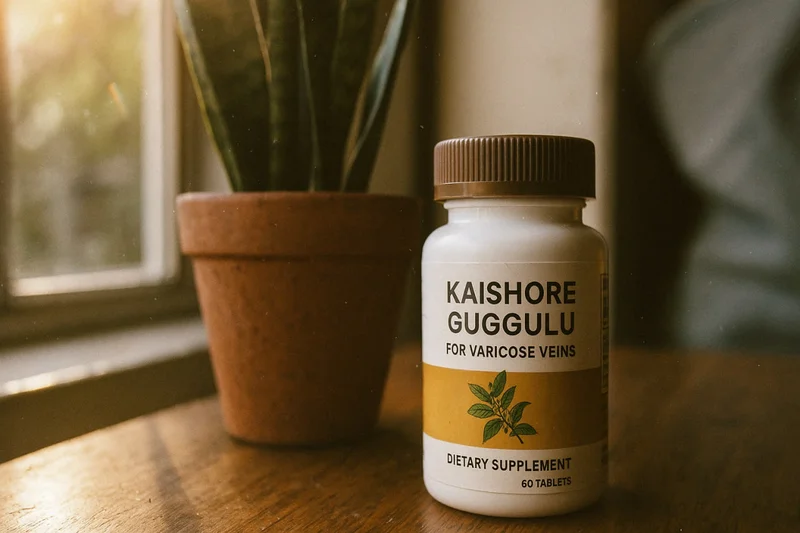
Kaishore Guggulu is a classical Ayurvedic formulation primarily used to manage gout, elevated uric acid levels, chronic skin conditions, and inflammatory joint disorders. Described in the ancient text Sharangdhara Samhita (Madhyama Khanda 7/70-81), this polyherbal tablet combines the resin of Guggulu (Commiphora mukul) with Triphala, Guduchi, and other potent herbs to deliver anti-inflammatory, analgesic, and blood-purifying effects. If you're searching for a natural approach to joint pain, skin problems, or metabolic imbalances — Kaishore Guggulu is one of the most time-tested remedies Ayurveda has to offer.
In this comprehensive guide, we'll cover everything from its ingredients and preparation method to scientific research, dosage protocols, drug interactions, and how it compares to both other Guggulu formulations and modern allopathic medications. Whether you're a patient, practitioner, or simply curious, this article goes deeper than anything else you'll find online.
What Is Kaishore Guggulu in Ayurveda?
Kaishore Guggulu (also spelled Kaishor Guggul or Kaishore Guggulu Vati) is classified as a Guggulu Kalpa — a category of Ayurvedic medicines where purified Guggulu resin serves as the binding and primary therapeutic agent. The word "Kaishore" is derived from "Kishore," meaning youthful, hinting at its rejuvenative (Rasayana) properties.
In Ayurvedic pharmacology, it is categorized as an Agni Siddha Guggulu, meaning the final preparation involves processing with heat (fire) to enhance the bioavailability and therapeutic potency of the formulation. This distinguishes it from cold-processed Guggulu preparations.
Classical Ayurvedic Properties
According to traditional texts, Kaishore Guggulu possesses the following properties:
- Rasa (Taste): Tikta (Bitter), Kashaya (Astringent)
- Guna (Quality): Laghu (Light), Ruksha (Dry)
- Veerya (Potency): Ushna (Hot)
- Vipaka (Post-digestive effect): Katu (Pungent)
- Dosha Karma: Pacifies Vata and Kapha, balances Pitta in moderate doses
Sanskrit Indications (Traditional Terminology)
Classical Ayurvedic texts list these indications using Sanskrit terms: Amavata (rheumatoid arthritis), Vatarakta (gout), Kustha (skin diseases), Vranaropana (wound healing), Prameha (metabolic disorders), Deepana (appetizer), Pachana (digestive), and Shotha (inflammation/swelling).
Key Ingredients in Kaishore Guggulu
The formulation contains a carefully balanced blend of herbs, minerals, and the Guggulu resin. Each ingredient plays a specific pharmacological role.
Here's the complete composition:
| Ingredient | Latin/Scientific Name | Quantity | Primary Role |
|---|---|---|---|
| Shuddha Guggulu | Commiphora mukul | Major portion | Anti-inflammatory, lipid-lowering, binding agent |
| Amalaki | Emblica officinalis | Equal parts (Triphala) | Antioxidant, Vitamin C source |
| Haritaki | Terminalia chebula | Equal parts (Triphala) | Digestive, mild laxative |
| Bibhitaki | Terminalia bellirica | Equal parts (Triphala) | Astringent, anti-microbial |
| Guduchi (Giloy) | Tinospora cordifolia | Significant portion | Immunomodulator, uric acid reducer |
| Ginger (Shunthi) | Zingiber officinale | Part of Trikatu | Bioavailability enhancer, anti-inflammatory |
| Black Pepper (Maricha) | Piper nigrum | Part of Trikatu | Bioavailability enhancer |
| Long Pepper (Pippali) | Piper longum | Part of Trikatu | Metabolic stimulant |
| Vidanga | Embelia ribes | Specified quantity | Anti-parasitic, antioxidant |
| Danti Mool | Baliospermum montanum | Specified quantity | Purgative, detoxifying |
| Nishoth (Trivrit) | Operculina turpethum | Specified quantity | Mild purgative, blood purifier |
| Ghee (Ghrita) | Clarified butter | For processing | Lipophilic carrier, enhances absorption |
Active Phytochemical Compounds
For the science-minded reader, here's what makes this formulation work at a molecular level:
- Guggulsterones (E and Z): The primary active compounds in Guggulu resin — guggulipids that modulate lipid metabolism and inflammatory pathways
- Berberine-related alkaloids from Guduchi — known to inhibit xanthine oxidase activity
- Polyphenols and tannins from Triphala — powerful antioxidants that scavenge free radicals
- Piperine from Black Pepper — increases bioavailability of other compounds by up to 2000% (Shoba et al., 1998, Planta Medica)
- Polysaccharides from Guduchi — immunomodulatory agents that regulate T-cell and macrophage function
- Gallic acid and ellagic acid from Amalaki — potent anti-inflammatory polyphenols
How Is Kaishore Guggulu Prepared?
The traditional method of preparation follows the Guggulu Paka Vidhi described in classical texts. It's a multi-step process that requires precision.
Step-by-Step Preparation Method
- 1.Purification of Guggulu (Shodhana): Raw Guggulu resin is purified by boiling it in Triphala Kashaya (Triphala decoction) until it dissolves completely. This removes impurities and reduces potential gastric irritation.
- 2.Preparation of herbal powders: All other ingredients — Triphala, Trikatu, Guduchi, Vidanga, Danti Mool, and Nishoth — are individually dried and finely powdered (churna).
- 3.Preparation of Guduchi Kwatha: Fresh Guduchi stems are boiled in water to prepare a concentrated decoction. This serves as the liquid medium for processing.
- 4.Combining ingredients: The purified Guggulu is placed in a mortar. Herbal powders are added incrementally. Guduchi Kwatha is used to grind and blend the mixture into a homogeneous mass.
- 5.Fire processing (Agni Siddha): The combined mass is gently heated on low flame with small quantities of ghee.
- This step — unique to Agni Siddha preparations — activates certain thermolabile compounds and improves shelf stability.
- 6.Pill rolling: The final mass is rolled into uniform tablets (vati), typically 250 mg or 500 mg each.
- 7.Drying and storage: Tablets are air-dried in shade and stored in airtight, dark containers.
Shelf life: Properly prepared Kaishore Guggulu lasts up to 5 years when stored in a cool, dry place away from direct sunlight, preferably in amber glass or opaque containers.
Health Benefits of Kaishore Guggulu
This is where things get really interesting. Kaishore Guggulu offers a remarkably wide range of therapeutic benefits, backed by both traditional use and emerging scientific evidence.
Gout and Uric Acid Reduction
This is the flagship indication. Kaishore Guggulu is arguably the most prescribed Ayurvedic formulation for Vatarakta (gout) and hyperuricemia.
How it works at a biochemical level: The formulation appears to inhibit xanthine oxidase, the enzyme responsible for converting hypoxanthine to xanthine and then to uric acid. A 2015 in vitro study published in the Journal of Ayurveda and Integrative Medicine demonstrated that Guduchi (Tinospora cordifolia) extract showed significant xanthine oxidase inhibitory activity comparable to allopurinol at certain concentrations.
Additionally, the formulation promotes renal excretion of uric acid through its mild diuretic action (primarily from Triphala and Guduchi components) and reduces the inflammatory response at joints by modulating COX-2 and NF-κB pathways.
Expected Timeline for Gout Management
One of the biggest questions patients have — and something no other guide adequately addresses — is how long before results appear:
- Acute gout flare relief: 5–10 days (usually combined with Punarnava decoction as adjuvant)
- Uric acid level reduction (measurable in blood tests): 4–8 weeks of consistent use
- Long-term maintenance: 3–6 months for sustained normalization of serum uric acid below 6.0 mg/dL
> Important: These timelines are based on clinical observations reported by Ayurvedic practitioners and may vary based on individual constitution, diet compliance, and disease severity.
Joint Pain and Inflammatory Conditions
Beyond gout, Kaishore Guggulu benefits a wide spectrum of musculoskeletal conditions:
- Rheumatoid arthritis (Amavata) — reduces morning stiffness and joint swelling
- Osteoarthritis — slows cartilage degradation through anti-inflammatory action
- Tennis elbow and carpal tunnel syndrome — reduces tendon inflammation
- Bursitis and tendinitis — decreases periarticular inflammation
- Fibromyalgia — modulates pain signalling pathways
- Stress fractures — supports bone healing through improved mineral metabolism
A 2018 randomized controlled trial published in AYU Journal involving 60 patients with rheumatoid arthritis showed that Kaishore Guggulu combined with Eranda Taila (castor oil) significantly reduced joint tenderness, swelling, and ESR levels over 8 weeks compared to baseline (p<0.05).
Blood Purification and Skin Disorders
Kaishore Guggulu acts as a potent Raktashodhak (blood purifier) in Ayurvedic terminology.
In practice, this translates to:
- Acne and cystic acne — reduces Pitta aggravation and blood toxins manifesting as skin eruptions
- Eczema and psoriasis (Kustha) — modulates immune-mediated skin inflammation
- Chronic wounds and non-healing ulcers (Vrana) — promotes granulation tissue formation
- Boils and abscesses — supports resolution through detoxification
The mechanism involves enhanced hepatic detoxification (Triphala's cholagogue effect), improved lymphatic drainage, and direct antimicrobial activity of several ingredients.
Course Duration for Skin Conditions
- Acne: 6–8 weeks for noticeable improvement; 3 months for significant clearance
- Eczema/Psoriasis: 2–4 months minimum; often requires 6 months with dietary modifications
- Chronic wounds: 4–6 weeks alongside topical Ayurvedic applications
Digestive and Metabolic Health
Thanks to the Trikatu complex and Triphala, Kaishore Guggulu acts as a Deepana-Pachana agent — it kindles digestive fire (Agni) and helps metabolize toxins (Ama).
This makes it valuable for:
- Sluggish digestion and bloating
- Metabolic syndrome
- Mild to moderate constipation (Triphala component)
Does Kaishore Guggulu Reduce Cholesterol?
Yes, there is evidence supporting this. Guggulsterones (E and Z forms) have been extensively studied for their hypolipidemic effects. A landmark study by Singh et al. (1994) published in Cardiovascular Drugs and Therapy showed that guggulipid supplementation reduced total cholesterol by 11.7% and triglycerides by 16.8% over 24 weeks. While this study used isolated guggulipid rather than the complete Kaishore Guggulu formulation, the active compound is the same.
The cholesterol-lowering mechanism involves guggulsterones acting as antagonists to the Farnesoid X Receptor (FXR), which upregulates bile acid synthesis from cholesterol, thereby reducing circulating cholesterol levels.
Application in Gynecological Conditions
An often overlooked use — Kaishore Guggulu is used by experienced Ayurvedic practitioners for certain gynaecological conditions:
- PCOS (Polycystic Ovary Syndrome) — addresses the inflammatory and metabolic components
- Dysmenorrhea — reduces prostaglandin-mediated menstrual pain
- Amenorrhea — when caused by metabolic blockages
- Uterine polyps and abnormal uterine bleeding — anti-inflammatory and Kapha-reducing action
These applications require supervision by a qualified practitioner and should not be self-medicated.
Dosage: How to Take Kaishore Guggulu
Standard Adult Dosage
| Condition | Dosage | Frequency | Anupana (Vehicle) |
|---|---|---|---|
| Gout / High Uric Acid | 2 tablets (500 mg each) | Twice daily | Warm water or Punarnava decoction |
| Joint Pain / Arthritis | 2 tablets (500 mg each) | Twice daily | Warm water or Castor oil (5 ml) |
| Skin Disorders | 1-2 tablets (500 mg each) | Twice daily | Khadiradi Kwatha or warm water |
| Cholesterol / Metabolic | 1 tablet (500 mg each) | Twice daily | Warm water |
| Constipation (mild) | 2 tablets (500 mg each) | At bedtime | Warm milk |
Timing: Best taken 30 minutes after meals to minimize any potential gastric irritation.
Adjuvants (Anupana) for Enhanced Efficacy
This is a crucial but often missed detail.
The anupana — the medium with which you take the medicine — dramatically influences its therapeutic direction:
- Punarnava decoction — for gout and kidney-related conditions
- Khadiradi Kwatha — for skin diseases
- Hot milk — for constipation and general detoxification
- Castor oil (Eranda Taila, 5 ml) — for rheumatoid arthritis
- Warm water — general purpose
Dosage for Children
- Kaishore Guggulu is generally considered safe for children above 5 years of age.
- The dosage should be reduced:
- Ages 5–12: Half the adult dose (1 tablet of 250 mg, twice daily)
- Ages 12–16: Three-quarters of adult dose
Always consult a qualified Ayurvedic physician before administering to children.
Dosage for Elderly Patients
- Elderly patients (above 65) may have reduced hepatic and renal function.
- Start with a lower dose — 1 tablet twice daily — and increase based on tolerance and response. Monitor liver and kidney function if taking for extended periods.
Side Effects and Precautions
Kaishore Guggulu is generally well-tolerated when taken in recommended doses. However, being informed about potential side effects is essential.
Common Side Effects
- Gastric irritation: Mild burning sensation or acidity, especially if taken on an empty stomach
- Loose stools: Due to the laxative effect of Triphala and Danti Mool
- Skin rash: Rare, usually indicates a sensitivity to Guggulu resin
Serious Precautions
- Pregnancy: Strictly avoid. Danti Mool and Nishoth have strong purgative properties that could stimulate uterine contractions
- Lactation: Not recommended unless specifically prescribed by a practitioner
- Active gastritis or peptic ulcer: The formulation can aggravate existing gastric inflammation
- Severe kidney disease: Consult a nephrologist before use, as altered renal clearance may affect drug metabolism
- Bleeding disorders: Guggulu may have mild anticoagulant properties
Do's and Don'ts While Taking Kaishore Guggulu
Do's:
- Maintain a Pitta-pacifying diet (cooling foods, bitter vegetables)
- Stay well-hydrated (at least 2.5–3 liters of water daily)
- Include moderate physical activity
- Follow up with blood tests every 4–6 weeks
Don'ts:
- Avoid excessively sour foods (citrus, vinegar, fermented foods)
- Avoid alcohol — it increases uric acid production and reduces Guggulu efficacy
- Avoid excessive sun exposure and overheating
- Avoid heavy, oily, and fried foods
- Avoid excessive anger and emotional stress (Pitta-aggravating)
Dietary Restrictions During Kaishore Guggulu Course
This is something patients frequently ask about but rarely find clear answers for:
- Reduce: Red meat, organ meats, shellfish, high-fructose foods, refined sugar, excessive salt
- Avoid completely: Alcohol, curd/yogurt at night, incompatible food combinations (Viruddhahara)
- Increase: Bitter gourd, leafy greens, ash gourd, barley, moong dal, cucumber
Drug Interactions: What Your Ayurvedic Doctor Should Know
This is a critical safety area that virtually no online resource covers adequately. If you're taking any of the following medications, inform your healthcare provider before starting Kaishore Guggulu:
| Drug Category | Interaction Risk | Details |
|---|---|---|
| NSAIDs (Ibuprofen, Diclofenac) | Moderate | Additive gastric irritation; combined anti-inflammatory effect may increase bleeding risk |
| Anticoagulants (Warfarin, Heparin) | Moderate–High | Guggulu may potentiate anticoagulant effect; monitor INR closely |
| Allopurinol / Febuxostat | Low–Moderate | Additive xanthine oxidase inhibition; may cause excessive uric acid lowering |
| Hypoglycemic drugs (Metformin, Glimepiride) | Low–Moderate | Guduchi has hypoglycemic properties; monitor blood sugar for additive effect |
| Antihypertensives | Low | Guggulu may have mild hypotensive effect; monitor blood pressure |
| Thyroid medications (Levothyroxine) | Moderate | Guggulsterones stimulate thyroid function; may alter thyroid hormone levels |
| Oral Contraceptives | Low–Moderate | May reduce efficacy due to hepatic enzyme induction |
> Clinical note: These interactions are based on pharmacological reasoning and limited clinical reports. Always inform both your allopathic and Ayurvedic physicians about all medications you're taking.
Scientific Research and Clinical Evidence
One of the most significant gaps in existing online resources is the absence of actual scientific citations.
Here's what the research says:
Published Studies on Kaishore Guggulu and Its Ingredients
- 1.Xanthine oxidase inhibition by Tinospora cordifolia: A 2015 study in the Journal of Ayurveda and Integrative Medicine demonstrated significant enzyme inhibitory activity, supporting its traditional use in gout (Patel & Mishra, 2015).
- 2.Anti-arthritic activity: A randomized controlled study published in AYU Journal (2018) with 60 rheumatoid arthritis patients showed statistically significant reduction in joint tenderness scores (p<0.05), ESR, and CRP levels after 8 weeks of Kaishore Guggulu administration.
- 3.Hypolipidemic effects of guggulsterones: Multiple studies, including Singh et al. (1994) in Cardiovascular Drugs and Therapy, have confirmed 11-16% reduction in total cholesterol and triglycerides with guggulipid supplementation.
- 4.Anti-inflammatory mechanism: A 2012 study in Molecular Pharmacology showed guggulsterones inhibit NF-κB activation and downregulate COX-2 expression, explaining the anti-inflammatory mechanism at a molecular level (Shishodia et al., 2012).
- 5.Immunomodulatory effects of Guduchi polysaccharides: Research published in Journal of Ethnopharmacology (2016) demonstrated that Tinospora cordifolia polysaccharides activate macrophages and enhance NK cell activity.
- 6.Piperine bioavailability enhancement: The classical study by Shoba et al. (1998) in Planta Medica showed piperine increased curcumin bioavailability by 2000% — the same principle applies to other compounds in the Kaishore Guggulu matrix.
Lab Tests to Monitor During Treatment
If you're taking Kaishore Guggulu for a chronic condition, track these parameters:
- Serum uric acid — baseline and every 4 weeks (target: below 6.0 mg/dL)
- ESR (Erythrocyte Sedimentation Rate) — marker for systemic inflammation
- CRP (C-Reactive Protein) — acute inflammation marker
- Liver function tests (ALT, AST) — especially if taking for more than 3 months
- Serum creatinine and BUN — kidney function monitoring
- Lipid profile — if taking for cholesterol management
- Thyroid function (TSH, T3, T4) — if you have a pre-existing thyroid condition
Kaishore Guggulu vs Other Formulations: How to Choose
Kaishore Guggulu vs Triphala Guggulu
This is one of the most commonly asked questions, and understandably so — both formulations contain Triphala and Guggulu.
| Parameter | Kaishore Guggulu | Triphala Guggulu |
|---|---|---|
| Primary Focus | Gout, uric acid, skin diseases, blood purification | Fistula, piles, sinuses, weight management |
| Key Differentiating Herb | Guduchi (Tinospora cordifolia) | No Guduchi; simpler formulation |
| Dosha Target | Pitta-Vata | Vata-Kapha |
| Anti-inflammatory Strength | Strong | Moderate |
| Blood Purification | Excellent | Moderate |
| Digestive/Purgative Action | Moderate | Strong |
| Best For | Inflammatory and metabolic conditions | Surgical conditions and obesity |
- Simple rule of thumb: If the problem involves inflammation, skin, or uric acid — choose Kaishore Guggulu.
- If it involves accumulation, growths, or excess weight — Triphala Guggulu is likely more appropriate.
Kaishore Guggulu vs Allopathic Medications for Gout
| Parameter | Kaishore Guggulu | Allopurinol | Colchicine |
|---|---|---|---|
| Mechanism | Multi-target: XO inhibition + anti-inflammatory + diuretic | Xanthine oxidase inhibitor (single target) | Tubulin polymerization inhibitor |
| Onset of Action | 1-2 weeks (gradual) | 2-4 weeks | 12-24 hours (acute flare) |
| Side Effects | Mild GI discomfort (rare) | Rash, hepatotoxicity, hypersensitivity syndrome | Diarrhea, nausea, bone marrow suppression |
| Long-term Safety | Generally safe for 6+ months | Requires regular liver/kidney monitoring | Not recommended long-term |
| Additional Benefits | Blood purification, immune support, cholesterol | None | None |
| Cost (India) | ₹80-200/month | ₹150-400/month | ₹200-500/month |
> Disclaimer: This comparison is for informational purposes only. Do not replace prescribed allopathic medication with Ayurvedic formulations without consulting both your allopathic doctor and Ayurvedic physician. In many cases, integrative use is both safe and effective.
Choosing Between Manufacturers
Major brands manufacturing Kaishore Guggulu in India include Baidyanath, Dabur, Kottakkal Arya Vaidya Sala, Patanjali, and Zandu. While the core formulation is standardized by classical texts, quality can vary:
- Kottakkal Arya Vaidya Sala — Widely regarded as the gold standard for classical Ayurvedic formulations. Follows traditional preparation methods closely. Often recommended by Ayurvedic practitioners.
- Baidyanath — One of the oldest brands. Widely available. Consistent quality.
- Dabur — Reliable quality, GMP-certified manufacturing, easily accessible across India.
- Patanjali — Most affordable option. Quality has improved in recent years but inconsistency has been reported by some practitioners.
- Zandu — Good quality, strong quality control processes.
What to look for: GMP certification, clearly stated batch number and expiry date, classical ingredient list matching Sharangdhara Samhita, and avoidance of unnecessary fillers or binders.
Frequently Asked Questions (FAQ)
What is Kaishore Guggulu Tablet?
Kaishore Guggulu tablet (Vati) is a classical Ayurvedic polyherbal formulation containing purified Guggulu resin, Triphala, Trikatu, Guduchi, and other herbs. It is primarily used for managing gout, elevated uric acid, inflammatory joint conditions, and chronic skin diseases. The formulation is described in Sharangdhara Samhita and has been used for centuries in traditional Indian medicine.
Is Kaishore Guggulu Effective in Managing Uric Acid in the Body?
- Yes. Kaishore Guggulu is one of the most effective Ayurvedic formulations for managing hyperuricemia.
- Its multi-pronged mechanism — xanthine oxidase inhibition (primarily through Guduchi), enhanced renal excretion of uric acid (through Triphala's diuretic effect), and systemic anti-inflammatory action (through guggulsterones) — makes it uniquely effective. Clinical observations suggest measurable reduction in serum uric acid levels within 4-8 weeks of consistent use.
How to Use Guggul for Joint Pain?
For joint pain, take 2 tablets (500 mg each) of Kaishore Guggulu twice daily, 30 minutes after meals. Use warm water as the vehicle for general joint pain. For rheumatoid arthritis specifically, take with 5 ml of castor oil (Eranda Taila) for enhanced anti-Vata action. Combine with gentle joint exercises and an anti-inflammatory diet. Expect gradual improvement over 2–4 weeks, with significant relief by 6–8 weeks.
Can Kaishore Guggulu Be Taken Long-Term?
- Yes, but with monitoring. Courses of 3–6 months are common in clinical practice. For longer use, take a 2-week break after every 3 months of continuous use. Monitor liver function tests and kidney function if taking beyond 3 months.
- Some practitioners recommend cycling — 3 months on, 1 month off — for chronic conditions requiring long-term management.
How Many Tablets Are There in a Pack?
This varies by manufacturer. Most brands offer packs of 80–120 tablets. Kottakkal typically offers 100-tablet packs, Baidyanath offers 80-tablet packs, and Dabur offers packs of 80 or 120 tablets. At standard dosing (4 tablets/day), a pack of 80 lasts approximately 20 days.
Where Can I Buy Kaishore Guggulu Online at the Best Price?
Kaishore Guggulu is widely available on platforms like 1mg, PharmEasy, Amazon India, Flipkart, and the official websites of manufacturers (Kottakkal, Baidyanath, Dabur). Prices typically range from ₹80 to ₹250 depending on the brand and pack size. Always verify the seller's authenticity and check for proper packaging seals.
Can Kaishore Guggulu Be Taken with Allopathic Medicines?
Generally yes, but with precautions. Maintain a gap of at least 2 hours between Kaishore Guggulu and allopathic medications. Specific caution is needed with anticoagulants, thyroid medications, and hypoglycemic drugs (see Drug Interactions section above). Always inform both your doctors about concurrent use.
Final Thoughts: Is Kaishore Guggulu Right for You?
- Kaishore Guggulu stands as one of Ayurveda's most versatile and well-validated classical formulations.
- Its multi-target pharmacological action — simultaneously addressing inflammation, uric acid metabolism, blood purification, and immune modulation — gives it an edge that single-molecule drugs simply cannot replicate.
That said, it's not a magic pill. Maximum benefit comes from combining it with appropriate dietary modifications, lifestyle changes, and regular monitoring. And it absolutely should not replace emergency medical care or established treatments for severe conditions.
If you're considering Kaishore Guggulu:
- Consult a qualified Ayurvedic practitioner (BAMS or MD Ayurveda) for personalized dosage
- Get baseline blood tests (uric acid, ESR, CRP, liver and kidney function)
- Follow dietary guidelines strictly — this amplifies the medicine's effect significantly
- Be patient — Ayurvedic formulations work gradually but sustainably
- Re-test after 6–8 weeks to objectively measure progress
The best outcomes occur when ancient wisdom meets modern monitoring. Kaishore Guggulu has survived over a thousand years of clinical use for good reason — but using it intelligently, with proper guidance and scientific tracking, is what will give you the best results.
This article is for informational and educational purposes only and should not be considered medical advice. Always consult a qualified healthcare practitioner before starting any new supplement or medication. The information presented here is based on classical Ayurvedic texts, published research, and clinical observations — individual results may vary.
Scientific Sources
- Effect of integrated approach of yoga and naturopathy on polycystic ovarian syndrome: A case study — Shrivastava R et al., 2022, Journal of family medicine and primary care
- The Role of Ayurveda in Chronic Disease Management: A Review of Clinical Evidence — Karambhe AD et al., 2026, Cureus
- Ayurveda management of infertility associated with Poly Cystic Ovarian Syndrome: A case report — Asmabi MA et al., 2022, Journal of Ayurveda and integrative medicine
- Ayurveda in Early Life to Prevent Noncommunicable Diseases From Epigenetical Alterations — Kuldeep C et al., 2021, Alternative therapies in health and medicine
- Clinical study of Arogyavardhini compound and lifestyle modification in management of metabolic syndrome: A double‑blind placebo controlled randomized clinical trial — Padhar BC et al., 2019, Ayu
- Ayurvedic medicine. Core concept, therapeutic principles, and current relevance — Chopra A et al., 2002, The Medical clinics of North America
- Neuroadaptability and Habit: Modern Medicine and Ayurveda — Wallace RK et al., 2021, Medicina (Kaunas, Lithuania)
- Effects of Ayurvedic practices on quality of life of health professionals in Brazil: trends from a quasi experimental study — das Neves BE et al., 2024, Journal of Ayurveda and integrative medicine
- Ayurnutrigenomics: Ayurveda-inspired personalized nutrition from inception to evidence — Banerjee S et al., 2015, Journal of traditional and complementary medicine
- Neuroprotective Herbs for the Management of Alzheimer's Disease — Gregory J et al., 2021, Biomolecules
- An Ayurgenomics Approach: Prakriti-Based Drug Discovery and Development for Personalized Care — Huang Z et al., 2022, Frontiers in pharmacology
- 'Yoga for Lifestyle Diseases': Conference held on 2nd International Day of Yoga-2016 at Kolar, India — Patil NJ et al., 2016, Journal of Ayurveda and integrative medicine
- Ethnobotanical study of medicinal plants used by the Kenyah community of Borneo — Sundara Rajoo K et al., 2023, Journal of ethnopharmacology
- Reversal of type 2 diabetes mellitus through integrated Ayurveda dietary protocol - A case report — Kumari S et al., 2024, Journal of Ayurveda and integrative medicine
- Intermittent Fasting and Vitamin E Supplementation Attenuates Hypothyroidism-Associated Ophthalmopathy — Kumar N et al., 2024, Molecular nutrition & food research
- Updates in Parkinson's Disease Integrative Therapies: an Evidence-Based Review — Kola S et al., 2023, Current neurology and neuroscience reports
- Benefits of antioxidant supplements for knee osteoarthritis: rationale and reality — Grover AK et al., 2016, Nutrition journal
- British Dietetic Association systematic review and evidence-based practice guidelines for the dietary management of irritable bowel syndrome in adults (2016 update) — McKenzie YA et al., 2016, Journal of human nutrition and dietetics : the official journal of the British Dietetic Association
- Psychodermatology: An Indian perspective — Shenoi SD et al., 2018, Clinics in dermatology
- Complete Resolution of Plantar Psoriasis With Ayurveda, A Case Report — Borse S et al., 2024, Alternative therapies in health and medicine
Ask Ayurvedic doctor a question and get a consultation online on the problem of your concern in a free or paid mode.
More than 2,000 experienced doctors work and wait for your questions on our site and help users to solve their health problems every day.
Related articles