Ask Ayurvedic doctor a question and get a consultation online on the problem of your concern in a free or paid mode. More than 2,000 experienced doctors work and wait for your questions on our site and help users to solve their health problems every day.


Body DetoxEar, Nose, and Throat DisordersGeriatrics & RejuvenationImmunodeficiencyInfertility TreatmentNutritionOrthopedic DisordersPediatricsRespiratory DisordersSexually Transmitted Diseases (STDs)Surgery RecoveryUrological DisordersVascular DisordersDental DisordersEndocrinological DisordersGastrointestinal DisordersYoga TherapyGeneral MedicineAllergic DisordersCardio DisordersGynecology and ObstetricsCosmetologySkin and Hair DisordersEye DisordersInfectious DiseasesMental DisordersNeurological DisordersOncologyPanchakarmaSexual Health & DisordersSports Medicine
Published on 01/07/25
(Updated on 08/10/26)
2,759
Hirak Bhasm: The Miracle Ayurvedic Medicine for Detoxification & Rejuvenation
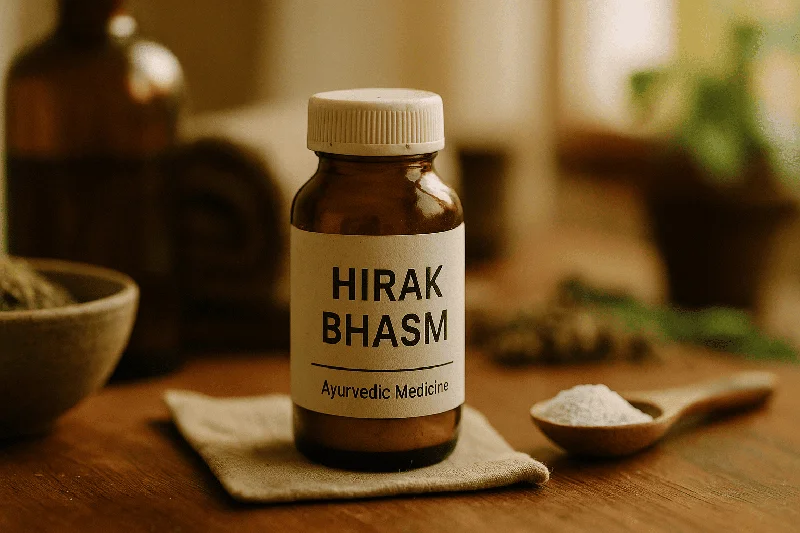
- Hirak Bhasma is a classical Ayurvedic mineral preparation made from purified diamond, processed into ultra-fine ash through rigorous calcination procedures. Known as one of the most potent and precious bhasmas in Rasashastra (Ayurvedic alchemy), it has been used for centuries to treat conditions ranging from severe debility and anemia to cancer and cardiac disorders.
- This guide covers everything — from its chemical composition and classical references to modern nanoparticle analysis, detailed dosage protocols, brand comparisons, and drug interactions — giving you the most comprehensive resource available on this remarkable formulation.
What Is Hirak Bhasma?
Hirak Bhasma (also spelled Heerak Bhasma) is a calcined preparation of diamond — one of the hardest naturally occurring substances on earth — transformed through ancient Ayurvedic pharmaceutical processes into a biologically active, nano-sized powder. The word "Hirak" comes from the Sanskrit "Heeraka" meaning diamond, and "Bhasma" means ash or calx.
- Unlike raw diamond, which is therapeuticaly inert and cannot be absorbed by the body, the bhasma form undergoes repeated cycles of purification (Shodhana) and calcination (Marana) that break down the crystalline carbon structure into nanoparticles.
- These particles — often measuring between 25 to 60 nanometers according to modern characterization studies — can interact with biological systems at the cellular level.
In Ayurvedic philosophy, Hirak Bhasma is classified as a Maharasa (great mineral drug) and is considered the king of all bhasmas due to its unparalleled potency. It is prescribed for life-threatening and chronic conditions where other medicines have failed.
Other Names and Synonyms
Hirak Bhasma is referenced across Ayurvedic literature and commercial products under several names:
| Name | Language/Context |
|---|---|
| Heerak Bhasma | Hindi/Commercial |
| Vajra Bhasma | Sanskrit (Vajra = thunderbolt/diamond) |
| Hira Bhasma | Hindi colloquial |
| Diamond Bhasma | English translation |
| Diamond Calx | English pharmaceutical |
| Hirak Bhasm | Alternate Hindi spelling |
| Vajra Abhra | Rare classical synonym |
Historical Background and Classical References
The use of diamond in medicine is documented in several foundational Ayurvedic texts, some dating back over 800 years:
- Rasaratna Samucchaya (13th century) — One of the earliest comprehensive texts on Rasashastra, it describes the types of diamonds suitable for medicinal use and outlines the Shodhana (purification) process.
- Rasa Tarangini by Sadananda Sharma — Provides detailed formulations and quality-testing criteria (Bhasma Pariksha) for diamond calx. Chapter 23 specifically addresses Vajra (diamond) processing.
- Rasendra Sara Sangraha — Contains specific shlokas on the therapeutic applications of Heerak Bhasma, particularly its use in Kshaya (wasting diseases) and Arbuda (tumors).
- Ayurveda Prakasha — Discusses the classification of diamonds by color and their respective medicinal properties.
These texts unanimously agree that improperly prepared diamond bhasma is dangerous, which is why classical authors laid down strict quality-control parameters.
Types of Diamond Used in Hirak Bhasma
Not all diamonds are considered equal in Ayurvedic pharmacology. Classical texts categorize diamonds into four types based on color, each with distinct therapeutic properties.
White Diamond (Shweta Vajra)
Considered the best quality for bhasma preparation. White diamonds are associated with Kapha-balancing properties and are traditionally preferred for cardiac and rejuvenative formulations. Most commercial Hirak Bhasma preparations use white diamond.
Red Diamond (Rakta Vajra)
Associated with Pitta-pacifying properties. Reddish diamonds are described in texts as particularly beneficial for blood disorders and inflammatory conditions. They are exceedingly rare and seldom used in modern commercial preparations.
Yellow Diamond (Peeta Vajra)
Linked to Vata-balancing effects. Yellow diamonds are mentioned for their utility in neurological and musculoskeletal conditions. Classical texts note their particular affinity for Majja Dhatu (bone marrow/nervous tissue).
Black Diamond (Krishna Vajra)
Classical references generally consider black diamonds inferior for medicinal purposes. Some texts explicitly advise against their use in bhasma preparation, noting they may produce adverse effects. However, a minority of practitioners have used them in specific Tridosha conditions.
Chemical Composition and Modern Analysis
Elemental Composition
Modern analytical chemistry has revealed that Hirak Bhasma is not simply carbon ash. The repeated processing with herbal juices and minerals introduces a complex elemental profile. A study published in the Journal of Ayurveda and Integrative Medicine (2015) identified the following elements in a properly prepared sample:
| Element | Presence |
|---|---|
| Carbon (C) | Major component |
| Iron (Fe) | Significant trace |
| Calcium (Ca) | Moderate |
| Potassium (K) | Moderate |
| Silicon (Si) | Trace |
| Magnesium (Mg) | Trace |
| Sodium (Na) | Trace |
| Phosphorus (P) | Trace |
| Sulfur (S) | Trace |
| Aluminium (Al) | Trace |
| Chromium (Cr) | Ultra-trace |
| Oxygen (O) | Bonded in oxides |
This mineral complexity is what gives Hirak Bhasma its broad-spectrum therapeutic activity — something a pure carbon preparation would not achieve.
Nanoparticle Characterization (XRD, SEM, TEM)
Modern analytical techniques have provided facinating insights into the structure of properly prepared Hirak Bhasma:
- X-Ray Diffraction (XRD) analysis shows that the crystalline diamond structure is largely destroyed during Marana, converting into amorphous or nanocrystalline carbon phases along with metallic oxide nanoparticles.
- Scanning Electron Microscopy (SEM) reveals particle sizes predominantly in the range of 25–60 nm, with irregular morphology — consistent with traditional descriptions of a properly prepared bhasma being "Sukshma" (extremely fine).
- Transmission Electron Microscopy (TEM) studies have demonstrated that the particles are often agglomerated but can be dispersed into individual nanoparticles in biological media.
A 2017 study using Energy Dispersive X-ray Spectroscopy (EDS) coupled with SEM confirmed that the herbal processing introduces iron, calcium, and silica into the final product — elements not present in raw diamond. This is critical because it means Hirak Bhasma functions as a multi-element nanomedicine, not just a carbon-based preparation.
This distinguishes traditional Ayurvedic diamond bhasma from modern synthetic nanodiamonds (produced via detonation or high-pressure synthesis), which are pure carbon nanoparticles lacking this mineral complexity. Synthetic nanodiamonds have different biological activity and should not be confused with classically prepared Hirak Bhasma.
Ayurvedic Pharmacology (Rasa Panchaka)
No competitor provides the complete Ayurvedic pharmacological profile of Hirak Bhasma.
Here it is, based on classical texts:
| Parameter | Description |
|---|---|
| Rasa (Taste) | Kashaya (Astringent), Madhura (Sweet) |
| Guna (Properties) | Laghu (Light), Snigdha (Unctuous) |
| Virya (Potency) | Sheeta (Cold) |
| Vipaka (Post-digestive effect) | Madhura (Sweet) |
| Dosha Karma | Tridoshahara — pacifies Vata, Pitta, and Kapha |
| Prabhava (Special action) | Rasayana (Rejuvenative), Balya (Strength-promoting) |
| Dhatu Affinity | Acts on all seven Dhatus, with particular affinity for Rasa, Rakta, and Majja |
| Srotas Affinity | Rasavaha, Raktavaha, Pranavaha, Manovaha |
The Tridoshahara property is particularly significant — most Ayurvedic medicines pacify one or two doshas, but Hirak Bhasma's ability to balance all three makes it suitable for complex, multi-system disorders.
What Are the Benefits of Hirak Bhasma?
Cardioprotective Properties (Hridya)
Hirak Bhasma is classified as "Hridya" (heart-friendly) in Ayurvedic texts. It strengthens cardiac muscles, improves circulation, and supports normal heart rhythm.
Practitioners prescribe it for:
- Chronic heart failure (as adjuvant therapy)
- Cardiac debility following prolonged illness
- Palpitations associated with anxiety
The calcium and potassium content identified in modern analysis may partly explain its cardiac benefits, as both minerals are essential for myocardial function.
Immunity Enhancement and Rejuvenation (Rasayana)
As one of the premier Rasayana drugs, Hirak Bhasma enhances Ojas (vital essence) and strengthens the body's natural defense mechanisms.
It is particularly valued in:
- Post-surgical recovery
- Chronic fatigue syndromes
- Age-related immunodeficiency
- Patients undergoing chemotherapy (as supportive therapy, under strict medical supervision)
Anti-Cancer and Anti-Metastatic Properties
Perhaps the most compelling modern research area. A 2019 in vitro study published in the International Journal of Pharmaceutical Sciences and Research demonstrated that Hirak Bhasma nanoparticles showed cytotoxic activity against certain cancer cell lines while sparing normal cells — a property known as selective toxicity.
Classical texts describe its use in "Arbuda" (tumors) and "Granthi" (abnormal growths). Modern Ayurvedic oncologists prescribe it in courses of 6–12 months for:
- Adjuvant support during cancer treatment
- Reducing tumor burden
- Preventing metastasis
Important disclaimer: Hirak Bhasma should never replace conventional cancer treatment. It is used as a complementary therapy under qualified supervision.
Treatment of Anemia (Pandu Roga)
The iron content in Hirak Bhasma contributes to its anti-anemic properties. It is prescribed for iron-deficiency anemia, particularly in patients who do not respond well to conventional iron supplements. The nanoparticle form allows for superior bioavailability compared to bulk iron preparations.
Cognitive Function (Medhya Properties)
Hirak Bhasma's affinity for Majja Dhatu (nervous tissue) and Manovaha Srotas (mental channels) makes it valuable for cognitive support.
It enhances:
- Memory and concentration
- Mental clarity during stress
- Neuroprotection in degenerative conditions
Anti-Inflammatory and Analgesic Effects
Clinical observations by Ayurvedic practioners suggest significant anti-inflammatory activity, useful in:
- Chronic joint inflammation
- Neuropathic pain
- Post-operative pain management
Sedative and Adaptogenic Properties
Hirak Bhasma regulates serotonin and other neurotransmitter pathways (as understood through modern pharmacological lens), providing:
- Relief from chronic anxiety and stress
- Improved sleep quality
- Adaptogenic support during periods of physical or mental overload
Tuberculosis and Respiratory Support
Classical texts specifically mention Hirak Bhasma for "Rajayakshma" (tuberculosis) and other wasting diseases of the lungs. It is used as adjuvant therapy to strengthen lung tissue and improve respiratory capacity. Both Rasaratna Samucchaya and Rasa Tarangini describe specific formulations combining Hirak Bhasma with Swarna Bhasma for pulmonary conditions.
Detoxification
Hirak Bhasma supports the body's natural detoxification pathways, helping to remove accumulated Ama (toxins) from deep tissues. This is particularly relevant in chronic diseases where toxin accumulation is a contributing factor.
Healthy Weight Maintenance
By optimizing Agni (digestive fire) and metabolic function, Hirak Bhasma helps in maintaining healthy body weight — beneficial for both underweight patients needing nourishment and overweight individuals with sluggish metabolism.
Don't wait or self medicate. Start chat with Doctor NOW
How Is Hirak Bhasma Prepared?
Shodhana (Purification Process)
Before calcination, raw diamond must undergo Shodhana to remove physical and chemical impurities.
The classical method involves:
Swedana (steaming) — The raw diamond is wrapped in cloth and subjected to Dola Yantra (a specialized steaming apparatus) with specific herbal liquids.
- The liquids used include Kulaththa Kwatha (horse gram decoction), Kanji (fermented rice water), Gomutra (cow urine), and Tila Taila (sesame oil).
- This process is repeated 3–7 times depending on the text followed.
- After purification, the diamond becomes brittle enough for grinding — a critical transformation since raw diamond is otherwise virtually impossible to process into fine powder.
Marana (Calcination) — The 14-Fold Process
The actual bhasma preparation involves:
- Purified diamond is ground into fine powder in a mortar.
- It is mixed with Ras Sindoor (purified mercury-sulfur compound) and Shuddha Gandhak (purified sulfur) in specific ratios.
- The mixture is levigated (ground with liquid media) using herbal juices — commonly Kumari Swarasa (aloe vera juice), Ardraka Swarasa (ginger juice), or Gulab Jal (rose water).
- Pellets are formed and dried.
- The pellets are placed in a Sharava Samputa (sealed clay crucible) and subjected to Gajaputa (a specific grade of heat using approximately 1 kg of cow dung cakes, reaching temperatures around 800–900°C).
- This process is repeated 14 times (Chaturdasha Puta). Each cycle further reduces particle size and removes potentially toxic elements.
The 14-fold calcination is what distinguishes Hirak Bhasma from lesser-prepared versions. Each Puta cycle progressively converts the material into finer nanoparticles.
Quality Tests (Bhasma Pariksha)
Classical quality-control tests determine whether the bhasma is properly prepared:
| Test | Method | Pass Criteria |
|---|---|---|
| Varitara | Sprinkle bhasma on water surface | Particles should float — indicating ultra-fine size |
| Rekhapurna | Rub between thumb and finger | Should fill finger lines — extremely fine texture |
| Apunarbhava | Attempt to re-convert to metallic form | Should not revert — complete conversion confirmed |
| Nischandratva | Examine under light | No metallic lustre — complete oxidation/conversion |
| Gata Rasatva | Taste test | Should be tasteless |
A bhasma that fails any of these tests is considered improperly prepared and potentially toxic. This is why purchasing from reputable manufacturers with proper quality certifications is non-negotiable.
Dosage and Method of Administration
General Dosage Guidelines
The standard therapeutic dose of Hirak Bhasma is 10–30 mg (approximately ⅛ to ¼ Ratti), taken once or twice daily with an appropriate Anupana (vehicle/carrier). Due to its extreme potency, even small variations in dosage can significantly affect outcomes.
This is not a self-medication drug. Always take it under the guidance of a qualifed Ayurvedic physician (BAMS/MD Ayurveda).
Anupana (Carriers) for Different Conditions
The choice of Anupana dramatically influences which tissues the bhasma targets:
| Condition | Recommended Anupana | Rationale |
|---|---|---|
| General rejuvenation | Ghee + Honey (unequal parts) | Balances all Dhatus |
| Heart conditions | Arjuna Ksheerapaka (Arjuna boiled in milk) | Directs action to Hridaya |
| Anemia | Honey + Loha Bhasma | Enhances iron assimilation |
| Respiratory disorders | Pippali Churna + Honey | Opens Pranavaha Srotas |
| Cancer (adjuvant) | Swarna Bhasma + Honey | Potentiates anti-tumor effect |
| Cognitive decline | Brahmi Ghrita | Targets Manovaha Srotas |
| Debility/weakness | Warm milk + Ghee | General nutritive vehicle |
| Tuberculosis | Vasaka Swarasa + Honey | Lung tissue affinity |
Duration of Treatment for Different Conditions
| Condition | Typical Duration | Notes |
|---|---|---|
| General debility | 1–3 months | Reassess monthly |
| Anemia | 2–4 months | Monitor hemoglobin levels |
| Cardiac conditions | 3–6 months | Alongside conventional treatment |
| Cancer (adjuvant) | 6–12 months | Requires close monitoring |
| Tuberculosis | 4–8 months | With anti-TB medication |
| Rejuvenation/Rasayana | 1–3 months annually | Seasonal course (often in winter) |
Safety, Side Effects, and Contraindications
Who Should Avoid Hirak Bhasma?
Detailed contraindications — a topic no competitor adequately addresses:
- Pregnant women — Absolutely contraindicated. The potent Tridoshahara action can disturb fetal development. No exceptions.
- Breastfeeding mothers — Avoid unless specifically prescribed by a highly experienced Vaidya, and even then, only in minimal doses.
- Children under 12 — Generally not recommended. Pediatric use requires extremely careful dosing by an experienced practitioner.
- Severe hepatic impairment — The liver processes mineral bhasmas; compromised liver function can lead to accumulation and toxicity.
- Severe renal disease — Impaired excretion increases risk of mineral accumulation.
- Known hypersensitivity to any component in the formulation.
Drug Interactions
This is a critical gap in existing literature.
Based on pharmacological principles and clinical observations:
- Anticoagulants (Warfarin, Heparin) — Hirak Bhasma may potentiate bleeding risk due to its Rakta Dhatu activity. Monitor INR closely.
- Immunosuppressants — Its immunostimulatory properties may counteract immunosuppressive drugs, problematic in organ transplant patients.
- Other Bhasmas — Generally compatible with complementary bhasmas (Swarna Bhasma, Mukta Bhasma), but total heavy mineral load must be considered.
- Chemotherapy drugs — May enhance or interfere with cytotoxic activity. Must be coordinated with the oncologist.
- Antihypertensives — Possible additive hypotensive effect; monitor blood pressure.
- Iron supplements — The iron content in Hirak Bhasma may contribute to iron overload if combined with high-dose iron supplementation.
Storage Guidelines
- Store in a cool, dry place below 30°C
- Keep away from direct sunlight
- Keep tightly sealed in the original container
- Shelf life: Properly prepared bhasma remains potent indefinitely according to classical texts, but commercially, a 5-year expiry is standard
Brand Comparison: Which Hirak Bhasma to Choose?
| Feature | Dhootapapeshwar | Divya (Patanjali) | Basic Ayurveda | Virgo |
|---|---|---|---|---|
| Pack Size | 100 mg | 100 mg | 100 mg | 100 mg |
| Approx. Price (₹) | ₹2,500–3,200 | ₹1,200–1,500 | ₹800–1,100 | ₹900–1,200 |
| Key Ingredients | Shuddha Heeraka, Ras Sindoor | Shuddha Heeraka, Gandhak | Shuddha Heeraka, Ras Sindoor, Gandhak | Shuddha Heeraka, Ras Sindoor |
| Quality Certifications | GMP, ISO, AYUSH | GMP, AYUSH | GMP | GMP |
| Number of Putas | As per classical text | Not specified | As per classical text | Not specified |
| Availability | Wide (1mg, Amazon, offline pharmacies) | Patanjali stores, online | Online primarily | Limited |
| Reputation | Premium, 150+ year legacy | Mass market, affordable | Budget-friendly | Niche |
Cost of a full treatment course: For a typical 3-month Rasayana course at 20 mg/day, you would need approximately 1.8 grams. At Dhootapapeshwar pricing, this translates to roughly ₹45,000–57,600. Patanjali brings it down to around ₹21,600–27,000 for the same duration. This makes Hirak Bhasma one of the most expensive Ayurvedic treatments — consistent with the precious nature of its primary ingredient.
Influence on the Three Doshas (Tridosha)
Hirak Bhasma's Tridoshahara nature makes it uniquely versatile:
- Vata — Its Snigdha (unctuous) Guna and Madhura Vipaka pacify Vata, reducing pain, anxiety, and degenerative processes.
- Pitta — The Sheeta Virya (cold potency) effectively controls Pitta, addressing inflammation, burning sensations, and bleeding disorders.
- Kapha — Despite its cold potency, the Laghu (light) Guna and Kashaya Rasa prevent Kapha aggravation, supporting metabolism and preventing congestion.
This triple action is considered the hallmark of a true Rasayana and is extreemly rare among Ayurvedic mineral preparations.
Frequently Asked Questions (FAQ)
How Much Does Hirak Bhasma 1 Gram Cost?
The price of 1 gram of Hirak Bhasma varies significantly by brand. Dhootapapeshwar (considered the gold standard) charges approximately ₹25,000–32,000 per gram. Patanjali's Divya brand costs around ₹12,000–15,000 per gram. Basic Ayurveda offers it at roughly ₹8,000–11,000 per gram. These prices reflect the cost of genuine diamond, the labor-intensive 14-fold calcination process, and quality control testing.
What Are the Ingredients in Heerak Bhasma?
The primary ingredient is Shuddha Heeraka (purified diamond). Processing agents include Ras Sindoor (purified mercury-sulfur compound), Shuddha Gandhak (purified sulfur), and various herbal media used for levigation — commonly Kumari Swarasa (aloe vera juice), Ardraka Swarasa (ginger juice), and Gulab Jal (rose water). The final product contains nanoparticles of carbon along with trace minerals including iron, calcium, potassium, magnesium, silicon, and others introduced during processing.
Can Hirak Bhasma Be Taken During Pregnancy or Breastfeeding?
No. Hirak Bhasma is strictly contraindicated during pregnancy. Its potent action on all seven Dhatus and Tridosha can potentially disturb fetal development. During breastfeeding, it should be avoided unless a highly experienced Ayurvedic physician specifically prescribes it in minimal doses for a serious condition — and even then, the infant must be monitored carefully.
How Is Hirak Bhasma Different from Modern Synthetic Nanodiamonds?
Synthetic nanodiamonds are pure carbon nanoparticles manufactured through detonation synthesis or high-pressure high-temperature (HPHT) methods. Hirak Bhasma, in contrast, is a multi-element nanomedicine containing carbon along with iron, calcium, sulfur, and other minerals introduced during classical processing. The biological activity, safety profile, and therapeutic applications are fundamentally different. They should not be considered interchangeable.
How Long Does Hirak Bhasma Take to Show Results?
Results vary by condition. For general debility and fatigue, improvements may be noticable within 2–4 weeks. For anemia, measurable changes in hemoglobin typically appear after 6–8 weeks. For cardiac and oncological applications, meaningful clinical improvement often requires 3–6 months of consistent use. Patience and adherence to the prescribed regimen are essential.
Is Hirak Bhasma the Same as Vajra Bhasma?
Yes. Vajra Bhasma and Hirak Bhasma are synonymous terms for the same preparation. "Vajra" is the Sanskrit name for diamond (literally meaning "thunderbolt"), while "Hirak/Heerak" comes from the Hindi/Prakrit linguistic tradition. Both terms refer to calcined diamond ash.
Conclusion
Hirak Bhasma represents the pinnacle of Ayurvedic mineral pharmacology — a sophisticated nanomedicine born from centuries of empirical knowledge. Its Tridoshahara nature, multi-element composition, and broad therapeutic range make it invaluable for conditions ranging from anemia and cardiac weakness to cancer support and cognitive decline.
- However, its potency demands respect. Self-medication is dangerous. The cost is substantial.
- And the quality of the preparation matters enormously — an improperly prepared bhasma can be toxic rather than therapeutic.
If you believe Hirak Bhasma may benefit your health condition, consult a qualified Ayurvedic physician (BAMS or MD in Ayurveda) who can assess your Prakriti, Vikriti, and overall health status before prescribing. Always purchase from reputable manufacturers with proper GMP and AYUSH certifications, and never compromise on quality for the sake of price. This article is for educational purposes only and does not replace professional medical advice. Always consult your healthcare provider before starting any new treatment.
Scientific Sources
- Diamond-Like Carbon Depositing on the Surface of Polylactide Membrane for Prevention of Adhesion Formation During Tendon Repair — Xiao Y et al., 2024, Nano-micro letters
- Obstructive Coronary Artery Disease Improved Prediction by the COME-CCT Pretest Probability Calculator With Cardiac CT — Wieske V et al., 2025, JACC. Advances
- Cancer treatment with nano-diamonds — Gupta C et al., 2017, Frontiers in bioscience (Scholar edition)
- Hybrid Model Design For Protein Function Prediction — Zhao S et al., 2024, Annual International Conference of the IEEE Engineering in Medicine and Biology Society. IEEE Engineering in Medicine and Biology Society. Annual International Conference
- Design and optimization of thin-film tungsten (W)-diamond target for multi-pixel X-ray sources — Tan Y et al., 2022, Medical physics
- A simple widely applicable hairy root transformation method for gene function studies in medicinal plants — Cao X et al., 2025, Acta pharmaceutica Sinica. B
- Primary Stability of Implants Inserted into Polyurethane Blocks: Micro-CT and Analysis In Vitro — Dura Haddad C et al., 2024, Bioengineering (Basel, Switzerland)
- Antioxidant and flavor properties of different apple cultivars grown in Korea — Kim K et al., 2025, Food chemistry: X
- Manikya Bhasma is a nanomedicine to affect cancer cell viability through induction of apoptosis — Jha S et al., 2021, Journal of Ayurveda and integrative medicine
- Optimization of the ultrasound-assisted extraction of flavonoids and the antioxidant activity of Ruby S apple peel using the response surface method — Park N et al., 2022, Food science and biotechnology
Questions from users
What types of diseases might be treated with Black Diamond (Krishna Vajra)?
Client_f70743
2 days ago
Black Diamond (Krishna Vajra) is generally considered inferior for medicinal purposes compared to other types of diamonds, particularly in Ayurveda. Typically, it is not recommended for treating diseases due to concerns about safety and efficacy. The concept of using diamonds in Ayurveda, such as Hirak Bhasma, involves complex processes and is more aligned with white diamonds. If considering Ayurvedic treatments that involve diamond preparation, consult a qualified Ayurvedic practitioner. For modern medical conditions, it's always advisable to see a licensed healthcare professional, especially if you are considering unconventional treatments like Black Diamond. Self-medication can be risky and should be avoided.
What scientific studies support the use of Hirak Bhasm in modern medicine?
Client_94aa36
7 days ago
As of my last update, there are no significant scientific studies specifically confirming the use of Hirak Bhasm in modern medicine. While some research explores similar carbon-based compounds for biomedical applications, Hirak Bhasm itself hasn't been supported by Western medical research. If considering its use, consult a healthcare professional, as it can carry risks. Ayurvedic texts often describe its use for vitality, but evidence remains largely anecdotal. Always watch for potential side effects and adverse reactions.
What are the historical uses of Hirak Bhasm in traditional medicine?
Client_6aad18
12 days ago
Hirak Bhasm, a traditional Ayurvedic preparation made from diamond ash, has been historically used for its therapeutic properties, especially in treating "Arbuda" (tumors) and "Granthi" (abnormal growths). It is believed to help in conditions related to abnormal cellular growth. However, its use should be approached with caution, particularly in children under 12 and breastfeeding mothers. The effects and safety of Hirak Bhasm are not well-documented in modern scientific studies, hence consulting with an experienced Ayurvedic practitioner is necessary before using it.
What conditions can reddish diamonds help improve in patients?
Client_97374d
17 days ago
Reddish diamonds, specifically when processed as "Hirak Bhasma" in Ayurvedic medicine, are traditionally cited for their potential benefits in addressing blood disorders and inflammatory conditions. However, there is no robust clinical evidence to support these claims definitively. The link between reddish diamonds and cancer treatment primarily involves nano-diamonds used in modern medical research, not traditional Ayurvedic practices. It typically takes 3–6 months to observe effects with consistent use, though this is based on anecdotal evidence rather than controlled studies. If you have a blood disorder or inflammatory condition, consult a healthcare professional for evidence-based treatments.
What are the potential side effects of Hirak Bhasm in adults?
Client_58a5c2
27 days ago
Hirak Bhasm, an Ayurvedic preparation made from diamonds, is used for its purported health benefits but may have potential side effects in adults, such as gastrointestinal issues, including nausea and abdominal discomfort. In some cases, minor toxicity symptoms could arise if not adequately processed. Effects vary based on individual health conditions and the quality of the product. It is crucial to consult a healthcare provider or a certified Ayurveda practitioner before using Hirak Bhasm to assess the safety, dosage, and potential interactions with other medications or conditions you may have.
What are the quality-control standards for preparing Hirak Bhasm?
Client_df15b7
37 days ago
Quality-control standards for preparing Hirak Bhasm are crucial due to its potency and potential risks if improperly made. Key standards focus on the purification and calcination processes, which convert raw diamond into a form that's safe for consumption. This includes multiple rigorous purification steps using herbs and specific heating techniques. The traditional texts emphasize that deviations can result in toxic products, thus strict adherence is necessary. Watch for trusted manufacturers who comply with these ayurvedic guidelines, and consult a healthcare professional before using Hirak Bhasm.
What are the long-term effects of using Hirak Bhasm for cancer support?
Client_65dede
46 days ago
The long-term effects of using Hirak Bhasm, also referred to as Heerak Bhasm or Vajra Bhasma, in cancer support are not well-documented through scientific studies, which makes it hard to definitively answer this question. While some practitioners suggest its use for up to 6–12 months as adjuvant support during cancer treatment, its efficacy and safety beyond that duration are not established. Patients considering Hirak Bhasm should primarily rely on conventional cancer treatments and consult healthcare professionals before beginning any alternative therapies. Watch out for potential allergic reactions or gastrointestinal issues and immediately seek medical advice if these occur.
How does Hirak Bhasma support respiratory health in patients?
Client_198582
56 days ago
Hirak Bhasma is an Ayurvedic preparation used to support respiratory health by potentially strengthening lung tissue and enhancing respiratory capacity. It is a multi-element nanomedicine containing carbon, iron, calcium, sulfur, and other minerals. While some users report benefits, scientific evidence on its efficacy and safety is limited. Improvements can vary, and users should monitor for any adverse effects. Due to its complex preparation, consult a healthcare provider to ensure its suitability for your specific respiratory condition and to discuss any potential risks or interactions with other treatments.
What is the significance of the 14-fold calcination process for Hirak Bhasm?
Client_0624e8
65 days ago
The 14-fold calcination process is crucial for Hirak Bhasma cuz it ensures the diamond is thoroughly processed, reducing particle size and removing toxins. This makes it safer and more effective, especially for long-term use in cardiac and oncological treatments. It enhances the Bhasma's tridoshahara nature, making it more potent and balanced for therapeutic use.
What is the role of Hirak Bhasm in treating neurological conditions?
Client_590006
75 days ago
Hirak Bhasm, being derived from diamonds, is believed in Ayurveda to help with neurological conditions due to its potent properties. It helps strengthen the body's tissues and enhance cellular functions, though it should be used with extreme caution. Always collaborate with a skilled practitioner to avoid potential risks, like toxicity, especially in cases of liver or kidney issues.
Related articles

Body Detox
How to Make Fennel Tea: Recipes, Benefits, and Ayurvedic Insights
Learn how to make fennel tea at home with simple recipes. Discover fennel tea benefits for digestion, periods, and overall wellness with Ayurvedic insights
10,922

Body Detox
Gandmool Meaning – Astrological Insights into Ganda Mool Nakshatras
Discover the meaning of Gandmool, an esteemed Ayurvedic herb known for its potent medicinal properties, detoxification benefits, and its role in enhancing overall wellness.
7,875

Body Detox
Virechana Treatment: A Deep Dive into the Ayurvedic Way to Cleanse
Virechana is one of the Panchakarma therapies — that’s the five core cleansing procedures in classical Ayurveda. It's not just "taking a laxative" and hoping for the best. It's a meticulously planned, guided, and customized process aimed at cleansing exce
6,459

Body Detox
Ayush Kwath Powder: How to Use It, Benefits, and Daily Dosage
Explore Ayush kwath powder uses. Learn the correct dosage, benefits, uses, and ingredients of Ayush kwath powder and how to prepare it at home for immunity
3,634

Body Detox
Powder Massage in Ayurveda: More Than Just a Skin Thing
So, let’s talk powder massage. Maybe you've seen a clip online — someone getting vigorously scrubbed with what looks like cinnamon dust. Or maybe your aunt's into Ayurveda and won’t stop talking about "Udvartana" (that’s the fancy Sanskrit name, by the wa
3,547

Body Detox
Vaidya Patankar Ayurvedic Kadha
Exploration of Vaidya Patankar Ayurvedic Kadha
3,584

Body Detox
Which Mudra Is Good for Sleep: Discover Ayurvedic Hand Gestures for Restful Nights
Explore the best mudra for sleep and anxiety, hand mudras for deep sleep, and yoga mudra to sleep fast. Practice nightly for relaxation and improved rest
12,028

Body Detox
Disadvantages of Drinking Lemon Water Daily: What Ayurveda Says
Discover the disadvantages of drinking lemon water daily. Learn its side effects on kidneys, digestion, and hormonal balance, especially for males and females
7,390

Body Detox
Why Vata Dosha Symptoms Can’t Be Ignored — And What Ayurveda Really Has to Say
Let’s start with something simple — ever feel like your mind is racing, your skin is dry no matter how much you moisturize, or your digestion just won’t cooperate? Yeah. That’s not just “life being hectic.” According to Ayurveda, you might be experiencing
3,187

Body Detox
Triphala Kwath Benefits, Dosage, Ingredients, Side Effects
Exploration of Triphala Kwath Benefits, Dosage, Ingredients, Side Effects
3,282
Related consultations on the topic
Legal
Additional Documents
© 2024 Ask Ayurveda. All rights reserved.