Ask Ayurvedic doctor a question and get a consultation online on the problem of your concern in a free or paid mode. More than 2,000 experienced doctors work and wait for your questions on our site and help users to solve their health problems every day.


Body DetoxEar, Nose, and Throat DisordersGeriatrics & RejuvenationImmunodeficiencyInfertility TreatmentNutritionOrthopedic DisordersPediatricsRespiratory DisordersSexually Transmitted Diseases (STDs)Surgery RecoveryUrological DisordersVascular DisordersDental DisordersEndocrinological DisordersGastrointestinal DisordersYoga TherapyGeneral MedicineAllergic DisordersCardio DisordersGynecology and ObstetricsCosmetologySkin and Hair DisordersEye DisordersInfectious DiseasesMental DisordersNeurological DisordersOncologyPanchakarmaSexual Health & DisordersSports Medicine
Published on 01/10/25
(Updated on 08/12/26)
4,202
Bonfit Capsule: Unlock Vitality & Wellness with Ayurvedic Power
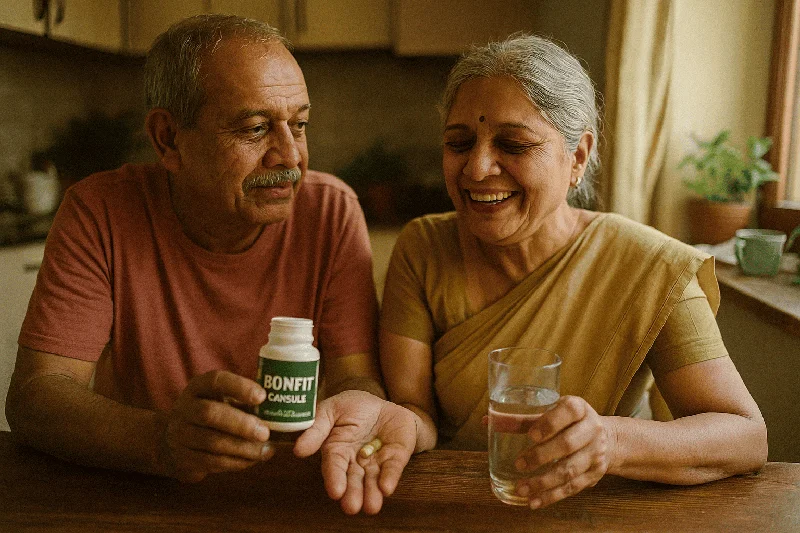
Bonfit Capsule is an Ayurvedic bone-health supplement manufactured by Ayulabs that combines natural calcium sources, Guggulu-based formulations, and time-tested herbs to support bone density, accelerate fracture healing, and manage conditions like osteoporosis and arthritis. If you're searching for a natural alternative to synthetic calcium tablets — or want to understand exactly what Bonfit contains, how it works, and whether it's right for you — this comprehensive guide covers everything you need to know, including details no other source has put together in one place.
What Is Bonfit Capsule?
- Bonfit Capsule is a proprietary Ayurvedic medicine designed specifically for musculoskeletal health. Each capsule is a carefully calibrated blend of classical Ayurvedic formulations (like Abha Guggulu, Laxadi Guggulu, and Kaishora Guggulu) combined with mineral Bhasmas and modern superfoods like Spirulina.
- The result is a supplement that doesn't just supply calcium — it actively promotes osteogenesis (new bone formation), reduces inflammation, and supports the body's natural healing processes.
Manufacturer & Brand Overview (Ayulabs)
Bonfit is manufactured by Ayulabs, an Ayurvedic pharmaceutical company that specializes in classical and proprietary formulations. The product is manufactured under GMP (Good Manufacturing Practice) guidelines and holds relevent Ayurvedic drug manufacturing licenses. Each batch is quality-tested for heavy metals, microbial contamination, and standardized active ingredient content.
Quick Product Facts:
| Detail | Information |
|---|---|
| Brand | Ayulabs |
| Type | Proprietary Ayurvedic Medicine |
| Form | Capsule |
| Pack Sizes | Blister of 10 capsules; Box of 30/60 capsules |
| MRP | Approximately ₹600 per box (30 capsules) / ~₹58 per blister of 10 |
| Shelf Life | 5 years from date of manufacture |
| Storage | Store in a cool, dry place away from direct sunlight |
| Certifications | AYUSH licensed, GMP certified |
Ayurvedic Significance & Philosophy Behind Bonfit
In Ayurveda, bone tissue is classified as Asthi Dhatu — one of the seven fundamental tissue layers of the body. According to classical texts like Charaka Samhita and Sushruta Samhita, bone disorders arise from Vata dosha imbalance, which leads to depletion of Asthi Dhatu. The treatment principle involves Asthi Dhatu Vardhana (bone tissue nourishment) combined with Vata Shamana (Vata pacification).
- Bonfit Capsule is formulated on this exact principle. The Guggulu-based compounds pacify aggravated Vata, while the Bhasmas (calcined mineral preparations) provide bioavailable calcium and micronutrients that directly nourish bone tissue.
- This holistic approach — addressing the root cause rather than just supplementing a single mineral — is what differentiates Ayurvedic bone care from conventional calcium tablets.
Key Ingredients of Bonfit Capsule (with Dosages)
Understanding what goes into each capsule is crucial for making an informed decision. Here's the complete composition with the role each ingredient plays.
| Ingredient | Quantity per Capsule | Primary Action |
|---|---|---|
| Abha Guggulu | 120 mg | Fracture healing, osteogenesis |
| Laxadi Guggulu | 60 mg | Calcium metabolism, bone strengthening |
| Madhumalini Vasantha | 50 mg | Rejuvenation, tissue nourishment |
| Kaishora Guggulu | 50 mg | Anti-inflammatory, anti-arthritic |
| Kukkutanda Twak Bhasma | 50 mg | Natural calcium source (eggshell) |
| Shankha Bhasma | 30 mg | Bioavailable calcium, antacid |
| Asthishrinkala (Cissus quadrangularis) | 20 mg | Fracture healing, bone cell proliferation |
| Arjuna (Terminalia arjuna) | 20 mg | Cardioprotective, mineral support |
| Spirulina | 20 mg | Micronutrient-dense superfood |
| Pushpadhanva Rasa | 10 mg | Rejuvenation, reproductive & bone health |
Abha Guggulu (120 mg) — The Primary Bone Healer
Abha Guggulu is a classical Ayurvedic formulation referenced in Bhaishajya Ratnavali. It is traditionally prescribed for fracture management and conditions involving bone wasting. The formulation contains Guggulu (Commiphora mukul) resin as the base, which has demonstrated anti-inflammatory and osteogenic properties. A study published in the Journal of Ayurveda and Integrative Medicine (2015) found that Guggulu-based formulations significantly accelerated callus formation in experimental fracture models.
At 120 mg — the highest single-ingredient dose in Bonfit — Abha Guggulu serves as the backbone of the formulation's bone-healing action.
Laxadi Guggulu (60 mg) & Kaishora Guggulu (50 mg)
Laxadi Guggulu focuses on calcium metabolism and bone strengthening. It contains Laksha (lac resin), Arjuna, Ashwagandha, and Nagabala — all of which support Asthi Dhatu formation. This makes it particularly valuable for osteoporosis where existing bone is being resorbed faster than new bone is formed.
- Kaishora Guggulu brings powerful anti-inflammatory and anti-arthritic properties to the formulation. It's a well-known compound for managing Vata-Rakta (gouty arthritis) and general joint inflammation.
- For patients dealing with both bone weakness and joint pain — a common combination in the elderly — this ingredient addresses the inflammatory component that Laxadi Guggulu doesn't specifically target.
Bhasmas: Kukkutanda Twak Bhasma (50 mg) & Shankha Bhasma (30 mg)
These two Bhasmas are the direct calcium sources in Bonfit:
- Kukkutanda Twak Bhasma is prepared from purified and calcined eggshell. A 2018 study in Ancient Science of Life demonstrated that Kukkutanda Twak Bhasma provides calcium in a highly bioavailable form — significantly better absorbed than plain calcium carbonate. It contains approximately 39% elemental calcium along with trace minerals like strontium, magnesium, and zinc that support bone matrix formation.
- - Shankha Bhasma (conch shell ash) provides additional calcium and also functions as a natural antacid, which helps with absorption of nutrients in the GI tract.
- This dual action — calcium supply plus improved digestive environment — makes it a smart inclusion.
Asthishrinkala / Cissus Quadrangularis (20 mg)
Possibly the most scientifically studied ingredient in this formulation. Cissus quadrangularis has been the subject of multiple clinical trials for bone healing. A randomized controlled trial published in Clinical Orthopaedics and Related Research (2009) showed that patients receiving Cissus extract experienced fracture healing times that were approximately 33% shorter compared to the control group. The herb promotes osteoblast proliferation and increases the tensile strenght of healing bone.
Arjuna, Spirulina & Madhumalini Vasantha
- Arjuna (Terminalia arjuna, 20 mg) — Primarily known for cardiac benefits, Arjuna also provides calcium, magnesium, and zinc, contributing to mineral support for bones.
- Spirulina (20 mg) — A nutrient-dense blue-green algae providing proteins, B-vitamins, iron, and antioxidants. It supports overall tissue nourishment and combats oxidative stress that accelerates bone loss.
- Madhumalini Vasantha (50 mg) — A classical Rasayana (rejuvenation) formulation that nourishes all seven Dhatus including Asthi. It containes processed pearl, gold, and herbal extracts.
Pushpadhanva Rasa (10 mg)
- A potent Rasa Shastra preparation used traditionally for rejuvenation and strengthening of tissues.
- Though present in a small dose, it serves as a Yogavahi — a bioenhancer that amplifies the efficacy of other ingredients in the formulation.
How Does Bonfit Capsule Work? (Mechanism of Action)
Bonfit doesn't work through a single mechanism. It operates on multiple physiological pathways simultaneously — which is why it's effective across a range of bone and joint conditions.
Three-Pronged Mechanism:
- 1.Direct Bone Nourishment: The Bhasmas and mineral-rich herbs supply bioavailable calcium, magnesium, zinc, and trace minerals that serve as raw materials for bone formation. Without adequate mineral supply, osteoblasts (bone-building cells) simply cannot construct new bone matrix, regardless of how many signals they receive.
- 2.Osteogenic Stimulation: Ingredients like Abha Guggulu and Cissus quadrangularis actively stimulate osteoblast activity. They promote callus formation at fracture sites and increase overall bone mineral density. Research suggests Guggulsterone (the active compound in Guggulu) may activate the BMP (Bone Morphogenetic Protein) signaling pathway.
- 3.Anti-inflammatory & Anti-Resorptive Action: Kaishora Guggulu and other anti-inflammatory components reduce the activity of osteoclasts — cells responsible for bone resorption. By dampening chronic inflammation, these ingredients slow down the bone loss that characterizes osteoporosis and inflammatory arthritis.
This multi-target approach is fundamentally different from simply taking a calcium tablet. You're not just adding building materials; you're also activating the builders and slowing down the demolition crew.
Uses and Benefits of Bonfit Capsule
Primary Indications
Bonfit Capsule is indicated for a wide range of musculoskeletal conditions:
- Osteoporosis — Increases bone mineral density and reduces fracture risk
- Osteomalacia — Addresses calcium and mineral deficiency at the tissue level
- Fracture Management — Accelerates callus formation and reduces healing time
- Glucocorticoid-Induced Osteoporosis — Counteracts bone loss caused by long-term steroid use
- Low Back Pain — Especially when related to degenerative bone/disc changes
- Rheumatoid Arthritis — Manages inflammation and prevents secondary bone loss
- Osteoarthritis — Supports joint and subchondral bone health
- Bone Tuberculosis — Adjuvant support in managing skeletal TB
How Does Bonfit Capsule Support Arthritis and Osteoporosis?
For osteoporosis, Bonfit works by simultaneously increasing calcium availability and stimulating osteoblast activity. This combination addresses both sides of the bone remodeling equation. Most synthetic calcium supplements only address the supply side — they give you calcium but don't enhance your body's ability to incorporate it into bone tissue.
For arthritis, the Guggulu compounds (especially Kaishora Guggulu) reduce inflammatory cytokines like TNF-α and IL-6 that damage joint cartilage and subchondral bone. This means less pain, less swelling, and slower disease progression. Patients with rheumatoid arthritis are at significantly higher risk of osteoporosis — both from the disease itself and from corticosteroid medications used to manage it. Bonfit addresses this dual challenge.
Benefits Beyond Bone Health
While primarily a bone supplement, Bonfit offers ancillary benefits:
- Improved calcium absorption due to Shankha Bhasma's antacid properties
- Antioxidant protection from Spirulina, which combats oxidative stress linked to accelerated aging
- General rejuvenation through Rasayana ingredients like Madhumalini Vasantha
- Better joint mobility — reduced inflammation translates to improved range of motion
Dosage: How to Take Bonfit Capsule
Standard Dosage Guidelines
| Condition | Recommended Dosage | Duration |
|---|---|---|
| Fracture healing | 2 capsules daily (morning & evening after meals) | Until fracture union + 4 weeks |
| Osteoporosis | 1-2 capsules daily after meals | Minimum 3 months, typically 6 months |
| Osteoarthritis / RA | 1-2 capsules daily after meals | 2-3 months, may repeat after a gap |
| Preventive / Maintenance | 1 capsule daily after meals | 2-3 months per cycle |
Important: Always take Bonfit Capsule after meals with lukewarm water or milk. Taking it on an empty stomach may cause mild gastric discomfort in some individuals.
How Long Does It Take for Bonfit Capsule to Show Benefits?
Most patients begin noticing improvements within 3-4 weeks of regular use — starting with reduced pain and stiffness. However, significant changes in bone density typically require 8-12 weeks of consistent use. For fracture healing, the acceleration in callus formation can sometimes be observed radiologically within 4-6 weeks.
- Don't expect overnight results.
- Bone is a slow-remodeling tissue, and any supplement — Ayurvedic or otherwise — needs time to produce measurable changes.
Can Bonfit Capsule Be Taken Daily?
Yes, Bonfit is designed for daily use during the prescribed course duration. Most practitioners recommend cycles of 2-3 months followed by a brief gap, especially for chronic conditions like osteoporosis. For acute conditions like fractures, continuous daily use until healing is complete is the standard approach.
Don't wait or self medicate. Start chat with Doctor NOW
Side Effects and Safety Profile
What Are the Most Common Side Effects of Bonfit Capsule?
Bonfit Capsule is generally well-tolerated when taken in recommended doses.
However, some individuals may experience:
- Mild gastric irritation — Particularly when taken on an empty stomach or in higher-than-recommended doses
- Occasional nausea — Usually resolves within the first week of use
- Rare: loose stools or constipation — Due to individual variation in response to mineral supplements
In cases of overdose, gastritis (stomach lining inflammation) has been reported. Sticking to the prescribed dosage is essential.
Contraindications — Who Should NOT Take Bonfit
This is an area that most sources completely overlook, but it's critically important:
| Contraindication | Reason |
|---|---|
| Pregnancy | Some Guggulu formulations and Rasa preparations may have uterotonic effects; safety not established |
| Lactation | Insufficient safety data; minerals and herbal actives may pass into breast milk |
| Hypercalcemia | Bonfit provides significant calcium; adding more to already-elevated calcium can cause kidney stones, cardiac arrhythmias |
| Severe Renal Impairment | Impaired kidneys cannot adequately excrete excess calcium and mineral metabolites |
| Children under 12 | Dosage and safety not established for pediatric population |
| Known allergy to any ingredient | Particularly relevant for eggshell-derived Kukkutanda Twak Bhasma in individuals with egg allergies |
Can Bonfit Capsule Interact With Other Medications?
Yes, potential interactions exist:
- Bisphosphonates (Alendronate, Risedronate): Concurrent use may cause excessive effects on calcium metabolism. Separate administration by at least 2 hours if both are prescribed.
- Cardiac Glycosides (Digoxin): Elevated calcium from Bonfit may increase Digoxin toxicity. Monitor closely.
- Thyroid Medications (Levothyroxine): Calcium can reduce absorption of thyroid hormones. Take at least 4 hours apart.
- Antibiotics (Tetracyclines, Fluoroquinolones): Calcium chelates with these antibiotics, reducing their effectiveness. Separate by 2-3 hours.
- Diuretics (Thiazides): Thiazide diuretics reduce calcium excretion; combined with Bonfit, this may cause hypercalcemia.
Always inform your doctor about Bonfit if you're on any prescription medication.
Bonfit Capsule vs. Other Calcium & Bone Supplements
- No other source provides this comparison, but it's one of the most common questions people actually have.
- Here's how Bonfit stacks up against popular alternatives:
| Feature | Bonfit Capsule | Synthetic Calcium Tablets (e.g., Shelcal) | Lakshadi Guggul (standalone) | Hadjod/Cissus Tablets |
|---|---|---|---|---|
| Type | Multi-ingredient Ayurvedic | Single mineral + Vitamin D | Classical Ayurvedic | Single-herb supplement |
| Calcium Source | Natural Bhasmas (eggshell + conch) | Calcium carbonate / citrate | Herbal (no direct calcium) | No direct calcium |
| Anti-inflammatory Action | Yes (multiple Guggulu compounds) | No | Mild | Mild |
| Osteogenic Stimulation | Yes (Abha Guggulu + Cissus) | No | Moderate | Yes |
| Fracture Healing | Strong evidence | Supportive only | Moderate | Good evidence |
| Arthritis Support | Yes | No | Limited | No |
| Bioenhancers Included | Yes (Pushpadhanva Rasa) | No | No | No |
| Approximate Cost | ₹600/month (2 caps/day) | ₹150-300/month | ₹200-400/month | ₹200-350/month |
The key difference: Synthetic calcium supplements provide a single nutrient. Bonfit provides the nutrient plus the biological signals that help your body actually use it. Think of it as the difference between delivering bricks to a construction site versus delivering bricks, hiring builders, and providing the blueprint.
That said, for simple calcium deficiency without bone pathology, a basic calcium + Vitamin D supplement may be sufficient and more cost-effective.
Diet & Lifestyle Tips to Maximize Bonfit's Effectiveness
Taking Bonfit alone is not enough. Your diet and lifestyle significantly influence how well the supplement works.
Foods That Enhance Bonfit's Action
- Sesame seeds (Til) — One of the richest plant sources of calcium; 1 tablespoon provides ~88 mg calcium
- Ragi (Finger Millet) — Exceptional calcium content (~344 mg per 100 g), traditionally used in South Indian diets
- Leafy greens — Moringa, amaranth, and fenugreek leaves are excellent mineral sources
- Dairy products — Milk, curd, and paneer provide complementary calcium and protein
- Fish with bones — Sardines and small fish eaten whole provide bioavailable calcium
What to Avoid
- Excessive caffeine — More than 3 cups of coffee daily increases urinary calcium excretion
- Carbonated soft drinks — Phosphoric acid in colas interferes with calcium absorption
- Excess salt — High sodium intake increases calcium loss through kidneys
- Alcohol — Chronic alcohol use directly inhibits osteoblast function
- Smoking — Reduces blood supply to bones and impairs healing
The Critical Role of Vitamin D
Bonfit does not contain Vitamin D, and this is worth noting. Without adequate Vitamin D, even the best calcium supplement wont be properly absorbed.
Ensure you get:
- 15-20 minutes of morning sunlight (before 10 AM) on exposed arms and face
- Dietary sources: Fatty fish, egg yolks, fortified milk
- Supplementation if needed: Get your Vitamin D levels tested; optimal range is 30-50 ng/mL
Exercise for Bone Health
- Weight-bearing and resistance exercises stimulate bone formation through mechanical loading.
- Combine Bonfit with:
- Walking (30 minutes daily)
- Squats and lunges (bodyweight or light weights)
- Stair climbing
- Yoga — particularly Virabhadrasana (Warrior Pose), Trikonasana (Triangle Pose), and Vrikshasana (Tree Pose) for balance and bone loading
Real-World Experiences: What Users Report
While formal clinical trials specifically on the Bonfit branded product are limited, practitioner experience and patient reports provide valuable real-world data:
Common feedback patterns:
- Fracture patients: Many orthopedic practitioners who integrate Ayurveda report that adding Bonfit to standard fracture management results in noticeably faster callus formation, with some patients showing radiological evidence of healing 2-3 weeks earlier than expected.
- Osteoporosis patients: Women in the post-menopausal age group (the highest-risk demographic) report improved mobility and reduced bone pain within 6-8 weeks. DEXA scan improvements have been documented after 6 months of consistent use in clinical practice settings.
- Arthritis patients: Reduction in morning stiffness and joint swelling is commonly reported by the third week, though this varies widely depending on disease severity and duration.
A note of honesty: Individual results vary significantly. Bonfit works best as part of a comprehensive bone health strategy — not as a standalone miracle cure. Patients with severe osteoporosis or complicated fractures need conventional medical management alongside any Ayurvedic supplement.
Frequently Asked Questions (FAQ)
Should I Consult a Doctor Before Starting Bonfit Capsule?
Absolutely yes. Even though Bonfit is an Ayurvedic product available without prescription, consulting a qualified Ayurvedic practitioner or orthopedic doctor is strongly recommended. This is especially important if you have pre-existing conditions like kidney disease, hypercalcemia, thyroid disorders, or if you're taking prescription medications. A doctor can also determine the right dosage for your specific condition.
Is Bonfit Capsule Safe for Elderly Individuals?
Yes, Bonfit is particularly suited for elderly individuals — in fact, this is its primary target demographic. The formulation was designed with age-related bone loss in mind. However, elderly patients often take multiple medications (for blood pressure, diabetes, heart conditions), so drug interactions need to be carefully evaluated. Start with 1 capsule daily and increase to 2 only if well tolerated and if advised by your physician.
What Are the Benefits of Ayurvedic Capsules Over Synthetic Supplements?
Ayurvedic formulations like Bonfit offer a multi-target approach — they don't just supply a single nutrient but address multiple aspects of bone health simultaneously. The inclusion of bioenhancers, anti-inflammatory agents, and osteogenic stimulators makes them fundamentally different from a simple calcium tablet. Additionally, the Bhasma-based calcium sources used in Ayurveda have been shown in studies to have superior bioavailability compared to synthetic calcium carbonate.
Can I Take Bonfit Capsule Along With Allopathic Calcium Tablets?
This is generally not recommended without medical supervision. Combining Bonfit (which already provides calcium through Bhasmas) with synthetic calcium tablets could lead to excessive calcium intake, potentially causing hypercalcemia, kidney stones, or cardiovascular issues. If you feel you need additional calcium beyond what Bonfit provides, discuss this with your doctor rather than self-supplementing.
How Should I Choose a Quality Bone Health Supplement?
When evaluating any bone supplement — Ayurvedic or otherwise — look for:
- GMP certification and valid manufacturing license
- Transparent ingredient listing with exact dosages (not proprietary blends that hide amounts)
- Standardized extracts where applicable
- Heavy metal testing certificates — especially important for Bhasma-containing products
- Clear expiry date and batch number on packaging
Is Bonfit Capsule Suitable for Vegetarians?
This requires careful consideration. Bonfit contains Kukkutanda Twak Bhasma (processed eggshell). While Bhasma preparation involves extensive purification and calcination that fundamentally alters the original material, strict vegetarians or vegans may have concerns. Additionally, the capsule shell itself may be gelatin-based. Check with the manufacturer or your practitioner if this is a concern for you.
Conclusion: Is Bonfit Capsule Right for You?
Bonfit Capsule offers a well-formulated, multi-target approach to bone health that goes beyond simple calcium supplementation. With its combination of Guggulu compounds for osteogenesis and anti-inflammatory action, Bhasmas for bioavailable mineral supply, and supporting herbs for overall tissue nourishment, it addresses bone health holistically — exactly as Ayurvedic principles intend.
Bonfit is most likely to benefit you if:
- You're dealing with osteoporosis, osteomalacia, or age-related bone loss
- You're recovering from a fracture and want to accelerate healing
- You have inflammatory joint conditions (RA, OA) with secondary bone involvement
- You prefer a natural, multi-ingredient approach over synthetic single-nutrient supplements
Bonfit may not be the best choice if:
- You only need basic calcium supplementation without bone pathology
- You're pregnant, breastfeeding, or have renal impairment
- You have known hypercalcemia or egg allergy
- Whatever you decide, don't rely on any single supplement for complete bone health. Combine it with adequate Vitamin D, weight-bearing exercise, a mineral-rich diet, and regular medical monitoring.
- Your bones are the framework of your entire body — they deserve a comprehensive strategy, not just a pill.
Consult a qualified Ayurvedic practitioner or orthopedic specialist before starting Bonfit Capsule, especially if you are on other medications or have pre-existing health conditions.
Scientific Sources
- Ayurveda-modern medicine interface: A critical appraisal of studies of Ayurvedic medicines to treat osteoarthritis and rheumatoid arthritis — Chopra A et al., 2010, Journal of Ayurveda and integrative medicine
- Post-operative Ayurvedic management of non-healing idiopathic granulomatous mastitis - A case report — Balakrishnan M et al., 2021, Journal of Ayurveda and integrative medicine
- The Role of Medicinal Plants in the Diabetic Wound Healing Process — Chaudhary R, 2023, Current diabetes reviews
- A complex, nonlinear dynamic systems perspective on Ayurveda and Ayurvedic research — Rioux J, 2012, Journal of alternative and complementary medicine (New York, N.Y.)
- A Comprehensive Analysis of Therapeutic Potential of Medicinal Plant Extracts to Treat Ethanol-Induced Gastric Ulcer — Paulraj RS et al., 2026, Biomedicines
- Unraveling the Mechanisms of Diabetic Wounds: Insights into Pathogenesis and Advanced Treatment Strategies — Mondal NS et al., 2026, Current diabetes reviews
- Why Ayurvedic Yoga Therapists and Why Now? — Rioux JG, 2015, International journal of yoga therapy
- Of relics, body parts and laser beams: the German Heilpraktiker and his Ayurvedic spa — Naraindas H, 2011, Anthropology & medicine
- Exploring the efficacy of panchavalkal extract and Zinc-Copper Bhasma in promoting wound healing in incision and excision wound models in the rat — Pathak PC et al., 2024, Journal of ethnopharmacology
- Biochemical analysis of methanolic extract from Evolvulus alsinoides — Nithya K et al., 2023, Bioinformation
- Management of postaxial polydactyly by "Ksharsutra": A minimally invasive Ayurvedic parasurgical procedure — Dwivedi AP, 2013, Journal of Ayurveda and integrative medicine
- Krimighna (anthelmintic) role of Neem Oil (medicated oil of Azadirachta indica Linn.) and adjuvant Ayurvedic therapies in the management of anal myiasis: A case report — Joshi FP, 2022, Journal of Ayurveda and integrative medicine
- Use of Ayurveda and Sri Lankan traditional medicine for healing shaft of humerus fracture following nonunion — Attanayake AMHS et al., 2018, Journal of Ayurveda and integrative medicine
- Unproven methods in cancer: a worldwide problem — Schraub S, 2000, Supportive care in cancer : official journal of the Multinational Association of Supportive Care in Cancer
- Ayurvedic Herbal Medicines: A Literature Review of Their Applications in Female Reproductive Health — Patibandla S et al., 2024, Cureus
- Effect of "Murcchana samskara" on therapeutic efficacy of BhallatakadiGhrita — Wayal SR et al., 2022, Journal of Ayurveda and integrative medicine
- Therapeutic significance and pharmacological activities of antidiarrheal medicinal plants mention in Ayurveda: A review — Mishra A et al., 2016, Journal of intercultural ethnopharmacology
- Reverse pharmacology approach to validate the diabetic wound-healing activity of Jatyadi thailam formulations in vitro on diabetic mimic environment — Swathi K et al., 2024, Archives of physiology and biochemistry
- Effective management of Colles fracture using Murivenna and Abha Guggulu - A case report — Alias Benny G et al., 2023, Journal of Ayurveda and integrative medicine
- Triphala incorporated collagen sponge--a smart biomaterial for infected dermal wound healing — Kumar MS et al., 2010, The Journal of surgical research
Questions from users
What are the potential side effects of taking Bonfit Capsule?
Client_bdfb2f
26 days ago
Bonfit Capsule may cause side effects such as gastrointestinal discomfort, nausea, or headache. People taking diuretics, particularly thiazides, should be cautious as these can lead to increased calcium levels, potentially causing hypercalcemia. If you experience symptoms like persistent nausea, confusion, or irregular heartbeat, contact a healthcare provider. Because the formulation includes Guggulu, known for anti-inflammatory properties, avoid mixing it with other similar supplements without consulting a doctor. It's crucial to inform your healthcare provider about all medications and supplements you are taking to prevent interactions.
How long does it take for Bonfit Capsule to show benefits?
Client_983301
35 days ago
Bonfit Capsules generally take about 4-6 weeks to show benefits in fracture healing, as the acceleration in callus formation can sometimes be observed radiologically in this time frame. Bone is a slow-remodeling tissue, so supplements, including Bonfit, require time to produce noticeable changes. The capsule contains Cissus quadrangularis, an ingredient traditionally used for bone health. It's important to take it daily during the prescribed course. If no benefits are observed after the typical timeline or if worsening symptoms occur, consult a healthcare professional.
What additional lifestyle practices can enhance the effectiveness of Bonfit Capsule?
Client_da6c00
45 days ago
To enhance the effectiveness of Bonfit Capsule, consider incorporating weight-bearing exercises like walking or strength training, as they stimulate bone growth and improve bone density. Ensure a diet rich in vitamin D and protein, which further supports bone health and aids the absorption of nutrients like calcium and magnesium found in the capsules. Smoking cessation and limiting alcohol intake can also prevent bone loss. Hydration supports overall health, enhancing nutrient distribution throughout the body. Monitor for gastrointestinal discomfort, and consult a healthcare provider if concerns arise or if you're managing a condition like osteoporosis.
How does Bonfit Capsule support digestive health while promoting bone strength?
Client_0b98b0
55 days ago
Bonfit Capsule supports digestive health while promoting bone strength primarily through its ingredient composition. It contains Shankha Bhasma, which supplies calcium and acts as a natural antacid, enhancing nutrient absorption in the gastrointestinal tract. This supports digestion while improving calcium availability for bone health. The capsule also includes ingredients like Cissus Quadrangularis and trace minerals that support bone matrix formation. Benefits often become noticeable within 3-4 weeks, with improvements in bone-related symptoms and digestion. If you experience persistent discomfort or have specific health conditions, it's wise to consult a healthcare professional.
What is the recommended dosage of Bonfit Capsule for optimal bone health?
Client_6b4080
64 days ago
The recommended dosage of Bonfit Capsule isn't firmly set, it typically depends on the individual's specific needs and constitution. Generally, 1-2 capsules per day is often suggested, but it's wise to consult with an Ayurvedic doctor for advice based on your prakriti, current dosha balance, and any other health concerns. Stay mindful of any interactions!
Is it safe for pregnant women to take Bonfit Capsule for bone health?
Client_33c8c7
74 days ago
It's always best for pregnant women to consult their doctor before taking any supplement, including Bonfit Capsules. The unique needs during pregnancy require professional guidance to ensure both your and the baby's health are not compromised. So, definitely check in with your doctor!
What is the role of Kaishora Guggulu in promoting bone healing with Bonfit Capsule?
Client_0da748
83 days ago
Kaishora Guggulu in combo with Bonfit Capsule can really support bone healing. It's anti-inflammatory, helps reduce swelling and pain, and can speed up callus formation. But remember, bones take time to heal, so patience is key! Make sure to follow your recommended dosage and keep in touch with your health practitioner.
Can Bonfit Capsule help manage inflammation from conditions other than arthritis?
Client_f3b9a4
96 days ago
Yes, Bonfit Capsules can potentially help with inflammation beyond just arthritis, as they contain herbs known for anti-inflammatory properties. Conditions like tendonitis or general muscle soreness might benefit too, but it's always a good idea to chat with a healthcare provider first to make sure it's suitable for your specific situation.
Can Bonfit Capsule enhance athletic performance or endurance in addition to bone health?
Client_d4dae2
105 days ago
While Bonfit Capsule is primarily focused on bone health and osteoporosis management, it contains Ashwagandha, which is known for enhancing endurance and improving cardiorespiratory function. So, it might help with athletic performance, but it's best to see it as a bonus effect rather than its main purpose. Always good to chat with an Ayurvedic practitioner for personal advice!
Can Bonfit Capsule weaken my immune system if taken long-term?
Client_720c09
115 days ago
Bonfit Capsule mainly supports bone health without significant evidence suggesting it'll weaken your immune system. But everyone's body is different, yo' know? If you're thinking long-term use, it might be good to chat with an Ayurvedic doc. They can check if it suits your prakriti and any other health considerations you got going on.
Related articles

Geriatrics & Rejuvenation
Amukkara Chooranam
Exploration of Amukkara Chooranam
3,978

Geriatrics & Rejuvenation
Jawahar Mohra Pishti Benefits, Dosage, Ingredients, Side Effects
Exploration of Jawahar Mohra Pishti Benefits, Dosage, Ingredients, Side Effects
2,974

Geriatrics & Rejuvenation
Ashtamurti Rasayan: An Ayurvedic Miracle for Rejuvenation and Vitality
Ashtamurti Rasayan is a traditional Ayurvedic preparation designed to promote longevity and vitality. Rooted in ancient texts, this formulation works by rejuvenating the body’s tissues, enhancing energy levels, and restoring balance to the mind and body.
3,617

Geriatrics & Rejuvenation
Patanjali Divya Shilajeet Rasayan Vati
Exploration of Patanjali Divya Shilajeet Rasayan Vati
10,165

Geriatrics & Rejuvenation
Ichhabhedi Ras Benefits Dosage Ingredients Side Effects
Exploration of Ichhabhedi Ras Benefits Dosage Ingredients Side Effects
2,317

Geriatrics & Rejuvenation
Makardhwaj Benefits, Dosage, Side Effects, Ingredients
Exploration of Makardhwaj Benefits, Dosage, Side Effects, Ingredients
5,135

Geriatrics & Rejuvenation
Bala Tel – Benefits, How To Use, Ingredients, Side Effects
Exploration of Bala Tel – Benefits, How To Use, Ingredients, Side Effects
2,476

Geriatrics & Rejuvenation
Laxmi Vilas Ras Nardiya Benefits, Dosage, Ingredients, Side Effects
Exploration of Laxmi Vilas Ras Nardiya Benefits, Dosage, Ingredients, Side Effects
4,649

Geriatrics & Rejuvenation
Dasamoola Rasayanam Benefits, Dose, Side Effects, Ingredients
Exploration of Dasamoola Rasayanam Benefits, Dose, Side Effects, Ingredients
2,454
Related consultations on the topic
Legal
Additional Documents
© 2024 Ask Ayurveda. All rights reserved.