Amrutadi Guggul Uses: Bridging Ayurvedic Tradition and Modern Science
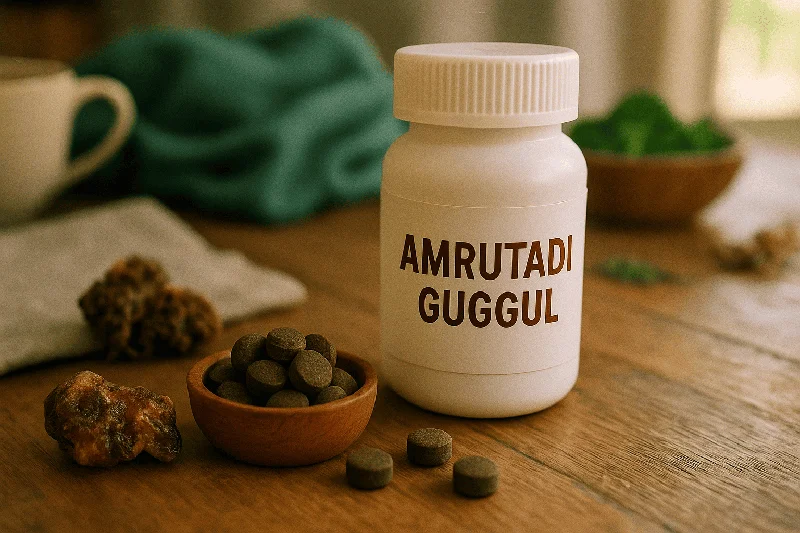
- Amrutadi Guggul is a classical Ayurvedic polyherbal formulation primarily used to manage gout (Vatarakta), inflammatory joint disorders, skin diseases, hemorrhoids, and metabolic conditions like obesity and high cholesterol.
- Built around two powerhouse herbs — Guduchi (Tinospora cordifolia) and purified Guggulu resin (Commiphora mukul) — this time-tested remedy balances all three doshas and delivers potent anti-inflammatory, detoxifying, and immunomodulatory benefits that modern pharmacology is only beginning to validate.
Whether you're dealing with stubborn joint pain, recurring skin flare-ups, or sluggish metabolism, this guide covers everything you need: complete ingredient analysis, evidence-based benefits, precise dosage protocols by condition, drug interactions, dietary guidelines, and honest answers to every common question.
What Is Amrutadi Guggul?
- Amrutadi Guggul (also spelled Amritadi Guggulu) is a traditional Ayurvedic tablet formulation classified under the Guggulu Kalpana category of medicines.
- The name itself reveals its identity: Amruta refers to Guduchi (Tinospora cordifolia), often called "the divine nectar" in Sanskrit for its rejuvenating properties, and Guggulu refers to the purified oleo-gum resin of Commiphora mukul, which serves as the binding and synergizing agent in the formulation.
Meaning of the Name and Core Philosophy
- In Ayurveda, Guduchi earned the name Amrita (nectar of immortality) because of its extraordinary ability to rejuvenate tissues, boost immunity, and detoxify the blood.
- When combined with Guggulu — a resin renowned for its ability to "scrape" toxins (Lekhana karma) from channels and tissues — the result is a formula designed to purify from the inside out. The synergy isn't random; it's intentional pharmacological design rooted in centuries of clinical observation.
Classical Ayurvedic References
The formulation appears in several authoritative Ayurvedic texts:
- Bhavaprakasha Nighantu — One of the earliest detailed references, describing its use in Vatarakta (gout) and Kushtha (skin diseases)
- Bhaishajya Ratnavali — Provides an expanded formulation variant with additional herbs for broader metabolic applications
- Yogaratnakara — Lists a slightly different proportion of ingredients, reflecting regional adaptations
- Kashyapa Samhita — References the formula in the context of pediatric and rejuvenative therapy
The original Sanskrit shloka from Bhavaprakasha describes the formula as Vatarakta-hara (destroyer of Vatarakta) and Medohara (reducer of excess fat tissue), establishing its dual role in inflammatory and metabolic disorders.
Regional Variations
Interestingly, the formulation isn't monolithic. Kerala traditions emphasize a kashayam (decoction) base preparation, Rajasthani practitioners often use a slightly higher Guggulu proportion, and Karnataka-based Ayurvedic pharmacies sometimes include additional Triphala in greater ratios. These regional adaptations explain why you might see minor ingredient differences across commercial brands.
Ingredients and Composition of Amrutadi Guggul
- The classical formulation (as per Bhavaprakasha) contains a carefully balanced set of herbs, each contributing specific therapeutic actions.
- Below is the comprehensive ingredient breakdown — something no single competitor resource has systematized this way.
Full Ingredient List with Properties
| Ingredient (Sanskrit) | Botanical Name | Part Used | Primary Action | Target Dosha |
|---|---|---|---|---|
| Amruta (Guduchi) | Tinospora cordifolia | Stem | Immunomodulation, anti-inflammatory, blood purifier | Tridosha (esp. Pitta-Vata) |
| Guggulu (Shuddha) | Commiphora mukul | Purified resin | Lekhana (scraping), anti-inflammatory, lipid-lowering | Vata-Kapha |
| Haritaki | Terminalia chebula | Fruit | Mild laxative, Rasayana (rejuvenative), digestive | Tridosha (esp. Vata) |
| Bibhitaki | Terminalia bellirica | Fruit | Mucolytic, anti-cholesterol, Kapha-reducing | Kapha |
| Amalaki | Emblica officinalis | Fruit | Antioxidant, Pitta-pacifying, vitamin C source | Pitta |
| Haridra (Turmeric) | Curcuma longa | Rhizome | Anti-inflammatory, antimicrobial, skin health | Kapha-Pitta |
| Daruharidra | Berberis aristata | Stem/root | Hepatoprotective, antimicrobial, anti-diabetic | Pitta-Kapha |
| Danti | Baliospermum montanum | Root | Purgative, anti-obesity, Kapha-reducing | Kapha-Pitta |
| Trivrit | Operculina turpethum | Root | Virechana (purgation), blood purifier | Pitta-Kapha |
| Pippali | Piper longum | Fruit | Bio-enhancer, digestive, Kapha-Vata balancing | Vata-Kapha |
Role of Key Ingredients: The "Big Three"
Guduchi (Tinospora cordifolia) — The lead herb. Contains polysaccharides (arabinogalactan), alkaloids (berberine, palmatine), and diterpenoid lactones (tinosporide). These compounds activate macrophages, modulate NF-κB inflammatory pathways, and enhance both innate and adaptive immunity. A 2015 study in the Journal of Ethnopharmacology demonstrated that Guduchi extract significantly reduced inflammatory markers (TNF-α, IL-6) in animal models. Shuddha Guggulu (Commiphora mukul) — The binding matrix and therapeutic multiplier. Its active compounds, guggulsterones (Z and E isomers), work as farnesoid X receptor antagonists — blocking pathways that increase cholesterol synthesis and promote inflammation. A landmark study published in Science (2002) identified guggulsterones as a novel class of hypolipidemic agents, though subsequent human trials have shown mixed results depending on preparation quality.
- Triphala (Haritaki + Bibhitaki + Amalaki) — The detoxification engine. This classic trio promotes gentle bowel cleansing, delivers powerful antioxidants (gallic acid, ellagic acid, chebulic acid), and supports hepatic detoxification pathways.
- Triphala's role here isn't just digestive — it enhances bioavailability of other herbs in the formulation.
Formulation Variants: Bhavaprakasha vs. Yogaratnakara
The Bhavaprakasha version emphasizes equal parts of Triphala with Guduchi, while the Yogaratnakara variant increases the proportion of Haridra and Daruharidra, making it slightly more targeted toward skin conditions and hepatobiliary disorders. If your primary concern is skin disease, look for formulations that follow the Yogaratnakara tradition.
Active Compounds and How Amrutadi Guggul Works
Understanding the mechanism isn't just academic — it helps you set realistic expectations about when and how this formulation will help.
Guggulsterones and Anti-Inflammatory Pathways
Guggulsterones inhibit the NF-κB signaling pathway, which is the master switch for inflammatory gene expression. They also modulate COX-2 enzyme activity (similar in principle to how ibuprofen works, but through a different mechanism). Research published in the Indian Journal of Pharmacology (2018) showed that guggulsterone Z reduced paw edema in rats by 47% at therapeutic doses — comparable to standard anti-inflammatory drugs.
Guduchi Polysaccharides and Immunomodulation
- The arabinogalactan polysaccharides in Guduchi don't suppress the immune system like conventional immunosuppressants.
- Instead, they modulate it — upregulating when immunity is low and calming overactive immune responses (relevant in autoimmune-driven conditions like rheumatoid arthritis and psoriasis). This dual action is what makes Amrutadi Guggul particularly valuable for conditions where inflammation and immune dysfunction coexist.
Ayurvedic Pharmacology (Dravyaguna)
| Property | Description |
|---|---|
| Rasa (Taste) | Tikta (Bitter), Kashaya (Astringent), Katu (Pungent) |
| Virya (Potency) | Ushna (Hot) |
| Vipaka (Post-digestive effect) | Katu (Pungent) |
| Prabhava (Special action) | Vatarakta-hara (specific to gout), Medohara (fat-scraping) |
| Dosha Karma | Tridosha-shamaka (balances all three doshas, primarily Vata and Kapha) |
Therapeutic Benefits and Indications: What Is Amrutadi Guggul Used For?
This is where the formulation truly shines. Let's go beyond generic lists and examine condition-specific protocols.
Joint Health: Gout, Osteoarthritis, and Rheumatoid Arthritis
The primary classical indication is Vatarakta — essentially gouty arthritis caused by the combination of disturbed Vata and vitiated Rakta (blood). The guggulsterones reduce joint inflammation while Guduchi helps clear uric acid from the blood through its diuretic and hepatoprotective actions. Triphala supports renal excretion of metabolic waste.
- Clinical case insight: Practitioners report that patients with acute gouty flares typically begin noticing pain reduction within 7–10 days, with significant improvement by 4–6 weeks of consistent use.
- For chronic osteoarthritis, expect a more gradual response — usually 8–12 weeks before substantial joint stiffness reduction.
Protocol for Gout vs. Rheumatoid Arthritis
- For gout: Amrutadi Guggul is taken with Guduchi kashayam (Guduchi decoction) as anupana, amplifying the uric acid-clearing effect.
- For rheumatoid arthritis: the anupana shifts to warm castor oil or Dashamoola kashayam to target deeper-seated Vata pathology.
Skin Disorders: Psoriasis, Eczema, and Chronic Acne
The combination of blood purification (Guduchi + Triphala), anti-microbial action (Haridra + Daruharidra), and tissue detoxification (Guggulu's Lekhana karma) makes this formulation effective for chronic, recurrent skin conditions — the ones that keep coming back because the root cause is internal.
Berberine from Daruharidra specifically targets Staphylococcus aureus and Propionibacterium acnes, two bacteria commonly involved in infected eczema and cystic acne respectively.
Metabolic Support: Obesity, Cholesterol, and Diabetes
Guggulsterones have been studied extensively for their lipid-lowering properties. A clinical study involving 61 patients (Journal of the Association of Physicians of India, 1989) found that guggulu supplementation reduced total serum cholesterol by 11.7% and triglycerides by 16.8% over 24 weeks.
- For obesity, the Lekhana (scraping) property of Guggulu combines with the mild purgative action of Danti and Trivrit to reduce Meda dhatu (fat tissue) accumulation.
- It's not a rapid weight-loss pill — think of it as a metabolic recalibrator that works over 2–3 months.
Hemorrhoids and Fistula
Amrutadi Guggul addresses hemorrhoids (Arsha) through multiple mechanisms: reducing venous congestion, improving bowel regularity (via Triphala), and reducing localized inflammation. The Kashaya (astringent) rasa of several ingredients helps tone the rectal vasculature.
Nasal Polyps, Respiratory Health, and Wound Healing
Less commonly discussed but clinically relevant — the formulation's anti-Kapha properties help reduce mucosal overgrowth (relevant in nasal polyps), while its Lekhana and blood-purifying actions support wound healing and vascular health.
Dosage and Administration: How to Take Amrutadi Guggul
Standard Dosage Guidelines
| Patient Group | Dose | Frequency | Duration |
|---|---|---|---|
| Adults (general) | 2 tablets (500 mg each) | Twice daily, after meals | 1–3 months |
| Acute gout flare | 2 tablets (500 mg each) | Three times daily | 2–4 weeks, then taper |
| Chronic joint conditions | 2 tablets (500 mg each) | Twice daily | 3–6 months |
| Obesity/metabolic support | 1–2 tablets | Twice daily | 3–6 months |
| Elderly patients (65+) | 1 tablet | Twice daily | As directed by physician |
| Children (above 12) | 1 tablet | Once or twice daily | Only under supervision |
The classical dose unit "Karsha" (approximately 12 grams) refers to the powdered form. Modern tablet dosing is adjusted for standardized extracts.
Anupana (Co-Drink) by Condition
The anupana dramatically influences where the medicine directs its action. This is a critical nuance most online resources completely miss.
| Condition | Recommended Anupana | Rationale |
|---|---|---|
| Gout (Vatarakta) | Guduchi Kashayam or warm water | Enhances blood purification and uric acid clearance |
| Skin diseases | Manjishtha Kashayam or Neem decoction | Amplifies Rakta Shodhana (blood purification) |
| Obesity | Warm honey water or Triphala Kashayam | Enhances Lekhana (scraping) and fat metabolism |
| Hemorrhoids | Buttermilk (Takra) | Improves digestion, reduces Pitta in GI tract |
| Arthritis (RA/OA) | Dashamoola Kashayam or castor oil | Targets deep-seated Vata in joints |
| General detox | Plain warm water | Supports overall Agni (digestive fire) |
When to Expect Results — Realistic Timeline
This is something nobody talks about honestly enough. Amrutadi Guggul is not a quick-fix.
Here's what clinical practice consistently shows:
- Week 1–2: Subtle improvements in digestion, possible mild increase in bowel frequency (normal)
- Week 3–4: Noticeable reduction in joint swelling or skin itchiness in responsive patients
- Week 6–8: Measurable reduction in inflammatory markers (if being monitored) and visible skin clearing
- Month 3–6: Full metabolic benefits (cholesterol, weight, uric acid levels) typically manifest
The medicine has a cumulative effect. Stopping prematurely at 2–3 weeks because "nothing's happening" is the most common mistake.
Amrutadi Guggul vs Similar Formulations: Which One Do You Need?
This is probably the most requested comparison that no resource has done comprehensively.
| Feature | Amrutadi Guggulu | Kaishore Guggulu | Yogaraj Guggulu | Triphala Guggulu |
|---|---|---|---|---|
| Primary indication | Gout, skin diseases, obesity | Gout, chronic skin diseases, blood disorders | Musculoskeletal pain, Vata disorders | Obesity, cholesterol, mild joint pain |
| Lead herb | Guduchi | Guduchi + Triphala (higher proportion) | Chitraka + Pippali | Triphala |
| Dosha focus | Tridosha (Vata-Kapha primary) | Pitta-Vata | Vata (primary) | Kapha-Vata |
| Purgative herbs included? | Yes (Danti, Trivrit) | Yes (Trivrit) | No | No |
| Best for obesity? | Yes — strong Lekhana action | Moderate | No — more pain-focused | Yes — moderate Lekhana |
| Best for chronic RA? | Good | Better for Pitta-type RA | Best for Vata-type pain | Mild support only |
| Strength of detox action | High (due to Danti + Trivrit) | Moderate-High | Low | Moderate |
Quick decision guide: If your primary issue is gout with obesity, go with Amrutadi Guggul. If it's inflammatory arthritis with significant Pitta symptoms (burning, redness), Kaishore Guggulu is your better pick. For pure Vata-type pain without metabolic concerns, choose Yogaraj Guggulu.

Side Effects, Contraindications, and Drug Interactions
Known Side Effects
Amrutadi Guggul is generally well-tolerated when taken in recommended doses.
Possible side effects include:
- Loose stools or mild diarrhea — due to Danti and Trivrit (purgative herbs). Usually self-limiting within 2–3 days
- Gastric irritation — uncommon, but can occur if taken on an empty stomach
- Skin rash — rare hypersensitivity reaction, discontinue if it occurs
- Headache or dizziness — very rare, typically related to excessive dosing
Contraindications
- Pregnancy and breastfeeding — Guggulu and purgative herbs (Danti, Trivrit) are contraindicated
- Severe diarrhea or IBS-D — the purgative components will worsen symptoms
- Extreme emaciation (Karshya) — Lekhana medicines should not be used in already depleted patients
- Children under 12 — unless specifically prescribed by a qualified practitioner
Drug Interactions — A Gap Nobody Addresses
This is critically important and conspicuously absent from virtually every online resource:
| Modern Drug | Interaction Type | Risk Level | Recommendation |
|---|---|---|---|
| Warfarin / Anticoagulants | Guduchi and Guggulu may potentiate blood-thinning effects | Moderate-High | Avoid concurrent use or monitor INR closely |
| Metformin / Anti-diabetics | Additive blood sugar lowering | Moderate | Monitor glucose; may require dose adjustment |
| Statins (Atorvastatin, etc.) | Guggulsterones affect similar lipid pathways | Low-Moderate | Generally safe, but inform your doctor |
| Thyroid medications (Levothyroxine) | Guggulu may stimulate thyroid function | Moderate | Monitor TSH levels regularly |
| Immunosuppressants (Cyclosporine, etc.) | Guduchi's immunomodulatory action may counteract | Moderate | Use only under dual medical supervision |
| Anti-hypertensives | Mild additive hypotensive effect possible | Low | Monitor blood pressure |
Always inform your Ayurvedic practitioner about any allopathic medications you're taking. This isn't optional.
Dietary Recommendations During Amrutadi Guggul Intake (Pathya-Apathya)
This is traditional Ayurvedic protocol that dramatically affects treatment outcomes, yet no competitor covers it in detail.
Foods to Favor (Pathya)
- Old rice (Purana Shali), barley, green gram (moong dal) — light, easy to digest
- Bitter vegetables: bitter gourd, drumstick, fenugreek leaves — support the medicine's Tikta rasa
- Warm, freshly cooked meals — maintain Agni
- Buttermilk — excellent for digestive support, especially if taking the medicine for hemorrhoids
- Adequate hydration — 8–10 glasses of warm water daily
Foods to Avoid (Apathya)
- Sour, fermented, and excessively salty foods — aggravate Vatarakta and Pitta
- Curd (yogurt) at night — clogs Srotas (channels), counterproductive to the medicine's channel-clearing action
- Red meat, alcohol, excessive sugar — directly oppose the detoxification process
- Incompatible food combinations (Viruddha Ahara) — milk with fish, milk with sour fruits
- Cold, stale, or reheated food — diminishes Agni
Seasonal Considerations
The medicine works optimally during Sharad Ritu (autumn) and Vasanta Ritu (spring) — seasons when Pitta and Kapha naturally tend toward aggravation. During peak summer (Greeshma Ritu), the Ushna Virya of Guggulu may feel too heating for pure Pitta constitutions. In such cases, dose reduction or temporary pause may be advisable.
Impact on Liver and Kidneys During Long-Term Use
- A genuine concern that deserves a direct answer. Studies on Guggulu preparations used for 24+ weeks have not shown significant hepatotoxicity or nephrotoxicity at standard doses.
- Guduchi itself is actually hepatoprotective — a 2017 study in BMC Complementary and Alternative Medicine found that Tinospora cordifolia extract protected against paracetamol-induced liver damage in animal models.
- However, because the formulation contains Danti (a strong purgative herb), prolonged use beyond 6 months without a break is not recommended.
- The standard Ayurvedic protocol suggests cycles: 3 months on, 2–4 weeks off, then reassess.
For patients with pre-existing liver or kidney disease, regular monitoring of liver function tests (LFT) and kidney function tests (KFT) every 8–12 weeks is a sensible precaution.
Special Populations
For Elderly Patients (65+)
Reduced dose (1 tablet twice daily) is advisable due to naturally diminished Agni. The purgative components require caution as elderly patients are more susceptible to dehydration from loose stools.
For Athletes and Active Individuals
Amrutadi Guggul can be beneficial for exercise-induced joint inflammation and post-workout recovery. The anti-inflammatory and tissue-rejuvenating properties support faster recovery. Take it post-meal to avoid any gastric discomfort during training.
For People with Chronic Conditions
Patients with diabetes, thyroid disorders, or autoimmune diseases should only use this formulation under qualified Ayurvedic supervision, given the potential drug interactions outlined above.
Frequently Asked Questions (FAQ)
Can I take Amrutadi Guggul during pregnancy?
- No.
- The formulation contains Guggulu, Danti, and Trivrit — all of which have uterine-stimulating or strong purgative properties that pose risks during pregnancy. It should also be avoided during breastfeeding unless explicitly prescribed by a qualified Ayurvedic physician.
Can I take Amrutadi Guggul on an empty stomach?
It's generally recommended to take it after meals to minimize the chance of gastric irritation. Some practitioners advise taking it 30 minutes before meals for enhanced absorption in obesity treatment, but only if the patient doesn't have a sensitive stomach.
Is it safe to take with alcohol?
No. Alcohol aggravates Pitta and Rakta (blood), directly counteracting the medicine's blood-purifying action. It also puts additional strain on the liver, reducing the medicine's efficacy and potentially increasing side effect risk.
Does Amrutadi Guggul help with high blood pressure?
- It's not a primary indication.
- However, some indirect benefits are possible — by reducing cholesterol, improving vascular health, and reducing systemic inflammation. It should not replace prescribed antihypertensive medication.
What is the difference between Amrutadi Guggul and Kaishore Guggulu?
Both share Guduchi and Guggulu as key ingredients, but Amrutadi Guggul contains stronger purgative herbs (Danti, Trivrit) making it more potent for detoxification and obesity. Kaishore Guggulu has a broader range of anti-Pitta herbs and is often preferred for chronic inflammatory conditions with more burning-type symptoms. See the detailed comparison table above.
How is Amrutadi Guggul different from Amrutharishtam?
Amrutharishtam is a liquid fermented preparation (Arishta) primarily used for fever, infection, and immune support. Amrutadi Guggul is a tablet formulation with a completely different therapeutic scope — joint disorders, skin diseases, and metabolic conditions. They share Guduchi as a common ingredient but are used for different purposes.
What is the price range for Amrutadi Guggul?
Prices vary by brand and quantity. Generally, a bottle of 60–100 tablets from reputable manufacturers like Dhootapapeshwar, Baidyanath, or Kottakkal ranges from ₹120 to ₹350. The shelf life is typically 3–5 years from manufacture for tablet forms when stored properly.
Can Amrutadi Guggul be taken long-term?
For most conditions, treatment courses of 3–6 months are standard. Long-term use beyond 6 months should follow a cyclical pattern (3 months on, 2–4 weeks off) and be supervised by a qualified practitioner. Regular liver and kidney function monitoring is advisable for extended use.
Conclusion: Is Amrutadi Guggul Right for You?
- Amrutadi Guggul represents one of Ayurveda's most intelligently designed polyherbal formulations — targeting inflammation, metabolic waste, immune dysfunction, and tissue toxicity simultaneously through complementary mechanisms that modern pharmacology is increasingly validating. It's not a miracle pill, and it's not for everyone.
- But for the right conditions — gout, chronic skin diseases, obesity-related metabolic dysfunction, and hemorrhoids — it offers a well-substantiated therapeutic option with centuries of clinical use and growing scientific support.
The key to success with this formulation: correct diagnosis of your condition and dosha imbalance, appropriate anupana selection, strict adherence to pathya-apathya dietary guidelines, and realistic patience with the timeline. Ayurveda works, but it works on its own terms.
- Consult a qualified Ayurvedic practitioner (BAMS or MD Ayurveda) before starting Amrutadi Guggul, especially if you are taking any modern medications.
- Self-prescription based on internet research alone — including this article — is not a substitute for personalized clinical assessment.
Scientific Sources
- A Standardized Boswellia serrata Extract Improves Knee Joint Function and Cartilage Morphology in Human Volunteers with Mild to Moderate Osteoarthritis in a Randomized Placebo-Controlled Study — Kumar B et al., 2025, Journal of the American Nutrition Association
- Guggulipid: A Promising Multi-Purpose Herbal Medicinal Agent — Ahmad MA et al., 2020, Drug research
- Guggulsterone for Chemoprevention of Cancer — Shishodia S et al., 2016, Current pharmaceutical design
- The guggul for chronic diseases: ancient medicine, modern targets — Shishodia S et al., 2008, Anticancer research
- Medicinal plants with traditional use: Ethnobotany in the Indian subcontinent — Rupani R et al., 2018, Clinics in dermatology
Ask Ayurvedic doctor a question and get a consultation online on the problem of your concern in a free or paid mode.
More than 2,000 experienced doctors work and wait for your questions on our site and help users to solve their health problems every day.
Related articles