Ask Ayurvedic doctor a question and get a consultation online on the problem of your concern in a free or paid mode. More than 2,000 experienced doctors work and wait for your questions on our site and help users to solve their health problems every day.


Body DetoxEar, Nose, and Throat DisordersGeriatrics & RejuvenationImmunodeficiencyInfertility TreatmentNutritionOrthopedic DisordersPediatricsRespiratory DisordersSexually Transmitted Diseases (STDs)Surgery RecoveryUrological DisordersVascular DisordersDental DisordersEndocrinological DisordersGastrointestinal DisordersYoga TherapyGeneral MedicineAllergic DisordersCardio DisordersGynecology and ObstetricsCosmetologySkin and Hair DisordersEye DisordersInfectious DiseasesMental DisordersNeurological DisordersOncologyPanchakarmaSexual Health & DisordersSports Medicine
Published on 12/19/24
(Updated on 08/09/26)
4,447
Swarna Sutshekhar Ras: Benefits, Dosage & Ayurvedic Insights
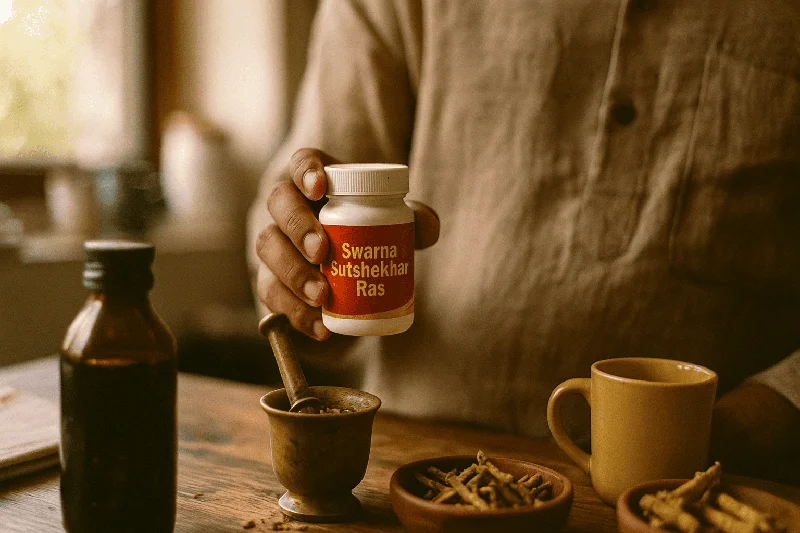
Swarna Sutshekhar Ras is a classical Ayurvedic herbomineral formulation containing Swarna Bhasma (gold calx) along with purified mercury, sulphur, and a synergistic blend of herbs — primarily used to treat hyperacidity, chronic gastritis, migraine, nausea, and irritable bowel syndrome (IBS). Unlike the regular Sutshekhar Ras (without gold), the Swarna variant delivers enhanced bioavailability and faster therapeutic action due to the catalytic properties of gold, making it one of the most respected preparations in Rasa Shastra, the Ayurvedic science of mineral-based medicines.
If you've been searching for a reliable, time-tested remedy for stubborn digestive issues that haven't responded well to conventional antacids, this guide covers everything you need — from ingredients and mechanism of action to dosage protocols, safety concerns around heavy metals, and how Swarna Sutshekhar Ras compares to other GI-focused Ayurvedic formulations.
What Is Swarna Sutshekhar Ras and Why Is It Special?
Swarna Sutshekhar Ras (also spelled Suvarna Sootshekhar Ras or Sutashekhara Rasa Swarna Yukta) is a Rasa Aushadhi — a category of Ayurvedic medicines that incorporate purified metals and minerals alongside herbal ingredients. The formulation finds its origins in classical Ayurvedic texts like Rasa Tarangini and Rasendra Sara Sangraha, where it was described as a potent remedy for Amlapitta (acid peptic disorders) and Shula (abdominal pain).
What sets Swarna Sutshekhar Ras apart from ordinary herbal digestive formulas is its dual-action mechanism: the metallic Bhasmas work at a cellular level to correct metabolic imbalances, while the herbal components address symptoms directly. Gold, in particular, has been used in Ayurveda for millennia as a Yogavahi — a substance that enhances the delivery and potency of other ingredients it's combined with.
Historical Significance in Ayurvedic Medicine
The word "Sutshekhar" literally translates to "the crown jewel of mercury preparations." In Rasa Shastra tradition, Parada (mercury) is considered the physical form of Lord Shiva, and when combined with Gandhaka (sulphur, representing Shakti), the resulting compound is believed to possess extraordinary healing properties. The addition of Swarna (gold) elevates this preparation to a higher therapeutic tier.
Historically, this formulation was reserved for complex, multi-system disorders where simpler herbal remedies had failed. Royal physicians in medieval India prescribed it for aristocrats suffering from chronic digestive ailments, nervous debility, and cardiac complaints — conditions we'd now recognize as stress-related gastrointestinal disorders.
Swarna Sutshekhar Ras vs. Regular Sutshekhar Ras (Without Gold)
This is perhaps the most commonly asked question, and surprisingly, no other resource online answers it clearly.
Here's the definitive comparison:
| Feature | Swarna Sutshekhar Ras (With Gold) | Sutshekhar Ras (Without Gold) |
|---|---|---|
| Key differentiator | Contains Swarna Bhasma (gold calx) | No gold component |
| Potency | Higher; gold acts as a catalyst and bioenhancer | Standard potency |
| Speed of action | Faster onset — typically 3–7 days for symptom relief | Slower — 7–14 days typically |
| Best suited for | Chronic/severe acidity, migraine with GI origin, IBS, cardiac-related GI symptoms | Mild to moderate acidity, simple indigestion |
| Neuroprotective effects | Significant — gold has documented anxiolytic and neuroprotective properties | Minimal |
| Price | Higher (due to gold content) | More affordable |
| Duration of treatment | Often shorter courses needed | May require longer administration |
In essence, if you're dealing with mild, occasional acidity, the regular Sutshekhar Ras may suffice. But for chronic hyperacidity, stress-induced digestive disorders, or conditions involving both neurological and GI symptoms — the Swarna variant is significantly more effective.
What Are the Benefits of Swarna Sutshekhar Ras?
The therapeutic benefits of Swarna Sutshekhar Ras span well beyond simple acid management. Here's a comprehensive breakdown of what this formulation can do:
Digestive Health and Acid Management
This is the primary indication. Swarna Sutshekhar Ras works by strengthening Agni (digestive fire) while simultaneously pacifying excess Pitta dosha — the root cause of hyperacidity in Ayurvedic pathology.
It addresses:
- Hyperacidity and acid reflux (GERD) — reduces excessive HCl secretion
- Chronic gastritis — heals inflamed gastric mucosa
- Heartburn — provides relief typically within 3–5 days of regular use
- Flatulence and bloating — carminative herbs in the formula dispel trapped gases
- Nausea and vomiting — particularly effective for pregnancy-related nausea (under medical supervision) and chemotherapy-induced nausea
- Irritable Bowel Syndrome (IBS) — regulates bowel motility and reduces spasms
A small pilot study published in the Journal of Ayurveda and Integrative Medicine (2017) evaluated Sutshekhar Ras in patients with Amlapitta and found statistically significant improvement in symptoms of heartburn, sour eructation, and epigastric pain over a 30-day treatment period compared to placebo.
Migraine and Headache Relief
One of the lesser-known but highly effective uses. Swarna Sutshekhar Ras is particularly beneficial for Pitta-type headaches — those associated with burning sensation, photosensitivity, and nausea. The gold component exerts a calming effect on the nervous system, while herbs like Pippali and Shankh Bhasma address the gastric component of migraine (a well-established connection in both Ayurveda and modern medicine — the "gut-brain axis").
Antistress and Neuroprotective Properties
Swarna Bhasma has demonstrated adaptogenic properties in preclinical studies. Research published in the International Journal of Ayurveda Research (2010) showed that gold Bhasma prepared through traditional Ayurvedic methods exhibited significant antioxidant activity and neuroprotective effects in animal models.
Clinically, patients report:
- Reduced anxiety and mental restlessness
- Improved sleep quality
- Enhanced mental clarity and cognitive function
- Better stress tolerance
Cardioprotective Benefits
Swarna Sutshekhar Ras supports cardiac function in several ways. It helps manage tachycardia (rapid heartbeat), especially when triggered by acidity or anxiety. The formulation also supports healthy blood pressure regulation through its Pitta-pacifying action. Some Ayurvedic practitioners prescribe it as adjunct therapy for patients experiencing palpitations linked to gastrocardiac syndrome — a condition where excessive stomach gas puts pressure on the diaphragm and mimics cardiac symptoms.
Support in Hepatitis Management
Certain classical references and clinical practitioners use Swarna Sutshekhar Ras as part of comprehensive treatment protocols for Hepatitis B and C, leveraging its hepatoprotective and immune-modulating properties. The gold component enhances liver cell regeneration, while herbs like Dalchini (cinnamon) and Nagkesar provide anti-inflammatory support. However, this application should only be pursued under direct medical supervision.
Metabolic Support and Weight Management
By optimizing Agni (metabolic fire), Swarna Sutshekhar Ras ensures more efficient nutrient extraction from food and reduces the formation of Ama (metabolic toxins). This improved metabolic efficiency can indirectly support healthy weight management — not through appetite suppression, but by ensuring the body properly processes what it receives.
Relief from Menstrual Cramps
Women experiencing abdominal and pelvic spasms during menstruation may benefit from Swarna Sutshekhar Ras. Its antispasmodic properties, derived from ingredients like Datura seed (processed and purified) and Shankh Bhasma, help relax smooth muscle tissue and reduce cramping intensity.
What Are the Key Ingredients in Swarna Sutshekhar Ras?
Understanding what goes into this formulation helps appreciate both its power and its safety profile.
Each ingredient serves a specific therapeutic purpose:
| Ingredient | Sanskrit/Common Name | Primary Role in the Formulation |
|---|---|---|
| Swarna Bhasma | Gold calx | Bioenhancer, immunomodulator, neuroprotective catalyst |
| Shuddha Parada | Purified mercury | Deepana (appetite stimulant), carrier for other ingredients |
| Shuddha Gandhaka | Purified sulphur | Antimicrobial, detoxifying, binds with mercury to form safe compound |
| Shankh Bhasma | Conch shell calx | Antacid, calcium supplement, reduces gastric hyperacidity |
| Tamra Bhasma | Copper calx | Hepatoprotective, supports liver and spleen function |
| Shuddha Vatsanabha | Purified aconite | Analgesic, anti-inflammatory (toxic when raw; safe after Shodhana) |
| Sonth | Dry ginger (Zingiber officinale) | Carminative, digestive stimulant, anti-nausea |
| Pippali | Long pepper (Piper longum) | Bioavailability enhancer, respiratory support |
| Kali Mirch | Black pepper (Piper nigrum) | Bioenhancer, stimulates gastric secretion in optimal amounts |
| Dalchini | Cinnamon (Cinnamomum zeylanicum) | Anti-inflammatory, blood sugar regulation |
| Shuddha Datura Beej | Purified Datura seed | Antispasmodic, muscle relaxant (processed to remove toxicity) |
| Elaichi | Cardamom (Elettaria cardamomum) | Carminative, cooling, enhances taste and absorption |
| Nagkesar | Mesua ferrea | Anti-hemorrhagic, reduces excessive bleeding, anti-inflammatory |
| Tejpata | Indian bay leaf (Cinnamomum tamala) | Digestive aid, aromatic, mild hypoglycemic |
| Tankan Bhasma | Borax calx | Mucolytic, digestive, helps bind the formulation |
The Shodhana (Purification) Process — Why Heavy Metals Are Safe Here
This is a critical topic that no competitor has adequately addressed. The presence of mercury (Parada), aconite (Vatsanabha), and Datura seed understandably raises safety concerns. Here's why the Ayurvedic preparation process makes these substances safe:
Shodhana (purification) is a multi-step process that fundamentally alters the chemical nature of raw materials:
- 1.Parada Shodhana — Raw mercury undergoes repeated trituration with fresh herbal juices (lime, garlic, Kumari), grinding with brick powder, and heating. This process removes free mercury and converts it into organometallic compounds with dramatically reduced toxicity and enhanced therapeutic properties.
- 2.Gandhaka Shodhana — Sulphur is melted and poured into cow's milk repeatedly (typically 7 times), which removes arsenic and other impurities.
- 3.Vatsanabha Shodhana — Aconite root is soaked in cow's urine (Gomutra) for 7 days, then dried. This process degrades the lethal alkaloid aconitine into less toxic derivatives while retaining the analgesic properties.
- 4.Datura Shodhana — Seeds are soaked in cow's milk and then dried, which neutralizes the tropane alkaloids responsible for hallucinations and toxicity.
A landmark study by Beaudet et al. (2012) in the Journal of Ethnopharmacology analyzed traditionally prepared Rasa Shastra medicines and found that mercury in properly prepared Bhasma formulations exists primarily as mercuric sulfide (HgS) — a form with extremely low bioavailability and minimal toxicity, fundamentally different from methylmercury or elemental mercury.
How the Preparation Process Works (Bhasma Manufacturing)
The manufacturing of Swarna Sutshekhar Ras involves these stages:
- Individual Shodhana of each metallic/mineral ingredient
- Kajjali preparation — Parada and Gandhaka are triturated together until a fine, lusterless black powder forms (this is the base)
- Sequential addition of Bhasmas (Shankh, Tamra, Swarna)
- Bhavana (levigation) — The mixture is ground with herbal juices or decoctions for extended periods, sometimes days
- Addition of herbal powders — Sonth, Pippali, Kali Mirch, and other herbs are added
- Final processing — The mixture may undergo mild heat treatment and is then formed into tablets
Quality manufacturers follow GMP (Good Manufacturing Practices) certification and perform heavy metal assay testing to ensure each batch meets safety standards.
How to Use Swarna Sutshekhar Ras
Standard Dosage Guidelines
The typical dosage of Swarna Sutshekhar Ras for adults is 125 mg to 250 mg (1–2 tablets), once or twice daily, taken before or after meals as directed by an Ayurvedic physician.
| Patient Category | Dosage | Frequency | Notes |
|---|---|---|---|
| Adults (general) | 125–250 mg | 1–2 times/day | Standard therapeutic dose |
| Severe acidity/GERD | 250 mg | Twice daily | With honey + milk |
| Migraine management | 125 mg | Twice daily | With Praval Pishti if needed |
| Children (above 5 years) | 62.5–125 mg | Once daily | Only under physician guidance |
| Elderly patients | 125 mg | Once daily | Lower dose due to slower metabolism |
Important: Self-medication with Rasa Aushadhis (mineral-based medicines) is not recommended. Always consult a qualified Ayurvedic practitioner who can assess your Prakriti (constitution) and Vikriti (current imbalance).
Which Anupana (Vehicle/Carrier) to Use and When
The choice of Anupana significantly influences how Swarna Sutshekhar Ras acts in the body.
This is a nuance that most resources completely overlook:
- Honey (Madhu) — Best for conditions with excess Kapha involvement: nausea, excessive mucus, sluggish digestion, morning sickness. Honey is a Yogavahi that enhances drug delivery.
- Warm milk — Ideal for Pitta-dominant conditions: burning sensation in stomach, acid reflux, irritability, insomnia related to acidity. Milk's cooling nature complements the formula's Pitta-pacifying action.
- Warm water — Suitable for Vata-dominant conditions: bloating, erratic digestion, abdominal cramps, irregular bowel movements.
- Mishri (rock sugar) + water — Used when there's excessive burning with associated weakness.
How Long Does It Take for Swarna Sutshekhar Ras to Show Results?
Most patients report noticeable improvement within 3 to 7 days for acute symptoms like heartburn and nausea. For chronic conditions such as IBS, recurring migraine, or long-standing gastritis, meaningful relief typically becomes apparent in 2 to 4 weeks of consistent use.
The total duration of treatment varies by condition:
- Acute acidity/heartburn — 1 to 2 weeks
- Chronic gastritis — 4 to 8 weeks
- Migraine (Pitta-type) — 6 to 12 weeks
- IBS management — 8 to 12 weeks
- Stress-related GI symptoms — 4 to 8 weeks
Your practitioner may adjust these timelines based on your individual response. It's generally not recommended to continue beyond 3 months without re-evaluation.
Side Effects and Safety Precautions
Can I Take Swarna Sutshekhar Ras Daily?
Yes, it can be taken daily — but only for the prescribed duration and under medical supervision. This is not a supplement you should take indefinitely. Continuous, unsupervised use of any Rasa Aushadhi can theoretically lead to accumulation of mineral residues, though properly prepared formulations from reputable manufacturers carry minimal risk.
Known Side Effects
When taken in prescribed doses from a GMP-certified manufacturer, side effects are rare.
However, some patients may experience:
- Mild gastric warmth during the first 2–3 days (usually self-limiting)
- Occasional loose stools if the dose is too high
- Metallic taste in mouth (uncommon, suggests dose reduction may be needed)
Is Swarna Sutshekhar Ras Safe for Women?
Yes, with caveats:
- During pregnancy — Some practitioners prescribe it in low doses for severe morning sickness, but this must be done under direct medical oversight due to the presence of metallic Bhasmas. Many prefer to avoid it during the first trimester.
- During lactation — Generally avoided as a precaution, since trace minerals could theoretically pass into breast milk.
- For menstrual cramps — Safe and often beneficial when used in standard doses.
Detailed Contraindications
Specific situations where Swarna Sutshekhar Ras should be avoided or used with extreme caution:
- 1.Severe renal impairment — Compromised kidneys cannot efficiently excrete mineral metabolites
- 2.Known heavy metal sensitivity — Though Bhasma preparation minimizes toxicity, hypersensitive individuals should avoid
- 3.Active peptic ulcer with bleeding — The formulation is indicated for acidity but can aggravate actively bleeding ulcers
- 4.Concurrent use of immunosuppressants — Gold Bhasma has immunomodulatory effects that may interfere
- 5.Concurrent use of anticoagulants — Some ingredients may potentiate blood-thinning effects
- 6.Children under 5 years — Not recommended without specialist pediatric Ayurvedic guidance
Don't wait or self medicate. Start chat with Doctor NOW
How Does Swarna Sutshekhar Ras Compare to Other Ayurvedic GI Medicines?
This comparison helps you understand when to choose Swarna Sutshekhar Ras over alternatives — and when a different formulation might be more appropriate:
| Parameter | Swarna Sutshekhar Ras | Avipattikar Churna | Kamadudha Ras | Praval Panchamrit |
|---|---|---|---|---|
| Type | Herbomineral (Rasa) | Herbal churna | Herbomineral (Rasa) | Mineral/coral-based |
| Primary action | Antacid + neuroprotective + antispasmodic | Mild laxative + antacid | Antacid + cooling | Antacid + calcium supplement |
| Best for | Chronic acidity with migraine, IBS, stress-related GI | Acidity with constipation | Pitta disorders, burning sensation, ulcers | Simple hyperacidity, calcium deficiency |
| Contains gold | Yes | No | No | No |
| Speed of action | Fast (3–7 days) | Moderate (1–2 weeks) | Fast (3–5 days) | Moderate |
| Neuroprotective | Yes | No | Minimal | No |
| Safety profile | Requires supervision | Very safe, OTC | Requires supervision | Relatively safe |
| Price point | High | Low | Moderate | Low–moderate |
| For children | Limited | Yes | Limited | Yes |
When to choose Swarna Sutshekhar Ras: When acidity coexists with neurological symptoms (migraine, anxiety, insomnia), when simpler antacids have failed, or when there's a stress-driven component to the digestive disorder. When to choose alternatives: For simple, uncomplicated acidity — Avipattikar Churna or Praval Panchamrit may be sufficient and more cost-effective.
Diet and Lifestyle Recommendations While Taking Swarna Sutshekhar Ras
The medicine works best when supported by appropriate dietary and lifestyle modifications. Neglecting these can undermine even the most potent formulation.
Foods to Favor
- Cooling foods: cucumber, coconut water, ash gourd, ripe bananas
- Well-cooked whole grains: rice, old wheat, barley
- Moong dal (easiest to digest among lentils)
- Fresh curd-based preparations like buttermilk (Takra) — excellent for digestive health
- Ghee in moderate amounts — lubricates the GI tract and pacifies Pitta
Foods to Avoid
- Excessive spicy, sour, and fermented foods
- Deep-fried items and processed foods
- Excessive tea, coffee, and carbonated beverages
- Alcohol and tobacco
- Stale or reheated food (increases Ama formation)
Lifestyle Practices
- Eat meals at consistent times — irregular eating is a primary Pitta aggravator
- Don't skip meals, but also avoid overeating
- Practice Shavasana or Yoga Nidra for stress management (stress directly increases acid secretion)
- Avoid lying down immediately after meals — wait at least 90 minutes
- Mild evening walks support digestion
Storage and Shelf Life
Store Swarna Sutshekhar Ras in a cool, dry place away from direct sunlight and moisture. Keep the container tightly sealed. Most manufacturers specify a shelf life of 36 months from the date of manufacture. However, Ayurvedic classical texts suggest that properly prepared Rasa Aushadhis can retain potency for much longer when stored correctly — some texts mention years or even decades for well-made metallic preparations.
How to Choose a Quality Swarna Sutshekhar Ras Product
Not all products on the market are created equal.
Here's what to look for:
- 1.GMP certification — Non-negotiable. This ensures standardized manufacturing processes
- 2.Ayush Ministry license — Verify the manufacturer has a valid license from India's Ministry of Ayush
- 3.Batch-wise heavy metal testing — Reputable brands test each batch for heavy metal levels within permissible limits
- 4.Classical reference mentioned — The label should specify which classical text the formulation follows
- 5.Transparency about ingredients — Complete ingredient list with proportions
- 6.Established brands — Look for manufacturers with long track records (Dhootapapeshwar, Baidyanath, Sandu, Sri Sri Tattva, and others have decades of manufacturing heritage)
- 7.Organic and sustainably sourced herbs — A growing number of manufacturers now prioritize this
Frequently Asked Questions (FAQ)
Does Swarna Sutshekhar Ras interact with other medications?
Yes, it can potentially interact with certain conventional medicines. Specifically, avoid concurrent use with antacids containing aluminum/magnesium (may alter absorption), anticoagulants like warfarin (some ingredients may potentiate effects), immunosuppressive drugs, and anti-epileptic medications. Always inform both your Ayurvedic practitioner and allopathic doctor about all medicines you're taking. A gap of at least 2 hours between this formulation and any conventional medication is generally advisable.
Can children take Swarna Sutshekhar Ras?
Children above 5 years may take Swarna Sutshekhar Ras in reduced doses (typically half or quarter of the adult dose) under strict medical supervision. It is sometimes prescribed for pediatric hyperacidity and recurrent vomiting, but only when milder remedies have proved insufficient. Children under 5 should not take this formulation.
How long should I take Sutshekhar Ras?
The duration depends on the condition being treated. For acute symptoms, 1–2 weeks may suffice. Chronic conditions like IBS or recurring migraine may require 8–12 weeks. Extended use beyond 3 months should be reassessed by your practitioner. Unlike some herbal supplements, Rasa Aushadhis are not intended for indefinite consumption.
What is the difference between Sutshekhar Ras No. 1 and Swarna Sutshekhar Ras?
Sutshekhar Ras No. 1 is typically the standard formulation without gold (Swarna Bhasma). "Swarna Sutshekhar Ras" or "Sutshekhar Ras (Swarna Yukta)" specifically indicates the presence of gold. The numbering system varies between manufacturers, so always check the ingredient list rather than relying solely on the product name.
Can Swarna Sutshekhar Ras be taken on an empty stomach?
It depends on the condition. For hyperacidity and GERD, taking it 30 minutes before meals is often recommended. For general digestive support and IBS, taking it after meals with appropriate Anupana yields better results. Your practitioner will specify the optimal timing based on your specific condition.
Is there any scientific evidence supporting Swarna Sutshekhar Ras?
- While large-scale randomized controlled trials are limited (a common challenge for classical Ayurvedic formulations), several smaller clinical studies and pharmacological investigations support its efficacy. A 2017 pilot study in JAIM demonstrated significant improvement in Amlapitta symptoms.
- Research on individual components — particularly Swarna Bhasma — has been more extensive, with studies in the International Journal of Ayurveda Research (2010) and Journal of Ethnopharmacology (2012) confirming neuroprotective, anti-inflammatory, and immunomodulatory properties of gold Bhasma prepared through traditional methods.
Final Thoughts: Is Swarna Sutshekhar Ras Right for You?
Swarna Sutshekhar Ras represents one of Ayurveda's most sophisticated therapeutic formulations — a preparation where ancient wisdom meets precise mineral processing to create something genuinely powerful. It's not a casual supplement or a simple antacid. It's a targeted, multi-action medicine best suited for chronic or complex digestive and neurological conditions that haven't responded to simpler interventions.
The key takeaway? Respect this formulation. Consult a qualified Ayurvedic physician before starting it, choose a reputable manufacturer, follow the prescribed dosage and duration, and support the treatment with appropriate dietary and lifestyle changes.
When used correctly, Swarna Sutshekhar Ras can be truly transformative — particularly for those caught in the frustrating cycle of chronic acidity, recurring migraines, and stress-related digestive dysfunction.
Disclaimer: This article is for informational purposes only and should not be considered medical advice. Always consult a qualified Ayurvedic practitioner or healthcare professional before starting any new medication or supplement, especially formulations containing mineral/metallic ingredients.
Scientific Sources
- Legal status of ayurveda in the healthcare system — Pashkov VМ et al., 2025, Polski merkuriusz lekarski : organ Polskiego Towarzystwa Lekarskiego
- Efficacy and Safety of Shatavari Root Extract for the Management of Menopausal Symptoms: A Double-Blind, Multicenter, Randomized Controlled Trial — Gudise VS et al., 2024, Cureus
- Integrative Medicine as an Adjunct to Orthopaedic Surgery — Ficke JR et al., 2018, The Journal of the American Academy of Orthopaedic Surgeons
- Meditation: Process and effects — Sharma H, 2015, Ayu
- Therapeutic importance of Cucurbitaceae: A medicinally important family — Mukherjee PK et al., 2022, Journal of ethnopharmacology
- Traditional Nutritional and Health Practices Targeting Lifestyle Behavioral Changes in Humans — Singh A et al., 2020, Journal of lifestyle medicine
- Awareness and attitudes towards ayurveda in chronic disease management and related knowledge gaps among UK healthcare professionals: an analytical cross-sectional survey — Ravindran V et al., 2026, BMC complementary medicine and therapies
- Nardostachys jatamansi (D.Don) DC.-Challenges and opportunities of harnessing the untapped medicinal plant from the Himalayas — Dhiman N et al., 2020, Journal of ethnopharmacology
- Investigating Bacopa monnieri L. Therapeutic Potential for the Treatment of Neurological Diseases — Srivastava P et al., 2024, Current pharmaceutical design
- Self reported benefits of participating in group prayer in a hospital outpatient setting: A cross-sectional observational study — Rastogi S et al., 2023, Journal of Ayurveda and integrative medicine
- A critical appraisal on Swarnaprashana in children — Jyothy KB et al., 2014, Ayu
- Insights into the potential benefits of triphala polyphenols toward the promotion of resilience against stress-induced depression and cognitive impairment — Wang W et al., 2023, Current research in food science
- Curcumin in Depression: Potential Mechanisms of Action and Current Evidence-A Narrative Review — Ramaholimihaso T et al., 2020, Frontiers in psychiatry
- Antioxidant Studies of One Ayurvedic Medicine, Srikhandasavam — Sanapati K et al., 2024, Journal of pharmacy & bioallied sciences
- Botanical influences on cardiovascular disease — Miller AL, 1998, Alternative medicine review : a journal of clinical therapeutic
- Using Guduchi (Tinospora cordifolia) as an eco-friendly feed supplement in human and poultry nutrition — Saeed M et al., 2020, Poultry science
- Guduchi Ghanavati (Ayurveda medication) improves the perceived immunity in individuals at risk of SARS-CoV-2: A Multicentred, controlled, before-and-after study — Thakar A et al., 2022, European journal of integrative medicine
- Ashwagandha Root Extract Mitigates Fibromyalgia-like Symptoms via Neurochemical and Histological Modulation in Mice — Hasanyn RF et al., 2025, Cells
- Ayurvedic medicine: An introduction for nurses — Narayanasamy A et al., 2006, British journal of nursing (Mark Allen Publishing)
- Traditional uses, bioactive composition, pharmacology, and toxicology of Phyllanthus emblica fruits: A comprehensive review — Saini R et al., 2022, Journal of ethnopharmacology
Questions from users
What is the best way to combine honey with Swarna Sutshekhar Ras?
Client_440e79
3 days ago
To combine honey with Swarna Sutshekhar Ras effectively, use honey as the anupana if your condition involves excess kapha, such as nausea or sluggish digestion. Honey aids in drug delivery and is considered beneficial for kapha-related complaints. However, it's crucial to consult a qualified Ayurvedic practitioner before starting any new regimen, as they can tailor advice to your specific needs and ensure it is safe for you, especially if you use it for more than three months. Look for signs of intolerance and seek medical advice if you experience adverse symptoms.
How does Swarna Sutshekhar Ras interact with other medications?
Client_219360
8 days ago
Swarna Sutshekhar Ras can potentially interact with other medications, similar to any mineral-based traditional preparation. While the specific interactions are not thoroughly documented in scientific literature, caution is advised, especially if used alongside other prescription medications. If you are taking blood thinners, medications for gastric issues, or have existing health conditions, consult with a healthcare provider before starting Swarna Sutshekhar Ras. Monitoring for unusual symptoms or changes in the effectiveness of your current medications can also indicate possible interactions. Always discuss with your doctor before combining it with other treatments.
What conditions can Swarna Sutshekhar Ras help manage effectively?
Client_9d3b5f
13 days ago
Swarna Sutshekhar Ras is an Ayurvedic formulation often used to manage conditions such as digestive disorders, including indigestion and gastritis, as well as relief from menstrual cramps. Its effectiveness is attributed to its ability to improve metabolic efficiency. While scientific evidence is not extensive, some small studies support its use for these purposes. It is crucial to use Swarna Sutshekhar Ras under medical supervision, especially due to potential side effects and the need for periodic evaluation, typically recommended every three months. Consult a healthcare professional if symptoms persist or worsen.
What are the potential side effects of taking Swarna Sutshekhar Ras?
Client_7fa7b3
18 days ago
Potential side effects of taking Swarna Sutshekhar Ras may include nausea, vomiting, or digestive disturbances due to the presence of heavy metals like mercury, which are part of its formulation. Prolonged use or overdose could lead to toxicity. It is crucial to follow the dosage recommended by a certified Ayurvedic practitioner and ensure the product undergoes proper purification processes like "Shodhana." If you experience any adverse reactions or persistent symptoms, consult a healthcare professional promptly.
What ingredients make up Swarna Sutshekhar Ras and their roles?
Client_4ca664
28 days ago
Swarna Sutshekhar Ras consists of ingredients like Swarna Bhasma (Gold), Shuddha Gandhaka (Purified Sulfur), Shuddha Vatsanabha (Aconite), and various herbs and minerals. The Swarna Bhasma is believed to enhance therapeutic effects, making it more effective for chronic conditions involving neurological and gastrointestinal symptoms. Gold also acts as a rejuvenator, while sulfur aids in digestion and aconite helps in modulating neurophysiological functions. It is essential to use this under medical guidance, especially if symptoms persist, worsen, or in the presence of significant side effects.
How long does it take for Swarna Sutshekhar Ras to show effects?
Client_d7f34b
38 days ago
Swarna Sutshekhar Ras may start showing effects for hyperacidity and GERD within a few doses if taken 30 minutes before meals. Chronic conditions like IBS or recurring migraines may require 8–12 weeks of consistent usage to notice benefits. This Ayurvedic formulation primarily targets digestive health and acid management. It is not meant for indefinite use, and the effectiveness can vary based on individual health conditions and adherence to supportive dietary and lifestyle changes. Consult a healthcare professional to discuss any safety concerns, especially due to ingredients like mercury and aconite, and to determine if alternative treatments may be appropriate.
What dietary guidelines should I follow while taking Swarna Sutshekhar Ras?
Client_e534e5
48 days ago
When taking Swarna Sutshekhar Ras, it's generally advised to follow a Pitta-pacifying diet to enhance its effects, especially since this Ayurvedic remedy is often used for conditions related to Pitta imbalance like acid reflux and burning sensations. Such a diet typically emphasizes cooling, non-spicy foods and includes items like cucumbers, leafy greens, and berries. Warm milk can be beneficial, but should be avoided if lactose intolerant. Stay hydrated and limit caffeine and alcohol, as they can aggravate symptoms. If any unusual symptoms arise or persist, consult a healthcare professional. For specific dietary modifications, particularly if symptoms don't improve after 1-2 weeks, consider discussing tailored guidelines with a healthcare provider.
What are the best conditions to use Swarna Sutshekhar Ras for optimal results?
Client_6f002f
57 days ago
Swarna Sutshekhar Ras is typically used to address chronic digestive and neurological conditions that are unresponsive to other treatments. It may help those experiencing severe acid reflux, chronic gastritis, or complex neurological discomfort. The preparation involves processes like Gandhaka Shodhana and Vatsanabha Shodhana to reduce toxicity. Optimal results are achieved when it is used under strict medical supervision due to its potent nature and potential toxicity. If you notice adverse effects or no improvement, consult a healthcare provider promptly. Always reassess usage if extending beyond three months.
What is the ideal age for starting Sutshekhar Ras for adults?
Client_5737f3
67 days ago
There's no strict ideal age for starting Sutshekhar Ras for adults, but it's usually prescribed for specific conditions by a qualified practitioner based on individual needs. For adults, it mainly depends on your dosha balance and health conditions. Always best to consult with an Ayurvedic doctor to see if it's right for you!
What is the gold component in Swarna Sutshekhar Ras and its health benefits?
Client_84a9fd
76 days ago
The gold in Swarna Sutshekhar Ras helps with liver cell regeneration and also strengthens overall vitality. It’s often used to balance doshas and enhance immunity. Remember though, it's a potent formula. Best to consult an Ayurvedic practitioner for personalized guidance cause it affects each person differently. 😊
Related articles
Gastrointestinal Disorders
Ayurvedic Medicine for Blood Clots: A Science-Based Overview
Explore how ayurvedic medicine for blood clot prevention complements modern therapies. Learn about research, best practices, and safe usage.
4,686
Gastrointestinal Disorders
Shadangodak: An In-Depth Exploration of an Ayurvedic Six-Herb Infusion
Discover Shadangodak, an Ayurvedic six-herb water infusion. Learn its benefits, scientific basis, and practical tips for safe use in daily wellness.
3,209

Gastrointestinal Disorders
Patanjali Divya Gashar Churna
Exploration of Patanjali Divya Gashar Churna
3,576

Gastrointestinal Disorders
Kapardika Bhasma Uses – Ayurvedic Remedy for Enhancing Health and Vitality
Explore the therapeutic benefits of Kapardika Bhasma, an Ayurvedic formulation used for various health conditions, including improving digestion, boosting immunity, and promoting overall wellness.
3,526

Gastrointestinal Disorders
Constipation Relief with Ayurveda
Ayurveda emphasizes the balance of doshas to maintain digestive health and prevent constipation.
3,216

Gastrointestinal Disorders
Punarnavashtak Kwath Churna: Benefits, Dosage & Scientific Insights
Explore the benefits, proper dosage, uses, and scientific research behind Punarnavashtak Kwath Churna, a potent Ayurvedic herbal formulation.
5,488

Gastrointestinal Disorders
Laghu Sutshekhar Ras Benefits, Dosage, Ingredients, Side Effects
Exploration of Laghu Sutshekhar Ras Benefits, Dosage, Ingredients, Side Effects
10,725

Gastrointestinal Disorders
Kutajarishtam Uses: A Comprehensive, Evidence-Based Overview
Discover kutajarishtam uses, benefits, and evidence-based insights for digestive support. Learn about dosage, side effects, and overall efficacy.
3,109
Gastrointestinal Disorders
Bilwadi Lehyam Uses: Traditional Remedy for Digestive Health
Discover the uses, benefits, and applications of Bilwadi Lehyam, an Ayurvedic formulation. Learn how it supports health, alleviates symptoms, and promotes well-being naturally.
3,592

Gastrointestinal Disorders
Gulma Chikitsa: Ayurvedic Approach to Abdominal Distention and Discomfort
Explore Gulma Chikitsa, an Ayurvedic approach to treating Gulma conditions. Learn about its causes, herbal remedies, dietary guidelines, and holistic therapies for effective management.
3,912
Related consultations on the topic
Legal
Additional Documents
© 2024 Ask Ayurveda. All rights reserved.