Ask Ayurvedic doctor a question and get a consultation online on the problem of your concern in a free or paid mode. More than 2,000 experienced doctors work and wait for your questions on our site and help users to solve their health problems every day.


Body DetoxEar, Nose, and Throat DisordersGeriatrics & RejuvenationImmunodeficiencyInfertility TreatmentNutritionOrthopedic DisordersPediatricsRespiratory DisordersSexually Transmitted Diseases (STDs)Surgery RecoveryUrological DisordersVascular DisordersDental DisordersEndocrinological DisordersGastrointestinal DisordersYoga TherapyGeneral MedicineAllergic DisordersCardio DisordersGynecology and ObstetricsCosmetologySkin and Hair DisordersEye DisordersInfectious DiseasesMental DisordersNeurological DisordersOncologyPanchakarmaSexual Health & DisordersSports Medicine
Published on 12/25/24
(Updated on 08/09/26)
star_border 5
2,908
Amavatari Kashayam: Benefits & Ayurvedic Uses
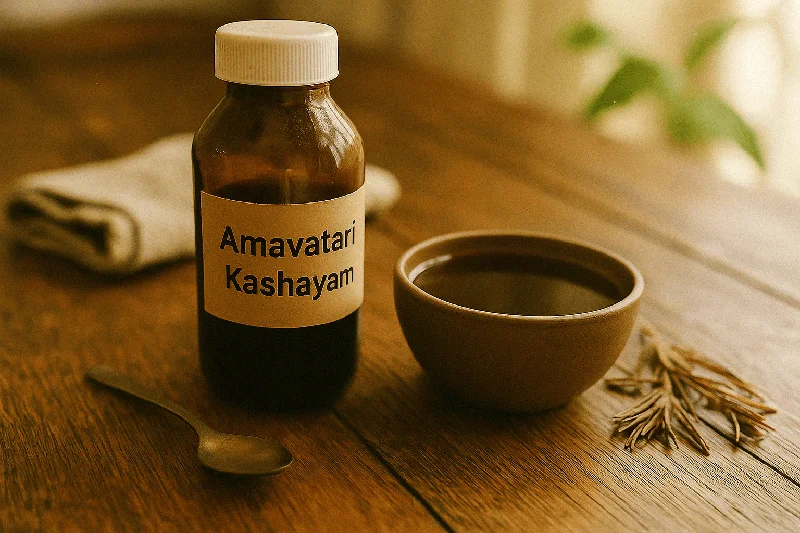
Amavatari Kashayam is a proprietary Ayurvedic herbal decoction formulated to manage autoimmune and inflammatory joint disorders — primarily Rheumatoid Arthritis (Amavata), Gout, Ankylosing Spondylitis, and Osteoarthritis. Manufactured by AVN Arogya Ayurvedic Formulations, it combines 13 potent botanicals anchored by Guduchi (Tinospora cordifolia) and the classical Dashamoola group to deliver immunomodulatory, anti-inflammatory, and joint-protective action. Available as a 200 ml liquid kashayam and in tablet form, it is one of the few Ayurvedic proprietary medicines that bridges ancient doshic theory with ingredients whose pharmacological profiles are now increasingly validated by modern research.
Below you will find everything you need to know — the full composition with exact quantities, mechanism of action, disease-specific indications, dosage protocols, contraindications, drug interactions, diet recommendations, storage guidelines, and a detailed FAQ section. No other single resource covers all of this in one place, so bookmark this page.
What Is Amavatari Kashayam?
Amavatari Kashayam is a water-based herbal decoction (kashayam literally means "decoction" in Sanskrit) classified as a proprietary Ayurvedic medicine. Unlike classical formulations that come from a single ancient text, proprietary medicines are developed by licensed pharmacies using classical principles but with a unique, branded composition. AVN Arogya formulated Amavatari specifically for Ama-Vata and related autoimmune-inflammatory conditions.
The medicine is liquid, dark-brown, and has the characteristically bitter-astringent taste you'd expect from a kashayam dominated by Guduchi and Dashamoola herbs.
Ayurvedic Concept — Ama-Vata & Vata-Shonita
- In Ayurveda, Ama refers to the toxic byproduct of incomplete digestion.
- When Ama circulates through the body and lodges in joints — carried by aggravated Vata dosha — the resulting condition is called Amavata. The symptoms map remarkably well onto modern Rheumatoid Arthritis: morning stiffness, symmetrical joint swelling, pain that worsens in cold-damp weather, and systemic inflammation.
- A related condition, Vata-Shonita (literally "Vata in the blood"), corresponds closely to Gout and crystal-induced arthropathies.
- Amavatari Kashayam is designed to address both pathologies by:
- Digesting and eliminating Ama (Amapachana)
- Pacifying aggravated Vata dosha
- Reducing Kapha-mediated swelling in joints
- Restoring Agni (digestive fire) to prevent further Ama formation
Manufacturer — AVN Arogya
AVN Arogya (Arya Vaidya Nilayam) is a heritage Ayurvedic pharmacy based in Madurai, Tamil Nadu, with roots going back several decades. They operate under GMP (Good Manufacturing Practices) certification as mandated by the AYUSH Department, Government of India. Their products undergo standardized quality-control testing for heavy metals, microbial load, and active-marker compounds. Amavatari Kashayam is one of their flagship proprietary formulations and has gained recognition among Ayurvedic rheumatology practitioners across South India and increasingly in North Indian and international markets.
Amavatari Kashayam Ingredients & Composition
The formulation contains 13 herbal ingredients. Below is the complete composition with exact quantities per dose, botanical names, and Sanskrit nomenclature — information that most sources only partially disclose.
Complete Ingredient Table with Quantities
| # | Sanskrit Name | Botanical Name | Part Used | Quantity per dose |
|---|---|---|---|---|
| 1 | Guduchi | Tinospora cordifolia | Stem | 4.445 g |
| 2 | Kokilaksha | Asteracantha longifolia | Whole plant | 4.445 g |
| 3 | Punarnava | Boerhaavia diffusa | Root | 4.445 g |
| 4 | Gokshura | Tribulus terrestris | Fruit | 4.445 g |
| 5 | Bilva | Aegle marmelos | Root | 0.667 g |
| 6 | Agnimantha | Premna integrifolia | Root | 0.667 g |
| 7 | Shyonaka | Oroxylum indicum | Root bark | 0.667 g |
| 8 | Gambhari | Gmelina arborea | Root | 0.667 g |
| 9 | Patala | Stereospermum suaveolens | Root bark | 0.667 g |
| 10 | Shalaparni | Desmodium gangeticum | Root | 0.667 g |
| 11 | Prishniparni | Uraria picta | Root | 0.667 g |
| 12 | Brihati | Solanum indicum | Root | 0.667 g |
| 13 | Kantakari | Solanum xanthocarpum | Root | 0.667 g |
Note: Ingredients 5–13 constitute the classical Dashamoola (Ten Roots) group, though technically Dashamoola includes Gokshura as the tenth member in some recensions. In Amavatari Kashayam, Gokshura is listed separately at a higher dose, reflecting its dual role as both a Dashamoola component and a primary renal-supportive herb.
Pharmacological Profile of Key Ingredients
Role of Guduchi (Tinospora cordifolia)
Guduchi is the lead herb in this formulation at the highest individual dose (4.445 g). Often called "Amrita" (the nectar of immortality), it is one of Ayurveda's premier immunomodulators.
- Rasa (Taste): Tikta (Bitter), Kashaya (Astringent)
- Guna (Quality): Laghu (Light), Snigdha (Unctuous)
- Vipaka: Madhura (Sweet post-digestive effect)
- Doshic Action: Tridoshahara — pacifies Vata, Pitta, and Kapha
A 2015 review in the Journal of Ethnopharmacology documented Guduchi's significant immunomodulatory activity, noting upregulation of macrophage function and modulation of both Th1 and Th2 cytokine pathways. A 2019 randomized controlled trial published in AYU Journal reported that Guduchi satva (aqueous extract) significantly reduced RA disease activity scores (DAS-28) over 12 weeks compared to placebo (p < 0.05).
Role of Kokilaksha (Asteracantha longifolia)
Kokilaksha is a potent Vata-Kapha pacifier with strong anti-inflammatory and diuretic properties.
- Rasa: Madhura (Sweet), Tikta (Bitter)
- Vipaka: Madhura
- Doshic Action: Vata-Kapha shamaka
It's traditionally indicated in Shvayathu (edema) and Vata-Vyadhi (neurological and musculoskeletal disorders). A 2013 study in Pharmaceutical Biology demonstrated significant inhibition of COX-2 and 5-LOX enzymes — the same targets of modern NSAIDs — in ethanolic extracts of Asteracantha longifolia.
Role of Punarnava (Boerhaavia diffusa)
Punarnava literally means "one that renews the body." It is a powerful anti-edema herb with nephroprotective properties.
- Rasa: Madhura, Tikta, Kashaya
- Guna: Laghu, Ruksha
- Vipaka: Madhura
- Doshic Action: Kapha-Vata shamaka
Research published in the Indian Journal of Experimental Biology (2004) showed that punarnavine, its principal alkaloid, exhibits significant anti-inflammatory activity comparable to ibuprofen in carrageenan-induced paw edema models. This makes it particularly valuable in managing the swelling component of inflammatory arthritis.
Role of Gokshura (Tribulus terrestris)
Gokshura serves a dual purpose here — as a mild Vata-pacifying analgesic and as a renal-protective agent that promotes uric acid excretion (critical in Gout management).
- Rasa: Madhura
- Guna: Guru (Heavy), Snigdha
- Vipaka: Madhura
- Doshic Action: Vata-Pitta shamaka
A 2012 study in Phytomedicine confirmed the diuretic and uricosuric effects of Tribulus terrestris fruit extract in hyperuricemic rats, supporting its traditional use in Vatarakta (Gout).
Role of Dashamoola (The Ten Roots)
The nine Dashamoola herbs (ingredients 5–13 plus Gokshura) form the backbone of Ayurvedic anti-Vata therapy.
Collectively, they offer:
- Shothaghna — anti-edema action
- Vedanasthapana — pain relief
- Balya — strength-promoting
- Rasayana — rejuvenating
A 2016 study in Journal of Ayurveda and Integrative Medicine showed that a standardized Dashamoola extract significantly inhibited TNF-α and IL-6 production in LPS-stimulated human peripheral blood mononuclear cells, providing a modern mechanistic basis for its traditional anti-inflammatory reputation.
How Amavatari Kashayam Works (Mode of Action)
Understanding the mechanism helps you appreciate why this isn't just another herbal pain-killer. Amavatari Kashayam works on multiple pharmacological levels simultaneously.
Immunomodulatory Action
- Rather than simply suppressing the immune system (as corticosteroids and conventional DMARDs do), the formulation modulates it.
- Guduchi's active compounds — berberine, tinosporin, and tinocordiside — help recalibrate overactive immune responses. This is particularly relevant in Rheumatoid Arthritis and SLE, where the immune system attacks the body's own tissues.
Anti-Inflammatory Action
The COX-2 and 5-LOX inhibition from Kokilaksha, combined with TNF-α suppression from Dashamoola and the anti-edema effect of Punarnava, creates a multi-target anti-inflammatory cascade. Unlike single-target NSAIDs, this multi-pronged approach may explain why Ayurvedic practitioners report fewer GI side effects.
Joint-Protective & Anti-Degenerative Action
Several ingredients — particularly Guduchi and Gokshura — have shown chondroprotective properties in preliminary studies. They appear to inhibit matrix metalloproteinases (MMPs) that degrade cartilage, potentially slowing the progressive joint destruction seen in RA and OA.
Ama-Pachana (Toxin Digestion)
From the Ayurvedic perspective, the Tikta (bitter) and Katu (pungent) rasas in the formulation stimulate Agni (digestive fire), which digests the accumulated Ama responsible for joint inflammation. This is considered the root-cause treatment rather than merely symptomatic relief.
Indications & Uses of Amavatari Kashayam
Rheumatoid Arthritis (Ama-Vata)
This is the primary indication. RA affects approximately 0.75% of the Indian population according to a 2017 epidemiological study in the Indian Journal of Rheumatology. Amavatari Kashayam is used both as a standalone therapy in mild-to-moderate cases and as an adjunct to conventional DMARDs in moderate-to-severe cases. Practitioners typically report noticeable improvement in morning stiffness and joint tenderness within 4–6 weeks.
Osteoarthritis
While OA is primarily a degenerative rather than autoimmune condition, the anti-inflammatory and Vata-pacifying properties of the formulation make it useful — especially when there's an inflammatory component (synovitis) overlying the degenerative changes.
Ankylosing Spondylitis
Ankylosing Spondylitis, characterized by progressive spinal stiffness and sacroiliac joint inflammation, responds to Amavatari Kashayam's strong Vata-shamana (Vata-pacifying) action. The Dashamoola component is particularly relevant here, as it has a special affinity for the spinal and pelvic regions.
Gout (Vatarakta / Crystal-Induced Synovitis)
- The combination of Gokshura (uricosuric), Punarnava (diuretic and anti-inflammatory), and Guduchi (immunomodulatory) makes this formulation well-suited for managing acute gout flares and preventing recurrences.
- It addresses the root cause — uric acid accumulation and inflammation — rather than just pain.
SLE & Other Autoimmune Collagen Diseases
Dermato-myositis and systemic lupus erythematosus (SLE) involve widespread autoimmune inflammation affecting connective tissues. The immunomodulatory action of Guduchi, combined with the anti-inflammatory Dashamoola group, provides therapeutic support. However, these are serious conditions and Amavatari Kashayam should only be used under strict medical supervision, typically alongside conventional immunosuppressive therapy.
Is Amavatari Kashayam Good for Spine Hernias?
This is a frequently asked question. While Amavatari Kashayam is not specifically indicated for disc herniation, the anti-inflammatory and Vata-pacifying properties may provide symptomatic relief when a herniated disc causes inflammatory radiculopathy. It's not a substitute for condition-specific treatments like Kati Basti or Matra Basti, but can be a helpful adjunct.
Amavatari Kashayam Dosage
Liquid Kashayam (Standard Dosage)
| Severity | Dose | Dilution | Frequency | Timing |
|---|---|---|---|---|
| Mild to Moderate | 10–15 ml | Mixed with 45 ml lukewarm water | Twice daily | Before food (on empty stomach) |
| Severe cases | 50 ml | Mixed with 1 litre of water, sipped throughout the day | As directed | Before meals |
The "sip throughout the day" protocol for severe cases allows continuous low-level delivery of active compounds and is sometimes preferred by practitioners managing acute flares.
Kashayam Tablets (Alternative Form)
For patients who cannot tolerate the intensely bitter taste of the liquid kashayam, AVN Arogya offers Amavatari Kashayam Tablets. These contain the same decoction in a dried, compressed form.
| Dosage Protocol | Dose | Frequency |
|---|---|---|
| Option A | 2 tablets | Three times a day |
| Option B | 3 tablets | Twice a day |
Tablets should be taken with lukewarm water before food.
Recommended Duration of Treatment
This is a significant gap in most available references. Based on Ayurvedic practice guidelines and consultations with prescribing physicians:
- Acute flares: 2–4 weeks at higher doses, then taper
- Chronic management (RA, AS): 3–6 months initially, reassess every 6–8 weeks
- Maintenance therapy: Some practitioners prescribe intermittent courses (e.g., 3 months on, 1 month off) for patients with recurrent flares
- Gout prevention: 2–3 month courses during high-risk seasons (monsoon, winter)
Always follow your Ayurvedic physician's specific guidance. Self-prescribing for durations beyond 4 weeks is not recommended.
Side Effects of Amavatari Kashayam
There are no known significant side effects when Amavatari Kashayam is taken at the recommended dosage under medical supervision.
That said, some patients may experience:
- Mild gastric discomfort in the first few days, especially if taken without adequate water dilution
- Loose stools — some of the bitter herbs stimulate peristalsis
- Metallic or excessive bitter aftertaste — this is normal and can be managed by rinsing the mouth with water or taking a small piece of jaggery afterward
These effects typically resolve within 3–5 days as the body adjusts.
Contraindications (Not Covered Elsewhere)
No other online resource currently lists clear contraindications for this product. Based on the pharmacological profiles of the individual ingredients:
- Pregnancy: Not recommended. Several ingredients (particularly Dashamoola and Guduchi) have uterine-stimulant properties documented in traditional texts
- Lactation: Use with caution and only under medical supervision
- Children under 12: No established pediatric dosing; consult a qualified practitioner
- Severe hepatic impairment: Guduchi undergoes hepatic metabolism; impaired liver function may alter drug processing
- Severe renal failure: Gokshura and Punarnava have diuretic effects that could complicate fluid-electrolyte management in advanced kidney disease
- Known allergy to any of the 13 listed ingredients
Drug Interactions
Another area that no competitor addresses:
| Drug/Drug Class | Interaction Type | Recommendation |
|---|---|---|
| Methotrexate / DMARDs | Potential additive immunomodulation | Use together only under rheumatologist + Ayurvedic physician co-management |
| NSAIDs (Ibuprofen, Diclofenac) | Additive GI irritation risk | Space doses by at least 2 hours; monitor for GI symptoms |
| Corticosteroids (Prednisolone) | Theoretical additive immunosuppression | Monitor closely; Ayurvedic physician may adjust kashayam dose |
| Antihypertensives | Punarnava has mild hypotensive effect | Monitor blood pressure regularly |
| Oral hypoglycemics | Guduchi may lower blood sugar | Monitor blood glucose; dose adjustment may be needed |
| Anticoagulants (Warfarin) | Guduchi may have mild antiplatelet activity | Monitor INR if co-prescribed |
Amavatari Kashayam vs. Other Ayurvedic Kashayams
This comparison is entirely absent from competing resources and should help you understand when Amavatari is the right choice versus alternatives.
| Feature | Amavatari Kashayam | Rasnadi Kashayam | Maharasnadi Kashayam | Dhanwantaram Kashayam |
|---|---|---|---|---|
| Primary Focus | Autoimmune joint inflammation | Vata disorders, neuralgia | Severe Vata-Kapha joint disorders | Vata-Vyadhi, neurological conditions |
| Best For | RA, Gout, SLE | Sciatica, lumbar spondylosis | Chronic RA with severe degeneration | Post-stroke, paralysis, Vata disorders |
| Immunomodulatory? | Yes (strong — Guduchi-based) | Mild | Moderate | Minimal |
| Uric Acid Management | Yes (Gokshura, Punarnava) | No | No | No |
| Classical/Proprietary | Proprietary (AVN) | Classical (Sahasrayogam) | Classical (Sahasrayogam) | Classical (Ashtanga Hridayam) |
| Taste Tolerance | Moderately bitter | Very bitter | Very bitter | Less bitter |
Takeaway: Choose Amavatari Kashayam specifically when dealing with autoimmune-inflammatory joint conditions, especially when there's an Ama component. For purely degenerative or neurological Vata conditions without immune involvement, classical alternatives may be more appropriate.
Pathya-Apathya: Diet & Lifestyle During Amavatari Kashayam Use
No competing resource covers this, yet it's considered essential in Ayurvedic treatment. In fact, Acharya Charaka states that medicine without pathya (appropriate diet/lifestyle) is only half-treatment.
Recommended Diet (Pathya)
- Warm, freshly cooked meals — avoid cold, stale, or refrigerated foods
- Light grains: Old rice (Purana Shali), barley (Yava), green gram (Mudga)
- Spices: Ginger, cumin, coriander, turmeric, black pepper — these enhance Agni and support Ama digestion
- Warm water — sip throughout the day; avoid cold or iced beverages entirely
- Bitter vegetables: Bitter gourd, drumstick (moringa), fenugreek leaves
Foods to Avoid (Apathya)
- Curd/yogurt — especially at night; it increases Kapha and Ama
- Dairy (heavy) — avoid paneer, cheese, and cream
- Fermented foods — pickles, vinegar, idli-dosa batter if excessively fermented
- High-purine foods (for Gout patients) — organ meats, red meat, shellfish, alcohol
- Cold foods and drinks — ice cream, chilled water, cold salads
- Heavy-to-digest items — deep-fried foods, refined flour (maida)
Lifestyle Recommendations
- Mild exercise: Walking, gentle yoga (especially Pawanmuktasana series), light stretching. Avoid heavy gym workouts during acute flares
- Oil application: Warm sesame oil or Dhanwantaram Tailam massage before bathing
- Sleep: Avoid daytime sleep (it increases Kapha and Ama). Ensure 7–8 hours of nighttime sleep
- Stress management: Pranayama, especially Nadi Shodhana, helps manage the stress-inflammation cycle
Storage & Shelf Life
- Storage: Store in a cool, dry place away from direct sunlight. Keep the bottle tightly capped after each use
- Refrigeration: Not strictly required but recommended after opening, especially in hot climates above 35°C
- Shelf life: 3 years from the date of manufacture (check the label for exact expiry date)
- Post-opening use: Best consumed within 60 days of opening the bottle
- Tablets: Store in the original blister packaging; shelf life is typically 3 years
- Price: Approximately ₹173 for a 200 ml bottle (may vary by retailer)
Frequently Asked Questions (FAQ)
What are the ingredients in Amavatari Kashayam?
Amavatari Kashayam contains 13 ingredients: Guduchi, Kokilaksha, Punarnava, and Gokshura as primary herbs (each at 4.445 g per dose), plus nine Dashamoola herbs — Bilva, Agnimantha, Shyonaka, Gambhari, Patala, Shalaparni, Prishniparni, Brihati, and Kantakari (each at 0.667 g per dose). See the full ingredient table above for botanical names and details.
What is the use of Amavatari tablet?
- Amavatari tablets contain the same herbal decoction as the liquid kashayam, but in a dried and compressed form.
- They are used for the same indications — Rheumatoid Arthritis, Gout, Ankylosing Spondylitis, Osteoarthritis, and autoimmune collagen diseases. Tablets are ideal for patients who find the bitter liquid unpalatable or need a more convenient travel-friendly option.
What are the side effects of Amavatari Kashayam?
No significant adverse effects have been reported at recommended doses under medical supervision. Minor and self-limiting effects like mild gastric discomfort, loose stools, or bitter aftertaste may occur in the first few days. See the detailed Side Effects and Contraindications section above.
What is the best medicine for Amavata?
Amavata (Rheumatoid Arthritis) treatment in Ayurveda follows a multi-pronged approach. Amavatari Kashayam is considered one of the most effective kashayams for this condition due to its combination of immunomodulatory and anti-inflammatory herbs. It is often prescribed alongside Simhanada Guggulu, Yogaraja Guggulu, or Amavata-specific rasaushadhi preparations. The "best" medicine depends on the individual patient's Prakriti, disease severity, and associated conditions — there is no universal single answer.
Is Amavatari Kashayam available as a syrup?
- The 200 ml liquid form is essentially the kashayam (decoction) itself.
- It is not a syrup in the conventional sense — it lacks added sugar or syrup base. However, some online retailers list it as "Amavatari Kashayam Syrup" for easier searchability. The product is the same.
What is the reference text for Amavatari Kashayam?
Since Amavatari Kashayam is a proprietary formulation by AVN Arogya, it does not have a direct reference in a classical Ayurvedic text like Ashtanga Hridayam or Sahasrayogam. However, its ingredient selection is rooted in classical principles — Guduchi is extensively described in Charaka Samhita (Chikitsasthana, Chapter 3), and Dashamoola is a well-established classical group found in multiple foundational texts.
Can Amavatari Kashayam be taken with allopathic medicines?
Yes, but with precautions. Many Ayurvedic rheumatologists successfully co-prescribe it alongside Methotrexate, Hydroxychloroquine, or low-dose steroids. The key is to maintain a gap of at least 1–2 hours between allopathic and Ayurvedic medicines and to ensure both your rheumatologist and Ayurvedic physician are aware of each other's prescriptions. See the Drug Interactions table above for specifics.
How long does it take for Amavatari Kashayam to show results?
Most practitioners report that patients notice initial improvements — particularly in morning stiffness and joint tenderness — within 3–6 weeks. Significant measurable changes in inflammatory markers (ESR, CRP) typically take 8–12 weeks. Full therapeutic benefit in chronic conditions like RA may take 3–6 months of consistent use.
Conclusion
Amavatari Kashayam stands as a thoughtfully formulated Ayurvedic medicine that addresses autoimmune-inflammatory joint diseases at multiple levels — from digesting Ama and pacifying Vata to modulating immune responses and protecting joint cartilage. Its unique combination of Guduchi, Dashamoola, and supportive herbs like Punarnava and Gokshura makes it distinct from other kashayams in the Ayurvedic pharmacopoeia.
However, like all potent medicines — Ayurvedic or otherwise — it works best when prescribed by a qualified practitioner who considers your individual constitution, disease stage, concurrent medications, and lifestyle factors. Self-medication, especially for autoimmune conditions, is strongly discouraged.
- If you or someone you know is dealing with Rheumatoid Arthritis, Gout, or any inflammatory joint condition, consult a qualified Ayurvedic physician to determine whether Amavatari Kashayam is appropriate for your specific case.
- A personalized treatment protocol — combining the right medicine, dosage, duration, diet, and lifestyle modifications — will always outperform generic advice.
Disclaimer: This article is for educational purposes only and should not be considered a substitute for professional medical advice. Always consult a qualified Ayurvedic practitioner or healthcare provider before starting any new medication or supplement.
Scientific Sources
- Study design of herbal medicine clinical trials: a descriptive analysis of published studies investigating the effects of herbal medicinal products on human participants — Koonrungsesomboon N et al., 2024, BMC complementary medicine and therapies
- Unproven methods in cancer: a worldwide problem — Schraub S, 2000, Supportive care in cancer : official journal of the Multinational Association of Supportive Care in Cancer
- Contemporary approaches in the management of uterine leiomyomas — Singh S et al., 2023, European journal of obstetrics, gynecology, and reproductive biology
- Ameliorative effect of two Ayurvedic herbs on experimentally induced arsenic toxicity in calves — Biswas S et al., 2017, Journal of ethnopharmacology
- Mechanistic role and potential of Ayurvedic herbs as anti-aging therapies — Raina K et al., 2023, Drug metabolism and personalized therapy
- Wound healing activity of topical application forms based on ayurveda — Datta HS et al., 2011, Evidence-based complementary and alternative medicine : eCAM
- Nano-ayurvedic medicine and its potential in cancer treatment — Lopus M, 2023, Journal of integrative medicine
- Oxidative Stress and Cancer: Chemopreventive and Therapeutic Role of Triphala — Prasad S et al., 2020, Antioxidants (Basel, Switzerland)
- Traditional and contemporary herbal medicines in management of cancer: A scoping review — Imtiaz I et al., 2024, Journal of Ayurveda and integrative medicine
- From ayurvedic folk medicine to preclinical neurotherapeutic role of a miraculous herb, Tinospora cordifolia — Sharma A et al., 2020, Neurochemistry international
- Pitfalls and promises of raw drug identification techniques in the ayurvedic industry: an overview — Unnikrishnan R et al., 2020, 3 Biotech
- Traditional Formulations for Managing COVID-19: A Systematic Review — Bhandari RB et al., 2024, Journal of integrative and complementary medicine
- Integrative practice in Asia - India and China — Leung PC, 2023, Journal of Ayurveda and integrative medicine
- Ayurveda in Dentistry: A Review — Gupta R et al., 2015, Journal of international oral health : JIOH
- From kitchen to clinic: Pharmacotherapeutic potential of common spices in Indian cooking in age-related neurological disorders — Norouzkhani N et al., 2022, Frontiers in pharmacology
- Immunity against COVID-19: Potential role of Ayush Kwath — Gautam S et al., 2022, Journal of Ayurveda and integrative medicine
- Essential concepts and vocabulary in herbal medicine — Tillotson AK, 2008, Journal of dietary supplements
- An assessment of the ayurvedic concept of cancer and a new paradigm of anticancer treatment in Ayurveda — Singh RH, 2002, Journal of alternative and complementary medicine (New York, N.Y.)
- Honey infused with herbs: A boon to cure pathological diseases — Kumar S et al., 2024, Heliyon
- Indian Herbs for the Treatment of Neurodegenerative Disease — Mannangatti P et al., 2016, Advances in neurobiology
Questions from users
What is the recommended dosage of Guduchi in Amavatari Kashayam?
Client_7078b1
3 days ago
The recommended dosage of Guduchi in Amavatari Kashayam is 4.445 grams, as it is a key herb in the formulation. This dosage is often integrated with other ingredients like the Dashamoola group to provide immunomodulatory and anti-inflammatory benefits. However, it is important to follow the specific dosage instructions provided on the product label or by a healthcare professional, as formulations and recommended amounts can vary. If you're considering using Amavatari Kashayam, consult a healthcare provider especially if you have pre-existing health conditions, to ensure it's suitable for your needs.
What lifestyle changes can enhance the effectiveness of Amavatari Kashayam?
Client_750088
8 days ago
To enhance the effectiveness of Amavatari Kashayam, incorporate regular moderate exercise like walking or yoga and avoid intense gym workouts during acute joint pain. Massage affected areas with warm sesame oil or Dhanwantaram Tailam before bathing to improve circulation and reduce stiffness. Prioritize getting 7-8 hours of nighttime sleep and avoid sleeping during the day to prevent increased Kapha and Ama. Manage stress through techniques like Pranayama, especially Nadi Shodhana, which can help reduce inflammation related to stress. Maintain a balanced diet and store the kashayam properly to preserve its efficacy. Consult a doctor if symptoms persist or worsen.
What chronic conditions other than RA can Amavatari Kashayam treat?
Client_edba75
13 days ago
Amavatari Kashayam is primarily used for managing rheumatoid arthritis (RA) but may also benefit other chronic inflammatory conditions due to its immunomodulatory and anti-inflammatory properties. It could be useful in addressing osteoarthritis, ankylosing spondylitis, or other autoimmune inflammatory diseases. Improvements in symptoms and inflammatory markers like ESR and CRP usually occur over 8–12 weeks, with full benefits potentially taking 3–6 months. Always consult a healthcare provider to confirm its suitability for your specific condition and to monitor for possible interactions or side effects.
How long should I take Amavatari Kashayam for best results?
Client_40914d
18 days ago
The duration for taking Amavatari Kashayam varies depending on individual health conditions and response to treatment. Typically, it might be used for 2-3 weeks to start seeing benefits, particularly for managing inflammation and Vata disorders. However, it's crucial to follow your healthcare provider's guidance, as prolonged use without supervision can be problematic. Monitor for any adverse reactions, and consult a doctor if symptoms persist or worsen. Combining it with a balanced diet and lifestyle that supports your treatment plan can maximize effectiveness.
What dietary changes should I make while using Amavatari Kashayam?
Client_274781
28 days ago
While using Amavatari Kashayam, incorporating anti-inflammatory foods can be beneficial. This includes consuming a diet rich in fresh fruits, green leafy vegetables, whole grains, and omega-3 fatty acids found in fish and flaxseeds. It may also help to reduce the intake of processed foods, sugar, and red meat, which can exacerbate inflammation. Drinking plenty of water and herbal teas can support overall health. Consult a healthcare provider if you experience digestive issues or if symptoms like joint pain persist or worsen.
What are the potential side effects of taking Amavatari tablets?
Client_f6370e
38 days ago
Amavatari tablets, often prescribed for conditions like Rheumatoid Arthritis, Gout, and Osteoarthritis, may cause certain side effects, particularly due to their immune-modulating effects. Some users report gastrointestinal discomfort, including nausea or diarrhea. Allergic reactions, though rare, can occur, such as skin rashes or itching. It's crucial to monitor for any unusual symptoms and to consult a healthcare provider if they occur. Long-term use should be under medical supervision, especially if you are on other medications like Methotrexate. Pregnant women should avoid it.
How does Amavatari Kashayam compare to conventional arthritis treatments?
Client_fc5d2c
47 days ago
Amavatari Kashayam is an Ayurvedic herbal decoction that may provide relief for arthritis by reducing inflammation and joint pain, particularly in cases of Rheumatoid Arthritis, Gout, Ankylosing Spondylitis, and Osteoarthritis. Practitioners typically cite noticeable improvements in symptoms like morning stiffness within 4–6 weeks, with significant changes in inflammatory markers like ESR and CRP seen in 8–12 weeks. However, conventional arthritis treatments, such as NSAIDs or DMARDs, have more robust clinical evidence and tend to act faster, though they may have more side effects. It's crucial to consult a healthcare provider to determine the best course of treatment for your specific condition and to monitor any potential side effects.
What are the active ingredients in Amavatari Kashayam and their benefits?
Client_85fabe
57 days ago
Amavatari Kashayam is an Ayurvedic formulation primarily used for conditions like rheumatoid arthritis and systemic lupus erythematosus (SLE). Its active ingredients include Guduchi (Tinospora cordifolia), known for its immunomodulatory properties, and the Dashamoola group, which provides anti-inflammatory and joint-protective benefits. Other key ingredients like Kokilaksha inhibit COX-2 and 5-LOX enzymes, while Dashamoola helps suppress TNF-α and Punarnava offers anti-edema effects. These botanicals work synergistically to reduce inflammation and improve joint health. If symptoms persist despite treatment, consult a healthcare provider.
Can I use Amavatari Kashayam to help manage stress and improve mood?
Client_136c6c
66 days ago
Amavatari Kashayam is typically used for joint-related issues rather than stress or mood improvement. For stress, consider herbs like Ashwagandha or Brahmi. They have a calming effect on the mind. However, it's best to consult with an Ayurvedic doctor for personalized advice based on your dosha balance and needs! 🌿
Can Amavatari Kashayam help with joint pain caused by arthritis?
Client_ae9953
76 days ago
Yes, Amavatari Kashayam can be helpful for joint pain due to arthritis. It's especially effective if the pain's related to Vata imbalance and Ama accumulation, which is common in rheumatoid arthritis. Consistent use over 3-6 months often needed tho. Also, might be good as a complement to other treatments, especially in more severe cases.
Related articles

Gastrointestinal Disorders
Samyak Virechana Lakshana: The Science of Proper Purgation
Discover the principles of Samyak Virechana Lakshana, evidence-based insights, and practical steps to ensure effective and balanced Ayurvedic purgation.
3,871

Gastrointestinal Disorders
Punarnavarishta
Exploration of Punarnavarishta
12,040

Gastrointestinal Disorders
Kamdhenu Ras
Exploration of Kamdhenu Ras
2,966

Gastrointestinal Disorders
Pittantak Ras – Ayurvedic Remedy for Pitta Imbalance and Digestive Health
Discover Pittantak Ras, an Ayurvedic tonic designed to balance digestive fire and rejuvenate the body. Learn how this herbal formulation supports dosha harmony and enhances vitality.
3,508

Gastrointestinal Disorders
Dhanwanthararishtam: An Ayurvedic Elixir Explained
Explore the science, usage, and benefits of Dhanwanthararishtam, an Ayurvedic tonic with traditional roots and modern research insights.
3,390

Gastrointestinal Disorders
Ras Pachak Vati Uses: An Ayurvedic Solution for Digestive Wellness
Ras Pachak Vati is a time-tested Ayurvedic remedy for digestive wellness. Its ability to relieve indigestion, acidity, and bloating makes it a must-have for those seeking natural and holistic solutions for gut health
4,251

Gastrointestinal Disorders
Kutaja Parpati Vati Uses – Traditional Ayurvedic Remedy for Digestive Disorders
Discover the traditional Ayurvedic uses of Kutaja Parpati Vati, a potent remedy for digestive disorders including dysentery and diarrhea. Learn about its benefits, usage guidelines, and expert insights.
2,929

Gastrointestinal Disorders
Is Curd Good for Piles? Ayurvedic View and Safe Dietary Use
Is curd good for piles? Learn what Ayurveda says about curd, curd rice, and combinations like onion or radish with curd. Find out how to eat it during piles
4,270

Gastrointestinal Disorders
Dasamoolarishtam and Jeerakarishtam Benefits – Ayurvedic Tonic for Health
Discover the health benefits of Dasamoolarishtam and Jeerakarishtam, two powerful Ayurvedic tonics that support digestion, immunity, and overall well-being.
6,728

Gastrointestinal Disorders
Constipation Relief with Ayurveda
Ayurveda emphasizes the balance of doshas to maintain digestive health and prevent constipation.
3,215
Related consultations on the topic
Legal
Additional Documents
© 2024 Ask Ayurveda. All rights reserved.