Urinary system
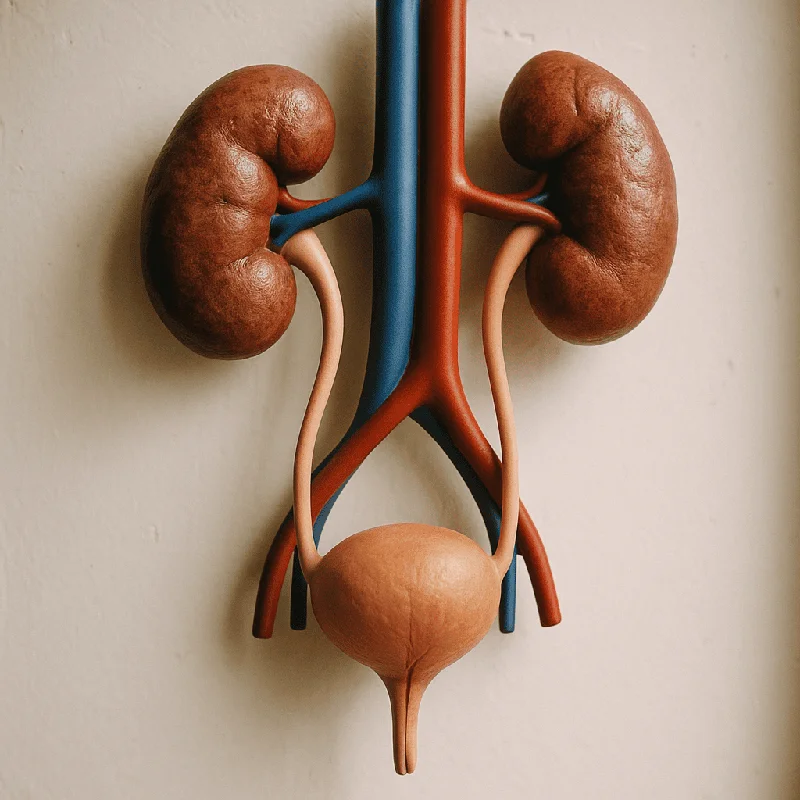
The urinary system — also called the renal system or urinary tract — is the body's filtration and waste-removal network. It filters roughly 150–180 litres of blood every single day, produces about 1–2 litres of urine, and quietly regulates everything from blood pressure to bone health. Understanding how this system works, what can go wrong, and how to protect it is essential for anyone who wants to maintain lifelong health.
In this comprehensive guide, we break down every organ, every process, and every condition linked to the urinary system. Whether you are a student looking for a detailed anatomy overview, a patient researching symptoms, or simply someone who wants practical tips — you'll find it all here.
What Is the Urinary System?
- The urinary system is a group of organs responsible for filtering blood, removing metabolic waste products, and excreting them as urine.
- It plays a far bigger role than most people realise: beyond simply "making urine," the system helps control blood volume, electrolyte balance, blood pH, and even red blood cell production.
Alternative Names: Urinary Tract, Renal System
You will often see the terms urinary tract, renal system, and excretory system used interchangeably. Technically, "renal" refers specifically to the kidneys (from the Latin ren), while "urinary tract" typically describes the path urine follows — from the kidneys down through the ureters, bladder, and urethra. In clinical practice, doctors use all three names depending on context.
Why the Urinary System Is Important
- Without a functioning urinary system, toxic waste products like urea, creatinine, and uric acid would accumulate in the blood within hours, leading to organ failure.
- The system also:
- Maintains water–electrolyte homeostasis (sodium, potassium, calcium, phosphate)
- Regulates blood pressure through the renin–angiotensin–aldosterone system (RAAS)
- Controls blood pH by excreting hydrogen ions and reabsorbing bicarbonate
- Stimulates red blood cell production via erythropoietin (EPO)
- Activates vitamin D into its usable form (calcitriol), supporting bone health
In short, every other organ system — cardiovascular, nervous, endocrine, digestive — depends on the urinary system to keep the internal environment stable.
Anatomy of the Urinary System: What Are the Main Organs?
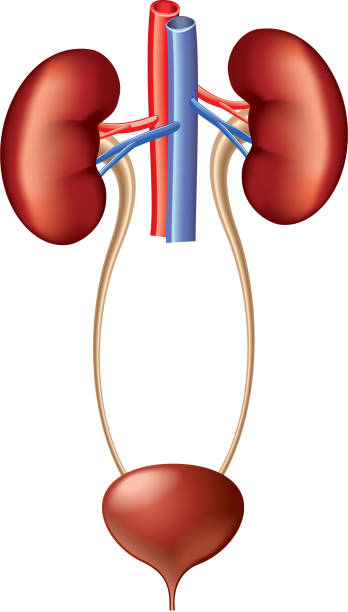
The urinary system consists of four primary organs: two kidneys, two ureters, one urinary bladder, and one urethra. Supporting structures include sphincter muscles, the pelvic floor, and a specialised lining called urothelium.
Kidneys
The kidneys are a pair of bean-shaped organs located in the retroperitoneal space, one on each side of the spine, roughly between the T12 and L3 vertebrae. Each kidney weighs about 120–170 grams in adults and measures approximately 10–12 cm in length. The right kidney sits slightly lower than the left because of the liver above it.
- Each kidney receives blood through a renal artery (branching directly from the abdominal aorta) and returns filtered blood via a renal vein into the inferior vena cava.
- Together the kidneys receive about 20–25 % of cardiac output — an astonishing volume for organs that make up less than 1 % of body weight.
Nephrons — The Structural and Functional Units
- Each kidney contains roughly 1 million nephrons. A nephron is the microscopic unit where urine formation actually happens.
- It consists of:
| Component | Role |
|---|---|
| Glomerulus | A tuft of capillaries where blood is initially filtered |
| Bowman's capsule | Cup-like structure that collects the filtrate |
| Proximal convoluted tubule (PCT) | Reabsorbs ~65 % of water, glucose, amino acids, sodium |
| Loop of Henle | Creates a concentration gradient; critical for urine concentration |
| Distal convoluted tubule (DCT) | Fine-tunes sodium, potassium, and pH under hormonal control |
| Collecting duct | Final concentration of urine; responds to ADH (antidiuretic hormone) |
The glomerular filtration rate (GFR) — the volume of filtrate produced per minute — is a key clinical marker. Normal GFR is about 90–120 mL/min/1.73 m². A GFR below 60 mL/min for three months or more signals chronic kidney disease (CKD).
Blood Supply: Renal Arteries & Veins
Blood flow through the kidney follows a highly organised path: renal artery → segmental arteries → interlobar arteries → arcuate arteries → interlobular arteries → afferent arterioles → glomerular capillaries → efferent arterioles → peritubular capillaries (or vasa recta around the Loop of Henle) → renal vein. This dual-capillary arrangement is unique in the body and allows both filtration and reabsorption to occur efficiently.
Ureters
The ureters are two muscular tubes, each about 25–30 cm long and 3–4 mm in diameter. They transport urine from the renal pelvis of each kidney down to the urinary bladder using rhythmic peristaltic contractions — not gravity alone, which is why urine flow continues even when you're lying down. The ureters enter the bladder at an oblique angle, creating a natural valve mechanism that prevents urine from flowing backwards (vesicoureteral reflux).
Urinary Bladder
The bladder is a hollow, muscular organ situated in the pelvis behind the pubic symphysis. Its wall contains a special smooth muscle called the detrusor muscle that contracts during urination. In adults, the bladder can comfortably hold 400–600 mL of urine, though the urge to urinate typically begins at around 200–300 mL.
The inner surface of the bladder is lined with urothelium (transitional epithelium), a unique tissue that can stretch dramatically as the bladder fills without tearing or allowing urine to leak into surrounding tissues.
Urethra
- The urethra is the final passage through which urine exits the body.
- Its length differs significantly between sexes:
- Female urethra: approximately 3–5 cm
- Male urethra: approximately 18–20 cm (it also serves as a passage for semen)
This anatomical differnce is one major reason why urinary tract infections (UTIs) are far more common in women — bacteria have a much shorter distance to travel to reach the bladder.
Sphincter Muscles & Pelvic Floor
Two sphincters control the release of urine:
- 1.Internal urethral sphincter — made of smooth muscle, under involuntary (autonomic) control. It remains contracted to keep the bladder sealed.
- 2.External urethral sphincter — made of skeletal muscle, under voluntary control. This is the sphincter you consciously relax when you decide to urinate.
- The pelvic floor muscles act as a supportive hammock beneath the bladder and other pelvic organs.
- Weakness in these muscles — from childbirth, aging, or surgery — can contribute to urinary incontinence.
Male vs Female Urinary System Differences
Beyond urethral length, there are other noteworthy differences. In males, the prostate gland encircles the urethra just below the bladder; enlargement of this gland (benign prostatic hyperplasia, BPH) can obstruct urine flow. In females, the bladder sits lower in the pelvis and is positioned anterior to the uterus and vagina, making it more susceptible to pressure changes during pregnancy. A 2018 review in The Journal of Urology noted that anatomical differences account for a significant portion of the gender disparity in UTI incidence, with women being up to 30 times more likely to develop a UTI than men.
How Does the Urinary System Work? (Step by Step)
Understanding the journey from blood filtration to urination helps clarify why kidney health matters so much.
From Blood Filtration to Urination
- Blood enters the kidneys through the renal arteries.
- Filtration occurs in the glomeruli — water, salts, glucose, amino acids, urea, and other small molecules pass through the glomerular capillary walls into Bowman's capsule, forming a fluid called filtrate.
- Reabsorption happens along the tubules — the PCT, Loop of Henle, and DCT reclaim about 99 % of the filtered water, all of the glucose (normally), and most electrolytes. Only waste products and excess substances remain.
- Secretion adds additional waste — certain drugs, hydrogen ions, and potassium are actively secreted from the peritubular capillaries into the tubular fluid.
- Concentrated urine collects in the collecting ducts, flows into the renal pelvis, and travels down the ureters to the bladder.
- Storage in the bladder — the detrusor muscle relaxes as the bladder fills; the internal sphincter stays closed.
- Micturition (urination) — stretch receptors in the bladder wall signal the brain when the bladder is full. The brain sends a signal back, the detrusor contracts, the internal sphincter relaxes, and you voluntarily relax the external sphincter to void.
Urine Formation: Filtration, Reabsorption, Secretion
Of the approximately 180 litres of filtrate produced per day, only about 1–2 litres become urine. The rest is reabsorbed. This is an incredibly efficient recycling process.
Glomerular Filtration Rate (GFR) in Detail
- GFR depends on three pressures: hydrostatic pressure in the glomerular capillaries (pushing fluid out), hydrostatic pressure in Bowman's capsule (pushing back), and oncotic pressure of blood proteins (pulling fluid back into capillaries).
- The net filtration pressure is normally about 10 mmHg — enough to drive filtration continuously.
Hormonal Regulation of the Urinary System
Several hormones fine-tune kidney function:
- Antidiuretic hormone (ADH / vasopressin): released by the posterior pituitary gland when blood osmolarity rises. It increases water reabsorption in the collecting ducts, producing concentrated urine.
- Aldosterone: secreted by the adrenal cortex; promotes sodium reabsorption and potassium excretion in the DCT and collecting duct.
- Atrial natriuretic peptide (ANP): released by the heart's atria when blood volume is too high; it inhibits sodium reabsorption, causing more sodium and water to be excreted.
- Parathyroid hormone (PTH): increases calcium reabsorption and phosphate excretion by the kidneys.
- Erythropoietin (EPO): produced by the kidneys when oxygen levels drop; stimulates red blood cell production in bone marrow. This is why patients with advanced CKD often develop anaemia.
Factors That Affect Urine Volume
Several everyday factors change how much urine you produce: fluid intake (obviously), physical activity, ambient temperature, certain medications (especially diuretics), caffeine and alcohol consumption, and overall health status. For instance, vigourous exercise in hot weather can reduce urine output significantly as the body conserves water through sweat.
What Are the 7 Main Functions of the Urinary System?
- While filtering waste is the headline function, the urinary system does much more.
- Here are the seven primary functions:
- 1.Excretion of metabolic waste — urea (from protein metabolism), creatinine (from muscle metabolism), uric acid (from nucleic acid breakdown), and foreign substances like drug metabolites.
- 2.Regulation of blood volume and pressure — by adjusting how much water is reabsorbed or excreted, the kidneys directly influence blood volume and, consequently, blood pressure.
- 3.Electrolyte balance — precise control of sodium, potassium, calcium, magnesium, chloride, and phosphate concentrations.
- 4.Acid–base balance (pH regulation) — the kidneys excrete hydrogen ions and regenerate bicarbonate to maintain blood pH between 7.35 and 7.45.
- 5.Erythropoietin production — stimulating red blood cell formation.
- 6.Vitamin D activation — converting 25-hydroxyvitamin D into active 1,25-dihydroxyvitamin D (calcitriol), essential for intestinal calcium absorption and bone mineralisation.
- 7.Gluconeogenesis during prolonged fasting — the kidneys can produce glucose from non-carbohydrate sources, contributing up to 40 % of new glucose during extended fasting periods, according to research published in The American Journal of Physiology (2001).


Urethritis Burning Urination Interstitial cystitis


Haematuria Kidney or bladder cancer

Urinary System Across the Lifespan
Urinary System in Children vs Adults
- Infants and young children have proportionally larger kidneys relative to body size but lower GFR at birth (about 20 mL/min/1.73 m²), reaching adult levels by age 1–2. Bladder capacity in children can be roughly estimated by the formula: (age in years + 2) × 30 mL. For example, a 4-year-old's bladder holds approximately 180 mL.
- Children also urinate more frequently — 8 to 10 times per day is normal for a toddler.
Urinary System in Older Adults
Aging brings several changes: kidney mass decreases by about 20–30 % between ages 30 and 80, GFR declines at roughly 1 mL/min per year after age 40, and the bladder loses elasticity, reducing its capacity. A 2020 study in Clinical Interventions in Aging found that up to 30 % of adults over 65 experience some form of urinary incontinence. Prostatic enlargement in men and pelvic floor weakening in women further compound these issues.
Urinary System During Pregnancy
Pregnancy causes notable changes. The kidneys increase in size by about 1–1.5 cm, GFR rises by approximately 50 % by the second trimester (due to increased blood volume), and the ureters dilate — a condition called physiological hydronephrosis — especially on the right side, because the enlarging uterus compresses the ureter against the pelvic brim. These changes raise the risk of UTIs and kidney infections. Pregnant women are screened for asymptomatic bacteriuria for this reason.
What Diseases and Conditions Affect the Urinary System?
A wide range of conditions can affect the urinary tract, from mild infections to life-threatening kidney failure.
Common Urinary System Diseases (With Symptoms)
| Condition | Key Symptoms | Prevalence |
|---|---|---|
| Urinary tract infection (UTI) | Burning during urination, frequent urge, cloudy or strong-smelling urine, pelvic pain | ~150 million cases/year globally (Lancet, 2019) |
| Kidney stones (nephrolithiasis) | Severe flank pain, blood in urine, nausea, vomiting | Affects ~12 % of the global population at some point |
| Chronic kidney disease (CKD) | Often silent early; later — fatigue, swelling, foamy urine, high blood pressure | ~850 million people affected worldwide (ISN, 2020) |
| Urinary incontinence | Involuntary urine leakage (stress, urge, or mixed type) | Affects 25–45 % of women and 5–15 % of men |
| Benign prostatic hyperplasia (BPH) | Weak stream, hesitancy, nocturia, incomplete emptying | Affects ~50 % of men over 50 |
| Bladder cancer | Painless haematuria, frequent urination, pelvic pain | ~570,000 new cases/year worldwide |
| Glomerulonephritis | Blood or protein in urine, edema, hypertension | Variable; can follow infections or autoimmune disease |
| Polycystic kidney disease (PKD) | Flank pain, hypertension, haematuria, kidney enlargement | 1 in 400 to 1 in 1,000 live births (autosomal dominant form) |
| Vesicoureteral reflux (VUR) | Recurrent UTIs, especially in children | Affects ~1 % of all children |
| Interstitial cystitis | Chronic bladder pain, urgency, frequency without infection | Estimated 3–8 million women in the US alone |
Common Symptoms of Urinary Tract Conditions
Watch for these warning signs:
- Pain or burning during urination (dysuria)
- Blood in urine (haematuria)
- Frequent or urgent need to urinate
- Difficulty starting or maintaining urine flow
- Lower back or flank pain
- Cloudy, dark, or foul-smelling urine
- Fever and chills (suggesting infection has reached the kidneys)
- Swelling in legs, ankles, or face (possible kidney dysfunction)
If you experience any combination of these, especialy blood in urine or fever with flank pain, seek medical attention promptly.
Diagnostic Tests for Urinary System Conditions
Modern medicine offers a broad toolkit for evaluating the urinary system:
- Urinalysis — the most basic test; checks for pH, protein, glucose, blood, white blood cells, bacteria, and crystals.
- Blood tests — serum creatinine, blood urea nitrogen (BUN), and estimated GFR (eGFR) assess kidney function.
- Urine culture — identifies specific bacteria causing UTI and determines antibiotic sensitivity.
- Ultrasound (renal/bladder) — non-invasive imaging to detect stones, cysts, tumours, hydronephrosis, or structural abnormalities.
- CT urogram — detailed cross-sectional imaging, the gold standard for detecting kidney stones.
- Cystoscopy — a thin camera inserted through the urethra to directly visualise the bladder lining.
- Intravenous pyelogram (IVP) — X-ray imaging after injecting contrast dye to outline the urinary tract.
- Urodynamic testing — measures bladder pressure, flow rate, and capacity; used for incontinence and voiding disorders.
- Kidney biopsy — a small tissue sample taken (usually under ultrasound guidance) for microscopic analysis; used when glomerulonephritis or other intrinsic kidney diseases are suspected.
How to Keep Your Urinary System Healthy
Prevention is far simpler — and cheaper — than treatment. Here are evidence-based strategies.
Hydration: How Much Water Do You Really Need?
- The "8 glasses a day" rule is a rough guideline, not a strict medical recommendation. Actual needs vary based on body weight, climate, physical activity, and health status.
- A practical goal for most adults: drink enough water so that your urine is pale yellow to clear. The European Food Safety Authority (EFSA) recommends about 2.0 L/day for women and 2.5 L/day for men from all beverages combined.
- People with a history of kidney stones may need more — up to 2.5–3 L/day — to keep urine dilute.
Diet and Nutrition for Urinary Health
- Reduce excess sodium — high salt intake increases calcium excretion in urine, raising kidney stone risk.
- Eat potassium-rich foods — bananas, spinach, sweet potatoes. Potassium citrate can help prevent calcium stones.
- Moderate animal protein — excessive protein increases uric acid and calcium in urine.
- Include cranberries (with caveats) — some evidence suggests cranberry products may reduce recurrent UTIs in women, though a 2023 Cochrane review found the benefit modest and inconsistent. They don't treat an active infection.
- Stay mindful of oxalate — if prone to calcium oxalate stones, moderate intake of spinach, rhubarb, nuts, and chocolate.
- Get adequate calcium from food — counterintuitively, dietary calcium binds oxalate in the gut and reduces stone risk. Calcium supplements, however, may increase risk if not taken with meals.
Hygiene and Behavioural Practices
- Urinate when you feel the urge — don't habitually hold it for hours.
- Wipe front to back (for women) to prevent bacterial migration from the rectum to the urethra.
- Urinate after sexual intercourse to flush out bacteria.
- Wear breathable cotton underwear.
- Avoid irritating feminine products (douches, powders, strong soaps).
Pelvic Floor Exercises (Kegels)
- Kegel exercises strenthen the pelvic floor muscles and can significantly improve stress urinary incontinence.
- The technique: contract the muscles you would use to stop urine midstream, hold for 5 seconds, release for 5 seconds, repeat 10–15 times, three times per day. A 2018 meta-analysis in Neurourology and Urodynamics showed that pelvic floor muscle training reduced incontinence episodes by up to 50 % in women.
Lifestyle Factors
- Avoid smoking — smoking is a major risk factor for bladder cancer and also impairs blood flow to the kidneys.
- Limit alcohol and caffeine — both act as diuretics and can irritate the bladder.
- Manage chronic conditions — diabetes and hypertension are the two leading causes of CKD worldwide. Keeping blood sugar and blood pressure under control is the single most important step to protect your kidneys.
- Exercise regularly — moderate physical activity supports cardiovascular health, which in turn supports renal perfusion.
Connection Between the Urinary System and Other Body Systems
- The urinary system does not work in isolation.
- Its interactions with other systems are constant and critical:
- Cardiovascular system — the kidneys regulate blood volume and pressure; the heart supplies kidneys with 20–25 % of its output. Kidney failure leads to fluid overload and heart failure, and vice versa (cardiorenal syndrome).
- Endocrine system — hormones like ADH, aldosterone, ANP, PTH, and EPO continuously modulate kidney function. The kidneys themselves act as endocrine organs by producing EPO and activating vitamin D.
- Nervous system — the micturition reflex involves both autonomic and somatic nerves. Spinal cord injuries or neurological diseases (e.g., multiple sclerosis, Parkinson's) can cause neurogenic bladder.
- Digestive system — the GI tract and kidneys share responsibility for water and electrolyte balance. Severe diarrhoea or vomiting can lead to dehydration and acute kidney injury.
- Skeletal system — through vitamin D activation and calcium/phosphate regulation, the kidneys directly influence bone density. CKD patients often develop renal osteodystrophy.
Common Myths About the Urinary System — Debunked
Myth 1: "You must drink exactly 8 glasses of water per day."
Reality: Water needs are highly individual. The 8-glass rule has no rigorous scientific origin. Monitor your urine colour instead.
Myth 2: "Cranberry juice cures UTIs."
Reality: Cranberry products may offer modest prevention of recurrent UTIs, but they cannot treat an active infection. Antibiotics remain the standard treatment.
Myth 3: "Holding your urine causes kidney damage."
Reality: Occasionally holding urine is not harmful. However, habitually delaying urination for prolonged periods can stretch the bladder, weaken the detrusor muscle over time, and increase infection risk.
Myth 4: "Dark urine always means you're dehydrated."
Reality: While concentrated urine is often darker, certain foods (beets, blackberries), medications (rifampin, metronidazole), and medical conditions can also change urine colour.
Myth 5: "Kidney disease is always obvious."
- Reality: CKD is often called a "silent disease." Up to 90 % of kidney function can be lost before symptoms become noticable.
- Regular screening — especially for people with diabetes or hypertension — is essential.
Frequently Asked Questions (FAQ)
What are the 4 parts of the urinary system?
The four main parts are the kidneys (filter blood and produce urine), ureters (transport urine to the bladder), urinary bladder (stores urine), and urethra (expels urine from the body).
What is the main function of the urinary system?
The primary function is to filter waste products and excess substances from the blood and excrete them as urine. It also regulates water balance, electrolytes, blood pressure and pH.
How does the urinary system filter my blood?
- Blood enters the kidneys via the renal arteries. Within each nephron, the glomerulus filters blood under pressure. The resulting filtrate passes through a series of tubules where useful substances are reabsorbed and waste remains.
- The final product — urine — drains into the renal pelvis and travels to the bladder.
What is longer in males than females?
The urethra. In males it is approximately 18–20 cm long (passing through the prostate and penis), whereas in females it is only about 3–5 cm. This is why women are more susceptible to UTIs.
What's the most common urinary system problem?
Urinary tract infections (UTIs) are the most common. The World Health Organization estimates approximately 150 million UTI cases occur each year worldwide. Women are disproportionately affected, with about 50–60 % of women experiencing at least one UTI in their lifetime.
What tests can check for urinary system conditions?
Key tests include urinalysis, urine culture, blood tests (creatinine, BUN, eGFR), renal ultrasound, CT urogram, cystoscopy, intravenous pyelogram, urodynamic studies, and kidney biopsy.
When should I see a doctor about urinary symptoms?
See a healthcare provider if you notice blood in your urine, persistent pain during urination, fever with back or flank pain, inability to urinate, significant changes in urine output, or unexplained swelling in your legs or face.
Conclusion
The urinary system is far more than a waste-disposal mechanism. It is a sophisticated network that maintains the body's internal balance — regulating everything from blood pressure and bone health to red blood cell counts and pH levels. Each component, from the million nephrons in your kidneys to the sphincter muscles controlling your urethra, plays a precise and indispensable role.
- The good news?
- Most urinary system problems are preventable — or at least manageable — with straightforward habits: staying well-hydrated, eating a balanced diet, exercising regularly, managing chronic conditions like diabetes and hypertension, and not ignoring warning symptoms.
- If you are experiencing any urinary symptoms or have risk factors for kidney disease, don't wait. Schedule a check-up with your healthcare provider, get a simple urinalysis and blood test, and take charge of your urinary health today.
- Early detection saves kidneys — and lives.
Scientific Sources
- Piezo channels in the urinary system — Li X et al., 2022, Experimental & molecular medicine
- CDCA3-MYC positive feedback loop promotes bladder cancer progression via ENO1-mediated glycolysis — Shen D et al., 2025, Journal of experimental & clinical cancer research : CR
- Herbal Drugs from Sudan: Traditional Uses and Phytoconstituents — Karar MGE et al., 2017, Pharmacognosy reviews
- A new perspective on macrophage-targeted drug research: the potential of KDELR2 in bladder cancer immunotherapy — Zhao Z et al., 2024, Frontiers in immunology
- Urinary Diversions and Neobladders — Chesnut GT et al., 2026
- Jin-Gui-Shen-Qi Wan alleviates fibrosis in mouse diabetic nephropathy via MHC class II — Liang D et al., 2024, Journal of ethnopharmacology
- Exploring urinary microbiome: insights into neurogenic bladder and improving management of urinary tract infections — Zhang J et al., 2025, Frontiers in cellular and infection microbiology
- Famous traditional Mongolian medicine Xieriga-4 (Turmeric-4) decoction: A review — Dulan et al., 2022, Chinese herbal medicines
- Diagnostic Imaging of the Avian Urinary Tract — Krautwald-Junghanns ME et al., 2020, The veterinary clinics of North America. Exotic animal practice
- Integrated network pharmacology and RNA sequencing analysis to reveal the mechanisms of Qici Sanling decoction in the treatment of gemcitabine resistant bladder cancer — Li Z et al., 2025, Journal of pharmaceutical and biomedical analysis
- Cuproptosis: Mechanism, role, and advances in urological malignancies — Wu J et al., 2024, Medicinal research reviews
- The therapeutic effects of Agrimonia eupatoria L — Paluch Z et al., 2020, Physiological research
- Therapeutic effects of Chinese herbal medicines for treatment of urolithiasis: A review — Jiang C et al., 2023, Chinese herbal medicines
- Study on the potential mechanism of Qingxin Lianzi Yin Decoction on renoprotection in db/db mice via network pharmacology and metabolomics — Gao WY et al., 2024, Phytomedicine : international journal of phytotherapy and phytopharmacology
- Traditional Chinese medicine on treating chronic prostatitis/chronic pelvic pain syndrome: A systematic review and meta-analysis — Xue Y et al., 2019, Medicine
- Bone-derived factors mediate crosstalk between skeletal and extra-skeletal organs — He T et al., 2025, Bone research
- Phytochemical and ethnopharmacological review of Elephantorrhiza goetzei (Harms) Harms — Maroyi A, 2017, Asian Pacific journal of tropical medicine
- Ferroptosis in Renal Cancer Therapy: A Narrative Review of Drug Candidates — Yu L et al., 2024, Cancers
- Harnessing organoid technology in urological cancer: advances and applications in urinary system tumors — Wang X et al., 2025, World journal of surgical oncology
- Artificial intelligence-driven strategies for managing renal and urinary complications in inflammatory bowel disease — Guo YX et al., 2025, World journal of nephrology
Ask Ayurvedic doctor a question and get a consultation online on the problem of your concern in a free or paid mode.
More than 2,000 experienced doctors work and wait for your questions on our site and help users to solve their health problems every day.
Related articles