Ask Ayurvedic doctor a question and get a consultation online on the problem of your concern in a free or paid mode. More than 2,000 experienced doctors work and wait for your questions on our site and help users to solve their health problems every day.
FREE! Ask Ayurvedic Doctors 24/7

 Fast responses
 1000+ verified doctors
Body DetoxEar, Nose, and Throat DisordersGeriatrics & RejuvenationImmunodeficiencyInfertility TreatmentNutritionOrthopedic DisordersPediatricsRespiratory DisordersSexually Transmitted Diseases (STDs)Surgery RecoveryUrological DisordersVascular DisordersDental DisordersEndocrinological DisordersGastrointestinal DisordersYoga TherapyGeneral MedicineAllergic DisordersCardio DisordersGynecology and ObstetricsCosmetologySkin and Hair DisordersEye DisordersInfectious DiseasesMental DisordersNeurological DisordersOncologyPanchakarmaSexual Health & DisordersSports Medicine
Published on 11/06/24
(Updated on 07/05/26)
2,254
Understanding Angina Pain and Ayurveda
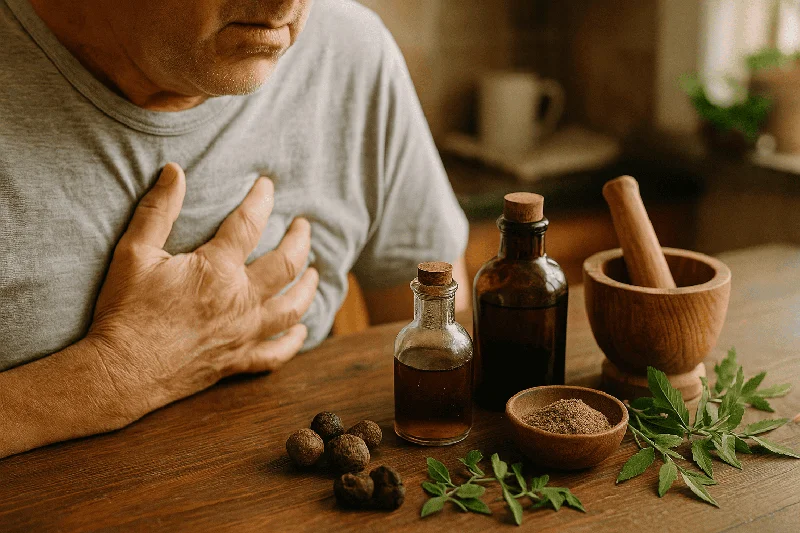
- Angina is chest pain or discomfort that occurs when your heart muscle doesn't receive enough oxygen-rich blood.
- It's not a disease itself — it's a symptom, a warning signal from your heart that something is wrong with your coronary blood supply. Most commonly caused by coronary artery disease (CAD), angina affects millions of people worldwide and serves as one of the most important early indicators that you may be at risk for a heart attack. Understanding what angina is, recognizing its symptoms, and knowing exactly what to do during an episode can literally save your life.
The term "angina pectoris" comes from Latin — angere meaning "to strangle" or "to squeeze," and pectus meaning "chest." That etymology perfectly describes what patients report: a squeezing, strangling pressure in the chest that can radiate to the jaw, arms, neck, and back. While angina itself is manageable with proper treatment, untreated or unstable angina can progress to myocardial infarction (heart attack) and sudden cardiac death.
What Is Angina and How Does It Affect Your Heart?
Angina occurs when there's a mismatch between your heart's oxygen demand and supply. Your heart is a muscle that works continuously, pumping approximately 2,000 gallons of blood every day. To fuel this work, the heart muscle needs a constant supply of oxygenated blood delivered through the coronary arteries.
When these arteries become narrowed or blocked — most often by atherosclerosis (buildup of fatty plaques inside artery walls) — the blood flow to portions of the heart muscle decreases. During rest, the reduced flow might be sufficient. But when you exert yourself physically or experience emotional stress, your heart demands more oxygen, and the narrowed arteries simply can't deliver enough. This oxygen deficit in the heart muscle is called myocardial ischemia, and the pain it produces is angina.

The Pathophysiology Behind Angina Pain
The mechanism is more complex than simple plumbing. Atherosclerosis begins with damage to the endothelium (the inner lining of your arteries). Inflammation follows, and over years, cholesterol, calcium, and cellular debris accumulate within the arterial wall, forming plaques. These plaques have a fibrous cap covering a lipid-rich core.
- In stable angina, the plaque is covered by a thick, stable fibrous cap. Blood flow is restricted but predictable. In unstable angina, however, the fibrous cap becomes thin and vulnerable to rupture.
- When it ruptures, the body's clotting system activates — platelets aggregate at the site, forming a thrombus (blood clot) that can severely or completely obstruct blood flow.
- This cascade — plaque rupture → platelet aggregation → thrombus formation → severe ischemia — explains why unstable angina is considered a medical emergency and often precedes full myocardial infarction with tissue necrosis.
Why Does Angina Pain Radiate to Other Areas?
One of the most confusing aspects of angina for patients is referred pain — feeling the discomfort not just in the chest but in the jaw, left arm, shoulders, neck, or upper back. This happens because the heart and these body areas share the same spinal nerve pathways (specifically, the T1-T5 dermatomes). Your brain receives pain signals from the heart through these shared pathways and sometimes "misinterprets" the source, attributing the pain to the arm or jaw instead of the heart. This is why some people experience angina primarily as jaw pain or left arm discomfort rather than classic chest pain.
What Are the Types of Angina?
Not all angina is the same. The type determines the severity, treatment approach, and urgency of medical intervention.
Stable Angina (Angina Pectoris)
- This is the most common form.
- Stable angina follows a predictable pattern — it occurs during physical exertion, emotional stress, exposure to cold weather, or after heavy meals. The pain typically lasts 3–5 minutes and relieves with rest or nitroglycerin. Stable angina happens because fixed atherosclerotic plaques narrow the coronary arteries, limiting blood flow during increased demand. While it's not immediately life-threatening, stable angina indicates significant coronary artery disease and requires ongoing management.
Physicians grade stable angina severity using the Canadian Cardiovascular Society (CCS) classification:
| CCS Class | Description |
|---|---|
| Class I | Angina only during strenuous or prolonged physical activity |
| Class II | Slight limitation — angina during vigorous activity like walking uphill, climbing stairs rapidly, or exercising after meals |
| Class III | Marked limitation — angina during mild everyday activities like walking one or two blocks on level ground |
| Class IV | Inability to perform any physical activity without discomfort; angina may occur at rest |
Unstable Angina
- Unstable angina is far more dangerous.
- It occurs unpredictably — at rest, during sleep, or with minimal exertion. The pain is typically more severe, lasts longer (often more than 20 minutes), and doesn't respond well to nitroglycerin. Interestingly, research has shown that approximately 64% of unstable angina episodes occur between 10:00 PM and 8:00 AM, possibly related to circadian variations in platelet activity and vascular tone.
Unstable angina is classified as an acute coronary syndrome alongside heart attack. It requires immediate emergency care. If you or someone near you experiences angina that is new, worsening, or occurring at rest — call emergency services immediately.
Variant Angina (Prinzmetal's Angina)
This rare form is caused by a spasm of the coronary artery rather than plaque buildup. The spasm temporarily narrows the artery, reducing blood flow. Variant angina often occurs at rest, frequently between midnight and early morning. It can affect people with or without atherosclerosis. Calcium channel blockers are the primary treatment.
Microvascular Angina (Cardiac Syndrome X)
Microvascular angina occurs when the smallest coronary arteries (the microvasculature) don't function properly, even though the major coronary arteries appear normal on angiography. This condition is significantly more common in women. The Women's Ischemia Syndrome Evaluation (WISE) study, conducted by the National Heart, Lung, and Blood Institute, demonstrated that microvascular angina — previously dismissed as benign — actually carries meaningful cardiovascular risk and requires treatment. This finding fundamentally changed how cardiologists approach chest pain in women with normal-appearing coronary arteries.
What Are the Symptoms of Angina?
The classic angina symptom is chest discomfort described as pressure, squeezing, heaviness, tightness, or burning. Patients often say it feels like "an elephant sitting on my chest" or "a tight band around the chest."
However, angina doesn't always present as textbook chest pain.
Associated symptoms include:
- Shortness of breath (dyspnea)
- Nausea and sometimes vomiting
- Excessive sweating (diaphoresis)
- Dizziness or lightheadedness
- Fatigue, sometimes extreme and unexplained
- Pain radiating to the jaw, left arm, both arms, neck, shoulders, or back
How Angina in Women Can Be Different Than Men
- Women are more likely to experience "atypical" angina symptoms — which is somewhat of a misnomer, since these symptoms are very typical for women.
- Instead of classic crushing chest pain, women may experience:
- Sharp or stabbing chest pain rather than pressure
- Nausea and vomiting as the predominant symptom
- Shortness of breath without chest pain
- Abdominal pain or discomfort
- Extreme fatigue, sometimes days before an event
- Discomfort in the neck, jaw, or back without chest involvement
Because these symptoms don't match the "classic" male-pattern presentation, angina and heart attacks in women are more frequently misdiagnosed or diagnosed later. If you're a woman experiencing any of these symptoms, especially with risk factors, seek medical evaluation promptly.
What Are the Main Causes and Risk Factors?
Primary Causes
- The overwhelming cause of angina is coronary artery disease (CAD) due to atherosclerosis.
- Other causes include:
- Coronary artery spasm (vasospasm) — the cause of variant angina
- Coronary microvascular disease — dysfunction in the tiny arteries of the heart
- Severe aortic stenosis — narrowing of the aortic valve increases cardiac workload
- Hypertrophic cardiomyopathy — thickened heart muscle requires more oxygen
- Severe anemia — reduced oxygen-carrying capacity of blood
Risk Factors You Should Know
Some risk factors are modifiable (you can change them), and some are not:
| Non-Modifiable Risk Factors | Modifiable Risk Factors |
|---|---|
| Age (men >45, women >55) | High blood pressure |
| Family history of early heart disease | High LDL cholesterol / low HDL |
| Gender (men at higher risk overall, but women's risk rises post-menopause) | Cigarette smoking |
| Diabetes mellitus | |
| Obesity and physical inactivity | |
| Chronic stress | |
| Excessive alcohol consumption | |
| Unhealthy diet |
How Is Angina Diagnosed?
Diagnosing angina involves a combination of clinical assessment and specialized testing:
- Electrocardiogram (ECG/EKG) — records the heart's electrical activity; may show ischemic changes during an episode
- Stress testing — monitors your heart during exercise (treadmill or stationary bike) to provoke and detect ischemia
- Coronary angiography — the gold standard; a catheter is inserted into the coronary arteries and dye is injected to visualize blockages on X-ray
- Blood tests (troponin levels) — troponin is released when heart muscle is damaged. Elevated troponin suggests unstable angina or heart attack rather than stable angina
- Nuclear stress test (MUGA scan) — uses a radioactive tracer to image blood flow to the heart during rest and stress
- CT coronary angiography — a non-invasive alternative to traditional angiography
- Echocardiography — ultrasound of the heart to assess pumping function and valve health
Your doctor will also take a detailed history of your symptoms: when they occur, what triggers them, how long they last, and what relieves them. This clinical picture often provides the most importnt diagnostic clues.
Don't wait or self medicate. Start chat with Doctor NOW
How Is Angina Treated?
Treatment aims to reduce the frequency and severity of episodes, improve quality of life, and — most critically — prevent heart attack and death.
Medications
- Nitroglycerin — the first-line rescue medication for angina episodes. It dilates blood vessels, improving blood flow to the heart. Available as sublingual tablets, sprays, patches, and long-acting oral forms
- Beta-blockers (metoprolol, atenolol) — slow heart rate and reduce blood pressure, decreasing the heart's oxygen demand
- Calcium channel blockers (amlodipine, diltiazem) — relax and widen blood vessels; particularly effective for variant angina
- Antiplatelet agents (aspirin, clopidogrel) — prevent blood clots from forming on plaque surfaces
- Statins — lower cholesterol and stabilize atherosclerotic plaques
- Ranolazine — a newer alternative that works differently from traditional anti-anginal drugs by reducing abnormal sodium and calcium currents in heart cells, improving blood flow without significantly affecting heart rate or blood pressure
- ACE inhibitors — especially beneficial if angina coexists with high blood pressure or heart failure
Important Drug Interactions and Side Effects
Nitroglycerin must never be taken with phosphodiesterase-5 (PDE-5) inhibitors like sildenafil (Viagra), tadalafil (Cialis), or vardenafil. The combination can cause severe, life-threatening hypotension — a dangerous drop in blood pressure that can lead to collapse and death. If you use PDE-5 inhibitors, inform your cardiologist immediately.
Beta-blockers can cause fatigue, cold extremities, depression, sexual dysfunction, and may mask hypoglycemia symptoms in diabetics. They should not be stopped abruptly, as this can cause rebound tachycardia and worsening angina.
Procedures and Surgery
When medications alone aren't sufficient:
- Percutaneous coronary intervention (PCI) with stenting — a catheter with a balloon is inserted into the blocked artery. The balloon is inflated to compress the plaque, and a stent (wire mesh tube) is placed to keep the artery open
- Coronary artery bypass grafting (CABG) — open-heart surgery where a healthy blood vessel from another part of the body is used to "bypass" the blocked coronary artery
- Transmyocardial laser revascularization — a specialized laser creates tiny channels in the heart muscle to improve blood flow; used for severe angina that doesn't respond to other treatments
Emerging and Experimental Therapies
- Enhanced external counterpulsation (EECP) — inflatable cuffs on the legs compress in sync with your heartbeat, improving blood flow to the heart. A non-invasive outpatient treatment typically delivered over 35 sessions
- Cardiac shockwave therapy — low-intensity shockwaves applied to the heart to stimulate new blood vessel growth (angiogenesis)
- Gene therapy — still experimental, involves introducing genes that promote blood vessel growth directly into the heart muscle
- Angina vs Heart Attack: How to Tell the Difference
This is one of the most critical distinctions every person should understand. The table below compares stable angina, unstable angina, and heart attack:
| Feature | Stable Angina | Unstable Angina | Heart Attack |
|---|---|---|---|
| Trigger | Physical exertion, stress, cold, heavy meals | Occurs at rest or with minimal exertion | Often at rest; may have no clear trigger |
| Duration | 3–5 minutes | 10–20+ minutes | Usually >20 minutes |
| Nitroglycerin response | Relieves within minutes | Partial or no relief | Little to no relief |
| Pattern | Predictable, consistent | New, worsening, or changing pattern | — |
| Severity | Mild to moderate | Moderate to severe | Usually severe |
| Troponin levels | Normal | Normal or slightly elevated | Significantly elevated |
| Risk level | Managed with medication | Emergency — high heart attack risk | Life-threatening emergency |
Key rule: If your chest pain is new, lasts longer than usual, occurs at rest, or doesn't respond to nitroglycerin within 5 minutes — treat it as a heart attack until proven otherwise. Call emergency services immediately.
Angina vs. Other Causes of Chest Pain
- Not all chest pain is cardiac.
- Here's how to differentiate:
- GERD (acid reflux) — burning sensation, worsens after eating or lying down, often relieved by antacids. Can mimic angina closely
- Musculoskeletal pain — sharp, localized, reproducible by pressing on the chest wall, worsens with specific movements
- Panic attack — rapid heartbeat, tingling, hyperventilation, feeling of doom; usually in younger patients without cardiac risk factors
- Pleurisy — sharp pain that worsens with deep breathing or coughing
- Pericarditis — sharp chest pain that improves when leaning forward
- Pulmonary embolism — sudden shortness of breath, chest pain with breathing, rapid heart rate; a medical emergency
When in doubt, always seek medical evaluation. It's far better to visit the emergency room for non-cardiac chest pain than to stay home during an actual heart attack.

Step-by-Step Action Plan During an Angina Attack
Knowing exactly what to do during an angina episode can prevent panic and potentially save your life.
Follow these steps:
- Stop all activity immediately. Sit down or lie down in a comfortable position. Do not try to "push through" the pain
- Stay calm. Anxiety increases your heart rate and oxygen demand, which worsens the ischemia
- Take nitroglycerin if prescribed — one tablet under the tongue or one spray. Let it dissolve completely
- Start timing. Note when the pain started and when you took the medication
- Wait 5 minutes. If pain persists, take a second dose of nitroglycerin
- Wait another 5 minutes. If still no relief, take a third dose
- If pain continues after 3 doses (15 minutes total) — call emergency services immediately. This may be unstable angina or a heart attack
- Chew an aspirin (325 mg) if you're not allergic, while waiting for the ambulance
- Do NOT drive yourself to the hospital. Wait for emergency medical services
What NOT to do:
- Don't ignore the pain hoping it will pass
- Don't take someone else's cardiac medication
- Don't eat or drink while experiencing chest pain
- Don't take nitroglycerin if you've taken a PDE-5 inhibitor (Viagra, Cialis) within the last 24–48 hours
Diet, Exercise, and Lifestyle Changes for Angina Prevention
Heart-Healthy Diet
Diet plays a fundamental role in managing and preventing angina. The Mediterranean diet has the strongest evidence base for cardiovascular protection. The landmark PREDIMED trial (2013, published in The New England Journal of Medicine) demonstrated that a Mediterranean diet supplemented with extra-virgin olive oil or nuts reduced major cardiovascular events by approximately 30% compared to a low-fat control diet.
Foods to include:
- Fatty fish (salmon, mackerel, sardines) — rich in omega-3 fatty acids that reduce inflammation and triglycerides
- Fruits and vegetables — aim for 5+ servings daily
- Whole grains (oats, brown rice, whole wheat)
- Nuts and seeds, especially walnuts and flaxseeds
- Olive oil as your primary cooking fat
- Legumes (lentils, chickpeas, beans)
Foods to limit or avoid:
- Trans fats (found in many processed and fried foods)
- Excessive sodium (limit to <2,000 mg/day if you have heart disease)
- Refined sugars and processed carbohydrates
- Red and processed meats
- Excessive alcohol (limit to 1 drink/day for women, 2 for men)
Safe Physical Activity and Cardiac Rehabilitation
Exercise is both a trigger for angina and — paradoxically — one of its best long-term treatments. The key is structured, gradual, supervised exercise.
Cardiac rehabilitation is a medically supervised program that typically includes:
- Monitored exercise sessions 2–3 times per week
- Education about heart-healthy living
- Stress management and psychological support
- Gradual progression from low to moderate intensity
Safe exercise guidelines for angina patients:
- Start with walking — 10–15 minutes at a comfortable pace
- Target heart rate: generally 50–70% of maximum heart rate (your cardiologist will provide specific numbers)
- Always warm up for 5–10 minutes and cool down for 5–10 minutes
- Avoid exercising in extreme cold or heat
- Carry nitroglycerin during exercise
- Stop immediately if you experience chest pain, unusual shortness of breath, or dizziness
Living with Angina: Practical Tips for Daily Life
An angina diagnosis doesn't mean you must stop living. With proper management, most people with stable angina lead full, active lifes.
Travel
- Carry enough medication for the entire trip plus extra days
- Keep nitroglycerin in carry-on luggage, never in checked bags
- Inform airline staff if you have a cardiac condition
- Avoid high-altitude destinations without consulting your doctor
- Travel insurance covering cardiac events is strongly recommended
Work
- Most people with stable angina can continue working
- Discuss any physical demands of your job with your cardiologist
- Keep nitroglycerin at your workplace
- Manage work-related stress through delegation and breaks
Sexual Activity
- Sexual activity is generally safe for patients with stable angina (equivalent to climbing 2 flights of stairs)
- If you can walk briskly without symptoms, sexual activity is likely safe
- Take nitroglycerin prophylactically if advised by your doctor
- Remember the critical interaction: no PDE-5 inhibitors with nitroglycerin
Seasonal Precautions
- Cold weather constricts blood vessels and increases cardiac workload. Cover your mouth and nose, dress in layers, avoid sudden exertion in cold
- Hot weather causes dehydration and increased heart rate. Stay hydrated, avoid midday outdoor activity, and exercise indoors during heat waves
Medical Alert
Consider wearing a medical identification bracelet or necklace that states your cardiac condition and medications. In an emergency where you can't communicate, this information can be lifesaving.
The Psychological Impact of Angina
The mental health aspect of living with angina is often overlooked, yet it significantly affects outcomes and quality of life.
Cardiac anxiety (cardiophobia) is extremely common — patients become hypervigilant about every chest sensation, leading to panic attacks that themselves can mimic angina symptoms, creating a vicious cycle. Studies have shown that up to 20–40% of patients with coronary artery disease experience clinically significant depression, which independently increases the risk of future cardiac events.
Chronic stress also directly harms the cardiovascular system through sustained elevation of cortisol and catecholamines, promoting inflammation, platelet activation, and endothelial dysfunction.
When to seek psychological support:
- Persistent worry about having a heart attack
- Avoiding activities you enjoy due to fear of triggering angina
- Sleep disturbances related to cardiac anxiety
- Feelings of hopelessness or depression after diagnosis
- Social withdrawal
Cognitive behavioral therapy (CBT) has shown effectiveness in reducing cardiac anxiety. Stress management techniques including mindfulness meditation, deep breathing exercises, and progressive muscle relaxation are evidence-based complementary approaches. Don't hesitate to ask your cardiologist for a referral to a psychologist experienced in cardiac patients.
Prognosis: Can Angina Be Cured?
Stable angina, while not curable in most cases (since the underlying atherosclerosis is a chronic condition), is very manageable. Data suggests that patients with moderate to severe stable angina (CCS classes II–IV) have a 5-year survival rate of approximately 92% with proper medical management — a dramatic improvement from the early 20th century, when severe angina was considered a sign of imminent death.
The prognosis depends heavily on:
- The number and severity of coronary artery blockages
- Left ventricular function (how well your heart pumps)
- How well risk factors are controlled
- Adherence to medication and lifestyle changes
Early 1900s cardiologists had limited tools. Today, with modern pharmacology, interventional cardiology, and cardiac surgery, even patients with severe multi-vessel disease can live long, productive lives.
Frequently Asked Questions (FAQ)
Is angina the same as a sore throat (angina/tonsillitis)?
No. This is a common point of confusion, especially in countries where "angina" is also used to describe throat infections (like in Hindi, Russian, or German medical terminology). Angina pectoris refers exclusively to cardiac chest pain caused by reduced blood flow to the heart. A sore throat or tonsillitis is a completely different condition affecting the throat. If your doctor mentions "angina" in a cardiac context, they're referring to heart-related chest pain.
Is angina dangerous?
Stable angina, when properly managed, is not immediately life-threatening. However, it indicates underlying coronary artery disease, which is serious. Unstable angina is dangerous and constitutes a medical emergency because it can rapidly progress to a heart attack. Any new or changing pattern of chest pain should be evaluated urgently.
How do you pronounce "angina"?
Angina is pronounced an-JY-nuh (with the stress on the second syllable) in most medical contexts, though some clinicians say AN-juh-nuh. Both pronunciations are accepted.
Can angina go away on its own?
Individual episodes of stable angina resolve with rest or nitroglycerin, but the underlying condition (coronary artery disease) does not disappear on its own. With aggressive lifestyle changes and medication, the progression of atherosclerosis can be slowed and, in some cases, partially reversed. But angina as a condition requires ongoing management.
Can you die from angina?
Stable angina itself rarely causes death directly. However, the coronary artery disease causing angina can lead to heart attack or sudden cardiac death if untreated. Unstable angina carries significant short-term risk and requires emergency treatment.
What is the connection between angina and the heart?
Angina is a direct symptom of your heart not receiving enough oxygenated blood. The heart muscle (myocardium) produces pain signals when it becomes ischemic — starved of oxygen. This is your body's alarm system, telling you that your coronary arteries are not delivering adequate blood supply.
Take Control of Your Heart Health Today
- Angina is your heart's way of asking for help.
- It's a warning — not a death sentence. With timely diagnosis, appropriate medication, lifestyle modifications, and regular follow-up with your cardiologist, you can manage angina effectively and significantly reduce your risk of heart attack.
Your next steps:
- If you experience any chest discomfort, get evaluated by a healthcare provider — don't wait
- If you've been diagnosed with angina, follow your medication regimen strictly and attend all follow-up appointments
- Adopt a heart-healthy diet and start a supervised exercise program
- Address your risk factors: quit smoking, manage blood pressure, control diabetes, maintain a healthy weight
- Don't neglect your mental health — anxiety and depression are treatable and affect cardiac outcomes
Every day you invest in your heart health is a day you invest in your future. Start today.
This article is for informational purposes only and does not substitute professional medical advice. Always consult your healthcare provider for diagnosis and treatment decisions specific to your condition.
Scientific Sources
- Overview of Microvascular Angina Pectoris and Discussion of Traditional Chinese Medicine Intervention — Yu L et al., 2022, Evidence-based complementary and alternative medicine : eCAM
- Generation of a medicine food homology formula and its likely mechanism in treatment of microvascular angina — Jin Z et al., 2024, Frontiers in pharmacology
- Traditional and Alternative Therapies for Refractory Angina — Kocyigit D et al., 2017, Current pharmaceutical design
- Dalbergia odorifera: A review of its traditional uses, phytochemistry, pharmacology, and quality control — Zhao X et al., 2020, Journal of ethnopharmacology
- Evidence and Characteristics of Traditional Chinese Medicine for Coronary Heart Disease Patients With Anxiety or Depression: A Meta-Analysis and Systematic Review — Wang B et al., 2022, Frontiers in pharmacology
- Traditional Chinese medicine injection for angina pectoris: an overview of systematic reviews — Luo J et al., 2014, The American journal of Chinese medicine
- Flavonoids and saponins: What have we got or missed? — Wang X et al., 2023, Phytomedicine : international journal of phytotherapy and phytopharmacology
- Experimental and early investigational drugs for angina pectoris — Elgendy IY et al., 2016, Expert opinion on investigational drugs
- Di'ao Xinxuekang: Therapeutic Potential in Cardiovascular Diseases — Zhang S et al., 2021, Current molecular pharmacology
- Reporting quality of randomized controlled trials of angina pectoris with integrated traditional Chinese and western medicine interventions: a cross-sectional study — Deng J et al., 2023, BMC medical research methodology
- A systematic review and meta-analysis of clinical research on treating angina pectoris of coronary heart disease with traditional Chinese medicine to promote blood circulation and remove blood stasis — Chen W et al., 2021, Annals of palliative medicine
- Lamiaceae in the treatment of cardiovascular diseases — Patrignani F et al., 2021, Frontiers in bioscience (Landmark edition)
- Analysis of acupoint selection and prescription rules of acupuncture for treatment of stable angina pectoris based on a Traditional Chinese Medicine inheritance calculation platform: A systematic review — Yang K et al., 2022, Medicine
- Traditional medicine Kuanxiong Aerosol alleviates atherosclerotic plaque inflammation by mitigating CX3CR1(+) macrophage apoptosis via the cGAS-STING pathway — Chen Y et al., 2025, Phytomedicine : international journal of phytotherapy and phytopharmacology
- Efficacy and safety of different traditional Chinese medicine injections in the treatment of unstable angina pectoris: a systematic review and Bayesian network meta-analysis — Chen Q et al., 2025, Frontiers in pharmacology
- Evaluation of the add-on effect of chinese patent medicine for patients with stable or unstable angina: a systematic review and meta-analysis — Mao C et al., 2013, Evidence-based complementary and alternative medicine : eCAM
- A systematic review of the effectiveness and safety of Chinese herbal medicine formula Gualou Xiebai Banxia (GLXBBX) decoction for the treatment of stable angina pectoris — Chen M et al., 2019, Medicine
- Efficacy and safety of Tongmai Jiangtang Capsule in the treatment of type 2 diabetes mellitus complicated with coronary heart disease with syndrome of damp - heat obstructing collaterals — Wan H et al., 2025, Phytomedicine : international journal of phytotherapy and phytopharmacology
- Effect of Traditional Chinese Medicine combined with Western Medicine on blood lipid levels and inflammatory factors in patients with angina pectoris in coronary heart disease identified as intermingled phlegm and blood stasis syndrome: a network Meta-analysis — Chao W et al., 2023, Journal of traditional Chinese medicine = Chung i tsa chih ying wen pan
- The cardiovascular protective effect and mechanism of calycosin and its derivatives — Pan L et al., 2020, Chinese journal of natural medicines
Questions from users
Can I use gene therapy for improving blood vessel growth in heart patients?
Kennedy
8 days ago
Gene therapy is still experimental when it comes to growing new blood vessels in heart patients. It's not widely available as a standard treatment yet and it's mostly used in clinical trials. But it holds potential for future use! If you're considering this, it’s best to discuss it with your doctor, they'd have the most updated info on what's available for you.
Is it safe to exercise with stable angina symptoms?
Isaac
17 days ago
Yeah, it's possible to exercise with stable angina, but you gotta be careful. Stick to moderate activity and, ideally, do it under medical supervision or after a chat with your doctor. Listen to your body—if you feel chest pain, stop and rest. Balancing exercise with managing stress, diet, and meds can really help improve your heart health!
What causes variant angina and how does it differ from other types of angina?
Valerie
26 days ago
Variant angina, or Prinzmetal's angina, happens due to a spasm in the coronary artery, not plaque build-up. That makes it different from other anginas like stable or unstable angina, which are usually caused by atherosclerosis. It's often unpredictable, can happen at rest, and requires medical attention.
What is the difference between stable and unstable angina?
Reese
35 days ago
Stable angina is predictable and happens during physical exertion or stress, it's like your heart giving a yell for oxygen. Unstable angina, though, is sneaky and can hit you even when resting & it's more serious, probably more of an emergency. It's your heart giving a bigger warning cry. If chest pain feels different or unexpected, check it out asap!
How does turmeric help with heart function and circulation?
Meredith
45 days ago
Turmeric, with its anti-inflammatory magic, can really help support heart health. Curcumin, the active compound, helps reduce inflammation in the arteries, making circulation smoother and keeping blood pressure in check a bit. It may not be a cure-all but adding a pinch to your diet could support better heart function.
What are the benefits of a balanced diet rich in fruits and vegetables for angina management?
Presley
55 days ago
Eating lots of fruits and veggies can work wonders for your heart! They’re packed with nutrients that improve circulation and lower blood pressure, which can really help manage angina. Plus, they bring balance to your doshas and enhance your overall heart health. Just try to keep a good variety in there to get all the benefits!
Can integrating meditation into my daily routine help lower blood pressure?
Seth
64 days ago
Yes, meditation can definitely help lower blood pressure. In Ayurveda, relaxation techniques like meditation are key to balancing the body and reducing stress, a common culprit behind high blood pressure. Try doing meditation daily, even just for short periods, to see if it makes a difference over time. Remember tho, consistency is key!
What is angina pain and how does it differ from a heart attack?
Peyton
74 days ago
Angina pain happens when there's reduced blood flow to your heart, causing a squeezing or pressure-like feeling in the chest. While similar to a heart attack, angina usually is shorter-lived. Heart attacks involve a blocked artery, leading to tissue damage, hence more severe. Pay attention to diet, manage stress, and get moving to help balance your heart health, like Ayurveda suggests.
What is the potential impact of yoga on heart health and blood pressure?
Makayla
83 days ago
Yoga's quite the multitasker for heart health! It lowers stress, which can reduce blood pressure, and can improve circulation, too. Practicing often might even help balance your doshas and strengthen agni (digestive fire) which Ayurveda says influences overall health. It’s no miracle, but it’s sure a helpful friend in keeping that heart ticking happily!
Is Ashwagandha effective for reducing stress and improving heart health?
Mia
93 days ago
Yes, Ashwagandha can be pretty effective for stress reduction! It's known to help stabilize cortisol levels, which can improve how you handle stress. As for heart health, it can support the heart by reducing stress, which indirectly helps manage heart conditions. But it's always a good idea to check with an expert before starting new herbs, just to be sure it suits your unique constitution. Stay balanced!
Related articles

Cardio Disorders
Cardostab Uses – Ayurvedic Formulation for Enhanced Cardiovascular Health
Discover Cardostab uses in Ayurveda, a natural remedy designed to strengthen the heart, improve circulation, and support overall cardiovascular function through potent herbal ingredients.
3,309

Cardio Disorders
Amycordial Syrup – Uses, Dose, Ingredients, Side Effects
Exploration of Amycordial Syrup – Uses, Dose, Ingredients, Side Effects
3,511

Cardio Disorders
Ayurvedic Medicine for High Triglycerides: Natural Solutions
Discover Ayurvedic remedies for high triglycerides. Learn about herbal supplements, dietary recommendations, and natural cholesterol-lowering remedies for healthy lipid levels.
5,781

Cardio Disorders
Abana Tablet Uses, Dose, Ingredients, Side Effects
Exploration of Abana Tablet Uses, Dose, Ingredients, Side Effects
6,649

Cardio Disorders
High BP Symptoms: Early Warning Signs and Ayurvedic Solutions
Discover the key symptoms of high BP, how to recognize early signs, understand hypertension, and learn Ayurvedic ways to control high blood pressure naturally
2,197

Cardio Disorders
Cardostab Tablets Benefits, Dosage, Ingredients, Side Effects
Exploration of Cardostab Tablets Benefits, Dosage, Ingredients, Side Effects
2,576

Cardio Disorders
Ayurvedic Medicine for Heart Palpitations: Natural Solutions
Explore Ayurvedic approaches for heart palpitations. Discover holistic support strategies, herbal treatments, and lifestyle tips to promote cardiovascular balance and reduce palpitations.
4,065

Cardio Disorders
Hridyamrit Vati Dosage – Comprehensive Guide to Ayurvedic Heart Tonic
Discover the optimal hridyamrit vati dosage to boost heart health and vitality with ancient Ayurvedic wisdom.
4,644
Cardio Disorders
Managing High Blood Pressure with Ayurvedic Approaches
High blood pressure, also known as hypertension, has become a widespread health issue, affecting millions of people globally in today’s fast-paced world.
3,401
Cardio Disorders
Hridya Mahakashaya: Powerful Ayurvedic Formula for Heart Health
Discover the benefits, proper dosage, side effects, and scientific research behind Hridya Mahakashaya, a group of ten Ayurvedic medicines for cardiovascular health.
3,883
Related consultations on the topic
Legal
Additional Documents
© 2024 Ask Ayurveda. All rights reserved.