Ask Ayurvedic doctor a question and get a consultation online on the problem of your concern in a free or paid mode. More than 2,000 experienced doctors work and wait for your questions on our site and help users to solve their health problems every day.
FREE! Ask Ayurvedic Doctors 24/7

 Fast responses
 1000+ verified doctors
Body DetoxEar, Nose, and Throat DisordersGeriatrics & RejuvenationImmunodeficiencyInfertility TreatmentNutritionOrthopedic DisordersPediatricsRespiratory DisordersSexually Transmitted Diseases (STDs)Surgery RecoveryUrological DisordersVascular DisordersDental DisordersEndocrinological DisordersGastrointestinal DisordersYoga TherapyGeneral MedicineAllergic DisordersCardio DisordersGynecology and ObstetricsCosmetologySkin and Hair DisordersEye DisordersInfectious DiseasesMental DisordersNeurological DisordersOncologyPanchakarmaSexual Health & DisordersSports Medicine
Published on 02/10/25
(Updated on 07/08/26)
star_border 5
3,307
Cardostab Uses – Ayurvedic Formulation for Enhanced Cardiovascular Health

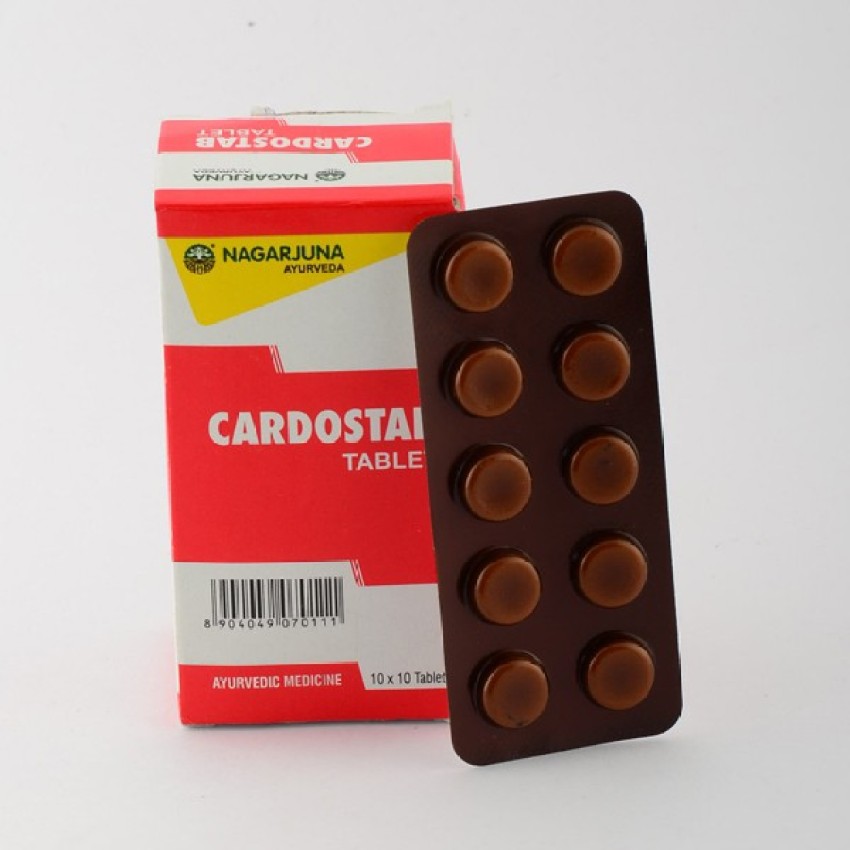
- Cardostab is a proprietary Ayurvedic medicine manufactured by Nagarjuna Herbal Concentrates Ltd. (Kerala, India) and primarily used for managing hypertension (high blood pressure) and supporting overall cardiovascular health. It contains Sarpagandha (Rauwolfia serpentina) as its principal ingredient alongside the Triphala trio — Haritaki, Amalaki, and Vibhitaki — which together help regulate blood pressure, balance Vata and Pitta doshas, and protect the heart. If you've been searching for a detailed, evidence-backed guide on this formulation, you're in the right place.
- Below we cover everything — from how Cardostab actually works at a pharmacological level (something no other guide explains) to contraindications, drug interactions, and diet recommendations during the course.
What Is Cardostab?
Cardostab is a polyherbal tablet formulation rooted in Ayurvedic principles of cardiac care. It falls under the category of hridya (cardio-protective) and rakta-prasadana (blood-purifying) medicines in classical Ayurveda. Unlike single-herb supplements, Cardostab combines a potent anti-hypertensive herb with a synergistic antioxidant complex, making it more than a one-dimensional blood pressure pill.
Manufacturer & Brand Details
| Detail | Information |
|---|---|
| Manufacturer | Nagarjuna Herbal Concentrates Ltd. |
| Location | Thodupuzha, Idukki District, Kerala, India |
| Type | Proprietary Ayurvedic Medicine |
| GMP Certified | Yes |
| License | Manufactured under Ayush manufacturing license |
Nagarjuna is one of Kerala's oldest and most respected Ayurvedic pharmaceutical companies, operating since 1981 with a wide portfolio of classical and proprietary formulations.
Product Specifications (Packaging, Price, Shelf Life)
| Specification | Details |
|---|---|
| Pack Size | 100 tablets per bottle |
| MRP | ₹375 (may vary slightly across platforms) |
| Form | Tablets (oral) |
| Shelf Life | 36 months from date of manufacture |
| Storage | Cool, dry place below 30°C; away from direct sunlight |
Price comparison across platforms (approximate, as of 2025):
| Platform | Price (100 tabs) |
|---|---|
| 1mg | ₹356–₹375 |
| Amazon India | ₹375–₹399 |
| AyushBuy | ₹375 |
| Planet Ayurveda Store | ₹375 (Pack of 2 available) |
| eAyur.com | ₹350–₹375 |
Prices fluctuate due to seller discounts and shipping. Buying directly from authorised Nagarjuna dealers or reputed online pharmacies is always recommended to ensure authenticity.
Key Ingredients of Cardostab
- The efficacy of any Ayurvedic formulation rests on the quality and synergy of its ingredients.
- Cardostab's formula is deceptively simple — just four herbs — but their combined pharmacological punch is significant.
Sarpagandha (Rauwolfia serpentina)
This is the star ingredient. Sarpagandha, also known as Indian Snakeroot, has been used in Ayurveda for centuries to calm the mind and lower blood pressure. What most competitor articles fail to mention is the why behind its effectiveness.
Rauwolfia serpentina contains over 50 different indole alkaloids, the most notable being reserpine. Reserpine was actually one of the first effective antihypertensive drugs used in modern Western medicine — it was isolated from this very plant in 1952. A landmark paper published in The Indian Medical Gazette (1954) documented significant blood pressure reduction in hypertensive patients treated with Rauwolfia extracts.
Key alkaloids and their roles:
- Reserpine — depletes catecholamines (norepinephrine, dopamine, serotonin) from nerve terminals, leading to reduced sympathetic nervous system activity and lower blood pressure
- Ajmaline — has anti-arrhythmic properties
- Serpentine — contributes to sedative and anxiolytic effects
The whole-plant extract used in Ayurvedic preparations (as opposed to isolated reserpine) is generally considered to have a gentler, more balanced action due to the buffering effect of multiple co-occurring alkaloids and other phytochemicals.
Haritaki (Terminalia chebula / Harad)
Called the "King of Medicines" in Tibetan medicine and revered in Ayurveda as a rasayana (rejuvenative), Haritaki is one of three fruits in the Triphala combination.
It supports cardiac health through multiple mechanisms:
- Hypolipidemic action — A 2019 study in the Journal of Ethnopharmacology demonstrated that Terminalia chebula extract significantly reduced total cholesterol and LDL in animal models
- Antioxidant activity — Rich in chebulic acid and gallic acid, which neutralize free radicals that damage endothelial cells
- Mild laxative effect — Helps eliminate ama (metabolic toxins) which, in Ayurvedic understanding, contribute to cardiovascular disease
Amalaki (Emblica officinalis / Amla)
Amla is one of the richest natural sources of Vitamin C — containing approximately 600–900 mg per fruit.
But its benefits extend far beyond vitamin content:
- A randomized controlled trial published in the European Journal of Clinical Nutrition (2012) found that amla extract supplementation (500 mg twice daily for 12 weeks) significantly reduced platelet aggregation and lowered inflammatory marker CRP, both of which are risk factors for cardiovascular events
- It supports endothelial function by improving nitric oxide bioavailability, which helps blood vessels dilate properly
- In Ayurvedic terms, Amla is tridosha-balancing but especially pacifies Pitta, making it valuable for conditions involving heat and inflammation in the blood
Vibhitaki (Terminalia bellirica / Baheda)
The third member of the Triphala trio, Vibhitaki rounds out the formulation:
- Studies show hypolipidemic activity comparable to certain statins in animal models (Shaila et al., Indian Journal of Clinical Biochemistry, 1998)
- Possesses anti-atherosclerotic potential by inhibiting lipid peroxidation
- In Ayurveda, it specifically pacifies Kapha dosha and helps reduce medas (excess fat tissue), which is relevant for cardiovascular disease management
Role of Triphala in the Formulation
You might wonder — why include all three Triphala herbs instead of just Sarpagandha alone? This is where Ayurvedic formulation science (Bhaishajya Kalpana) gets interesting.
Sarpagandha is a powerful herb, but it is also inherently tikshna (sharp) and can aggravate Vata if used in isolation over long periods.
Triphala serves multiple purposes here:
- 1.Bioenhancer — Triphala improves absorption and bioavailability of active compounds
- 2.Balancing agent — Counters potential side effects of Sarpagandha (like gastric irritation or constipation)
- 3.Cardiovascular support — Adds its own independent cardioprotective, hypolipidemic, and antioxidant actions
- 4.Detoxification — Ensures proper elimination of metabolic waste, which Ayurveda considers essential during any treatment protocol
How Does Cardostab Work? (Mechanism of Action)
This is perhaps the biggest gap in existing online content about Cardostab. Nobody explains how it actually works. Let's fix that.
Ayurvedic Perspective — Effect on Tridosha
In Ayurvedic pathology, hypertension is primarily understood as a condition involving:
- Vitiated Vyana Vata — The subdosha responsible for circulation. When aggravated, it increases the force of blood flow
- Pitta involvement — Excess Pitta heats the blood (rakta dhatu) and inflames vessels
- Kapha role — Blockages from Kapha (cholesterol, plaque) narrow the channels (srotas), increasing pressure
Cardostab addresses all three:
| Dosha | Action | Primary Herb(s) |
|---|---|---|
| Vata | Calms Vyana Vata, reduces excessive circulatory force | Sarpagandha, Haritaki |
| Pitta | Cools and purifies Rakta dhatu | Amalaki |
| Kapha | Clears channel blockages, reduces excess medas | Vibhitaki, Haritaki |
The net result is balancing of Pitta and Vata doshas primarily, with secondary Kapha-reducing action.
Pharmacological Perspective — Reserpine & Alkaloids
From a modern pharmacological standpoint, Cardostab works through several mechanisms simultaneously:
- 1.Sympatholytic action — Reserpine from Sarpagandha irreversibly blocks the vesicular monoamine transporter (VMAT), preventing storage of norepinephrine in synaptic vesicles. This reduces sympathetic nervous system output, lowering heart rate and blood pressure
- 2.Vasodilation — Ajmaline and serpentinine contribute to relaxation of vascular smooth muscle
- 3.Antioxidant protection — Triphala's polyphenols (gallic acid, ellagic acid, chebulagic acid) reduce oxidative stress on blood vessel walls
- 4.Anti-inflammatory action — Reduction in CRP and other inflammatory markers protects against endothelial dysfunction
- 5.Lipid modulation — Mild but meaningful reduction in total cholesterol and LDL, reducing atherosclerotic risk
It's essentially a multi-target approach — something that single-molecule pharmaceutical drugs often cannot achieve.
Benefits and Uses of Cardostab
Hypertension (High Blood Pressure)
This is the primary indication. Cardostab is most commonly prescribed by Ayurvedic practitioners for mild to moderate essential hypertension (stage 1 and early stage 2). It's worth noting that for severe hypertension (systolic >160 mmHg or diastolic >100 mmHg), it should not be used as a sole treatment — conventional medical intervention is critical in such cases.
Heart Health & Cardiac Support
Beyond blood pressure reduction, Cardostab offers broader cardioprotection — antioxidant defence of cardiac tissue, mild lipid-lowering action, and improved coronary circulation. Some practitioners prescribe it as an adjunct in post-myocardial infarction recovery (alongside conventional treatment), though direct clinical trials for Cardostab specifically in this indication are lacking.
Stress and Anxiety-Related Tension
- Sarpagandha has well-documented anxiolytic and mild sedative properties. Patients with stress-related blood pressure elevation often report improved sleep quality and reduced anxiety when taking Cardostab.
- This dual benefit — lowering BP and calming the nervous system — is particularly valuable, since chronic stress is one of the most common aggravating factors in hypertension.
Other Reported Benefits
- Mild headache relief associated with high blood pressure
- Improved digestion (courtesy of Triphala)
- General detoxification support
- Reduction in palpitations and tachycardia
Dosage & How to Take Cardostab
Recommended Dosage
The standard recommended dosage is 1–2 tablets, twice daily, preferably after meals. However, the exact dosage should always be determined by a qualified Ayurvedic physician based on your specific condition, body constitution (prakriti), and severity of hypertension.
| Patient Profile | Typical Dosage | Frequency |
|---|---|---|
| Mild hypertension | 1 tablet | Twice daily |
| Moderate hypertension | 2 tablets | Twice daily |
| Maintenance / Prevention | 1 tablet | Once or twice daily |
> Important: Do not self-medicate. Sarpagandha-containing formulations require medical supervision.
Duration of Treatment
This is something no competitor website addresses properly. Based on traditional Ayurvedic practice and clinical experience:
- Acute management: 4–6 weeks as initial treatment phase, with regular blood pressure monitoring
- Stabilization phase: 2–3 months at a maintenance dose once BP normalizes
- Long-term use: Some patients continue low-dose Cardostab for 6–12 months or longer under medical supervision. Periodic assessment is essential
Abrupt discontinuation after prolonged use is not recommended — tapering is preferable to avoid rebound hypertension.
Best Time to Take
- Morning dose: After breakfast (around 8–9 AM)
- Evening dose: After dinner (around 7–8 PM)
Taking it with food reduces the likelihood of gastric discomfort.
Adjuvants (Anupana)
In Ayurveda, the medium used to take a medicine (anupana) can enhance its efficacy:
- Warm water — The most common and universally recommended adjuvant
- Milk — Sometimes advised for patients with a Pitta-dominant constitution
- Honey — Occasionally recommended for Kapha-dominant patients (do not heat honey)
Consult your doctor for the best anupana based on your individual constitution.
Don't wait or self medicate. Start chat with Doctor NOW
Side Effects & Safety Profile
Known Side Effects
Cardostab is generally well-tolerated when taken at recommended dosages under medical supervision.
However, possible side effects include:
- Drowsiness or sedation — Due to Sarpagandha's CNS-depressant action
- Nasal congestion — A known side effect of reserpine-containing preparations
- Gastric discomfort — Nausea or mild abdominal discomfort, especially on an empty stomach
- Postural hypotension — Dizziness when standing up quickly, particularly if combined with other antihypertensive medications
- Depression — Reserpine can deplete serotonin; long-term use at high doses has been associated with depressive symptoms in some patients (this is well-documented in pharmacological literature)
- Chest discomfort — Reported by at least one user in online reviews (on 1mg.com), though this is uncommon
A study published in the British Medical Journal (Prisant & Carr, 1990) noted that low-dose reserpine (0.1–0.25 mg/day) had a favourable safety profile with minimal risk of depression, while higher doses carried greater risk. Ayurvedic whole-herb preparations of Sarpagandha typically deliver lower effective reserpine doses compared to purified pharmaceutical reserpine, which may partly explain the generally better tolerability.
Is Cardostab Habit-Forming?
- No. Cardostab is not classified as habit-forming. It does not produce physical dependence or withdrawal symptoms in the traditional sense. However, because of reserpine's mechanism of depleting neurotransmitter stores, abrupt stoppage after prolonged use can cause temporary rebound effects (increased blood pressure, anxiety).
- This is not "addiction" — it's a physiological adjustment.
Precautions & Warnings
- Always take under the guidance of a qualified Ayurvedic physician
- Monitor blood pressure regularly while on treatment
- Inform your doctor about all other medications you are currently taking
- Do not exceed prescribed dosage
- Avoid driving or operating heavy machinery if experiencing drowsiness
- Not recommended for use in children unless specifically prescribed by a paediatric Ayurvedic specialist
Contraindications — Who Should Not Take Cardostab?
This section is critically important and conspicuously absent from every competitor website.
Absolute Contraindications
- Pregnancy — Sarpagandha is classified as potentially uterotonic and should be strictly avoided during pregnancy
- Lactation — Reserpine is known to be excreted in breast milk; avoid during breastfeeding
- Active peptic ulcer disease — Reserpine increases gastric acid secretion
- History of depression — Due to serotonin-depleting effects of reserpine
- Hypotension — If your blood pressure is already low (systolic <90 mmHg), taking Cardostab could be dangerous
- Pheochromocytoma — Contraindicated due to risk of catecholamine release
Relative Contraindications (Use with Caution)
- Patients on allopathic antihypertensive medications (risk of additive hypotension)
- Patients on antidepressant therapy (SSRI, MAOI, tricyclic antidepressants)
- Elderly patients with a tendency toward orthostatic hypotension
- Patients scheduled for surgery (reserpine should ideally be discontinued 2 weeks prior to elective surgery due to risk of severe intraoperative hypotension)
Drug Interactions
Another major gap in existing content. Given that many patients take Cardostab alongside other medications, this information is vital.
| Interacting Drug/Class | Nature of Interaction | Risk Level |
|---|---|---|
| ACE inhibitors, ARBs, Beta-blockers, Calcium channel blockers | Additive blood pressure lowering | High — can cause severe hypotension |
| MAO inhibitors | Reserpine + MAOI can cause hypertensive crisis or excitatory reactions | High — strictly avoid |
| Tricyclic antidepressants | Reserpine may reduce antidepressant efficacy | Moderate |
| SSRIs | Potential serotonin-related interactions | Moderate |
| Digoxin | Additive bradycardia (slow heart rate) | Moderate |
| Levodopa | Reserpine may counteract levodopa's effects in Parkinson's disease | High |
| Alcohol | Enhanced CNS depression and hypotension | Moderate |
| Other sedatives / Sleeping pills | Additive sedation | Moderate |
Bottom line: Always provide your doctor with a complete list of medications — Ayurvedic, allopathic, and supplements — before starting Cardostab.
Cardostab vs. Other Ayurvedic Cardiac Formulations
How does Cardostab stack up against other popular options?
Here's a practical comparison:
| Feature | Cardostab (Nagarjuna) | Mukta Vati (Divya Pharmacy) | Abana (Himalaya) | Arjuna Tablets (Various) |
|---|---|---|---|---|
| Primary Use | Hypertension | Hypertension | General heart health, lipid management | Cardiac support, mild hypertension |
| Key Herb | Sarpagandha | Sarpagandha + Mukta Pishti | Arjuna + multiple herbs | Terminalia arjuna |
| Contains Reserpine | Yes (via Sarpagandha) | Yes (via Sarpagandha) | No | No |
| Anti-anxiety effect | Strong | Moderate | Mild | Mild |
| Lipid-lowering | Mild | Mild | Moderate | Moderate |
| Sedative effect | Yes | Yes | No | No |
| Price (approx.) | ₹375/100 tabs | ₹120/120 tabs | ₹155/60 tabs | ₹100–200/60 tabs |
| Best for | BP reduction + anxiety | BP reduction | Overall cardiac protection | Cardiac muscle support |
Each formulation has its own niche. Cardostab is particularly suited for patients where hypertension coexists with stress, anxiety, or sleep disturbance — the Sarpagandha + Triphala combination handles both the cardiovascular and nervous system aspects.
Diet & Lifestyle Recommendations While Taking Cardostab (Pathya-Apathya)
Ayurveda emphasizes that medicine alone is insufficient — pathya (dietary and lifestyle regimen) is equally important.
Here's what to follow:
Foods to Favour (Pathya)
- Fresh fruits, especially pomegranate (dadima), amla, and watermelon
- Leafy green vegetables, bottle gourd (lauki), ash gourd
- Whole grains — oats, barley, brown rice
- Low-fat dairy — buttermilk, cow's milk
- Garlic (1–2 raw cloves daily — shown to have mild antihypertensive effects)
- Flaxseeds and walnuts (omega-3 sources)
- Adequate water intake — 2 to 3 liters daily
Foods to Avoid (Apathya)
- Excessive salt (limit sodium to <2,000 mg/day)
- Deep fried and heavily processed foods
- Red meat and organ meats
- Excessive caffeine
- Alcohol
- Pickles, papad, and high-sodium condiments
Lifestyle Practices
- Yoga — Shavasana, Bhujangasana, and Pranayama (especially Nadi Shodhana) are specifically beneficial for hypertension
- Walking — 30 minutes of brisk walking daily
- Meditation — Even 10 minutes of daily meditation has been shown to reduce systolic BP by 4–5 mmHg (American Heart Association, 2017 scientific statement)
- Sleep hygiene — 7–8 hours of quality sleep
- Stress management — Avoiding overwork, emotional turbulence, and excessive screen time before bed
User Reviews & Expert Opinions
What Patients Say
On 1mg.com, Cardostab holds a rating of 4.3 out of 5 based on 25+ ratings.
Notable feedback includes:
- Positive: "Controls blood pressure effectively when taken regularly along with diet control" — verified buyer
- Negative: "Experienced mild chest discomfort in the first week, which subsided after consultation with my doctor" — verified buyer
These reviews suggest that while most users experience positive results, medical supervision during the initial phase is important.
Expert Perspective
Ayurvedic practitioners generally regard Cardostab as a reliable formulation for mild to moderate hypertension, especially in patients who prefer avoiding long-term allopathic medication or who experience side effects from conventional drugs. However, reputed doctors consistently emphasize that it should be part of a comprehensive treatment plan — not a standalone solution. As noted in the traditional Ayurvedic text Charaka Samhita (Sutrasthana 16.34): treatment is most effective when diet, lifestyle, and medicine work together.
Frequently Asked Questions (FAQ)
What is Cardostab tablet used for?
Cardostab tablets are primarily used for managing high blood pressure (hypertension) and supporting cardiovascular health. They are also used to address stress-related cardiac tension, mild anxiety, and palpitations.
What are the side effects of Cardostab tablet?
Common side effects include drowsiness, nasal congestion, mild gastrointestinal discomfort, and occasionally postural hypotension (dizziness on standing). In rare cases, prolonged high-dose use may contribute to depressive symptoms. Always use under medical supervision.
What are the ingredients of Cardostab?
Cardostab contains four key herbs: Sarpagandha (Rauwolfia serpentina), Haritaki (Terminalia chebula), Amalaki (Emblica officinalis / Amla), and Vibhitaki (Terminalia bellirica). Together, these form a Sarpagandha + Triphala combination.
What is the price of Cardostab?
The MRP is ₹375 for a bottle of 100 tablets. Prices may vary slightly across online platforms such as 1mg, Amazon India, and AyushBuy, typically ranging from ₹350 to ₹399.
Can I take Cardostab with allopathic blood pressure medicine?
This requires careful medical supervision. Since both Cardostab and allopathic antihypertensives lower blood pressure, combining them can cause excessive hypotension. Never combine without consulting both your Ayurvedic and allopathic doctors.
How long does Cardostab take to show results?
Most patients begin to notice gradual blood pressure reduction within 2–4 weeks of regular use. Full stabilization typically occurs over 6–8 weeks. Individual results vary based on severity of hypertension, diet, and lifestyle compliance.
Is Cardostab safe for long-term use?
Under medical supervision with regular monitoring, Cardostab can be used for extended periods (6–12 months or longer). Periodic blood pressure checks, assessment for side effects (especially mood changes), and dosage adjustments are essential.
Can Cardostab be taken during pregnancy?
No. Cardostab is contraindicated during pregnancy due to the presence of Sarpagandha, which may have uterotonic effects. Pregnant women with hypertension should consult their obstetrician for appropriate management.
Which Ayurvedic medicine is best to reduce cholesterol?
While Cardostab has mild lipid-lowering effects (thanks to Triphala), it is not primarily a cholesterol-lowering medicine. For dedicated cholesterol management, formulations like Medohar Guggulu, Triphala Guggulu, or Arjuna tablets may be more appropriate — your Ayurvedic doctor can guide you based on your specific lipid profile.
Conclusion
- Cardostab is a thoughtfully formulated Ayurvedic medicine that combines the proven antihypertensive properties of Sarpagandha with the holistic benefits of Triphala.
- Its multi-target mechanism — addressing blood pressure, oxidative stress, lipid levels, and nervous system tension simultaneously — makes it a valuable tool in cardiovascular care.
However, it is not a casual supplement. The presence of Rauwolfia serpentina (and its reserpine content) means this formulation demands respect — proper dosing, medical supervision, awareness of contraindications, and attention to drug interactions are non-negotiable.
If you're considering Cardostab for hypertension or cardiac support, consult a qualified Ayurvedic physician who can evaluate your complete health profile, prescribe the right dosage, and monitor your progress. Combine it with the recommended diet and lifestyle practices for best results.
The information in this article is for educational purposes only and should not replace professional medical advice. Always consult a qualified healthcare practitioner before starting any new medication.
Scientific Sources
- The benefits of ashwagandha (Withania somnifera) supplements on brain function and sports performance — Guo S et al., 2024, Frontiers in nutrition
- Ashwagandha (Withania somnifera)-Current Research on the Health-Promoting Activities: A Narrative Review — Mikulska P et al., 2023, Pharmaceutics
- Ayurvedic Herbal Medicines: A Literature Review of Their Applications in Female Reproductive Health — Patibandla S et al., 2024, Cureus
- Ashwagandha (Withania somnifera) and Its Effects on Well-Being-A Review — Wiciński M et al., 2025, Nutrients
- Efficacy and Safety of Ashwagandha Root Extract in Subclinical Hypothyroid Patients: A Double-Blind, Randomized Placebo-Controlled Trial — Sharma AK et al., 2018, Journal of alternative and complementary medicine (New York, N.Y.)
Questions from users
How does stress management impact the effectiveness of Cardostab?
Zoey
4 days ago
Stress management can significantly impact the effectiveness of Cardostab in managing hypertension. Stress is known to elevate blood pressure, counteracting the benefits of antihypertensive treatments like Cardostab. Effective stress-reduction techniques, such as mindfulness, regular exercise, and adequate sleep, support the action of Cardostab by stabilizing blood pressure levels. Aim to incorporate these lifestyle changes along with medication. If stress persists or blood pressure does not improve within 4 weeks of regular Cardostab use, consult a healthcare professional to reassess your treatment plan.
Is it safe to take Cardostab if I have a history of depression?
Grace
14 days ago
If you've got a history of depression, it's definitely worth discussing with your doctor first. Cardostab includes Rauwolfia serpentina, which can, in rare cases, lead to depressive symptoms, especially with prolonged use. An ayurvedic physician can guide you considering your health history to ensure its safe for you!
Can Cardostab help lower blood pressure effectively compared to conventional medications?
Titus
23 days ago
Cardostab might help with lowerin' blood pressure thanks to its Ayurvedic herbs, but it's kinda different than conventional meds. Its effectiveness can vary depending on your condition, lifestyle, and diet. It's best to consult a healthcare professional to see if it fits well with your needs and other treatments.
What lifestyle changes can enhance the effectiveness of Cardostab for heart health?
Wyatt
35 days ago
For enhancing the effects of Cardostab, lifestyle changes like regular mild exercise - walking or yoga, stress management like meditation and maintaining a balanced diet can be key. Try to include fresh fruits and veggies, avoid processed foods, and keep a food routine that fits your dosha. Also, keeping hydrated and ensuring good sleep helps too!
Can Cardostab be used alongside dietary changes for better heart health outcomes?
Rachael
45 days ago
Yes, you can definitely use Cardostab alongside dietary changes for better heart health. They can work together, as Cardostab supports heart function & circulation while dietary changes can ensure proper nutrition and balance. Focus on foods that align with your dosha and support agni. Just monitor for any reactions; it's vital to listen to your body!
Can I use Cardostab as a preventive measure for heart health?
Wyatt
54 days ago
Absolutely, Cardostab can be used as a preventive measure for heart health! Its blend of herbs focuses on balancing Vata and Kapha, which are key for a healthy heart. Just keep in mind, it's good to check if it suits your unique body constitution or "prakriti". Also, pairing it with a healthy lifestyle boosts results!
How does the timing of taking Cardostab after meals affect its effectiveness?
Zara
64 days ago
Taking Cardostab after meals is important 'cause it helps the herbs be absorbed more effectively and reduces any potential irritation to the stomach. Meals can help with absorption and harmonizing digestion, so the capsule can work better. Just keeping it simple, if an Ayurvedic practitioner tailored that for you personally, that's the way to go!
Can Cardostab help improve blood circulation and what are the expected results?
Abigail
73 days ago
Yep, Cardostab can help improve blood circulation! It's packed with herbs that support heart function and manage Vata and Kapha imbalances. You might start feeling improvements in energy and general heart health over time but remember, results may vary. It's always good to chat with an Ayurvedic practitioner for personalized advice. :)
What is the role of Ayurveda in maintaining heart health and using remedies like Cardostab?
Sophia
83 days ago
Ayurveda plays a big role in heart health by focusing on balancing your doshas and improving your agni, or digestive fire. Using remedies like Cardostab incorporates herbs that work to support heart function and circulation. If you're thinking about trying it, maybe chat with a practitioner to see how it fits your doshas.
Is it safe to combine Cardostab with supplements for heart health?
Vance
93 days ago
Combining Cardostab with heart health supplements can be safe, but it's really important to be careful and consult both your Ayurvedic and conventional docs. They can help figure out if the combination is cool for your unique body needs and any other meds you might be taking. Just to make sure you're covering all the bases!
Related articles

Cardio Disorders
Understanding Angina Pain and Ayurveda
Angina pain is caused by reduced blood flow to the heart, presenting as chest pain with identifiable symptoms and causes.
2,254
Cardio Disorders
Managing High Blood Pressure with Ayurvedic Approaches
High blood pressure, also known as hypertension, has become a widespread health issue, affecting millions of people globally in today’s fast-paced world.
3,399

Cardio Disorders
Kravyad Ras Benefits, Dosage, Ingredients, Side Effects
Exploration of Kravyad Ras Benefits, Dosage, Ingredients, Side Effects
2,378

Cardio Disorders
A Holistic Guide to Preventing and Curing Heart Diseases Naturally
Heart disease is a debilitating condition brought on by an accumulation of fatty deposits and other materials in the arteries.
2,955

Cardio Disorders
Cardostab Tablets Benefits, Dosage, Ingredients, Side Effects
Exploration of Cardostab Tablets Benefits, Dosage, Ingredients, Side Effects
2,575

Cardio Disorders
Patanjali Divya Hridyamrit Vati
Exploration of Patanjali Divya Hridyamrit Vati
4,063

Cardio Disorders
High BP Symptoms: Early Warning Signs and Ayurvedic Solutions
Discover the key symptoms of high BP, how to recognize early signs, understand hypertension, and learn Ayurvedic ways to control high blood pressure naturally
2,197

Cardio Disorders
Sarpagandha Ghan Vati – Benefits, Dosage, Ingredients and Side Effects
Exploration of Sarpagandha Ghan Vati – Benefits, Dosage, Ingredients and Side Effects
6,087

Cardio Disorders
Avalambaka Kapha – Balancing the Supportive Force in Ayurveda
Explore the role of avalambaka kapha in enhancing lung function and heart health through balanced Ayurvedic principles.
3,134
Related consultations on the topic
Legal
Additional Documents
© 2024 Ask Ayurveda. All rights reserved.