Ask Ayurvedic doctor a question and get a consultation online on the problem of your concern in a free or paid mode. More than 2,000 experienced doctors work and wait for your questions on our site and help users to solve their health problems every day.
FREE! Ask Ayurvedic Doctors 24/7

 Fast responses
 1000+ verified doctors
Body DetoxEar, Nose, and Throat DisordersGeriatrics & RejuvenationImmunodeficiencyInfertility TreatmentNutritionOrthopedic DisordersPediatricsRespiratory DisordersSexually Transmitted Diseases (STDs)Surgery RecoveryUrological DisordersVascular DisordersDental DisordersEndocrinological DisordersGastrointestinal DisordersYoga TherapyGeneral MedicineAllergic DisordersCardio DisordersGynecology and ObstetricsCosmetologySkin and Hair DisordersEye DisordersInfectious DiseasesMental DisordersNeurological DisordersOncologyPanchakarmaSexual Health & DisordersSports Medicine
Published on 06/18/25
(Updated on 06/14/26)
6,397
Almond Milk And Acne: Skin Effects & Ayurvedic Insights

Almond milk has exploded in popularity lately — whether it’s in lattes, smoothies, or cereal bowls, it’s everywhere. But if you're one of the millions battling breakouts, you might’ve wondered: Does almond milk cause acne? Or maybe you’ve heard people ask, Can almond milk cause acne or help clear it up instead?
With all the buzz around dairy alternatives, it’s natural to wonder if switching from cow's milk to almond milk could help your skin — or make things worse. Spoiler: there's no one-size-fits-all answer. But don’t worry. In this article, we’re going deep. We’ll break down the science, explore Ayurvedic wisdom, and figure out whether almond milk is actually the best milk for acne-prone skin — or if you should be cautious.
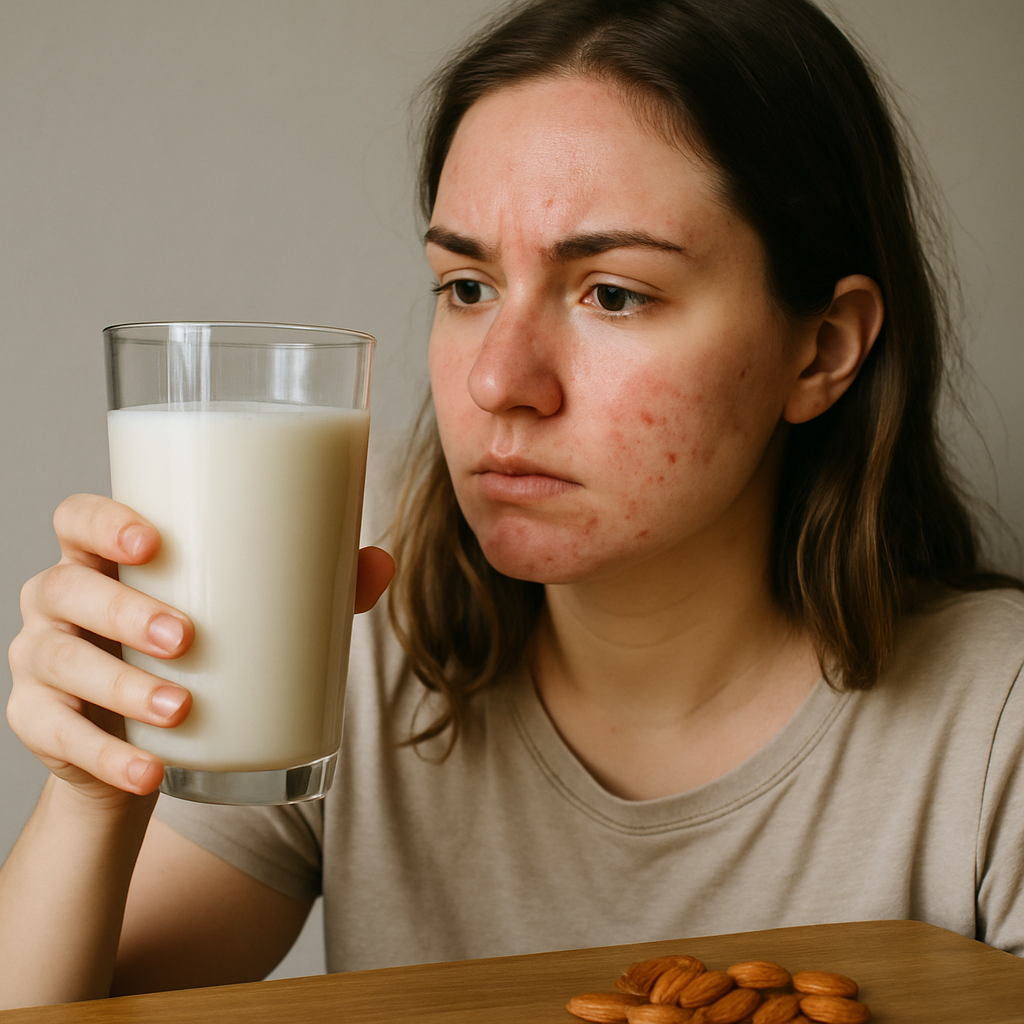
Does Almond Milk Cause Acne or Help Prevent It?
Let’s just say it: almond milk and acne have a complicated relationship.
Ayurvedic View on Almond Milk and Skin Health
Ayurveda, the ancient system of Indian medicine, sees food as not just fuel — but as a tool for balance. Almonds, in general, are considered sattvic (pure) and nourishing. But processed almond milk? That’s a different story.
In Ayurveda, acne is often related to excess Pitta dosha, which governs heat and inflammation. Because almonds are warming by nature, consuming too much almond milk — especially with added sugars or artificial flavorings — might aggravate Pitta in some individuals. That could potentially lead to breakouts, especially if your skin is already prone to oiliness and inflammation.
So while almond milk might seem healthy on the surface, from an Ayurvedic perspective, it could go either way depending on your dosha balance and the type of almond milk you’re consuming.
Nutritional Impact of Almond Milk on Skin Balance
On the modern nutrition side, almond milk is dairy-free, low in saturated fat, and often enriched with vitamins like E and D — all of which are great for the skin. Vitamin E, in particular, is a known antioxidant that helps repair and protect the skin barrier.
However, not all almond milks are created equal. Some contain carrageenan, a thickener that’s been linked to gut inflammation in certain people. And gut health, as many skin experts now agree, is directly tied to acne.
Plus, flavored almond milk (especially vanilla and chocolate kinds) often come loaded with sugar — and excess sugar definitely doesn’t do your skin any favors. It spikes insulin, which can increase oil production and inflammation. And yeah, milk cause acne is a thing, but sugar in any form is just as guilty.
So... can almond milk cause acne? Technically, yes — especially if it’s sweetened, overly processed, or you're sensitive to some of the additives.
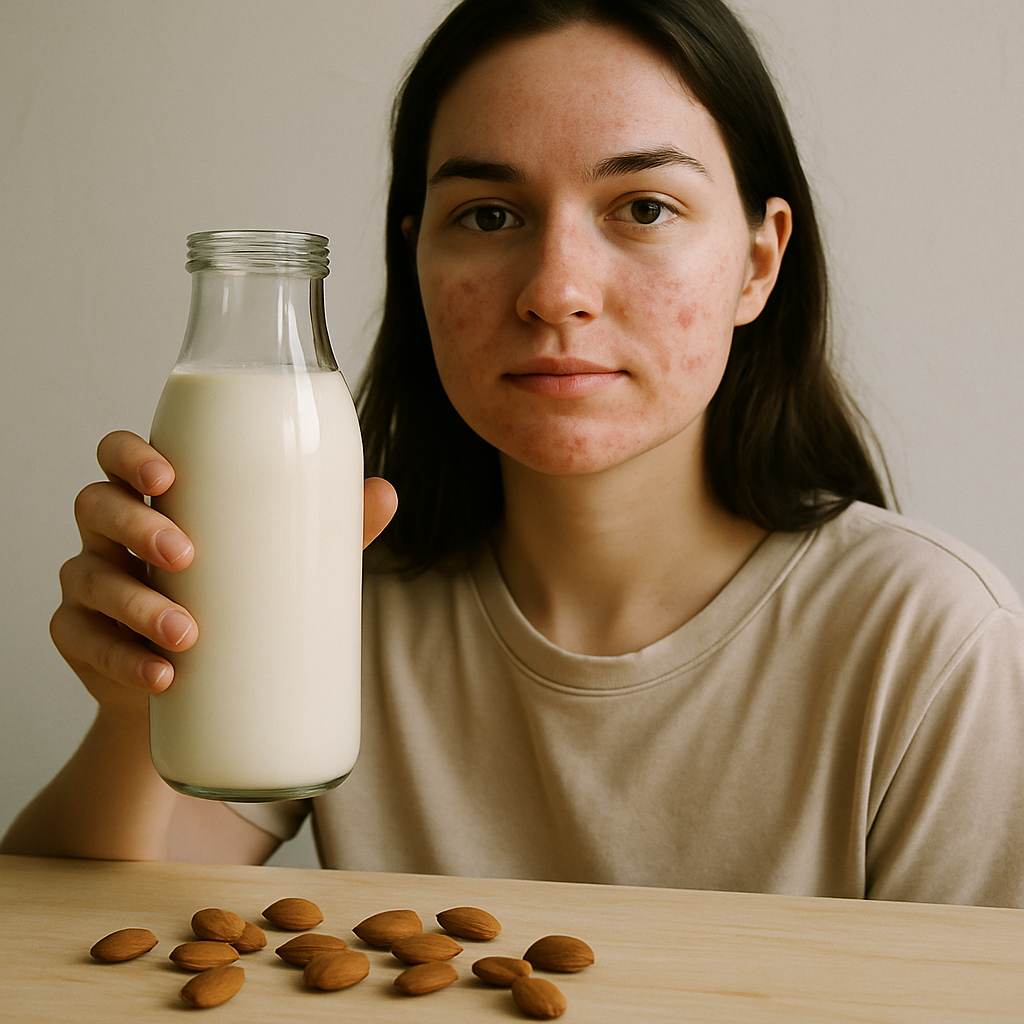
Almond Milk and Acne-Prone Skin: Pros and Cons
So is almond milk good for acne-prone skin, or should you avoid it?
Can Almond Milk Cause Acne for Some Skin Types?
Some people might notice breakouts after switching to almond milk. This could be due to a nut sensitivity, added sugars, or ingredients like gums and preservatives. While almond milk doesn't contain the hormones found in dairy (which are known acne triggers), it might still affect hormone-sensitive individuals in indirect ways.
This doesn't mean almond milk will cause pimples — but for some, yes, almond milk cause acne-like reactions. It's a good idea to track what you're eating and see how your skin responds.
Almond Milk for Acne-Prone or Oily Skin
On the flip side, if you're using unsweetened, clean-label almond milk, it might be a good choice. It’s low in calories, non-comedogenic, and doesn’t contain lactose — which some believe plays a role in acne development.
Still, everyone’s skin is different. Just because almond milk helps one person clear up doesn’t mean it won’t cause a flare-up in someone else. Trial and error — plus reading labels! — is your best friend here.
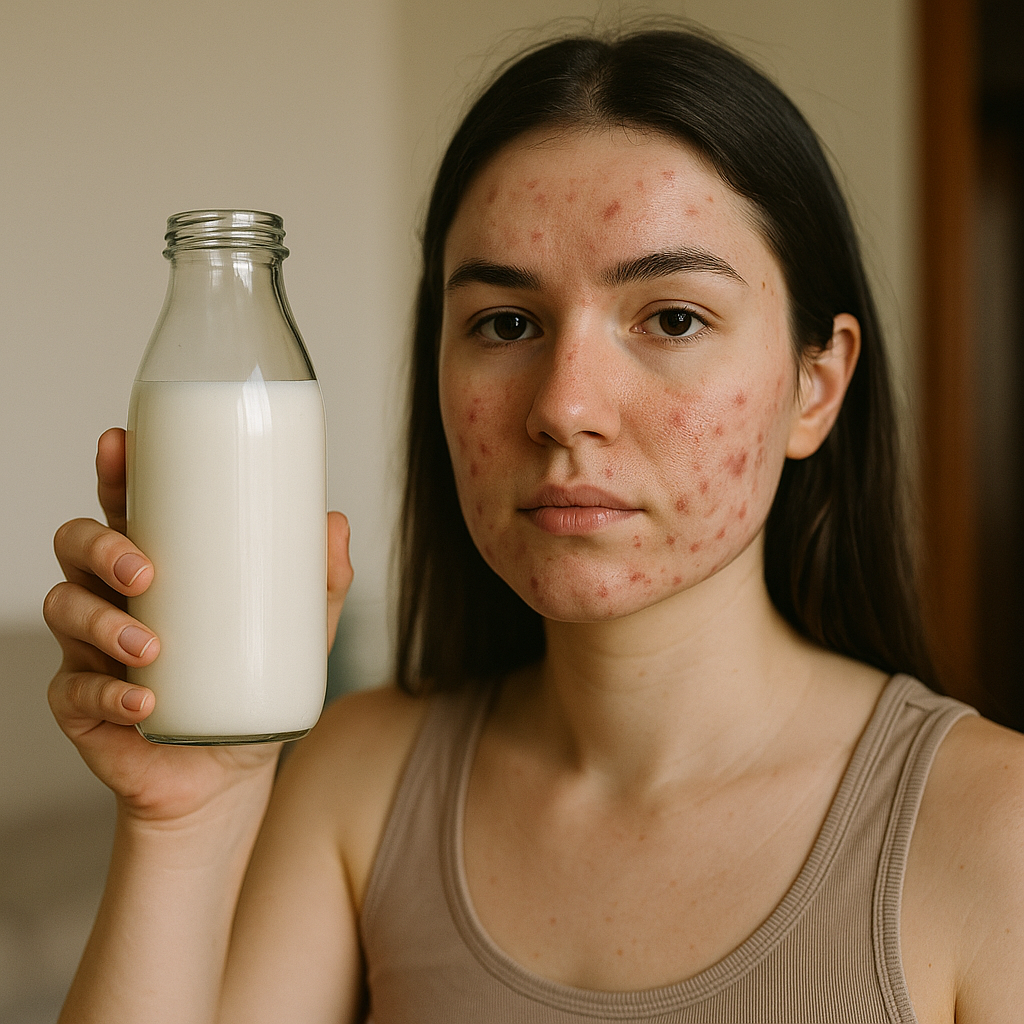
Comparing Almond Milk to Other Types of Milk for Acne
One of the biggest reasons people switch to almond milk is to avoid the skin drama that sometimes comes with dairy. But is almond milk actually the best milk for acne-prone skin? Let’s see how it stacks up.
Does Dairy Milk Cause Pimples or Inflammation?
If you're dealing with acne and still drinking dairy milk every day... we gotta talk.
Studies have shown a link between cow’s milk (especially skim milk) and acne. While the science isn't fully settled, many researchers believe that dairy may trigger acne in some people due to hormones and bioactive molecules present in milk. These can mess with your own hormones and oil production — and boom, pimples.
Plus, dairy increases something called IGF-1 (insulin-like growth factor), which is connected to higher sebum production and inflammation. More oil, more clogged pores, more breakouts.
So if you're wondering, milk cause acne? — for many people, yes, especially dairy milk.
In contrast, almond milk is naturally hormone-free. So on paper, it looks like a better option. But again, this isn’t a universal truth. If you react badly to almonds or the additives in your almond milk, you might just be trading one problem for another.
Best Milk for Acne-Prone Skin in Ayurveda
In Ayurveda, milk is usually considered nourishing and beneficial when it's organic, full-fat, and consumed warm with spices like turmeric or cardamom. But here’s the catch: if you're experiencing acne or other inflammatory skin issues, Ayurveda recommends avoiding cold milk and processed dairy.
For acne-prone folks, some Ayurvedic practitioners suggest goat milk (easy to digest), or plant-based options like oat or rice milk. Almond milk gets mixed reviews — again, because of its warming nature and potential to aggravate Pitta.
If you're using almond milk for acne, make sure it's:
-
Unsweetened
-
Free of preservatives, gums, and carrageenan
-
Made with high almond content (some brands only use 2% almonds — basically nut-flavored water)
And hey, if you're feeling extra fancy, making your own almond milk at home can be a game-changer. Fewer ingredients = fewer surprises.
Using Milk on Face for Acne: Myths and Truths
Now here’s a weird twist: while we talk so much about drinking milk and its effects on acne... what about putting milk on your face?
Milk-Based Skin Remedies
DIY skincare fans love to rave about milk as a natural cleanser or brightener. Raw milk has lactic acid, which can gently exfoliate the skin and help with pigmentation. Some people swear by it for soothing red or irritated acne-prone skin.
But — big but — if your skin is already breaking out, rubbing dairy milk on your face might not be the smartest move. It could clog pores or cause more irritation.
That said, almond milk is sometimes used topically, especially in natural skincare routines. It’s gentle, has vitamin E, and feels hydrating. But again, make sure it's the clean, unsweetened kind.
Which Milk is Safest for Topical Use on Acne Skin
If you're keen to try milk on your face for acne, go simple and go slow.
-
Raw goat milk: Often used in soap form, good for sensitive skin
-
Almond milk: Hydrating and mild, best used with calming ingredients like honey or turmeric
-
Avoid: Sweetened or flavored milks, anything with additives
Patch test first, and don’t use milk masks too often — once or twice a week is plenty. Overdoing it can actually make things worse, not better.
Conclusion
So, does almond milk cause acne? The answer isn’t black and white — more like almond beige. For some people, switching to almond milk can actually help reduce breakouts, especially if they’re ditching dairy in the process. But for others, almond milk can cause acne, especially when it’s full of additives, sugars, or if the person has a sensitivity to nuts.
Whether you’re drinking it or using it on your face, almond milk and acne don’t always get along. But they’re not sworn enemies either. The trick is knowing your skin, your body, and what you’re really putting into (or onto) yourself.
If you're breaking out and trying to figure out if milk is the culprit, it might help to eliminate all forms of milk (yes, even almond) for a couple weeks and track how your skin responds. Keep a journal. It sounds nerdy, but seriously — your skin will tell you what it likes and doesn’t like. You just have to listen. (And maybe stop chugging sweetened vanilla almond milk like it’s a smoothie.)
And let’s not forget: skincare isn’t just about what you drink or eat. It’s the whole lifestyle — stress, sleep, hormones, gut health, all that good (and not-so-good) stuff.
Still, if you’re looking for the best milk for acne, unsweetened, clean almond milk is a decent contender. Just don’t expect miracles — and be ready to pivot if your skin starts throwing a tantrum.
Don't wait or self medicate. Start chat with Doctor NOW
FAQs
Which milk is worse for acne?
Generally, dairy milk — especially skim milk — is considered the worst offender when it comes to acne. It’s linked to hormonal fluctuations and inflammation, both of which are common triggers for breakouts.
Sweetened plant-based milks can also be sneaky culprits because of the high sugar content and additives. If you’re acne-prone, go for unsweetened versions with short ingredient lists. The fewer things your body has to process, the better.
How to get rid of acne scars?
Ugh, the scars — almost worse than the pimples themselves. To fade acne scars, consistency is key. Here’s a quick rundown:
-
Use gentle exfoliants like lactic acid or mandelic acid (don’t overdo it tho)
-
Vitamin C serums can help with hyperpigmentation
-
Retinoids (prescribed or over-the-counter) can speed up skin cell turnover
-
Microneedling or chemical peels may help, but talk to a pro before jumping in
-
Stay out of the sun — seriously, scars get darker with sun exposure
-
And of course... hydrate and don’t pick! Picking is a one-way ticket to long-term scarring.
Final Thoughts
There’s no one perfect milk for everyone’s skin. What works wonders for one person might spell disaster for another. But if you’re trying to get clearer skin, it’s worth experimenting with your diet — and almond milk can be part of that experiment.
Just remember to choose the right kind of almond milk: unsweetened, minimal ingredients, and ideally homemade or organic. Watch how your skin responds over a few weeks. You might be surprised by what you discover.
👉 Have you tried switching to almond milk for your skin? Share your experience in the comments — it might help someone else on their skincare journey.
And if this article helped you or gave you a new insight, consider sharing it with a friend or on social media. Clear skin is a team effort.
Questions from users
Is it safe to drink almond milk if I have a nut allergy?
Anthony
8 days ago
If you have a nut allergy, it's best to stay on the safe side and avoid almond milk. It could trigger an allergic reaction, as almonds are a type of nut. You might wanna try oat or rice milk instead. A good idea would be to chat with your doctor or an allergist for options that suit you!
Can I use goat milk instead of almond milk for acne-prone skin?
Claire
17 days ago
Yes, you can use goat milk instead of almond milk for acne-prone skin. Goat milk is easier to digest and has nurturing properties. Just make sure it's fresh and unprocessed, and keep watching how your skin respond to it! Everyone's different, so if you notice any irritation, it might not be the best fit for ya.
Is it okay to drink almond milk daily if I have acne-prone skin?
Tucker
26 days ago
Drinking almond milk daily can be a part of your diet, just pay attention to how it affects your skin. Go for unsweetened, minimal ingredients - ideally homemade or organic. Processed ones with sugars or additives might aggravate any Pitta imbalance. Try it out, observe your skin for a few weeks & see if it works for you.
What ingredients should I avoid in plant-based milk to prevent skin issues?
Walter
36 days ago
When choosing plant-based milk, try to avoid added sugars, artificial flavors, and preservatives, they can mess with skin balance. Also, some people react to oils like sunlower or canola, so watch out for any reactions there. Check labels for gums or thickeners like carrageenan too—sometimes they irritate skin!
What is the role of Ayurveda in choosing the best milk for acne-prone skin?
Vance
46 days ago
Ayurveda helps us choose the right milk by considering your dosha balance. If you have acne-prone skin, it could be due to Pitta imbalance. Almond milk might be good here 'cause it calms Pitta. But listen to your body, try small amounts first, see how you feel. Cow's milk can sometimes heat you up, maybe not the best.
Is it safe to use almond milk as a moisturizer for acne-prone skin?
Harper
55 days ago
Using almond milk as a moisturizer might be okay for some, but it’s not specifically ideal for acne-prone skin. Almond milk is great for drinking, but it doesn't target acne issues directly. Instead, you might wanna look into non-comedogenic oils or natural products with ingredients like tea tree oil or neem, which are more focused on calming acne.
What should I do if I notice my skin reacting poorly to almond milk after switching?
Kayden
65 days ago
If your skin's not loving almond milk, it's worth cutting it out for a bit to see if things improve. Your body might be reacting to almonds' warming properties, especially if you have Pitta imbalance goin on. Try hydrating foods and herbs to calm and balance your Pitta, like cucumber or cilantro!
What is the connection between dairy consumption and acne flare-ups?
Vada
74 days ago
Dairy, especially skim milk, may trigger acne due to hormones and insulin-like stuff in it, which could cause inflammation and oil production in your skin. Almond milk might be a better choice if you're looking to swap out dairy and see if it helps calm your skin tantrums. Give it a try and see how your skin feels!
What are the benefits of using raw milk on skin compared to other natural remedies for acne?
Daniel
151 days ago
Raw milk's lactic acid is a gentle exfoliant that can help unclog pores reducing acne. Unlike almonds or commercial products, it has no additives that could irritate sensitive skin. But, it's important to consider your dosha and skin type before trying it, Ayurveda is about balance, right? Track how ur skin reacts, that’s the best guide.
What are some easy DIY milk-based face masks I can try for better skin health?
Daniel
157 days ago
Sure thing! Milk is great for skin. You can try mixing milk with turmeric for a brightening mask, or with honey for hydration. You could also blend some milk with oatmeal for gentle exfoliation. Just apply, let it sit for about 15-20 min and then rinse. Watch how your skin likes it, everyone's skin responds differently!
Related articles

Skin and Hair Disorders
Valiya Madhusnuhi Rasayanam – Traditional Ayurvedic Rejuvenation Therapy for Enhanced Vitality
Discover Valiya Madhusnuhi Rasayanam, a classical Ayurvedic rejuvenation therapy. Learn about its ingredients, benefits, usage, and how it promotes holistic health and longevity naturally.
2,612
Skin and Hair Disorders
Palitya – Ayurvedic Perspective on Premature Graying of Hair
Discover the Ayurvedic approach to treating Palitya, a condition referring to premature graying of hair before age 35. Learn how natural remedies restore melanin production and hair vitality.
2,833

Skin and Hair Disorders
Somaraji Oil: Benefits, How to Use, Ingredients, Side Effects
Exploration of Somaraji Oil: Benefits, How to Use, Ingredients, Side Effects
1,829

Skin and Hair Disorders
What Is Red Sandalwood Used For: Ayurvedic Benefits and Applications
Discover what red sandalwood is used for in Ayurveda. Learn its skin and face benefits, how to use the powder, and natural ways to apply it for skin whitening
4,793

Skin and Hair Disorders
Best Ayurvedic Medicine for Fungal Infection – Natural Herbal Solutions
Discover the best Ayurvedic medicines for treating fungal infections. Learn about natural remedies, benefits, dosage, usage, and scientific evidence behind these herbs.
5,629

Skin and Hair Disorders
How to Remove Dark Spots on Feet and Ankles Naturally
Learn how to remove dark spots on feet and ankles using natural home remedies, Ayurvedic treatments, and simple lifestyle changes. Get clear skin effectively
11,557

Skin and Hair Disorders
Discover Natural Solutions: Best Ayurvedic Treatment for Melasma on Face
xplore the top Ayurvedic treatments for melasma on the face, including herbs, remedies, and lifestyle tips to achieve clearer, radiant skin naturally.
5,553

Skin and Hair Disorders
Manibhadra Guda Ayurvedic Remedy – Natural Treatment for Digestive Health and Detoxification
Explore the benefits of Manibhadra Guda in Ayurveda, a powerful herbal remedy known for promoting digestive health, detoxification, and overall well-being.
3,342
Skin and Hair Disorders
Ayurvedic Treatment for Rosacea – Soothing Herbal Care
Explore Ayurvedic approaches to treat rosacea naturally. Learn about herbs, lifestyle changes, dosage, precautions, and holistic insights for clear, calm skin.
3,661

Skin and Hair Disorders
How to Get Rid of Wrinkles on Forehead Naturally: Ayurvedic Remedies and Tips
How to get rid of wrinkles on forehead naturally? Discover natural remedies, Ayurvedic forehead wrinkles treatment, and ways to reduce facial lines at home
3,753
Related questions on the topic
Legal
Additional Documents
© 2024 Ask Ayurveda. All rights reserved.