Ask Ayurvedic doctor a question and get a consultation online on the problem of your concern in a free or paid mode. More than 2,000 experienced doctors work and wait for your questions on our site and help users to solve their health problems every day.
FREE! Ask Ayurvedic Doctors 24/7

 Fast responses
 1000+ verified doctors
Body DetoxEar, Nose, and Throat DisordersGeriatrics & RejuvenationImmunodeficiencyInfertility TreatmentNutritionOrthopedic DisordersPediatricsRespiratory DisordersSexually Transmitted Diseases (STDs)Surgery RecoveryUrological DisordersVascular DisordersDental DisordersEndocrinological DisordersGastrointestinal DisordersYoga TherapyGeneral MedicineAllergic DisordersCardio DisordersGynecology and ObstetricsCosmetologySkin and Hair DisordersEye DisordersInfectious DiseasesMental DisordersNeurological DisordersOncologyPanchakarmaSexual Health & DisordersSports Medicine
Published on 01/14/25
(Updated on 06/17/26)
star_border 5
3,663
Ayurvedic Treatment for Rosacea – Soothing Herbal Care
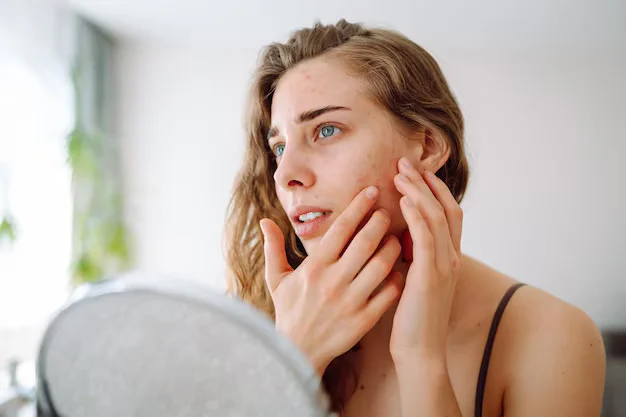
Ayurvedic treatment for rosacea centers on cooling aggravated Pitta dosha, purifying the blood (Rakta dhatu), and restoring skin health through herbal remedies, dietary changes, Panchakarma detox, and lifestyle modifications. Unlike conventional approaches that primarily suppress symptoms, Ayurveda addresses the root cause — internal heat and toxin accumulation — to deliver lasting relief from facial redness, visible blood vessels, and inflammatory bumps.
If you've been struggling with rosacea flare-ups that never seem to fully go away, this guide will walk you through everything: the Ayurvedic understanding of why rosacea happens, specific herbs with clinical evidence, exact dosages, Panchakarma protocols, diet plans, yoga practices, and precautions. Let's get into it.
What Does Ayurveda Say About Rosacea?
Ayurveda doesn't have a single direct translation for "rosacea," but it classifies this condition under Kushta Roga (skin diseases) — specifically subtypes that involve redness, heat, and inflammation on the face.
The most relevant Ayurvedic correlations include:
- Mandala Kushta — circular reddish patches on the skin, resembling erythematotelangiectatic rosacea
- Pundarika Kushta — red and white elevated patches with burning sensation
- Alasaka — digestive stagnation leading to toxic buildup that manifests on the skin
Rosacea as Pitta-Rakta Imbalance
- At its core, Ayurveda views rosacea as a disorder of Pitta dosha (the fire element governing metabolism, heat, and transformation) combined with Rakta Dushti (vitiation of blood tissue).
- When Pitta becomes excessively aggravated — through diet, emotions, environmental exposure, or lifestyle — it heats the blood, which then manifests as redness, inflammation, and vascular changes in the facial skin.
This is why rosacea predominantly affects the cheeks, nose, forehead, and chin. These areas are considered Pitta-dominant zones in Ayurvedic facial mapping.
How Each Dosha Contributes to Rosacea Triggers
What makes Ayurveda's approach uniquely useful is its systematic mapping of triggers to specific doshas:
| Trigger | Dosha Involvement | Mechanism |
|---|---|---|
| Spicy/hot foods | Pitta aggravation | Directly increases internal heat |
| Alcohol (especially red wine) | Tridosha (all three) | Heats blood, dilates vessels, disrupts digestion |
| Emotional stress & anxiety | Vata aggravation | Disrupts nervous system, destabilizes Pitta |
| Sun exposure | Pitta aggravation | External heat compounds internal fire |
| Extreme cold/wind | Vata aggravation | Damages skin barrier, triggers reactive flushing |
| Hot beverages (coffee, tea) | Pitta aggravation | Raises internal temperature |
| Chemical-laden cosmetics | Pitta + Rakta | Toxic absorption through skin irritates blood |
| Fermented/sour foods | Pitta aggravation | Increases acidity and heat in GI tract |
Understanding which dosha is driving your particular flare-ups helps you customize treatment. This is something Western dermatology simply doesn't offer.
Vatarakta Chikitsa: The Alternative Protocol
- When standard Kushta treatment protocols don't produce results, Ayurvedic physicians may switch to Vatarakta Chikitsa — a treatment approach originally designed for gout-like conditions where Vata and Rakta (blood) are simultaneously vitiated.
- The overlapping pathogenesis between Vatarakta and rosacea — both involving disturbed blood circulation, inflammation, and skin manifestation — makes this a viable alternative protocol, particularly for stubborn cases with burning sensation and visible capillaries.
What Is the Root Cause of Rosacea?
Understanding the root cause requires integrating both Ayurvedic and modern perspectives. Neither alone tells the complete story.
The Ayurvedic Perspective
Ayurveda identifies these root causes:
- 1.Mandagni (weakened digestive fire) — Impaired digestion creates Ama (metabolic toxins) that enter the bloodstream
- 2.Pitta Prakopa — Aggravation of Pitta through incompatible diet, excessive sun, anger, or competitive stress
- 3.Rakta Dushti — Toxin-laden blood reaches facial capillaries, causing chronic inflammation
- 4.Blocked Srotas (channels) — When sweat channels and blood channels get obstructed, toxins accumulate in skin tissue
The Modern Science Perspective
Contemporary research points to several contributing factors that align surprisingly well with Ayurvedic theory:
- Immune system abnormalities — Elevated cathelicidin peptides cause exaggerated inflammatory responses (a 2007 study in Nature Medicine by Yamasaki et al. demonstrated this mechanism)
- Vascular instability — Blood vessels in the facial skin become hyper-reactive, matching the Ayurvedic concept of Rakta Dushti
- Demodex folliculorum overgrowth — These microscopic mites are found in significantly higher densities on rosacea skin. A 2012 meta-analysis in the Journal of Medical Entomology confirmed a strong association
- Genetic predisposition — Family history increases risk, though Ayurveda addresses this through Prakriti (constitutional) assessment
- Gut-skin axis dysfunction — Studies show that small intestinal bacterial overgrowth (SIBO) is significantly more common in rosacea patients; a 2008 study published in Clinical Gastroenterology and Hepatology found SIBO in 46% of rosacea patients vs. 5% of controls
This gut-skin connection is perhaps the most powerful validation of Ayurveda's emphasis on Agni (digestive fire) as the starting point of treatment.
Best Ayurvedic Herbs for Rosacea (With Dosages and Evidence)
Every competitor article lists herbs. None of them give you specific dosages, durations, or cite actual research. Here, we fix that.
Kumari (Aloe Vera)
Aloe vera is the most consistently recommended herb across Ayurvedic literature for Pitta-type skin conditions. Its cooling, anti-inflammatory, and wound-healing properties make it ideal for rosacea.
How to use:
- Topical: Apply fresh aloe vera gel (from the inner leaf) directly to affected areas. Leave for 20–30 minutes, then rinse with cool water. Use twice daily.
- Internal: 20–30 ml of pure aloe vera juice on an empty stomach, once daily for 4–6 weeks.
Evidence: A 2008 study in Skin Pharmacology and Physiology demonstrated that aloe vera significantly reduces erythema and has anti-inflammatory effects comparable to 1% hydrocortisone cream, without the side effects.
Haridra (Turmeric/Curcumin)
Curcumin, the active compound in turmeric, is one of the most researched natural anti-inflammatory substances available.
How to use:
- Topical paste: Mix 1 teaspoon turmeric powder + 2 teaspoons raw honey + 1 teaspoon sandalwood powder.
- Apply for 15 minutes, 3 times per week. Patch test first — some people react to topical turmeric.
- Internal: 500 mg standardized curcumin supplement (with piperine for absorption) twice daily with meals.
- Duration: 8–12 weeks minimum.
- Evidence: A 2016 systematic review in Phytotherapy Research analyzed 10 clinical trials and confirmed curcumin's significant anti-inflammatory and antioxidant effects on skin conditions.
- Curcumin inhibits NF-κB pathway — the same inflammatory cascade implicated in rosacea pathology.
Manjistha (Rubia cordifolia)
Manjistha is Ayurveda's premier blood-purifying herb. It directly addresses Rakta Dushti.
How to use:
- 500 mg Manjistha churna (powder) twice daily with warm water, after meals
- Duration: 2–3 months for visible results
- Can also be applied topically: mix with rose water to form a cooling paste
Nimba (Neem)
Neem's anti-microbial properties make it particularly relevant for papulopustular rosacea where Demodex mite overgrowth is a concern.
How to use:
- Internal: Neem capsules, 500 mg twice daily (not for pregnant women or those trying to conceive)
- Topical: Neem oil diluted with coconut oil (1:3 ratio) applied to affected areas at bedtime
Evidence: A 2019 study in Parasitology Research showed neem extracts have significant acaricidal activity against Demodex mites.
Chandana (Sandalwood)
A classic Pitta-pacifying herb with powerful cooling action on the skin.
How to use:
- Mix sandalwood powder with rose water or raw milk to create a paste
- Apply to face for 20 minutes, rinse with cool water
- Use 3–4 times per week during active flares
Green Tea
While not a traditional Ayurvedic herb, green tea's polyphenols (especially epigallocatechin-3-gallate or EGCG) have remarkable anti-inflammatory and photoprotective properties.
Evidence: A 2005 study in the Journal of the American Academy of Dermatology showed topical green tea extract significantly reduced papulopustular lesions and erythema in rosacea patients. How to use: Brew green tea, cool it completely, and apply with cotton pads as a compress for 10–15 minutes daily. Also consume 2–3 cups daily as an internal anti-inflammatory.
Comprehensive Herbal Treatment Table
| Herb | Primary Action | Dosage (Internal) | Topical Application | Duration | Best For |
|---|---|---|---|---|---|
| Aloe Vera | Cooling, anti-inflammatory | 20-30 ml juice daily | Fresh gel, 2x daily | 4-6 weeks | All rosacea types |
| Curcumin | Anti-inflammatory, antioxidant | 500 mg 2x daily (with piperine) | Paste with honey, 3x/week | 8-12 weeks | Papulopustular |
| Manjistha | Blood purification | 500 mg 2x daily | Paste with rose water | 2-3 months | Chronic redness |
| Neem | Anti-microbial | 500 mg 2x daily | Diluted oil at bedtime | 6-8 weeks | Pustules, Demodex |
| Sandalwood | Cooling, soothing | — | Paste 3-4x weekly | Ongoing | Active flares |
| Green Tea | Anti-inflammatory, UV protection | 2-3 cups daily | Cool compress daily | Ongoing | Sun-triggered rosacea |
| Fenugreek (Methi) | Vitamins A, C, K; anti-inflammatory | 1 tsp seeds soaked overnight, drink water | Crushed seed paste | 4-6 weeks | Preventing pustules |
Panchakarma Detox Protocols for Rosacea
Panchakarma is Ayurveda's gold standard for deep detoxification. For rosacea, specific procedures target Pitta and Rakta cleansing.
Virechana (Therapeutic Purgation)
This is the single most important Panchakarma procedure for rosacea. Virechana eliminates excess Pitta from the liver, blood, and GI tract through medicated purgation.
Protocol overview:
- Preparation (Poorvakarma): 3–7 days of internal oleation with medicated ghee (Tikta Ghrita is preferred), followed by 1–2 days of external oleation and sudation
- Main procedure: Single-day administration of purgative herbs (usually Trivrit or Avipattikar Churna) under physician supervision
- Post-procedure (Paschat Karma): Graduated diet from rice gruel to normal food over 5–7 days
Frequency: Once every 3–6 months during active disease; annually for maintenance.
Raktamokshana (Bloodletting Therapy)
For acute, severe redness and inflammation, traditional Raktamokshana — using Jalouka (medicinal leeches) — can provide dramatic relief. The leeches release hirudin and other anti-coagulant, anti-inflammatory compounds directly into the affected tissue.
This should only be performed by an experienced Ayurvedic physician. It's particularly effective for phymatous and erythematotelangiectatic subtypes.
Takradhara (Buttermilk Drip Therapy)
A gentle, cooling therapy where medicated buttermilk is continuously poured over the forehead (or affected area) in a rhythmic stream. Takradhara cools the nervous system, reduces stress-mediated Pitta aggravation, and has a direct soothing effect on facial skin.
Duration: 30–45 minutes per session, typically 7–14 consecutive days.
Nasya (Nasal Detoxification)
Since rosacea affects the central face — areas connected to the nasal passages — Nasya therapy helps clear toxins from the head region. Anu Taila or medicated coconut oil (2–4 drops in each nostril) is administered daily.
This is especially useful for ocular rosacea, where eyes are affected alongside facial skin.
What Foods Stop Rosacea?
Diet is arguably the most powerful long-term intervention for rosacea. In Ayurvedic terms, you need to follow a Pitta-pacifying diet — emphasizing cooling, sweet, bitter, and astringent tastes while minimizing pungent, sour, and salty foods.
Foods to Eat Generously
- Cooling vegetables: Cucumber, bottle gourd (lauki), ash gourd (petha), zucchini, leafy greens (except mustard greens)
- Sweet fruits: Watermelon, cantaloupe, sweet grapes, pomegranate, ripe mango (in moderation), coconut
- Whole grains: Basmati rice, oats, barley (cooling grain), wheat
- Proteins: Moong dal (the most Pitta-pacifying legume), tofu, small amounts of freshwater fish
- Healthy fats: Ghee (clarified butter — highly Pitta-pacifying), coconut oil, olive oil
- Probiotic foods: Fresh homemade yogurt (diluted as buttermilk/chaas with cumin and coriander), kefir — these support gut health and the gut-skin axis
- Zinc-rich foods: Pumpkin seeds, chickpeas, sesame seeds — zinc supports skin barrier repair and immune modulation
- Herbs and spices: Coriander, fennel, fresh mint, cardamom, small amounts of fresh ginger
Foods to Strictly Avoid
- Chili peppers, cayenne, black pepper in excess, hot sauces
- Alcohol — especially red wine, beer, and spirits
- Coffee and caffeinated beverages (switch to herbal teas)
- Fermented foods in excess — pickles, vinegar, aged cheese, kimchi
- Tomatoes, citrus fruits, sour berries
- Processed and fried foods
- Onion and garlic in large amounts (heating)
- Red meat (increases Pitta and Rakta heat)
A Simple Daily Meal Framework
Morning: Overnight soaked fenugreek water (1 tsp seeds) → followed by breakfast of oatmeal with coconut, cardamom, and sweet fruits Lunch (largest meal): Basmati rice + moong dal + cooling vegetable (lauki/cucumber raita) + ghee + fresh coriander chutney Evening: Light soup or kitchari (rice + moong dal porridge) with cooling spices Before bed: Warm milk with 1/4 tsp turmeric and a pinch of cardamom
Don't wait or self medicate. Start chat with Doctor NOW
Can Ashwagandha Help Rosacea?
This is a common question, and the answer is nuanced. Ashwagandha (Withania somnifera) is not a direct treatment for rosacea, but it can be a valuable supporting herb — here's why.
Ashwagandha is classified as a Rasayana (rejuvenative) and is primarily Vata-pacifying. Its main relevance to rosacea is through stress reduction. Since emotional stress is a major Pitta-aggravating trigger for rosacea flares, Ashwagandha's well-documented cortisol-lowering effects can indirectly reduce flare frequency.
A 2012 study in the Indian Journal of Psychological Medicine found that Ashwagandha root extract (300 mg twice daily) reduced serum cortisol levels by 28% over 60 days compared to placebo.
Recommended use for rosacea patients: 300–600 mg standardized root extract daily, taken with meals. It's best combined with direct Pitta-pacifying herbs like Manjistha and Shatavari rather than used alone. Caution: Ashwagandha is mildly heating in nature (Ushna Virya). In some highly Pitta-dominant individuals, it could potentially aggravate heat. Start with a lower dose and monitor your skin's response.
Lifestyle Modifications and Yoga for Rosacea
Stress Management: The Non-Negotiable
Stress is perhaps the single most underestimated trigger.
Ayurveda prescribes specific practices:
- Sheetali Pranayama (Cooling Breath): Curl your tongue into a tube, inhale through the mouth, close the mouth, exhale through the nose. 10–15 rounds, twice daily. This literally cools the body.
- Chandra Bhedana (Left Nostril Breathing): Inhale only through the left nostril, exhale through the right. The left channel (Ida Nadi) is cooling and calming. 5–10 minutes daily.
- Meditation: Even 15 minutes of daily meditation reduces cortisol and Pitta aggravation. Consistency matters more than duration here.
Yoga Asanas That Help
Not all yoga is appropriate for rosacea. Avoid hot yoga, intense Vinyasa, or inversions that send blood rushing to the face.
Instead, focus on:
- Setu Bandhasana (Bridge Pose) — Gentle backbend that opens the chest without facial flushing
- Navasana (Boat Pose) — Strengthens core, stimulates digestion without excessive heat
- Utkatasana (Chair Pose) — Grounds Vata energy, builds strength moderately
- Shavasana (Corpse Pose) — Deep relaxation, essential for nervous system cooling
- Supported Forward Bends — Calming, Pitta-pacifying, without pressure on the face
Skincare Dos and Don'ts
Do:
- Use only natural, fragrance-free products
- Wash face with cool (not cold, not hot) water
- Apply coconut oil or kumkumadi tailam as nighttime moisturizer
- Use mineral-based sunscreen (zinc oxide) — sun protection is critical
- Keep a trigger diary to identify your personal patterns
Don't:
- Use harsh exfoliants or chemical peels
- Apply products with alcohol, menthol, eucalyptus, or synthetic fragrance
- Take very hot showers or steam facials
- Over-wash your face — twice daily is sufficient
The 4 Types of Rosacea and Their Ayurvedic Management
Type 1: Erythematotelangiectatic (Persistent Redness)
Primary dosha: Pitta-Rakta Key treatments: Manjistha internally, sandalwood + aloe vera paste topically, Virechana seasonally, Takradhara for cooling Ayurvedic correlation: Mandala Kushta
Type 2: Papulopustular (Acne-like Bumps)
Primary dosha: Pitta-Kapha Key treatments: Neem + turmeric internally and topically, strict Pitta-pacifying diet, Virechana, address Demodex with neem oil Ayurvedic correlation: Pundarika Kushta
Type 3: Phymatous (Thickened Skin, Rhinophyma)
Primary dosha: Pitta-Kapha with chronic Ama Key treatments: Aggressive Panchakarma (Virechana + Vamana), Guggulu formulations for tissue scraping, Raktamokshana, long-term Manjistha + Kaishore Guggulu This type requires professional Ayurvedic supervision
Type 4: Ocular (Eye Involvement)
Primary dosha: Pitta-Vata Key treatments: Nasya therapy, Triphala eye wash (1 tsp Triphala powder boiled in 200 ml water, cooled, strained, used as an eyewash), internal Shatavari + Amalaki, ghee consumption Ayurvedic correlation: Netra Roga (eye disease) with Kushta overlap
Treatment Protocol: A 12-Week Plan
No competitor provides this. Here is a structured protocol that an Ayurvedic practitioner might customize for you:
Weeks 1–2 (Preparation):
- Begin Pitta-pacifying diet strictly
- Start aloe vera juice (20 ml) morning on empty stomach
- Begin Sheetali Pranayama, 2x daily
- Eliminate all known triggers
- Topical: Aloe vera gel + sandalwood paste, alternating days
Weeks 3–4 (Internal Herbal Protocol Begins):
- Add Manjistha 500 mg 2x daily
- Add Curcumin 500 mg 2x daily with meals
- Continue aloe vera juice
- Add neem capsules 500 mg daily (if pustules present)
- Begin yoga practice, 20 minutes daily
Weeks 5–6 (Panchakarma Phase — if accessible):
- Virechana under professional guidance
- Takradhara for 7 consecutive days
- Nasya with Anu Taila, daily
- Light diet during and after Panchakarma
Weeks 7–12 (Consolidation and Maintenance):
- Continue herbal protocol
- Gradually reintroduce mild foods while monitoring
- Add Ashwagandha 300 mg if stress is a major factor
- Monthly follow-up with practitioner
- Track progress with photos and symptom diary
Expected timeline: Most patients begin noticing reduced redness and flare frequency by weeks 4–6. Significant improvement typically occurs by weeks 8–12. Rosacea is chronic, so maintenance therapy (diet + lifestyle + seasonal Virechana) should continue long-term.
Frequently Asked Questions
How do Japanese treat rosacea?
Japanese dermatology emphasizes gentle skincare with minimal ingredients, green tea-based topicals, and avoidance of irritants. Interestingly, Japanese approaches share common ground with Ayurveda — both prioritize cooling the skin, using natural anti-inflammatories (green tea polyphenols), and protecting the skin barrier. Japanese skincare routines favor hydration and barrier repair over aggressive treatment, which complements an Ayurvedic protocol well.
What is the best natural remedy for rosacea?
Based on both Ayurvedic tradition and clinical evidence, aloe vera (topical and internal) combined with curcumin supplementation represents the strongest natural combination. Aloe vera provides immediate soothing and cooling, while curcumin addresses systemic inflammation. Adding Manjistha for blood purification creates a comprehensive three-herb foundation that addresses rosacea from multiple angles.
Can rosacea be cured permanently with Ayurveda?
Ayurveda does not promise a "cure" for rosacea in the Western sense, but it offers something potentially more valuable — long-term remission and dramatically reduced flare frequency. By correcting the underlying Pitta-Rakta imbalance, strengthening Agni, and maintaining proper diet and lifestyle, many patients experience months or even years without significant flares. The key is consistency and treating rosacea as a constitutional tendency that requires ongoing management, not a one-time fix.
Is honey safe to apply on rosacea skin?
- Raw, unprocessed honey (especially Manuka honey) has natural antimicrobial and anti-inflammatory properties. It can be applied to rosacea-affected skin as a gentle cleanser or mask for 15–20 minutes.
- However, avoid honey if your skin reacts to it — always patch test. In Ayurveda, honey is considered Yogavahi (a carrier substance) that enhances the effect of other herbs, making it excellent as a base for turmeric or sandalwood pastes.
How long does Ayurvedic treatment take to show results for rosacea?
For mild to moderate rosacea, initial improvement (reduced redness, fewer flares) typically appears within 3–4 weeks of consistent treatment. Significant, stable improvement usually requires 8–12 weeks. Severe or long-standing cases may need 4–6 months of comprehensive treatment including Panchakarma. The timeline depends heavily on dietary compliance, trigger avoidance, and the severity of the condition at baseline.
Final Thoughts and Next Steps
- Rosacea doesn't have to control your life.
- Ayurveda's systematic approach — cooling Pitta, purifying Rakta, strengthening Agni, and removing Ama — addresses the condition at a level that topical creams and antibiotics simply cannot reach. The science increasingly supports what Ayurvedic physicians have observed for centuries: that skin health begins in the gut, is modulated by stress, and responds profoundly to anti-inflammatory herbs and dietary modification.
Start with the foundations: switch to a Pitta-pacifying diet, begin aloe vera and curcumin, practice Sheetali Pranayama daily, and eliminate your known triggers. If you have access to a qualified Ayurvedic practitioner, a supervised Virechana can accelerate your progress significantly.
Your skin is a mirror of your internal state. Treat what's inside, and the outside will follow.
Consult a qualified Ayurvedic physician before starting any new treatment protocol, especially if you are pregnant, nursing, on medication, or managing other health conditions. The information in this article is educational and should not replace professional medical advice.
Scientific Sources
- Rosemary and neem: an insight into their combined anti-dandruff and anti-hair loss efficacy — Hashem MM et al., 2024, Scientific reports
- Bangladeshi medicinal plant dataset — Borkatulla B et al., 2023, Data in brief
- Phytotherapy in periodontics as an effective and sustainable supplemental treatment: a narrative review — Gawish AS et al., 2024, Journal of periodontal & implant science
- Formulation and Evaluation of Turmeric- and Neem-Based Topical Nanoemulgel against Microbial Infection — Giri S et al., 2024, Gels (Basel, Switzerland)
- Azadirachta indica A.Juss (neem) against diabetes mellitus: a critical review on its phytochemistry, pharmacology, and toxicology — Patil SM et al., 2022, The Journal of pharmacy and pharmacology
- Ulcerative colitis: molecular insights and intervention therapy — Liang Y et al., 2024, Molecular biomedicine
- Turmeric and Curcumin: From Traditional to Modern Medicine — Akaberi M et al., 2021, Advances in experimental medicine and biology
- Curcumin (Turmeric) and cancer — Unlu A et al., 2016, Journal of B.U.ON. : official journal of the Balkan Union of Oncology
- The Essential Medicinal Chemistry of Curcumin — Nelson KM et al., 2017, Journal of medicinal chemistry
- Neuroprotective Herbs for the Management of Alzheimer's Disease — Gregory J et al., 2021, Biomolecules
- Aromatherapy and Essential Oils: Holistic Strategies in Complementary and Alternative Medicine for Integral Wellbeing — Caballero-Gallardo K et al., 2025, Plants (Basel, Switzerland)
- Traditional Tibetan medicine: therapeutic potential in lung diseases — Li C et al., 2024, Frontiers in pharmacology
- Santalum Genus: phytochemical constituents, biological activities and health promoting-effects — Sharifi-Rad J et al., 2023, Zeitschrift fur Naturforschung. C, Journal of biosciences
- Progress in biosynthesis of santalene and santalol(https://pubmed.ncbi.nlm.nih.gov/29943532/) — Wang Y et al., 2018, Sheng wu gong cheng xue bao = Chinese journal of biotechnology
- East Indian Sandalwood and alpha-santalol odor increase physiological and self-rated arousal in humans — Heuberger E et al., 2006, Planta medica
Questions from users
Can I use a Pitta-pacifying diet to help with other skin conditions besides rosacea?
Meredith
5 days ago
Absolutely, a Pitta-pacifying diet isn't just for rosacea! It's great for other pitta-related skin issues, like acne or eczema. These conditions often come up when there's too much heat or inflammation in the body. Cooling foods can help balance that out. Just make sure to avoid your specific triggers and keep your Agni (digestive fire) happy!
Is it safe to combine Ayurvedic treatments with over-the-counter products for rosacea?
Ava
20 days ago
Combining Ayurvedic treatments with OTC products for rosacea could be safe, but best to proceed with caution. Ayurveda focuses on balance, so mixing with other treatments might impact results. Consult with an Ayurvedic practitioner who knows your skin and dosha type—also check with a dermatologist. Listen to your skin's reactions.
Is it safe to use essential oils for rosacea treatment in Ayurveda?
Stella
29 days ago
It's generally safe to use essential oils for rosacea, but sensitivity can vary person to person. Always do a patch test first to make sure your skin reacts well. Essential oils like lavender or chamomile can be soothing, but keep in mind to use them diluted in a carrier oil, not directly on the skin. If you're unsure, consulting with a practitioner is a good idea!
How long does it typically take to see results from Ayurvedic treatments for rosacea?
Peyton
39 days ago
Improvements with Ayurvedic treatment for rosacea can vary widely; it depends on a lot of factors like your body's unique makeup, the severity of your symptoms, and how well you follow the treatment plan. Generally, you might start seeing changes in a few weeks to a few months. It's important to be patient and consistent with the approach!
Can I use cooling, non-spicy foods to help manage my rosacea symptoms?
Caleb
49 days ago
Yes, definitely! Cooling, non-spicy foods can help manage rosacea by reducing internal heat and inflammation. Focus on Pitta-pacifying foods like cucumber, celery, watermelon, and leafy greens. It's also a good idea to consult a practitioner to get personalized advice that suits your unique dosha balance! Eat mindfully and stay cool.
What is the best way to balance Pitta dosha to help reduce rosacea flare-ups?
Sydney
58 days ago
To balance Pitta and manage rosacea, try cooling foods like cucumbers, melons, and cilantro. Keep hydrated, use coconut oil for skin, and practice calming activities like meditation or yoga. Avoid spicy or fried foods, and alcohol. Herbs like licorice and sandalwood paste can also help soothe redness. Stay cool, literally and emotionally!
Can I use turmeric and sandalwood together to treat rosacea effectively?
Kennedy
68 days ago
Yes, you can! Turmeric and sandalwood can be a great combo for soothing rosacea. Turmeric's anti-inflammatory properties plus sandalwood's cooling effect work well together. Just make sure to test on a small skin area first to avoid any unexpected irritation. If it suit your skin type, you can apply the mix and rinse off gently after a short while.
Is applying sandalwood and rose water safe for sensitive skin with rosacea?
Walker
78 days ago
Applying sandalwood and rose water can be calming for the skin, but it's important to be cautious if you have rosacea. Sensitive skin may react differently, so it's best to start with a patch test on a small area. If there's no irritation, you should be good. But always consult with a dermatologist if unsure, ya know?
How do I know if my skin is reacting negatively to Ayurvedic treatments for rosacea?
Walter
153 days ago
If your skin's reacting negatively to Ayurvedic treatments for rosacea, you might notice more redness, burning, or irritation than before. Stop using the product immediately. Its important to know each skin type is unique, so consider consulting a professional to tailor a better approach based on your dosha and skin's needs.
What are some common mistakes people make when trying Ayurvedic remedies for rosacea?
Andrew
160 days ago
One common mistake is not addressing Pitta imbalance properly. People may use Pitta-aggravating items like spicy foods or alcohol, thinking they're harmless. Also, overusing remedies like neem can cause dryness. It's crucial to find balance and listen to ur body's response. A tailored approach, considering one's unique prakriti, works best!
Related articles
Skin and Hair Disorders
Ayurvedic Medicine for Premature Grey Hair: What You Really Need to Know
Now, maybe you’ve spotted those first silvery threads in your twenties. Or maybe they arrived in your thirties, and now they’ve multiplied like they own the place. Either way, you’re not alone. Studies suggest that premature greying affects nearly 15–30%
5,086

Skin and Hair Disorders
How to Make Almond Oil at Home for Hair, Face, and Skin
Learn how to make almond oil at home using simple tools and raw almonds. Perfect for hair, face, and skin care routines. Try this pure natural DIY method today
9,824
Skin and Hair Disorders
Ayurvedic Treatment for Scabies – Natural Remedies & Holistic Care
Explore Ayurvedic approaches for treating scabies. Discover herbal remedies, lifestyle tips, and holistic strategies to manage and alleviate scabies symptoms naturally.
4,524

Skin and Hair Disorders
Which Type of Aloe Vera Is Good for Skin: Varieties and Benefits
Which type of aloe vera is good for skin? Learn the best aloe vera plant types, their benefits, and how different types of aloe vera help nourish and heal skin
12,344

Skin and Hair Disorders
What Is the Best Homemade Face Mask for Pimples and Dark Spots?
Explore the best face mask for oily skin and pimples, dark spots, and acne. Try DIY face masks for pimples, natural Ayurvedic blends, and overnight treatments
6,442

Skin and Hair Disorders
vIs Elaichi Good for Hair? Ayurvedic Benefits of Cardamom for Hair Health
Explore whether elaichi is good for hair. Learn about cardamom benefits for hair, growth remedies, and how elaichi with hot water supports scalp health
5,156
Skin and Hair Disorders
SLE Treatment in Ayurveda – A Holistic Approach to Lupus Management
Discover Ayurvedic strategies for SLE treatment, focusing on natural herbal remedies, detoxification, dosha balancing, and lifestyle adjustments to manage Lupus holistically.
3,039
Skin and Hair Disorders
Manjishtadi Lepam: Traditional Ayurvedic Paste for Skin Health
Discover Manjishtadi Lepam, a traditional Ayurvedic paste. Learn its benefits, uses, dosage, and scientific insights for effective skin health and healing.
2,931

Skin and Hair Disorders
How Long Should Oil Be Kept in Hair for Best Results?
Discover how long to keep oil in hair for best results. Learn the minimum time, ideal duration, and tips for washing. Improve hair health with correct oiling
15,097

Skin and Hair Disorders
How to Get Rid of Wrinkles on Forehead Naturally: Ayurvedic Remedies and Tips
How to get rid of wrinkles on forehead naturally? Discover natural remedies, Ayurvedic forehead wrinkles treatment, and ways to reduce facial lines at home
3,756
Related questions on the topic
Legal
Additional Documents
© 2024 Ask Ayurveda. All rights reserved.