Ask Ayurvedic doctor a question and get a consultation online on the problem of your concern in a free or paid mode. More than 2,000 experienced doctors work and wait for your questions on our site and help users to solve their health problems every day.
FREE! Ask Ayurvedic Doctors 24/7

 Fast responses
 1000+ verified doctors
Body DetoxEar, Nose, and Throat DisordersGeriatrics & RejuvenationImmunodeficiencyInfertility TreatmentNutritionOrthopedic DisordersPediatricsRespiratory DisordersSexually Transmitted Diseases (STDs)Surgery RecoveryUrological DisordersVascular DisordersDental DisordersEndocrinological DisordersGastrointestinal DisordersYoga TherapyGeneral MedicineAllergic DisordersCardio DisordersGynecology and ObstetricsCosmetologySkin and Hair DisordersEye DisordersInfectious DiseasesMental DisordersNeurological DisordersOncologyPanchakarmaSexual Health & DisordersSports Medicine
Published on 12/11/24
(Updated on 07/04/26)
star_border 5
3,653
Best Ayurvedic Medicine for Stomach Ulcer
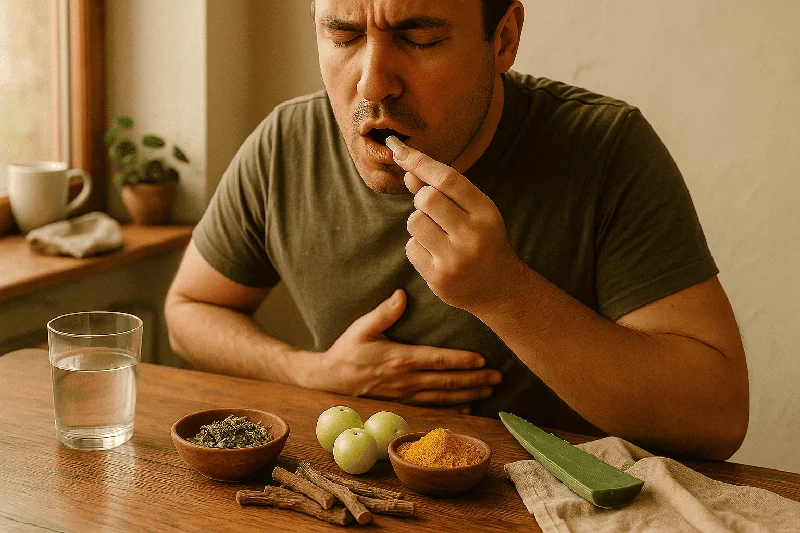
Stomach ulcers are open sores that develop on the inner lining of the stomach (gastric ulcers) or the upper portion of the small intestine (duodenal ulcers). They affect roughly 10% of the global population at some point in their lives, and the burning, gnawing pain they cause can seriously disrupt daily life. If you're searching for an ayurvedic medicine for stomach ulcer, the good news is that Ayurveda offers a comprehensive system — not just a single pill — to heal the damaged mucosa, rebalance digestion, and prevent recurrence.
- The most effective ayurvedic medicines for stomach ulcers include Avipattikar Churna, Sukumaram Kashayam, Kamadudha Ras, Yashtimadhu (Licorice), Shatavari, and Praval Pishti. These formulations work by cooling aggravated Pitta dosha, protecting the gastric lining, and restoring the strength of Agni (digestive fire) without provoking excess acidity.
- But medicines alone won't do the job — Ayurveda treats stomach ulcers through a layered protocol that includes herbal remedies, dietary correction, stress management, and in chronic cases, Panchakarma detoxification.
This guide covers everything: root causes, specific formulations with dosages, a step-by-step healing timeline, scientific evidence, and critical safety information that most resources overlook.
How Does Ayurveda View the Root Causes of Stomach Ulcers?
- In modern medicine, stomach ulcers are primarily attributed to Helicobacter pylori infection (present in up to 90% of duodenal ulcer cases) and prolonged use of NSAIDs like ibuprofen or aspirin.
- Ayurveda doesn't contradict these findings — it layers a deeper systemic understanding on top.
- Ayurveda classifies stomach ulcers under Annadrava Shula and Parinama Shula, conditions rooted in the aggravation of Pitta dosha. Pitta governs all transformative and metabolic processes in the body, including the secretion of digestive acids.
- When Pitta becomes vitiated — through spicy food, alcohol, chronic stress, anger, or irregular eating — it leads to excessive acid production (Amlapitta), which corrodes the protective mucosal barrier.
The Role of Agni and Ama in Ulcer Formation
Here's where Ayurveda adds nuance that Western medicine often misses. It's not just about "too much acid." The concept of Agni (digestive fire) explains that a disturbed digestive capacity produces Ama — incompletely digested metabolic waste that becomes toxic. This Ama lodges in the GI tract, creates local inflammation, and weakens the stomach's mucosal defense.
The therapeutic strategy, therefore, has two simultaneous goals:
- Cool and pacify excess Pitta to reduce acid secretion
- Restore Agni through gentle deepana (appetite-stimulating) and pachana (digestion-enhancing) herbs — without provoking further acidity
This is a delicate balance, and it's why random "home remedy" approaches often fail or even worsen the condition.
Gastric Ulcer vs Duodenal Ulcer: Does Ayurveda Differentiate?
- Yes, and this distinction matters for treatment. Gastric ulcers (in the stomach itself) tend to involve more Pitta-Kapha vitiation — with symptoms like heaviness after eating, nausea, and pain that worsens with food.
- Duodenal ulcers lean more toward Pitta-Vata imbalance — with sharp, burning pain on an empty stomach that improves temporarily after eating.
The base herbal protocol is similar, but the supporting formulations, dietary timing, and Panchakarma approach differ. A qualified Ayurvedic practitioner will assess your Prakriti (constitution) and Vikriti (current imbalance) before prescribing.
Which Ayurvedic Medicines Are Best for Stomach Ulcers?
This is the most direct answer to the search query — and surprisingly, most online resources fail to provide a systematic list of actual ayurvedic formulations. Below are the key medicines, organized by type, with standard dosages and indications.
Classical Formulations (Compound Medicines)
| Medicine | Form | Standard Dosage | Primary Action | Best For |
|---|---|---|---|---|
| Avipattikar Churna | Powder | 3–6 g with lukewarm water, before meals | Reduces hyperacidity, mild laxative | Acid-predominant ulcers with constipation |
| Sukumaram Kashayam | Decoction/Tablet | 15 ml decoction or 2 tablets, twice daily before food | Balances Pitta-Vata, soothes GI tract | Duodenal ulcers with bloating |
| Kamadudha Ras | Tablet | 125–250 mg, twice daily with honey or milk | Potent Pitta-pacifier, antacid | Severe burning, bleeding ulcers |
| Shankha Bhasma | Calcined powder | 250–500 mg with honey, twice daily | Neutralizes acid, improves Agni | Hyperacidity with indigestion |
| Praval Pishti | Coral calcium | 250–500 mg with milk or water, twice daily | Cooling, hemostatic | Ulcers with bleeding tendency |
| Dhatri Lauha | Tablet | 250 mg, twice daily with buttermilk | Iron + Amla based, heals mucosa | Ulcers with anemia (chronic blood loss) |
> Important: These dosages are general guidelines. Individual dosing should be determined by a qualified Ayurvedic doctor based on your constitution, severity of ulceration, and concurrent medications.
Single Herbs (Dravya) That Heal Ulcers
- These herbs form the backbone of most anti-ulcer formulations in Ayurveda.
- Several of them now have credible scientific backing:
- Yashtimadhu (Glycyrrhiza glabra — Licorice): This is arguably the single most important herb for stomach ulcers. Its active compound, glycyrrhizin, stimulates mucus secretion and protects the gastric lining. A 2012 study published in the Journal of Ethnopharmacology demonstrated that deglycyrrhizinated licorice (DGL) significantly accelerated ulcer healing comparable to conventional antacids.
- Standard dose: 3–5 g powder or 1–2 tablets of Yashtimadhu, twice daily.
- Amalaki (Emblica officinalis — Indian Gooseberry/Amla): Rich in vitamin C and tannins, Amalaki has both anti-inflammatory and gastroprotective properties. Research published in Phytomedicine (2011) showed it reduced gastric acid output and increased mucosal defense factors in animal models.
- Dose: 3–6 g powder or 500 mg standardized extract, twice daily.
- Shatavari (Asparagus racemosus): Known as one of the best Pitta-shamaka herbs, Shatavari increases the production of protective mucus in the stomach. A study in the Indian Journal of Pharmacology (2003) found its anti-ulcer activity comparable to ranitidine.
- Dose: 3–6 g powder with milk, twice daily.
- Guduchi (Tinospora cordifolia): An immunomodulator and Pitta-pacifier. Guduchi helps heal the mucosal lining while also addressing the immune dysfunction that allows H. pylori to persist.
- Dose: 500 mg extract or 3 g powder, twice daily.
- Kumari (Aloe vera): Aloe vera gel has demonstrated anti-ulcer effects in multiple studies. A 2016 trial in the World Journal of Gastroenterology showed aloe vera gel was as effective as omeprazole in treating non-complicated gastric ulcers.
- Dose: 20–30 ml fresh gel or juice, once daily on empty stomach.
Ayurvedic Herbs with Anti-H. pylori Activity
This is a critical gap in most Ayurvedic ulcer guides. Since H. pylori infection is implicated in the vast majority of peptic ulcers, it's worth knowing which Ayurvedic herbs show proven antibacterial activity against this bacterium.
Turmeric (Curcuma longa): Curcumin, the active compound in turmeric, has shown significant anti-H. pylori activity in vitro. A 2009 study in Molecular Nutrition & Food Research found that curcumin inhibited H. pylori growth and reduced gastric inflammation. While it may not fully eradicate the infection on its own, it serves as an excellent adjunct.
- Triphala: The combination of Amalaki, Bibhitaki, and Haritaki demonstrated bactericidal activity against H. pylori in a 2014 study in IOSR Journal of Pharmacy.
- However — and this is important — Triphala has a mild laxative and heating quality that can aggravate active ulcers. It should be used only in the later healing phases, not during the acute stage. This is one of the most common mistakes people make.
Neem (Azadirachta indica): Neem bark extract showed anti-H. pylori activity in research published in Helicobacter journal (2009). Its bitter and cooling properties also help pacify Pitta.
What Dietary Steps Can Speed Up Ulcer Relief?
Diet is not optional in Ayurvedic ulcer management — it's literally half the treatment. The principle is to follow a Pitta-pacifying diet that reduces acid production while still nourishing the body.
Foods to Include
- Cooling grains: White rice (well-cooked), oats, barley
- Protective fats: Cow's ghee (especially medicated ghee — Shatdhaut Ghrita), coconut oil
- Vegetables: Bottle gourd (lauki), ash gourd, tender coconut, cooked leafy greens, cucumber
- Fruits: Sweet pomegranate, ripe banana, sweet grapes, coconut water
- Dairy: Warm milk (not cold), buttermilk with cumin and coriander
- Specific addition: Raw cabbage juice — a 2017 review confirmed that cabbage juice can accelerate ulcer healing by up to 40% due to its vitamin U (S-methylmethionine) content
Foods to Strictly Avoid
- All spicy, sour, and fermented foods (pickles, vinegar, hot sauce)
- Raw onions, garlic in excess, tomatoes
- Tea, coffee, carbonated drinks, alcohol
- Deep-fried foods and reheated oils
- Citrus fruits and sour curd
The Kala Principle: Meal Timing Matters
This is an often-overlooked aspect that makes a significant difference:
- Eat your last meal before sunset — ideally before 6:30 PM. Pitta is naturally elevated between 10 PM and 2 AM, and undigested food during this window aggravates acid production.
- Never skip meals or go long gaps without food. For duodenal ulcers especially, empty-stomach acidity worsens symptoms.
- Sleep by 10 PM. Late nights directly aggravate Pitta.
- Lunch should be the largest meal (between 12–1 PM when Agni is naturally strongest).
How Does Stress Management Fit Into Ulcer Healing?
- The mind-gut connection in Ayurveda isn't a new concept — the texts describe Manasika Nidana (psychological causes) as primary triggers for Pitta aggravation.
- Modern research supports this: chronic psychological stress alters gastric acid secretion, impairs mucosal blood flow, and weakens immune defenses against H. pylori.
A clinical study on yoga-based interventions found that regular practice reduced ulcer-related abdominal pain by approximately 30% over an 8-week period.
Recommended Practices
- Sheetali/Sheetkari Pranayama: Cooling breath techniques that directly reduce Pitta. Practice 10–15 rounds, twice daily.
- Yoga Asanas: Vajrasana (after meals), Paschimottanasana, Shavasana. Avoid intense core exercises and Kapalbhati during the acute phase.
- Meditation: Even 15 minutes of guided meditation daily has measurable effects on cortisol levels and gastric acid secretion.
- Shirodhara: For chronic, stress-driven ulcers, this Panchakarma procedure (warm oil poured steadily on the forehead) has a profound calming effect on the nervous system.
Don't wait or self medicate. Start chat with Doctor NOW
When Should You Consider Panchakarma for Stomach Ulcers?
Panchakarma — Ayurveda's five-fold purification therapy — is recommended for chronic, recurrent, or treatment-resistant ulcers. It's not a first-line approach for mild or acute cases, but for patients who've been struggling for months (or years), it can be genuinely transformative.
Virechana (Therapeutic Purgation)
- This is the primary Panchakarma for Pitta-dominant conditions.
- It involves:
- Snehapana (internal oleation with medicated ghee for 3–7 days)
- Swedana (herbal steam therapy)
- Controlled purgation using herbs like Trivrit or Aragvadha
Clinical observations at integrative Ayurvedic centers report that Virechana shows efficacy in 80–90% of chronic hyperacidity and ulcer cases, particularly when combined with post-procedure herbal maintenance.
Basti (Medicated Enema)
Particularly useful when Vata involvement is significant (duodenal ulcers with irregular pain, anxiety-driven symptoms). Ksheera Basti (milk-based enema with cooling herbs) helps reset the entire lower GI environment.
> Note: Panchakarma must be done under strict medical supervision. Self-administering purgation or enemas can be dangerous, especially with active bleeding ulcers.
Step-by-Step Healing Protocol: Your Ayurvedic Treatment Timeline
- No competitor resource provides this, and it's what most patients actually need — a clear roadmap.
- Here's a general phased approach:
Phase 1: Acute Relief (Weeks 1–2)
Goal: Reduce pain, cool Pitta, protect the gastric lining
- Kamadudha Ras 125 mg + Praval Pishti 250 mg, twice daily
- Yashtimadhu powder 3 g with 1 tsp cow's ghee, on empty stomach
- Shatavari powder 3 g with warm milk, at bedtime
- Strict Pitta-pacifying diet; cold milk sips when pain flares
- Aloe vera juice 20 ml, morning empty stomach
- Avoid all spicy, sour, fried food completely
Phase 2: Mucosal Healing (Weeks 3–6)
Goal: Repair the damaged lining, improve Agni gently
- Continue Yashtimadhu and Shatavari
- Add Avipattikar Churna 3 g before lunch and dinner
- Introduce Guduchi 500 mg twice daily for immune support
- Add cabbage juice 100 ml, morning
- Begin Sheetali Pranayama and gentle yoga
- Gradually reintroduce bland cooked vegetables
Phase 3: Strengthening & Prevention (Months 2–3)
Goal: Restore full digestive strength, address root causes
- Continue core herbs at reduced doses
- Add Triphala 3 g at bedtime (now safe since the acute phase is resolved)
- Curcumin supplement 500 mg daily for anti-H. pylori and anti-inflammatory effect
- Begin Sukumaram Kashayam if bloating or irregular digestion persists
- Focus on stress management practices daily
- Consider Virechana if chronic symptoms persist
Phase 4: Long-Term Maintenance (Ongoing)
- Seasonal Pitta-pacifying detox (especially before and during summer)
- Continue Amalaki as a daily rasayana (rejuvenative)
- Maintain meal timing discipline
- Annual or biannual Panchakarma for patients with chronic tendencies
- Ayurveda vs Conventional Treatment: A Practical Comparison
Understanding how Ayurvedic and conventional approaches compare helps patients make informed decisions — especially since the best outcomes often come from combining both.
| Parameter | Conventional Medicine | Ayurvedic Medicine |
|---|---|---|
| Primary approach | Kill H. pylori (triple therapy antibiotics), suppress acid (PPIs like omeprazole) | Balance Pitta, heal mucosa, restore Agni, remove Ama |
| Speed of symptom relief | Fast (1–3 days with PPIs) | Gradual (1–2 weeks for noticeable relief) |
| Root cause treatment | Partially (kills bacteria, but doesn't address lifestyle causes) | Comprehensive (diet, stress, constitution, lifestyle) |
| Side effects | PPIs: B12 deficiency, bone loss with long-term use; Antibiotics: gut dysbiosis | Minimal when properly prescribed; some herbs have specific contraindications |
| Recurrence rate | 50–60% within 1 year after stopping PPIs | Lower with sustained lifestyle changes; clinical data suggests 75% of chronic patients see lasting improvement with integrative Ayurvedic protocols |
| Cost | Higher (ongoing medication, endoscopy) | Generally lower for herbs; Panchakarma can be costly |
| Best for | Acute/severe cases, confirmed H. pylori eradication, bleeding ulcers | Mild-moderate ulcers, chronic/recurrent cases, prevention, maintenance |
Can Ayurvedic Methods Be Combined with Modern Treatment?
Absolutely — and for serious cases, this is often the recommended approach. Use conventional medicine for rapid acid suppression and H. pylori eradication, then transition to Ayurvedic herbs and lifestyle modification for long-term healing and prevention. Integrative centers report that approximately 75% of chronic ulcer patients show significant improvement when Ayurveda is combined with modern diagnostics and treatment.
The key is communication: inform both your gastroenterologist and Ayurvedic doctor about all medicines you're taking, as some herbs (like Licorice) can interact with certain medications.
Safety, Contraindications, and Common Mistakes
This section is something virtually no competitor covers, and it's crucial for patient safety.
Contraindications to Be Aware Of
- Yashtimadhu (Licorice): Should not be used for more than 4–6 weeks continuously without medical supervision. Glycyrrhizin can cause potassium depletion, water retention, and elevated blood pressure. Patients with hypertension, kidney disease, or those on diuretics should use DGL (deglycyrrhizinated licorice) formulations instead.
- Shankha Bhasma and Praval Pishti: Avoid in patients with kidney stones or hypercalcemia. Ensure you're purchasing properly processed (shodhita) bhasmas from reputable manufacturers.
- Aloe vera: Contraindicated in pregnancy (can stimulate uterine contractions) and in patients with active bleeding ulcers (the latex component can irritate).
- Triphala in the acute phase: This is a common mistake. Triphala has mild ushna (heating) quality and laxative action that can worsen active ulcers. Reserve it for the healing and maintenance phases only.
Common Mistakes People Make
- Using multiple home remedies simultaneously without understanding their interactions. For example, combining Aloe vera juice + Amla juice + lemon honey water creates a contradictory acid-alkaline mix that often worsens symptoms.
- Assuming "cold food" equals "cooling effect." Ice cream, cold milk from the fridge, and chilled smoothies are cold in temperature but many are not Pitta-pacifying. Room-temperature or warm preparations are generally better.
- Ignoring H. pylori. If you've been diagnosed with H. pylori-positive ulcers, consider conventional antibiotic treatment for eradication first, then use Ayurvedic protocols for healing and prevention. Herbs alone may not reliably eradicate an established H. pylori infection.
- Self-prescribing bhasmas (metal/mineral preparations). Improperly processed bhasmas can contain toxic heavy metals. Always source from certified manufacturers and use under practitioner guidance.
A Powerful Home Remedy: Yashtimadhu-Ghee Decoction
This is a time-tested, practical recipe you can prepare at home:
- Take 1 teaspoon of Yashtimadhu (Licorice) powder
- Add it to 2 cups of water in a saucepan
- Boil and simmer on low heat until reduced to 1 cup
- Strain and add 1 teaspoon of pure cow's ghee while still warm
- Drink this on an empty stomach, first thing in the morning
Duration: Daily for 3 weeks. Discontinue for 1 week, then repeat if needed. Do not exceed 6 weeks without medical guidance due to glycyrrhizin-related concerns.
This decoction works by coating the stomach lining with a protective mucilaginous layer while the ghee provides healing lipids that penetrate the damaged mucosa.
FAQ: Ayurvedic Medicine for Stomach Ulcer
What is the fastest way to cure a stomach ulcer in Ayurveda?
- The fastest relief comes from a combination of Kamadudha Ras (125–250 mg) with Yashtimadhu ghee decoction on an empty stomach, combined with strict dietary discipline. Most patients report significant pain reduction within 7–10 days. However, complete mucosal healing takes 4–8 weeks.
- There is no genuine "instant cure" — be wary of anyone promising one.
What is the fastest way to cure a stomach ulcer permanently?
Permanent healing requires addressing all layers: eradicate H. pylori if present (consider conventional antibiotics for this), follow the full Ayurvedic healing protocol for 2–3 months, adopt long-term Pitta-pacifying dietary habits, manage stress through daily pranayama/meditation, and do seasonal detox. The patients who achieve lasting results are those who modify their lifestyle, not just take medicines temporarily.
Which medicine is best to cure a stomach ulcer?
For mild-moderate ulcers, Avipattikar Churna combined with Yashtimadhu is often sufficient. For severe or bleeding ulcers, Kamadudha Ras + Praval Pishti provides stronger acid-neutralizing and hemostatic action. The "best" medicine depends on your specific ulcer type, constitution, and severity — a one-size-fits-all answer doesn't really exist in Ayurveda.
Does Ayurveda offer long-term strategies for maintaining gut health?
Yes. Ayurveda's concept of Ritucharya (seasonal regimen) recommends Pitta-pacifying protocols during summer months when Pitta naturally aggravates. Daily use of Amalaki Rasayana, maintaining proper meal timing, and annual Panchakarma (especially Virechana before summer) form the backbone of long-term gastric health maintenance.
Can Ayurvedic practices replace medical advice for serious ulcer cases?
No. If you have symptoms of a bleeding ulcer (black/tarry stools, vomiting blood, sudden severe pain), seek emergency medical attention immediately. Ayurveda is most effective for mild-moderate ulcers, chronic management, prevention, and as a complementary approach alongside conventional treatment. A confirmed diagnosis through endoscopy is recommended before beginning any treatment plan.
Final Thoughts: Healing Your Ulcer the Ayurvedic Way
Stomach ulcers are not merely an "acidity problem" — they reflect a deeper imbalance in your body's digestive intelligence. Ayurvedic medicine for stomach ulcer works because it addresses this imbalance at multiple levels simultaneously: the physical (herbs and diet), the metabolic (Agni restoration), the eliminative (Panchakarma), and the psychological (stress management).
The evidence is growing. Modern research increasingly validates what Ayurvedic practitioners have observed for centuries — that herbs like Yashtimadhu, Shatavari, and Amalaki possess genuine gastroprotective, anti-inflammatory, and anti-ulcer properties.
- Start with the basics: consult a qualified Ayurvedic physician, get a proper diagnosis (ideally with modern diagnostics like endoscopy), follow the phased protocol outlined above, and commit to the dietary and lifestyle changes that make lasting healing possible.
- Your stomach lining has a remarkable capacity to regenerate — give it the right conditions, and it will.
This article is for informational purposes and should not replace personalized medical advice. Always consult a qualified healthcare practitioner before starting any new treatment regimen.
Scientific Sources
- Exploring the Efficacy of Integrating Yoga and Ayurveda for Hypertension Treatment — Balkrishna A et al., 2025, Current hypertension reviews
- An Ayurvedic approach to postpartum depression — Posmontier B et al., 2009, Holistic nursing practice
- Ayurveda and Panchakarma: measuring the effects of a holistic health intervention — Conboy L et al., 2009, TheScientificWorldJournal
- Complete Resolution of Plantar Psoriasis With Ayurveda, A Case Report — Borse S et al., 2024, Alternative therapies in health and medicine
- The use of "tortured phrases" in science communication — Samal J, 2025, Indian journal of medical ethics
- Determination of trace and heavy metals in some commonly used medicinal herbs in Ayurveda — Nema NK et al., 2014, Toxicology and industrial health
- Ayurveda in Early Life to Prevent Noncommunicable Diseases From Epigenetical Alterations — Kuldeep C et al., 2021, Alternative therapies in health and medicine
- Utilization of Ayurveda in health care: an approach for prevention, health promotion, and treatment of disease.
- Part 2--Ayurveda in primary health care — Sharma H et al., 2007, Journal of alternative and complementary medicine (New York, N.Y.)
- Ayurveda and in silico Approach: A Challenging Proficient Confluence for Better Development of Effective Traditional Medicine Spotlighting Network Pharmacology — Sahu R et al., 2023, Chinese journal of integrative medicine
- Exploring pluralism--the many faces of Ayurveda — Nordstrom CR, 1988, Social science & medicine (1982)
- Management of Parkinson's disease in Ayurveda: Medicinal plants and adjuvant measures — Pathak-Gandhi N et al., 2017, Journal of ethnopharmacology
- The practitioner's perspective: introduction to Ayurvedic herbalism — Khalsa KP, 2007, Journal of herbal pharmacotherapy
- Maharishi Ayurveda for postpartum care — Boes RR, 2013, Midwifery today with international midwife
- Legal status of ayurveda in the healthcare system — Pashkov VМ et al., 2025, Polski merkuriusz lekarski : organ Polskiego Towarzystwa Lekarskiego
- A Review of the Evolution of Ayurveda in the United States — Halpern M, 2018, Alternative therapies in health and medicine
- An Insight of Clinical Evidence of Ayurveda Interventions in the Management of COVID-19 Patients — Maideen NMP et al., 2022, Infectious disorders drug targets
- Knowledge, attitude and practice towards Ayurveda among patients attending cardiology and neurology clinics at a tertiary care institute in India — Sharma G et al., 2023, The National medical journal of India
- From nature's bounty to drug discovery: Leveraging phytochemicals and molecular approaches to combat multi-drug-resistant (MDR) tuberculosis — Nalam SM et al., 2024, The Indian journal of tuberculosis
- Utilization of Ayurveda in health care: an approach for prevention, health promotion, and treatment of disease.
- Part 1--Ayurveda, the science of life — Sharma H et al., 2007, Journal of alternative and complementary medicine (New York, N.Y.)
- Ajurveda in modern medical science(https://pubmed.ncbi.nlm.nih.gov/27211357/) — Korossy A et al., 2016, Orvosi hetilap
Questions from users
What should I know about the types of stomach ulcers and their Ayurvedic treatments?
Leslie
9 days ago
Stomach ulcers can be gastric (stomach) or duodenal (upper intestine). Ayuerveda focuses on balancing your doshas, mainly Pitta, for ulcer relief. Herbs like licorice, amalaki, and slippery elm can help. Consult a practitoner to personalize your treatment based on your body's needs. Eat warm, unctuous food to support healing, and stay away from spicy or acidic food.
What is the impact of excess Pitta on stomach ulcers and how can it be balanced?
Claire
18 days ago
Excess Pitta in the stomach can really irritate those ulcers by boosting acid levels and inflaming things. To calm down Pitta, try cooling foods and herbs like coriander, fennel, or aloe vera. Gentle spices like cardamom can help restore your Agni. Focus on non-acidic foods and chew food thoroughly. A holistic approach can make a big diff! 🥗😌
What Ayurvedic herbs should I use to help prevent stomach ulcers?
Mason
28 days ago
To prevent stomach ulcers with Ayurveda, you might try Turmeric, as it has curcumin, which is good against Helicobacter pylori, a common cause of ulcers. Licorice too – the deglycyrrhizinated form is usually safe. These herbs balance Pitta dosha, often linked to ulcers. Also, don't forget to practice calming asanas like Vajrasana after eating! Just ask a practitioner for tailored advice.
Can I use Ayurvedic herbs alongside antibiotics for treating stomach ulcers?
Una
37 days ago
Yes, it's possible to use Ayurvedic herbs alongside antibiotics for treating stomach ulcers, but definitely discuss with your doctor first. Herbs like yashtimadhu and shatavari can help the mucosa heal, but you'll want holistic guidance to balance this with your other treatments. Remember, everyone's constitution and needs are different!
Can I take Avipattikar Churna long-term for stomach ulcer management?
Owen
46 days ago
It's generally okay to use Avipattikar Churna long-term for stomach ulcers but it's super important to adapt its usage to your individual body constitution, or prakriti. Plus, ya gotta check your dosha & agni balance too. Chat with an Ayurvedic practitioner or doc just to be on the safe side. They can give tips on integrating it into your lifestyle without issues.
What is the best time to drink aloe vera juice for stomach ulcer relief?
Anthony
56 days ago
The best time to drink aloe vera juice for stomach ulcer relief is on an empty stomach, preferably in the morning. This allows it to coat your stomach lining effectively. Just make sure not to follow it up immediately with acidic or spicy foods, as they can aggravate the Pitta dosha. Listen to your body, adjust if needed!
What is the role of stress in causing stomach ulcers and how can it be managed?
Lily
65 days ago
Stress can definitely play a role in causing stomach ulcers as it might increase stomach acid leading to erosion of the stomach lining. In Ayurveda, it's key to balance the doshas, especially Pitta, to manage stress. Try stress-reduction techniques like meditation, yoga, or journaling, and consider herbs like ashwagandha to help calm the mind.
What is Shankha Bhasma and how does it help with stomach ulcers?
Brooklyn
75 days ago
Shankha Bhasma is an Ayurvedic remedy made from conch shell ash. It's known for balancing pitta dosha, which helps soothe hyperacidity and can reduce inflammation in the stomach lining, aiding in ulcers. It neutralizes excess acid, but remember, it should ideally be part of a holistic approach, including diet & lifestyle changes. Always good to chat with an Ayurvedic practitioner first!
Is it safe to take Kamadudha Ras with other medications for stomach ulcers?
Hunter
84 days ago
Taking Kamadudha Ras with other medications for ulcers can be tricky. It's super important to talk with an Ayurvedic practitioner or a healthcare provider first. They can check if your current meds are compatible with Kamadudha Ras. Balancing your dosha and ensuring no interactions are key here!
Can I drink coconut water daily to help with stomach ulcers?
Summer
94 days ago
Yes, you can drink coconut water daily for stomach ulcers. It's cool and soothing, helping to balance Pitta dosha, which is often linked to ulcers. Just listen to your body and see if it agrees with you. Coconut water is great, but mix it up with other remedies like amla or licorice for optimal healing.
Related articles

Gastrointestinal Disorders
Patanjali Divya Udarkalp Churna
Exploration of Patanjali Divya Udarkalp Churna
3,023

Gastrointestinal Disorders
Panchavalkala Churna: An Ayurvedic Solution for Holistic Healing
Panchavalkala Churna is a versatile Ayurvedic formulation that addresses various health concerns, from digestive disorders to skin care. Its natural properties make it a safe and effective option for those seeking holistic healing.
3,101

Gastrointestinal Disorders
Avipathi Choornam Benefits, Dosage, Ingredients, Side Effects
Exploration of Avipathi Choornam Benefits, Dosage, Ingredients, Side Effects
2,716

Gastrointestinal Disorders
Liver & Gall
The liver is closely linked to other organs and body systems.
3,035

Gastrointestinal Disorders
Ayurvedic Treatment for Gastritis: A Real Talk on Gut Healing
Let’s not sugarcoat it—gastritis sucks. Whether it hits you like a slow burn or drops you with sudden, stabbing upper-abdominal pain, it’s no walk in the park. Technically speaking, gastritis is inflammation of the stomach lining. But if you’ve dealt with
3,375

Gastrointestinal Disorders
Amorex Tablet: Ayurvedic Benefits and How It Supports Well-being
Discover the uses, benefits, proper dosage, and scientific research behind Amorex Tablet, a potent pharmaceutical formulation for enhancing health and well-being.
4,155

Gastrointestinal Disorders
Dhanwantara Vati: Ayurvedic Remedy for Holistic Healt
In Ayurveda, the ancient science of natural healing, Dhanwantara Vati holds a significant place for its wide-ranging therapeutic properties.
3,419
Gastrointestinal Disorders
Arshoghni Vati Uses – Ayurvedic Remedy for Piles and Hemorrhoids
Discover the benefits and uses of Arshoghni Vati, a powerful Ayurvedic remedy for piles (hemorrhoids). Learn how it helps alleviate symptoms and promotes rectal health.
3,650

Gastrointestinal Disorders
Is Rice Good for Piles? Ayurvedic View on White, Brown, and Curd Rice
Is rice good for piles? Learn if white rice, brown rice, or curd rice helps or harms piles. Discover Ayurvedic advice on rice for hemorrhoid relief
6,029

Gastrointestinal Disorders
Kalamegha Strong: Benefits, Dosage & Science-Backed Insights
Discover the proven benefits, proper dosage, uses, and scientific research behind Kalamegha Strong, the powerful Ayurvedic formulation for liver health and overall wellness.
3,991
Related consultations on the topic
Legal
Additional Documents
© 2024 Ask Ayurveda. All rights reserved.