Ask Ayurvedic doctor a question and get a consultation online on the problem of your concern in a free or paid mode. More than 2,000 experienced doctors work and wait for your questions on our site and help users to solve their health problems every day.
FREE! Ask Ayurvedic Doctors 24/7

 Fast responses
 1000+ verified doctors
Body DetoxEar, Nose, and Throat DisordersGeriatrics & RejuvenationImmunodeficiencyInfertility TreatmentNutritionOrthopedic DisordersPediatricsRespiratory DisordersSexually Transmitted Diseases (STDs)Surgery RecoveryUrological DisordersVascular DisordersDental DisordersEndocrinological DisordersGastrointestinal DisordersYoga TherapyGeneral MedicineAllergic DisordersCardio DisordersGynecology and ObstetricsCosmetologySkin and Hair DisordersEye DisordersInfectious DiseasesMental DisordersNeurological DisordersOncologyPanchakarmaSexual Health & DisordersSports Medicine
Published on 02/07/25
(Updated on 06/21/26)
3,400
Arshoghni Vati Uses – Ayurvedic Remedy for Piles and Hemorrhoids
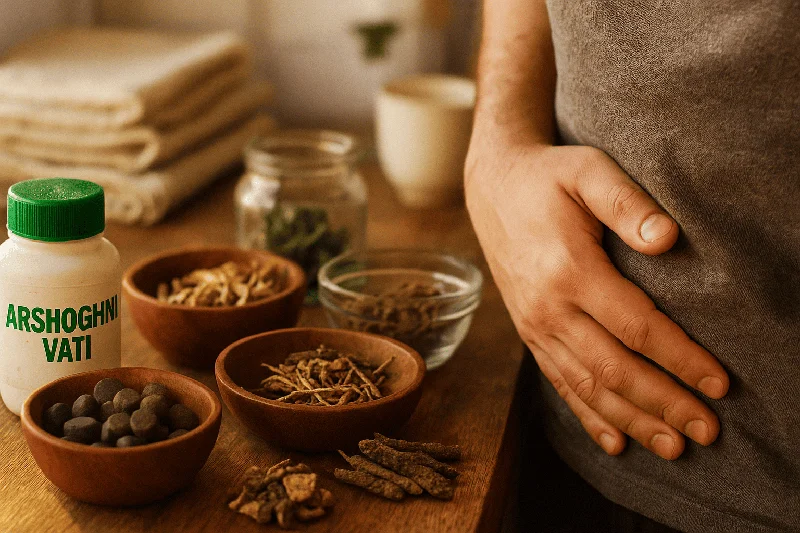
Arshoghni Vati is a classical Ayurvedic formulation specifically designed to treat piles (hemorrhoids) — a painful condition involving swollen blood vessels in the rectum and anus. It works by reducing inflammation, stopping rectal bleeding, shrinking hemorrhoidal masses, and relieving itching and pain. Whether you're dealing with bleeding piles, non-bleeding piles, chronic constipation, or anal fissures, Arshoghni Vati offers a time-tested natural approach rooted in centuries of Ayurvedic practice.
- But does it actually work? What's inside these tablets? And how does it compare to other popular Ayurvedic remedies like Pilex or Arshkalp Vati?
- In this comprehensive guide, we cover everything — from ingredients and dosage to side effects, clinical evidence, and practical lifestyle tips that can dramatically improve your results.
What Is Arshoghni Vati?
- Arshoghni Vati (also spelled Arshoghni Bati) is a polyherbal Ayurvedic tablet formulation classified under the "Vati" or "Bati" category of Ayurvedic medicines — meaning it's prepared by combining powdered herbs and mineral ingredients into tablet form.
- The name itself reveals its purpose: "Arsh" means piles/hemorrhoids in Sanskrit, and "Oghni" means destroyer. Quite literally, it is the "destroyer of piles."
This formulation is widely referenced in classical Ayurvedic texts and is manufactured by several major Ayurvedic companies across India. It primarily targets Vata and Kapha doshas, which according to Ayurveda, are the root imbalances behind hemorrhoidal conditions.
Arshoghni Vati vs Arshoghni Bati — Are They the Same?
Yes, they are the same medicine. The difference is purely linguistic. "Vati" is the Sanskrit/Hindi term, while "Bati" is a Bengali transliteration of the same word. Both refer to tablet-form Ayurvedic preparations. So whether you see "Arshoghni Vati Baidyanath" or "Arshoghni Bati" on a label, you're looking at the same classical formulation. However, slight variations in ingredient proportions can exist between manufacturers — a point we'll address later.
Ayurvedic Properties (Rasa, Guna, Virya, Vipaka, Dosha Karma)
Understanding Arshoghni Vati through the lens of classical Ayurvedic pharmacology gives deeper insight into how it works:
| Ayurvedic Property | Value |
|---|---|
| Rasa (Taste) | Tikta (Bitter), Kashaya (Astringent) |
| Guna (Quality) | Laghu (Light), Ruksha (Dry) |
| Virya (Potency) | Sheeta (Cooling) |
| Vipaka (Post-digestive effect) | Katu (Pungent) |
| Dosha Karma | Pacifies Pitta and Kapha; balances Vata in the lower abdomen |
Key medicinal qualities (Karma):
- Arshoghna — Directly destroys piles
- Raktastambhaka — Stops bleeding
- Shothahara — Reduces swelling and inflammation
- Deepana — Enhances digestive fire
- Pachana — Aids digestion of toxins (Ama)
- Anulomana — Regulates downward movement of Vata (promotes healthy bowel movement)
These properties collectively explain why Arshoghni Vati addresses not just the symptoms but the underlying digestive imbalances that cause hemorrhoids in the first place.
Key Ingredients of Arshoghni Vati and Their Benefits
The effectiveness of any Ayurvedic formulation depends on its ingredients.
Arshoghni Vati combines herbs, minerals, and natural resins — each playing a specific therapeutic role.
Here's the detailed composition:
| Ingredient | Botanical/Scientific Name | Quantity (per dose) | Primary Action |
|---|---|---|---|
| Neem Seeds | Azadirachta indica | 2 parts | Anti-inflammatory, antibacterial |
| Bakayan Seeds | Melia azedarach | 2 parts | Anthelmintic, anti-hemorrhoidal |
| Rasaut (Daruhaldi extract) | Berberis aristata | 1 part | Astringent, wound-healing |
| Dragon's Blood (Khoon-e-Siyavshan) | Daemonorops draco | 1 part | Hemostatic (stops bleeding) |
| Kaharva Pishti | Calcium carbonate (processed amber) | 1 part | Cooling, bleeding control |
| Makoy (Black Nightshade) | Solanum nigrum | 1 part | Hepatoprotective, anti-inflammatory |
| Reetha (Soapnut) | Sapindus mukorossi | For processing | Binding and detoxifying agent |
Neem Seeds (Azadirachta indica)
Neem is one of the most well-researched Ayurvedic herbs. A 2017 study published in the Journal of Traditional and Complementary Medicine confirmed neem's significant anti-inflammatory and antimicrobial properties. In Arshoghni Vati, neem seeds specifically reduce infection risk in hemorrhoidal tissues, decrease inflammation, and help detoxify the blood. They also have mild laxative properties that ease constipation — a major contributing factor to piles.
Bakayan Seeds (Melia azedarach)
Bakayan, also known as Persian Lilac, is a potent anthelmintic and anti-inflammatory herb. Its seeds contain compounds called limonoids, which studies have shown possess anti-tumor and anti-inflammatory activities. In the context of hemorrhoids, Bakayan helps reduce swelling of the venous plexus and expels intestinal parasites that can worsen digestive health.
Dragon's Blood (Khoon-e-Siyavshan / Daemonorops draco)
This is perhaps the most fascinating ingredient. Dragon's Blood is a deep red resin obtained from the Dracaena or Daemonorops species. A 2019 study in Molecules journal demonstrated its powerful hemostatic (blood-stopping), wound-healing, and antioxidant properties. It's specifically included in Arshoghni Vati to control rectal bleeding — one of the most distressing symptoms of hemorrhoids.
Rasaut / Daruhaldi Extract (Berberis aristata)
- Rasaut is the concentrated aqueous extract of Daruhaldi (Indian Barberry). It contains berberine, a bioactive alkaloid extensively studied for its anti-inflammatory and antimicrobial effects. Research published in Phytomedicine (2020) showed berberine significantly reduces inflammatory markers.
- In this formulation, it acts as an astringent — tightening tissues and reducing discharge from hemorrhoidal masses.
Kaharva Pishti (Processed Amber / Calcium Carbonate)
Kaharva Pishti is a classical Ayurvedic mineral preparation known for its cooling effect on the body. It specifically targets Pitta-related bleeding disorders. It absorbs excess heat from the gastrointestinal tract and provides a soothing effect on inflamed rectal tissues. Its calcium content also supports tissue repair.
Uses and Benefits of Arshoghni Vati
Primary Use: Piles (Hemorrhoids) — Bleeding and Non-Bleeding
This is the core indication.
Arshoghni Vati is effective for both types:
- Bleeding Piles (Raktarsha): The combination of Dragon's Blood, Kaharva Pishti, and Rasaut works synergistically to stop rectal bleeding — often within 1–3 days for mild cases. The hemostatic action contracts blood vessels and promotes clotting at the hemorrhoidal site.
- Non-Bleeding Piles (Shushkarsha): For dry, itchy, and painful hemorrhoids, the anti-inflammatory action of Neem and Bakayan reduces swelling, while the overall formulation softens stool to reduce strain during defecation.
Effectiveness by Hemorrhoid Grade
Not all piles are equal.
Here's what you can realistically expect:
| Grade | Description | Arshoghni Vati Effectiveness |
|---|---|---|
| Grade 1 | Internal hemorrhoids, no prolapse | Highly effective — often resolves completely in 4–6 weeks |
| Grade 2 | Prolapse during straining, spontaneously reduces | Effective — significant symptom relief in 4–8 weeks |
| Grade 3 | Prolapse requiring manual reduction | Partially effective — can reduce symptoms, but may need additional treatments |
| Grade 4 | Permanently prolapsed, cannot be reduced | Not sufficient alone — surgical consultation recommended |
> Important: If you have Grade 3–4 hemorrhoids, Arshoghni Vati may still be beneficial as a supportive therapy alongside medical or surgical treatment, but it should not be relied upon as the sole treatment.
Relief from Chronic Constipation
Constipation is both a cause and consequence of piles. Arshoghni Vati addresses this through its Anulomana (downward-moving) and Deepana (digestive fire-enhancing) properties. The Neem and Makoy components help cleanse the intestinal tract, promote peristalsis, and regulate bowel movements. Consistent use typically normalizes stool consistency within 1–2 weeks.
Healing Anal Fissures
Anal fissures — small tears in the anal lining — often coexist with hemorrhoids. The wound-healing properties of Dragon's Blood and berberine from Rasaut accelerate tissue repair at fissure sites. The stool-softening effect also prevents re-tearing during bowel movements.
Detoxification of the Colon
The combination of Neem, Makoy, and Bakayan acts as a natural detoxifier for the large intestine. These herbs help eliminate accumulated Ama (toxins) from the colon walls, improve nutrient absorption, and create an environment less prone to inflammatory conditions.
Enhances Liver Function
Makoy (Solanum nigrum) is a well-known hepatoprotective herb. A study published in Food and Chemical Toxicology (2012) demonstrated its liver-protective effects against toxin-induced damage. Since Ayurveda considers the liver (Yakrit) central to blood purification — and impure blood a contributing factor to piles — this benefit directly supports hemorrhoid treatment.
Prevents Recurrence of Hemorrhoids
Perhaps the most underappreciated benefit. Unlike symptom-only treatments, Arshoghni Vati addresses the root cause by improving digestion, detoxifying the colon, and balancing disturbed doshas. When combined with dietary and lifestyle modifications, it significantly reduces the likelihood of hemorrhoid recurrence.
How Is Arshoghni Vati Prepared?
The traditional preparation method follows classical Ayurvedic pharmaceutical practices (Bhaishajya Kalpana):
- 1.Collection and cleaning: All herbal ingredients are sourced, authenticated, and cleaned thoroughly to remove impurities.
- 2.Drying: Ingredients are sun-dried or shade-dried depending on the herb's sensitivity.
- 3.Grinding (Churna preparation): Each ingredient is individually powdered to a fine consistency.
- 4.Mixing: Powders are combined in the specified proportions (as listed in the ingredients table above).
- 5.Bhavana (Wet grinding): The combined powder is ground with fresh Reetha (Soapnut) decoction or juice. This wet-grinding process, called Bhavana, is repeated 3–7 times to enhance potency and ensure uniform blending.
- 6.Tablet formation: The wet mass is rolled into uniform-sized tablets (approximately 250–500 mg each).
- 7.Drying: Tablets are dried in shade at controlled temperatures to preserve active compounds.
The Bhavana process is critical — it's essentially what transforms raw powders into a synergistic formulation with enhanced bioavailability.
Dosage of Arshoghni Vati
Standard Adult Dosage
| Parameter | Recommendation |
|---|---|
| Dose | 1–2 tablets (250–500 mg each) |
| Frequency | Twice daily |
| Timing | After meals |
| Adjuvant (Anupana) | Lukewarm water or buttermilk |
| Duration | 4–8 weeks (or as directed by an Ayurvedic physician) |
Duration of Treatment — How Long Should You Take It?
This depends on severity:
- Mild cases (Grade 1, recent onset): 4–6 weeks is usually sufficient.
- Moderate cases (Grade 2, chronic): 8–12 weeks with periodic assessment.
- Chronic/recurring cases: Up to 3 months, followed by a 2-week break, then reassess.
> Do not take continuously for more than 3 months without medical supervision, as the Neem content may affect liver enzymes with prolonged use.
Dosage for Children
Arshoghni Vati is generally not recommended for children under 12 years. Hemorrhoids are rare in children, and when present, usually indicate an underlying condition requiring pediatric evaluation. For adolescents aged 12–16, a reduced dose of half a tablet twice daily may be used — but only under the guidance of a qualified Ayurvedic practitioner.
When to Expect Results
| Symptom | Expected Timeline |
|---|---|
| Rectal bleeding reduction | 1–3 days |
| Pain and itching relief | 3–7 days |
| Reduction in hemorrhoid size | 2–4 weeks |
| Complete resolution (Grade 1–2) | 4–8 weeks |
| Constipation relief | 1–2 weeks |
These are approximate timelines based on clinical practice patterns. Individual results vary based on diet, lifestyle, and disease severity.
Don't wait or self medicate. Start chat with Doctor NOW
Side Effects of Arshoghni Vati
Arshoghni Vati is generally considered safe when taken in recommended doses for the prescribed duration. However, no medicine is entirely without risk.
Possible side effects:
- Mild stomach discomfort or nausea (usually in the first few days)
- Loose stools in some individuals (due to the laxative action of Neem)
- Allergic reactions (rare — primarily in individuals allergic to Neem or any specific ingredient)
Safety in special populations:
| Population | Safety Status |
|---|---|
| Pregnant women | Not recommended — Neem and Bakayan may stimulate uterine contractions |
| Breastfeeding mothers | Avoid unless specifically prescribed by a physician |
| Diabetic patients | Use with caution — Neem may lower blood sugar levels; monitor glucose regularly |
| Hypertensive patients | Generally safe, but monitor blood pressure during initial use |
Drug Interactions
While no formal drug interaction studies exist specifically for Arshoghni Vati, the following interactions are theoretically possible based on individual ingredient pharmacology:
- Antidiabetic medications (Metformin, Glimepiride): Neem has hypoglycemic properties — combined use may cause excessive blood sugar lowering.
- Anticoagulants/Blood thinners (Warfarin, Aspirin): Dragon's Blood has hemostatic properties that may counteract blood thinners.
- Immunosuppressants: Neem's immunomodulatory activity could theoretically interfere with immunosuppressive therapy.
- Hepatotoxic drugs: Since the formulation is liver-metabolized, concurrent use with hepatotoxic medications should be monitored.
> Rule of thumb: Maintain a 2-hour gap between Arshoghni Vati and any allopathic medication. Always inform both your Ayurvedic and allopathic physicians about all medicines you're taking.
Arshoghni Vati vs Other Ayurvedic Piles Medicines — A Comparison
One question nobody seems to answer properly: how does Arshoghni Vati stack up against other popular hemorrhoid formulations?
Here's an honest, detailed comparison:
| Feature | Arshoghni Vati | Arshkalp Vati (Patanjali) | Pilex Tablets (Himalaya) | Kankayan Vati |
|---|---|---|---|---|
| Primary Action | Hemostatic + Anti-inflammatory | Anti-inflammatory + Laxative | Venotonic + Anti-inflammatory | Digestive + Anti-hemorrhoidal |
| Best For | Bleeding piles | General piles with constipation | Non-bleeding piles with varicosity | Piles with digestive weakness |
| Key Ingredients | Neem, Dragon's Blood, Rasaut | Haritaki, Nagkeshar, Rasaut | Guggulu, Neem, Haritaki | Pippali, Haritaki, Sunthi |
| Bleeding Control | ★★★★★ | ★★★☆☆ | ★★★☆☆ | ★★☆☆☆ |
| Constipation Relief | ★★★☆☆ | ★★★★☆ | ★★★☆☆ | ★★★★☆ |
| Availability | Widely available | Patanjali stores | Pharmacies, Amazon | Ayurvedic pharmacies |
| Approx. Price | ₹40–80 for 80 tablets | ₹80–100 for 80 tablets | ₹195–220 for 60 tablets | ₹90–130 for 80 tablets |
Bottom line: If your primary complaint is bleeding hemorrhoids, Arshoghni Vati is arguably the best choice due to its potent hemostatic ingredients (Dragon's Blood + Kaharva Pishti). For non-bleeding piles with significant constipation, Arshkalp Vati or Pilex may be more appropriate.
Differences Between Manufacturers
Not all Arshoghni Vati tablets are identical. Baidyanath, Patanjali Divya Pharmacy, and other manufacturers may use slightly different proportions or processing methods.
Key differences to watch for:
- Baidyanath Arshoghni Vati: One of the most established brands — generally follows classical proportions closely. Priced around ₹40–80 for 80 tablets.
- Patanjali Divya Arshoghni Vati: May include additional processing steps (extra Bhavana cycles). Priced similarly.
- Local/regional manufacturers: Quality and potency can vary significantly. Always check for GMP certification and batch testing.
> When choosing a manufacturer, look for products with the AYUSH Ministry license, GMP certification, and clearly printed batch numbers and expiry dates.
Mechanism of Action — How Does Arshoghni Vati Actually Work?
Understanding the mechanism helps set realistic expectations. Here's how Arshoghni Vati works through both Ayurvedic and modern pharmacological lenses:
Ayurvedic Perspective
Hemorrhoids (Arsha) result from vitiated Vata and disturbed Agni (digestive fire), leading to Mandagni (weak digestion) and formation of hemorrhoidal masses.
Arshoghni Vati works by:
- Rekindling Agni (Deepana-Pachana action)
- Normalizing Apana Vata (the downward-moving sub-dosha governing elimination)
- Reducing Kapha-mediated swelling (Shothahara)
- Stopping Pitta-induced bleeding (Raktastambhaka)
Modern Pharmacological Perspective
- 1.Anti-inflammatory action: Neem's nimbidin and Bakayan's limonoids inhibit pro-inflammatory cytokines (TNF-α, IL-6), reducing tissue swelling.
- 2.Hemostatic effect: Dragon's Blood tannins and Kaharva Pishti promote platelet aggregation and vasoconstriction at bleeding sites.
- 3.Venotonic effect: Berberine from Rasaut strengthens venous walls and reduces venous pooling.
- 4.Laxative/prokinetic effect: Neem stimulates intestinal motility, reducing constipation-related straining.
- 5.Antimicrobial protection: Multiple ingredients prevent secondary infection of hemorrhoidal tissue.
Diet and Lifestyle Recommendations While Taking Arshoghni Vati
This is something most articles completley ignore, but it can make the difference between mediocre results and complete resolution. Arshoghni Vati works significantly better when combined with the right diet and habits.
Foods to Include
- High-fiber foods: Psyllium husk (Isabgol), oats, whole wheat, brown rice, green leafy vegetables
- Fruits: Papaya, figs (Anjeer), bananas, apples with skin
- Hydration: Minimum 8–10 glasses of warm or room-temperature water daily
- Buttermilk (Chaas): Acts as both a digestive aid and an ideal Anupana for Arshoghni Vati
- Triphala powder: 1 teaspoon with warm water at bedtime can complement the treatment
Foods to Avoid
- Spicy foods (especially red chili, excessive black pepper)
- Refined flour (maida) products — breads, pastries, naan
- Fried and oily foods
- Excessive tea, coffee and alcohol
- Red meat and processed foods
- Curd/yogurt at night (increases Kapha)
Lifestyle Modifications
- Avoid prolonged sitting: Take a 5-minute walk every hour if you have a desk job
- Sitz baths: Sit in warm water for 15–20 minutes twice daily to reduce pain and swelling
- Exercise: Moderate walking (30 minutes daily) improves circulation and bowel regularity
- Avoid straining: Never force a bowel movement; if it doesn't come naturally, wait
- Toilet posture: Use a footstool to elevate knees above hips (mimics squatting position) — this straightens the anorectal angle and reduces straining
Storage and Shelf Life
| Parameter | Guideline |
|---|---|
| Storage temperature | Below 30°C, in a cool dry place |
| Keep away from | Direct sunlight, moisture, and heat |
| Shelf life | Typically 3–5 years from manufacturing date (check label) |
| Signs of spoilage | Color change, unusual odor, crumbling tablets, mold spots |
| Container | Keep in original container; close lid tightly after each use |
Price of Arshoghni Vati in India
Arshoghni Vati is one of the most affordable Ayurvedic formulations available:
| Brand | Pack Size | Approximate Price (INR) |
|---|---|---|
| Baidyanath | 80 tablets | ₹40–80 |
| Patanjali Divya | 80 tablets | ₹50–70 |
| Other manufacturers | 40–80 tablets | ₹60–360 (varies widely) |
Prices vary depending on retailer, location, and whether purchasing online or offline. Always buy from authorized dealers to avoid counterfeit products.
Frequently Asked Questions (FAQ)
What is the use of Arshoghni Vati?
Arshoghni Vati is primarily used to treat bleeding and non-bleeding hemorrhoids (piles). It stops rectal bleeding, reduces swelling and pain, relieves itching, and promotes healing of hemorrhoidal tissues. It is also beneficial for chronic constipation, anal fissures, and colon detoxification.
What are the side effects of Arshoghni Vati?
When taken in the recommended dosage, side effects are rare and mild. Some people may experience mild nausea, loose stools, or stomach discomfort in the first few days. It is not recommended during pregnancy or breastfeeding. Diabetic patients should monitor blood sugar levels as Neem may lower glucose.
How to remove piles using Ayurvedic methods?
Ayurvedic management of piles involves a multi-pronged approach: internal medicines like Arshoghni Vati or Arshkalp Vati, external application of Jatyadi oil or Kshara, dietary modifications (high fiber, adequate water), lifestyle changes (regular exercise, avoiding prolonged sitting), and in severe cases, Kshara Sutra therapy — an Ayurvedic para-surgical procedure. The approach depends on the grade and type of hemorrhoids.
Which Ayurvedic tablet is best for piles?
It depends on the type of piles. For bleeding hemorrhoids, Arshoghni Vati is considered one of the most effective options due to its strong hemostatic ingredients. For general piles with constipation, Arshkalp Vati works well. Pilex tablets are a good over-the-counter option for mild cases. For piles associated with weak digestion, Kankayan Vati is often preferred. Consulting an Ayurvedic practitioner for personalized recommendations is always best.
Can I take Arshoghni Vati with allopathic medicines?
Generally yes, but maintain a minimum 2-hour gap between Arshoghni Vati and allopathic medications. Specifically inform your doctor if you're taking blood thinners, diabetes medication, or immunosuppressants, as interactions are possible. Never self-adjust doses of prescribed medications.
Is Arshoghni Vati safe for long-term use?
It is safe for continuous use up to 3 months. Beyond that, take a 2-week break before resuming. Long-term continuous use without medical supervision is not recommended due to the cumulative effects of Neem on liver enzymes.
Can Arshoghni Vati cure piles permanently?
For Grade 1–2 hemorrhoids, Arshoghni Vati — combined with proper diet and lifestyle changes — can provide long-term or permanent relief in many cases. However, "permanent cure" depends on maintaining the dietary and lifestyle modifications that prevent recurrence. Grade 3–4 hemorrhoids typically require additional intervention.
Conclusion — Is Arshoghni Vati Worth Trying?
Arshoghni Vati is a classical, well-formulated Ayurvedic medicine with a strong rationale for treating hemorrhoids — especially the bleeding variety. Its ingredients have both traditional backing and emerging scientific support. It's affordable (₹40–80 for a full course), widely available, and generally safe for most adults.
However, it's not a magic pill. The best results come when you combine it with a high-fiber diet, adequate hydration, regular physical activity, and proper toilet habits. And if you have Grade 3–4 hemorrhoids, persistent bleeding, or symptoms lasting more than 8 weeks despite treatment, please consult a qualified healthcare professional — whether Ayurvedic or allopathic — for proper evaluation.
Ready to try Arshoghni Vati? Consult with a certified Ayurvedic practitioner who can assess your specific condition, recommend the right dosage, and create a personalized treatment plan that includes diet and lifestyle guidance tailored to your body constitution (Prakriti). Your path to lasting relief from piles starts with the right guidance.
Scientific Sources
- Chronic inflammation: Cross linking insights from Ayurvedic Sciences, a silver lining to systems biology and personalized medicine — Nair PP et al., 2024, Journal of Ayurveda and integrative medicine
- Phytotherapeutics against Alzheimer's Disease: Mechanism, Molecular Targets and Challenges for Drug Development — Gayathri S et al., 2022, CNS & neurological disorders drug targets
- Management of Psoriatic Erythroderma with Ayurvedic herbomineral preparations: A case report — Girhepunje KS et al., 2022, Journal of Ayurveda and integrative medicine
- Ayurvedic clinical decision-making methods to predict, prevent and manage childhood allergic disorders — Karthik KP et al., 2024, Journal of Ayurveda and integrative medicine
- Ayurvedic approach in the management of spinocerebellar ataxia-2 — Singh SK et al., 2016, Ancient science of life
- Reporting an alliance using an integrative approach to the management of lymphedema in India — Ryan TJ et al., 2012, The international journal of lower extremity wounds
- Drug discovery from plant sources: An integrated approach — Katiyar C et al., 2012, Ayu
- Focus on Ayurvedic Diet Resolves Persistent Severe Covid-19 Symptoms: Case Report — Adluri USP et al., 2022, Integrative medicine (Encinitas, Calif.)
- An 'Ayurveda-Biology' platform for integrative diabetes management — Thottapillil A et al., 2021, Journal of ethnopharmacology
- Confessions of an Ayurveda professor — Patwardhan K, 2023, Indian journal of medical ethics
- Integrated approach to yoga — Bhobe S, 2000, The Nursing journal of India
- Utilization of Ayurveda in health care: an approach for prevention, health promotion, and treatment of disease.Part 2--Ayurveda in primary health care — Sharma H et al., 2007, Journal of alternative and complementary medicine (New York, N.Y.)
- Development process of a clinical guideline to manage type 2 diabetes in adults by Ayurvedic practitioners — Chattopadhyay K et al., 2023, Frontiers in medicine
- An alternative treatment for anxiety: a systematic review of human trial results reported for the Ayurvedic herb ashwagandha (Withania somnifera) — Pratte MA et al., 2014, Journal of alternative and complementary medicine (New York, N.Y.)
- Ayurvedic Management of Alzheimer's Disease: A Clinical Case Study — Sharma M et al., 2025, Alternative therapies in health and medicine
- Ayurveda--the science of healing — Gokani T, 2014, Headache
- Ayurvedic approach to clinical medicine - part ii — Mishra SK, 1985, Ancient science of life
- Ayurvedic management of diabetic peripheral neuropathy: a case report — Menon A et al., 2026, Frontiers in medicine
- 100 Years of Drug Delivery to the Lungs — Lavorini F et al., 2019, Handbook of experimental pharmacology
- Ayurvedic medicine. Core concept, therapeutic principles, and current relevance — Chopra A et al., 2002, The Medical clinics of North America
Questions from users
Is Arshoghni Vati effective for treating both bleeding and non-bleeding hemorrhoids?
Theodore
2 days ago
Yes, Arshoghni Vati can be effective for both bleeding and non-bleeding hemorrhoids. For bleeding piles, its ingredients help stop rectal bleeding, often quickly. And for non-bleeding types, it works on digestion imbalances and colon detoxification, which helps tackle the root cause. Just watch out for any mild side effects like nausea or loose stools.
What is the role of diet in managing hemorrhoids while using Arshoghni Vati?
Miles
16 days ago
Diet plays a big role in managing hemorrhoids while using Arshoghni Vati! Keeping your digestive system running smoothly is key. Eating fiber-rich foods like fruits, veggies, and whole grains. Also keep hydrated, and avoid spicy or deeply fried foods, that can irritate your system. So, think soothing and gentle for your tummy.
What precautions should I take before using Arshoghni Vati for piles?
Raven
26 days ago
Before using Arshoghni Vati for piles, it's smart to do a patch test and consult with an Ayurvedic practitioner. Pregnant or nursing? Double-check with your healthcare provider. Stick to the dosage to avoid discomfort n' if you've got conditions like gastrointestinal or heart issues, talk to a pro first.
Can Arshoghni Vati help reduce inflammation associated with hemorrhoids?
Vesper
35 days ago
Yes, Arshoghni Vati can help reduce the inflammation linked to hemorrhoids. Thanks to its anti-inflammatory properties, it helps shrink the hemorrhoidal tissue and ease discomfort. Remember, though, balance your Agni with suitable diet and lifestyle, as digestion plays a big role in managing these symptoms. 🌿
Can Arshoghni Vati help in preventing hemorrhoids from recurring?
Rowan
45 days ago
Yes, Arshoghni Vati can help in preventing hemorrhoids from recurring. By reducing inflammation and improving digestion, this Ayurvedic remedy supports healthy bowel movements, preventing the strain that leads to piles. But it's good to also look at your diet and lifestyle to maintain balance and prevent future issues. Don't forget to consult an Ayurvedic doctor to get personalized advice!
Can I use Arshoghni Vati for hemorrhoids if I have high blood pressure?
Michael
55 days ago
Arshoghni Vati might help with hemorrhoids, but since you have high blood pressure, it's best to consult an Ayurvedic practitioner first. Some formulations could affect BP. Also, look into balance of your doshas and vata's role in this health issue!
Can Arshoghni Vati help with constipation related to hemorrhoids?
Owen
64 days ago
Yes, Arshoghni Vati might help with the constipation related to hemorrhoids. It supports digestion, which can ease constipation and thus, reduce strain during bowel movements. It's important though to also look at diet and lifestyle changes, since they’re big players in managing constipation and piles. Make sure to consult a healthcare expert before starting any new treatment!
What is the recommended dosage of Arshoghni Vati for treating hemorrhoids?
Reese
74 days ago
For Arshoghni Vati, the dosage can vary, typically around 1-2 tablets twice a day with water, but it's really important to consult a qualified Ayurvedic practitioner. They can recommend the right dosage based on your prakriti (constitution) and dosha imbalance. Plus, they can make sure it suits your specific condition safely.
Is it safe to take Arshoghni Vati for hemorrhoids during pregnancy?
Addison
83 days ago
Taking Arshoghni Vati during pregnancy can be tricky. While it's helpful for hemorrhoids, pregnancy can be a sensitive time for medication use. It's crucial to consult with a qualified Ayurvedic practitioner or doctor to ensure it's safe for you, basing their advice on your specific condition and dosha balance.
What diet changes should I consider while taking Arshoghni Vati to help with hemorrhoids?
Zoey
163 days ago
While you're taking Arshoghni Vati, try to add more fiber to your diet, like whole grains, fresh fruits, and veggies, to ease constipation, which often causes hemorrhoids. Stay well hydrated too, as it helps with digestion. Avoid spicy, oily foods — they can irritate hemorrhoids more. Maybe think about warm meals, they can be less irritating and easier to digest according to Ayurveda. Always, keep listening to your body's responses!
Related articles
Gastrointestinal Disorders
Amrutadi Guggul Uses: Bridging Ayurvedic Tradition and Modern Science
Explore Amrutadi Guggul Uses from an Ayurvedic and scientific perspective. Learn about traditional benefits, research insights, dosage guidelines, and practical tips for wellness.
2,579

Gastrointestinal Disorders
Takrarishta
Exploration of Takrarishta
1,683

Gastrointestinal Disorders
Hingutriguna Tailam Uses: Natural Relief for Vata Disorders
Discover the uses and benefits of Hingutriguna Tailam, an Ayurvedic oil made with asafoetida. Learn how it supports digestion, respiratory health, and overall well-being through traditional applications.
2,641

Gastrointestinal Disorders
Punarnava Guggulu Uses: Benefits, Research, and Precautions
Explore Punarnava Guggulu uses, evidence-based benefits, key research, and expert guidelines. Learn how this Ayurvedic herbal blend may support your health.
3,450

Gastrointestinal Disorders
Sthoulya Chikitsa – Natural Ayurvedic Approach for Obesity Management
Sthoulya Chikitsa represents a holistic and natural approach to managing obesity by addressing the root causes through detoxification and dosha balancing.
2,700

Gastrointestinal Disorders
Parikartika in Ayurveda: Understanding and Treating Diarrhea Naturally
Explore the Ayurvedic approach to treating Parikartika (diarrhea), focusing on natural remedies to balance digestive health and restore wellness.
3,855

Gastrointestinal Disorders
Vanari Vati
Exploration of Vanari Vati
2,714

Gastrointestinal Disorders
Is Ginger Good for Piles: Ayurvedic Insights and Practical Tips
Discover if ginger is good for piles, its benefits, risks, and Ayurvedic recommendations. Learn how ginger affects piles, and safe usage tips
10,851

Gastrointestinal Disorders
Ayurveda for Pancreas Health: Natural Approaches to Healing and Support
Explore Ayurvedic treatments for pancreas health, focusing on natural remedies to support pancreatic function, manage digestive issues, and enhance overall well-being.
4,959

Gastrointestinal Disorders
Santarpana Janya Vyadhi – Understanding the Ayurvedic Approach to Nutritional Imbalances
Explore the concept of Santarpana Janya Vyadhi in Ayurveda, a category of diseases caused by excessive nourishment, and learn about its causes, symptoms, and treatment options.
2,509
Related questions on the topic
Legal
Additional Documents
© 2024 Ask Ayurveda. All rights reserved.