Ask Ayurvedic doctor a question and get a consultation online on the problem of your concern in a free or paid mode. More than 2,000 experienced doctors work and wait for your questions on our site and help users to solve their health problems every day.
FREE! Ask Ayurvedic Doctors 24/7

 Fast responses
 1000+ verified doctors
Body DetoxEar, Nose, and Throat DisordersGeriatrics & RejuvenationImmunodeficiencyInfertility TreatmentNutritionOrthopedic DisordersPediatricsRespiratory DisordersSexually Transmitted Diseases (STDs)Surgery RecoveryUrological DisordersVascular DisordersDental DisordersEndocrinological DisordersGastrointestinal DisordersYoga TherapyGeneral MedicineAllergic DisordersCardio DisordersGynecology and ObstetricsCosmetologySkin and Hair DisordersEye DisordersInfectious DiseasesMental DisordersNeurological DisordersOncologyPanchakarmaSexual Health & DisordersSports Medicine
Published on 12/11/24
(Updated on 07/04/26)
3,345
Scoliosis Treatment in Ayurveda: A Holistic Approach
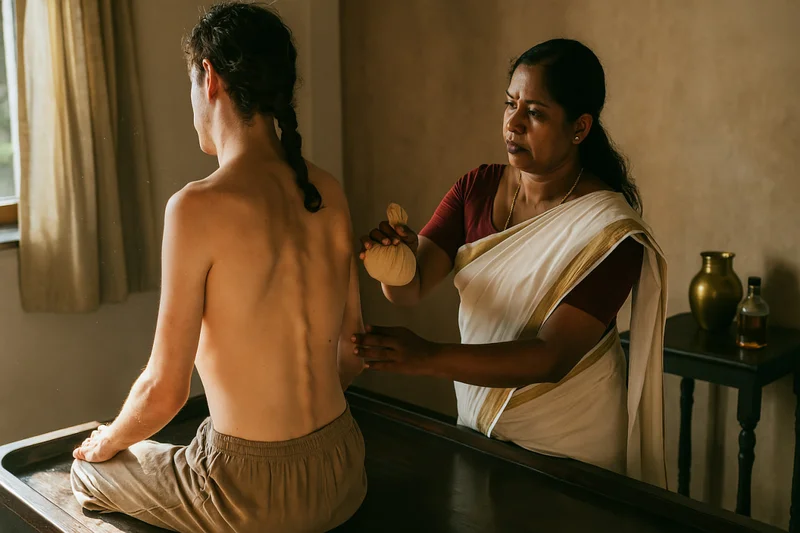
Ayurvedic treatment for scoliosis works by addressing the root cause of spinal misalignment — primarily Vata dosha imbalance — through a combination of Panchakarma therapies, herbal medicines, targeted yoga, and dietary corrections. For mild to moderate curves (Cobb angle under 40°), Ayurveda offers a non-surgical path that can reduce pain, improve spinal mobility, and in some cases gradually correct the curvature. A typical Panchakarma protocol spans 21–28 days per cycle, with multiple cycles recommended over 6–12 months depending on severity.
This is not a miracle cure. But it's a systematic, time-tested approach that thousands of patients across India rely on — and one that modern research is slowly beginning to validate. In this guide, we'll cover everything from the Ayurvedic understanding of scoliosis to specific treatment protocols based on your Cobb angle, herbal dosages, therapy timelines, costs, and situations where Ayurveda alone may not be enough.
What Is Scoliosis?
Scoliosis is an abnormal lateral curvature of the spine, typically forming a "C" or "S" shape when viewed from behind. A healthy spine has natural front-to-back curves, but any sideways deviation greater than 10 degrees (measured by the Cobb angle on X-ray) is classified as scoliosis.
The condition affects approximately 2–3% of the global population, with onset most common during the growth spurt just before puberty — between ages 10 and 15.
How Scoliosis Affects the Spine: C-Shape vs S-Shape
- A C-shaped curve involves a single lateral bend, usually in the thoracic (mid-back) or lumbar (lower back) region.
- An S-shaped curve involves two opposing curves — one in the thoracic region curving one direction and a compensatory curve in the lumbar region curving the other way. S-shaped scoliosis is generally more complex to treat because both curves must be addressed simultaneously.
The structural changes don't stop at the spine. Over time, surrounding muscles, ligaments, and even rib positioning adapt to the curvature, creating a cascading pattern of imbalance throughout the body.
Scoliosis Grading by Cobb Angle
- Not all scoliosis is the same.
- Treatment decisions — whether in conventional medicine or Ayurveda — depend heavily on the degree of curvature:
| Cobb Angle | Classification | Typical Approach |
|---|---|---|
| 10°–20° | Mild | Observation, Ayurvedic therapies, yoga |
| 20°–40° | Moderate | Intensive Ayurvedic protocols, bracing considered |
| 40°–50° | Severe | Combined approach; surgical consult recommended |
| >50° | Very Severe | Surgery usually necessary; Ayurveda as adjunct |
This grading system is critical — and it's something no other Ayurvedic resource online maps to specific Ayurvedic interventions. We'll do exactly that in the treatment section below.
Types of Scoliosis
Understanding the type of scoliosis helps determine whether Ayurvedic treatment is appropriate:
- Idiopathic Scoliosis — No known cause; accounts for ~80% of cases. Most responsive to Ayurvedic treatment.
- Congenital Scoliosis — Present at birth due to vertebral malformation. Ayurveda plays a supportive role, but structural correction often requires surgery.
- Neuromuscular Scoliosis — Caused by neurological or muscular conditions like cerebral palsy or muscular dystrophy. Ayurveda can help manage symptoms but cannot address the underlying neurological cause alone.
- Degenerative (Adult) Scoliosis — Develops in adults 45+ years due to disc degeneration and arthritis. This type responds well to Ayurvedic pain management and mobility improvement.
- Syndromic Scoliosis — Associated with conditions like Marfan syndrome or Ehlers-Danlos syndrome.
Signs and Symptoms: Which Organ Is Affected by Scoliosis?
Scoliosis is primarily a musculoskeletal condition, but its effects extend far beyond the spine. Here's what to watch for.
Visible Physical Signs
- Uneven shoulders — one noticeably higher than the other
- Asymmetric waistline or hip height
- One shoulder blade protruding more prominently
- Head not centered directly over the pelvis
- Rib hump visible when bending forward (Adams forward bend test)
Pain and Functional Symptoms
- Chronic back pain, especially in the lumbar region
- Muscle fatigue and stiffness after prolonged sitting or standing
- Reduced range of spinal motion
- Difficulty maintaining an upright posture
Complications of Untreated Scoliosis
Left untreated, moderate to severe scoliosis can affect multiple organ systems:
- Respiratory system — Severe thoracic curves compress the lungs, reducing lung capacity by up to 20-30% in curves exceeding 60°
- Cardiovascular system — Extreme curves can restrict heart function due to reduced chest cavity space
- Digestive system — Lumbar scoliosis may compress abdominal organs, causing digestive discomfort
- Mental health — Studies show adolescents with visible scoliosis have significantly higher rates of anxiety and depression related to body image. A 2019 study published in Spine Journal found that psychological distress affects nearly 30% of adolescent scoliosis patients.
The Ayurvedic Understanding of Scoliosis: Root Cause Analysis
- Ayurveda doesn't just look at the curved spine.
- It asks why the curve developed in the first place — and the answer, more often than not, points to doshic imbalance.
The Role of Vata Dosha
In Ayurvedic pathology, scoliosis correlates with conditions described under Asthi-Vata (bone-related Vata disorders) and Kati Graha (spinal stiffness). Vata dosha governs all movement in the body, including the nervous system, muscle contractions, and bone metabolism.
When Vata becomes aggravated (Vata Prakopa), it leads to:
- Dryness and degeneration of intervertebral discs
- Weakening of muscles and ligaments supporting the spine
- Impaired nerve signaling to paraspinal muscles
- Bone tissue (Asthi Dhatu) depletion
This is why Ayurvedic treatment for scoliosis fundamentally revolves around pacifying Vata through oleation (oil therapies), warmth, nourishment, and grounding practices.
The Tridosha Perspective
While Vata is the primary dosha involved, the other doshas play supporting roles:
- Kapha Dosha — When deficient, Kapha fails to provide adequate lubrication and structural support to joints and intervertebral discs. In degenerative scoliosis of older adults, Kapha depletion is a significant factor.
- Pitta Dosha — Aggravated Pitta contributes to inflammatory processes in the tissues surrounding the curved spine, intensifying pain and accelerating tissue degradation.
Nadi Pariksha: Ayurvedic Diagnostic Assessment
- Traditional Ayurvedic diagnosis of scoliosis begins with Nadi Pariksha (pulse diagnosis), which helps the practitioner identify the specific doshic imbalance driving the condition.
- This is supplemented by:
- Prakriti assessment — Understanding the patient's constitutional type
- Vikriti analysis — Identifying current imbalances
- Physical examination — Palpation of the spine, assessment of muscle tone and tenderness
- Marma point evaluation — Checking specific vital energy points along the spine (Bruhati, Ansa, Katika Tarunam) for blockages
Modern Ayurvedic centers will also use X-rays and Cobb angle measurements to integrate conventional diagnostics with traditional assessment.
Panchakarma Therapy: The Core of Ayurvedic Scoliosis Treatment
Panchakarma is the gold standard in Ayurvedic scoliosis management. It's not a single treatment but a structured therapeutic protocol that detoxifies the body, nourishes depleted tissues, and restores doshic balance.
Pre-Treatment (Poorvakarma)
Before main Panchakarma therapies begin, the body is prepared through:
- Snehana (internal oleation) — Consuming medicated ghee for 3–7 days to loosen toxins
- Swedana (sudation) — Steam therapy to open channels and prepare tissues
Core Panchakarma Therapies for Scoliosis
- Here's where it gets specific.
- Not every Panchakarma procedure is used for scoliosis — only certain therapies target spinal conditions:
| Therapy | What It Involves | Purpose |
|---|---|---|
| Prishta Abhyanga | Specialized back massage with medicated oils (Dhanwantharam, Kottamchukkadi) | Relaxes paraspinal muscles, improves circulation |
| Kati Basti | Warm medicated oil retained in a dough dam over the lumbar spine | Deep tissue nourishment, Vata pacification in the lower back |
| Prishta Basti | Similar to Kati Basti but covering the entire spine | Addresses full-spine curvature |
| Churnapinda Swedam | Herbal powder bolus massage | Reduces muscle stiffness and inflammation |
| Patrapotala Swedam | Fomentation with herbal leaves tied in cloth bolus | Anti-inflammatory, muscle relaxant |
| Shashtika Pinda Swedam | Bolus massage with Shashtika rice cooked in milk and herb decoctions | Deeply nourishing for Asthi (bone) and Mamsa (muscle) dhatus |
| Tailadhara | Continuous stream of warm medicated oil over the spine | Calms Vata, promotes nerve healing |
| Lepanam | Application of herbal paste over affected area | Reduces localised inflammation |
| Veshtanam | Bandaging with herbal preparations | Provides structural support during healing |
| Vasti (Medicated Enema) | Anuvasana Vasti (oil enema) and Kashaya Vasti (decoction enema) | The single most important treatment for Vata disorders; nourishes bone tissue from within |
Vasti deserves special mention. Classical Ayurvedic texts like the Charaka Samhita describe Vasti as "Ardha Chikitsa" — half of all treatment. For Vata-predominant conditions like scoliosis, Vasti is arguably the most impactful intervention, as it directly nourishes Asthi Dhatu through the colon's absorptive pathway.
Treatment Duration and What to Expect
- This is a question every patient asks — and one that most Ayurvedic websites conveniently avoid answering.
- Here's a realistic timeline:
- Single Panchakarma cycle: 21–28 days of in-patient treatment
- Mild scoliosis (10°–20°): 1–2 cycles over 3–6 months, with home-based maintenance between cycles
- Moderate scoliosis (20°–40°): 2–4 cycles over 6–18 months
- Severe scoliosis (>40°): Panchakarma as adjunct to conventional care; ongoing maintenance
First noticeable improvements — reduced pain, better mobility, decreased muscle spasm — typically appear within the first 21-day cycle. Measurable changes in Cobb angle, when they occur, usually require 6–12 months of consistent treatment.
A 2017 observational study published in the Journal of Ayurveda and Integrative Medicine documented improvement in pain scores and functional capacity in scoliosis patients undergoing Panchakarma, though the study noted that large-scale randomized controlled trials are still needed.
Herbal Remedies for Scoliosis: Specific Herbs, Dosages, and Duration
Ayurvedic herbs for scoliosis primarily target three goals: strengthening bone tissue, reducing inflammation, and pacifying Vata dosha.
Key Herbs and Their Mechanisms
| Herb | Latin Name | Mechanism | Typical Dosage | Form |
|---|---|---|---|---|
| Ashwagandha | Withania somnifera | Strengthens Asthi Dhatu, adaptogenic, anti-inflammatory | 500mg–1g twice daily | Churna (powder) or capsule |
| Guggulu | Commiphora mukul | Anti-inflammatory, improves bone metabolism | 250–500mg twice daily | Tablet (Yogaraja Guggulu or Trayodashanga Guggulu) |
| Shallaki (Boswellia) | Boswellia serrata | Potent anti-inflammatory, reduces joint stiffness | 400–800mg twice daily | Capsule or tablet |
| Bala | Sida cordifolia | Strengthens muscles, nourishes nerves | 3–5g twice daily | Decoction or powder |
| Rasna | Pluchea lanceolata | Vata-pacifying, analgesic | 3–5g twice daily | Decoction |
| Triphala | Three-fruit combination | Detoxification, supports nutrient absorption | 3–5g at bedtime | Powder with warm water |
| Eranda (Castor) | Ricinus communis | Vata-pacifying, improves elimination | 5–10ml at bedtime | Oil with warm milk |
| Yashtimadhu (Licorice) | Glycyrrhiza glabra | Anti-inflammatory, supports tissue repair | 3–5g twice daily | Powder or decoction |
Important classical formulations frequently prescribed for scoliosis include:
- Dhanwantharam Kashayam — decoction targeting Vata in bones and joints
- Sahacharadi Kashayam — specifically for lower back and spinal conditions
- Maharasnadi Kashayam — powerful Vata-pacifying formula for musculoskeletal disorders
- Ksheerabala 101 (oil, 101 times processed) — for both internal and external use in nerve and bone disorders
Dosage Duration
- Most herbal protocols run for 3–6 months minimum, with periodic adjustments based on response.
- Self-medication is strongly discouraged — dosages must be tailored by a qualified Ayurvedic physician (BAMS or MD Ayurveda) based on your Prakriti, Vikriti, Agni status, and concurrent medications.
Don't wait or self medicate. Start chat with Doctor NOW
Yoga for Scoliosis: Specific Asanas for Spinal Correction
Yoga is not just a complement to Ayurvedic treatment — it's an integral part of the protocol. The right asanas can strengthen weak paraspinal muscles, stretch contracted tissues on the concave side of the curve, and improve proprioceptive awareness.
Recommended Asanas
- Trikonasana (Triangle Pose) — Stretches the lateral trunk, particularly beneficial for C-shaped thoracolumbar curves
- Marjariasana-Bitilasana (Cat-Cow) — Gentle spinal flexion-extension that improves segmental mobility
- Balasana (Child's Pose) — Decompresses the spine, calms Vata
- Adho Mukha Svanasana (Downward-Facing Dog) — Axial decompression and hamstring lengthening
- Veerbhadrasana II (Warrior II) — Strengthens the legs and stabilizes pelvic alignment
- Bharadvajasana (Seated Twist) — Gentle rotational stretch; must be practiced asymmetrically for scoliosis (longer hold on the corrective side)
- Savasana with Props — Relaxation in a supported position using bolsters to encourage spinal de-rotation
Critical Yoga Guidelines for Scoliosis
- Asymmetric practice is essential — Unlike standard yoga where both sides are held equally, scoliosis yoga requires longer holds and deeper engagement on the corrective side
- Avoid deep backbends in cases of hyperkyphosis accompanying scoliosis
- Never force a stretch — The goal is gradual, sustained lengthening over weeks and months
- Practice under supervision initially — Incorrect alignment in yoga can worsen scoliosis
- A 2014 case study by Dr. Loren Fishman published in Global Advances in Health and Medicine showed that practicing side plank (Vasisthasana) on the convex side for 90 seconds daily reduced primary scoliosis curves by an average of 32% over approximately 7 months
Diet and Lifestyle Modifications
Dietary Recommendations for Scoliosis
Since Vata pacification is the cornerstone of Ayurvedic scoliosis management, the diet should be warm, nourishing, and grounding:
Foods to Include:
- Calcium-rich foods — sesame seeds, ragi (finger millet), dairy products, leafy greens
- Vitamin D sources — sunlight exposure (20-30 minutes daily), fortified foods, egg yolks
- Anti-inflammatory foods — turmeric with black pepper, ginger, garlic
- Healthy fats — ghee (essential for Vata pacification), coconut oil, almonds, walnuts
- Warm, cooked meals — soups, stews, khichdi, cooked vegetables with spices
Foods to Avoid:
- Cold, raw, dry foods that aggravate Vata
- Excess caffeine and carbonated beverages (interfere with calcium absorption)
- Refined sugar and processed foods
- Excessive bitter and astringent tastes
Lifestyle and Ergonomic Adjustments
- Workstation ergonomics — Chair height adjusted so feet are flat on the floor, lumbar support cushion, monitor at eye level
- Sleep position — Side-lying with a pillow between the knees to maintain spinal alignment; avoid sleeping on the stomach
- Weight management — Excess weight increases spinal load and worsens curvature progression
- Stress management — Chronic stress aggravates Vata; daily practices like Pranayama (Nadi Shodhana is particularly Vata-calming), meditation, and Abhyanga (self-oil massage) are recommended
- Regular stretching — 10–15 minutes of gentle spinal stretches every morning and evening, even on non-yoga days
Ayurveda vs Conventional Treatment: An Honest Comparison
Patients deserve a transparent comparison.
Here it is:
| Parameter | Ayurvedic Treatment | Bracing | Spinal Fusion Surgery |
|---|---|---|---|
| Best for | Mild to moderate curves (10°–40°) | Moderate curves in growing adolescents (20°–40°) | Severe curves (>40°–50°) |
| Approach | Holistic — addresses root doshic imbalance | Mechanical — prevents progression | Structural — corrects curve mechanically |
| Pain management | Excellent | Moderate (brace itself can cause discomfort) | Post-surgical pain; long recovery |
| Side effects | Minimal when supervised | Skin irritation, psychological distress | Infection risk, hardware failure, reduced spinal mobility |
| Duration | 6–18 months of active treatment | 16–23 hours/day until skeletal maturity | One-time surgery + 6–12 months recovery |
| Cost (India) | ₹30,000–₹80,000 per Panchakarma cycle | ₹15,000–₹50,000 for brace | ₹3,00,000–₹10,00,000+ |
| Curve correction | Gradual; 5°–15° improvement documented in mild-moderate cases | Prevents progression; rarely corrects | 50°–70% correction typically |
| Quality of life during treatment | High — therapies are pleasant and restorative | Low to moderate — brace is restrictive | Low initially; improves after recovery |
When Ayurveda Is NOT Enough: Contraindications
Honesty matters here. Ayurvedic treatment alone is not recommended as the primary intervention when:
- Cobb angle exceeds 45°–50° and is progressing
- There is neurological compromise (numbness, weakness, bowel/bladder dysfunction)
- The scoliosis is congenital with vertebral fusion anomalies
- Rapid curve progression (>5° per year) in a growing adolescent
- Severe cardiopulmonary compromise from the curvature
In these cases, Ayurveda plays a valuable adjunct role — managing pain, improving tissue health pre- and post-surgery, and supporting rehabilitation.
Special Populations
Scoliosis in Children and Adolescents
Early detection is everything. Adolescent idiopathic scoliosis (AIS) is the most common type, and Ayurvedic intervention during growth years can potentially influence curve progression.
Key considerations for pediatric treatment:
- Panchakarma procedures are modified — gentler oils, shorter duration sessions, reduced Vasti frequency
- Herbal dosages are typically 50% of adult doses for children under 12
- Yoga is introduced gradually with an emphasis on making it enjoyable
- Regular monitoring (X-rays every 6 months) is essential to track whether the curve is stable, improving, or worsening
- Parental involvement in daily home-based therapies (oil massage, supervised exercises) significantly improves outcomes
Scoliosis During Pregnancy
This is a population that gets almost zero attention in scoliosis literature, yet many women with scoliosis experience increased back pain during pregnancy.
- Most oral herbal medications are contraindicated during pregnancy
- Gentle external therapies like Abhyanga with safe oils (plain sesame oil, Bala oil) can be continued
- Modified prenatal yoga with scoliosis-specific adaptations helps manage pain
- Kati Basti can be used in the first and second trimesters with physician approval
- A supportive maternity belt may provide structural relief
Degenerative Scoliosis in Adults (45+ Years)
Adult degenerative scoliosis develops due to disc degeneration, facet joint arthropathy, and ligament weakening. Ayurveda is particularly effective here because the primary issues — Vata aggravation, tissue depletion, and inflammation — are exactly what Ayurvedic therapies target.
Focus areas include:
- Intensive Vasti protocols (Kala Vasti — a 16-day alternating enema schedule)
- Rasayana (rejuvenation) therapy with Ashwagandha, Bala, and Shatavari
- Calcium and Vitamin D supplementation alongside Ayurvedic herbs
- Joint-protective formulations like Yogaraja Guggulu and Dhanwantharam capsules
Is Scoliosis 100% Curable?
Let's be straightforward: no treatment — conventional or Ayurvedic — guarantees 100% cure of scoliosis in every patient.
What Ayurveda can realistically achieve:
- Pain relief: 70–90% of patients report significant pain reduction after completing a full Panchakarma protocol
- Improved mobility: Most patients experience noticeably better range of motion within the first treatment cycle
- Curve reduction: In mild to moderate cases, documented improvements of 5°–15° over 6–12 months of consistent treatment. A case study published in AYU (An International Quarterly Journal of Research in Ayurveda) documented a 12° Cobb angle improvement in a 14-year-old female patient after 3 months of Panchakarma and herbal therapy
- Halted progression: Preventing a curve from worsening is itself a major success, particularly in adolescents
- Improved quality of life: Better posture, reduced dependency on painkillers, improved breathing capacity, and enhanced psychological well-being
The patients who get the best outcomes are those who commit to the full protocol — Panchakarma cycles, daily herbal medications, regular yoga, dietary changes, and lifestyle modifications. It's not a quick fix. But for many people, it's a life-changing one.
Approximate Cost of Ayurvedic Scoliosis Treatment in India
- Transparency about cost is something you won't find on most Ayurvedic websites.
- Here are general ranges:
| Component | Estimated Cost |
|---|---|
| Initial consultation + Nadi Pariksha | ₹500–₹2,000 |
| 21-day Panchakarma (in-patient, including accommodation) | ₹30,000–₹80,000 |
| Monthly herbal medicines | ₹2,000–₹5,000 |
| Yoga therapy sessions (per month, 8–12 sessions) | ₹3,000–₹8,000 |
| Follow-up X-rays (every 6 months) | ₹800–₹1,500 |
| Total estimated first-year cost | ₹80,000–₹2,50,000 |
- Costs vary significantly based on the center's location, reputation, and whether it's a government Ayurvedic hospital (much cheaper) or a private wellness resort.
- Centers in Kerala — particularly in Kottakkal, Thrissur, and Trivandrum — are renowned for authentic Panchakarma and tend to offer competitive pricing.
Frequently Asked Questions
How Did Hrithik Roshan Overcome Scoliosis?
Bollywood actor Hrithik Roshan has been open about his scoliosis diagnosis. He managed his condition through a combination of disciplined physical training, specialized physiotherapy, yoga, and a strong focus on core strengthening. While he hasn't publicly attributed his management specifically to Ayurveda, his approach aligns with the holistic, movement-based philosophy that Ayurveda advocates — strengthening the body's natural support systems rather than relying solely on external interventions.
Which Treatment Is Best for Scoliosis?
- The "best" treatment depends entirely on the severity and type of scoliosis. For mild to moderate idiopathic scoliosis, Ayurvedic treatment combined with yoga and physiotherapy offers a comprehensive, low-risk approach. For severe or rapidly progressing curves, surgical intervention may be necessary.
- The ideal approach for many patients is integrative — combining the structural correction of conventional medicine with the tissue-nourishing, pain-relieving benefits of Ayurveda.
Can Ayurveda Cure Scoliosis Permanently?
Ayurveda can significantly improve symptoms, reduce curvature in mild to moderate cases, and prevent progression. However, "permanent cure" depends on multiple factors including the patient's age, curve severity, consistency of treatment, and type of scoliosis. Structural scoliosis with bony changes cannot be completely reversed through any non-surgical method. Functional scoliosis caused by muscle imbalances and postural habits has the best prognosis with Ayurvedic treatment.
How Long Does Ayurvedic Treatment for Scoliosis Take?
Expect a minimum of 6 months for meaningful results, with optimal outcomes typically seen at 12–18 months. Each Panchakarma cycle lasts 21–28 days, and most patients require 2–4 cycles with home-based maintenance between sessions.
Is Marma Therapy Used for Scoliosis?
Yes. Marma therapy involves stimulating specific vital energy points along the spine — particularly Bruhati Marma (upper back), Ansa Marma (shoulder), and Katika Tarunam Marma (pelvic region). This helps release energy blockages, improve nerve conduction, and relax deeply held muscle tension patterns that contribute to maintaining the curvature.
Take the First Step Toward a Healthier Spine
Scoliosis doesn't have to define your life. Whether you're a parent noticing uneven shoulders in your teenager, an adult managing chronic back pain from a long-standing curve, or someone exploring alternatives before committing to surgery — Ayurveda offers a path worth considering.
The key is starting with a proper evaluation. Consult a qualified Ayurvedic physician (BAMS or MD Ayurveda) who can assess your specific condition, review your X-rays, determine your Cobb angle, and design a personalized treatment protocol.
Ask our certified Ayurvedic doctors today — get expert guidance on whether Ayurvedic treatment is right for your specific type and severity of scoliosis. With over 1,000 verified doctors available 24/7, you can get a personalized assessment without leaving your home.
Your spine has been adapting to imbalance for months or years. Give it the support it needs to find its way back.
Scientific Sources
- The benefits of ashwagandha (Withania somnifera) supplements on brain function and sports performance — Guo S et al., 2024, Frontiers in nutrition
- Ashwagandha (Withania somnifera)-Current Research on the Health-Promoting Activities: A Narrative Review — Mikulska P et al., 2023, Pharmaceutics
- Ayurvedic Herbal Medicines: A Literature Review of Their Applications in Female Reproductive Health — Patibandla S et al., 2024, Cureus
- Ashwagandha (Withania somnifera) and Its Effects on Well-Being-A Review — Wiciński M et al., 2025, Nutrients
- Efficacy and Safety of Ashwagandha Root Extract in Subclinical Hypothyroid Patients: A Double-Blind, Randomized Placebo-Controlled Trial — Sharma AK et al., 2018, Journal of alternative and complementary medicine (New York, N.Y.)
Questions from users
Is Marma therapy effective for pain relief in adults with degenerative scoliosis?
Claire
8 days ago
Marma therapy can be helpful in managing pain for adults with degenerative scoliosis, as it focuses on balancing the body’s energies and relieving tension. While it might not directly fix the spine, it could reduce discomfort when combined with other treatments like yoga or physiotherapy. It’s really about the holistic approach and consistency.
What is neuromuscular scoliosis and how is it treated according to Ayurveda?
Willow
18 days ago
Neuromuscular scoliosis results from conditions like cerebral palsy or muscular dystrophy. Ayurveda may support by using Marma therapy to stimulate energy points, enhancing the body's natural support. Bruhati (upper back), Ansa (shoulder), and Katika Tarunam (pelvis) areas are typically targeted. But remember, it often needs more than Ayurveda alone, especially in severe cases.
Can Ayurveda help prevent scoliosis from worsening over time?
Scarlett
27 days ago
Ayurveda can definitely help in managing scoliosis, but it's not a cure. The focus is on balancing doshas and supporting your body's natural alignment. Therapies could include herbal treatments, Ayurvedic massages, and yoga. Consult with an Ayurvedic practitioner for personalized advice, though other treatments might also be necessary.
What Ayurvedic practices can help reduce psychological distress in scoliosis patients?
Violet
36 days ago
To help reduce psychological distress for scoliosis patients, Ayurveda often suggests focusing on Vata dosha balance. Practices like meditation, yoga (gentle ones like restorative yoga), and pranayama help calm the mind. Ashwagandha, an adaptogen, can support nervous system health. Regular Abhyanga (oil massage) is also great for reducing anxiety and promoting relaxation, boosting overall well-being.
What is the role of therapeutic massages in Ayurvedic treatment for scoliosis?
Oakley
46 days ago
Therapeutic massages in Ayurveda can play a big role in managing scoliosis. They're great for balancing aggravated doshas and improving circulation around the spine. By using specific oils and techniques, massages aim to ease tension, promote healing, and support musculoskeletal health. It helps in reducing stiffness, too, but it's not a standalone cure. Always good to pair with other techniques like yoga.
What are the benefits of using Panchakarma therapies for scoliosis treatment?
Paisley
56 days ago
Panchakarma therapies can really help with scoliosis by cleansing the body of toxins, balancing the doshas, especially Vata which impacts the spine, and improving overall flexibility and strength. They work to restore agni (digestive fire) which is essential for absorbing nutrients that strengthen bones. Plus, it can calm the mind and reduce stress!
Can I use Abhyanga massage to relieve pain associated with scoliosis?
Patrick
66 days ago
Yes, Abhyanga can help with scoliosis-related pain! The warm herbal oils used in this massage boost circulation, relieve stiffness, and reduce pain. Just remember to use oils that suit your dosha for best results. Maybe consult with an Ayurvedic practitioner for personal guidance. Also, integrating other treatments like Kati Basti can be beneficial!
What is Shallaki and how does it help with back pain relief?
Thomas
75 days ago
Shallaki, also called Boswellia Serrata, is a herb known for its anti-inflammatory properties. It's commonly used in Ayurveda to ease back pain and stiffness by reducing inflammation. It's like nature's own pain reliever! If you're considering it, talk with an Ayurvedic practitioner to see if it suits your dosha balance and health needs.
Is it safe to practice yoga if I have scoliosis?
Gabriella
85 days ago
Yoga can be beneficial for scoliosis, but it's important to be careful and choose poses that are safe for your spine. It would be a good idea to work with an experienced teacher who understands your condition. They can tailor poses that help balance your doshas and promote overall spine health without causing strain. :)
Is it safe to combine Ayurvedic treatments with conventional therapy for scoliosis?
Theodore
94 days ago
It's generally considered safe to combine Ayurvedic treatment with conventional therapy for scoliosis, but it's kinda important to work with both your healthcare providers. Ayurveda can complement by addressing dosha imbalances and improving the overall constitution, but keep communication open with your docs to ensure all treatments align and work well together.
Related articles

Panchakarma
Panchamrit Parpati Benefits, Dosage, Ingredients, Side Effects
Exploration of Panchamrit Parpati Benefits, Dosage, Ingredients, Side Effects
4,227
Panchakarma
Discover the Benefits of Karma Kala Yoga Basti Detox Therapy
Discover the profound interconnection of karma, kala, and yoga basti in Ayurveda. Learn how ancient wisdom and therapeutic practices unite to enhance wellbeing and spiritual growth.
3,398

Panchakarma
Panchatikta Guggulu Ghrita – Benefits, Dosage, How To Use, Side Effects, Ingredients, Reference
Exploration of Panchatikta Guggulu Ghrita – Benefits, Dosage, How To Use, Side Effects, Ingredients, Reference
3,397

Panchakarma
Saptasaram Kashayam Benefits, Dose, Side Effects, Ingredients, And Reference
Exploration of Saptasaram Kashayam Benefits, Dose, Side Effects, Ingredients, And Reference
2,086

Panchakarma
Sodhak – Ayurvedic Detoxification & Cleansing Remedy
Discover Sodhak, a traditional Ayurvedic remedy designed to cleanse toxins, boost digestion, and balance doshas for overall vitality and well-being.
3,080
Panchakarma
Patra Pottali Sweda – Traditional Ayurvedic Herbal Steam Therapy for Holistic Healing
Discover Patra Pottali Sweda, a time-honored Ayurvedic herbal steam therapy using medicated leaf pouches to relieve muscle tension, improve circulation, detoxify the body, and balance doshas for overall well-being.
3,039

Panchakarma
Guggulutiktakam Ghritam (Gulguluthikthaka Ghritham)
Exploration of Guggulutiktakam Ghritam (Gulguluthikthaka Ghritham)
2,190

Panchakarma
Panchakola Choornam Benefits, Dosage, Ingredients, Side Effects
Exploration of Panchakola Choornam Benefits, Dosage, Ingredients, Side Effects
2,677

Panchakarma
Kshar Sutra Thread Change Pain: Causes & Expert Insights
Learn about kshar sutra thread change pain, its causes, research-backed solutions, and expert tips for managing discomfort in anorectal treatments.
6,398
Panchakarma
Piccha Basti Ingredients – Ayurvedic Enema Formulation for Vata Balance
Explore the key piccha basti ingredients used in Ayurvedic enema therapy. Discover the herbal decoctions, oils, and natural compounds that balance Vata and promote detoxification.
2,671
Related consultations on the topic
Can I resume oil treatments after my period ends if I started virechana and got my period after 3 days of oiling?
26 days ago
How much can Panchakarma treatment improve quality of life for a 92-year-old with atypical Parkinson's and diabetes?
27 days ago
Can I undergo Panchakarma therapy with silent gallbladder stones and diverticulum in the large intestine?
29 days ago
Legal
Additional Documents
© 2024 Ask Ayurveda. All rights reserved.