FREE! Ask Ayurvedic Doctors 24/7

 Fast responses
 1000+ verified doctors
Piccha Basti Ingredients – Ayurvedic Enema Formulation for Vata Balance
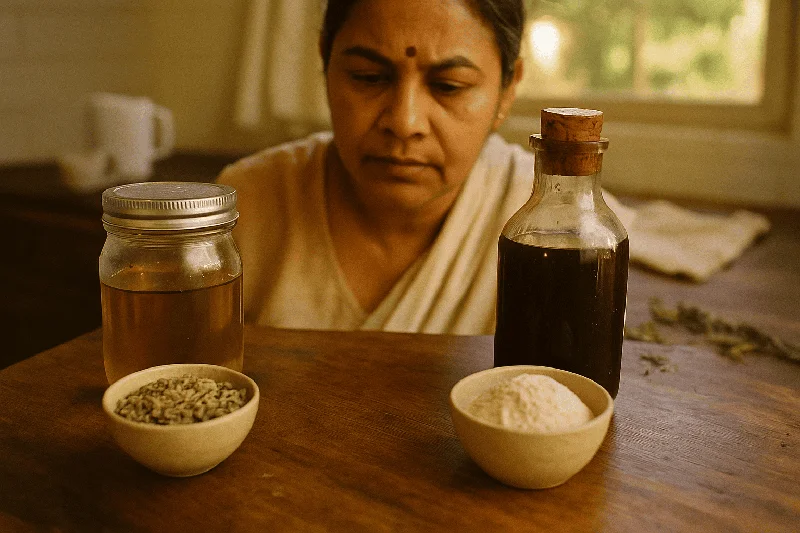
Piccha Basti is a specialized therapeutic enema (Basti) in Ayurveda formulated with slimy, mucilaginous, and astringent herbs — most notably the gum resin (Mocha Rasa) of Shalmali (Bombax ceiba) — to treat bleeding diarrhea, dysentery, hemorrhoids, ulcerative colitis, and other Pitta-Rakta dominant conditions of the lower GI tract. Unlike ordinary Niruha Basti, Piccha Basti forms a protective, muco-adhesive coating over inflamed and ulcerated intestinal mucosa, delivering wound-healing, hemostatic, and anti-inflammatory action directly at the site of pathology.
This guide covers everything: classical references, exact formulations, ingredient-by-ingredient analysis, step-by-step procedure, dosage, course schedules, diet, clinical evidence, and comparisons with modern therapy — filling critical gaps that no other resource addresses comprehensively.
What Is Piccha Basti? Definition, Etymology & Classical Context
The word Piccha derives from the Sanskrit term Pichchhila, meaning slimy, viscous, mucilaginous, or sticky. This name refers directly to the physical quality of the enema formulation — it is intentionally thick, glutinous, and adhesive so it clings to the inner mucosal lining of the colon and rectum.
How Piccha Basti Differs From Other Basti Types
Piccha Basti belongs to the Niruha Basti (decoction enema) category but stands apart in several critical ways:
- Primary intent: While standard Niruha Basti aims at Shodhana (cleansing/evacuation), Piccha Basti is fundamentally Shamana (palliative) and Ropana (healing).
- Retention goal: The formulation is designed to be retained longer, coating the mucosa rather than being expelled quickly.
- Composition: It lacks Lavana (salt) in most formulations — a deliberate omission since salt aggravates Pitta, Rakta, and bleeding conditions.
| Feature | Standard Niruha Basti | Anuvasana Basti | Piccha Basti | Yapana Basti |
|---|---|---|---|---|
| Base | Herbal decoction | Oil/Ghee only | Mucilaginous decoction + ghee/milk | Meat broth + milk + ghee |
| Primary Action | Shodhana (cleansing) | Snehana (oleation) | Ropana (healing), Sangrahi (astringent) | Brimhana (nourishing) |
| Salt (Lavana) | Included | Minimal/none | Usually excluded | Included |
| Retention Time | Short (expelled quickly) | Long | Moderate-to-long | Long |
| Key Indication | Vata disorders, detox | Vata balancing, lubrication | Bleeding diarrhea, colitis, hemorrhoids | Debility, chronic Vata |
| Dosha Focus | Vata | Vata | Pitta-Rakta (also Vata) | Vata-Pitta |
Classical Textual References (Piccha Basti Shloka Sources)
Piccha Basti is described across multiple foundational Ayurvedic texts:
- Charaka Samhita — Chikitsa Sthana 14 (Atisara Chikitsa), Chikitsa Sthana 19 (Arsha Chikitsa), Siddhi Sthana 7
- Sushruta Samhita — Chikitsa Sthana 37 (Atisara), Chikitsa Sthana 38 (Pravahika)
- Ashtanga Hridayam — Chikitsa Sthana chapters on Atisara and Arsha
- Sharangadhara Samhita — Uttara Khanda (Basti Prakarana)
Charaka classifies Piccha Basti specifically under the treatment of Parisrava — anorectal discharge as a complication of improperly administered Basti — and for Raktatisara (bloody diarrhea). Sushruta extends its use to Pravahika (dysentery) and Raktarsha (bleeding piles).
Piccha Basti Ingredients: Complete Breakdown With Pharmacological Roles
Understanding each ingredient is essential for both practitioners and students. The formulations vary by classical source, but share a common therapeutic logic.
Shalmali (Bombax ceiba) — The Key Ingredient
Shalmali is the cornerstone of every Piccha Basti formulation.
Different parts are used:
- Mocha Rasa (gum resin/exudate): The primary ingredient. Rich in tannins and gallic acid, which act as potent astringent agents — they precipitate proteins on the surface of ulcers and damaged epithelium, forming a protective coagulum that stops bleeding and promotes healing.
- Shalmali Niryasa (stem bark extract): Anti-inflammatory, anti-diarrheal.
- Shalmali Pushpa (flowers): Used in certain formulations for Raktarsha; they carry Kashaya (astringent) and Madhura (sweet) rasa.
Modern pharmacological research confirms Bombax ceiba possesses antibacterial, anti-inflammatory, antioxidant, and wound-healing properties. A 2016 study published in the Journal of Ethnopharmacology demonstrated significant wound contraction rates with Bombax ceiba extracts, validating its traditional Ropana (healing) action.
Herbal Decoction (Kwatha) Components
Depending on the specific formulation, the decoction may include:
| Ingredient (Sanskrit) | Botanical Name | Rasa/Guna | Role in Piccha Basti |
|---|---|---|---|
| Yashtimadhu | Glycyrrhiza glabra | Madhura, Snigdha | Anti-inflammatory, mucoprotective, soothes ulcerated mucosa |
| Kutaja (Indrayava) | Holarrhena antidysenterica | Tikta, Kashaya | Anti-diarrheal, antimicrobial (specific for Pravahika) |
| Manjishtha | Rubia cordifolia | Tikta, Kashaya | Rakta Shodhaka (blood purifier), anti-inflammatory |
| Chandana | Santalum album | Tikta, Madhura, Sheeta | Pitta-shamaka, cooling, reduces burning sensation |
| Lodhra | Symplocos racemosa | Kashaya | Potent astringent, hemostatic |
| Utpala (Kumuda) | Nymphaea stellata | Madhura, Kashaya, Sheeta | Cooling, Pitta-pacifying, anti-hemorrhagic |
| Priyangu | Callicarpa macrophylla | Tikta, Kashaya | Sangrahi (binding), Stambhana (arresting discharges) |
Sneha (Lipid Medium)
- Ghrita (clarified butter/ghee) is the preferred Sneha in Piccha Basti. Ghee acts as a vehicle for fat-soluble phytochemicals, is inherently Pitta-shamaka, and enhances mucosal absorption.
- Some modern modifications use:
- Shatadhauta Ghrita — ghee washed 100 times with water, creating an ultra-cooling emulsion ideal for severe Pitta-Rakta conditions
- Changeryadi Ghrita — medicated ghee with Changeri (Oxalis corniculata), specifically beneficial in Grahani
- Jatyadi Taila — when wound-healing action is prioritized
Madhu (Honey)
- Honey serves as the Yogavahi (synergistic vehicle) — it enhances tissue penetration of other ingredients without increasing their bulk. It also has intrinsic Kashaya (astringent) and Ropana (healing) properties.
- Important: in Basti preparation, Madhu is always added first and mixed thoroughly before other ingredients.
Kshira (Milk)
- Milk acts as a soothing, cooling base that pacifies Pitta and protects the mucosa from irritation.
- Many Piccha Basti formulations use Kshirapaka method — herbs are boiled in a mixture of milk and water until the water evaporates, leaving a medicated milk decoction.
Why Lavana (Salt) Is Excluded
This is a critical pharmacological detail that most resources overlook. In standard Niruha Basti, Saindhava Lavana is added to enhance penetration and break down doshas.
However, in Piccha Basti:
- Salt has Ushna Virya (hot potency) — aggravates Pitta
- Salt is Raktadushaka — vitiates blood
- Salt causes Vidahi (burning) — harmful to already ulcerated mucosa
- Salt promotes Sravana (discharge) — counterproductive when the goal is stopping bleeding and diarrhea
Only certain formulations for Arsha (hemorrhoids) may include minimal salt. This exclusion is a key identifier of Piccha Basti and should be respected in clinical practice.
Role of Sharkara (Raw Sugar) in Arsha-Specific Formulations
In the hemorrhoid-specific Piccha Basti formulation from Charaka (Chikitsa Sthana 19), Sharkara (unrefined sugar) is added. Sharkara pacifies Vata-Pitta-Rakta simultaneously, provides energy to the depleted tissue, and counterbalances the astringent dryness of tannin-rich herbs. It is NOT included in the standard Atisara formulation.
Classical Formulations of Piccha Basti (Piccha Basti Reference)
Formulation 1: Charaka's Piccha Basti for Atisara (Ch.Chi.19)
Ingredients: Mocha Rasa (Shalmali gum), Ghrita, Madhu, Kshira (milk), decoction of Kashaya-Madhura-Sheeta herbs (Lodhra, Priyangu, Utpala, Manjishtha, Chandana, Yashtimadhu) Method: Herbs are prepared as Kwatha; Mocha Rasa is dissolved in warm ghee; honey is added first in the mixing bowl, followed by ghee-Mocha mixture, then Kalka (paste), then Kwatha, then milk. This sequence ensures proper emulsification.
Formulation 2: Sushruta's Piccha Basti for Pravahika (Su.Chi.38)
Sushruta's formulation uniquely includes Rakta (fresh blood) — approximately 192 ml (4 pala) of fresh animal blood. While this may seem unusual by modern standards, the rationale is rooted in the principle of Samanya-Vishesha — like increases like. Fresh blood provides growth factors and proteins that directly nourish damaged rectal/colonic tissue. In modern clinical practice, this ingredient is usually substituted with Rakta-vardhaka herbs.
Formulation 3: Piccha Basti for Raktarsha (Charaka Ch.Chi.14)
This formulation includes Shalmali Mocha Rasa, Shalmali Pushpa (flowers), Nyagrodha Twak (Ficus benghalensis bark), and Sharkara. The flowers and bark add extra astringency and hemostatic action, while Sharkara balances Vata and nourishes depleted tissues.
Modern Modifications Used in Clinical Practice
Contemporary Ayurvedic practitioners frequently adapt the classical formulation based on patient presentation:
- Durva Kalka (Cynodon dactylon paste) — for enhanced hemostatic action
- Nalpamaradi Keram — coconut oil-based preparation for Pitta-predominant conditions
- Shatadhauta Ghrita — replacing standard ghee in severe burning/ulceration
Piccha Basti Dosage: Classical and Practical Guidelines
Dosage varies significantly between classical commentators:
| Source | Total Volume | Metric Equivalent | Context |
|---|---|---|---|
| Dalhana (commentary on Sushruta) | 32 Pala | ~1,536 ml | Maximum dose for robust patients |
| Sharangadhara Samhita | 12 Pala | ~576 ml | Standard therapeutic dose |
| Modern Ayurvedic practice | 200–480 ml | — | Adjusted by patient tolerance, condition severity |
Dosage Considerations for Special Populations
- Pediatric patients (children aged 5-12): Doses are typically reduced to 1/4 to 1/2 of adult dose (100–250 ml), depending on age, body weight, and Prakriti. Charaka advises proportional reduction based on age in Siddhi Sthana.
- Elderly/debilitated patients: Start with lower doses (200–300 ml) and titrate upward based on tolerance.
- Pregnant women: Piccha Basti is generally avoided during pregnancy unless specifically indicated by an experienced practitioner, due to the risk of stimulating Apana Vata.
How to Make Piccha Basti: Step-by-Step Procedure
This is one of the most critical gaps in existing literature — no competitor provides a detailed procedural breakdown.
Here is the complete Trividha Karma (three-phase procedure):
Purva Karma (Pre-Procedure Preparation)
- 1.Patient assessment: Confirm Nirama Avastha (absence of Ama). Piccha Basti is contraindicated in Amatisara (diarrhea with Ama/toxins).
- Signs of Nirama: clear tongue coating, formed though frequent stools, absence of foul odor and mucus.
- 2.Abhyanga (oil massage): Gentle abdominal massage with Bala Taila or Dhanwantharam Taila for 15-20 minutes. Focus on the lower abdomen and lumbo-sacral region.
- 3.Swedana (fomentation): Mild Nadi Swedana (steam) to the lower abdomen — not vigorous, since the patient is often debilitated.
- 4.Formulation preparation: Mix ingredients in the classical sequence — Madhu first → Saindhava (if included) → Sneha (ghee) → Kalka (paste) → Kwatha (decoction) → Kshira (milk). Stir thoroughly to create a homogeneous emulsion. Temperature should be lukewarm (Sukhoshna), NOT hot.
- 5.Equipment: Fill the enema syringe (Basti Putaka or modern enema apparatus) and ensure no air bubbles remain.
Pradhana Karma (Main Procedure)
- 1.Position: Patient lies in left lateral position (Vama Parshva Shayana) with the left leg extended and the right knee flexed toward the chest.
- 2.Lubrication: Anus and rectal catheter tip are lubricated with ghee or sesame oil.
- 3.Insertion: Catheter is gently inserted 4–6 inches (about 10-15 cm) into the rectum, angled slightly toward the umbilicus.
- 4.Administration: The formulation is pushed slowly and steadily. The patient is instructed to take deep breaths and remain relaxed. Avoid forceful or rapid injection.
- 5.Post-injection: Catheter is gently withdrawn. Patient remains in the left lateral position for 5-10 minutes, then gradually turns supine. Gentle tapping on the soles of the feet (Sphik Tadana) encourages upward movement of the medicine.
Pashchat Karma (Post-Procedure Care)
- 1.Retention: Unlike standard Niruha where expulsion within 48 minutes is expected, Piccha Basti should ideally be retained for 30-60 minutes or longer. The mucilaginous formulation naturally adheres to the colonic wall.
- 2.Diet: Light, warm, Pitta-pacifying liquid diet for the first meal after Basti — Peya (thin rice gruel), Manda (rice water), or Mudga Yusha (green gram soup).
- 3.Rest: Patient should rest for at least 2-3 hours. Avoid physical exertion, travel, cold exposure, or heavy meals for the remainder of the day.
- 4.Monitoring: Observe the nature of expelled material — color, consistency, presence of blood, mucus. This guides subsequent treatment decisions.
Piccha Basti Benefits: Mechanism of Action (Samprapti Vighatana)
The therapeutic action of Piccha Basti operates through multiple synergistic mechanisms:
Anti-Inflammatory & Wound-Healing Action (Ropana)
- The tannins and gallic acid from Mocha Rasa precipitate surface proteins on ulcerated tissue, forming a protective film.
- Yashtimadhu provides glycyrrhizin — a compound with well-documented anti-inflammatory activity comparable to hydrocortisone in some studies. A 2017 study in Phytotherapy Research demonstrated glycyrrhizin's ability to inhibit NF-κB pathway activation in colonic epithelial cells.
Muco-Adhesive Drug Delivery (A Unique Ayurvedic Concept)
This is perhaps the most fascinating aspect. The slimy, viscous nature of Piccha Basti means it functions as an ancient muco-adhesive rectal drug delivery system. The mucilage physically adheres to the colonic mucus layer, prolonging contact time between therapeutic compounds and diseased tissue. Modern pharmaceutical science recognizes muco-adhesive systems as superior for localized colon therapy — and Ayurveda described this principle thousands of years ago.
Hemostatic Action (Shonitasthapana)
Tannins cause vasoconstriction of small mucosal blood vessels. Lodhra and Mocha Rasa have specific Stambhana (arresting) action on Rakta Srava (bleeding). The ghee base provides Sheeta Virya (cooling potency) that counters the Ushna quality driving Pitta-Rakta vitiation.
Astringent-Binding Action (Sangrahi)
The Kashaya Rasa (astringent taste) predominant in most ingredients increases the tone of the intestinal wall, reduces hypersecretion, and firms up loose stools — directly counteracting the pathophysiology of Atisara and Pravahika.
Dosha-Specific Action
- Pitta Shamana: Cooling herbs (Chandana, Utpala, Yashtimadhu) + Ghee + Milk
- Rakta Prasadana: Manjishtha, Lodhra purify and stabilize Rakta Dhatu
- Vata Anulomana: Ghee and the Basti procedure itself correct the disturbed Apana Vata in the colon, restoring normal peristaltic direction
Piccha Basti Indications: When Is It Prescribed?
Primary Indications (Classical)
- Atisara (diarrhea) — specifically Raktaatisara (bloody) and Pittaja Atisara
- Pravahika (dysentery) with tenesmus and bloody-mucoid stools
- Raktarsha (bleeding hemorrhoids)
- Grahani Roga (malabsorption syndromes, IBS-like conditions)
- Parisrava (anorectal discharge following Basti complications)
Modern Clinical Applications
- Ulcerative Colitis — the most studied modern indication
- Proctitis and Proctosigmoiditis
- Radiation-induced colitis/proctitis
- Post-surgical rectal healing
Contraindications
- Amatisara — diarrhea with Ama (undigested toxins). Administer Deepana-Pachana first.
- Complete rectal obstruction or perforation
- Severe rectal prolapse
- Patients too weak to tolerate any Basti procedure
Clinical Evidence: Research Studies on Piccha Basti
While large-scale RCTs are still limited, several clinical studies provide encouraging data:
- A 2014 pilot study at Gujarat Ayurved University enrolled 30 patients with ulcerative colitis and administered Piccha Basti (Shalmali Mocha Rasa-based) for 8 days (Yoga Basti schedule). Results showed 73% of patients achieved clinical remission as measured by the Simple Clinical Colitis Activity Index (SCCAI), with significant reduction in stool frequency, blood in stool, and urgency.
- A 2018 case series published in the Journal of Ayurveda and Integrative Medicine documented 15 patients with chronic Pravahika treated with Piccha Basti over 16 days (Kala Basti). Colonoscopic improvement (reduced mucosal inflammation, partial healing of ulcers) was observed in 11 of 15 patients (73.3%).
- A 2021 comparative study from IPGT&RA Jamnagar compared Piccha Basti with standard Niruha Basti in Raktarsha. The Piccha Basti group showed statistically significant better outcomes in bleeding cessation (p<0.05) and earlier wound healing.
Comparison With Modern IBD/UC Therapy
| Parameter | Piccha Basti | 5-ASA Rectal Enemas (Mesalamine) | Corticosteroid Enemas |
|---|---|---|---|
| Mechanism | Muco-adhesive, astringent, anti-inflammatory, wound-healing | Anti-inflammatory (5-aminosalicylic acid) | Immunosuppressive, anti-inflammatory |
| Side Effects | Minimal (when properly administered) | Headache, nausea, rarely pancreatitis | Adrenal suppression, osteoporosis, infection risk |
| Systemic Absorption | Very low | Low-moderate | Moderate |
| Cost (India, per course) | ₹2,000–5,000 | ₹3,000–8,000 | ₹2,500–6,000 |
| Mucosal Healing | Yes (Ropana action) | Partial | Symptomatic relief, less healing |
| Long-term Safety | Excellent (herbal, food-grade ingredients) | Generally safe, rare complications | Not suitable for long-term use |
This comparison is not to suggest Piccha Basti replaces modern therapy — rather, it can serve as a powerful complementary or alternative approach, especially for patients with mild-to-moderate disease or those experiencing side effects from conventional medications.
Diet & Lifestyle After Piccha Basti (Pathya-Apathya)
No other resource adequately covers this critical aspect of treatment success.
Recommended Diet (Pathya)
- Immediately after Basti: Manda (rice water) or thin Peya (rice gruel) — light, warm, easy to digest
- First 24 hours: Mudga Yusha (green gram soup), Takra (diluted buttermilk — only if not Raktaatisara), old Shali rice (aged rice)
- During course: Khichdi prepared with minimal spice, well-cooked vegetables (bottle gourd, ash gourd, pointed gourd), pomegranate juice
- Ghee: Small quantities of plain ghee with meals to maintain Snehana effect
Foods to Avoid (Apathya)
- Spicy, sour, salty, and fermented foods
- Raw vegetables and salads
- Heavy-to-digest foods: fried foods, red meat, cheese
- Alcohol, coffee, carbonated drinks
- Incompatible food combinations (Viruddha Ahara)
Lifestyle Recommendations
- Avoid vigorous exercise, sexual activity, and daytime sleep during the Basti course
- Maintain regular sleep schedule; sleep on the left side when possible
- Avoid excessive sun exposure, travel, and emotional stress
- Light walking is acceptable and encouraged
Course Schedules: Karma, Kala & Yoga Basti for Piccha Basti
Yoga Basti (8-Day Course) — Most Common
| Day | Basti Type |
|---|---|
| Day 1 | Anuvasana Basti (oil enema) |
| Day 2 | Piccha Basti (Niruha) |
| Day 3 | Anuvasana |
| Day 4 | Piccha Basti |
| Day 5 | Anuvasana |
| Day 6 | Piccha Basti |
| Day 7 | Anuvasana |
| Day 8 | Anuvasana |
This alternating pattern ensures Vata is kept balanced by oil enemas while the therapeutic action of Piccha Basti addresses mucosal pathology.
Kala Basti (16-Day Course)
For chronic or severe conditions like established ulcerative colitis, a 16-day Kala Basti course is preferred — alternating Anuvasana and Piccha Basti with the final days being consecutive Anuvasana to prevent Vata aggravation.
Karma Basti (30-Day Course)
Reserved for deeply chronic, relapsing conditions. Requires careful monitoring and may need intermediate dietary adjustments.
Seasonality (Ritucharya Considerations)
- Best season: Varsha Ritu (monsoon/rainy season) — this is classically the prime season for all Basti karmas as Vata naturally accumulates
- Also suitable: Sharad Ritu (autumn) — when Pitta undergoes natural Prakopa (aggravation), making Pitta-shamaka Piccha Basti particularly relevant
- Avoid if possible: Grishma Ritu (peak summer) — patient may already be depleted; dehydration risk higher
Potential Side Effects & Complications of Piccha Basti
When properly administered with correct indication, Piccha Basti has an excellent safety profile.
However, potential issues include:
- Abdominal cramping: Usually mild, caused by the volume of enema. Reduce quantity if persistent.
- Incomplete expulsion: The mucilaginous nature means some residue may remain. Generally not harmful; it continues its therapeutic action.
- Allergic reaction: Rare, but possible with specific herbal ingredients. Always check patient history.
- Vagal response: Bradycardia, lightheadedness during insertion — have patient breathe deeply; pause administration.
- Worsening of symptoms: If administered during Ama stage, Piccha Basti can trap toxins and worsen diarrhea. This is why the Amatisara contraindication is absolute.
Frequently Asked Questions (FAQ)
What is the cost of Piccha Basti treatment in India?
A single Piccha Basti session typically costs ₹800–2,500 in Indian Ayurvedic hospitals, depending on the city and institution. A complete Yoga Basti course (8 days) ranges from ₹5,000–15,000. This is significantly lower than a 7-day full Panchakarma detox, which generally costs ₹15,000–60,000 depending on the center and therapies included.
What are the 5 treatments of Panchakarma?
The five classical Panchakarma therapies are: Vamana (emesis), Virechana (purgation), Nasya (nasal administration), Anuvasana Basti (oil enema), and Niruha Basti (decoction enema). Piccha Basti is a specialized sub-type of Niruha Basti, not a separate Panchakarma procedure.
Can Piccha Basti be self-administered at home?
No. Piccha Basti requires proper clinical assessment (especially ruling out Amatisara), correct formulation preparation, and supervised administration. Self-administration risks incorrect dosage, improper technique, and misdiagnosis of the underlying condition. Always seek treatment from a qualified Ayurvedic practitioner.
How long does it take for Piccha Basti to show results?
Most patients report symptomatic improvement (reduced bleeding, decreased stool frequency) within 3–5 days of starting a Yoga Basti course. However, complete mucosal healing may take 2-4 weeks, and chronic conditions like ulcerative colitis often require repeated courses over several months.
Is Piccha Basti effective for ulcerative colitis?
Clinical studies suggest Piccha Basti can achieve remission rates of approximately 70-75% in mild-to-moderate ulcerative colitis, particularly for left-sided colitis and proctitis where the enema can directly reach affected tissue. For pancolitis (entire colon), oral Ayurvedic medications are typically added alongside Basti therapy.
What is the Putapaka method for preparing Piccha Basti?
Putapaka is a specialized preparation method where Shalmali parts are wrapped in leaves, coated with clay, and heated in fire or ash. The resulting juice (Putapaka Swarasa) is extracted and used as the decoction base. This method is believed to enhance the potency of the mucilaginous compounds. An alternative is the Kshirapaka method, where herbs are decocted in milk-water mixture until only the milk remains.
Conclusion: Why Piccha Basti Deserves Greater Recognition
Piccha Basti represents one of Ayurveda's most elegant therapeutic innovations — a localized, muco-adhesive, multi-action enema system that predates modern concepts of targeted rectal drug delivery by thousands of years. Its combination of astringent, anti-inflammatory, hemostatic, and wound-healing actions makes it uniquely suited for conditions that modern medicine often manages with long-term immunosuppressants carrying significant side effects.
For practitioners, the key takeaway is precision: correct patient selection (Nirama Avastha), proper formulation (without unnecessary Lavana), appropriate dosage, and disciplined post-procedure Pathya. For patients suffering from chronic colitis, bleeding hemorrhoids, or persistent diarrhea, Piccha Basti offers a time-tested, evidence-supported path toward genuine mucosal healing — not just symptom suppression.
If you're considering Piccha Basti treatment, consult a qualified Ayurvedic physician (BAMS/MD Ayurveda) who can assess your Prakriti, current disease stage, and design a personalized Basti course. With proper guidance, this ancient therapy can deliver remarkable results that complement or, in appropriate cases, provide an alternative to conventional treatment.
Scientific Sources
- Basti treatment improved faecal calprotectin and faecal elastase of a patient of inflammatory bowel disease with sarcoidosis - a case report — Kora RK et al., 2025, Journal of Ayurveda and integrative medicine
Ask Ayurvedic doctor a question and get a consultation online on the problem of your concern in a free or paid mode.
More than 2,000 experienced doctors work and wait for your questions on our site and help users to solve their health problems every day.
Related articles