Ask Ayurvedic doctor a question and get a consultation online on the problem of your concern in a free or paid mode. More than 2,000 experienced doctors work and wait for your questions on our site and help users to solve their health problems every day.
FREE! Ask Ayurvedic Doctors 24/7

 Fast responses
 1000+ verified doctors
Body DetoxEar, Nose, and Throat DisordersGeriatrics & RejuvenationImmunodeficiencyInfertility TreatmentNutritionOrthopedic DisordersPediatricsRespiratory DisordersSexually Transmitted Diseases (STDs)Surgery RecoveryUrological DisordersVascular DisordersDental DisordersEndocrinological DisordersGastrointestinal DisordersYoga TherapyGeneral MedicineAllergic DisordersCardio DisordersGynecology and ObstetricsCosmetologySkin and Hair DisordersEye DisordersInfectious DiseasesMental DisordersNeurological DisordersOncologyPanchakarmaSexual Health & DisordersSports Medicine
Published on 12/13/24
(Updated on 07/05/26)
4,122
Tribhuvan Kirti Ras Dosage: Unlocking the Secrets of Ayurvedic Fever Remedy
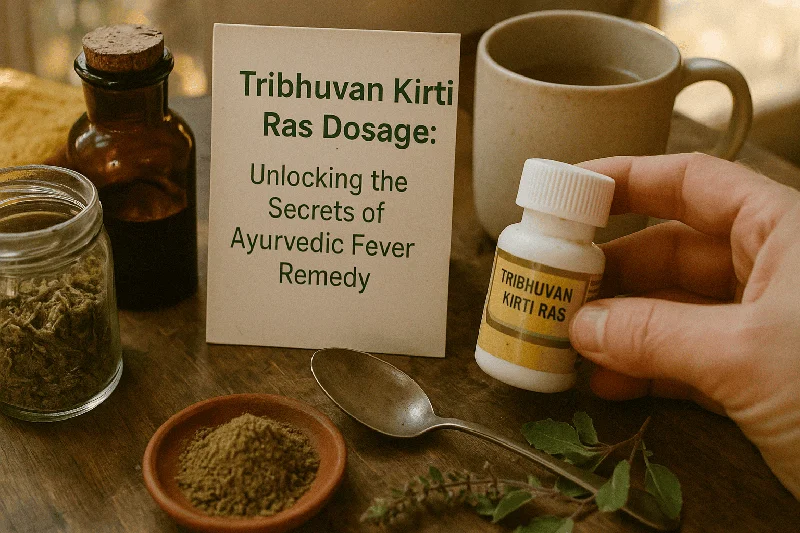
Tribhuvan Kirti Ras is a classical Ayurvedic herbomineral formulation primarily used to treat all types of fever (Jwara), cold, cough, and flu-like symptoms. Described in the ancient text Bhaishajya Ratnavali (Jwaradhikara chapter), it combines purified minerals like Shuddha Vatsanabha (purified aconite) and Shuddha Hingula (purified cinnabar) with warming herbs such as Trikatu and herbal decoctions of Tulsi, Nirgundi, and Dhatura. The standard adult dosage is 1–2 tablets (125–250 mg) twice daily with honey or warm water, strictly under the guidance of a qualified Ayurvedic physician.
In this comprehensive guide, we cover everything you need to know — from its historical origins and detailed ingredient breakdown to mechanism of action, clinical evidence, safety profile, and how it compares to similar Ayurvedic fever remedies. Whether you're a practitioner or a patient seeking clarity, this article is designed to give you actionable, evidence-based information.
What Is Tribhuvan Kirti Ras?
Tribhuvan Kirti Ras belongs to the Rasa Shastra category of Ayurvedic medicines — formulations that incorporate purified metals and minerals alongside herbal ingredients. It is classified as a Khalviya Rasa (a preparation made by trituration without the use of a Kupipakva or sublimation process), and it comes primarily in tablet (vati) form.
Definition and Classical References
The primary classical reference for Tribhuvan Kirti Ras is Bhaishajya Ratnavali, one of the most authoritative Ayurvedic pharmacological texts compiled by Govinda Dasji in the 18th century. The formulation appears in the Jwaradhikara (chapter on fevers), establishing its primary therapeutic identity as a Jwara-nashak (fever-destroying) medicine.
However, traces of similar formulations can also be found in earlier texts:
- Rasaratna Samuccaya (12th–13th century CE) by Vagbhatacharya — mentions analogous mercurial-aconite combinations for febrile conditions
- Rasendra Chintamani — references comparable herbomineral synergies for managing Sannipataja Jwara (fevers involving all three doshas)
The formulation is also listed in the Ayurvedic Formulary of India (AFI), Part I, published by the Government of India, which standardizes its composition and manufacturing process.
Historical Origin and Evolution
- The concept behind Tribhuvan Kirti Ras reflects centuries of refinement. Ancient Rasa Shastra practitioners recognized that certain purified minerals could act as powerful catalysts — enhancing the bioavailability and speed of herbal medicines.
- The name itself is telling: "Tribhuvan" refers to the three worlds (heaven, earth, and the netherworld), while "Kirti" means fame or glory.
- Essentially, it's a medicine "famous across three worlds" — a bold claim that speaks to its historical reputation.
Over time, different Ayurvedic schools adapted the formula slightly, which is why you might notice minor variations between manufacturers today.
Ingredients of Tribhuvan Kirti Ras
- Understanding the composition is critical.
- This isn't just a herbal supplement — it contains potent mineral ingredients that require proper purification (Shodhana) to be safe for human consumption.
Complete Ingredient List
| Ingredient | Sanskrit/Hindi Name | Role in Formula | Proportion |
|---|---|---|---|
| Purified Aconite | Shuddha Vatsanabha | Jvaraghna (antipyretic), Vedanasthapana (analgesic) | 1 part |
| Purified Cinnabar | Shuddha Hingula | Rasayana, antimicrobial, enhances drug potency | 1 part |
| Dried Ginger | Shunthi (Zingiber officinale) | Deepana (appetizer), Pachana (digestive) | 1 part |
| Black Pepper | Maricha (Piper nigrum) | Kaphashamaka, bioavailability enhancer | 1 part |
| Long Pepper | Pippali (Piper longum) | Respiratory support, Agni deepana | 1 part |
| Borax (purified) | Tankana Bhasma | Kaphahara, expectorant, antimicrobial | 1 part |
| Holy Basil Decoction | Tulsi Kwatha (Ocimum sanctum) | Bhavana Dravya — immunomodulatory | For trituration |
| Ginger Juice | Adrak Swarasa | Bhavana Dravya — enhances bioavailability | For trituration |
| Thorn Apple Decoction | Dhatura Kwatha (Datura metel) | Bhavana Dravya — antispasmodic, bronchodilatory | For trituration |
| Five-leaved Chaste Tree Decoction | Nirgundi Kwatha (Vitex negundo) | Bhavana Dravya — anti-inflammatory, analgesic | For trituration |
Note: The Bhavana Dravyas (trituration media) are not present as final ingredients in measurable quantities — they are used during the pharmaceutical process to imbue the tablet with their therapeutic qualities.
Role of Each Key Ingredient
Let's break down why each component matters — something most resources overlook completely.
Shuddha Vatsanabha (Purified Aconite): This is the star ingredient and also the most controversial. Raw aconite is highly toxic, but after Shodhana (purification through cow's urine or cow's milk as described in Rasatarangini), it becomes a powerful Jvaraghna — capable of breaking even stubborn fevers. It works as a diaphoretic, promoting sweating and thereby reducing body temperature. Modern pharmacology attributes this to aconitine alkaloids, which in purified, micro-dose form influence thermoregulatory centers. Shuddha Hingula (Purified Cinnabar): A mercurial compound that, after proper Shodhana, acts as an antimicrobial and potent Rasayana (rejuvenative). It enhances the penetration and efficacy of other drugs in the formulation. This is why Rasa Shastra medicines often work faster than purely herbal alternatives. Trikatu (Shunthi, Maricha, Pippali): This classic trio forms the digestive-respiratory backbone of the formula. Shunthi (dry ginger) ignites Agni and combats Ama (metabolic toxins) — which Ayurveda considers the root cause of most fevers. Maricha contains piperine, which modern research has shown increases the bioavailability of co-administered compounds by up to 2000% (Shoba et al., Planta Medica, 1998). Pippali specifically targets Rasa and Pranavaha Srotas (channels of plasma and respiration). Tankana Bhasma (Borax): A powerful Kaphahara that liquefies thick mucus, making it invaluable for fevers accompanied by respiratory congestion. Bhavana Dravyas — Tulsi, Adrak, Dhatura, and Nirgundi: These trituration media deserve special attention. Tulsi is a well-documented immunomodulator. Nirgundi provides potent anti-inflammatory action. Dhatura, while toxic in raw form, contributes antispasmodic and bronchodilatory properties when used as a Kwatha for Bhavana. Ginger juice (Adrak Swarasa) further amplifies the bioavailability of the entire formulation.
Significance of Shodhana (Purification of Toxic Ingredients)
This is perhaps the most critical aspect that no other resource adequately explains.
Tribhuvan Kirti Ras contains two potentially toxic ingredients — Vatsanabha (aconite) and Hingula (cinnabar containing mercury). Without proper Shodhana, these substances are genuinely dangerous.
Shodhana of Vatsanabha: Per Rasatarangini (Chapter 24), raw Vatsanabha is soaked in Gomutra (cow's urine) for 7 days, with the medium replaced daily. This process reduces the pseudo-aconitine and aconitine content to safe therapeutic levels while preserving the antipyretic activity. A 2019 PhD thesis from Savitribai Phule Pune University demonstrated that properly purified Vatsanabha showed no hepatotoxicity or nephrotoxicity in animal models at therapeutic doses. Shodhana of Hingula: Raw cinnabar undergoes repeated trituration with lime juice and is then washed thoroughly to remove free mercury. The resulting Shuddha Hingula is bound mercury sulfide (HgS), which has extremely low bioavailability — meaning it passes through the GI tract largely unabsorbed. Why this matters for consumers: Always purchase Tribhuvan Kirti Ras from GMP-certified manufacturers who follow Ayurvedic Pharmacopoeia of India (API) standards. The difference between a properly manufactured product and a substandard one is literally the difference between medicine and poison.
How Does Tribhuvan Kirti Ras Work? (Mechanism of Action)
Ayurvedic Perspective — Rasa, Virya, Vipaka, Prabhava
| Parameter | Value | Clinical Significance |
|---|---|---|
| Rasa (Taste) | Katu (Pungent), Tikta (Bitter) | Stimulates Agni, clears Kapha |
| Virya (Potency) | Ushna (Hot) | Counteracts Sheeta (cold) quality of fever |
| Vipaka (Post-digestive effect) | Katu | Sustained Agni-stimulating action |
| Prabhava (Special action) | Jvaraghna | Specific fever-breaking capacity beyond standard pharmacological prediction |
Effect on Agni, Ama, and Srotas
Ayurveda considers most fevers a consequence of Ama (metabolic toxins) obstructing the Rasavaha Srotas (plasma channels).
Tribhuvan Kirti Ras works on multiple levels:
- 1.Agni Deepana: The Trikatu and Vatsanabha components intensely stimulate Jatharagni (digestive fire), burning through accumulated Ama
- 2.Srotoshodhana: Tankana Bhasma and Nirgundi clear obstructed channels, particularly in the respiratory system
- 3.Swedana (Diaphoresis): Vatsanabha and Shunthi promote sweating, a natural mechanism for fever resolution and toxin elimination
- 4.Kapha-Vata Shamana: The overall hot, penetrating, and light qualities of the formulation directly pacify excess Kapha and Vata — the two doshas most commonly involved in fevers with chills, body pain, and congestion
Doshic Action (Vata-Kapha Shamaka)
Tribhuvan Kirti Ras is predominantly a Vata-Kapha pacifying formulation.
It is best suited for:
- Vataja Jwara — fever with body aches, shivering, irregular temperature
- Kaphaja Jwara — fever with congestion, heaviness, thick mucus
- Vata-Kaphaja Jwara — combined presentations (the most common type in cold weather)
Caution with Pitta: Due to its Ushna Virya, it can aggravate Pitta dosha. In Pittaja Jwara (fever with burning sensation, excessive thirst, irritability), it should either be avoided or administered with cooling Anupana like Pravala Pishti or Godugdha (cow's milk) under strict medical supervision.
Health Benefits and Therapeutic Uses
Fever (Jwara) — Acute and Chronic
- This is the primary indication.
- Tribhuvan Kirti Ras is effective in:
- Nava Jwara (Acute fever): Provides rapid antipyretic action, typically showing results within 24–48 hours
- Jeerna Jwara (Chronic/recurrent fever): Used in longer protocols (7–14 days) with appropriate Anupana
- Vishama Jwara (Intermittent fever): Including malarial-type fevers with periodicity
- Sannipataja Jwara: Complex fevers involving disturbance of all three doshas
A pilot study conducted at Banaras Hindu University (BHU) in 2018 on chronic bronchitis patients with recurrent low-grade fever showed significant improvement in both fever resolution and respiratory symptoms with a Tribhuvan Kirti Ras-based protocol.
Cold, Cough, and Flu (Pratishyaya and Kasa)
Beyond fever, it excels in managing the entire symptom complex of upper respiratory infections — nasal congestion, sore throat, productive cough, and general malaise. The Kaphahara action of Tankana Bhasma combined with the bronchodilatory influence of Dhatura Kwatha makes it particularly useful when fever is accompanied by chest congestion.
Digestive Disorders (Agnimandya)
By powerfully stimulating Agni, it helps resolve Agnimandya (weak digestive fire) that often accompanies febrile states. Patients frequently report improved appetite and reduced bloating within days of starting the medicine.
Spleen and Liver Diseases (Pleeha and Yakrit Vikara)
Classical texts mention its utility in Pleehodara (splenic enlargement) and hepatic congestion — conditions often associated with chronic or recurrent fevers, particularly in endemic malaria regions.
Respiratory Conditions
The CCRAS (Central Council for Research in Ayurvedic Sciences) conducted a trial in 2020 where formulations including Tribhuvan Kirti Ras showed promising results in managing inflammatory conditions. The combination of Nirgundi's anti-inflammatory properties and Tulsi's immunomodulatory action makes this formulation relevant for bronchitis, asthmatic bronchitis, and recurrent respiratory infections.
Dosage and Administration
Standard Adult Dosage
| Parameter | Recommendation |
|---|---|
| Dose | 1–2 tablets (125–250 mg) |
| Frequency | Twice or thrice daily |
| Timing | After meals or as directed |
| Anupana (Vehicle) | Honey, warm water, or Adrak Swarasa (ginger juice) |
| Duration | 3–7 days for acute conditions; up to 14 days for chronic cases |
How to Take Tribhuvan Kirti Ras
For acute fever with chills and body pain: Take 1 tablet twice daily with 1 teaspoon of honey and warm water. The honey acts as a Yogavahi (carrier) that enhances penetration into tissues. For fever with cough and congestion: Take 1 tablet twice daily with Adrak Swarasa (fresh ginger juice) — approximately 5–10 ml. This maximizes the expectorant action. For chronic or recurrent low-grade fever: Take 1 tablet twice daily with Tulsi Kwatha (holy basil decoction). The course may extend to 14 days under medical supervision.
Dosage Adjustments for Special Populations
- Children (above 5 years): Half tablet once or twice daily, ONLY under a qualified Vaidya's guidance. Not recommended for children under 5.
- Elderly patients: 1 tablet twice daily. Monitor for signs of Pitta aggravation.
- Pregnant and lactating women: Strictly contraindicated due to Vatsanabha and Hingula content.
Anupana and Seasonality Considerations
The choice of Anupana significantly influences the medicine's action:
- Honey (Madhu): Best for Kapha-predominant conditions — congestion, heaviness, thick white mucus
- Warm Water (Ushna Jala): General-purpose vehicle for most fever types
- Ginger Juice (Adrak Swarasa): Best for respiratory symptoms and Ama pachana
- Ghee with milk: Rarely used with this formulation due to its already Ushna nature, but may be considered in very Vata-predominant cases
Seasonal note: Tribhuvan Kirti Ras is most frequently prescribed during Hemanta (early winter), Shishira (late winter), and Vasanta (spring) — seasons when Vata-Kapha disorders and respiratory infections peak. During Greeshma (summer) and peak Pitta season, practitioners typically prefer cooler alternatives.
Don't wait or self medicate. Start chat with Doctor NOW
Side Effects, Safety, and Contraindications
Potential Side Effects
- When taken in the correct dosage under medical supervision, side effects are uncommon.
- However, possible adverse effects include:
- Mild burning sensation in the stomach (due to Ushna Virya)
- Excessive sweating
- Loose stools (rare)
- Pitta aggravation symptoms — acidity, mouth ulcers, skin rashes (with prolonged or excessive use)
Detailed Contraindications
- This is an area where most resources are dangerously vague.
- Let's be specific:
| Contraindication | Reason |
|---|---|
| Pregnancy | Vatsanabha is a known uterine stimulant; Hingula poses teratogenic risk |
| Lactation | Potential excretion of mercury compounds in breast milk |
| Children under 5 years | Immature hepatic detoxification pathways cannot safely process mineral components |
| Renal insufficiency | Impaired clearance of mineral metabolites |
| Hepatic disease (active) | Reduced capacity for mineral processing |
| Pittaja Prakriti with active Pitta symptoms | Risk of severe Pitta aggravation |
| Known hypersensitivity to any ingredient | Allergic reactions possible, particularly with Hingula |
Drug Interactions
- This is a significant gap in existing literature.
- Based on pharmacological reasoning and clinical experience:
- With NSAIDs (Ibuprofen, Diclofenac): Both are hepatically metabolized; concurrent use increases hepatic load. Avoid simultaneous administration; maintain at least a 2-hour gap.
- With Paracetamol: Exercise caution.
- Both have antipyretic action — combining may cause excessive temperature drop. If using both, reduce dosage of each.
- With Antibiotics: Generally compatible but should be administered separately (2 hours apart) to avoid interference with absorption.
- With other Rasa Shastra preparations: Avoid stacking multiple mercury-containing formulations to prevent cumulative toxicity.
Toxicological Profile — Addressing Safety Concerns
The elephant in the room: this medicine contains aconite and mercury. Is it safe?
- The short answer: Yes, when properly purified and taken at recommended doses for appropriate durations. The Shodhana process transforms these substances fundamentally.
- However, this safety is conditional on:
- Manufacturing by GMP-certified facilities following API/AFI standards
- Adherence to recommended dosage
- Limited duration of use (not meant for long-term continuous administration)
- Medical supervision throughout the course
Tribhuvan Kirti Ras vs Other Ayurvedic Fever Remedies
No competitor has provided this comparison, yet it's one of the most practical questions patients and practitioners face.
| Parameter | Tribhuvan Kirti Ras | Mahalaxmi Vilas Ras | Lakshmi Vilas Ras | Anand Bhairava Ras |
|---|---|---|---|---|
| Primary Indication | All types of Jwara (fever) | Vata-Kaphaja disorders, neuralgia | Respiratory and skin disorders | Agnimandya, Ajirna, mild fever |
| Potency (Virya) | Ushna (Hot) — very strong | Ushna | Ushna | Moderate Ushna |
| Contains Vatsanabha | Yes | Yes | Yes (Nardiya variety) | No |
| Contains Hingula | Yes | Yes | Yes | Yes |
| Speed of Action | Very fast (24–48 hrs) | Moderate | Moderate | Gradual |
| Suitability for Pitta | Low | Low | Low-moderate | Moderate |
| Best For | Acute febrile illness with chills, body pain | Chronic Vata disorders with Kapha | Chronic respiratory and skin conditions | Digestive-origin fevers |
| Duration of Use | Short-term (3–14 days) | Medium-term | Medium to long-term | Short to medium-term |
When to choose Tribhuvan Kirti Ras over alternatives: When the primary complaint is acute fever, especially with chills, body pain, and respiratory congestion — and the patient does not have a Pitta-predominant constitution.
Differences Between Manufacturers
- Another gap no competitor addresses.
- Here's what to know:
| Manufacturer | Notable Features | Approximate Price | Shelf Life |
|---|---|---|---|
| Baidyanath | Most widely available; follows Bhaishajya Ratnavali reference; well-established quality control | ₹60–90 for 40 tablets | ~10 years |
| Dabur | Large-scale GMP manufacturing; consistent quality | ₹70–100 for 40 tablets | 5 years (typically) |
| Dhootapapeshwar | Premium quality; known for meticulous Shodhana processes; Maharashtra-based | ₹120–160 for 30 tablets | 5 years |
| Zandu | Widely available in pharmacy chains | ₹65–85 for 40 tablets | 5 years |
| Basic Ayurveda | Budget-friendly option | ₹50–70 for 40 tablets | Varies |
Key advice: Don't choose based on price alone. The quality of Shodhana directly determines both safety and efficacy. Established manufacturers with dedicated Rasa Shastra units (like Dhootapapeshwar and Baidyanath) generally maintain more rigorous purification standards.
Pathya-Apathya: Diet and Lifestyle During the Course
This is traditional guidance that significantly impacts treatment outcomes but is virtually never discussed online.
What to Eat (Pathya)
- Light, warm, easily digestible foods — Moong dal khichdi, vegetable soups, warm rice porridge
- Freshly cooked meals (avoid leftovers)
- Warm water throughout the day
- Tulsi tea, ginger tea, lemon water
- Steamed vegetables, especially lauki (bottle gourd) and parval (pointed gourd)
What to Avoid (Apathya)
- Cold foods and beverages — ice cream, cold water, refrigerated items
- Heavy, fried, oily foods
- Curd/yogurt (increases Kapha and may worsen congestion)
- Non-vegetarian food during active fever
- Excessive physical exertion, exercise, travel
- Day sleeping (increases Kapha)
- Exposure to cold wind or air conditioning
Storage and Shelf Life
- Store in a cool, dry place away from direct sunlight and moisture.
- Rasa Shastra preparations generally have a long shelf life — Baidyanath lists approximately 9 years 11 months for their Tribhuvan Kirti Ras. However, once the container is opened, use within the recommended timeframe and ensure the cap is tightly sealed after each use.
Clinical Protocols for Different Types of Fever
Based on classical references and contemporary clinical practice, here are specific treatment protocols:
Protocol for Viral Fever (Vata-Kaphaja Jwara)
- Tribhuvan Kirti Ras: 1 tablet twice daily with honey
- Sudarshana Ghana Vati: 2 tablets twice daily
- Sitopaladi Churna: 1/2 tsp with honey (if cough present)
- Duration: 5–7 days
Protocol for Malarial Fever (Vishama Jwara)
- Tribhuvan Kirti Ras: 1 tablet thrice daily with Tulsi Kwatha
- Ayush-64: 2 tablets twice daily (CCRAS-validated antimalarial)
- Pravala Pishti: 250 mg twice daily (to manage Pitta)
- Duration: 7–14 days with periodic blood monitoring
Protocol for Typhoid-type Fever (Antrika Jwara)
- Tribhuvan Kirti Ras: 1 tablet twice daily
- Sutshekhar Ras: 1 tablet twice daily
- Guduchi Satva: 500 mg twice daily
- Duration: 10–14 days with strict Pathya
Disclaimer: These protocols are for educational reference only. Individual treatment must be determined by a qualified Ayurvedic practitioner after proper diagnosis (Nadi Pariksha, Ashtavidha Pariksha).
Frequently Asked Questions (FAQ)
What is Tribhuvan Kirti Ras used for?
It is primarily used for treating all types of fevers (Jwara), including viral fever, flu, common cold, and cough. Secondary indications include digestive weakness, splenic enlargement, and respiratory congestion.
Can Tribhuvan Kirti Ras be used for cough?
Yes. While its primary action is antipyretic, the Kaphahara ingredients (Tankana Bhasma, Trikatu) and the Bhavana with Dhatura and Nirgundi Kwatha make it effective for productive cough associated with fever. For dry cough without fever, other formulations like Sitopaladi Churna or Khadiradi Vati may be more appropriate.
What are the ingredients in Tribhuvan Kirti tablet?
The main ingredients are Shuddha Vatsanabha, Shuddha Hingula, Shunthi, Maricha, Pippali, and Tankana Bhasma, triturated with Tulsi Kwatha, Adrak Swarasa, Dhatura Kwatha, and Nirgundi Kwatha.
What is the Tribhuvan Kirti Ras shloka?
The primary shloka from Bhaishajya Ratnavali (Jwaradhikara) describes the formulation, its ingredients, and indications. The classical verse begins with the enumeration of ingredients and their proportions, followed by the Bhavana process and therapeutic applications in Jwara.
What is the price of Tribhuvan Kirti Ras?
Prices range from approximately ₹50 to ₹160 depending on the manufacturer, quantity, and quality. Baidyanath and Zandu products typically cost ₹60–90 for 40 tablets, while premium brands like Dhootapapeshwar may cost more.
How long does it take to show results?
For acute fevers, patients typically report improvement within 24–48 hours. For chronic or recurrent fevers, a course of 7–14 days may be needed for sustained results.
Is Tribhuvan Kirti Ras safe for long-term use?
No. Due to the presence of Vatsanabha and Hingula, it is designed for short-term therapeutic use only — typically 3 to 14 days. Long-term use without medical supervision can lead to cumulative toxicity.
Can it be taken with allopathic medicines?
It can be taken alongside most allopathic medicines, but maintain a gap of at least 2 hours between them. Specifically avoid combining with other antipyretics (like Paracetamol) without dose adjustment, and inform your doctor about all medicines you're taking.
Conclusion
Tribhuvan Kirti Ras represents one of the finest examples of Ayurvedic pharmaceutical ingenuity — a formulation where carefully purified minerals and synergistic herbs come together to create a medicine that can rival modern antipyretics in speed of action while addressing the root cause of fever from an Ayurvedic perspective.
- However, it is not a casual over-the-counter remedy.
- The presence of Vatsanabha and Hingula demands respect — proper Shodhana during manufacturing, correct dosage during administration, and medical supervision throughout the course are all non-negotiable.
If you're experiencing fever, cold, or flu symptoms and considering Tribhuvan Kirti Ras, consult a qualified Ayurvedic practitioner who can assess your Prakriti, Vikriti, and the specific type of Jwara before prescribing. The right medicine, in the right dose, at the right time, with the right Anupana — this is the essence of Ayurvedic treatment, and Tribhuvan Kirti Ras exemplifies exactly why these details matter.
Always buy from GMP-certified manufacturers. Never self-medicate with Rasa Shastra preparations. Your health deserves both ancient wisdom and modern safety standards.
Scientific Sources
- Ayurvedic Herbal Medicines: A Literature Review of Their Applications in Female Reproductive Health — Patibandla S et al., 2024, Cureus
- Bangladeshi medicinal plant dataset — Borkatulla B et al., 2023, Data in brief
- Iranian Traditional Medicine (ITM) and Natural Remedies for Treatment of the Common Cold and Flu — Shahrajabian MH et al., 2024, Reviews on recent clinical trials
- Ocimum sanctum L (Holy Basil or Tulsi) and its phytochemicals in the prevention and treatment of cancer — Baliga MS et al., 2013, Nutrition and cancer
- Harnessing the Antibacterial, Anti-Diabetic and Anti-Carcinogenic Properties of Ocimum sanctum Linn (Tulsi) — Arya R et al., 2024, Plants (Basel, Switzerland)
- Chinese herbal medicine-derived extracellular vesicles as novel biotherapeutic tools: present and future — Zhang J et al., 2024, Journal of translational medicine
- Efficacy of herbal medicine (cinnamon/fennel/ginger) for primary dysmenorrhea: a systematic review and meta-analysis of randomized controlled trials — Xu Y et al., 2020, The Journal of international medical research
- A critical review of Ginger's (Zingiber officinale) antioxidant, anti-inflammatory, and immunomodulatory activities — Ayustaningwarno F et al., 2024, Frontiers in nutrition
- Zingiber officinale var. rubrum: Red Ginger's Medicinal Uses — Zhang S et al., 2022, Molecules (Basel, Switzerland)
Questions from users
What is Shodhana and why is it important for using Tribhuvan Kirti Ras safely?
Morgan
8 days ago
Shodhana is a purification process in Ayurveda to remove toxic properties from substances like raw aconite. It's crucial for safely using Tribhuvan Kirti Ras cause it transforms potentially harmful ingredients into something beneficial. Think of it as making sure the "medicine" part of the remedy is effective. Do consult an Ayurvedic expert to ensure it's done the right way!
Can I take Tribhuvan Kirti Ras for digestive issues while also having a fever?
Charlotte
17 days ago
Tribhuvan Kirti Ras can indeed help with digestive issues by stimulating Agni and improving digestion, but be careful if you also have a fever. It's great for fever with chest congestion, but make sure it's Shodhana-processed for safety. And yeah, don’t mix it with other meds without a 2-hour gap. Always consult with a doc too! 😊
What is the role of piperine in the effectiveness of Tribhuvan Kirti Ras?
Savannah
26 days ago
Piperine in Maricha (black pepper) is like a turbo boost for Tribhuvan Kirti Ras. It helps the body absorb its other components more effectively, making them work better. So, piperine sort of increases the "oomph" of the formula, making it more potent for fighting fevers! Just watch out, it's pretty strong so careful with long-term use!
Can I use Tribhuvan Kirti Ras for reducing inflammation in addition to fever?
Nadine
35 days ago
You can use Tribhuvan Kirti Ras for inflammation along with fever, but it's super important to do so under the guidance of a qualified Ayurvedic practitioner. The anti-inflammatory action you mentioned is due to ingredients like Nirgundi in it. Just keep in mind, it can affect doshas differently so personalized advice, based on your unique body constitution, is best!
Can I take Tribhuvan Kirti Ras for a cold along with fever symptoms?
Addison
46 days ago
Yes, you can take Tribhuvan Kirti Ras for a cold with fever symptoms. It's good for reducing fever and easing body aches. Just a quick tip, make sure you follow the recommended dosage and consult with an Ayurvedic practitioner to avoid any risks. Self-medication can be tricky, better safe than sorry!
Is it normal to feel drowsy after taking Tribhuvan Kirti Ras?
Nova
56 days ago
Feeling drowsy after taking Tribhuvan Kirti Ras isn't super common, but it might happen. It could be related to how your body is reacting to it or other factors like your dosha type or digestion. Maybe keep an eye on it and check in with your doc if it keeps happening. They can tweak the dosage or timing if needed!
Is it safe to use Tribhuvan Kirti Ras while breastfeeding?
Nadine
66 days ago
It's generally not recommended to use Tribhuvan Kirti Ras while breastfeeding, unless a healthcare professional prescribes it specifically for your situation. It's important to discuss with an Ayurvedic doctor to ensure it's safe for both you and your baby. Always better safe than sorry!
What is the best way to store Tribhuvan Kirti Ras for maximum effectiveness?
Genesis
75 days ago
For storing Tribhuvan Kirti Ras, keep it in a cool, dry place away from direct sunlight. Make sure the container is airtight to maintain potency and prevent moisture, which can affect its effectiveness. If it's in tablet form, this helps to keep it safely consumable for a longer time. Always check the expiry date too!
Is it safe to use Tribhuvan Kirti Ras for children with fevers?
Evelyn
85 days ago
It’s generally not recommended to use Tribhuvan Kirti Ras in children without consulting with an Ayurvedic practitioner. It's a powerful formulation with ingredients like purified mercury and sulfur, which can be quite potent. Better safe than sorry, right? Always good to get professional adivce when it comes to little ones!
Can I take Tribhuvan Kirti Ras if I have a chronic health condition?
Caroline
95 days ago
If you have a chronic health condition, it's super important to check with an Ayurvedic practitioner before taking Tribhuvan Kirti Ras. It's a potent formula and needs careful dosing, specially if you have ongoing health issues. Better safe than sorry! Consult with a pro to make sure it's right for you.
Related articles

General Medicine
Alabu Raktamokshana: Detoxify and Rejuvenate with Ayurvedic Bloodletting
Explore Alabu Raktamokshana, an Ayurvedic bloodletting technique, its benefits, usage guidelines, and scientific insights into this traditional therapy for detoxification and healing.
3,071

General Medicine
Vidaryadi Kashayam: Benefits, Dose, Side Effects, Ingredients, Reference
Exploration of Vidaryadi Kashayam: Benefits, Dose, Side Effects, Ingredients, Reference
2,553
General Medicine
Sariva Manjistha Vati – Ayurvedic Detox & Skin Rejuvenation
Discover Sariva Manjistha Vati, an Ayurvedic formulation. Learn about its benefits, uses, dosage, precautions, and scientific insights for holistic health.
4,743
General Medicine
Laghu Soota Mishran
Laghu Soota Mishrana is an Ayurvedic preparation made from a combination of natural ingredients, including herbs and purified sulfur (Soota). It is designed to balance the three doshas—Vata, Pitta, and Kapha—and support overall health.
2,699

General Medicine
Apamarg Kshar Uses: Evidence-Based Ayurvedic Insights
Discover apamarg kshar uses, backed by research and Ayurvedic tradition. Learn its benefits, preparation, and safety tips for holistic well-being.
3,075

General Medicine
Panchmahabhoot in Ayurveda – The Five Element Theory in Traditional Healing
Discover the profound insights of Panchmahabhoot in Ayurveda, exploring the five elements that form the foundation of Ayurvedic medicine and their applications in health, balance, and healing.
4,086
General Medicine
Ayurvedic Medicine for Heel Pain: Natural Relief for Lasting Comfort
Ayurveda, the ancient Indian system of medicine, offers natural remedies to address heel pain at its root cause.
3,519

General Medicine
Khadiradi Vati
Exploration of Khadiradi Vati
2,723

General Medicine
Dashamoola Kashayam: Benefits, Dose, Side Effects, Ingredients
Exploration of Dashamoola Kashayam: Benefits, Dose, Side Effects, Ingredients
4,432
General Medicine
Ayurvedic Medicine: Types, Herbs, and Its Role in Modern Health
Explore Ayurvedic medicine, healing herbs, and home remedies. Boost immunity naturally—discover how to bring balance and wellness into your life today
2,536
Related consultations on the topic
Legal
Additional Documents
© 2024 Ask Ayurveda. All rights reserved.