Ask Ayurvedic doctor a question and get a consultation online on the problem of your concern in a free or paid mode. More than 2,000 experienced doctors work and wait for your questions on our site and help users to solve their health problems every day.
FREE! Ask Ayurvedic Doctors 24/7

 Fast responses
 1000+ verified doctors
Body DetoxEar, Nose, and Throat DisordersGeriatrics & RejuvenationImmunodeficiencyInfertility TreatmentNutritionOrthopedic DisordersPediatricsRespiratory DisordersSexually Transmitted Diseases (STDs)Surgery RecoveryUrological DisordersVascular DisordersDental DisordersEndocrinological DisordersGastrointestinal DisordersYoga TherapyGeneral MedicineAllergic DisordersCardio DisordersGynecology and ObstetricsCosmetologySkin and Hair DisordersEye DisordersInfectious DiseasesMental DisordersNeurological DisordersOncologyPanchakarmaSexual Health & DisordersSports Medicine
Published on 12/16/24
(Updated on 07/08/26)
2,461
Grihadhoomadi Choornam: A Potent Ayurvedic Solution for Respiratory Health
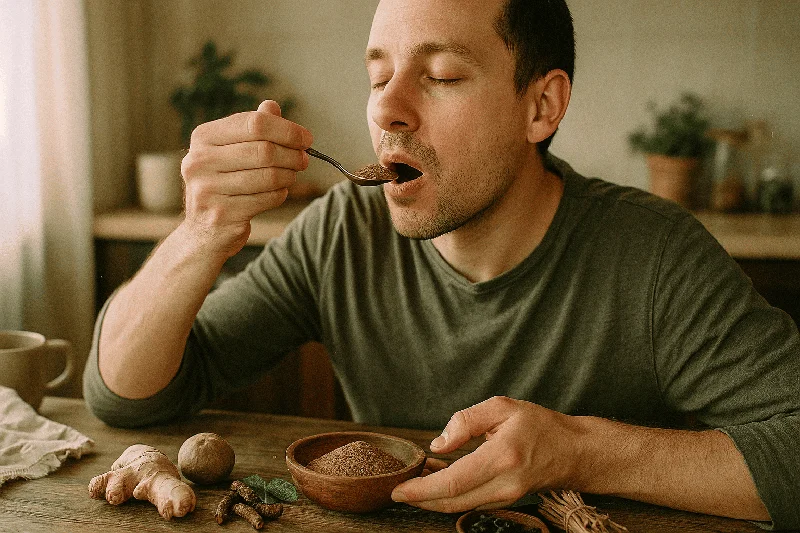
- Grihadhoomadi Choornam is a classical Ayurvedic polyherbal powder (choorna) used primarily as an external paste (lepa) for managing Vatarakta (gouty arthritis), joint inflammation, and rheumatic conditions. Described in the ancient text Ashtanga Hridayam (Chikitsa Sthana 22/36), this formulation combines kitchen soot (grihadhooma) with potent anti-inflammatory herbs to reduce swelling, pain, and burning sensations in affected joints.
- Unlike oral medicines, it is applied topically — mixed with water to form a paste and spread directly over inflamed areas.
If you've been searching for clear, detailed information on what this medicine actually is, how to use it properly, and whether it's right for your condition, this guide covers everything the other sources don't — including the pharmacology behind each ingredient, step-by-step application instructions, and specific contraindications most websites simply skip over.
What Is Grihadhoomadi Choornam?
- Grihadhoomadi Choornam is a finely powdered Ayurvedic formulation classified under Lepa Yoga (therapeutic paste preparations) in classical Ayurvedic pharmacology.
- The name itself tells you about its key ingredient: "Grihadhooma" means kitchen soot or chimney soot (the carbon deposit collected from traditional wood-fire kitchens), and "adi" means "and others," referring to the accompanying herbs. "Choornam" simply means powder.
This formulation is specifically designed for external application only. You don't consume it orally. Instead, you mix it with water (or sometimes medicated liquids) to create a paste, which is then applied over swollen, painful, or inflamed joints.
Classical Reference and Sanskrit Shloka
The formulation originates from Ashtanga Hridayam by Vagbhata, one of the three great classical texts (Brihat Trayi) of Ayurveda. The specific reference is found in Chikitsa Sthana, Chapter 22 (Vatarakta Chikitsa), Shloka 36.
The original Sanskrit shloka reads:
> गृहधूम हरिद्रा च दारु चन्दनम् एव च |
> वचा शारपुङ्खा च लेपः वातरक्तनुत् ||
Transliteration: Grihadhooma haridra cha daaru chandanam eva cha | Vacha sharapunkha cha lepah vataraktanut ||
This shloka lists the ingredients and states clearly that this lepa (paste) is a destroyer of Vatarakta — the Ayurvedic condition closely corresponding to gouty arthritis.
- Grihadhoomadi Choornam vs Grihadhoomadi Lepa — What's the Difference?
- You'll often see these two terms used interchangeably online, which causes confusion.
- Here's the clarification:
- Grihadhoomadi Choornam refers to the dry powder form — the product as you buy it from the shelf
- Grihadhoomadi Lepa refers to the same powder after it has been mixed with water or another liquid to form a therapeutic paste ready for application
So they're essentially the same formulation at different stages of preparation. The choornam becomes the lepa when you add liquid. Most manufacturers sell it as "Grihadhoomadi Choornam" because the powder form has a longer shelf life (typically 2 years from the date of manufacture) and can be prepared fresh each time.
Ingredients and Composition of Grihadhoomadi Choornam
All ingredients are taken in equal proportions (Samabhaga) and finely powdered together. This is a relatively simple formulation with 6-7 ingredients depending on the manufacturer.
| # | Sanskrit Name | English / Common Name | Latin Botanical Name | Part Used |
|---|---|---|---|---|
| 1 | Grihadhooma | Kitchen Soot / Chimney Soot | — (Carbon deposit) | Collected soot |
| 2 | Haridra | Turmeric | Curcuma longa | Rhizome |
| 3 | Daruharidra | Indian Barberry / Tree Turmeric | Berberis aristata | Stem |
| 4 | Chandana | Sandalwood | Santalum album | Heartwood |
| 5 | Vacha | Sweet Flag / Calamus | Acorus calamus | Rhizome |
| 6 | Sharapunkha | Wild Indigo | Tephrosia purpurea* | Whole plant |
\Note: Sharapunkha (Tephrosia purpurea) appears in some manufacturer formulations but not others. Kottakkal Arya Vaidya Sala and certain other brands may list only 5 primary ingredients. This variation stems from differences in textual interpretation — some commentaries on Ashtanga Hridayam include it based on the shloka, while others omit it. Always check the label of the specific product you purchase.*
What Is Grihadhooma (Kitchen Soot) and Why Is It Used?
This is perhaps the most fascinating — and most overlooked — ingredient in this formulation. Grihadhooma is literally the black soot that deposits on the ceiling, walls, and chimney of a traditional wood-burning kitchen. In modern terms, it's primarily amorphous carbon with trace minerals and alkaline salts.
- Why would ancient Ayurvedic physicians include soot in a medicinal formulation?
- Several reasons:
Alkaline nature: Kitchen soot is alkaline (Kshara guna), which helps neutralize the acidic inflammatory environment in gouty joints. Gout involves the deposition of uric acid crystals, and the alkaline property of grihadhooma may help counteract this locally. Lekhana (scraping) property: In Ayurvedic pharmacology, soot has a scraping quality that helps remove accumulated pathological deposits (ama) from tissues. Shoshana (drying) property: It absorbs excess moisture and reduces oedema (swelling) in the affected area, which is crucial in managing the Kapha component of Vatarakta. Historical usage: Carbon-based substances have been used in traditional medicine systems worldwide. Even in modern dermatology, activated charcoal and coal tar find therapeutic application. The use of grihadhooma represents an ancient understanding of carbon's adsorptive and anti-inflammatory potential.
Detailed Pharmacological Profile of Each Ingredient
- No competitor has broken down why these specific herbs work together.
- Here's the synergistic logic:
Haridra (Turmeric): Contains curcumin, one of the most well-researched natural anti-inflammatory compounds. A 2016 systematic review published in the Journal of Medicinal Food confirmed curcumin's ability to reduce inflammatory markers like TNF-α and IL-6. When applied topically, it penetrates skin layers to reduce local inflammation and provides its characteristic yellow color as a visual indicator of application. Daruharidra (Berberis aristata): Contains berberine, a potent alkaloid with proven anti-inflammatory and analgesic properties. A 2011 study in Phytomedicine demonstrated berberine's ability to inhibit COX-2 pathways — the same mechanism targeted by modern NSAIDs. It also has significant anti-microbial action, preventing secondary infections in compromised skin. Chandana (Sandalwood): Provides a pronounced cooling effect (Sheeta Virya), which directly counteracts the burning sensation (daha) characteristic of Vatarakta. Sandalwood oil contains α-santalol, which has demonstrated anti-inflammatory effects comparable to low-dose hydrocortisone in some experimental studies.
- Vacha (Acorus calamus): Contributes penetration-enhancing properties.
- Vacha is known as a Yogavahi — a substance that enhances the bioavailability of other ingredients. Its volatile oils help the active compounds from turmeric and barberry penetrate deeper into the inflamed tissue. It also has analgesic properties of its own.
Sharapunkha (Tephrosia purpurea): Primarily acts on Pitta dosha and purifies Rakta dhatu (blood tissue). It has demonstrated hepatoprotective and anti-oxidant properties. In the context of Vatarakta, where blood tissue is vitiated, Sharapunkha helps address the root pathology.
The genius of this formulation lies in the synergy: Grihadhooma provides alkalinity and drying action, turmeric and barberry deliver anti-inflammatory power, sandalwood cools the burning, vacha drives everything deeper into the tissue, and sharapunkha purifies the blood component. Together, they address Vatarakta from multiple angles simultaneously.
Uses and Indications: What Conditions Does Grihadhoomadi Choornam Treat?
Vatarakta (Gouty Arthritis) — The Primary Indication
- Vatarakta is the main condition for which Grihadhoomadi Choornam is prescribed.
- In Ayurveda, Vatarakta literally means "Vata in the blood" — a condition where aggravated Vata dosha vitiates Rakta dhatu (blood tissue), leading to intensely painful, swollen, red, and warm joints.
This corresponds closely to what modern medicine calls gouty arthritis — a condition caused by elevated uric acid levels and the deposition of monosodium urate crystals in joints.
Symptoms of Vatarakta where this choornam is beneficial:
- Intense pain in small and large joints (especially the big toe, ankles, knees)
- Swelling with redness and warmth
- Burning sensation over the affected joints
- Skin over the joint appearing taut and shiny
- Pain aggravated by touch or movement
Understanding Vatarakta: Ayurvedic Pathogenesis (Samprapti)
To understand why Grihadhoomadi Choornam works, it helps to understand how Vatarakta develops according to Ayurveda:
Stage 1 — Nidana Sevana (Causative Factors): Excessive intake of salty, sour, pungent, alkaline foods; incompatible food combinations (viruddhahara); sedentary lifestyle; daytime sleeping; excessive anger. Stage 2 — Dosha Dushti: Vata dosha gets aggravated due to the above factors. Simultaneously, Rakta dhatu (blood tissue) becomes vitiated due to Pitta-aggravating diet and lifestyle.
- Stage 3 — Dosha-Dushya Sammurchana: The aggravated Vata gets obstructed by the vitiated Rakta in the pathways (srotas), leading to further aggravation.
- The affected Dhatus include: Rasa, Rakta, Mamsa, Asthi, and Majja.
Stage 4 — Sthana Samshraya: The pathology settles in joints and extremities through Madhyama Roga Marga (middle pathway of disease). Stage 5 — Vyakti (Manifestation): Pain, swelling, redness, burning sensation appear in the affected joints.
Grihadhoomadi Choornam works at the Vyakti stage as a symptomatic treatment, reducing inflammation locally while the systemic causes are addressed through internal medications and dietary modifications.
Other Joint Conditions
Beyond Vatarakta, Ayurvedic practitioners also prescribe this formulation for:
- Sandhivata (Osteoarthritis) — particularly when inflammation and swelling are prominent
- Amavata (Rheumatoid Arthritis) — as an adjunct external therapy alongside internal medicines
- General joint inflammation — post-injury swelling, soft tissue inflammation
- Inflammatory conditions with burning sensation — any localized swelling with Pitta involvement
Dosha Balancing Action
Grihadhoomadi Choornam primarily balances Vata and Kapha doshas when applied externally. The cooling nature of Chandana also helps pacify the Pitta component, making this a tridoshic formulation in practice, though its primary action remains on Vata-Kapha.
How to Use Grihadhoomadi Choornam: Step-by-Step Application Guide
This is where most online resources fall short — they simply say "apply as paste" without telling you how. Here's a practical, detailed guide.
Step-by-Step Lepanam (Paste Application) Instructions
What you'll need:
- Grihadhoomadi Choornam powder
- Clean water at room temperature (or lukewarm water in cold weather)
- A small mixing bowl (non-metallic preferred — stone, glass, or ceramic)
- A flat wooden spatula or clean fingers for application
- Cotton cloth or muslin for wrapping (optional)
Step 1 — Measure the powder: Take approximately 10-15 grams of the powder (roughly 2-3 teaspoons) for a single joint application. Adjust the quantity based on the area to be covered.
- Step 2 — Add water gradually: Pour small amounts of water into the powder while stirring continuously.
- The goal is a thick, smooth paste — similar to the consistency of yogurt or a face mask. It should be thick enough to stay on the skin without dripping, but not so thick that it feels dry and crumbly.
Step 3 — Apply the paste: Spread the paste evenly over the inflamed joint with a thickness of approximately 3-5 mm (about ¼ inch). Cover the entire swollen area and extend slightly beyond the visible inflammation. Step 4 — Allow to dry: Leave the paste on the skin for 30-45 minutes, or until it is approximately 70-80% dry. Do not let it dry completely and crack, as removing fully dried paste can irritate the skin. Step 5 — Wash off: Gently wash off the paste with lukewarm water. Do not scrub. Pat the area dry with a soft towel. Step 6 — Frequency: Apply once or twice daily, typically in the morning and evening. Your Ayurvedic doctor may adjust the frequency based on the severity of your condition.
Recommended Duration of Treatment
This is another detail that's completely missing from other sources.
Generally:
- Acute flare-ups: 7-14 days of daily application, or until swelling subsides significantly
- Chronic conditions: 21-30 days as part of a comprehensive treatment plan
- Maintenance: Some practitioners recommend twice-weekly application during remission periods to prevent recurrence
Always follow your physician's specific recommendations rather than self-treating for extended periods.
What Liquid Should You Mix With the Powder?
While water is the standard medium, some Ayurvedic practitioners recommend alternatives based on the specific condition:
| Liquid Medium | When to Use | Rationale |
|---|---|---|
| Plain water | Standard use, most conditions | Neutral medium, easy preparation |
| Lukewarm water | Cold weather, Vata-dominant conditions | Better absorption, soothes Vata |
| Triphala kashayam (decoction) | Chronic, deep-seated inflammation | Enhanced anti-inflammatory action |
| Dhanyamla (fermented liquid) | Conditions with significant Ama | Helps break down toxins locally |
| Coconut water | Intense burning sensation (Pitta dominant) | Additional cooling effect |
Side Effects, Contraindications and Safety Precautions
Known Side Effects
- Grihadhoomadi Choornam is generally well-tolerated when used as directed. Being an external application, systemic side effects are rare.
- However, some individuals may experience:
- Mild skin irritation or redness — particularly in those with sensitive skin, usually due to the turmeric or vacha content
- Yellowish staining of the skin — temporary, caused by turmeric; fades within 24-48 hours
- Dryness of the skin at the application site if the paste is left on for too long
The formulation is not habit-forming and does not cause dependency.
Specific Contraindications
This is critical information that virtually no online source provides clearly:
- Open wounds or broken skin: Do not apply over cuts, abrasions, ulcers or any area where skin integrity is compromised
- Active skin infections: Fungal, bacterial, or viral skin infections at the application site
- Known allergy to turmeric or berberine: Conduct a small patch test on the inner forearm and wait 30 minutes before full application
- Pregnancy: Avoid use during pregnancy unless explicitly prescribed by a qualified Ayurvedic practitioner. While it's an external application, some herbs (particularly Vacha) have properties that warrant caution
- Children under 5 years: Not typically recommended without pediatric Ayurvedic consultation
- Immediately after hot fomentation: Wait at least 30 minutes after applying heat therapy before applying the paste, as vasodilation may increase absorption unpredictably
Compatibility With Allopathic Medicines
If you're currently taking allopathic medications for gout (such as allopurinol, colchicine, or NSAIDs like indomethacin), you can generally continue using Grihadhoomadi Choornam externally without interaction concerns. However, it's always wise to inform both your allopathic doctor and Ayurvedic physician about all treatments you're using simultaneously.
Don't wait or self medicate. Start chat with Doctor NOW
Comparison With Other Ayurvedic External Formulations for Arthritis
- Several other choornams are used as external applications for joint disorders.
- Here's how Grihadhoomadi Choornam compares:
| Feature | Grihadhoomadi Choornam | Kottamchukkadi Choornam | Kolakulathadi Choornam | Upanaha Choornam |
|---|---|---|---|---|
| Primary Indication | Vatarakta (Gouty Arthritis) | Sandhivata (Osteoarthritis), Sciatica | Amavata, Obesity, Kapha disorders | Sandhivata with stiffness |
| Application Method | Lepanam (cold paste) | Podikizhi (warm bolus massage) | Udvartana (dry powder massage) | Upanaham (warm poultice bandaging) |
| Dominant Action | Anti-inflammatory, cooling | Pain-relieving, warming | Fat-reducing, Kapha-reducing | Reducing stiffness, warming |
| Dosha Action | Vata-Kapha-Pitta | Vata-Kapha | Kapha-Medas | Vata |
| Temperature | Sheeta (Cool) | Ushna (Warm) | Ushna (Warm) | Ushna (Warm) |
| Best For | Hot, red, swollen joints | Chronic joint pain | Swelling with heaviness | Stiff, immobile joints |
This table makes one thing clear: Grihadhoomadi Choornam is uniquely suited for conditions with prominent inflammation, redness, and burning — exactly what distinguishes Vatarakta from other joint disorders. If your joints are warm to touch and appear reddish, this is likely the appropriate external formulation.
Diet, Lifestyle, and Complementary Therapies
Dietary Recommendations During Treatment (Pathya)
- What you eat significantly impacts the outcome of Vatarakta treatment.
- Follow these guidelines:
Foods to favor:
- Bitter gourd (karela), snake gourd, bottle gourd
- Old rice (purana shali), barley (yava), green gram (mudga)
- Milk processed with bitter herbs
- Pomegranate, amla (Indian gooseberry)
- Warm water throughout the day
Foods to strictly avoid (Apathya):
- Red meat, organ meats (extremely high in purines)
- Alcohol — particularly beer and spirits
- Curd/yogurt (especially at night)
- Black gram (urad dal), horse gram
- Sour, salty, and excessively spicy foods
- Fermented foods, pickles
- Sesame seeds and sesame oil
Recommended Yoga and Pranayama
Gentle yoga and specific breathing exercises complement the external treatment remarkably well:
Pranayama:
- Nadi Shodhana (Alternate Nostril Breathing): Sit comfortably, close the right nostril with the right thumb, inhale through the left nostril for 4 counts, close both nostrils and hold for 4 counts, then exhale through the right nostril for 6 counts. Repeat alternating sides. Practice for 10-15 minutes daily. This balances Vata and calms the nervous system.
- Anulom Vilom: Similar to Nadi Shodhana but without breath retention — suitable for beginners.
- Sheetali Pranayama: Roll the tongue into a tube, inhale through the mouth, close the mouth and exhale through the nose. This has a cooling effect that complements the Pitta-reducing action of the medicine.
Yoga Asanas (perform gently, avoid during acute flare-ups):
- Pawanmuktasana (Wind-Relieving Pose)
- Viparita Karani (Legs Up the Wall Pose)
- Gentle Surya Namaskar at slow pace during remission
Complementary Ayurvedic Medicines
- Grihadhoomadi Choornam is an external application and typically used alongside internal medicines for comprehensive treatment.
- Commonly prescribed complementary formulations include:
- Baladhathryadi Tailam — for external oil application (Abhyanga) before the lepa
- Balaguluchyadi Tailam — another medicated oil for massage in Vatarakta
- Kaisora Guggulu — internal medicine (tablets) for Vatarakta
- Amruthotharam Kashayam — internal decoction for reducing inflammation
Your Ayurvedic physician will design a complete treatment protocol combining these as needed.
Available Brands and Manufacturers
Grihadhoomadi Choornam is manufactured by several reputed Ayurvedic pharmacies, primarily based in Kerala:
| Brand | Pack Size | Approximate Price (INR) |
|---|---|---|
| Kottakkal Arya Vaidya Sala | 50g, 100g | ₹60–₹110 |
| Vaidyaratnam Oushadhasala | 50g, 100g | ₹55–₹100 |
| SNA Oushadhasala | 50g | ₹50–₹80 |
| AVP (Arya Vaidya Pharmacy) | 50g, 100g | ₹65–₹115 |
| Sitaram Ayurveda | 50g | ₹55–₹90 |
Prices are approximate and may vary. Check the manufacturer's official store or authorized retailers for current pricing.
- Important note on ingredient variation: Some brands (like those following the Sahasrayogam text) may include Sharapunkha in their formulation, while others (following a different commentary on Ashtanga Hridayam) may omit it.
- Both versions are classically valid — just be aware that the exact composition might differ slightly between brands.
Storage Instructions
Store in a cool, dry place away from direct sunlight and moisture. Keep the lid tightly closed after each use. Avoid storing in the bathroom, where humidity is high. The powder should remain free-flowing and aromatic; if it clumps, develops an off-smell, or shows signs of moisture, discard it. Shelf life is generally 2 years from the date of manufacture when stored properly.
Frequently Asked Questions (FAQ)
What is Gruhadhoomadi Choornam Kottakkal?
Gruhadhoomadi Choornam by Kottakkal (Arya Vaidya Sala) is one of the most widely trusted versions of this formulation. Kottakkal AVS, established in 1902 in Malappuram, Kerala, follows traditional manufacturing processes with strict quality control. Their version adheres closely to the Ashtanga Hridayam reference and is available in 50g and 100g packs. The slight variation in spelling ("Gruha" vs "Griha") is simply a transliteration difference — the product is identical.
Can Grihadhoomadi Choornam be taken orally?
No. This formulation is strictly for external use only. The presence of Grihadhooma (kitchen soot) makes it unsuitable for internal consumption. Do not ingest it under any circumstance, even in small amounts.
How is Grihadhoomadi Choornam different from Rasnadi Choornam?
Rasnadi Choornam is primarily used for headaches, sinusitis, and head-related Kapha disorders, and is typically applied on the crown of the head (moordhni). Grihadhoomadi Choornam is specifically for joint inflammation and is applied on the affected joints. They target different conditions and different body regions.
What is Jatamayadi Choornam and how does it differ?
Jatamayadi Choornam is another external application choornam but is primarily used for skin conditions and wound healing. It contains Jatamansi (Spikenard) as its principal ingredient, whereas Grihadhoomadi Choornam centres around Grihadhooma and is focused on joint inflammation. They are not interchangeable.
Is there any scientific research supporting this formulation?
- While large-scale clinical trials specifically on Grihadhoomadi Choornam are limited, a published case study in the International Journal of Ayurvedic Medicine documented successful Ayurvedic management of Vatarakta using a protocol that included Grihadhoomadi Lepa as part of the external treatment regimen.
- The individual ingredients — particularly curcumin from turmeric and berberine from Daruharidra — have extensive scientific literature supporting their anti-inflammatory mechanisms. More rigorous clinical research on the complete formulation is needed and would be welcome.
Can I use Grihadhoomadi Choornam for knee pain?
Yes, if the knee pain involves inflammation, swelling, redness, or warmth — characteristics of Vatarakta or inflammatory arthritis. For knee pain that is purely degenerative (without inflammation) or caused by mechanical issues, other formulations like Kottamchukkadi Choornam may be more appropriate. Consult an Ayurvedic practitioner for proper assessment.
How quickly does Grihadhoomadi Choornam show results?
Most patients notice a reduction in swelling and burning sensation within 3-5 applications. However, significant and lasting improvement typically requires 2-4 weeks of consistent use alongside internal medicines and dietary changes. Acute flare-ups may respond faster than chronic conditions.
Conclusion
Grihadhoomadi Choornam represents a brilliantly designed classical Ayurvedic formulation where every ingredient serves a specific purpose — from the alkaline soot that neutralizes the acidic inflammatory environment, to the turmeric that modulates inflammation, to the sandalwood that cools the burning joints. It's a testament to the sophisticated pharmacological thinking of ancient Ayurvedic physicians.
However, it's important to remember that this is an external supportive therapy, not a standalone cure. Vatarakta (gouty arthritis) requires a comprehensive approach including internal medicines, strict dietary discipline, lifestyle modifications, and regular follow-up with a qualified practitioner.
If you're experiencing symptoms of gouty arthritis — painful, swollen, red joints especially in the toes, ankles, or knees — consult a qualified Ayurvedic physician (BAMS/MD Ayurveda) who can assess your prakriti, evaluate the specific dosha involvement, and design a personalized treatment protocol that includes Grihadhoomadi Choornam where appropriate.
Don't self-treat chronic joint conditions. Get a proper diagnosis first, then use this formulation as part of your prescribed treatment plan for the best outcomes.
Scientific Sources
- Traditional Formulations for Managing COVID-19: A Systematic Review — Bhandari RB et al., 2024, Journal of integrative and complementary medicine
- Herbal medicines to prevent dental caries — Pradeep P et al., 2024, The Cochrane database of systematic reviews
- Medicinal plants for the treatment and prevention of post-menopausal obesity: a review — Liu J et al., 2025, Frontiers in pharmacology
- Nootropic herbs (Medhya Rasayana) in Ayurveda: An update — Kulkarni R et al., 2012, Pharmacognosy reviews
- Efficacy and safety of Shatavari root extract (Asparagus racemosus) for menopausal symptoms: a randomized, double-blind, three-arm, placebo-controlled study — Ademola J et al., 2025, Frontiers in reproductive health
- Traditional Nutritional and Health Practices Targeting Lifestyle Behavioral Changes in Humans — Singh A et al., 2020, Journal of lifestyle medicine
- From kitchen to clinic: Pharmacotherapeutic potential of common spices in Indian cooking in age-related neurological disorders — Norouzkhani N et al., 2022, Frontiers in pharmacology
- Treatment of the common cold with herbs used in Ayurveda and Jamu: monograph review and the science of ginger, liquorice, turmeric and peppermint — Wardani RS et al., 2023, Drugs in context
- Promising Antiviral Molecules from Ayurvedic Herbs and Spices against COVID-19 — Rajan M et al., 2021, Chinese journal of integrative medicine
- From ayurvedic folk medicine to preclinical neurotherapeutic role of a miraculous herb, Tinospora cordifolia — Sharma A et al., 2020, Neurochemistry international
- Natural Compounds with Anti-BACE1 Activity as Promising Therapeutic Drugs for Treating Alzheimer's Disease — Naushad M et al., 2019, Planta medica
- An update on Shankhpushpi, a cognition-boosting Ayurvedic medicine — Sethiya NK et al., 2009, Zhong xi yi jie he xue bao = Journal of Chinese integrative medicine
- An assessment of the ayurvedic concept of cancer and a new paradigm of anticancer treatment in Ayurveda — Singh RH, 2002, Journal of alternative and complementary medicine (New York, N.Y.)
- Mechanistic role and potential of Ayurvedic herbs as anti-aging therapies — Raina K et al., 2023, Drug metabolism and personalized therapy
- Clinical Effectiveness of Aloe Vera in the Management of Oral Mucosal Diseases- A Systematic Review — Nair GR et al., 2016, Journal of clinical and diagnostic research : JCDR
- Studies on the Determination of Antioxidant Activity and Phenolic Content of Plant Products in India (2000-2017) — Sharma RK et al., 2019, Journal of AOAC International
- Ayurveda and herbs in dental health — Saini R et al., 2011, Ayu
- Ayurvedic and Chinese Herbs against Coronaviruses — Gasmi A et al., 2024, Current pharmaceutical design
- Ashwagandha withanolides, Withaferin-A, and Withanone for natural interventions in aging and obesity — Yoshitomi R et al., 2025, Mechanisms of ageing and development
- Indian Ayurvedic medicine: Overview and application to brain cancer — Newton HB, 2024, Journal of Ayurveda and integrative medicine
Questions from users
What are the benefits of using Sharapunkha in skin treatments?
Charlotte
5 days ago
Sharapunkha, used in skin treatments, offers several benefits, primarily through its blood-purifying and anti-microbial properties. It helps clear toxins from the blood, which can alleviate skin issues linked to blood impurities. Additionally, its anti-microbial action can prevent secondary infections in damaged or compromised skin. While using Sharapunkha as a topical paste, ensure it doesn't dry completely on the skin to avoid irritation. If skin conditions persist or worsen, it's advisable to consult a healthcare professional.
What is the cooling effect of Chandana in Grihadhoomadi Choornam for skin treatments?
Willow
14 days ago
Chandana, or sandalwood, in Grihadhoomadi Choornam, is great for cooling the skin (Sheeta Virya), which really helps in reducing inflammation and burning sensations on the skin. The cooling effect comes from its ability to balance Pitta dosha, which is often linked with heat-related skin issues.
Is it safe to use Grihadhoomadi Choornam during pregnancy?
Genesis
24 days ago
It's wise to be cautious with any herbal formulation during pregnancy. Grihadhoomadi Choornam has potent ingredients that can influence bodily systems, so I would suggest consulting with a qualified Ayurvedic practitioner or healthcare provider familiar with your specific health needs before using it. Always better safe than sorry!
Can I use Grihadhoomadi Choornam for skin infections or wounds?
Penelope
33 days ago
Yes, you can use Grihadhoomadi Choornam for skin infections or wounds. It’s known for its anti-microbial properties, which can help. Just mix the powder with clean water to make a paste and apply it gently to the affected area. Make sure you use clean hands or a spatula, and avoid any metal bowls. If unsure, always check with an Ayurvedic doctor.
Can I use steam therapy with Grihadhoomadi Choornam to relieve congestion?
Dylan
46 days ago
Absolutely, you can use steam therapy with Grihadhoomadi Choornam! The warmth and moisture from the steam can help loosen mucus and open up your airways, offering faster relief. Just be careful not to overdo it; start with a few minutes and see how you feel. Stay hydrated too! 🌿
What is the role of diet in enhancing the effects of Grihadhoomadi Choornam for respiratory health?
Riley
56 days ago
Diet plays a big role! Eating warm, light meals helps support the effects of Grihadhoomadi Choornam by balancing your Kapha dosha and boosting your agni (digestive fire). Avoid heavy, cold, or greasy foods which can worsen Kapha-related congestion. Think soups, cooked veggies, and spices like ginger or turmeric 🍵. Keep cozy, healthy eating habits!
Can I use Grihadhoomadi Choornam if I have a chronic cough?
Xanthe
66 days ago
Grihadhoomadi Choornam is mainly used for sinusitis, nasal congestion, and headaches. While it's not specifically mentioned for chronic cough, it might help if your cough is linked to congestion or sinus issues. But it's best to check with an Ayurvedic practitioner for advice tailored to your condition, ya know?
What is Grihadhoomadi Choornam and how does it work for respiratory health?
Mason
76 days ago
Grihadhoomadi Choornam is a traditional Ayurvedic remedy known for helping with respiratory and nasal issues. It works by balancing the Kapha dosha, which is typically aggravated in such conditions. It can help clear congestion and enhance lung function, and you can make it more effective by staying hydrated, doing steam inhalation, and watching your diet.
How does Grihadhoomadi Choornam compare to over-the-counter asthma medications?
Kendall
85 days ago
Grihadhoomadi Choornam and over-the-counter asthma meds work very diff'rently! Choornam is more about holistic healing, reducing inflammation, and promoting detoxification. It's a natural approach but doesn’t provide immediate relief like some OTC meds might. It's best if you’re looking for long-term balance and imbalances corrections.
Is it safe to use Grihadhoomadi Choornam for children with respiratory issues?
Sofia
95 days ago
Grihadhoomadi Choornam is generally safe, but for children, it's best to consult an Ayurvedic practitioner first. Kids can be more sensitive, and dosha balance is different for them. A professional can guide you on appropriate dosages and ensure it's suitable for your child's constitution and condition. Stay hydrated and mindful of their diet, too!
Related articles

Ear, Nose, and Throat Disorders
Can We Put Mustard Oil in Ear: Benefits, Risks, and Ayurvedic Advice
Can we put mustard oil in ear safely? Learn the benefits, risks, Ayurvedic uses, and whether mustard oil is good for ear pain or safe for babies
19,404

Ear, Nose, and Throat Disorders
Gandha Thailam Uses Dosage Side Effects Ingredients Reference
Exploration of Gandha Thailam Uses Dosage Side Effects Ingredients Reference
4,974
Ear, Nose, and Throat Disorders
Karna Purana Explained: The Ultimate Ayurvedic Ear Care Practice
Delve into Karna Purana, uncovering the life, values, and enduring legacy of Karna from the Mahabharata, highlighting his lessons on loyalty, generosity, and honor.
6,998

Ear, Nose, and Throat Disorders
Best Ayurvedic Nasal Drops for Sinusitis: Natural Remedies & Benefits
Discover the best Ayurvedic nasal drops for sinusitis. Learn how Anu Taila, Shadbindu Taila, and other herbal oils can alleviate sinusitis symptoms naturally. Explore benefits, usage tips, and expert insights based on traditional Ayurvedic wisdom.
6,528

Ear, Nose, and Throat Disorders
Which Juice Is Good for Throat Pain and Sore Throat Relief
Discover which juice is good for throat pain and sore throat relief. Explore Ayurvedic drinks and fruit juices to soothe irritation and support healing
8,793

Ear, Nose, and Throat Disorders
Ayurvedic Treatment for Ear Blockage – Natural Remedies for Clear Hearing
Discover effective Ayurvedic treatment for ear blockage, featuring herbal therapies, ear drops, and lifestyle tips to naturally relieve congestion and promote optimal ear health.
5,076

Ear, Nose, and Throat Disorders
Pharyngitis Treatment in Ayurveda: Natural Relief Through Holistic Healing
Discover Pharyngitis Treatment in Ayurveda. Learn traditional remedies, modern insights, dosage guidelines, and lifestyle tips for effective, natural throat care.
3,004

Ear, Nose, and Throat Disorders
Hearing Loss Treatment in Ayurveda – Natural Remedies for Enhanced Auditory Health
Explore hearing loss treatment in Ayurveda through ancient herbal therapies and holistic practices designed to restore auditory function, balance doshas, and promote overall well-being.
3,984

Ear, Nose, and Throat Disorders
Narasimha Churna – Ayurvedic Powder for Digestive Health and Immunity Boost
Learn about the uses and benefits of Narasimha Churna, a powerful Ayurvedic powder formulated to improve digestion, boost immunity, and promote overall well-being.
3,298
Ear, Nose, and Throat Disorders
Alopecia Areata Ayurvedic Treatment – Natural Remedies for Hair Regrowth & Scalp Health
Explore holistic Ayurvedic treatment for alopecia areata. Discover natural remedies that detoxify, balance doshas, and nourish the scalp to promote hair regrowth and scalp health.
3,793
Related consultations on the topic
Legal
Additional Documents
© 2024 Ask Ayurveda. All rights reserved.