Ask Ayurvedic doctor a question and get a consultation online on the problem of your concern in a free or paid mode. More than 2,000 experienced doctors work and wait for your questions on our site and help users to solve their health problems every day.
FREE! Ask Ayurvedic Doctors 24/7

 Fast responses
 1000+ verified doctors
Body DetoxEar, Nose, and Throat DisordersGeriatrics & RejuvenationImmunodeficiencyInfertility TreatmentNutritionOrthopedic DisordersPediatricsRespiratory DisordersSexually Transmitted Diseases (STDs)Surgery RecoveryUrological DisordersVascular DisordersDental DisordersEndocrinological DisordersGastrointestinal DisordersYoga TherapyGeneral MedicineAllergic DisordersCardio DisordersGynecology and ObstetricsCosmetologySkin and Hair DisordersEye DisordersInfectious DiseasesMental DisordersNeurological DisordersOncologyPanchakarmaSexual Health & DisordersSports Medicine
Published on 02/06/25
(Updated on 07/10/26)
3,297
Narasimha Churna – Ayurvedic Powder for Digestive Health and Immunity Boost
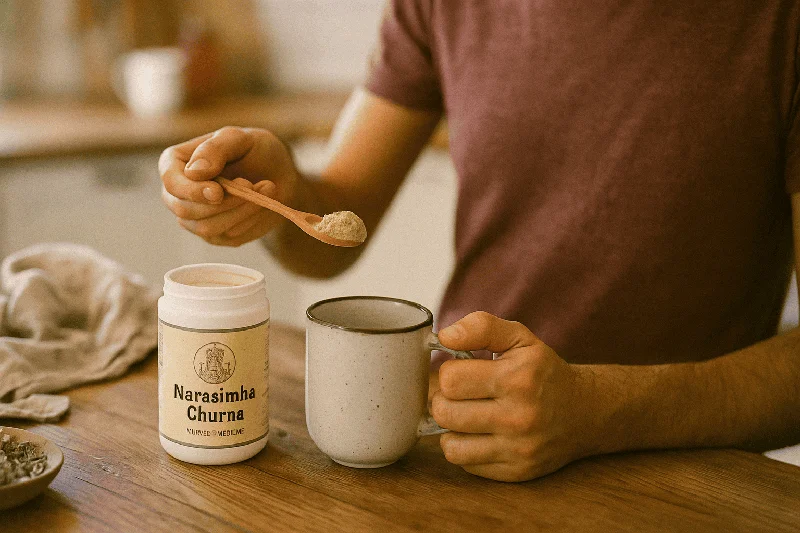
Narasimha Churna is a classical Ayurvedic polyherbal formulation composed of twelve synergistic ingredients, traditionally prescribed as a Rasayana (rejuvenative) to strengthen immunity, improve digestion, enhance male and female reproductive health, and promote overall vitality. Rooted in ancient Sanskrit texts like Bhaishajya Ratnavali and Charaka Samhita, this churna combines potent herbs such as Shatavari, Guduchi, Gokshura, and Bhallataka to deliver broad-spectrum therapeutic benefits. Whether you're seeking to address respiratory issues, boost fertility, or simply slow the aging process, Narasimha Churna offers a time-tested solution backed by centuries of Ayurvedic practice — and increasingly supported by modern pharmacological research.
This guide covers everything you need to know: the complete ingredient list with individual actions, evidence-based benefits, precise dosage protocols for specific conditions, side effects, drug interactions, dietary guidelines during the course, and how to identify authentic products. It goes well beyond what other sources offer, so you can make a truly informed decision.
What Is Narasimha Churna?
Definition and Ayurvedic Classification
Narasimha Churna is a fine herbal powder (churna literally means "powder" in Sanskrit) that falls under the Rasayana category of Ayurvedic medicine. Rasayana formulations are specifically designed for rejuvenation — they aim to nourish the dhatus (body tissues), enhance Ojas (vital essence), and promote longevity. Within Ayurvedic pharmacology, Narasimha Churna is classified as a Balya (strength-promoting), Vrishya (aphrodisiac), and Medhya (intellect-enhancing) preparation.
It primarily pacifies Vata and Kapha doshas while maintaining a balanced effect on Pitta when taken in recommended doses. This tridoshic tendency makes it suitable for a wide range of constitutional types, though Pitta-dominant individuals should exercise some caution during hot seasons.
Synonyms and Alternative Names
To help you find this product across different brands and regional markets, here are the commonly used alternative names:
- Narsingh Churna (Hindi transliteration)
- Narasimha Choorna (South Indian spelling)
- Narsimha Churnam
- Narsingh Churn
- Narasimha Rasayana Churna (when prepared with ghee/honey as anupana for Rasayana purpose)
Knowing these synonyms is practical — different manufacturers like Kottakkal, Baidyanath, and regional pharmacies may use varying spellings on their labels.
Historical Origins and Mythological Significance
The name "Narasimha" derives from Lord Narasimha, the half-man, half-lion avatar of Lord Vishnu in Hindu mythology. This deity symbolizes extraordinary strength, fierce protection, and the power to overcome seemingly impossible obstacles. The formulation was named Narasimha Churna because it was believed to bestow "lion-like strength" (simha bala) upon the consumer — revitalizing weakened bodies, protecting against disease, and restoring youthful vigor.
This isn't just poetic symbolism. The classical texts describe this formulation as one that makes a person "strong as a lion, free from disease, and endowed with a long lifespan." The cultural weight behind the name reflects the high regard Ayurvedic practitioners held for this particular combination of herbs.
Classical References and Sanskrit Verses (Shloka)
Textual Sources
Narasimha Churna finds mention in several authoritative Ayurvedic texts:
- Bhaishajya Ratnavali (Rasayana Prakarana) — provides the standard formulation with twelve ingredients
- Charaka Samhita (Rasayana Adhyaya) — references the individual herbs and the Rasayana principle behind the combination
- Sharangdhara Samhita — discusses churna preparation methodology relevant to this formulation
The original shloka from Bhaishajya Ratnavali describes the composition and indicates the churna should be taken with ghee and honey for maximum Rasayana effect. Classical commentators note that the formula was designed for "those suffering from kshaya (wasting), daurbalya (weakness), and vandhyatva (infertility)."
Special Method of Preparation
Traditional preparation of Narasimha Churna follows a precise methodology:
- Each of the twelve herbs is individually cleaned, dried in shade (not direct sunlight, which can degrade active compounds), and ground separately.
- The powders are then sieved through fine cloth (vastra galita) to ensure uniform particle size — typically 80–100 mesh.
- The individual powders are mixed in exact proportions as specified in the classical text, using the Khalva Yantra (mortar and pestle) method for thorough homogenization.
- The final churna is stored in airtight, moisture-free containers, traditionally in glass or earthen jars.
This methodical approach isn't just tradition for its own sake. The shade-drying preserves volatile compounds, and the sequential grinding ensures that harder herbs (like Gokshura seeds) achieve the same fineness as softer ones (like Shatavari roots), which directly impacts bioavailability.
Complete Ingredients of Narasimha Churna with Individual Actions
Understanding each ingredient individually helps you appreciate how the formula works as a whole.
Here are all twelve components:
| # | Ingredient (Sanskrit) | Botanical Name | Part Used | Primary Action in This Formula |
|---|---|---|---|---|
| 1 | Shatavari | Asparagus racemosus | Root | Reproductive tonic, galactagogue, adaptogen |
| 2 | Gokshura | Tribulus terrestris | Fruit | Urogenital tonic, diuretic, aphrodisiac |
| 3 | Guduchi (Giloy) | Tinospora cordifolia | Stem | Immunomodulator, antipyretic, detoxifier |
| 4 | Bhallataka | Semecarpus anacardium | Fruit (processed) | Digestive stimulant, anti-inflammatory, Rasayana |
| 5 | Chitraka | Plumbago zeylanica | Root | Deepana-Pachana (digestive fire enhancer) |
| 6 | Marica (Black Pepper) | Piper nigrum | Fruit | Bioavailability enhancer, expectorant |
| 7 | Pippali (Long Pepper) | Piper longum | Fruit | Respiratory tonic, metabolism booster |
| 8 | Nagara (Ginger) | Zingiber officinale | Rhizome | Carminative, anti-emetic, circulatory stimulant |
| 9 | Haritaki | Terminalia chebula | Fruit | Laxative, Rasayana, Tridosha balancer |
| 10 | Vibhitaki | Terminalia bellirica | Fruit | Expectorant, astringent, eye tonic |
| 11 | Amalaki | Emblica officinalis | Fruit | Vitamin C source, antioxidant, Pitta pacifier |
| 12 | Musali (Safed Musli) | Chlorophytum borivilianum | Root | Vajikarana (aphrodisiac), strength promoter |
The Science Behind the Synergy
This isn't a random collection of herbs.
The formulation follows a clear Ayurvedic logic:
- - Trikatu (Marica + Pippali + Nagara) acts as a bioenhancer. A 2012 study published in Journal of Ayurveda and Integrative Medicine demonstrated that piperine from black pepper increases the bioavailability of curcumin by 2000%.
- Similar mechanisms apply here — Trikatu enhances the absorption of active compounds from Shatavari, Guduchi, and other herbs.
- Triphala (Haritaki + Vibhitaki + Amalaki) provides the detoxification and digestive foundation, ensuring the body can properly assimilate the Rasayana herbs.
- Shatavari + Gokshura + Musali form the reproductive and rejuvenative core of the formula.
- Guduchi functions as the immunomodulatory anchor, connecting the immune, digestive, and metabolic benefits.
- Bhallataka (carefully processed to remove toxic resinous compounds) adds powerful anti-inflammatory and Rasayana properties that no other single herb in the formula can replicate.
- Chitraka ensures the Agni (digestive fire) is strong enough to process and distribute the benefits of all other herbs.
This layered architecture — bioenhancers + detoxifiers + active Rasayana herbs + digestive support — is what separates a well-designed polyherbal formula from a simple herbal mixture.
Benefits of Narasimha Churna: What Does It Actually Do?
How Does Narasimha Churna Benefit Respiratory Health?
The combination of Trikatu (the three pungent herbs) with Triphala and Guduchi creates a potent respiratory support system. Pippali has been extensively studied for bronchodilatory effects — a 2017 study in Pharmacognosy Reviews confirmed its efficacy in reducing bronchial inflammation. Marica (black pepper) acts as an expectorant, helping to clear Kapha accumulation from the lungs.
Narasimha Churna is traditionally indicated for:
- Chronic cough (Kasa)
- Breathlessness and mild asthma (Shwasa)
- Recurrent upper respiratory infections
- Post-viral respiratory weakness
Can Narasimha Churna Improve Male Fertility?
Yes — and this is perhaps one of its most valued traditional applications. The formula contains three powerful Vajikarana (aphrodisiac) herbs: Gokshura, Shatavari, and Musali.
Gokshura has shown promising results in improving sperm parameters. A 2012 clinical study published in Pharmacognosy Magazine reported that Tribulus terrestris extract improved sperm count, motility, and morphology in men with idiopathic oligoasthenoteratozoospermia after 60 days of supplementation. Safed Musli (Chlorophytum borivilianum) demonstrated spermatogenic activity in a 2009 study published in Evidence-Based Complementary and Alternative Medicine, showing increased testosterone levels and sperm count in animal models.
The combined effect of these herbs, enhanced by Trikatu's bioavailability-boosting action, makes Narasimha Churna a comprehensive formula for male reproductive health — particularly for conditions like oligospermia (low sperm count), asthenospermia (poor motility), and general sexual debility.
Benefits for Women's Health
While Narasimha Churna is often discussed primarily for men, its benefits for women deserve equal attention.
Shatavari — literally meaning "she who possesses a hundred husbands" — is the premier female reproductive tonic in Ayurveda.
It supports:
- Hormonal balance during menstrual irregularities
- Lactation as a proven galactagogue (a 2016 study in Iranian Journal of Pharmaceutical Research confirmed its prolactin-enhancing activity)
- Menopausal symptoms through its phytoestrogenic properties
- PCOS-related complications when used as part of a broader protocol
Combined with Triphala's detoxifying action and Guduchi's immunomodulatory support, Narasimha Churna can serve as an effective Rasayana for women experiencing fatigue, hormonal imbalances, or post-partum weakness. However, it should be noted that Bhallataka and Chitraka are quite heating — women with Pitta-dominant constitutions should take it under practitioner guidance.
Immunity Boosting and Digestive Health
Guduchi (Giloy) is the immunological backbone of this formula. The Indian government's AYUSH ministry prominently featured Guduchi during the COVID-19 pandemic for its immunomodulatory properties. A 2020 review in Journal of Ethnopharmacology confirmed that Tinospora cordifolia activates macrophages, enhances NK cell activity, and modulates both innate and adaptive immunity.
On the digestive front, Chitraka is one of Ayurveda's most potent Agni-deepana herbs. It directly stimulates the secretion of digestive enzymes, helping break down complex foods. Triphala adds gentle regulation of bowel movements without creating dependence — unlike many stimulant laxatives.
Anti-Aging and Rejuvenation (Rasayana Properties)
The Rasayana effects of Narasimha Churna manifest through multiple pathways:
- Antioxidant protection: Amalaki alone provides one of the highest natural vitamin C concentrations (up to 600–900 mg per 100g of fresh fruit). This combats oxidative stress at cellular level.
- Telomere protection: A 2015 study on Guduchi extract in Asian Pacific Journal of Tropical Biomedicine showed potential telomerase-activating properties, suggesting cellular anti-aging effects.
- Tissue nourishment: Shatavari and Musali directly nourish Rasa and Shukra dhatus, supporting tissue repair and regeneration.
The overall effect? Enhanced energy levels, improved skin quality, better cognitive function, and a general sense of vitality that users typically begin noticing after 4–8 weeks of consistent use.
Dosage: How Should Narasimha Churna Be Taken for Best Results?
Standard Adult Dosage
The generally recommended dose for adults is:
- Quantity: 3–6 grams (approximately ½ to 1 teaspoon) per dose
- Frequency: Twice daily
- Timing: Before meals (30 minutes prior) or as directed by an Ayurvedic practitioner
- Anupana (vehicle): Warm milk, ghee with honey, or warm water depending on the condition being treated
Condition-Specific Dosage Protocols
| Condition | Dose | Anupana (Vehicle) | Duration | Notes |
|---|---|---|---|---|
| General immunity & vitality | 3g twice daily | Warm milk + ½ tsp ghee | 60–90 days | Best started in autumn (Sharad Ritu) |
| Male infertility / oligospermia | 5g twice daily | Warm milk + 1 tsp ghee + 1 tsp honey | 90–120 days | Combine with Vajikarana diet |
| Respiratory conditions | 3g twice daily | Warm water + honey | 45–60 days | Avoid cold foods during course |
| Digestive weakness / Agnimandya | 3g twice daily | Warm water or buttermilk | 30–45 days | Take 15 min before meals |
| Anti-aging / Rasayana | 3–5g twice daily | Warm milk + ghee | 90–180 days | Follow Rasayana lifestyle rules |
| Female reproductive health | 3g twice daily | Warm milk + Shatavari ghee | 60–90 days | Avoid during heavy menstrual flow |
- Important note: When using ghee and honey together as anupana, they should NOT be mixed in equal quantities by weight. Ayurveda considers equal parts ghee and honey (sama matra) to be incompatible (viruddha ahara).
- Use them in unequal proportions — for example, 1 teaspoon ghee with ½ teaspoon honey.
How Long Does It Take to See Results?
This is one of the most commonly asked questions.
Honestly, it depends on what you're treating:
- Digestive improvements: Often noticeable within 1–2 weeks
- Energy and vitality: 3–4 weeks for most people
- Respiratory benefits: 2–4 weeks with consistent use
- Fertility parameters: 60–90 days minimum (one complete spermatogenic cycle is approximately 74 days)
- Anti-aging / Rasayana effects: 3–6 months for visible changes
Ayurvedic Rasayana therapy is not designed for overnight results. It works by systematically nourishing tissues from the grossest (Rasa dhatu) to the subtlest (Shukra dhatu), and this process takes time.
Dosage for Children (Pediatric Use)
While adult dosage is well-documented in classical texts, pediatric dosage for Narasimha Churna specifically is not explicitly mentioned. However, based on the general Ayurvedic principle of Young's Rule adapted for churna formulations:
- Children aged 5–12 years: 1–2 grams once or twice daily with warm milk
- Children aged 2–5 years: 0.5–1 gram once daily with warm milk and honey
- Below 2 years: Not recommended without direct practitioner supervision
Critical caution: Bhallataka (marking nut) in this formula is a potent herb that requires careful dosing in children. Always consult a qualified Ayurvedic pediatrician before administering Narasimha Churna to children.
Don't wait or self medicate. Start chat with Doctor NOW
Side Effects, Precautions, and Drug Interactions
Are There Any Side Effects of Using Narasimha Churna?
When taken at recommended doses under proper guidance, Narasimha Churna is generally well-tolerated.
However, potential side effects include:
- Gastric irritation: Due to Chitraka and Bhallataka, especially when taken on an empty stomach by Pitta-predominant individuals
- Increased body heat: The Ushna Veerya (hot potency) herbs — Trikatu, Chitraka, Bhallataka — can increase internal heat, causing mild burning sensation, excessive thirst, or acidity in sensitive individuals
- Skin reactions: Bhallataka, even in processed form, can rarely cause contact dermatitis or mild allergic reactions in susceptible people
- Loose stools: Due to Triphala content, some individuals may experience mild looseness initially
Who Should NOT Take Narasimha Churna?
- Pregnant women (Bhallataka and Chitraka are contraindicated in pregnancy)
- Individuals with active peptic ulcers or severe gastritis
- People with bleeding disorders (Raktapitta) — the heating herbs may aggravate bleeding
- Those with Pitta-dominant conditions during summer season unless dose is reduced
- People with known allergy to any of the individual ingredients, particularly Semecarpus anacardium
Interactions with Modern Pharmaceutical Drugs
This is a critical gap that no other guide addresses. Based on the pharmacological profiles of the individual ingredients:
| Narasimha Churna Ingredient | Potential Drug Interaction | Mechanism |
|---|---|---|
| Guduchi | Immunosuppressants (Cyclosporine, Tacrolimus) | May counteract immunosuppressive effects |
| Guduchi | Anti-diabetic drugs (Metformin, Glipizide) | Additive hypoglycemic effect — monitor blood sugar |
| Gokshura | Anti-hypertensive drugs | Additive blood pressure lowering — monitor BP |
| Marica (Piperine) | Phenytoin, Carbamazepine, other CYP3A4 substrates | Piperine inhibits CYP3A4 enzyme, increasing drug levels |
| Haritaki | Anticoagulants (Warfarin) | Potential additive anticoagulant effect |
| Bhallataka | NSAIDs | Additive gastric irritation risk |
The piperine interaction is particularly important. A 2002 study in Clinical Pharmacology & Therapeutics showed piperine significantly altered the pharmacokinetics of phenytoin. If you're on any prescription medication, inform your doctor before starting Narasimha Churna.
Diet and Lifestyle During the Course (Pathya-Apathya)
Classical Ayurvedic texts emphasize that Rasayana therapy is only effective when accompanied by appropriate diet and lifestyle. No other online resource covers this for Narasimha Churna, but it's essential information.
Pathya (Favorable — What to Follow)
- Diet: Warm, freshly cooked meals; milk, ghee, almonds, dates; fresh seasonal fruits; easily digestible grains like rice and wheat
- Lifestyle: Regular sleep schedule (before 10 PM); moderate exercise; daily oil massage (Abhyanga) with sesame oil; meditation or pranayama practice
- Mental state: Positive thinking, avoidance of anger and excessive worry — the texts are very specific that Rasayana works best with a sattvic (calm, balanced) mind
Apathya (Unfavorable — What to Avoid)
- Diet: Stale or reheated food; excessive sour, salty, or pungent tastes; alcohol; processed and fried foods; incompatible food combinations (Viruddha Ahara) such as fish with milk
- Lifestyle: Late nights; excessive sexual activity (especially during intensive Vajikarana protocol); excessive physical exertion; exposure to extreme heat or cold
- Substances: Smoking and tobacco in all forms; excessive caffeine
- Following these guidelines isn't optional — it fundamentally affects how well the churna works.
- Think of it this way: the finest fuel won't help if the engine is poorly maintained.
Narasimha Churna vs Other Rasayana Formulations: A Comparison
| Feature | Narasimha Churna | Chyawanprash | Ashwagandha Churna | Brahma Rasayana |
|---|---|---|---|---|
| Primary Action | Broad-spectrum Rasayana + Vajikarana | Immunity + respiratory | Adaptogenic + strength | Brain tonic + anti-aging |
| Number of Herbs | 12 | 40+ | 1 (single herb) | 30+ |
| Best For | Infertility, weakness, multi-system rejuvenation | Respiratory immunity, general health | Stress, anxiety, muscular strength | Cognitive decline, memory, longevity |
| Dosha Balance | Vata-Kapha pacifying | Tridoshic | Vata-Kapha pacifying | Vata-Pitta pacifying |
| Form | Powder | Jam/paste | Powder | Paste/Avaleha |
| Vajikarana Effect | Strong | Mild | Moderate | Mild |
| Digestive Action | Strong (contains Trikatu + Chitraka) | Moderate | Mild | Moderate |
| Suitability in Summer | Use with caution (heating) | Generally safe | Safe | Generally safe |
Key takeaway: Narasimha Churna stands out for its combination of strong Vajikarana (reproductive tonic) action with Rasayana benefits. If your primary concern is fertility or sexual debility along with general weakness, Narasimha Churna may be more appropriate than Chyawanprash or Brahma Rasayana. For pure stress management, Ashwagandha alone might be simpler. For respiratory immunity in children, Chyawanprash is typically preferred.
How to Identify and Buy Authentic Narasimha Churna
Quality Markers to Look For
With the growing market for Ayurvedic products, quality varies enormously.
Here's what to check:
- GMP Certification: The manufacturer should be GMP-certified under the Government of India's AYUSH Ministry guidelines
- Heavy Metal Testing: Reputable brands test for heavy metals. Look for products with heavy metal content below 4 PPM (parts per million) — some manufacturers display this on the label or their website
- Ingredient Transparency: The label should list all 12 ingredients with their Sanskrit and botanical names, along with the quantity of each
- Manufacturing and Expiry Date: Churna preparations typically have a shelf life of 2 years from date of manufacture (as per Sharangdhara Samhita)
- Physical Characteristics: Authentic Narasimha Churna should be a fine, homogeneous brownish-green powder with a characteristic pungent, slightly bitter aroma
Storage and Shelf Life
- Store in a cool, dry place away from direct sunlight
- Keep in airtight glass or food-grade plastic containers
- Avoid storing in metal containers (can react with herbal compounds)
- Do not use wet spoons — moisture is the biggest enemy of churna preparations
- Typical shelf life: 24 months from manufacturing date, though some practitioners say efficacy begins to diminish after 18 months
Where Can I Purchase Authentic Narasimha Churna?
Look for established Ayurvedic pharmacies with long track records. Products from manufacturers like Kottakkal Arya Vaidya Sala, Arya Vaidya Pharmacy (Coimbatore), and other AYUSH-certified pharmacies are generally reliable. Online purchase is convenient but verify the seller's authenticity — check for proper labeling, batch numbers, and return policies. Websites specializing in Ayurvedic products often provide certificates of analysis upon request.
Can Narasimha Churna Be Used with Other Ayurvedic Remedies?
Yes, Narasimha Churna is commonly prescribed alongside other Ayurvedic formulations.
Some well-established combinations include:
- With Ashwagandha Churna: For enhanced strength and stress management — the two complement each other well since Ashwagandha adds adaptogenic depth
- With Chandraprabha Vati: For urogenital conditions and enhanced Vajikarana effect
- With Sitopaladi Churna: For respiratory conditions — Sitopaladi adds targeted mucolytic action
- With Dashamoola Kwatha: For Vata disorders with pain and inflammation
However, avoid combining Narasimha Churna with other formulations containing Bhallataka to prevent cumulative toxicity. And never combine it with strongly cooling Pitta-pacifying formulations like Kamadugha Ras without practitioner guidance, as the opposing energetics may reduce efficacy.
Frequently Asked Questions (FAQ)
What is the use of Narasimha Rasayana?
Narasimha Rasayana (the broader category that includes Narasimha Churna when taken with specific anupanas) is used primarily for rejuvenation, anti-aging, improving physical strength, enhancing fertility in both men and women, boosting immunity, and treating chronic respiratory conditions. It is also indicated for generalized debility following prolonged illness.
Is Narasimha Churna good for constipation and gas?
While Narasimha Churna contains Triphala, which is renowned for relieving constipation, the formula as a whole is not primarily designed as a laxative. It can help with mild constipation and bloating due to its Deepana-Pachana (appetizing and digestive) properties. For severe or chronic constipation, Triphala Churna alone or Abhayarishtam would be more targeted choices.
How does Narasimha Churna compare to Narasimha Rasayanam (the lehya/avaleha form)?
Narasimha Rasayanam in lehya (paste/jam) form typically contains the same core herbs but is processed with ghee, oil, sugar, or honey into a semi-solid preparation. The churna form is lighter, easier to dose precisely, and better suited for individuals with Kapha conditions or those who need to avoid sugars. The Rasayanam form may have better palatability and slightly enhanced bioavailability due to lipid-based processing.
Is Narasimha Churna safe for long-term use?
When taken at recommended doses with proper Pathya (dietary guidelines), Narasimha Churna can be used for extended courses of 3–6 months. However, it's advisable to take a break of 2–4 weeks after every 90 days of continuous use. Long-term safety data from formal clinical trials is limited, so periodic monitoring — especially liver and kidney function — is prudent for courses exceeding 6 months.
Can diabetic patients take Narasimha Churna?
Guduchi and Triphala in the formula have demonstrated hypoglycemic effects. Diabetic patients can take Narasimha Churna, but should monitor blood sugar levels closely, especially if taking oral hypoglycemics or insulin. Dose adjustments of conventional medication may be necessary. Always inform your treating physician.
Can Narasimha Churna be taken during menstruation?
It is generally advisable to reduce or pause the dose during heavy menstrual flow, particularly because of the heating herbs (Bhallataka, Chitraka, Trikatu) which may theoretically increase menstrual bleeding. During light flow days or after menstruation, the regular dose can be resumed.
Conclusion: Is Narasimha Churna Right for You?
Narasimha Churna represents one of Ayurveda's most intelligently designed polyherbal formulations — a true multi-system rejuvenative that addresses digestion, immunity, respiratory health, and reproductive vitality through a single, elegant composition. Its strength lies in the synergy of its twelve ingredients, each playing a defined role from bioenhancement to tissue nourishment.
That said, it's not a one-size-fits-all solution. The presence of potent herbs like Bhallataka and Chitraka means it requires respect — proper dosing, appropriate dietary support, and ideally, guidance from a qualified Ayurvedic practitioner who can tailor the protocol to your specific constitution and health goals.
If you're dealing with chronic weakness, fertility concerns, recurrent respiratory issues, or simply want a structured Rasayana protocol rooted in classical wisdom, Narasimha Churna deserves serious consideration. Start with the lower dose, follow the Pathya guidelines outlined above, and give it at least 60 days before evaluating results.
Consult a certified Ayurvedic physician before starting any new herbal supplement, especially if you are pregnant, nursing, taking prescription medications, or managing a chronic health condition.
Scientific Sources
- Integrative Yoga and Ayurvedic Approach to Oligoasthenozoospermia: A Holistic Case Study on Fertility Enhancement — Gade B et al., 2024, Cureus
- Herbal and Holistic Solutions for Neurodegenerative and Depressive Disorders: Leads from Ayurveda — Sharma R et al., 2018, Current pharmaceutical design
- Ayurvedic protocols of chronic pain management: spatiotemporality as present moment awareness and embodied time — Agarwal V, 2024, Frontiers in pain research (Lausanne, Switzerland)
- Molluscum contagiosum: A novel Ayurvedic approach — Kalasannavar SB et al., 2013, Ancient science of life
- Ayurvedic genomics: establishing a genetic basis for mind-body typologies — Patwardhan B et al., 2008, Journal of alternative and complementary medicine (New York, N.Y.)
- AYUSH for COVID-19: Science or Superstition? — Priya R et al., 2020, Indian journal of public health
- Quantification of adulteration in traded ayurvedic raw drugs employing machine learning approaches with DNA barcode database — Dev SA et al., 2021, 3 Biotech
- Foundations of clinical logagogy — Bühler KE, 2003, Medicine, health care, and philosophy
- Improvements in chronic diseases with a comprehensive natural medicine approach: a review and case series — Nader T et al., 2000, Behavioral medicine (Washington, D.C.)
- Outcomes from a Whole-Systems Ayurvedic Medicine and Yoga Therapy Treatment for Obesity Pilot Study — Rioux J et al., 2019, Journal of alternative and complementary medicine (New York, N.Y.)
- From ayurvedic folk medicine to preclinical neurotherapeutic role of a miraculous herb, Tinospora cordifolia — Sharma A et al., 2020, Neurochemistry international
- Assessing the Ayurvedic prescribing trends on the basis of WHO drug use indicators — Rastogi S, 2019, Journal of Ayurveda and integrative medicine
- Ayurvedic medicine. Core concept, therapeutic principles, and current relevance — Chopra A et al., 2002, The Medical clinics of North America
- Ayurvedic medicine and NADPH oxidase: a possible approach to the prevention of ESRD in hyperoxaluria — Gambaro G et al., 2011, Nephrology, dialysis, transplantation : official publication of the European Dialysis and Transplant Association - European Renal Association
- Patient Assessment and Chronic Pain Self-Management in Ethnomedicine: Seasonal and Ecosystemic Embodiment in Ayurvedic Patient-Centered Care — Agarwal V, 2020, International journal of environmental research and public health
- Etiopathogenesis and Management of Prameha Poorvaroopa (Prediabetes), Prameha and Madhumeha (Diabetes Mellitus): An Ancient Perspective — Kurian J et al., 2024, Advances in mind-body medicine
- Infantile diarrhoea - an ayurvedic approach — Sharma R et al., 1984, Ancient science of life
- Āyurveda's Contributions to Vegetarian Nutrition in Medicine — Manohar R et al., 2016, Forschende Komplementarmedizin (2006)
- Personality types in Ayurveda — Dube KC et al., 1983, The American journal of Chinese medicine
- COVID-19 patient with B cell lymphoma co-morbidity managed with co-administration of ayurvedic formulation — Dilip Pandkar P et al., 2022, Journal of Ayurveda and integrative medicine
Questions from users
What lifestyle changes can enhance the benefits of Narasimha Churna?
Claire
2 days ago
To enhance the benefits of Narasimha Churna, focus on lifestyle changes such as maintaining a balanced diet rich in whole grains, fruits, and vegetables to support digestion. Regular physical activity and stress-reducing practices like yoga or meditation can improve overall vitality and immunity. Adequate hydration and sufficient sleep are crucial for reproductive health and general well-being. Avoiding excessive caffeine, alcohol, and tobacco can also enhance its effects. If you notice adverse effects or have specific health concerns, consult with a healthcare professional to ensure safe and effective use.
Can Narasimha Churna be used to improve fertility in women as well as men?
Emily
12 days ago
Yes, Narasimha Churna can be used to improve fertility in both men and women. It's part of a wider category known as Narasimha Rasayana, which helps with rejuvenation and strengthening dhatus, improving ojas, and boosting immunity. Though, it's best to consult with a practitioner for proper use, especially when combining with other treatments.
Can Guduchi be used safely alongside other herbal supplements?
Alexander
21 days ago
Yeah, Guduchi is generally safe to be taken with other herbal supplements, but it's always a good idea to consult with an Ayurvedic practitioner or doctor, as combining herbs can sometimes alter their effects. Keep an eye on your body's reactions too, as everyone's constitution is different... If in doubt, check with a healthcare pro!
What is the role of Satavari in enhancing stamina and reproductive health?
Joseph
39 days ago
Satavari is kinda amazing for boosting stamina and reproductive health! It works like a charm by balancing hormones and nourishing reproductive systems for both men and women. It's also known to rejuvenate tissues and enhance vitality, which is why it's popular in Ayurveda for such issues. Quality matters tho, so go for organic options when you can! 🙂
Can Narasimha Churna help with chronic cough and what are the best ways to use it?
Jackson
48 days ago
Yes, Narasimha Churna can help with chronic cough since it acts like a natural expectorant! It’s best to take it with warm water to soothe the throat and help with clearing the airways. If your cough is persistent it's a good idea to also consult with a healthcare provider.
Is it safe to take Satavari with other hormonal supplements?
Carter
58 days ago
It's typically safe to combine Shatavari with other hormonal supplements, but it's super important to first talk to a healthcare professional, 'cause everyone's body is different. They can look at your specific dosha and constitution (prakriti) to figure out if it’s cool for you. Some people might react differently, so always good to get personalized advice.
What is the best time of day to take Narasimha Churna for optimal results?
Ava
68 days ago
Taking Narasimha Churna at a time when your digestive fire, or "agni," is strong would be ideal. Usually, that's about 30 minutes before meals. Morning or evening is good, but always listen to your body! If you find it’s better on an empty stomach in the morning or alongside food in the evening, go with that. Adjust as needed!
Can I use Narasimha Churna for boosting my immunity during cold and flu season?
Elizabeth
77 days ago
Yes, Narasimha Churna can be great for boosting immunity, especially during cold and flu season! Its blend of herbs helps balance doshas and support respiratory health. Just make sure it suits your dosha type and chat with a healthcare pro if needed, since everyone's body reacts differently. Stay well!
What is Narasimha Churna and how does it support energy levels and inflammation?
Anna
87 days ago
Narasimha Churna is a traditional Ayurvedic blend named after the deity known for strength. It's designed to enhance energy levels, reduce inflammation, and boost tissue regeneration. It's thought to invigorate agni (digestive fire), so energy flow improves, and inflammation reduces naturally. A certified practitioner could help ensure it's right for you.
What is the role of Bhallataka and Sunthi in supporting overall health?
Connor
96 days ago
Bhallataka, also known as marking nut, and Sunthi (ginger) are awesome for boosting immunity and reducing inflammation. Bhallataka helps with digestion and immunity while Sunthi is great for calming vata dosha and warming the digestive system. Together, they support your body's defenses and overall health.
Related articles

Ear, Nose, and Throat Disorders
Discover Gaytarin: Natural Ayurvedic Thyroid Support – Benefits, Dosage & Science-Backed Insights
Discover the benefits, proper dosage, and scientific insights behind Gaytarin, an Ayurvedic proprietary preparation for thyroid health by Arya Aushadi.
2,793

Ear, Nose, and Throat Disorders
Why Is My Ear Ringing All of a Sudden? Ayurvedic and Spiritual Insights
Why is your ear ringing all of a sudden? Discover Ayurvedic and spiritual meanings behind ringing in the left or right ear and natural ways to restore balance
17,967

Ear, Nose, and Throat Disorders
Ayurvedic Ear Drops for Hearing Loss: Natural Remedies & Benefits
Explore effective Ayurvedic ear drops for hearing loss. Discover natural remedies, benefits, usage guidelines, and scientific insights to support auditory health.
5,657

Ear, Nose, and Throat Disorders
Hearing Loss Treatment in Ayurveda – Natural Remedies for Enhanced Auditory Health
Explore hearing loss treatment in Ayurveda through ancient herbal therapies and holistic practices designed to restore auditory function, balance doshas, and promote overall well-being.
3,981

Ear, Nose, and Throat Disorders
Alopecia Areata Ayurvedic Treatment – Natural Remedies for Hair Regrowth & Scalp Health
Explore holistic Ayurvedic treatment for alopecia areata. Discover natural remedies that detoxify, balance doshas, and nourish the scalp to promote hair regrowth and scalp health.
3,792

Ear, Nose, and Throat Disorders
Gandha Thailam Uses Dosage Side Effects Ingredients Reference
Exploration of Gandha Thailam Uses Dosage Side Effects Ingredients Reference
4,971

Ear, Nose, and Throat Disorders
Ashwa Kanchuki Ras – Traditional Ayurvedic Remedy for Health & Wellness
Learn about Ashwa Kanchuki Ras, a traditional Ayurvedic formulation known for enhancing vitality, supporting joint health, and promoting overall well-being through natural ingredients.
2,302

Ear, Nose, and Throat Disorders
Karna Bindu Ear Drops: Ayurvedic Ear Care for Healthy Hearing
Explore Karna Bindu Ear Drops, an Ayurvedic formulation for ear health. Learn about its benefits, uses, dosage guidelines, and holistic applications for optimal auditory well-being.
3,249

Ear, Nose, and Throat Disorders
Natural Ways to Reduce Acoustic Neuroma
Understanding the basics of acoustic neuroma is essential for exploring natural remedies and how they can be integrated into daily life.
3,385

Ear, Nose, and Throat Disorders
How to Get Rid of Ear Pain: Effective Home Remedies and Natural Treatments
Discover how to get rid of ear pain using home remedies. Learn about ayurvedic ear pain treatment at home, natural cures, and ways to stop ear pain quickly
5,941
Related consultations on the topic
Legal
Additional Documents
© 2024 Ask Ayurveda. All rights reserved.