Ask Ayurvedic doctor a question and get a consultation online on the problem of your concern in a free or paid mode. More than 2,000 experienced doctors work and wait for your questions on our site and help users to solve their health problems every day.
FREE! Ask Ayurvedic Doctors 24/7

 Fast responses
 1000+ verified doctors
Body DetoxEar, Nose, and Throat DisordersGeriatrics & RejuvenationImmunodeficiencyInfertility TreatmentNutritionOrthopedic DisordersPediatricsRespiratory DisordersSexually Transmitted Diseases (STDs)Surgery RecoveryUrological DisordersVascular DisordersDental DisordersEndocrinological DisordersGastrointestinal DisordersYoga TherapyGeneral MedicineAllergic DisordersCardio DisordersGynecology and ObstetricsCosmetologySkin and Hair DisordersEye DisordersInfectious DiseasesMental DisordersNeurological DisordersOncologyPanchakarmaSexual Health & DisordersSports Medicine
Published on 02/14/25
(Updated on 07/05/26)
3,790
Alopecia Areata Ayurvedic Treatment – Natural Remedies for Hair Regrowth & Scalp Health
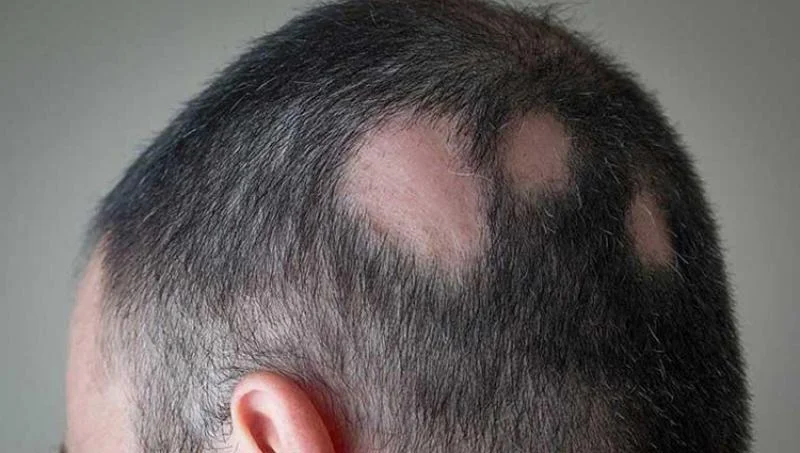
Alopecia areata is an autoimmune condition in which your immune system mistakenly attacks healthy hair follicles, causing sudden, patchy hair loss — most often on the scalp, but sometimes on the beard, eyebrows, and body. It affects roughly 2% of the global population (about 147 million people worldwide), and it is not contagious, not caused by poor hygiene, and not a sign of any life-threatening illness. The condition can strike at any age, though most people develop their first patch before age 30. While there is no permanent cure yet, a wave of new FDA-approved treatments — including JAK inhibitors — has transformed the outlook for patients in 2024-2025, making effective management more achievable than ever before.
If you or someone you love has noticed coin-shaped bald patches appearing seemingly overnight, this guide covers everything you need to know: from the underlying autoimmune mechanism and clinical subtypes to the latest evidence-based treatments, severity assessment scales, nutritional strategies, and practical tips for daily life.
What Is Alopecia Areata?
- Alopecia areata (pronounced al-oh-PEE-sha air-ee-AH-tah) is a chronic, recurrent autoimmune disorder.
- The term itself breaks down simply: alopecia means hair loss and areata means occurring in patches or areas.
- Your body's immune cells — specifically CD8+ T-lymphocytes — swarm around hair follicles and disrupt the normal growth cycle, pushing hairs prematurely into the shedding phase.
One critically important thing to understand: the follicles themselves are not destroyed. This is why regrowth is always possible, even after years of being bald.
How the Immune System Attacks Hair Follicles
Healthy hair follicles enjoy something scientists call immune privilege — a special protective status that normally shields them from immune surveillance (similar to the eyes and the brain). In alopecia areata, this immune privilege collapses. Research published in the Journal of Clinical Investigation (2014) demonstrated that the NKG2D receptor pathway activates cytotoxic T-cells, which then infiltrate the hair bulb and release inflammatory cytokines like interferon-gamma (IFN-γ) and interleukin-15 (IL-15).
- The result?
- The follicle doesn't die, but it essentially goes dormant — shrinking and halting hair production.
Who Gets Alopecia Areata?
The condition affects all ages, genders, and ethnicities.
However certain patterns emerge:
- Age of onset: About 50% of cases begin before age 20; most appear before age 30
- Gender: Males and females are affected roughly equally, though some studies suggest a slight male preponderance
- Ethnicity: Data from the U.S. National Health Interview Survey and other population studies indicate a somewhat higher prevalence among Asian, Black, and Hispanic populations compared to non-Hispanic White individuals
- Genetics: If you have a first-degree relative with alopecia areata, your lifetime risk increases significantly. Studies of identical twins show a 50–55% concordance rate, confirming a strong genetic component
- Associated conditions: People with other autoimmune diseases — thyroid disease (Hashimoto's thyroiditis, Graves' disease), type 1 diabetes, vitiligo, celiac disease, rheumatoid arthritis, and lupus — face elevated risk
How Common Is Alopecia Areata?
The lifetime prevalence is approximately 2%, which translates to roughly 1 in 50 people developing the condition at some point. In India alone, millions of people are affected, though exact national figures remain underreported. A 2020 meta-analysis in the Journal of the American Academy of Dermatology confirmed the 2% global estimate across 14 population-based studies.
What Causes Alopecia Areata?
The honest answer: we don't fully understand the exact cause. What we know is that alopecia areata results from a complex interplay of genetic susceptibility, immune dysregulation, and environmental triggers. No single factor is sufficient on its own.
Genetic Factors and Genomic Research
A landmark genome-wide association study (GWAS) published in Nature in 2010 identified 139 single-nucleotide polymorphisms (SNPs) across 8 genomic regions associated with alopecia areata.
Key genes implicated include:
- HLA genes (especially HLA-DRB1) — central to immune recognition
- CTLA-4 — a checkpoint inhibitor gene involved in T-cell regulation
- IL-2RA (CD25) — the interleukin-2 receptor alpha chain
- PRDX5 — an antioxidant enzyme gene
- STX17 — linked to organelle transport
These genetic findings have directly informed the development of targeted therapies like JAK inhibitors.
Known Triggers and Risk Factors
While genetics load the gun, triggers pull it.
Common triggers include:
| Trigger Category | Examples |
|---|---|
| Psychological stress | Grief, job loss, trauma, chronic anxiety |
| Physical stress | Surgery, illness, high fever, childbirth |
| Infections | Viral infections (EBV, CMV), dental infections |
| Hormonal changes | Puberty, pregnancy, menopause |
| Lifestyle factors | Smoking, obesity, chronic sleep deprivation |
| Medications | Rarely, checkpoint inhibitors used in cancer therapy |
| Vaccination (emerging data) | Case reports linked to influenza, HPV, and COVID-19 mRNA vaccines — though the overall evidence remains inconclusive and the absolute risk is very low |
It's essential to note: many episodes of alopecia areata occur without any identifiable trigger at all.
Types and Stages of Alopecia Areata
Not all alopecia areata looks the same. The classification helps clinicians determine prognosis and guide treatment decisions.
Clinical Subtypes
| Type | Description | Approximate Frequency |
|---|---|---|
| Patchy alopecia areata | One or more coin-sized bald patches on the scalp | Most common (~75% of cases) |
| Alopecia totalis | Complete loss of all scalp hair | ~5% of cases |
| Alopecia universalis | Loss of all hair on the entire body (scalp, eyebrows, eyelashes, body hair) | ~1% of cases |
| Ophiasis | Band-like pattern of hair loss along the sides and back of the scalp (temporal and occipital) | Uncommon; treatment-resistant |
| Sisaipho (ophiasis inversus) | Hair loss on the top of the scalp, sparing the sides | Rare |
| Diffuse alopecia areata | Widespread thinning across the entire scalp without distinct patches | Often misdiagnosed as telogen effluvium |
| Alopecia barbae | Patchy hair loss specifically in the beard area | Common in men; frequently Googled separately |
The SALT Score: Measuring Severity
The Severity of Alopecia Tool (SALT) score is the standard clinical scale used in research and treatment planning:
- S0: No hair loss (0%)
- S1: <25% scalp hair loss (mild)
- S2: 25–49% hair loss (moderate)
- S3: 50–74% hair loss (severe)
- S4: 75–99% hair loss (severe)
- S5: 100% hair loss (very severe / totalis)
The SALT score matters because FDA-approved JAK inhibitors are currently indicated primarily for severe alopecia areata (SALT ≥50%), so knowing your score helps determine whether you qualify for these newer medications.
What Are the Symptoms of Alopecia Areata?
The hallmark symptom is sudden, well-defined, round or oval bald patches, typically on the scalp. But there's more to look for than just missing hair.
Hair-Related Signs
- Exclamation point hairs: Short, broken hairs (2–3 mm) that are thinner at the base and wider at the top, found at the edges of bald patches — a classic diagnostic sign
- Cadaverized (black dot) hairs: Hairs that break at the scalp surface, leaving dark dots
- Short vellus hairs: Fine, unpigmented new hairs that may signal early regrowth
- Rapid onset: Patches can develop within days to weeks
- Tingling or burning: Some patients report mild paresthesia in the affected area before or during active hair loss
Alopecia Areata Nails
Nail changes occur in 10–20% of alopecia areata patients — and sometimes appear before hair loss begins.
Common findings include:
- Nail pitting — tiny, regular dents across the nail plate (most common)
- Trachyonychia — rough, sandpaper-like nails (also called "twenty-nail dystrophy")
- Longitudinal ridging
- Brittle nails or onychorrhexis
- Red-spotted lunulae — reddish discoloration of the half-moon area
Nail involvement is generally considered a marker of more severe or long-lasting disease.
How Is Alopecia Areata Diagnosed?
In most cases, an experienced dermatologist can diagnose alopecia areata based on clinical examination alone. However several tools and tests help confirm the diagnosis and rule out look-alikes.
Physical Examination and Dermoscopy
Dermoscopy (trichoscopy) is a non-invasive technique using a handheld magnifying device.
Key dermoscopic findings in alopecia areata include:
- Yellow dots — empty follicular openings filled with sebum and keratinous material
- Black dots — cadaverized hairs broken at the surface
- Broken hairs and exclamation point hairs
- Short vellus hairs — fine, light-colored regrowing hairs
- Coudability hairs — tapering hairs that bend easily
Blood Tests and Biopsy
- Blood tests: Thyroid function (TSH, T3, T4), ANA, CBC, vitamin D, ferritin, zinc levels — primarily to identify associated conditions
- Scalp biopsy: Rarely needed, but shows a characteristic "swarm of bees" pattern — peribulbar lymphocytic infiltration around anagen follicles
Differential Diagnosis: What Else Could It Be?
| Condition | Key Distinguishing Features |
|---|---|
| Tinea capitis | Fungal infection; scaling, broken hairs, positive KOH test or culture |
| Trichotillomania | Self-induced; irregular patches, hairs of varying lengths, no exclamation point hairs |
| Telogen effluvium | Diffuse shedding (not patchy); follows stress/illness by 2–3 months |
| Scarring (cicatricial) alopecia | Destroyed follicles, smooth/shiny skin, no regrowth potential |
| Secondary syphilis | "Moth-eaten" alopecia; positive RPR/VDRL test |
| Traction alopecia | Hair loss along hairline due to tight hairstyles; gradual onset |
| Androgenetic alopecia | Patterned thinning (not patchy); gradual, not sudden |
Don't wait or self medicate. Start chat with Doctor NOW
What Is the Best Treatment for Alopecia Areata?
- Treatment depends on age, severity (SALT score), disease duration, and patient preference.
- Here's the full landscape — from time-tested options to the newest breakthroughs.
Conventional Treatments
Corticosteroids remain the first-line treatment for mild-to-moderate alopecia areata:
- Intralesional injections (triamcinolone acetonide 5–10 mg/mL): Most effective for limited patches; injected every 4–6 weeks. Regrowth usually begins within 4–8 weeks. This is the gold standard for patchy disease.
- Topical corticosteroids (clobetasol, betamethasone): Useful for children or patients who can't tolerate injections. Applied once or twice daily.
- Oral corticosteroids (prednisone): Short courses for rapidly progressive disease; not recommended long-term due to side effects.
Topical immunotherapy with diphencyprone (DPCP) or squaric acid dibutylester (SADBE) deliberately induces a mild allergic reaction on the scalp. This "distracts" the immune system from attacking follicles. Response rates are approximately 50–60% for extensive disease. Minoxidil (5% topical): Often used as an adjunct. It doesn't address the immune component but can support regrowth once inflammation is controlled. Phototherapy: Narrowband UVB or PUVA therapy may help in some cases, though evidence is mixed. Platelet-rich plasma (PRP) therapy: An emerging approach where concentrated platelets from the patient's own blood are injected into the scalp. A 2019 systematic review in Dermatologic Surgery showed promising results, particularly when combined with other treatments. Typically requires 3–6 sessions.
JAK Inhibitors: The Game-Changer (2022–2025)
This is arguably the most significant development in alopecia areata treatment in decades. Janus kinase (JAK) inhibitors work by blocking the JAK-STAT signaling pathway that drives the inflammatory attack on hair follicles.
| Drug | Brand Name | FDA Approval | Age Group | Administration | Key Trial Results |
|---|---|---|---|---|---|
| Baricitinib | Olumiant® | June 2022 | Adults ≥18 | Oral (once daily) | BRAVE-AA1 trial: 39% of patients achieved ≥80% scalp coverage at 36 weeks (4mg dose) |
| Ritlecitinib | Litfulo® | June 2023 | Adults & adolescents ≥12 | Oral (once daily) | ALLEGRO-2b/3 trial: 23% achieved ≥80% scalp coverage at 24 weeks |
| Deuruxolitinib (CTP-543) | Under review | Expected 2025 | Adults | Oral (twice daily) | THRIVE-AA1: 42% achieved SALT ≤20 at 24 weeks (12mg BID) |
Why this matters: Before 2022, there were zero FDA-approved systemic treatments specifically for alopecia areata. JAK inhibitors represent a paradigm shift, particularly for patients with severe disease (SALT ≥50%) who had essentially no reliably effective options.
- Important caveats: These drugs carry potential side effects including increased infection risk, elevated cholesterol, blood clots (rare), and require ongoing monitoring.
- They are also expensive — often costing $2,000–$4,000/month without insurance.
Alopecia Areata Treatment Comparison
| Treatment | Best For | Effectiveness | Time to Results | Key Side Effects |
|---|---|---|---|---|
| Intralesional steroids | Mild/patchy (few patches) | High (~80% regrowth) | 4–8 weeks | Skin atrophy at injection site |
| Topical steroids | Children, mild cases | Moderate | 8–12 weeks | Skin thinning, folliculitis |
| Topical immunotherapy (DPCP) | Extensive patchy/totalis | Moderate (~50-60%) | 3–6 months | Severe contact dermatitis, eczema |
| Minoxidil 5% | Adjunct therapy | Low-moderate alone | 3–6 months | Irritation, unwanted facial hair |
| JAK inhibitors (oral) | Severe (SALT ≥50%) | High (35–42%) | 4–9 months | Infections, lab changes, costly |
| PRP therapy | Mild-moderate, adjunct | Moderate (emerging) | 3–6 months (multiple sessions) | Pain at injection, bruising |
| Phototherapy (PUVA/NB-UVB) | Moderate-extensive | Low-moderate | Months | Photosensitivity, skin aging |
How to Stop Alopecia Areata from Spreading
This is one of the most common questions patients ask, and honestly, there's no guaranteed way to prevent progression. However, evidence-informed strategies can help manage the disease:
Early Aggressive Treatment
Starting treatment promptly — especially intralesional steroids for new patches — is associated with better outcomes. The longer alopecia areata goes untreated, the harder it can be to achieve full regrowth.
Managing Stress and Mental Health
While stress doesn't directly cause alopecia areata, it can trigger flares and worsen existing disease.
Effective approaches include:
- Cognitive behavioral therapy (CBT): A 2020 study in Dermatology and Therapy showed CBT significantly reduced anxiety and improved quality of life in alopecia areata patients
- Mindfulness meditation and yoga
- Regular physical exercise — 150+ minutes per week of moderate activity
- Adequate sleep — 7–9 hours consistently
- Social support — connecting with others through organizations like the National Alopecia Areata Foundation (NAAF) or online communities
Diet and Nutritional Considerations
No specific diet cures alopecia areata, but nutritional deficiencies can impair hair regrowth and may contribute to immune dysregulation:
| Nutrient | Role in Hair Health | Food Sources | Recommended Action |
|---|---|---|---|
| Vitamin D | Modulates immune function; low levels linked to alopecia areata severity | Sunlight, fatty fish, fortified milk | Check serum 25(OH)D; supplement if <30 ng/mL |
| Zinc | Essential for hair follicle function and immune regulation | Pumpkin seeds, lentils, chickpeas, cashews | Check serum zinc; supplement if deficient |
| Iron/Ferritin | Low ferritin associated with hair shedding | Red meat, spinach, lentils, fortified cereals | Target ferritin >40 ng/mL for optimal hair growth |
| Biotin (B7) | Supports keratin structure | Eggs, nuts, sweet potatoes | Limited evidence for supplementation in AA specifically |
| Omega-3 fatty acids | Anti-inflammatory properties | Fatty fish, flaxseeds, walnuts | Include regularly in diet |
Alopecia Areata in Women
While the condition affects both genders equally, the psychosocial impact on women can be particularly devastating. Hair is deeply tied to identity, femininity, and self-expression in most cultures.
Women with alopecia areata report significantly higher scores on the Dermatology Life Quality Index (DLQI) compared to men, indicating greater impact on daily life. A 2021 study in the British Journal of Dermatology found that women with alopecia areata were 3.4 times more likely to experience clinical depression and 2.8 times more likely to have an anxiety disorder than age-matched controls.
Hormonal fluctuations during pregnancy and postpartum can also influence disease activity — some women experience remission during pregnancy while others see flares.
Practical Coping Strategies
- Wigs and hairpieces: Modern options include lace-front wigs, vacuum-fit prostheses, and custom cranial prosthetics. Some insurance plans cover these as "cranial prostheses" with a doctor's prescription.
- Scalp micropigmentation (SMP): Cosmetic tattooing that creates the appearance of hair stubble or adds density
- Eyebrow microblading: For those who've lost eyebrow hair
- Eyelash alternatives: Magnetic lashes, lash extensions, or prescription eyelash serums
- Head scarves and turbans: Embraced as fashion accessories by many women in the alopecia community
Is Alopecia Areata Permanent?
The short answer: usually not, but it's unpredictable.
- Approximately 50% of patients with limited patches will regrow hair within 1 year — even without treatment
- About 80-85% of patients experience regrowth at some point during their lifetime
- However, recurrence is common. An estimated 50% of patients who regrow hair will experience another episode
- Alopecia totalis and universalis carry a poorer prognosis: only about 10% achieve full, sustained regrowth without treatment
- Factors associated with worse prognosis include: onset before puberty, extensive hair loss (SALT ≥50%), ophiasis pattern, family history, associated atopic disease, and nail involvement
The good news? Because follicles are never truly destroyed in alopecia areata, regrowth remains biologically possible at any stage — even after years of baldness. This fundamentally distinguishes it from scarring alopecias.
Living with Alopecia Areata: Mental Health and Quality of Life
The psychological burden of alopecia areata is often underestimated. Studies using validated instruments like the Alopecia Areata Symptom Impact Scale (AASIS) and DLQI consistently show significant impacts on emotional wellbeing, social functioning, and daily activities.
The Emotional Toll
- Anxiety: Present in up to 39% of alopecia areata patients (compared to ~18% in the general population)
- Depression: Affects approximately 25–30% of patients
- Social avoidance: Many patients report avoiding social situations, swimming, and windy conditions
- Impact on children: Bullying, school avoidance, and self-esteem issues are well-documented in pediatric alopecia areata
Support Resources
- National Alopecia Areata Foundation (NAAF): www.naaf.org — peer support, educational resources, clinical trial listings
- Psychotherapy: CBT and acceptance and commitment therapy (ACT) show the strongest evidence
- Teledermatology and teletherapy: Increasingly accessible, especially in underserved areas in India
- Support groups: Both online (Facebook, Reddit communities) and in-person
Frequently Asked Questions (FAQ)
What is the main cause of alopecia areata?
- Alopecia areata is caused by an autoimmune response where T-cells attack hair follicles.
- The exact trigger varies — it's likely a combination of genetic predisposition (involving HLA, CTLA-4, and IL-2RA genes) and environmental factors like stress, infections, or hormonal shifts.
Is alopecia areata contagious?
No. Absolutely not. You cannot catch alopecia areata from touching, sharing combs, or being near someone who has it. It is an internal immune dysfunction, not an infection.
How to stop worrying about alopecia?
- This is genuinley one of the hardest parts.
- Practical steps include: seeking professional mental health support (CBT is evidence-based), connecting with support communities like NAAF, educating family and friends about the condition, exploring cosmetic solutions that boost confidence, and reminding yourself that the condition is medically benign — it does not affect physical health or lifespan.
What is the best treatment cream for alopecia areata?
For topical treatment, high-potency corticosteroid creams like clobetasol propionate 0.05% are most commonly prescribed. These are applied once or twice daily to affected patches. Topical minoxidil 5% is often used alongside. However, for more than a few patches, intralesional steroid injections are generally more effective than creams alone.
How long does alopecia areata last?
It varies enormously. A single episode may resolve within 6–12 months. Some people have one episode and never have another. Others experience a chronic relapsing-remitting course lasting years or decades. There's no reliable way to predict the timeline for an individual patient.
Can alopecia areata be cured permanently?
- Currently, there is no permanent cure. Treatments can induce regrowth and manage the condition effectively, but the underlying autoimmune tendency remains.
- Research into curative approaches — including gene therapy and immune tolerance induction — is ongoing but still in early stages.
What injections are used for alopecia areata?
The most common injection is intralesional triamcinolone acetonide (a corticosteroid) at concentrations of 5–10 mg/mL. PRP injections are also increasingly used. For severe cases, the systemic JAK inhibitor baricitinib (Olumiant) is an oral medication, not an injection.
Conclusion: Taking the Next Step
- Alopecia areata can feel overwhelming, but understanding the condition is the first — and most empowering — step toward managing it.
- The science has never been more hopeful: with JAK inhibitors now approved, PRP therapy gaining traction, and a robust pipeline of new drugs in clinical trials, people with alopecia areata have more effective options today than at any point in medical history.
If you've noticed unexplained bald patches, see a dermatologist promptly. Early diagnosis and treatment are associated with better outcomes. Ask about your SALT score, discuss whether newer therapies like baricitinib or ritlecitinib might be appropriate, and don't neglect the emotional side — your mental health matters just as much as your hair.
You are not alone. Millions of people share this journey, and effective help is available.
Scientific Sources
- Alopecia Areata: Pathogenesis, Diagnosis, and Therapies — Ma T et al., 2025, MedComm
- Systemic Therapies for Pediatric Alopecia Areata — Kalil L et al., 2025, Pediatric dermatology
- Status of research on the development and regeneration of hair follicles — Liu D et al., 2024, International journal of medical sciences
- Hair-growth promoting effect and anti-inflammatory mechanism of Ginkgo biloba polysaccharides — Li Y et al., 2022, Carbohydrate polymers
- Biologics and Small Molecule Targeted Therapies for Pediatric Alopecia Areata, Psoriasis, Atopic Dermatitis, and Hidradenitis Suppurativa in the US: A Narrative Review — Yi RC et al., 2024, Children (Basel, Switzerland)
- Herbal Remedies for Hair Loss: A Review of Efficacy and Safety — Ahmed A et al., 2025, Skin appendage disorders
- Complementary and alternative medicine for alopecia areata: A systematic review — Tkachenko E et al., 2023, Journal of the American Academy of Dermatology
- Novel investigational drugs for alopecia areata and future perspectives — Chim I et al., 2024, Expert opinion on investigational drugs
- Childhood Alopecia Areata: An Overview of Treatment and Recent Patents — Hon KL et al., 2020, Recent patents on inflammation & allergy drug discovery
- Overlapping features of atopic dermatitis and alopecia areata: from pathogenesis to treatment — Cheng J et al., 2025, Frontiers in immunology
- Macrophage-Centric Immunometabolic Crosstalk in Alopecia Areata Pathogenesis: Mechanisms and Therapeutic Implications — Liu X et al., 2025, Clinical reviews in allergy & immunology
- A unique approach for investigating skin lesions and their relationship with TCM syndrome differentiation in alopecia areata — Zhang X et al., 2024, African health sciences
- Garlic in dermatology — Pazyar N et al., 2011, Dermatology reports
- Defining Severity in Alopecia Areata: Current Perspectives and a Multidimensional Framework — King BA et al., 2022, Dermatology and therapy
- A randomized, double-blind, placebo-controlled phase II study to evaluate the efficacy and safety of ivarmacitinib (SHR0302) in adult patients with moderate-to-severe alopecia areata — Zhou C et al., 2023, Journal of the American Academy of Dermatology
- Gut microbiota, skin microbiota, and alopecia areata: A Mendelian randomization study — Li Z et al., 2024, Skin research and technology : official journal of International Society for Bioengineering and the Skin (ISBS) [and] International Society for Digital Imaging of Skin (ISDIS) [and] International Society for Skin Imaging (ISSI)
- Efficacy of Acupuncture and Moxibustion in Alopecia: A Narrative Review — Li AR et al., 2022, Frontiers in medicine
- Alopecia Areata: Review of Epidemiology, Clinical Features, Pathogenesis, and New Treatment Options — Darwin E et al., 2018, International journal of trichology
- Role of neurogenic inflammation in the pathogenesis of alopecia areata — Shi Y et al., 2024, The Journal of dermatology
- The antiinflammatory effects of Xuefu Zhuyu decoction on C3H/HeJ mice with alopecia areata — He X et al., 2021, Phytomedicine : international journal of phytotherapy and phytopharmacology
Questions from users
What lifestyle changes can help reduce the frequency of alopecia areata episodes?
Genesis
8 days ago
Reducing alopecia areata episodes can be tricky, but here's a few lifestyle changes to think about: managing stress with techniques like yoga or meditation can be super helpful. Balance your doshas by eating according to your prakriti and keep that agni (digestive fire) strong with proper diet. Avoid harsh hair treatments. Sometimes it's trial and error to find what works for you!
Is it safe to use minoxidil long-term for treating alopecia areata?
Joshua
17 days ago
Using minoxidil long-term for alopecia areata can be safe, but results can vary. Some people see regrowth, others not so much. It's usually used with other treatments cuz alopecia areata is more about immune stuff. Maybe check with a derm for a personalized take, especially with long-term use.
Is it normal to experience hair shedding when starting Ayurvedic treatments for alopecia areata?
Luke
34 days ago
Yeah, it can be normal to experience some hair shedding when you first start Ayurvedic treatments. It's often part of the body's detoxifying process as the treatment starts to balance doshas like Pitta and Vata, and clears out ama (toxins). But if it continues or gets worse, better chat with your practitioner. Stick with the treatment plan and give it some time too—it usually needs patience!
What is the role of detoxification in Ayurvedic treatments for hair regrowth?
Willow
43 days ago
Detox is kinda like hitting the reset button in Ayurveda. It helps remove ama (toxins) and balances your doshas, which is key for hair health. When your body is clear of toxins, it's easier for nutrients to nourish your hair follicles, support regrowth, and make hair stronger. So, detox + nourishing = better chances for regrowth!
Can Ayurvedic treatments be used for hair loss caused by stress?
River
53 days ago
Yes, Ayurvedic treatments can help with hair loss from stress by balancing doshas and calming the mind. Herbs like Brahmi and Ashwagandha can be good for stress-related issues. Focus on a consistent routine, including diet, herbs, and lifestyle changes. Each person is different, so some trial and error might be involved.
How does eliminating toxins support Ayurvedic treatments for hair regrowth?
Julian
63 days ago
Eliminating ama (toxins) in Ayurveda enhances hair growth by restoring balance in aggravated doshas, like Pitta and Vata. These imbalances often cause hair issues. Detoxification boosts your body's naturall regeneration, nourishing and rejuvenating hair follicles. Using herbal oils and decoctions can also improves scalp circulation, promoting healthier hair.
What are the potential side effects of using Ayurvedic treatments for alopecia areata?
Tenley
72 days ago
Using Ayurvedic treatments for alopecia areata is generally safe, but there can be some side effects like skin irritation due to certain herbs, or allergic reactions if you're sensitive to some ingredients. Always best to consult with a certified Ayurvedic practitioner to find what suits your body type, or dosha, to avoid imbalances!
Is it safe to use Ayurvedic treatments for alopecia areata during pregnancy?
Jaxon
82 days ago
Using Ayurvedic treatments during pregnancy should be approached with care. Some herbs or treatments might not be safe for pregnant individuals. It's best to consult with an experienced Ayurvedic practitioner to tailor the treatment to your needs, considering both your pregnancy and your body's constitution. Safety first, right?
Can I detoxify my body to support Ayurvedic treatment for alopecia areata?
Millie
91 days ago
Yes, detoxifying your body can definitely support Ayurvedic treatment for alopecia areata. Ayurveda believes that detox helps balance the doshas, especially Pitta and Vata, which are often out of balance with hair issues. You might consider Panchakarma or follow a simple detox diet under guidance, focusing on fresh, whole foods. But always check with a practitioner first.
Is it safe to use Ayurvedic oils on color-treated hair?
Phoenix
101 days ago
It's generally safe to use Ayurvedic oils on color-treated hair, but you gotta be cautious. Some oils might alter the color slightly or affect its longevity. Try a patch test first. Opt for oils known to be gentle like coconut or sweet almond. Also, make sure the product is high quality and free of harsh additives. Hope that helps!
Related articles
Ear, Nose, and Throat Disorders
Ayurvedic Medicine for Hyperthyroidism – Natural Remedies for Thyroid Balance
Discover Ayurvedic medicine for hyperthyroidism, featuring effective herbs, treatments, and lifestyle changes. Learn natural approaches to manage hyperthyroidism symptoms and promote thyroid health.
3,510
Ear, Nose, and Throat Disorders
Tinnitus Ayurveda – Natural Holistic Approach to Ear Health & Sound Balance
Explore Tinnitus Ayurveda, a natural, holistic method to manage tinnitus through herbal remedies, detoxification, dietary modifications, and lifestyle practices that restore ear health and balance.
3,304

Ear, Nose, and Throat Disorders
Why Is My Ear Ringing All of a Sudden? Ayurvedic and Spiritual Insights
Why is your ear ringing all of a sudden? Discover Ayurvedic and spiritual meanings behind ringing in the left or right ear and natural ways to restore balance
17,958

Ear, Nose, and Throat Disorders
Rhinex Granules: Benefits, Dosage & Science-Backed Insights
Discover the proven benefits, proper dosage, side effects, and scientific research behind Rhinex Granules, an effective treatment for nasal congestion and allergic rhinitis.
3,433

Ear, Nose, and Throat Disorders
Best Ayurvedic Medicine for Tonsil
Explore the best Ayurvedic medicines for tonsils, including their benefits, proper dosage, side effects, and scientific research. Discover natural remedies for tonsil health and infections.
3,926

Ear, Nose, and Throat Disorders
Is Tonsillitis Contagious? Ayurvedic Perspective on Spread and Prevention
Is tonsillitis contagious? Explore how it spreads, common symptoms, bacterial vs viral causes, and Ayurvedic tips for natural prevention and healing
1,668

Ear, Nose, and Throat Disorders
Kamdudha Ras Tablet Benefits: Ayurvedic Secret to Wellness
Discover the benefits of Kamdudha Ras tablets. Learn how this traditional Ayurvedic remedy supports respiratory health, enhances immunity, and provides holistic well-being.
3,814
Ear, Nose, and Throat Disorders
Amodini Tablet Uncovered: The Secret to Boosting Digestion & Gut Health!
Explore the health benefits of Amodini Tablet, an Ayurvedic remedy designed for hormonal balance, menstrual health, and overall wellness in women.
2,303

Ear, Nose, and Throat Disorders
Hearing Loss Treatment in Ayurveda – Natural Remedies for Enhanced Auditory Health
Explore hearing loss treatment in Ayurveda through ancient herbal therapies and holistic practices designed to restore auditory function, balance doshas, and promote overall well-being.
3,980

Ear, Nose, and Throat Disorders
Chronic Cough Treatment in Ayurveda – Natural Holistic Remedies
Discover effective Ayurvedic methods for chronic cough treatment. Learn about herbal remedies, dietary adjustments, and holistic therapies that soothe and heal persistent cough.
3,205
Related consultations on the topic
Legal
Additional Documents
© 2024 Ask Ayurveda. All rights reserved.