Ask Ayurvedic doctor a question and get a consultation online on the problem of your concern in a free or paid mode. More than 2,000 experienced doctors work and wait for your questions on our site and help users to solve their health problems every day.
FREE! Ask Ayurvedic Doctors 24/7

 Fast responses
 1000+ verified doctors
Body DetoxEar, Nose, and Throat DisordersGeriatrics & RejuvenationImmunodeficiencyInfertility TreatmentNutritionOrthopedic DisordersPediatricsRespiratory DisordersSexually Transmitted Diseases (STDs)Surgery RecoveryUrological DisordersVascular DisordersDental DisordersEndocrinological DisordersGastrointestinal DisordersYoga TherapyGeneral MedicineAllergic DisordersCardio DisordersGynecology and ObstetricsCosmetologySkin and Hair DisordersEye DisordersInfectious DiseasesMental DisordersNeurological DisordersOncologyPanchakarmaSexual Health & DisordersSports Medicine
Published on 02/21/25
(Updated on 07/06/26)
5,074
Ayurvedic Treatment for Ear Blockage – Natural Remedies for Clear Hearing
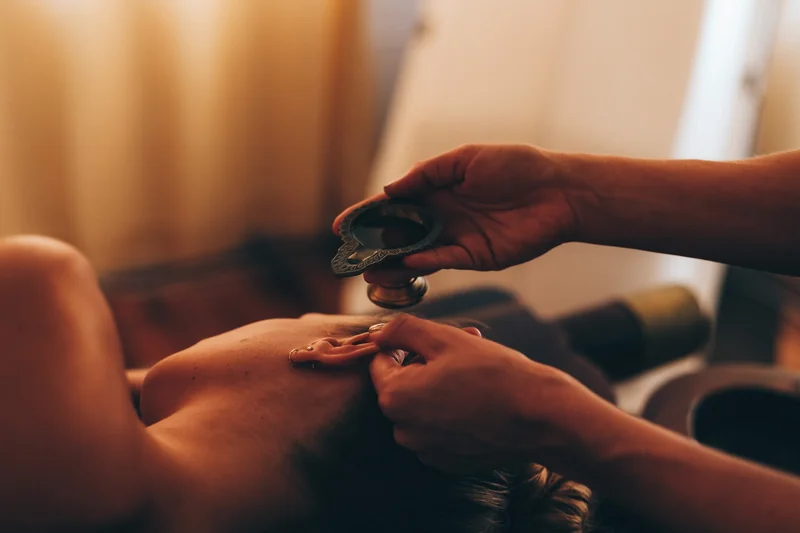
- Ear blockage is more than just an annoyance — it can muffle your hearing, throw off your balance, and make you feel disconnected from the world around you. If you've been searching for a natural solution, ayurvedic treatment for ear blockage works by identifying the root dosha imbalance (typically Vata or Kapha), then applying targeted therapies like Karna Purana (ear oil therapy), Nasya (nasal oil administration), and specific herbal formulations to restore clear hearing without the side effects of conventional drugs.
- Ayurveda treats the underlying cause, not just the symptom — and that's exactly why thousands of people across India are turning to it.
In this comprehensive guide, you'll find everything from classical Ayurvedic classifications and step-by-step home procedures to yoga asanas, seasonal protocols, children's dosages, and a comparison table with conventional treatments. Let's get into it.
What Is Ear Blockage? Symptoms and Causes
Before diving into treatment, it's essential to understand what's actually happening inside your ear when it feels blocked, and why it matters beyond the obvious discomfort.
Common Symptoms of Ear Blockage
Ear blockage (known as Karnapratinaha in Ayurvedic literature) presents with a range of symptoms that can vary from mild to severely disruptive:
- Muffled or reduced hearing in one or both ears
- A persistent feeling of fullness or pressure deep in the ear
- Tinnitus (ringing, buzzing, or humming sounds)
- Ear pain (Karnasula) that may radiate to the jaw or temple
- Dizziness or vertigo, especially when changing head position
- Itching or irritation inside the ear canal
- Occasional discharge (Karnasrava) if infection is present
Western Medical Causes: Eustachian Tube Dysfunction, Infections, and Wax Buildup
From a modern medical standpoint, ear blockage typically results from:
| Cause | Mechanism | Prevalence |
|---|---|---|
| Cerumen (wax) impaction | Excessive or hardened earwax physically blocks the canal | Affects ~6% of general population, up to 57% of elderly (Roland et al., 2008) |
| Eustachian tube dysfunction | Tube fails to equalize pressure between middle ear and environment | Most common cause of chronic ear fullness |
| Upper respiratory infections | Inflammation and mucus block drainage pathways | Seasonal, very common |
| Allergic rhinitis | Swelling of nasal and tubal mucosa | Affects ~20-30% of Indian population |
| Otitis media (middle ear infection) | Fluid accumulation behind eardrum | Leading cause in children |
| Sinus infections | Congestion spreads to ear structures | Often co-occurs with ear blockage |
| Hormonal changes | Pregnancy and menopause can cause mucosal swelling | Under-recognized cause |
How Chronic Ear Blockage Affects Your Overall Well-Being
Here's what most websites don't tell you: chronic ear blockage doesn't just affect your hearing.
It cascades into multiple areas of health:
- Cognitive fog and concentration problems — your brain works harder to process muffled sounds, leaving less bandwidth for thinking
- Balance disturbances — the vestibular system shares space with hearing structures, so chronic blockage can cause subtle but persistent unsteadiness
- Social isolation — difficulty following conversations leads many people to withdraw, particularly elderly patients
- Speech development delays in children — even mild chronic blockage during critical language-learning years (ages 1-4) can impair speech development
- Sleep disruption — the pressure sensation often worsens when lying down
- Anxiety and irritability — constant sensory distortion creates genuine psychological distress
This is precisely why treating ear blockage holistically — addressing root causes rather than symptoms — makes such a difference.
The Ayurvedic Perspective on Ear Blockage
Ayurveda doesn't view ear blockage as an isolated local problem. It's a systemic signal that something is out of balance in your body's fundamental energies.
Ear Disorders in Ayurvedic Texts (Karnasrava, Badhirya, Karnapratinaha)
Classical Ayurvedic texts like Sushruta Samhita and Charaka Samhita describe 28 types of ear diseases (Karna Roga).
Among the most relevant to ear blockage are:
- Karnapratinaha — blockage or obstruction of the ear canal, the closest equivalent to what we're discussing
- Karnasrava — ear discharge, often accompanying or following blockage
- Karnasula — ear pain, frequently associated with blocked ears
- Badhirya — deafness or significant hearing loss, the end-stage consequence of untreated blockage
- Karnakshweda — tinnitus, commonly co-existing with blockage
Sushruta classified 11 of the 28 ear diseases as most clinically frequent. Of these, Vata-dominant conditions account for the majority of blockage presentations, while Kapha-dominant conditions tend to involve mucus accumulation and fluid retention.
Role of Dosha Imbalances: Vata, Kapha, and Pitta
The ear is considered a primary seat of Vata dosha in Ayurveda.
Here's how each dosha contributes:
Vata Imbalance (Most Common)
- Causes dryness in the ear canal, leading to hardened wax
- Creates irregular pressure sensations and crackling sounds
- Associated with tinnitus, sharp pain, and sensations of "wind" in the ear
- Aggravated by cold weather, excessive travel, loud noise exposure, and irregular sleep
Kapha Imbalance
- Leads to excessive mucus production that blocks the Eustachian tube
- Causes heavy, dull feeling of fullness
- Associated with thick discharge and reduced hearing
- Aggravated by cold, damp weather, dairy-heavy diets, and sedentary lifestyle
Pitta Imbalance
- Creates inflammation and infection in the ear canal
- Causes burning pain, redness, and yellowish discharge
- Associated with sudden onset and fever
- Aggravated by hot, spicy foods, excessive sun exposure, and stress
Prakruti and Vikruti: Why Personalized Diagnosis Matters
One of Ayurveda's greatest strengths is its insistence on personalized treatment. Two patients with identical symptoms may receive entirely different protocols based on:
- Prakruti — your birth constitution (the dosha combination you were born with)
- Vikruti — your current state of imbalance
An Ayurvedic practitioner assesses both through pulse diagnosis (Nadi Pariksha), tongue examination, questioning about diet, sleep, digestion, and emotional patterns. This is why a Vata-type person with ear blockage might receive warm sesame oil therapy, while a Kapha-type person gets treatment with lighter mustard oil and expectorant herbs.
Ayurvedic Treatments for Ear Blockage
Now let's get to the core of what you came here for — the actual treatments. These range from clinical Panchakarma procedures to therapies you can safely perform at home.
Karna Purana (Ear Oil Therapy): Step-by-Step Home Procedure
Karna Purana is the signature Ayurvedic treatment for ear problems. It involves filling the ear canal with warm medicated oil and allowing it to sit for a specific duration.
What You'll Need:
- Medicated ear oil (see recipes below)
- Small stainless steel or glass bowl
- Warm water for heating the oil
- Clean cotton balls
- A timer
Step-by-Step Procedure:
- Warm the oil to approximately 37-40°C (body temperature — test on your inner wrist; it should feel pleasantly warm, never hot)
- Lie on your side with the affected ear facing up
- Gently pull the ear lobe slightly down and back to straighten the ear canal
- Using a dropper, instill 4-5 drops of warm oil into the ear canal
- Remain in position for 10-15 minutes, allowing the oil to penetrate deeply
- You may gently massage the area just in front of the ear (tragus) in circular motions to help the oil travel
- Place a cotton ball loosely in the ear and slowly sit up
- Repeat on the other side if needed
Frequency: Daily for 7-14 days during acute blockage, then 2-3 times per week for maintenance. For general ear health (Dinacharya), once weekly is sufficient. Important: Never perform Karna Purana if you suspect a perforated eardrum (signs include sudden sharp pain followed by relief, bloody or watery discharge, and a significant sudden hearing drop).
Nasya Therapy: How Nasal Oil Administration Clears Your Ears
This might seem counterintuitive — putting oil in your nose to treat your ears. But the nose, throat, and ears are interconnected through the Eustachian tube, and Nasya therapy (also called Shirovirechana) is remarkably effective.
How Nasya Works for Ear Blockage:
- Lubricates and opens the Eustachian tube
- Reduces nasal and sinus congestion that contributes to ear pressure
- Calms Vata in the head region
- Clears Kapha accumulation in the upper respiratory tract
Home Nasya Procedure:
- Apply warm towel or mild steam to the face for 3-5 minutes to open channels
- Lie down with head tilted slightly back (place a small pillow under shoulders)
- Instill 2-3 drops of Anu Taila or plain sesame oil in each nostril
- Sniff gently to draw oil inward — do NOT inhale forcefully
- Remain lying down for 1-2 minutes
- Spit out any oil that drains to the throat (do not swallow)
- Perform morning and evening for best results
Is Nasya therapy painful? Not at all. Most people report a mild warming sensation. Occasional sneezing immediately after is normal and actually beneficial — it helps expel accumulated Kapha. Contraindications for Nasya: Avoid during active nasal bleeding, immediately after meals, during fever, after head bath, in children under 7 years, and during the first trimester of pregnancy.
Herbal Remedies and Formulations
Ayurvedic pharmacology offers several proven formulations for ear blockage:
| Formulation | Key Ingredients | Dosha Target | Primary Action |
|---|---|---|---|
| Bilva Taila | Bilva (Bael), Sesame oil | Vata | Reduces dryness, softens wax |
| Nirgundi Oil | Nirgundi (Vitex negundo) | Vata-Kapha | Anti-inflammatory, analgesic |
| Dashmool Taila | 10 root herbs in sesame base | Tridosha | Balances all doshas, deeply nourishing |
| Mulaka Swarasa | Fresh radish juice | Kapha | Breaks down mucus, clears blockage |
| Gandhak Rasayana | Purified sulphur, herbs | Pitta-Kapha | Antimicrobial, anti-infective |
| Sarivadi Vati | Sariva, Triphala, metals | Vata | Improves hearing, treats tinnitus |
| Anu Taila | 28+ herbs in sesame/goat milk base | Tridosha | Nasal/sinus clearing (for Nasya) |
A case report published in the Journal of Ayurveda and Integrated Medical Sciences (2018) documented a patient with otitis externa caused by Klebsiella infection who was treated with Gandhak Rasayana internally and medicated oil externally. The patient showed complete resolution of symptoms within 21 days, with negative culture results at follow-up. The Brighton grading scale score improved from 3 to 0. While this is a single case, it demonstrates the antimicrobial potential of classical Ayurvedic formulations.
DIY Ear Oil Recipes You Can Make at Home
Recipe 1: Garlic-Sesame Oil (Vata-Kapha blockage)
- 2 tablespoons cold-pressed sesame oil
- 2 cloves garlic, crushed
- Heat on low flame until garlic turns light golden (about 5-7 minutes)
- Strain thoroughly through clean muslin cloth
- Cool to body temperature before use
- Store in dark glass bottle; use within 5 days
Recipe 2: Neem-Turmeric Oil (Pitta/Infectious blockage)
- 3 tablespoons coconut oil
- 5-6 fresh neem leaves
- 1/4 teaspoon turmeric powder
- Simmer on very low heat for 10 minutes
- Strain twice to ensure no particles remain
- Cool completely before use
Recipe 3: Simple Mustard Oil Preparation (Kapha-dominant blockage)
- 2 tablespoons mustard oil
- 1/2 teaspoon ajwain (carom seeds)
- 1 small piece of camphor (optional)
- Warm gently, strain, and use 2-3 drops per ear
Diet and Lifestyle Modifications for Ear Health
Does Diet Really Make a Difference for Ear Blockage?
Absolutely. In Ayurveda, diet is considered the first line of medicine. What you eat directly influences dosha balance and mucus production.
Foods to Favor:
- Warm, cooked meals (soups, stews, khichdi)
- Ginger, black pepper, turmeric, and cumin in daily cooking
- Light, warm herbal teas (ginger-tulsi, cinnamon-cardamom)
- Fresh seasonal fruits (not cold/refrigerated)
- Warm water throughout the day
Foods to Reduce or Avoid:
- Cold dairy products (ice cream, cold milk, yogurt at night)
- Fried and heavily processed foods
- Excessive sugar and refined carbohydrates
- Cold beverages and iced water
- Bananas and cold-natured fruits during acute blockage
- For Hormonal Ear Blockage: Women experiencing ear fullness during pregnancy or menopause may benefit from Shatavari (Asparagus racemosus) supplementation, which helps balance hormonal fluctuations that cause mucosal swelling.
- Typical dose: 500mg twice daily with warm milk — but always consult your practitioner during pregnancy.
Seasonal Protocol (Ritucharya) for Ear Health
This is something no other guide covers, but it's genuinely important.
Your ear care protocol should shift with seasons:
| Season | Dominant Risk | Protocol Adjustment |
|---|---|---|
| Winter (Hemant/Shishir) | Vata-Kapha aggravation, cold-induced blockage | Increase Karna Purana frequency to 3-4x/week; use heavier oils (sesame, mustard); keep ears covered in cold wind |
| Spring (Vasant) | Kapha liquefaction, allergies peak | Focus on Nasya therapy; add expectorant herbs like Trikatu; reduce dairy significantly |
| Summer (Grishma) | Pitta aggravation, swimmer's ear | Use cooling oils (coconut-based); avoid excessive sun exposure on ears; stay hydrated |
| Monsoon (Varsha) | Infections, fungal growth, Vata aggravation | Keep ears dry; use neem-based oils; perform weekly Karna Purana with Bilva Taila |
| Autumn (Sharad) | Residual Pitta, transitional imbalance | Gentle detox; moderate oil therapy; Triphala internally for systemic cleansing |
Yoga Asanas and Marma Points for Ear Drainage
Yoga Practices That Improve Hearing and Eustachian Tube Function
Specific yoga postures promote blood circulation to the head region and facilitate drainage of the Eustachian tube:
1. Shanmukhi Mudra (Sealing the Six Gates)
- Sit in Padmasana or Sukhasana
- Place thumbs gently on the ear tragus (don't push hard into the canal)
- Close eyes with index fingers, nostrils with middle and ring fingers, lips with little fingers
- Hold for 5-10 breaths, focusing on internal sound
- Releases Vata from the ear region
2. Bhramari Pranayama (Humming Bee Breath)
- Close ears with thumbs, eyes with fingers
- Inhale deeply through the nose
- Exhale while producing a steady humming sound
- The vibration directly stimulates the ear structures and promotes drainage
- Perform 7-11 rounds, twice daily
3. Matsyasana (Fish Pose)
- Opens the throat and chest, facilitating Eustachian tube drainage
- Hold for 30 seconds to 1 minute
- Particularly helpful for Kapha-type blockage
- Sarvangasana (Shoulder Stand) — Modified
- Promotes blood flow to the head and ear region
- Hold for 1-3 minutes
- Avoid during acute ear infection or if you have high blood pressure
Marma Points (Acupressure) for Immediate Ear Relief
- Marma therapy is Ayurveda's acupressure system.
- These specific points help relieve ear pressure:
- Vidhura Marma — Located just behind the earlobe in the depression between the mastoid process and the jaw. Apply firm, circular pressure for 2-3 minutes. This is the primary marma for all ear conditions.
- Phana Marma — Located at the sides of the nostrils. Stimulating this point opens nasal passages and, by extension, the Eustachian tube. Press and hold for 1-2 minutes.
- Shankha Marma — At the temples. Gentle circular massage here relieves pressure in the ear and head region.
Apply pressure with thumb or index finger, using warm sesame oil for added benefit. Practice 2-3 times daily during acute blockage.
Don't wait or self medicate. Start chat with Doctor NOW
Ayurvedic Treatment for Children's Ear Blockage
Children are particularly prone to ear blockage due to their shorter, more horizontal Eustachian tubes.
Here's an adapted pediatric protocol — something that's surprisingly absent from most resources:
Age-Specific Guidelines
| Age Group | Karna Purana | Oil Type | Drops | Nasya | Herbs |
|---|---|---|---|---|---|
| 0-2 years | NOT recommended | N/A | N/A | Not recommended | Only external massage with warm sesame oil around ear |
| 2-5 years | Gentle, only under practitioner guidance | Plain warm sesame oil only | 1-2 drops | Not recommended | Mild Trikatu in honey (pinch) |
| 5-10 years | Yes, with supervision | Bilva Taila or plain sesame | 2-3 drops | 1 drop per nostril (after age 7) | Sitopaladi Churna (1/4 tsp) with honey |
| 10+ years | Yes, can learn self-administration | Any appropriate medicated oil | 3-4 drops | 2 drops per nostril | Adult formulations at half dose |
Safety Note: For children under 5, always have an Ayurvedic practitioner evaluate the ear before any oil is instilled. If the child has tubes (grommets) in place, do NOT perform Karna Purana.
Ayurvedic vs Conventional Treatment: A Comparison
| Parameter | Ayurvedic Treatment | Conventional Treatment |
|---|---|---|
| Approach | Holistic; addresses root dosha imbalance | Symptom-focused; targets specific pathology |
| Time to Relief | 7-21 days for noticeable improvement | Often immediate (decongestants) to days (antibiotics) |
| Long-term Efficacy | High — treats underlying cause, prevents recurrence | Moderate — symptoms may return after stopping medication |
| Side Effects | Minimal when properly administered | Antibiotic resistance, drowsiness (antihistamines), dependency (nasal sprays) |
| Cost (India) | ₹200-800/month for oils and herbs | ₹500-2000/month for medications; ₹3000-15,000 for procedures |
| Invasiveness | Non-invasive | May include ear syringing, microsuction, or tympanostomy tubes |
| Personalization | Highly individualized (Prakruti-based) | Generally standardized protocols |
| Recurrence Rate | Lower with adherence to diet/lifestyle changes | Higher if lifestyle factors unchanged |
| Best For | Chronic/recurring blockage, wax issues, Eustachian tube dysfunction | Acute infections, structural abnormalities, emergencies |
The integrative approach works best. You don't have to choose one over the other. Many patients benefit from working with both an ENT specialist and an Ayurvedic practitioner simultaneously. Ayurveda can complement conventional treatment by reducing medication dependency and preventing recurrences.
Preventive Protocol: Daily Routine (Dinacharya) for Ear Health
Prevention is where Ayurveda truly shines. Here's a daily routine to keep your ears healthy and prevent blockage from recurring:
Morning Routine:
- 1.Oil pulling (Kavala Graha) — Swish 1 tablespoon of sesame or coconut oil for 5-10 minutes. This clears toxins from the oral cavity that connect to ear health through shared pathways.
- 2.Nasya — 2 drops of Anu Taila in each nostril after brushing teeth.
- 3.Bhramari Pranayama — 7 rounds to stimulate ear circulation.
Weekly Maintenance:
- Karna Purana — Once weekly with appropriate medicated oil (even when asymptomatic)
- Ear massage — Gently massage around the ear with warm sesame oil before bathing
Lifestyle Practices:
- Avoid inserting cotton buds or any objects into the ear canal
- Dry ears thoroughly after swimming or bathing (tilt head, use soft towel)
- Keep head covered in cold, windy weather
- Manage stress — chronic stress aggravates Vata and directly impacts ear health
- Maintain regular sleep schedule (irregular sleep is a primary Vata aggravator)
Contraindications Summary by Method:
| Method | Do NOT Use When |
|---|---|
| Karna Purana | Suspected perforated eardrum, active bleeding, ear tubes in place, acute otitis media with pus |
| Nasya | Active nosebleed, fever, immediately after meals, children under 7, first trimester pregnancy |
| Steam Inhalation | Facial burns/wounds, very young children (burn risk), severe asthma |
| Herbal Internal Medicine | Without practitioner guidance; during pregnancy (most herbs); with blood thinning medication (some herbs interact) |
Frequently Asked Questions
How long does it typically take to see results with Ayurvedic treatment for blocked ears?
- Most patients report some improvement within 7-10 days of consistent Karna Purana and dietary modifications. Significant improvement typically occurs by 3-4 weeks. Chronic cases (6+ months duration) may require 2-3 months of sustained treatment.
- Consistency is key — sporadic treatment gives sporadic results.
Can children with chronic ear problems benefit from Ayurvedic treatments?
Yes, but with important modifications. Children over 5 can safely receive gentle Karna Purana with plain sesame oil under supervision. For younger children, external ear massage and dietary corrections (reducing cold dairy, adding warming spices) form the primary approach. Always consult a qualified Ayurvedic practitioner before treating children.
Will I need to stop my current medical treatments if I pursue Ayurvedic care?
No. Ayurvedic treatment can work alongside conventional medications. However, inform both your ENT doctor and Ayurvedic practitioner about all treatments you're receiving. Some herb-drug interactions exist (e.g., Guggulu with thyroid medications, certain herbs with blood thinners), so coordination is important.
My ears feel blocked but hearing tests show normal results. Can Ayurveda still help?
This is actually one of the most common presentations we see. Eustachian tube dysfunction and subtle Vata imbalances can cause significant subjective blockage even when audiometry is normal. Ayurveda is particularly effective here because it addresses the underlying sensory disturbance that doesn't show up on standard tests.
Where can I find authentic Ayurvedic remedies for ear blockage?
Purchase medicated oils (Bilva Taila, Anu Taila, Dashmool Taila) from reputable Ayurvedic pharmacies with GMP certification. Brands manufactured under AYUSH Ministry guidelines are reliable. For personalized formulations, consult a BAMS-qualified practitioner who can prepare or prescribe specific combinations for your dosha type.
How can I open my blocked ears naturally at home?
Start with warm sesame oil Karna Purana (4-5 drops, lie on side for 15 minutes), steam inhalation with eucalyptus or ajwain seeds, Bhramari pranayama, and Vidhura marma point massage behind the earlobe. Combine with warm water intake throughout the day and reducing cold foods. These simple practices resolve many mild to moderate cases without any medication.
Which oil is best for ears?
- For general ear health and Vata-type blockage: warm sesame oil is the gold standard in Ayurveda.
- For Kapha-type mucus blockage: mustard oil with ajwain.
- For Pitta-type inflammatory conditions: coconut oil with neem. For a versatile medicated option, Bilva Taila works across multiple dosha types.
Is Ayurvedic treatment safe for long-term use?
When properly prescribed, Ayurvedic ear treatments are safe for extended use. In fact, weekly Karna Purana is recommended as a lifelong practice in Dinacharya (daily routine) texts. Internal herbal medicines should be periodically reviewed by your practitioner — typically every 3 months — and adjusted based on your changing needs.
Conclusion: Take the First Step Toward Clear Hearing
Ear blockage doesn't have to be something you just "live with." Ayurvedic treatment for ear blockage provides a comprehensive, time-tested system that addresses why your ears are blocked — not just that they are. From Karna Purana and Nasya therapy to dietary adjustments, yoga, and marma point stimulation, you have a full toolkit of natural approaches.
Start simple: try warm sesame oil Karna Purana tonight, add Bhramari pranayama to your morning routine tomorrow, and begin reducing cold dairy from your diet. Most people feel a difference within the first week.
- For chronic or severe cases, consult a qualified Ayurvedic practitioner (BAMS or MD Ayurveda) who can perform a proper Prakruti-Vikruti assessment and design a personalized treatment protocol.
- And remember — Ayurvedic care works beautifully alongside conventional ENT treatment, so you never have to choose between the two.
- Your ears deserve attention.
- Don't wait for the blockage to become permanent — take action today.
Scientific Sources
- Neuroprotective Herbs for the Management of Alzheimer's Disease — Gregory J et al., 2021, Biomolecules
- The antitumor effects of herbal medicine Triphala on oral cancer by inactivating PI3K/Akt signaling pathway: based on the network pharmacology, molecular docking, in vitro and in vivo experimental validation — Hu S et al., 2024, Phytomedicine : international journal of phytotherapy and phytopharmacology
- Role of Triphala in dentistry — Prakash S et al., 2014, Journal of Indian Society of Periodontology
- Indian Ayurvedic medicine: Overview and application to brain cancer — Newton HB, 2024, Journal of Ayurveda and integrative medicine
- Comparison of medicinal preparations of Ayurveda in India and five traditional medicines in China — Li X et al., 2022, Journal of ethnopharmacology
- Rosemary and neem: an insight into their combined anti-dandruff and anti-hair loss efficacy — Hashem MM et al., 2024, Scientific reports
- Bangladeshi medicinal plant dataset — Borkatulla B et al., 2023, Data in brief
- Phytotherapy in periodontics as an effective and sustainable supplemental treatment: a narrative review — Gawish AS et al., 2024, Journal of periodontal & implant science
- Formulation and Evaluation of Turmeric- and Neem-Based Topical Nanoemulgel against Microbial Infection — Giri S et al., 2024, Gels (Basel, Switzerland)
- Medicinal plants with traditional use: Ethnobotany in the Indian subcontinent — Rupani R et al., 2018, Clinics in dermatology
- Chinese herbal medicine-derived extracellular vesicles as novel biotherapeutic tools: present and future — Zhang J et al., 2024, Journal of translational medicine
- Efficacy of herbal medicine (cinnamon/fennel/ginger) for primary dysmenorrhea: a systematic review and meta-analysis of randomized controlled trials — Xu Y et al., 2020, The Journal of international medical research
- A critical review of Ginger's (Zingiber officinale) antioxidant, anti-inflammatory, and immunomodulatory activities — Ayustaningwarno F et al., 2024, Frontiers in nutrition
- Ayurvedic Herbal Medicines: A Literature Review of Their Applications in Female Reproductive Health — Patibandla S et al., 2024, Cureus
- Zingiber officinale var. rubrum: Red Ginger's Medicinal Uses — Zhang S et al., 2022, Molecules (Basel, Switzerland)
Questions from users
How can gentle ear massage improve ear health according to Ayurveda?
Samuel
7 days ago
Massage, like in Ayurveda, helps maintain ear health by balancing the doshas and enhancing circulation. Using warm sesame oil adds warmth, soothing any imbalance, and relieving ear and head pressure. It's a natural method to prevent blockages and support balance without relying too much on medications. Regular gentle massage keeps things in harmony!
What is the best daily routine in Ayurveda for maintaining ear health?
Kennedy
16 days ago
For ear health, Ayurveda suggests practices like Karna Purana (oiling the ears) once a week. Use warm, herbal oils like sesame or medicated oils. Also, maintain overall ear care by avoiding exposure to loud noises and ensuring proper hygiene. Look after your doshas, as Vata imbalance can affect ear health. Hydration and diet matter too. 😊
What is Triphala and how can it help with ear health in Ayurveda?
Aubrey
33 days ago
Triphala is a powerful Ayurvedic herbal remedy made from three fruits. It is primarily known for detoxifying and supporting digestive health, but it can indirectly benefit ear health by improving overall body balance. If ear issues are linked to inflammation or toxins, Triphala might help due to its anti-inflammatory properties. But for direct ear concerns, other treatments like Nasya might be more effective.
What is the role of lifestyle adjustments in Ayurvedic treatment for ear disorders?
Sebastian
42 days ago
Lifestyle adjustments are super important in Ayurvedic treatment for ear disorders cuz they help maintain balance in the body's doshas. Things like a regular sleep schedule, stress management, and a balanced diet can support your overall health and ear wellness. It’s all about keeping your mind and body in harmony for long-term relief.
What is Ayurvedic detoxification and how does it help with ear health issues?
Ellie
51 days ago
Ayurvedic detoxification, known as Panchakarma, helps by removing toxins (ama) from the body and balancing the doshas, which can improve ear health. It focuses on internal cleaning and strengthening agni (digestive fire). For ear issues, this can prevent blockages or infections by restoring harmony. It's a holistic approach tho, so it's important to consult a practitioner for personalized advice.
Is it safe to use Ayurvedic oils for ear blockage treatment?
Avery
61 days ago
Yes, using Ayurvedic oils like anuwasan basti or herbal ear drops can help with ear blockage by balancing Vata and Kapha dosha. It's generally safe, but it's important to consult with a qualified Ayurvedic practitioner first to avoid any complications or if you have any allergies. They'll guide you on the right oil and proper method for your specific needs.
Can I combine Ayurvedic treatments for ear blockage with conventional medicine?
Sandra
70 days ago
Absolutely, you can try combining both. But it's always a good idea to consult both your Ayurvedic practitioner and your regular doctor to make sure there's no conflict, especially if you're taking any medications. Balancing both can sometimes offer a comprehensive approach to healing. Just keep an open line of communication with your healthcare providers!
What is the importance of balancing doshas for ear health in Ayurveda?
Tenley
80 days ago
Balancing doshas is key for ear health because when they're off, it can lead to issues like infections or blockages. Each dosha—Vata, Pitta, and Kapha—affects ear function differently; Vata imbalance might lead to dryness or ringing, while increased Kapha could cause blockages. Keeping them balanced helps the ears function well and supports overall health. You might find help with herbal remedies, diet, meditation, etc., to maintain this balance.
What is the role of detoxifying herbs in Ayurvedic treatment for ear health issues?
Christian
90 days ago
Detoxifying herbs in Ayurveda play a role in clearing ama (toxins) from the body, which can accumulate and cause imbalances in the doshas - especially important for ear health issues. They support agni (digestive fire), helping to maintain overall balance, which in turn keeps the ears healthy, reducing inflammation and infections. Think of them as a natural cleanse for your system!
Is Nasya therapy effective for preventing future ear blockages in Ayurveda?
David
99 days ago
Yes, Nasya therapy can be effective for preventing future ear blockages by helping balance Vata and Kapha doshas. It can clear excess mucus and support overall ear health. Consistency is crucial though—regular practice, alongside a balanced diet and lifestyle tweaks, could help in maintaining clear ear canals. But it's always good to consult an Ayurvedic practicioner for personalized guidance!
Related articles

Ear, Nose, and Throat Disorders
Discover Gaytarin: Natural Ayurvedic Thyroid Support – Benefits, Dosage & Science-Backed Insights
Discover the benefits, proper dosage, and scientific insights behind Gaytarin, an Ayurvedic proprietary preparation for thyroid health by Arya Aushadi.
2,793

Ear, Nose, and Throat Disorders
Why Is My Ear Ringing All of a Sudden? Ayurvedic and Spiritual Insights
Why is your ear ringing all of a sudden? Discover Ayurvedic and spiritual meanings behind ringing in the left or right ear and natural ways to restore balance
17,967

Ear, Nose, and Throat Disorders
Ayurvedic Ear Drops for Hearing Loss: Natural Remedies & Benefits
Explore effective Ayurvedic ear drops for hearing loss. Discover natural remedies, benefits, usage guidelines, and scientific insights to support auditory health.
5,657

Ear, Nose, and Throat Disorders
Hearing Loss Treatment in Ayurveda – Natural Remedies for Enhanced Auditory Health
Explore hearing loss treatment in Ayurveda through ancient herbal therapies and holistic practices designed to restore auditory function, balance doshas, and promote overall well-being.
3,981
Ear, Nose, and Throat Disorders
Alopecia Areata Ayurvedic Treatment – Natural Remedies for Hair Regrowth & Scalp Health
Explore holistic Ayurvedic treatment for alopecia areata. Discover natural remedies that detoxify, balance doshas, and nourish the scalp to promote hair regrowth and scalp health.
3,792

Ear, Nose, and Throat Disorders
Gandha Thailam Uses Dosage Side Effects Ingredients Reference
Exploration of Gandha Thailam Uses Dosage Side Effects Ingredients Reference
4,971

Ear, Nose, and Throat Disorders
Ashwa Kanchuki Ras – Traditional Ayurvedic Remedy for Health & Wellness
Learn about Ashwa Kanchuki Ras, a traditional Ayurvedic formulation known for enhancing vitality, supporting joint health, and promoting overall well-being through natural ingredients.
2,302

Ear, Nose, and Throat Disorders
Karna Bindu Ear Drops: Ayurvedic Ear Care for Healthy Hearing
Explore Karna Bindu Ear Drops, an Ayurvedic formulation for ear health. Learn about its benefits, uses, dosage guidelines, and holistic applications for optimal auditory well-being.
3,249
Ear, Nose, and Throat Disorders
Natural Ways to Reduce Acoustic Neuroma
Understanding the basics of acoustic neuroma is essential for exploring natural remedies and how they can be integrated into daily life.
3,385

Ear, Nose, and Throat Disorders
How to Get Rid of Ear Pain: Effective Home Remedies and Natural Treatments
Discover how to get rid of ear pain using home remedies. Learn about ayurvedic ear pain treatment at home, natural cures, and ways to stop ear pain quickly
5,941
Related consultations on the topic
Legal
Additional Documents
© 2024 Ask Ayurveda. All rights reserved.