FREE! Ask Ayurvedic Doctors 24/7

 Fast responses
 1000+ verified doctors
Heel Spur Ayurvedic Treatment: Benefits, Dosage & Ayurvedic Insights
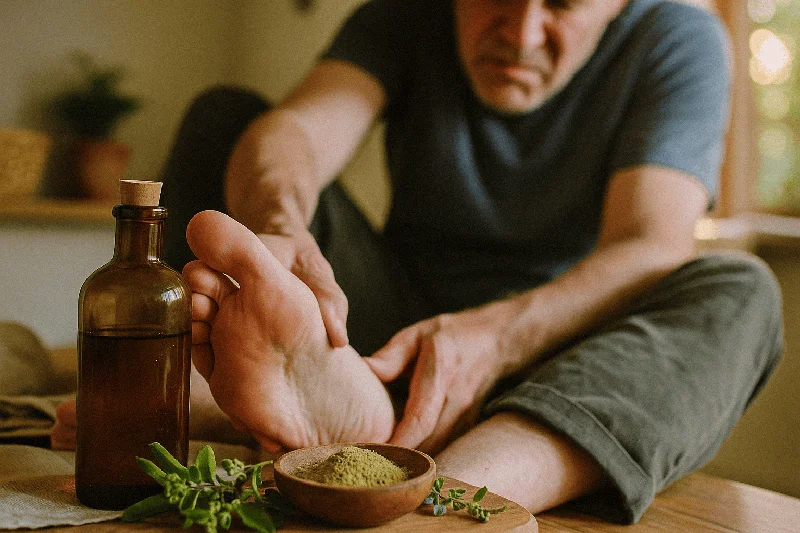
- A heel spur is a calcium deposit that forms a bony protrusion on the underside of your heel bone.
- In Ayurveda, this condition is called Vatakantaka — and it can be treated effectively without surgery or steroid injections. Heel spur Ayurvedic treatment works by pacifying aggravated Vata dosha, reducing inflammation through medicinal herbs like Shallaki and Guggulu, and restoring tissue health with targeted Panchakarma therapies such as Abhyanga, Swedana, and Basti.
If you wake up every morning dreading those first painful steps, this guide covers everything you need: the Ayurvedic understanding of heel spurs, specific herbs with clinical evidence, Panchakarma protocols, home remedies, dietary adjustments, yoga asanas, realistic treatment timelines, and how Ayurveda compares to conventional options. Let's get into it.
What Is a Heel Spur and How Does Ayurveda Explain It?
A calcaneal spur is a pointed bony outgrowth that develops at the attachment point of the plantar fascia to the calcaneum (heel bone). It typically measures 1–12 mm and develops over months or years of repetitive stress. While many people have heel spurs without any symptoms, for others, the pain can be debilitating — especially in the morning or after prolonged rest.
Vatakantaka: The Ayurvedic Perspective
- In classical Ayurvedic texts, particularly the Madhava Nidana and Sushruta Samhita, this condition is described as Vatakantaka (also spelled Vata Kandakam).
- The term literally translates to "Vata thorn" — a remarkably accurate description of the sharp, thorn-like pain patients experience.
According to Ayurvedic pathology (Samprapti), the mechanism unfolds like this:
- 1.Vata aggravation — Factors like excessive walking (ativyayama), prolonged standing, walking on uneven surfaces, wearing improper footwear, suppression of natural urges (vegadharana), excessive fasting, and aging vitiate Vata dosha.
- 2.Localization in the heel — The aggravated Vata migrates to the gulpha sandhi (ankle joint) and parshni (heel region), which are predominantly Vata sites.
- 3.Tissue degeneration — Vitiated Vata depletes the Kapha component in the joint (the natural lubrication and cushioning), leading to muscle wasting, ligament weakening, and eventually calcium deposition.
- 4.Pain manifestation — The resulting inflammation and bony growth cause characteristic stabbing pain, described as being "pricked by a thorn" (kantaka vedana).
How Heel Spurs Relate to Plantar Fasciitis
- Many patients confuse these two conditions. A heel spur is the bony growth itself, while plantar fasciitis is the inflammation of the plantar fascia — the thick band of tissue running across the bottom of your foot.
- They often coexist: about 50% of people with plantar fasciitis have heel spurs, according to radiographic studies.
- But heres the key insight — the spur itself isn't always the source of pain. The surrounding soft tissue inflammation is usually whats causing the discomfort, which is precisely why Ayurvedic anti-inflammatory therapies work so well.
How to Treat Heel Spurs in Ayurveda: Panchakarma Therapies
- Panchakarma forms the backbone of clinical Ayurvedic treatment for heel spurs.
- These aren't DIY treatments — they require a qualified Ayurvedic practitioner. Here's what each therapy does and why it matters.
Abhyanga (Therapeutic Oil Massage)
Specialized foot massage using medicated oils like Mahanarayan Taila or Kottamchukkadi Taila is typically the first-line therapy. The massage is performed for 20–30 minutes, focusing on the heel, sole, and calf muscles.
A 2017 study published in the Journal of Ayurveda and Integrative Medicine demonstrated that Abhyanga with medicated oils significantly reduced pain scores and improved joint mobility in musculoskeletal conditions involving Vata vitiation.
How it works: The warm medicated oil penetrates through the skin layers (the Ayurvedic concept of tiryak gati), pacifies localized Vata, improves blood circulation, and nourishes depleted tissues.
Swedana (Fomentation / Heat Therapy)
Several specialized Swedana techniques are used for heel spurs:
- Valuka Sweda — Fomentation with heated sand tied in a cloth poultice, applied directly to the heel. Particularly effective for deep-seated Vata pain.
- Ishtika Swedam — The heel is placed on a heated brick wrapped in cloth with medicated herbs. This unique technique provides sustained, penetrating warmth.
- Nadi Sweda — Directed steam application using a tube, allowing precise targeting of the affected heel area.
Swedana dilates local blood vessels, reduces stiffness, and prepares tissues to absorb medicinal oils more effectively. It's almost always performed immediately after Abhyanga.
Basti (Medicated Enema Therapy)
This might seem unrelated to heel pain — but Basti is considered the supreme treatment for Vata disorders in Ayurveda. Ksheerabala Taila Basti and Dashamoola Kashaya Basti are commonly used.
The rationale: since Vata dosha originates in the colon (Pakwashaya), treating its root source provides systemic relief. A typical course involves 8–16 Basti sessions administered over 8–16 days, depending on severity.
Raktamokshana and Leech Therapy
For cases with significant local inflammation and congestion, Raktamokshana (therapeutic bloodletting) may be recommended.
This can be done through:
- Jalauka (leech therapy) — Medicinal leeches are applied near the heel. Their saliva contains hirudin and other bioactive compounds with proven anti-inflammatory and analgesic properties. A 2020 review in Evidence-Based Complementary and Alternative Medicine confirmed the anti-inflammatory effects of leech therapy in musculoskeletal conditions.
- Viddhakarma — A specialized puncturing technique using surgical instruments at specific Marma points near the heel.
Agnikarma (Therapeutic Cauterization)
- For chronic, resistant cases, Agnikarma — controlled thermal micro-cauterization — is performed at specific points on the heel using specialized instruments (Shalaka).
- A case report published in Life Sciences — Ayurveda (2023) documented complete pain relief in a calcaneal spur patient after 4 sessions of Agnikarma with Rajata Shalaka (silver probe), with no recurrence at 6-month follow-up.
Ksheeradhara
In this soothing procedure, a continuous stream of warm medicated milk (typically prepared with Bala, Ashwagandha, and Dashamoola) is poured over the affected heel for 30–45 minutes. Ksheeradhara is particularly beneficial when there is burning sensation along with pain, suggesting a Vata-Pitta involvement.
What Herbs Are Good for Heel Spurs?
Ayurveda uses specific herbs that target inflammation, calcium metabolism, and Vata pacification. Unlike conventional NSAIDs that merely mask pain, these herbs address the underlying pathology.
Shallaki (Boswellia serrata) — The Star Anti-Inflammatory
Boswellic acids in Shallaki inhibit 5-lipoxygenase (5-LOX), an enzyme directly responsible for inflammation. A landmark 2003 study in Phytomedicine showed that Boswellia extract reduced pain and improved physical functioning in 30 patients with musculoskeletal disorders within 8 weeks. A more recent 2020 systematic review in BMC Complementary Medicine and Therapies confirmed its efficacy comparable to NSAIDs — without the gastric side effects.
Typical dosage: 400–800 mg standardized extract, twice daily after meals.
Guggulu (Commiphora mukul) — The Bone Healer
Guggulu has a unique dual action: anti-inflammatory and osteoblast-modulating. It's the base ingredient in several classical formulations used for heel spurs.
Key formulations:
- Yogaraja Guggulu — 2 tablets (250 mg each), twice daily with warm water. Best for generalized Vata disorders with joint involvement.
- Rasnadi Guggulu — 2 tablets, twice daily. Specifically formulated for lower limb Vata conditions.
Ashwagandha (Withania somnifera) — Tissue Regenerator
A 2015 study published in the Journal of Ayurveda and Integrative Medicine demonstrated that Ashwagandha root extract at 600 mg/day significantly reduced inflammatory markers (CRP and ESR) and improved joint function over 12 weeks. For heel spurs, it supports the rebuilding of damaged connective tissue around the calcaneum.
Supporting Herbs
| Herb | Ayurvedic Action | How It Helps Heel Spurs | Common Form |
|---|---|---|---|
| Eranda (Castor) | Vata-shamaka, Shothahara | Reduces pain, improves mobility | Oil for massage, root decoction |
| Haridra (Turmeric) | Anti-inflammatory, Lekhaniya | Curcumin inhibits NF-κB pathway | 500 mg curcumin + piperine, twice daily |
| Shunthi (Ginger) | Deepana, Vata-anulomana | Improves circulation, reduces stiffness | Fresh ginger paste or 1–2g powder |
| Rasna (Pluchea lanceolata) | Vata-hara, Vedanasthapana | Specific for lower extremity pain | Decoction, 20–30 ml twice daily |
| Bala (Sida cordifolia) | Balya, Vata-shamaka | Strengthens muscles and tendons | Oil for external use, powder internally |
Best Ayurvedic Medicines for Heel Pain: Formulations & Dosages
Here's something none of the existing online guides provide clearly — actual dosage guidance for classical Ayurvedic formulations. While individual dosing should always be confirmed with your practitioner, these are standard therapeutic ranges from authoritative Ayurvedic pharmacopoeias.
Internal Medicines
| Formulation | Standard Dosage | Frequency | Duration | Best For |
|---|---|---|---|---|
| Yogaraja Guggulu | 2 tablets (250 mg) | Twice daily, after meals | 4–8 weeks | Chronic Vata joint pain |
| Rasnadi Guggulu | 2 tablets (250 mg) | Twice daily, with warm water | 4–6 weeks | Lower limb specific pain |
| Maharasnadi Kashayam | 15–20 ml | Twice daily, with equal warm water | 4–8 weeks | Severe pain with stiffness |
| Ksheerabala 101 (Avarti) | 5–10 drops | Twice daily, with warm milk | 6–8 weeks | Nerve-related pain, chronic cases |
| Dhanwantharam Kashayam | 15 ml | Twice daily before meals | 4–6 weeks | Vata disorders with weakness |
| Ashwagandha Churna | 3–5 g | Twice daily, with warm milk or ghee | 8–12 weeks | Tissue regeneration |
External Applications (Oils and Pastes)
- Kottamchukkadi Taila — Warm the oil slightly, apply to the heel and sole, massage for 15–20 minutes before bedtime.
- This oil contains Kushta, Vacha, and mustard — potent Vata-pacifiers.
- Mahanarayan Taila — Best used before Swedana. Apply generously, wrap in warm cloth for 20 minutes.
- Murivenna — A Kerala-specific oil excellent for trauma and inflammation. Apply twice daily.
- Pinda Taila — Specifically indicated when there's a burning sensation (Vata-Pitta involvement).
Herbal Paste (Lepa) Recipe:
Grind together 5–6 garlic cloves, 4–5 castor leaves (Eranda patra), and 1 g camphor into a paste. Apply to the heel, wrap with a cotton bandage, and leave overnight. Use for 7–14 consecutive nights.
How to Dissolve Bone Spurs Naturally: Diet & Lifestyle Changes
While "dissolving" a calcified spur entirely may not always be realistic, Ayurvedic dietary and lifestyle modifications can halt spur growth, reduce surrounding inflammation, and in some cases — especially early-stage spurs — promote gradual resorption.
Foods to Eat (Vata-Pacifying Diet)
- Warm, cooked, and moist foods — soups, stews, khichdi, porridge
- Healthy fats — ghee (2 tsp daily), sesame oil, olive oil
- Anti-inflammatory foods — pineapple (contains bromelain), turmeric milk, ginger tea, garlic
- Omega-3 rich foods — flaxseeds, walnuts, fatty fish
- Calcium and magnesium-rich foods — sesame seeds, ragi (finger millet), dairy, green leafy vegetables like spinach and kale
- Warming spices — cumin, fennel, cinnamon, black pepper, asafoetida
Foods to Avoid
- Cold, dry, and raw foods — salads, raw vegetables, cold beverages, crackers
- Processed and refined foods — white sugar, white flour, packaged snacks
- Excessive caffeine and carbonated drinks — they leach calcium
- Nightshade vegetables in excess — tomatoes, potatoes, eggplant (they may increase inflammation in susceptible individuals)
- Leftover and reheated food — considered Vata-aggravating in Ayurveda
Lifestyle Modifications
- 1.Footwear — Wear cushioned shoes with arch support. Absolutely avoid walking barefoot on hard floors or uneven surfaces.
- 2.Weight management — Every extra kilogram adds approximately 3 kg of force on your heels during walking. Even a 5 kg weight loss can reduce heel stress by 15 kg.
- 3.Warm foot soaks — Soak feet in warm water with rock salt (Saindhava Lavana) and a few drops of sesame oil for 15–20 minutes daily before bed.
- 4.Avoid prolonged standing — If your job requires standing, take a 5-minute sitting break every 30 minutes.
- 5.Padabhyanga (daily foot massage) — Even 5 minutes of self-massage with warm sesame oil before sleep can prevent Vata accumulation in the feet.
How to Reduce Heel Spur Naturally: Home Remedies That Work
These remedies complement professional treatment and can provide meaningful relief, particularly for mild to moderate cases.
1. Castor Oil Pack
Warm 2 tablespoons of castor oil (Eranda Taila), soak a cotton cloth, apply to the heel, cover with plastic wrap, and place a hot water bottle on top. Keep for 30–45 minutes. The ricinoleic acid in castor oil has documented anti-inflammatory properties. Do this daily for 2–3 weeks.
2. Turmeric Golden Milk
Boil 1 cup milk with ½ tsp turmeric powder, ¼ tsp black pepper, and 1 tsp ghee. Drink nightly before bed. The piperine in black pepper increases curcumin bioavailability by 2000% (Shoba et al., Planta Medica, 1998).
3. Hot-Cold Alternating Therapy
Apply a warm compress for 3 minutes, followed by a cold pack for 1 minute. Repeat 3 times. This creates a "vascular pumping" effect that reduces inflammation and promotes healing.
4. Garlic-Mustard Oil Massage
Crush 4 garlic cloves into 3 tablespoons of warm mustard oil. Massage into the heel for 10 minutes. Garlic contains allicin, a natural anti-inflammatory, while mustard oil provides deep tissue warmth.
5. Epsom Salt Soak with Dashamoola
Add 2 tablespoons of Epsom salt and 1 tablespoon of Dashamoola powder to a basin of warm water. Soak for 20 minutes. The magnesium in Epsom salt relaxes tight plantar muscles, while Dashamoola tackles Vata directly.
Yoga Asanas and Exercises for Heel Spur Relief
Specific stretches and yoga postures can significantly reduce heel spur pain by lengthening the plantar fascia, strengthening foot muscles, and improving blood flow.
Recommended Asanas
- Tadasana (Mountain Pose) — Builds awareness of weight distribution across the feet. Hold for 30 seconds, focusing on grounding evenly through the heel and forefoot.
- Virabhadrasana I (Warrior I) — Stretches the Achilles tendon and calf muscles. Hold each side for 20–30 seconds.
- Vajrasana (Thunderbolt Pose) — Sit on your heels for 3–5 minutes after meals. This gently stretches the plantar fascia and improves blood flow to the feet.
- Ardha Uttanasana (Half Forward Bend) — Stretches the entire posterior chain including calves and plantar fascia.
Targeted Exercises
- 1.Towel curl — Place a towel on the floor, curl it toward you using only your toes. 3 sets of 10 repetitions.
- 2.Calf raises — Stand on a step with heels hanging off the edge. Slowly raise and lower. 2 sets of 15.
- 3.Frozen bottle roll — Roll a frozen water bottle under your foot for 5 minutes. Combines massage with cold therapy.
- 4.Achilles tendon stretch — Stand facing a wall, one foot forward, back leg straight. Lean in until you feel a stretch in the calf. Hold 30 seconds, repeat 3 times each side.
Important: Avoid high-impact activities like running or jumping until pain subsides significantly. Swimming and cycling are excellent low-impact alternatives.
Ayurveda vs Conventional Treatment: A Comparative Look
This comparison helps you make an informed decision — or better yet, understand how both systems can complement each other.
| Parameter | Ayurvedic Treatment | Conventional Treatment |
|---|---|---|
| Approach | Holistic — treats root cause (Vata imbalance) | Symptomatic — targets pain and inflammation |
| Pain Relief Timeline | 2–4 weeks for noticeable relief | Hours to days (NSAIDs, cortisone) |
| Full Recovery | 6–12 weeks with consistent treatment | Variable; may require ongoing management |
- | Side Effects | Minimal when prescribed correctly | NSAIDs: gastric ulcers, kidney strain.
- Cortisone: fat pad atrophy, tendon rupture |
| Recurrence Rate | Low (addresses underlying dosha imbalance) | Moderate to high (40–50% recurrence after cortisone injections) |
|---|---|---|
| Cost | Moderate (herbs, oils, Panchakarma sessions) | Low (OTC NSAIDs) to very high (surgery: ₹50,000–₹2,00,000) |
| Invasiveness | Non-invasive to minimally invasive | Ranges from non-invasive to surgical |
| Best For | Mild to moderate cases; chronic cases; prevention | Acute severe pain; cases failing conservative treatment |
| Scientific Evidence | Growing — individual herbs well-studied; more RCTs needed for protocols | Extensive — well-established clinical guidelines |
When to Choose Conventional Medicine
Ayurveda has its limitations, and honesty about this builds trust.
Seek conventional medical evaluation if:
- Pain is severe and sudden (rule out fracture or Achilles tendon rupture)
- You notice numbness, tingling, or fever along with heel pain
- There's no improvement after 8–12 weeks of consistent Ayurvedic treatment
- The spur is large (>10 mm) and causing structural damage
The best outcomes often come from an integrative approach — using Ayurvedic herbs and lifestyle changes alongside orthopedic assessment and properly fitted orthotics.
Treatment Timeline and Stages: What to Realistically Expect
One of the biggest frustrations patients face is not knowing when they'll get better. Here's a stage-wise breakdown based on clinical practice patterns:
Stage 1: Mild (Pain only in the morning, resolves within 30 minutes of walking)
- Treatment: Home remedies + oral herbs (Yogaraja Guggulu, Ashwagandha) + daily oil massage
- Expected improvement: 60–70% pain reduction within 3–4 weeks
- Duration: 4–6 weeks total
Stage 2: Moderate (Pain persists through the day, worsens with activity)
- Treatment: All of Stage 1 + Panchakarma (Abhyanga, Swedana, Basti) — 2–3 sessions per week
- Expected improvement: Noticeable relief within 2–3 weeks; significant improvement by week 6
- Duration: 6–8 weeks
Stage 3: Severe (Constant pain, difficulty walking, affecting daily activities)
- Treatment: Intensive Panchakarma (daily sessions for 14–21 days) + Agnikarma or Raktamokshana + internal medicines + strict dietary protocol
- Expected improvement: Initial relief within 1–2 weeks of intensive treatment; full recovery may take 10–16 weeks
- Duration: 12–16 weeks, with maintenance protocol for 3–6 months
Critical note: Consistency is everything. Skipping treatments or dietary guidelines significantly delays recovery. Most treatment failures in Ayurveda aren't due to the medicine — they're due to inconsistent adherence.
Frequently Asked Questions
Can Ayurveda completely cure a heel spur?
- Ayurveda can effectively eliminate the pain and inflammation associated with heel spurs and prevent further growth. Complete radiographic disappearance of the bony spur has been documented in some case studies (particularly with early-stage spurs), but in many cases, the spur remains visible on X-ray while becoming entirely asymptomatic.
- The goal of treatment is functional recovery — walking and standing without pain — which Ayurveda achieves reliably in the majority of cases.
What is the best Ayurvedic medicine for heel pain?
For most patients, a combination of Yogaraja Guggulu (internal) and Kottamchukkadi Taila (external massage) provides the best results. Shallaki (Boswellia) capsules at 400–800 mg twice daily add significant anti-inflammatory support. However, the "best" medicine depends on your specific dosha imbalance, which an Ayurvedic doctor can assess through Nadi Pariksha (pulse diagnosis).
How long does Ayurvedic treatment for heel spur take?
Mild cases typically respond within 3–4 weeks. Moderate cases need 6–8 weeks. Severe or chronic cases (persisting over 6 months) may require 12–16 weeks of consistent treatment. Most patients report at least 50% pain reduction within the first 2–3 weeks of starting a comprehensive Ayurvedic protocol.
Is Vatakantaka treatment different from plantar fasciitis treatment in Ayurveda?
The Ayurvedic approach is essentially the same, as both conditions share the same underlying pathology — Vata vitiation in the parshni (heel) region. The treatment protocols overlap significantly. The only difference is that pure plantar fasciitis (without a calcified spur) often responds faster to treatment, typically within 3–4 weeks.
Can I continue my regular job during Ayurvedic treatment?
Yes, in most cases. However, if your job involves prolonged standing or heavy physical activity, discuss modifications with your practitioner. Using cushioned insoles, taking regular sitting breaks, and performing the stretching exercises described above can make a real difference while you continue working.
Are there any side effects of Ayurvedic heel spur treatment?
When prescribed by a qualified practitioner with appropriate dosing, side effects are rare. Guggulu preparations may occasionally cause mild digestive upset — taking them after meals usually resolves this. External oils can rarely cause skin sensitivity; always do a patch test first. Panchakarma therapies like Agnikarma and Raktamokshana should only be performed by experienced practitioners to avoid complications.
Conclusion: Taking the First Step Toward Pain-Free Heels
Heel spur Ayurvedic treatment isn't a quick fix — it's a comprehensive healing system that addresses why the spur developed in the first place, not just the pain it causes. By combining Panchakarma therapies, clinically-supported herbs like Shallaki and Guggulu, targeted diet and lifestyle changes, and consistent home care, most patients achieve lasting relief within 4–12 weeks.
The science backing individual Ayurvedic interventions is growing stronger every year, with published research supporting the anti-inflammatory efficacy of Boswellia, Curcumin, and Ashwagandha at levels comparable to conventional medications — without the side effect burden.
Start with what you can do today: begin a daily warm oil foot massage, add turmeric milk to your nightly routine, switch to supportive footwear, and consult a qualified Ayurvedic practitioner for a personalized treatment plan. Your heels carry the weight of your entire body. They deserve proper care.
Disclaimer: This article is for informational purposes only and should not replace professional medical advice. Always consult a qualified Ayurvedic practitioner or healthcare provider before starting any new treatment regimen, especially if you have existing health conditions or are taking medications.
Scientific Sources
- Network Pharmacology of Ayurveda Formulation Triphala with Special Reference to Anti-Cancer Property — Chandran U et al., 2015, Combinatorial chemistry & high throughput screening
- Anatomy in ancient India: a focus on the Susruta Samhita — Loukas M et al., 2010, Journal of anatomy
- Hastyăyurvĕda--a complete treatise on elephants — Sharma MC, 2006, Bulletin of the Indian Institute of History of Medicine (Hyderabad)
- Ayurveda in Early Life to Prevent Noncommunicable Diseases From Epigenetical Alterations — Kuldeep C et al., 2021, Alternative therapies in health and medicine
- Confused mystification of Ayurvedic concepts — Krishna GL, 2025, Indian journal of medical ethics
- Clinical evaluation of purified Shilajit on testosterone levels in healthy volunteers — Pandit S et al., 2016, Andrologia
- Treatment Strategies Against Psoriasis: Principle, Perspectives and Practices — Ramanunny AK et al., 2020, Current drug delivery
- Butea monosperma as a collective phytomedicine and environmentally sustainable, conservative, and beneficial plant — Hiremath KY et al., 2024, Archives of Razi Institute
- Herbal Immunomodulators - A Remedial Panacea for Designing and Developing Effective Drugs and Medicines: Current Scenario and Future Prospects — Tiwari R et al., 2018, Current drug metabolism
- Biomedical Research.Searching for science in India's traditional medicine — Pulla P, 2014, Science (New York, N.Y.)
- Herbalome of Chandraprabha vati, a polyherbal formulation of Ayurveda prevents fibrillation of lysozyme by stabilizing aggregation-prone intermediate state — Kumari A et al., 2020, International journal of biological macromolecules
- Severe Lead Toxicity Due to Ayurvedic Medicine in a Child with Type 1 Diabetes Mellitus — Roy K et al., 2022, Indian journal of pediatrics
- Medicinal plants of India with anti-diabetic potential — Grover JK et al., 2002, Journal of ethnopharmacology
- People With Non-Communicable Diseases Using Ayurveda: A UK-Based Qualitative Study — Egwumba P et al., 2025, Health expectations : an international journal of public participation in health care and health policy
- Some thoughts on the undergraduate Ayurveda curriculum — Chandra S, 2023, Indian journal of medical ethics
- Phyllanthus amarus: ethnomedicinal uses, phytochemistry and pharmacology: a review — Patel JR et al., 2011, Journal of ethnopharmacology
- Public Health Approach of Ayurveda and Yoga for COVID-19 Prophylaxis — Tillu G et al., 2020, Journal of alternative and complementary medicine (New York, N.Y.)
- Using Guduchi (Tinospora cordifolia) as an eco-friendly feed supplement in human and poultry nutrition — Saeed M et al., 2020, Poultry science
- A case for testing and modifying theory in Ayurveda: Author's response — Patwardhan K, 2023, Indian journal of medical ethics
- Withaferin A: From Ancient Remedy to Potential Drug Candidate — Sultana T et al., 2021, Molecules (Basel, Switzerland)
Ask Ayurvedic doctor a question and get a consultation online on the problem of your concern in a free or paid mode.
More than 2,000 experienced doctors work and wait for your questions on our site and help users to solve their health problems every day.
Related articles