Ask Ayurvedic doctor a question and get a consultation online on the problem of your concern in a free or paid mode. More than 2,000 experienced doctors work and wait for your questions on our site and help users to solve their health problems every day.
FREE! Ask Ayurvedic Doctors 24/7

 Fast responses
 1000+ verified doctors
Body DetoxEar, Nose, and Throat DisordersGeriatrics & RejuvenationImmunodeficiencyInfertility TreatmentNutritionOrthopedic DisordersPediatricsRespiratory DisordersSexually Transmitted Diseases (STDs)Surgery RecoveryUrological DisordersVascular DisordersDental DisordersEndocrinological DisordersGastrointestinal DisordersYoga TherapyGeneral MedicineAllergic DisordersCardio DisordersGynecology and ObstetricsCosmetologySkin and Hair DisordersEye DisordersInfectious DiseasesMental DisordersNeurological DisordersOncologyPanchakarmaSexual Health & DisordersSports Medicine
Published on 12/23/24
(Updated on 07/11/26)
3,663
Best Ayurvedic Medicine for Mouth Ulcer: Effective Natural Remedies
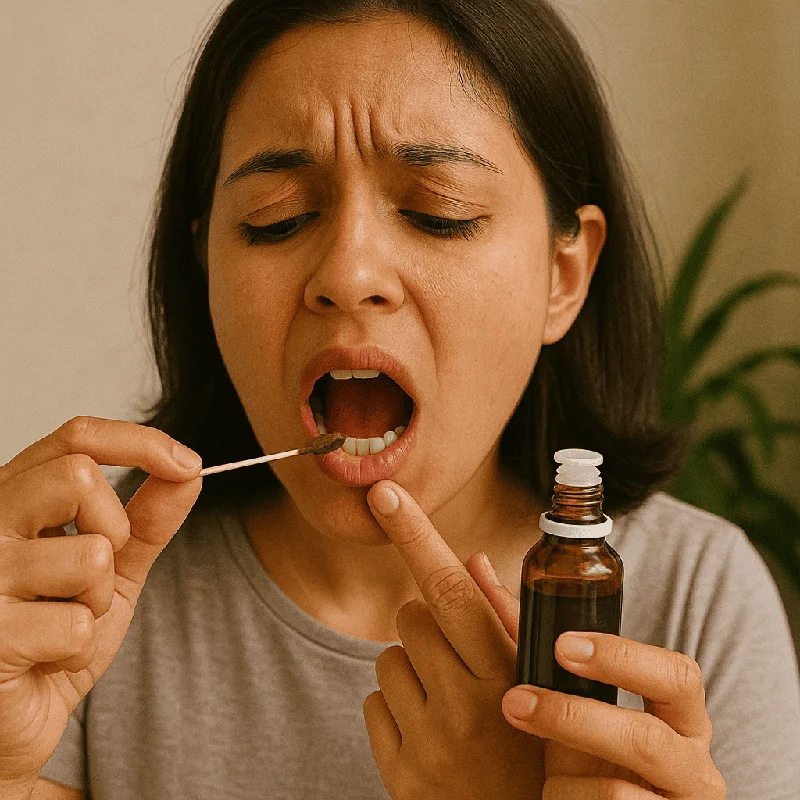
The best ayurvedic medicine for mouth ulcer depends on the severity and type of ulcer, but Khadiradi Vati stands out as the most widely recommended option — it's a classical Ayurvedic tablet you dissolve in the mouth that reduces pain, inflammation, and promotes healing within 3–5 days for most minor ulcers. Other highly effective options include Triphala Kashaya for gargling, Yashtimadhu (Licorice) for its soothing anti-inflammatory action, and topical application of turmeric mixed with honey directly on the sore.
But here's the thing — Ayurveda doesn't just treat the ulcer itself. It addresses why the ulcer appeared in the first place. Whether it's aggravated Pitta dosha, poor digestion, nutritional deficiencies, or chronic stress, the approach is to treat the root cause so ulcers don't keep coming back.
In this comprehensive guide, we'll walk you through everything: the specific medicines (with actual dosages), a step-by-step treatment protocol from Day 1 to full healing, home remedies you can start tonight, and importantly — when you should stop self-treating and see a doctor.
What Are Mouth Ulcers?
Mouth ulcers (medically called aphthous ulcers or canker sores) are open, painful lesions that form on the soft tissues inside the mouth — the inner cheeks, lips, tongue, gums, or the floor of the mouth. They appear as round or oval sores with a white or yellowish center surrounded by a red, inflamed border.
Most people experience mouth ulcers at some point in their lives. According to research, recurrent aphthous stomatitis (RAS) affects approximately 20% of the general population, making it one of the most common oral mucosal conditions worldwide.
Types of Mouth Ulcers (Minor, Major, Herpetiform)
Understanding which type you have matters because treatment intensity varies significantly:
| Type | Size | Healing Time | Scarring | Prevalence |
|---|---|---|---|---|
| Minor aphthous ulcers | Less than 10 mm | 7–14 days | No | ~80% of cases |
| Major aphthous ulcers | More than 10 mm | 2–6 weeks | Often yes | ~10% of cases |
| Herpetiform ulcers | 1–3 mm (clusters of 10-100) | 7–30 days | Sometimes | ~10% of cases |
Minor ulcers are what most people deal with — small, painful, but they resolve on their own. Major ulcers are deeper, larger, and can be genuinely debilitating. Herpetiform ulcers (despite the name, not caused by herpes virus) appear as clusters of tiny sores that can merge into larger irregular ulcers.
Symptoms and How to Identify Them
The primary symptoms include:
- Burning or tingling sensation 1–2 days before the ulcer appears (prodromal phase)
- Sharp pain, especially when eating spicy or acidic foods
- Round or oval sores with white/yellow center and red halo
- Difficulty swallowing, chewing, or even talking in severe cases
- Bad breath (halitosis)
- In serious cases: fever, swollen lymph nodes, general fatigue
A key identification point — mouth ulcers are not contagious, unlike cold sores which appear on the outside of the lips and are caused by herpes simplex virus.
Causes of Mouth Ulcers
Common Physical and Dietary Causes
The most frequent triggers include:
- Nutritional deficiencies: Low levels of iron, Vitamin B12, zinc, and folic acid are strongly linked to recurrent ulcers. A 2009 study published in the Journal of Oral Pathology & Medicine found that B12 supplementation reduced ulcer episodes significantly even in patients without measurable deficiency.
- Mechanical trauma: Accidental cheek biting, sharp tooth edges, ill-fitting dentures, or aggressive tooth brushing
- Food triggers: Citrus fruits, tomatoes, chocolate, coffee, cheese, nuts, and highly spicy foods
- Sodium lauryl sulfate (SLS) in toothpastes — studies suggest switching to SLS-free toothpaste can reduce recurrence by up to 81%
Stress, Hormones, and Immune Factors
- Psychological stress is one of the most underestimated triggers. Cortisol elevation weakens mucosal immunity
- Hormonal fluctuations: Many women report ulcers during menstruation (luteal phase), suggesting a progesterone link
- Weakened immune system: HIV, autoimmune conditions, or immunosuppressive medications
- Smoking cessation: Paradoxically, some people develop mouth ulcers after quitting smoking, likely due to changes in oral mucosa keratinization
Underlying Health Conditions
Recurrent mouth ulcers can be a symptom of systemic diseases:
- Crohn's disease and ulcerative colitis (inflammatory bowel diseases)
- Celiac disease (gluten intolerance)
- Behçet's disease (causes ulcers in mouth, genitals, and eyes)
- Iron deficiency anemia
- Reactive arthritis
If your ulcers recur frequently (more than 3–4 times per year) and don't respond to standard treatment, screening for these conditions is strongly recommended.
Mouth Ulcers in Ayurveda (Mukha Paka)
In Ayurvedic classical literature, mouth ulcers are described as Mukha Paka — literally meaning "inflammation/cooking of the mouth." Acharya Sushruta, in his foundational text Sushruta Samhita, classified oral diseases under Mukha Roga and described 65 types of oral cavity diseases.
Role of Pitta Dosha in Mouth Ulcers
- Ayurveda considers mouth ulcers primarily a Pitta dosha disorder. Pitta governs metabolism, heat, and transformation in the body.
- When Pitta becomes aggravated — through spicy food, excessive sun exposure, emotional irritability, skipped meals, or alcohol — it manifests as inflammation, burning, and ulceration in the oral cavity.
People with a Pitta-dominant constitution (Pitta Prakriti) are naturally more prone to mouth ulcers. If you tend to have a warm body temperature, get irritated easily, prefer cold drinks, and have a strong appetite — you likely have a Pitta constitution and should pay extra attention to Pitta-balancing lifestyle choices.
Ama (Toxins) and Digestive Fire (Agni)
Beyond Pitta, Ayurveda identifies Ama (metabolic toxins from improperly digested food) as a contributing factor. When Agni (digestive fire) is weak or irregular, Ama accumulates in the body and finds expression through mucosal surfaces — including the mouth.
This is why Ayurvedic treatment for mouth ulcers almost always includes digestive correction alongside topical relief. You can't just treat the sore; you have to fix the digestion.
Five Principles of Ayurvedic Treatment
Classical Ayurvedic treatment of Mukha Paka follows five therapeutic principles:
- 1.Pittasamaka — Pacifying aggravated Pitta dosha
- 2.Shothohara — Reducing inflammation and swelling
- 3.Vedanastapaka — Pain relief
- 4.Vrunashodana/Vrunaropana — Wound cleansing and healing
- 5.Raktaprasadana — Blood purification
Every medicine and remedy we discuss below works through one or more of these mechanisms. This systematic approach is what makes Ayurvedic treatment effective not just for symptom relief, but for preventing recurrence.
Best Ayurvedic Medicines for Mouth Ulcers
Oral Medicines (Internal Use)
Khadiradi Vati
The gold standard for mouth ulcers in Ayurveda. Khadiradi Vati is a classical formulation mentioned in Sahasra Yoga text that combines Khadira (Acacia catechu), Javitri (Mace), Karpura (Camphor), and other herbs.
- How to use: Dissolve 1–2 tablets slowly in the mouth, 3–4 times daily (total 6–8 tablets/day). Do not chew or swallow whole.
- Dosage duration: 5–7 days for acute episodes; up to 2 weeks for stubborn ulcers
- How it works: Khadira has potent astringent and antimicrobial properties. The tablet creates a protective film over the ulcer while reducing inflammation.
- Expected healing time: Noticeable pain reduction within 24–48 hours; ulcer healing in 3–5 days for minor ulcers
Yashtimadhu (Licorice) Tablets/Churna
Yashtimadhu (Glycyrrhiza glabra) is one of the best Pitta-pacifying herbs. A 2012 study published in the Journal of Contemporary Dental Practice found that licorice-based preparations reduced ulcer size and pain scores significantly compared to placebo.
- How to use: 500 mg tablet twice daily after meals, or mix ½ teaspoon Yashtimadhu churna with honey and apply topically
- Duration: 7–14 days
- Caution: Not recommended for people with hypertension, as prolonged use of licorice can raise blood pressure
Aarogyavardhini Vati
Used when mouth ulcers are associated with digestive dysfunction or liver sluggishness. This formulation addresses the Ama component.
- How to use: 1–2 tablets twice daily before meals with warm water
- Duration: 2–4 weeks under practitioner guidance
Avipathy Churna (Avipattikara Churna)
Specifically useful when ulcers are linked to hyperacidity or Pitta aggravation in the GI tract. Contains Triphala, Trivrit, and other Pitta-pacifying herbs.
- How to use: 3–5 grams (approximately 1 teaspoon) with warm water or milk at bedtime
- Duration: 2–3 weeks
Topical Applications
Turmeric + Honey Paste
Perhaps the simplest and most effective home remedy. Turmeric (Haridra) is anti-inflammatory and antimicrobial; honey is a natural wound healer with osmotic action.
- Recipe: Mix ½ teaspoon turmeric powder with 1 teaspoon raw honey
- Application: Apply directly on the ulcer 2–3 times daily, 15 minutes before eating. Let it sit for as long as possible before rinsing
- Expected results: Pain relief within 1–2 applications; healing accelerated by 2–3 days
Coconut Oil Application and Oil Pulling
Coconut oil contains lauric acid, which has documented antimicrobial and anti-inflammatory properties. A 2016 study in the Nigerian Journal of Clinical Practice confirmed the antibacterial efficacy of coconut oil against oral pathogens.
- Direct application: Dab virgin coconut oil on the ulcer using a clean finger or cotton swab, 3–4 times daily
- Oil pulling technique: Take 1 tablespoon of virgin coconut oil, swish it around the mouth for 15–20 minutes (start with 5 minutes if difficult), spit out, and rinse with warm water. Do this on an empty stomach every morning.
Ghee Application
Medicated or plain ghee (clarified butter) is one of the best Pitta-pacifying substances in Ayurveda. Apply a thin layer of ghee directly over the ulcer before bed. It forms a protective barrier and delivers fat-soluble healing compounds to the tissue.
Tankana Bhasma (Borax) + Honey
A powerful but lesser-known remedy. Tankana Bhasma (dehydrated/purified borax) mixed with honey creates a paste that can heal stubborn ulcers remarkably fast.
- How to use: Mix a pinch (approximately 125 mg) of Tankana Bhasma with ½ teaspoon honey. Apply to the ulcer twice daily.
- - Duration: 2–3 days maximum.
- This is potent — don't overuse.
- Note: Use only purified (Shodhit) Tankana Bhasma from a reputable source
Gargling and Mouth Rinse Formulas
Triphala Kashaya (Decoction)
Triphala — the combination of Amalaki (Emblica officinalis), Haritaki (Terminalia chebula), and Bibhitaki (Terminalia bellirica) — is arguably the most well-researched Ayurvedic formulation. A study published in PubMed Central (PMC) specifically demonstrated Triphala's efficacy in managing aphthous ulcers, noting its anti-inflammatory, antimicrobial, and antioxidant properties.
- Preparation: Boil 1 tablespoon of Triphala churna in 2 cups of water until reduced to 1 cup. Cool to lukewarm. Strain.
- Use: Gargle for 30–60 seconds, 2–3 times daily. Do not swallow large quantities.
Panchavalkala Kashaya
A decoction made from the barks of five trees (Vata, Ashwatha, Udumbara, Plaksha, and Parisha). Excellent wound-healing and antimicrobial properties.
- Use: Gargle 2–3 times daily with lukewarm decoction
Arimedadi Taila
A medicated oil referenced in classical texts, used for oil pulling and direct application in mouth diseases. Particularly effective for ulcers associated with bad breath and gum inflammation.
Comparative Table: Ayurvedic Medicines for Mouth Ulcers at a Glance
| Medicine | Type | Best For | How to Use | Onset of Relief | Healing Time |
|---|---|---|---|---|---|
| Khadiradi Vati | Oral dissolve | General mouth ulcers, pain relief | 1–2 tabs, 3–4x/day | 24–48 hours | 3–5 days |
| Triphala Kashaya | Gargle | Inflammation, recurrent ulcers | Gargle 2–3x/day | 1–2 days | 5–7 days |
| Turmeric + Honey | Topical paste | Acute painful ulcers | Apply 2–3x/day | Within hours | 4–6 days |
| Yashtimadhu | Oral/Topical | Pitta-type burning ulcers | 500 mg 2x/day or topical | 1–2 days | 5–7 days |
| Coconut Oil Pulling | Oral rinse | Prevention & mild ulcers | 15–20 min daily swish | 2–3 days | 5–10 days |
| Tankana Bhasma + Honey | Topical | Stubborn, non-healing ulcers | Apply 2x/day, max 3 days | Within hours | 2–3 days |
| Gulkand + Praval Pisti | Internal | Heat-related ulcers, acidity | 1–2 tsp Gulkand + 250mg Praval, 2x/day | 2–3 days | 7–10 days |
| Arimedadi Taila | Oil pulling/topical | Ulcers with bad breath | Swish/apply 2x/day | 1–2 days | 5–7 days |
Don't wait or self medicate. Start chat with Doctor NOW
Step-by-Step Treatment Protocol: Day 1 to Full Healing
No competitor out there gives you a clear, day-by-day protocol. Here's one based on classical Ayurvedic principles and practical clinical experience:
Day 1–2: Acute Relief Phase
- Morning: Oil pulling with coconut oil or Arimedadi Taila (15 minutes, empty stomach)
- After brushing: Gargle with lukewarm Triphala Kashaya
- Apply turmeric-honey paste directly on the ulcer
- Start Khadiradi Vati — dissolve 1 tablet every 3–4 hours (maximum 6–8/day)
- Diet: Switch to soft, cooling foods. Absolutely avoid spicy, salty, acidic, and crunchy foods
- Before bed: Apply ghee or coconut oil on the ulcer
Day 3–5: Active Healing Phase
- Continue all Day 1–2 interventions
- If ulcer is stubborn, add Tankana Bhasma + Honey application (replace turmeric paste for these 2 days)
- Start internal Pitta pacification: Gulkand (rose petal preserve) — 1–2 teaspoons with cold milk, twice daily
- If digestive issues present: Add Avipattikara Churna at bedtime
Day 5–7: Resolution Phase
- Pain should be significantly reduced by now. Reduce Khadiradi Vati to 3–4 tablets/day
- Continue gargling with Triphala Kashaya
- Gradually reintroduce normal diet (still avoid extreme spices)
- Continue oil pulling as a preventive habit
Day 7–14: Prevention of Recurrence
- If healed, stop topical applications
- Continue Triphala gargling once daily for another week
- Take Amalaki (Amla) churna — 1 teaspoon daily with water — as a Rasayana (rejuvenative) for mucosal immunity
- Consider Chyawanprash (1–2 teaspoons daily) for ongoing immune support
> Important: If the ulcer hasn't shown improvement by Day 7, or has worsened, consult an Ayurvedic practitioner or physician. Do not continue self-treatment beyond 2 weeks for a non-healing ulcer.
What Are the Best Natural Indian Remedies for Mouth Ulcers?
Beyond classical Ayurvedic formulations, several single herbs and kitchen-cabinet remedies have strong traditional backing:
Tulsi (Holy Basil)
Chew 4–5 fresh Tulsi leaves, 2–3 times daily. Tulsi has documented immunomodulatory and anti-inflammatory properties. It also freshens breath and has mild analgesic effects on oral tissue.
Mulethi (Licorice Root)
Chew a small piece of raw Mulethi root, or gargle with Mulethi water. The deglycyrrhizinated form (DGL) has been studied specifically for aphthous ulcers — a 2008 study found that DGL mouthwash reduced ulcer size by 50–75% within 3 days.
Amla (Indian Gooseberry)
- Rich in Vitamin C and a powerful Pitta pacifier. Eat fresh amla, drink amla juice (20 ml diluted in water), or take Amalaki churna.
- Amla also addresses the nutritional deficiency angle — it's one of the richest natural sources of Vitamin C.
Chandana (Sandalwood)
Sandalwood paste mixed with rose water, applied on the ulcer, provides a cooling, soothing effect. Particularly helpful for ulcers caused by excessive body heat.
Usheera (Vetiver)
Usheera water (Khus water) is an excellent internal coolant. Drinking Usheera-infused water throughout the day helps pacify Pitta systemically.
Rejuvenation Therapy (Rasayana) for Recurrent Mouth Ulcers
If you're someone who gets mouth ulcers repeatedly — say, every month or two — the issue likely goes deeper than local inflammation. Ayurveda recommends Rasayana therapy (rejuvenation) to strengthen immunity and rebuild tissue resilience:
- Chyawanprash: 1–2 teaspoons daily with warm milk. Contains Amla as the base with 40+ herbs. Strengthens immunity and acts as a systemic antioxidant.
- Brahma Rasayana: Particularly useful when recurrent ulcers are stress-related
- Giloy (Guduchi/Tinospora cordifolia): 500 mg capsule twice daily or fresh juice 15–20 ml daily. A 2017 study in the Indian Journal of Pharmacology confirmed its immunomodulatory activity.
- Amalaki Rasayana: Specifically targets Pitta-related tissue degeneration
For chronic, recurrent cases, consider consulting an Ayurvedic doctor about Shodhana therapy (purificatory/Panchakarma procedures) — specifically Virechana (therapeutic purgation) which directly addresses Pitta aggravation at its root. This is typically recommended when simpler treatments haven't controlled recurrence.
Diet and Lifestyle Recommendations (Ahara-Vihara)
Foods to Eat
- Cooling foods: Cucumber, watermelon, pomegranate, bottle gourd, tender coconut water
- Dairy: Cold milk, buttermilk (Takra), ghee
- Grains: Rice, wheat, oats — well-cooked and easy to digest
- Gulkand (rose petal jam): 1–2 teaspoons daily — one of the best Pitta pacifiers
- Coriander water: Soak 1 tablespoon coriander seeds in a glass of water overnight, strain and drink in the morning
Foods to Strictly Avoid
- Chillies, hot spices, vinegar, and fermented foods
- Citrus fruits (oranges, lemons, pineapple) during active ulcers
- Coffee, alcohol, and carbonated beverages
- Extremely salty or crunchy foods (chips, toast) that can traumatize the ulcer
Lifestyle Changes
- Oral hygiene: Use a soft-bristled brush. Switch to an SLS-free, herbal toothpaste
- Stress management: Practice Pranayama (especially Sheetali and Sheetkari — cooling breathwork), meditation, or yoga
- Don't skip meals: Irregular eating aggravates both Pitta and Agni
- Stay hydrated: At least 8–10 glasses of water daily, preferably at room temperature or slightly cool
- Sun protection: If you're Pitta-dominant, excessive sun exposure can trigger ulcers.
- Carry an umbrella — this might sound odd, but it's a classical Pitta-management recommendation
Mouth Ulcers in Children and Pregnant Women
This is a topic that virtually no online resource covers adequately, yet these are the populations that need the most careful guidance.
For Children (Ages 2–12)
- Safe remedies: Honey application (for children over 1 year), coconut oil application, Triphala gargle (if old enough to gargle without swallowing)
- Khadiradi Vati: Half tablet, 2–3 times daily for children above 5 years (dissolved in mouth under supervision)
- Avoid: Tankana Bhasma, strong herbal decoctions, and any Bhasma preparations without practitioner guidance
- Common cause in children: Often linked to Vitamin B12 or iron deficiency — get bloodwork done if ulcers recur more than 3 times in 6 months
For Pregnant Women
- Safe remedies: Coconut oil application, ghee application, Gulkand with cold milk, gentle Triphala gargle
- Avoid: Aarogyavardhini Vati, Avipattikara Churna, Aloe vera juice internally, and any purgative herbs
- Important: Many Ayurvedic formulations contain herbs that can stimulate uterine contractions. Always consult an Ayurvedic practitioner before taking any internal medicine during pregnancy.
When to See a Doctor: Red Flags You Shouldn't Ignore
Ayurvedic self-treatment is appropriate for occasional, minor mouth ulcers.
However, seek medical attention immediately if:
- Ulcer persists for more than 3 weeks without any improvement
- Unusually large ulcers (greater than 1 cm) or rapidly spreading sores
- High fever accompanies the ulcers
- Bleeding from the ulcer that doesn't stop
- Ulcers extending to the lips (outer lip involvement suggests a different diagnosis)
- Difficulty swallowing or breathing
- New ulcers appearing before old ones heal (constantly having active ulcers)
- Unexplained weight loss combined with oral ulcers
- Suspected drug reaction (certain medications like NSAIDs, beta-blockers, and chemotherapy drugs cause oral ulceration)
- Non-healing oral ulcers can, in rare cases, be a sign of oral malignancy (cancer).
- This is not to cause panic — the vast majority of mouth ulcers are benign. But any ulcer that doesn't heal in 3 weeks deserves professional evaluation, period.
Interaction with Conventional Medicine
If you're already taking conventional medication:
- Yashtimadhu can interact with anti-hypertensive and diabetic medications
- Triphala may have mild laxative effects that could interact with bowel medications
- Tankana Bhasma should not be used alongside antifungal medications without medical oversight
- Always inform your doctor (both Ayurvedic and allopathic) about all medications you're taking
Frequently Asked Questions (FAQ)
How to treat mouth ulcers in Ayurveda?
Ayurvedic treatment for mouth ulcers follows a three-pronged approach: (1) topical application of healing substances like turmeric-honey paste, medicated ghee, or coconut oil directly on the ulcer, (2) internal medicines like Khadiradi Vati and Yashtimadhu to reduce Pitta dosha and inflammation, and (3) dietary and lifestyle changes to prevent recurrence — avoiding spicy and acidic foods, managing stress, and maintaining good oral hygiene. For chronic cases, Panchakarma procedures like Virechana may be recommended.
What is the Ayurvedic mouth ulcer tablet?
The most commonly prescribed Ayurvedic tablet for mouth ulcers is Khadiradi Vati. It's a classical formulation that you slowly dissolve in the mouth (not swallow). The recommended dosage is 1–2 tablets, 3–4 times daily. Other tablets include Eladi Vati and Lavangadi Vati. These are available from major Ayurvedic manufacturers like Kottakkal Arya Vaidya Sala, which produces Khadiradi Gulika — their version of this formulation.
What is the best natural medicine for mouth ulcers?
For immediate, accessible relief, a paste of turmeric powder mixed with raw honey applied directly on the ulcer is arguably the best natural medicine. It combines turmeric's anti-inflammatory and antimicrobial action with honey's wound-healing osmotic properties. Most people experience pain relief within the first application and visible healing within 3–4 days.
Which Ayurvedic mouth ulcer gel is available?
Several Ayurvedic gels are formulated specifically for oral ulcers. Look for gels containing ingredients like Mulethi (Licorice), Triphala, Yashtimadhu, or Aloe vera. These provide a convenient, ready-to-use alternative to traditional paste preparations. Apply the gel directly to the ulcer 2–3 times daily after meals and at bedtime.
Can Ayurvedic medicine for mouth infection also help with ulcers?
Yes, there's significant overlap. Mouth ulcers can become secondarily infected, and many Ayurvedic formulations like Triphala Kashaya and Khadiradi Vati have both wound-healing and antimicrobial properties. For ulcers with suspected fungal involvement (common in immunocompromised patients), Panchanimbadi Gulika and Nimbadi Kashayam — which have strong antifungal properties — are particularly effective.
How long do mouth ulcers take to heal with Ayurvedic treatment?
With consistent Ayurvedic treatment, minor mouth ulcers typically heal within 3–7 days (compared to 7–14 days without treatment). Major ulcers may take 2–4 weeks. Pain relief usually begins within 24–48 hours of starting treatment. Recurrent episodes decrease over 2–3 months with systemic Rasayana therapy and dietary modifications.
Conclusion: A Holistic Path to Healing
Mouth ulcers may seem like a minor problem, but for anyone who deals with them regularly, they can be genuinely miserable. The beauty of the Ayurvedic approach is that it works on multiple levels — providing immediate topical relief while correcting the underlying imbalances (Pitta aggravation, poor digestion, weakened immunity) that cause ulcers to keep returning.
Start with the simple remedies — turmeric-honey paste, coconut oil application, and Triphala gargling. If ulcers are frequent, incorporate Khadiradi Vati and consider a proper Ayurvedic consultation for personalized Rasayana therapy.
- Most importantly, pay attention to what your mouth ulcers are telling you.
- They're often an early signal that something — your diet, your stress levels, your digestion — needs attention. Listen to that signal, and you won't just heal the ulcer. You'll improve your overall health.
- *If you found this guide helpful, consider sharing it with someone who struggles with recurrent mouth ulcers.
- And remember — for any ulcer lasting more than 3 weeks, please consult a healthcare professional.*
Scientific Sources
- Ayurveda and Yoga in Cardiovascular Diseases — Mamtani R et al., 2004, Cardiology in review
- Bridging Ayurveda with evidence-based scientific approaches in medicine — Patwardhan B, 2014, The EPMA journal
- Synergy effects of herb extracts: pharmacokinetics and pharmacodynamic basis — Yang Y et al., 2014, Fitoterapia
- Optimizing Health - Integrative Medicine & Poor Performance — Henneman K, 2022, The Veterinary clinics of North America. Equine practice
- Evidence-based approaches for the Ayurvedic traditional herbal formulations: toward an Ayurvedic CONSORT model — Narahari SR et al., 2008, Journal of alternative and complementary medicine (New York, N.Y.)
- Unconventional antidiabetic agents(https://pubmed.ncbi.nlm.nih.gov/17484443/) — Rustenbeck I, 2007, Medizinische Monatsschrift fur Pharmazeuten
- Spices: Potential Therapeutics for Alzheimer's Disease — Satheeshkumar N et al., 2016, Advances in neurobiology
- Traditional Indian systems of medicine — Lodha R et al., 2000, Annals of the Academy of Medicine, Singapore
- Confused mystification of Ayurvedic concepts — Krishna GL, 2025, Indian journal of medical ethics
- Complementary and Alternative Medicine for Management of Premature Ejaculation: A Systematic Review — Cooper K et al., 2017, Sexual medicine
- Exploring the signature gut and oral microbiome in individuals of specific Ayurveda prakriti — Shalin TV et al., 2021, Journal of biosciences
- Ayurveda Management of Allergic Rhinitis: Protocol for a Randomized Controlled Trial — Mata S et al., 2024, JMIR research protocols
- Direct evidence for GABAergic activity of Withania somnifera on mammalian ionotropic GABAA and GABAρ receptors — Candelario M et al., 2015, Journal of ethnopharmacology
- Herbal treatments of asthma: a systematic review — Singh BB et al., 2007, The Journal of asthma : official journal of the Association for the Care of Asthma
- Treatment of the common cold with herbs used in Ayurveda and Jamu: monograph review and the science of ginger, liquorice, turmeric and peppermint — Wardani RS et al., 2023, Drugs in context
- The role of alternative medicine in treating postnatal depression — Mantle F, 2002, Complementary therapies in nursing & midwifery
- Ayurpharmacoepidemiology en Route to Safeguarding Safety and Efficacy of Ayurvedic Drugs in Global Outlook — Debnath P et al., 2017, Journal of evidence-based complementary & alternative medicine
- An Insight of Clinical Evidence of Ayurveda Interventions in the Management of COVID-19 Patients — Maideen NMP et al., 2022, Infectious disorders drug targets
- Nutmeg (Myristica fragrans Houtt.) essential oil: A review on its composition, biological, and pharmacological activities — Ashokkumar K et al., 2022, Phytotherapy research : PTR
- Review of grey literature on Ayurveda wound healing formulations and procedures - A systematic review — Dudhamal TS, 2023, Journal of Ayurveda and integrative medicine
Questions from users
How long does Shodhana therapy take to show results for mouth ulcers?
Mia
1 day ago
Shodhana therapy, particularly Virechana, can take between 2 to 3 weeks to start showing results for mouth ulcers, depending on the individual's condition and adherence to the treatment. This Panchakarma procedure aims to address underlying Pitta imbalances, which are often linked to mouth ulcers. The process involves internal purification using herbal formulations like Triphala and Trivrit. It's crucial to consult with a qualified Ayurvedic practitioner for personalized advice. If ulcers persist or worsen during treatment, see a healthcare provider to rule out other causes.
What is the role of coconut oil in treating mouth ulcers according to Ayurveda?
Zayden
11 days ago
Coconut oil plays a part in soothing mouth ulcers by providing a cooling effect that helps balance Pitta dosha, often linked to mouth ulcers. It moisturizes and forms a protective barrier over the ulcee, reducing irritation. So applying coconut oil before bed can be really calming and supportive for the healing process.
What is the best Ayurvedic treatment for stubborn mouth ulcers that last longer than two weeks?
Summer
20 days ago
For stubborn mouth ulcers lasting over two weeks, Khadiradi Vati can really help. Let it dissolve in your mouth, 6-8 tablets a day. Combine with honey and turmeric paste for added soothing. Stay on this routine for about two weeks. Maintain good oral hygiene and avoid spicy, acidic foods, as they may aggravate the condition!
What is the best way to use DGL mouthwash for treating mouth ulcers?
Emily
30 days ago
For using DGL mouthwash, swish about one teaspoon of the solution in your mouth for 1-2 mins, focusing on the ulcer area. Do it 2-3 times a day until they improve, usually within a few days. Make sure the mouthwash you're using is well mixed. If ulcers persist, consider evaluating your diet, stress level, or seek professional advice.
Can I use Ayurvedic treatments for mouth ulcers if I have a sensitive stomach?
Paige
47 days ago
Yes, you can use Ayurvedic treatments for mouth ulcers with a sensitive stomach, but it's important to be cautious. Stick to gentle remedies like a neem or mint rinse. A few other safe bets could be licorice root or aloe vera gel. But definitely consult with an Ayurvedic practitioner to make sure it fits your specific needs and dosha balance.
Is it safe to use Ayurvedic remedies for mouth ulcers during pregnancy?
Liam
57 days ago
It's generally acknlowedged safe to use mild Ayurvedic remedies for mouth ulcers during pregnancy, but it's super important to check with a healthcare provider first. Some herbs might not suit everyone, especially during pregnancy. Consider cooling foods like coconut water and avoid irritants like spicy stuff. Just keep it simple and gentle!
What is the role of diet in preventing mouth ulcers according to Ayurveda?
Tanner
67 days ago
In Ayurveda, diet plays a big role in preventing mouth ulcers! It's about reducing pitta, which is linked to inflammation. So, balancing spices and avoiding very hot, spicy or sour foods can help. Focus on cooling foods like cucumber, watermelon or coconut water. Also, drinking plenty of water supports good agni, which is crucial. Remember, everyone's different, so it's good to notice what works best for your own body.
Can I use Ayurvedic remedies for mouth ulcers while taking other medications?
Hunter
76 days ago
Yes, it's possible to use Ayurvedic remedies for mouth ulcers alongside other medications. However, it's important to be cautious. Herbal remedies can interact with other treatments, so talking to your healthcare provider or an Ayurvedic practitioner would be a smart move. They'll help ensure you're not causing any unwanted interactions!
Can I use Ayurvedic remedies for mouth ulcers if I have high blood pressure?
Morgan
86 days ago
Yes, you can use Ayurvedic remedies for mouth ulcers even if you have high blood pressure, but be careful with specific herbs like licorice, which can raise blood pressure more. It's smart to chat with an Ayurvedic practitioner who can tailor something specific for you. Avoid anything that can escacerbate your condition!
Is it safe to combine different Ayurvedic herbs for treating mouth ulcers?
Owen
96 days ago
Yep, combining Ayurvedic herbs can be safe if done mindfully. It's best to focus on herbs known to balance Pitta, like licorice and coriander. However, if you have specific health issues, consult an Ayurvedic practitioner to avoid any risky interactions. They can guide ya on what works well together for your unique constitution and situation.
Related articles

Dental Disorders
How to Use Clove for Toothache: Natural Relief for Pain
Discover how to use clove for toothache relief. Learn clove remedies, how it helps reduce pain, and safe ways to apply clove or clove oil on aching teeth
9,842

Dental Disorders
How to Make Gums Strong at Home Using Natural Methods
Discover how to make gums strong at home using Ayurvedic remedies, vitamins, foods, and gum care practices. Improve your oral health naturally and effectively
5,082

Dental Disorders
Gum Tone Tooth Powder
Exploration of Gum Tone Tooth Powder
2,222

Dental Disorders
Oral Lichen Planus Treatment in Ayurveda
Oral lichen planus treatment in Ayurveda offers a promising, natural approach to managing a challenging condition by targeting its root causes through detoxification and dosha balancing.
4,145

Dental Disorders
What Is Oil Pulling? Ayurvedic Meaning, Method, and Benefits
What is oil pulling? Learn about the meaning, method, benefits, and Ayurvedic technique for teeth cleaning using oils like coconut oil and sesame oil
3,527

Dental Disorders
How to Cure TMJ Permanently: Ayurvedic, Natural, and At-Home Treatments
How to cure TMJ permanently? Discover Ayurvedic methods, self-care techniques, home remedies, and effective exercises for TMJ pain relief and jaw joint healing
4,642

Dental Disorders
How to Remove Alcohol Smell from Mouth Naturally and Effectively
Learn effective ways to remove alcohol smell from mouth using natural remedies, Ayurveda tips, and quick tricks to stay fresh, odor-free, and confident
17,705

Dental Disorders
How to Remove Tartar from Teeth Naturally at Home
Exploration of Effective Home and Ayurvedic Remedies to Remove Tartar from Teeth
4,170

Dental Disorders
How to Get Rid of Bitter Taste in Mouth: Causes, Remedies, and Ayurvedic Treatment
How to get rid of bitter taste in mouth? Discover home remedies, Ayurvedic tips, and how to treat bitter taste after fever or when sick
6,312
Dental Disorders
Best Manjan for Teeth – Ayurvedic Oral Care for a Bright Smile
Discover the best manjan for teeth—a traditional Ayurvedic dental powder that cleans, whitens, and strengthens your teeth while promoting overall oral health.
3,818
Related consultations on the topic
Legal
Additional Documents
© 2024 Ask Ayurveda. All rights reserved.