Ask Ayurvedic doctor a question and get a consultation online on the problem of your concern in a free or paid mode. More than 2,000 experienced doctors work and wait for your questions on our site and help users to solve their health problems every day.
FREE! Ask Ayurvedic Doctors 24/7

 Fast responses
 1000+ verified doctors
Body DetoxEar, Nose, and Throat DisordersGeriatrics & RejuvenationImmunodeficiencyInfertility TreatmentNutritionOrthopedic DisordersPediatricsRespiratory DisordersSexually Transmitted Diseases (STDs)Surgery RecoveryUrological DisordersVascular DisordersDental DisordersEndocrinological DisordersGastrointestinal DisordersYoga TherapyGeneral MedicineAllergic DisordersCardio DisordersGynecology and ObstetricsCosmetologySkin and Hair DisordersEye DisordersInfectious DiseasesMental DisordersNeurological DisordersOncologyPanchakarmaSexual Health & DisordersSports Medicine
Published on 10/09/24
(Updated on 07/08/26)
2,647
Ayurveda for Immunity: Tips and Practices for a Healthier Tomorrow
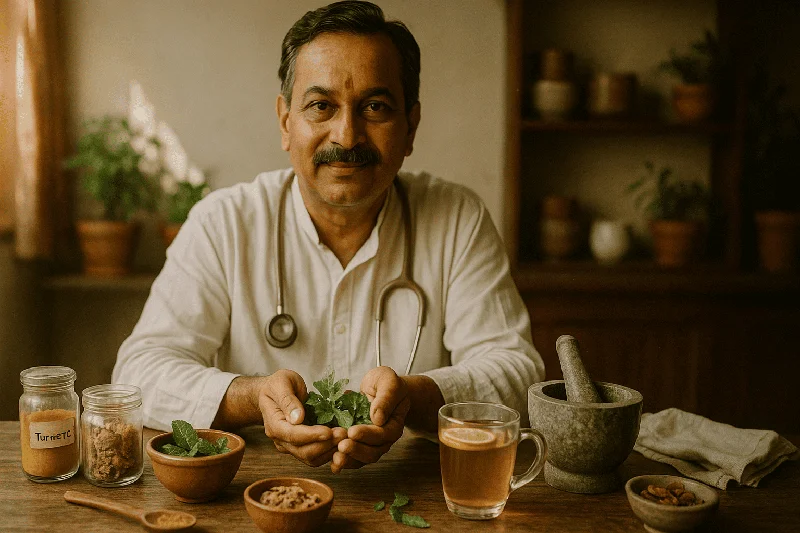
- Ayurveda strengthens immunity by balancing the three doshas (Vata, Pitta, Kapha), kindling your digestive fire (Agni), and building Ojas — the vital essence that determines how well your body resists disease. Unlike the modern "one-pill-fixes-all" approach, Ayurvedic immunity is a layered system built on specific herbs (Ashwagandha, Guduchi, Tulsi, Amla), daily routines (Dinacharya), seasonal protocols (Rutucharya), detoxification (Panchakarma), and stress management through yoga and pranayama.
- This guide covers every layer — with exact dosages, contraindications, a full morning-to-night plan, and the scientific evidence behind it all.
If you've ever wondered why some people rarely get sick while others catch every cold that passes through the office, Ayurveda has an answer that modern science is only now beginning to validate. It's not just genetics. It's not just luck. It's about how you live, eat, sleep, and manage the invisible fire in your gut that determines everything.
Let's break it down.
What Is Immunity in Ayurveda? Understanding Bala, Ojas & Vyadhikshamatva
In Ayurveda, immunity isn't a single concept — it's described through three interconnected terms: Bala (strength), Ojas (vital essence), and Vyadhikshamatva (disease resistance). The ancient text Charaka Samhita classifies immunity into three distinct types, each requiring a different approach.
Sahajabala — Innate (Genetic) Immunity
Sahajabala is the immunity you're born with. It's determined by your parents' health, the conditions during conception (Shukra and Artava Dhatu quality), and your Prakriti (constitutional type). You can't change Sahajabala, but you can support it. A person born with a strong Kapha constitution, for instance, naturally tends to have greater physical resilience — though they may be more prone to respiratory congestion.
Kalajabala — Seasonal and Age-Related Immunity
Your immunity fluctuates with the seasons and your age. Ayurveda recognizes that Bala is naturally strongest during Hemanta Ritu (early winter) and weakest during Greeshma Ritu (summer). Children and the elderly have inherently lower Kalajabala, which is why Rutucharya — seasonal regimen — isn't optional; it's essential.
Yuktikrutabala — Acquired Immunity You Can Build
- This is where you have real power. Yuktikrutabala is the immunity you actively build through Rasayana (rejuvenation therapy), proper diet (Ahara), lifestyle (Vihara), and targeted herbal formulations.
- Every recommendation in this guide falls under this category — the immunity you earn through daily choices.
The Agni-Immunity Connection: Why Your Gut Decides Everything
- Here's something none of the popular guides adequately explain: in Ayurveda, your immune system begins in your gut.
- Specifically, it begins with Agni — your digestive fire.
When Agni is strong (Sama Agni), food is completely digested and transformed through seven Dhatus (tissue layers) until it produces Ojas, the final and most refined product of metabolism. Ojas is essentially your immune reserve.
When Agni is weak or irregular, undigested food creates Ama — a toxic, sticky residue that clogs channels (Srotas), disturbs dosha balance, and directly suppresses Ojas production.
How Ama Destroys Immunity
- Think of Ama as metabolic sludge. It coats your intestinal lining, blocks nutrient absorption, and creates a breeding ground for pathogens.
- Modern science draws a strikingly similar picture: intestinal permeability ("leaky gut"), dysbiosis, and chronic low-grade inflammation are now recognized as major contributors to immune dysfunction.
Signs of Ama accumulation:
- Coated tongue (white/yellow)
- Feeling heavy after meals
- Frequent bloating and gas
- Foggy thinking, lethargy
- Foul-smelling stools or breath
- Recurrent infections
How to Strengthen Agni
- Eat your largest meal at midday when Agni peaks (aligned with Pitta time, 10 AM–2 PM)
- Sip warm water or ginger tea throughout the day — never ice-cold beverages
- Add Agni-kindling spices: cumin, black pepper, ginger, turmeric, asafoetida
- Avoid incompatible food combinations (Viruddha Ahara) such as milk with fish, or fruit with meals
- Practice intermittent fasting or eat only when the previous meal is fully digested
Top Ayurvedic Herbs for Immunity: Dosages, Mechanisms & Evidence
Every competitor lists the same herbs. What nobody tells you is how much to take, for how long, and who should avoid them. Let's fix that.
Ashwagandha (Withania somnifera)
Mechanism: Ashwagandha is classified as a Rasayana and Balya (strength-promoting) herb. It modulates immunity by increasing Natural Killer (NK) cell activity and enhancing the production of immunoglobulins. A 2021 systematic review published in the Journal of Clinical Medicine analyzing data from multiple RCTs found that Ashwagandha root extract significantly increased IgG and IgM antibody levels. Dosage: 300–600 mg of standardized root extract (withanolides 5%), twice daily with warm milk or water, for 8–12 weeks. Best for: Vata and Kapha types. Reduces stress-induced immunosuppression.
Guduchi/Giloy (Tinospora cordifolia)
Mechanism: Guduchi is called "Amrita" — the root of immortality. It activates macrophages and increases white blood cell counts. A 2012 study in the Journal of Ethnopharmacology demonstrated its immunomodulatory action through enhanced phagocytic activity. It also works as a potent Ama-digesting herb.
- Dosage: 500 mg of aqueous stem extract, twice daily, or 15–30 ml of fresh Giloy juice on an empty stomach.
- Course: 4–8 weeks.
Best for: All dosha types. Particularly effective during seasonal transitions.
Tulsi (Ocimum sanctum)
Mechanism: Tulsi enhances T-helper cell activity and cytokine production. It also has documented antibacterial, antiviral, and antifungal properties. Dosage: 300–600 mg extract daily, or 5–7 fresh leaves chewed each morning. Can be taken continuously as it also doubles as an adaptogen. Best for: Kapha-type congestion and respiratory immunity.
Amla (Emblica officinalis)
Mechanism: Amla is the richest natural source of vitamin C (approximately 600–700 mg per fruit), and it contains tannins that protect the vitamin C from degradation during cooking. It nourishes all seven Dhatus and directly supports Ojas production. Dosage: 500–1000 mg of Amla powder daily, or 15–20 ml of fresh Amla juice. For maximum benefit, combine with honey and turmeric. Best for: Pitta types. Cools inflammation while building immunity.
Yashtimadhu (Glycyrrhiza glabra / Licorice)
Mechanism: Yashtimadhu has both immunomodulatory and anti-inflammatory properties. It supports respiratory mucosal immunity and soothes irritated tissues. Its glycyrrhizin content shows antiviral activity against several respiratory viruses. Dosage: 250–500 mg of root powder, twice daily, for up to 6 weeks. Caution: Must not be taken for more than 6 weeks continuously. Avoid in hypertension.
Comparative Table: Ayurvedic Immunity Herbs at a Glance
| Herb | Primary Action | Target Dosha | Daily Dosage | Max Duration | Key Contraindication |
|---|---|---|---|---|---|
| Ashwagandha | Adaptogen, NK cell activation | Vata, Kapha | 300–600 mg (2×) | 12 weeks | Hyperthyroidism, pregnancy (high dose) |
| Guduchi | Macrophage activation, Ama digestion | Tridoshic | 500 mg (2×) or 15–30 ml juice | 8 weeks | Autoimmune conditions (consult doctor) |
| Tulsi | T-helper cell support, antimicrobial | Kapha, Vata | 300–600 mg | Ongoing | May lower blood sugar; caution in diabetics on medication |
| Amla | Ojas builder, antioxidant | Pitta, Tridoshic | 500–1000 mg | Ongoing | Hyperacidity in some individuals |
| Yashtimadhu | Mucosal immunity, antiviral | Pitta, Vata | 250–500 mg (2×) | 6 weeks max | Hypertension, hypokalemia, pregnancy |
| Pippali | Bioavailability enhancer, lung tonic | Kapha, Vata | 125–250 mg (2×) | 4 weeks | Pitta aggravation, gastric ulcers |
Rasayana Formulations: Chyavanprash, Samshamani Vati & More
Individual herbs are powerful, but Ayurveda's greatest genius lies in synergistic formulations — Rasayanas that combine dozens of ingredients for amplified effect.
Chyavanprash
The king of Rasayanas. This 2,500-year-old formulation contains 40+ ingredients with Amla as the base, processed in ghee and sesame oil. A 2011 study published in the Indian Journal of Experimental Biology found that Chyavanprash significantly enhanced NK cell activity and improved neutrophil function in healthy volunteers.
Dosage: 1–2 teaspoons (10–20 g) daily, morning on an empty stomach with warm milk. Safe for long-term use.
Samshamani Vati (Guduchi Ghana Vati)
- A concentrated Guduchi extract in tablet form. Used extensively during COVID-19 based on AYUSH Ministry guidelines.
- Dose: 500 mg twice daily after meals.
Which Herb Is Best for Immunity?
There's no single "best" herb — it depends on your Prakriti and current imbalance. However, if forced to choose one, Guduchi (Giloy) is considered the most universally applicable immunomodulator in Ayurveda because it's Tridoshic (balances all three doshas) and has the broadest evidence base for direct immune cell activation.
How to Boost Immunity as Per Ayurveda: Your Complete Daily Plan (Dinacharya)
Knowing which herbs to take is only half the equation. Ayurveda insists that when and how you structure your day matters just as much. Here's a practical morning-to-night protocol that no other guide provides.
Morning Routine (5:30 AM – 9:00 AM)
| Time | Practice | Purpose |
|---|---|---|
| 5:30–6:00 AM | Wake during Brahma Muhurta | Aligns with natural Vata rhythm for mental clarity |
| 6:00 AM | Tongue scraping (copper scraper) + oil pulling (1 tbsp sesame/coconut oil, 10 min) | Removes overnight Ama, reduces oral pathogen load |
| 6:10 AM | Drink warm water with 1 tsp raw honey + ½ tsp turmeric | Kindles Agni, anti-inflammatory |
| 6:20 AM | Nasya — 2 drops Anu Taila in each nostril | Protects upper respiratory tract, lubricates nasal passages |
| 6:30–7:00 AM | Yoga asanas (Surya Namaskar × 5, Sarvangasana, Matsyasana) + 10 min Pranayama (Nadi Shodhana, Bhastrika) | Stimulates lymphatic flow, oxygenates tissues, balances doshas |
| 7:00–7:15 AM | Meditation (mindfulness or Mantra-based, 10–15 min) | Reduces cortisol, protects Ojas from stress depletion |
| 7:30–8:00 AM | Breakfast: warm, cooked, light (oatmeal with cardamom, stewed apple, or Moong dal porridge) + Chyavanprash 1 tsp | Nourishes without taxing Agni |
Midday Routine (12:00 PM – 2:00 PM)
This is when Pitta — and therefore Agni — is at its peak. Eat your largest, most nutrient-dense meal here.
- Include all six tastes (Shadrasa): sweet, sour, salty, pungent, bitter, astringent
- Add immunity-boosting spices: turmeric, cumin, coriander, black pepper
- Include ghee (1–2 tsp) — it carries fat-soluble nutrients and nourishes Ojas
- - Eat mindfully, without screens.
- This isn't a suggestion — distracted eating directly weakens Agni.
Evening Routine (6:00 PM – 10:00 PM)
| Time | Practice | Purpose |
|---|---|---|
| 6:00–7:00 PM | Light dinner (soup, khichdi, steamed vegetables) | Easy to digest; prevents Ama formation overnight |
| 7:30 PM | Kavala Gandusha (gargling with warm salt water or Triphala decoction) | Protects throat mucosa |
| 8:00–9:00 PM | Gentle walk (15 min) + Abhyanga with warm sesame oil on feet | Promotes Vata balance, induces sleep readiness |
| 9:30 PM | Golden milk (warm milk + turmeric + pinch of black pepper + Ashwagandha 300 mg) | Promotes deep sleep, Rasayana effect |
| 10:00 PM | Sleep (lights off) | Sleep before 10 PM honors the Kapha window; delays past 10 PM activate Pitta, causing restlessness |
Don't wait or self medicate. Start chat with Doctor NOW
Seven Ways to Boost Your Immune System Through Ayurvedic Diet & Nutrition
1. Eat Seasonally (Rutucharya)
Each season demands different foods:
- - Hemanta/Shishira (Winter): Heavy, oily, sweet foods. Ghee, sesame, root vegetables, warm soups.
- Immunity is naturally strong — nourish deeply.
- - Vasanta (Spring): Light, bitter, astringent foods.
- Barley, honey, green leafy vegetables.
- Kapha accumulates — cleanse gently.
- Greeshma (Summer): Cool, sweet, liquid-rich. Coconut water, milk, rice, sweet fruits. Avoid excess sour and pungent.
- - Varsha (Monsoon): Warm, easily digestible, slightly sour.
- Ginger tea, light grains.
- Agni is weakest — be careful with raw foods.
- - Sharad (Autumn): Bitter, sweet, cold-potency foods.
- Pitta detox season — favor astringent tastes.
2. Cook with Immunity Spices Daily
Turmeric (anti-inflammatory), black pepper (bioavailability enhancer), cumin (digestive), ginger (Agni-kindler), and garlic (antimicrobial) should be non-negotiables in your kitchen.
3. Never Skip Ghee
Ghee is not just fat — it's a Yogavahi (catalytic substance) that carries medicinal properties of herbs into deeper tissues. 1–2 teaspoons daily with meals supports Ojas directly.
4. Favour Warm, Cooked Food Over Raw
Raw food requires stronger Agni to digest. If your digestion is even slightly compromised, raw salads and smoothies create more Ama than nourishment.
5. Hydrate Wisely
- Warm or room temperature water throughout the day. Adding cumin seeds, coriander seeds, or fennel seeds to boiled water creates a simple Ama-detoxing drink.
- Cold water suppresses Agni — always avoid it during and after meals.
6. Include Fermented Foods (In Moderation)
Small amounts of buttermilk (Takra) with cumin and curry leaves support gut microbiome. But excessive fermentation (kombucha in large quantities, excessive pickle) can aggravate Pitta.
7. The 80% Rule
Eat until your stomach is 75–80% full. The remaining space allows Agni to work properly. Overeating is one of the fastest ways to create Ama.
Panchakarma and Detoxification: Clearing Ama to Restore Immunity
- When Ama has accumulated deeply, dietary changes alone won't cut it.
- That's when Panchakarma — Ayurveda's fivefold detoxification therapy — becomes necessary.
The Five Procedures
- 1.Vamana (therapeutic emesis) — clears Kapha from the respiratory tract
- 2.Virechana (purgation) — eliminates excess Pitta and liver toxins
- 3.Basti (medicated enema) — the most important for Vata balance; cleanses the colon
- 4.Nasya (nasal administration of medicated oils) — protects upper respiratory immunity
- 5.Raktamokshana (bloodletting) — used in specific conditions; removes blood-borne toxins
When to do Panchakarma: Ideally at seasonal junctions (Ritu Sandhi), especially at the transition between winter and spring, and again before monsoon. A full Panchakarma takes 7–21 days and must be done under a qualified Ayurvedic physician.
Home-Level Detox (When Full Panchakarma Isn't Possible)
- 3-day Kitchari cleanse (Moong dal + basmati rice + mild spices)
- Daily Triphala (½ tsp with warm water at bedtime) for gentle colon detox
- Self-Abhyanga (warm sesame oil massage) followed by a warm bath — stimulates lymphatic drainage
Contraindications and Safety: Who Should Be Careful
This is the section every other guide ignores, and honestly, it's irresponsible to skip.
Pregnancy
- Avoid: Ashwagandha in high doses, Guduchi, Aloe vera juice, Pippali, strong Panchakarma procedures
- Safe: Amla in moderate doses, Shatavari, mild spices, ghee, milk-based Rasayanas
- Always consult an Ayurvedic practitioner experienced in Prasuti Tantra (obstetrics)
Children (Bala Roga — Pediatric Ayurvedic Immunity)
- Children have developing Agni and delicate Dhatus.
- Dosages must be adjusted:
- Under 5 years: ¼ of adult dose; prefer Chyavanprash (½ tsp), Tulsi drops, and Amla juice
- 5–12 years: ½ of adult dose
- Avoid: Pippali in excess, strong bitters like Neem internally, any Panchakarma without expert supervision
Elderly
- Vata dominates in old age.
- Focus on gentle Rasayanas — Ashwagandha with warm milk, Chyavanprash, and Basti therapy. Avoid harsh purgation or emesis.
Drug Interactions
| Ayurvedic Herb | Interacts With | Risk |
|---|---|---|
| Ashwagandha | Thyroid medication, sedatives, immunosuppressants | May potentiate effects |
| Guduchi | Blood sugar-lowering drugs | Additive hypoglycemia |
| Tulsi | Anticoagulants, anti-diabetic drugs | May enhance blood-thinning and glucose-lowering |
| Yashtimadhu | Diuretics, cardiac glycosides, antihypertensives | Hypokalemia, fluid retention |
| Turmeric (high dose) | Anticoagulants (Warfarin) | Increased bleeding risk |
Bottom line: If you're on any prescription medication, consult both your physician and a qualified Ayurvedic doctor before starting herbal protocols.
Myths and Misconceptions About Ayurveda and Immunity
Myth 1: "Ayurveda Is Just Placebo"
- A 2022 systematic review in PMC (National Library of Medicine) analyzed 20 randomized controlled trials involving 1,661 participants and found statistically significant improvements in NK cell activity, T-helper cell counts, and immunoglobulin levels with Ayurvedic interventions.
- This isn't anecdotal — it's peer-reviewed evidence.
Myth 2: "Natural Means Safe for Everyone"
As the contraindications section above shows, "natural" does not mean universally safe. Yashtimadhu can raise blood pressure. Ashwagandha can overstimulate the thyroid. Context matters.
Myth 3: "Ayurveda Replaces Modern Medicine"
Ayurveda works best as a complementary system. For acute infections, emergencies, and serious conditions, conventional medicine is necessary. Ayurveda excels at prevention, chronic immune support, and recovery.
Myth 4: "One Herb Can Fix Your Immunity"
- Immunity in Ayurveda depends on Agni, Ojas, Dosha balance, mental health, sleep, and seasonal alignment.
- A single herb — no matter how powerful — cannot compensate for poor sleep, chronic stress, and a diet of processed food.
Integrating Ayurveda With Modern Medicine: A Practical Framework
This is a gap no competitor addresses, yet it's what most readers actually need.
- 1.Use Ayurveda for prevention and foundation: Daily Dinacharya, seasonal Rutucharya, Rasayana herbs, and dietary guidelines form your baseline immune strength.
- 2.Use modern medicine for diagnosis and acute care: Blood tests, imaging, antibiotics for bacterial infections, vaccinations — these are not in conflict with Ayurveda.
- 3.Inform both practitioners: If you're taking Guduchi tablets while also on metformin, both your Ayurvedic doctor and your endocrinologist need to know.
- 4.Post-illness recovery with Ayurveda: After an acute illness treated with antibiotics, Ayurvedic Rasayanas and Agni-rebuilding protocols help restore gut flora and tissue strength faster than doing nothing.
- The goal isn't Ayurveda versus modern medicine.
- It's Ayurveda with modern medicine — each covering the other's blind spots.
Frequently Asked Questions
What are the 7 best ways to boost your immune system naturally?
Ayurveda recommends: (1) Kindle Agni with proper eating habits, (2) Take Rasayana herbs daily, (3) Follow Dinacharya, (4) Practice Pranayama and Yoga, (5) Sleep before 10 PM, (6) Eat seasonally through Rutucharya, and (7) Detoxify with Panchakarma or home cleansing at seasonal transitions.
What is the strongest natural immune booster?
From an Ayurvedic perspective, Chyavanprash is considered the most complete natural immune booster because it combines 40+ synergistic ingredients. Among single herbs, Guduchi (Giloy) has the broadest evidence for direct immune cell activation across all dosha types.
Which Ayurvedic immunity booster is best for adults?
For general adult use, a combination of Ashwagandha (600 mg/day) + Chyavanprash (1–2 tsp/day) + seasonal Guduchi (500 mg twice daily during monsoon and winter transitions) provides a comprehensive protocol. Adjust based on your dosha.
What is the best Ayurvedic immunity booster for men?
Men, especially those dealing with high stress and physical labor, benefit most from Ashwagandha — it simultaneously supports immune function, testosterone levels, and stress resilience. Combine with Shilajit for enhanced stamina.
Are Ayurvedic immunity booster powders effective?
Powders (Churnas) are traditional and effective if they are from quality sources and taken correctly — typically with warm water, honey, or ghee as Anupana (vehicle). Tablets offer convenience, but Churnas allow your taste receptors to trigger appropriate digestive responses, which Ayurveda considers therapeutically important.
Can I take Ayurvedic immunity herbs with my regular medications?
Some combinations are safe; others are not. See the Drug Interactions table above. As a rule, maintain a 2-hour gap between Ayurvedic and conventional medicines, and always disclose all supplements to your prescribing doctor.
Final Thoughts: Building Immunity Is a Daily Practice, Not a Quick Fix
- Ayurveda doesn't promise overnight immunity.
- What it promises — and delivers, when practiced consistently — is a deeper, more resilient kind of health that modern medicine calls "immune homeostasis." It's the state where your body efficiently fights pathogens without overreacting (autoimmunity) or underperforming (immunodeficiency).
- Start small.
- Pick three practices from this guide — maybe tongue scraping, golden milk at night, and one Rasayana herb matched to your dosha. Do them for 30 days. Notice the difference. Then build from there.
Your immunity isn't built in a day. But every day, you're either building it or depleting it. Ayurveda just makes the building part a whole lot more intentional.
If you found this guide useful, consult a qualified Ayurvedic physician (BAMS or MD Ayurveda) before beginning any new herbal protocol — especially if you have pre-existing conditions, are pregnant, or are on prescription medication.
Scientific Sources
- Catharanthus roseus (L.) G.
- Don: A review of its ethnobotany, phytochemistry, ethnopharmacology and toxicities — Kumar S et al., 2022, Journal of ethnopharmacology
- Ayurveda for Animals — Dohmen L, 2025, The Veterinary clinics of North America. Small animal practice
- Botanical drugs in Ayurveda and Traditional Chinese Medicine — Jaiswal Y et al., 2016, Journal of ethnopharmacology
- Ayurvedic plumbism — Sadler M et al., 2017, Internal medicine journal
- Cancer--an ayurvedic perspective — Balachandran P et al., 2005, Pharmacological research
Questions from users
What dietary changes can support acquired immunity in Ayurveda?
Penelope
4 days ago
To support acquired immunity through dietary changes in Ayurveda, focus on incorporating foods that are rich in nutrients known to enhance the immune system. Increase your intake of fruits like amla, which is high in vitamin C, and spices like turmeric and ginger that have anti-inflammatory properties. Additionally, maintain a balanced diet with whole grains, nuts, and seeds, all of which contribute to robust immunity by nourishing the body's tissues. While herbs can be beneficial, consult with a healthcare provider if considering them, especially for specific health concerns or ongoing treatments.
How can I identify the signs of a Vata imbalance according to Ayurveda?
Savannah
13 days ago
Spotting a Vata imbalance can be a bit tricky, but here are some common signs: restlessness, dry skin, constipation, and feelings of anxiety or irregular sleep patterns. Vata's energy is airy and can lead to unpredictable habits. If you're feeling scattered or cold, that might be a hint. Try grounding foods like warm stews or root veggies!
What is the best time to take Guduchi for optimal immune support?
Violet
23 days ago
For optimal immune support, take Guduchi early in the morning on an empty stomach. This helps in better absorption and effectiveness. Since it's tridoshic, it balances all doshas, making it flexible for different body types. Just keep the dosage in mind — either 500mg twice daily or 15–30 ml of fresh juice. If you're start noticing any imbalances, you might adjust when you take it.
What is Guduchi and how does it enhance immune function according to Ayurveda?
Alexander
32 days ago
Guduchi, also known as Giloy, is a powerful herb in Ayurveda that's great for boosting immunity. It's tridoshic, meaning it helps balance all three doshas—Vata, Pitta, and Kapha. It does this by enhancing immune cell activity directly. It supports the digestive fire (agni) too, which is key for overall health. If you wnat to give it a try, consult with an Ayurvedic practitioner to find the best way to use it for your constitution.
Can I use Ashwagandha daily for immune support without overstimulating my thyroid?
Yara
41 days ago
It's generally safe to take Ashwagandha daily for immune support, as it’s a great adaptogen and Rasayana herb. However, it can overstimate thyroid function in some people, so it's good to be mindful of any changes like feeling jittery or anxious. If you're concerned, it might be a good idea to check in with a healthcare proffesional to find the best balance for you!
What is the connection between positive emotions and immune system health in Ayurveda?
Elizabeth
58 days ago
Positive emotions like joy and gratitude have a significant role in Ayurvedic health. They help balance the doshas and boost ojas, a vital energy linked to both immunity and vitality. This positive state strengthns the mind-body connection, supporting overall wellness including the immune system. So, laugh more, it'll do wonders for your health!
Is it safe to drink ginger tea when you have a cold?
Tiffany
67 days ago
Yes, drinking ginger tea is generally safe and can be quite helpful when you have a cold. It's warming and can help soothe sore throats and clear congestion. Just listen to your body – if you notice any discomfort, it's okay to stop or try something else. Always trust your inner wisdom!
Is it safe to drink Tulsi tea daily for immune support?
Mckenzie
77 days ago
Yeah, sipping Tulsi tea daily is generally safe and can boost your immune system for sure! But, listen to your body, ‘cause too much of anything, even good stuff, might lead to imbalances! If you're experiencing any weird symptoms, like stomach issues or anything else, it's always a good idea to check with a health pro.
What is the role of Tulsi tea in managing Kapha imbalance and improving immunity?
Lily
87 days ago
Tulsi tea's great for managing Kapha imbalance! It's an adaptogen, so it helps with stress and boosts immunity. Tulsi warms and dries up that heavy, sluggish Kapha energy, helping you feel light and energetic again. For immunity, Tulsi's antioxidant properties do wonders—keeps those colds at bay! Just be cautious not to overdo it.
How can daily routines from Ayurveda help strengthen my immune system?
John
96 days ago
Following a daily routine, or "dinacharya," can really boost your immune system. Starting your day early with light exercise or yoga, eating meals at the same time daily, and getting to sleep early helps balance your doshas. Don't forget warm water sips throughout the day and occasional oil massages to keep your body nourished and happy! If you have any dosha imbalances, keep those in mind for your routine!
Related articles

Immunodeficiency
Ayurvedic Treatment for Lupus – Natural Approaches for Managing Lupus Symptoms
Explore Ayurvedic treatment for lupus, including effective herbs, therapies, and lifestyle changes. Discover natural methods to alleviate lupus symptoms and enhance overall well-being.
4,336

Immunodeficiency
Madhusnuhi Rasayanam Uses, Dose, Side Effects, Ingredients
Exploration of Madhusnuhi Rasayanam Uses, Dose, Side Effects, Ingredients
1,912

Immunodeficiency
Guduchyadi Kashayam Benefits, Dosage, Ingredients, Side Effects
Exploration of Guduchyadi Kashayam Benefits, Dosage, Ingredients, Side Effects
3,497

Immunodeficiency
How to Increase the Immunity Power: Ayurvedic and Natural Methods
Exploration of Boost Your Immunity Naturally: Tips, Foods, and Ayurvedic Practices
2,371

Immunodeficiency
What Does Vitamin C Do? Ayurvedic Benefits, Foods, and Deficiency
What does vitamin C do? Learn its key benefits, top vitamin C foods, how it helps skin and immunity, and how to spot signs of vitamin C deficiency naturally
2,287

Immunodeficiency
Amavata Shloka – Understanding the Ayurvedic View on Rheumatism
Discover the Amavata Shloka, an important verse in Ayurveda that describes the causes and treatments of Amavata, or rheumatoid arthritis, through ancient wisdom.
3,311

Immunodeficiency
How to Make Chyawanprash at Home: Traditional Recipe and Ingredients
Learn how to make chyawanprash at home using Ayurvedic ingredients. Discover the full recipe, benefits, and traditional method based on classical Ayurveda texts
13,569

Immunodeficiency
Samshamani Vati Benefits, Dosage, Ingredients, Side Effects
Exploration of Samshamani Vati Benefits, Dosage, Ingredients, Side Effects
4,719

Immunodeficiency
Septilin Tablet
Exploration of Septilin Tablet
12,340

Immunodeficiency
Mahasudarshan Kadha
Exploration of Mahasudarshan Kadha
4,212
Related consultations on the topic
Legal
Additional Documents
© 2024 Ask Ayurveda. All rights reserved.