FREE! Ask Ayurvedic Doctors 24/7

 Fast responses
 1000+ verified doctors
Panchendriya Vardhan Tel: Enhance Your Senses with Ayurvedic Oil
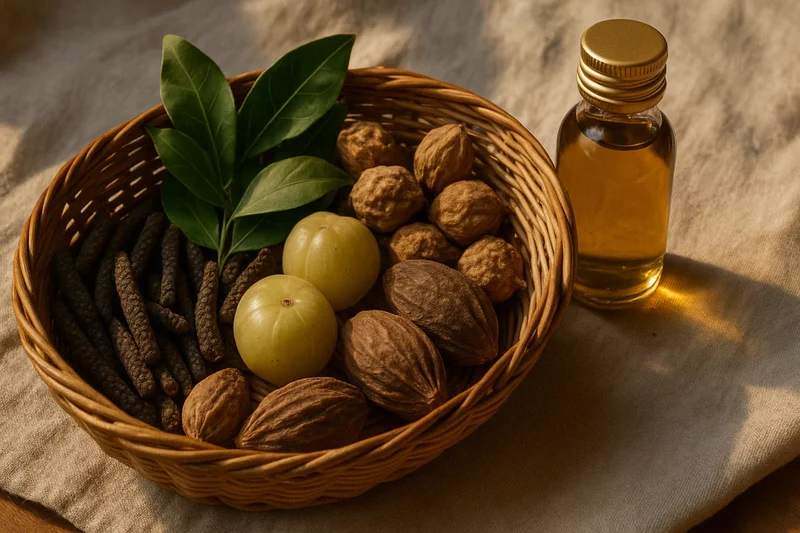
Panchendriya Vardhan Tel is a classical Ayurvedic nasal oil (Nasya Taila) specifically formulated to nourish, protect, and strengthen all five sensory organs — eyes, ears, nose, tongue, and skin. Made with a sesame oil base infused with herbs like Bala, Punarnava, Pippali, and Manjistha, it is administered as nasal drops to support the nervous system, improve sensory acuity, and balance the doshas. If you've been searching for a natural way to sharpen your senses and protect your neurological health, this guide covers everything you need to know — from ingredients and dosage to side effects and how it compares with other popular Nasya oils.
What Is Panchendriya Vardhan Tel?
Panchendriya Vardhan Tel is a medicated herbal oil used in the Ayurvedic practice of Nasya — the nasal administration of medicine. It is one of the five core procedures of Panchakarma, Ayurveda's detoxification system. The oil is designed to reach the brain and sensory organs through the nasal passages, which Ayurveda considers the "gateway to the head" (Shiro dwara).
Unlike general-purpose nasal oils, Panchendriya Vardhan Tel has a very specific therapeutic target: enhancing and preserving the function of the Panchendriya (five sense organs). It is widely recommended by Ayurvedic practitioners for conditions ranging from chronic sinusitis and headaches to peripheral neuropathy and age-related sensory decline.
The oil is typically available in 10 mL, 15 mL, and 50 mL bottles. Prices start around ₹55 for a 15 mL bottle, making it one of the more affordable classical Ayurvedic formulations. Shelf life is generally 3 years from the date of manufacture when stored properly.
Meaning of "Panchendriya Vardhan"
The name itself tells you exactly what this oil does:
- Panch (पञ्च) — Five
- Indriya (इन्द्रिय) — Sense organs
- Vardhan (वर्धन) — To enhance, nourish, or strengthen
So, literally translated, it means "that which strengthens the five sense organs." In Ayurvedic philosophy, the five Indriyas are: Chakshu (eyes/sight), Shrotra (ears/hearing), Ghrana (nose/smell), Rasana (tongue/taste), and Tvak (skin/touch). Each of these is governed by a specific element and dosha, and this oil aims to bring all of them into balance simultaneously.
It's a beautfully elegant concept — one formulation addressing the entire sensory apparatus through a single route of administration.
History and Ayurvedic Origin (Nasya Therapy)
- Nasya therapy has been described extensively in the Charaka Samhita and Ashtanga Hridayam, two foundational Ayurvedic texts dating back over 2,000 years.
- The concept is straightforward: the nose provides the most direct access to the brain (Shringataka Marma), and medicines administered nasally can influence the entire head region — including the eyes, ears, sinuses, and cranial nerves.
Panchendriya Vardhan Tel belongs to the category of Snehana Nasya (oleation-based nasal therapy), which uses medicated oils to lubricate, nourish, and strengthen the tissues. Classical references describe it as a Brimhana (nourishing) Nasya, particularly useful for Vata-dominant conditions where dryness, degeneration, or weakness of the sensory organs is the primary concern.
The formulation appears in traditional Ayurvedic pharmacopoeias and has been manufactured by various established companies under AYUSH and GMP standards, though specific manufacturer certifications can vary — always check the label for GMP or AYUSH certification marks before purchasing.
Key Ingredients and Their Benefits
The strength of Panchendriya Vardhan Tel lies in its carefully selected combination of herbs, each bringing a distinct therapeutic property. Below is a detailed breakdown.
Bala (Sida cordifolia)
Bala literally means "strength" in Sanskrit, and thats exactly what this herb contributes. It is one of Ayurveda's premier Rasayana (rejuvenative) herbs, known for its ability to nourish the nervous system (Majja Dhatu) and strengthen muscle tissue. A 2015 study published in the Journal of Ethnopharmacology confirmed the neuroprotective and anti-inflammatory properties of Sida cordifolia alkaloids. In this formulation, Bala provides the foundational nerve-nourishing action.
Ringani (Solanum surattense)
Also known as Kantakari, Ringani is primarily recognized for its benefits to the respiratory system and ENT organs. It has potent anti-inflammatory and analgesic properties. Traditional Ayurvedic texts classify it among the Dashamoola (ten roots) — a group of ten herbs used extensively in treating Vata and Kapha disorders. Its inclusion helps address nasal congestion, sinusitis, and inflammation of the upper respiratory tract.
Punarnava (Boerhavia diffusa)
Punarnava means "that which renews the body." It is a powerful anti-inflammatory and diuretic herb that helps reduce tissue swelling and promote cellular regeneration. Research published in the Indian Journal of Experimental Biology (2004) demonstrated significant anti-inflammatory activity of Boerhavia diffusa root extract. In Panchendriya Vardhan Tel, Punarnava helps reduce inflammatory conditions affecting the sensory organs, particularly the eyes and ears.
Manjistha (Rubia cordifolia)
- Manjistha is Ayurveda's primary blood-purifying herb. It pacifies Pitta and Kapha, promotes healthy blood circulation to the head region, and supports the lymphatic system. Its antioxidant properties help protect sensory nerve endings from oxidative damage.
- A 2011 study in Pharmacognosy Reviews highlighted rubiadin — a key compound in Manjistha — as having notable anti-inflammatory and neuroprotective effects.
Rasna (Pluchea lanceolata)
Rasna is one of the most important anti-Vata herbs in Ayurveda. It is traditionally used for neuralgic pain, facial paralysis, and conditions involving stiffness or nerve damage. Its role in this formulation is to combat Vata-driven sensory dysfunction — things like tinnitus, numbness, or diminished sensory perception.
Twak (Cinnamomum zeylanicum)
Twak, or cinnamon, serves a dual purpose here. It acts as a bioavailability enhancer (helping other herbs absorb more effectively) and provides its own anti-microbial and circulatory benefits. Cinnamon improves micro-circulation to the delicate tissues of the eyes, ears, and nasal passages.
Kamala Pushpa (Nelumbo nucifera)
Lotus flower has a cooling, Pitta-pacifying nature. It calms the mind, reduces inflammation, and supports the health of the eyes and skin. In classical texts, it is described as Medhya (intellect-promoting) — helping with mental clarity alongside sensory sharpness.
Pippali (Piper longum)
Pippali is a critical addition. As a bioenhancer, it dramatically improves the absorption of other active compounds. Modern pharmacological research has identified piperine (the active compound) as capable of increasing bioavailability by up to 2,000% for certain substances (Atal et al., 1981, published in Journal of Ethnopharmacology). Pippali also directly supports the respiratory mucosa and helps clear Kapha from the nasal passages.
Gokshura (Tribulus terrestris)
Gokshura is a renowned Rasayana herb that supports both the nervous and urinary systems. Its nerve-strengthening (Balya) properties make it valuable for conditions involving nerve weakness or degeneration. It also helps balance all three doshas, adding a harmonizing effect to the overall formulation.
Tila Taila — Sesame Oil Base
The base of this formulation is Tila Taila (sesame oil), and this choice is not accidental. Ayurveda considers sesame oil the best medium for Nasya therapy because of its:
| Property | Significance |
|---|---|
| Penetrating quality (Sukshma) | Reaches deep tissues through nasal mucosa |
| Warming nature (Ushna Virya) | Balances Vata dosha |
| Rich in antioxidants | Protects sensory nerve endings |
| Nourishing (Snigdha) | Lubricates and strengthens Majja Dhatu (nerve tissue) |
| Natural preservative | Extends shelf life of the herbal compounds |
Panchendriya Vardhan Tel Benefits
Support for All Five Senses
This is the oil's primary claim — and it's rooted in a sound Ayurvedic rationale.
Here's how the formulation targets each sense organ:
- Eyes (Chakshu Indriya): Herbs like Manjistha and Kamala Pushpa improve blood circulation to the optic region and reduce Pitta-related inflammation, supporting visual clarity
- Ears (Shrotra Indriya): Bala and Rasna nourish the auditory nerves and help with conditions like tinnitus and age-related hearing decline
- Nose (Ghrana Indriya): Direct nasal application ensures the olfactory receptors receive maximum herbal benefit; Ringani and Pippali clear congestion and restore smell
- Tongue (Rasana Indriya): By pacifying Vata in the head region, the oil indirectly supports taste perception, which is often diminished in chronic nasal congestion
- Skin (Tvak Indriya): The nerve-nourishing properties of Bala and Gokshura support tactile sensitivity and address numbness or tingling
Neurological and Nerve Health Benefits
One of the most valuable — and underreported — applications of Panchendriya Vardhan Tel is in neurological conditions. Ayurvedic doctors on platforms like Ask Ayurveda have documented its use in:
- Peripheral neuropathy — numbness and tingling in extremities
- Post-injection nerve damage — recovery after iatrogenic nerve injuries
- Facial paralysis (Bell's palsy) — as an adjunct therapy
- Migraine — a 2020 observational study published in the International Journal of Ayurveda and Herbal Medicine (Interscience) examined Panchendriya Vardhan Taila's role in managing acute and chronic migraine, reporting positive outcomes in reducing headache frequency and intensity
Protection Against Environmental Pollution
This is one benefit that deserves more attention then it typically gets. Daily exposure to air pollution, dust, smoke, and chemical fumes damages the nasal mucosa and gradually impairs sensory function. Regular nasal oiling with Panchendriya Vardhan Tel creates a protective barrier, traps particulate matter, and helps the nasal lining regenerate.
How to Use Panchendriya Vardhan Tel (Dosage & Method)
Standard Dosage
| Age Group | Dosage | Frequency |
|---|---|---|
| Adults | 2–4 drops per nostril | Twice daily (morning and evening) |
| Children (5–12 years) | 1–2 drops per nostril | Once daily |
| Elderly | 2–3 drops per nostril | Twice daily |
Important: Always use under the guidance of a qualified Ayurvedic practitioner. Dosage may vary based on the condition being treated and individual constitution (Prakriti).
Step-by-Step Nasya Procedure at Home
Most people don't realize there's a proper technique to nasal oil application — and doing it correctly makes a significant difference in effectiveness.
Here is a practical step-by-step guide:
- 1.Preparation (Poorva Karma): Gently massage your face, forehead, and neck with warm sesame oil for 3–5 minutes. This opens the channels and prepares the tissues.
- 2.Steam (optional but recommended): Take mild steam inhalation for 2–3 minutes to open the nasal passages. You can add a pinch of turmeric to the water.
- 3.Position: Lie down on your back with your head slightly tilted backward. You can hang your head over the edge of a bed or place a small pillow under your shoulders.
- 4.Application: Using a clean dropper, instill the prescribed number of drops into each nostril.
- Breathe in gently — don't sniff hard.
- 5.Massage (Paschat Karma): After application, gently massage the inner walls of the nose, the area around the nostrils, forehead, cheeks, and temples using circular motions. This is essentially a simplified version of the Ayurvedic Abhyanga technique — Dr. Manjula (BAMS) specifically recommends using warm oil and slow circular strokes for maximum absorption.
- 6.Rest: Remain lying down for 2–3 minutes.
- Spit out any oil that drains into the throat — do not swallow it.
- 7.Timing: Best performed on an empty stomach in the morning. Evening application should be at least 1 hour after eating.
Duration of Treatment
This is where many people go wrong — they stop too soon. Based on clinical guidelines from experienced Ayurvedic practitioners:
- Active treatment phase: 6–8 weeks at full prescribed dosage
- Tapering phase: Gradually reduce the dosage over the next 6 weeks
- Maintenance: For chronic conditions or preventive care, 2 drops per nostril once daily can be continued long-term
Panchendriya Vardhan Tel and the Three Doshas
Understanding the oil's action on the doshas gives you a much deeper insight into when and how to use it. No competitor has explained this properly, so let's fill that gap.
Vata Dosha (Primary Target)
The oil's sesame base, warming herbs (Pippali, Twak), and nerve-nourishing ingredients (Bala, Gokshura, Rasna) make it predominantly a Vata-pacifying formulation. Vata governs all nerve impulses and sensory perception, so when Vata is aggravated, you experience sensory deterioration — poor hearing, blurred vision, loss of smell or taste, numbness. This is the oil's primary domain.
Pitta Dosha (Secondary Target)
Cooling herbs like Kamala Pushpa, Manjistha, and Punarnava prevent the oil from being overly heating and address Pitta-related inflammation in the eyes, nasal mucosa, and skin.
Kapha Dosha (Tertiary Target)
Pippali, Ringani, and Twak provide the Kapha-clearing action needed to address congestion, mucous buildup, and heaviness in the head. However, individuals with severe Kapha aggravation (excessive thick mucous, productive cough) may need additional Kapha-reducing therapies alongside.
Panchendriya Vardhan Tel vs Anu Taila vs Shadbindu Taila
- One of the most common questions is how Panchendriya Vardhan Tel compares to other Nasya oils.
- Here's an honest comparison:
| Feature | Panchendriya Vardhan Tel | Anu Taila | Shadbindu Taila |
|---|---|---|---|
| Primary Focus | Strengthening all five senses | General head & sinus health | Sinusitis, hair growth, headache |
| Main Dosha Target | Vata (primary), Pitta, Kapha | Tridosha (balanced) | Vata-Kapha |
| Neurological Use | Strong — peripheral neuropathy, nerve repair | Moderate | Mild |
| Sinus & Congestion | Moderate | Strong | Very Strong |
| Number of Herbs | ~10 key herbs | 25+ herbs | ~15 herbs |
| Best For | Sensory decline, nerve health, preventive care | Daily Nasya, general wellness | Chronic sinusitis, hair loss |
| Oil Base | Sesame oil | Sesame oil | Sesame oil |
| Approximate Price | ₹55–150 | ₹80–250 | ₹60–180 |
Bottom line: If your primary concern is sensory health and nerve function, Panchendriya Vardhan Tel is the most targeted choice. Anu Taila is better for general daily Nasya practice, while Shadbindu Taila excels at heavy sinus and congestion issues.
Side Effects and Precautions
Panchendriya Vardhan Tel is generally considered safe when used as directed. However, responsible use requires awareness of potential side effects and contraindications.
Common Side Effects (Usually Mild)
- Mild burning or tingling sensation in the nostrils (especially during first use)
- Sneezing immediately after application
- Temporary watering of eyes
- Slight throat irritation if oil drains excessively
These typically resolve within the first 2–3 days of use as the nasal mucosa adapts.
Contraindications
- Acute fever or infection — Nasya should not be performed during active fever, acute cold with heavy congestion, or active nasal infection
- Immediately after meals — Wait at least 1 hour
- After head bath — Wait 30 minutes for nasal passages to dry
- Infants under 5 years — Not recommended without direct medical supervision
- Post-nasal surgery — Consult your surgeon before using any nasal oil
Use During Pregnancy and Lactation
This is an area where caution is especially important. While the herbs in Panchendriya Vardhan Tel are generally considered safe, Nasya therapy itself is traditionally not recommended during pregnancy — particularly during the first trimester. Lactating mothers may use it in low doses (1–2 drops per nostril) under physician guidance, as the systemic absorption is minimal.
Compatibility with Allopathic Medicines
- If you are taking allopathic (modern) medications, you can still use Panchendriya Vardhan Tel.
- The recommended approach: take your allopathic medicine first, then wait at least 30 minutes before performing Nasya with the Ayurvedic oil. This prevents any interaction at the absorption level. However, always inform both your allopathic and Ayurvedic doctors about all medications you are using.
Diet and Lifestyle Tips to Enhance the Effect
Using Panchendriya Vardhan Tel is more effective when combined with supportive dietary and lifestyle habits. Think of the oil as one part of a larger sensory health protocol.
Dietary Recommendations
- Favor: Warm, freshly cooked foods; ghee (clarified butter); almonds soaked overnight; fresh fruits rich in Vitamin A (carrots, papaya, mango); green leafy vegetables
- Avoid: Excessive cold foods and drinks; processed foods high in preservatives; excessive sugar; stale or reheated food
- Hydration: Drink warm water throughout the day — cold water aggravates Kapha and can counteract the oil's decongesting effect
Lifestyle Practices
- Pranayama: Practice Nadi Shodhana (alternate nostril breathing) daily — this complements Nasya therapy beautifully by balancing the flow of prana through both nostrils
- Eye exercises (Trataka): Gentle candle-gazing for 2–3 minutes daily strengthens the visual apparatus
- Adequate sleep: The sensory organs regenerate during sleep; aim for 7–8 hours
- Screen time management: Excessive screen exposure degrades vision and overstimulates the nervous system; take a 20-20-20 break (every 20 minutes, look at something 20 feet away, for 20 seconds)
- Abhyanga (self-massage): Weekly full-body oil massage with warm sesame oil supports overall Vata balance
Quality Standards and What to Look For
Since no competitor has addressed this — and it genuinely matters — here's what you should check before buying:
- GMP Certification: Look for the GMP (Good Manufacturing Practice) mark on the bottle. This ensures the product was manufactured under controlled, hygienic conditions.
- AYUSH License: The manufacturer should have a valid AYUSH department license. This is a regulatory requirement in India for all Ayurvedic medicines.
- Batch Number and Expiry Date: Always present on legitimate products. Shelf life is typically 3 years.
- Storage: Store in a cool, dry place away from direct sunlight. Do not refrigerate unless specifically instructed. Keep the dropper cap tightly closed to prevent contamination.
- Trusted Manufacturers: Products from established companies like Vatsal Ayurved (Rajson), Aushadhi Bhavan, and other AYUSH-licensed pharmacies are generally reliable.
Frequently Asked Questions (FAQ)
How to use Panchendriya Vardhan Tel?
Instill 2–4 drops in each nostril while lying down with your head tilted back. Gently massage the nose and surrounding area afterward. Use twice daily on an empty stomach for best results. See the detailed step-by-step Nasya guide above.
What are the main benefits of Panchendriya Vardhan Tel?
The primary benefits include strengthening all five sense organs, nourishing the nervous system, relieving chronic headaches and migraines, addressing peripheral neuropathy, clearing nasal congestion, and providing protection against environmental pollutants.
What is Shadbindu Taila used for?
Shadbindu Taila is another Ayurvedic Nasya oil, primarily used for sinusitis, chronic headaches, premature greying, and hair fall. While there is some overlap with Panchendriya Vardhan Tel, Shadbindu Taila focuses more on sinus and hair health rather than comprehensive sensory organ support.
What is Panchendriya Vardhan Tel price?
Prices vary by brand and bottle size. A 15 mL bottle typically costs around ₹55, while a 50 mL bottle may range from ₹100 to ₹150. It is available at most Ayurvedic pharmacies and online retailers.
Can I buy Panchendriya Vardhan Tel online?
Yes. It is available on platforms like Rajved.in, Aushadhi Bhavan's website, and general e-commerce platforms. Ensure you purchase from authorized sellers to guarantee authenticity and proper storage during shipping.
Is Panchendriya Vardhan Tel safe for long-term use?
When used in appropriate doses, it is generally safe for long-term use. For chronic or preventive purposes, a maintenance dose of 2 drops per nostril once daily is considered safe. Periodic breaks (e.g., one week off every 3 months) are advisable. Always consult your practitioner for personalized guidance.
What is the difference between Panchendriya Vardhan Tel and Anu Tel?
- Anu Taila is a broader-spectrum Nasya oil with 25+ ingredients designed for general head health and daily Nasya practice.
- Panchendriya Vardhan Tel is more specialized — it specifically targets the five sense organs and nervous system. If your primary goal is sensory enhancement and nerve health, Panchendriya Vardhan Tel is the more targeted option.
Final Thoughts
Panchendriya Vardhan Tel represents one of Ayurveda's most elegant solutions — a single formulation that addresses the health of all five sensory organs through the simple, time-tested route of nasal administration. Its combination of nerve-nourishing, anti-inflammatory, and bioenhancing herbs makes it relevant not just for existing conditions, but as a preventive measure in our increasingly polluted, screen-dominated world.
Whether you're dealing with declining sensory function, recovering from nerve-related issues, or simply want to maintain sharp senses as you age — this oil deserves a place in your daily wellness routine.
Always consult a qualified Ayurvedic practitioner before starting any new herbal therapy, especially if you have existing health conditions or are taking other medications. Ayurveda works best when personalized to your unique constitution. Have questions about Panchendriya Vardhan Tel or your specific condition? Consult with our verified Ayurvedic doctors for personalized guidance tailored to your needs.
Scientific Sources
- The healing Buddha — Chen TS et al., 2004, Journal of medical biography
- Antiviral Activity of Svarnvir-IV Tablet Assayed for Activity Against SARS-CoV-2 In Vitro — Reddy KR et al., 2023, Cureus
- Nadi Tarangini: a pulse based diagnostic system — Joshi A et al., 2007, Annual International Conference of the IEEE Engineering in Medicine and Biology Society. IEEE Engineering in Medicine and Biology Society. Annual International Conference
- Wound healing activity of topical herbal aerosol sprays on diabetic and Varicose Ulcers: A randomized, controlled, open labelled, multi-centric clinical trial — Tamoli S et al., 2022, Journal of Ayurveda and integrative medicine
- Methodological implications of nonlinear dynamical systems models for whole systems of complementary and alternative medicine — Bell IR et al., 2012, Forschende Komplementarmedizin (2006)
- Wound healing activity of the ethanol root extract and polyphenolic rich fraction from Potentilla fulgens — Kundu A et al., 2016, Pharmaceutical biology
- Drimia indica: A Plant Used in Traditional Medicine and Its Potential for Clinical Uses — Aswal S et al., 2019, Medicina (Kaunas, Lithuania)
- Unproven methods in cancer: a worldwide problem — Schraub S, 2000, Supportive care in cancer : official journal of the Multinational Association of Supportive Care in Cancer
- Chemical Analysis of Native Himalayan Shilajit: An Evaluation of an Ayurvedic Formulation — Basavaraja D et al., 2025, ACS omega
- Translation and purification: Ayurvedic psychiatry, allopathic psychiatry, spirits and occult violence in Kerala, South India — Lang C, 2018, Anthropology & medicine
- Ayurvedic medicine: An introduction for nurses — Narayanasamy A et al., 2006, British journal of nursing (Mark Allen Publishing)
- Ayurvedic and Chinese Herbs against Coronaviruses — Gasmi A et al., 2024, Current pharmaceutical design
- Bergenin, a bioactive flavonoid: advancements in the prospects of anticancer mechanism, pharmacokinetics and nanoformulations — Pandey P et al., 2024, Frontiers in pharmacology
- Unraveling the Mechanisms of Diabetic Wounds: Insights into Pathogenesis and Advanced Treatment Strategies — Mondal NS et al., 2026, Current diabetes reviews
- A Comprehensive Review on Physiological Effects of Curcumin — Ahsan R et al., 2020, Drug research
- The medicinal properties and phytochemistry of plants of the genus Terminalia (Combretaceae) — Cock IE, 2015, Inflammopharmacology
- Rational use of Ashwagandha in Ayurveda (Traditional Indian Medicine) for health and healing — Joshi VK et al., 2021, Journal of ethnopharmacology
- Development and Validation of a Green Stability-Indicating HPTLC Method for Estimation of Curcumin, Gallic Acid, and Ursolic Acid From Polyherbal Formulation Jatyadi Taila — Patel MN et al., 2023, Journal of AOAC International
- Tulsi - Ocimum sanctum: A herb for all reasons — Cohen MM, 2014, Journal of Ayurveda and integrative medicine
- A complex, nonlinear dynamic systems perspective on Ayurveda and Ayurvedic research — Rioux J, 2012, Journal of alternative and complementary medicine (New York, N.Y.)
Ask Ayurvedic doctor a question and get a consultation online on the problem of your concern in a free or paid mode.
More than 2,000 experienced doctors work and wait for your questions on our site and help users to solve their health problems every day.
Related articles