Ask Ayurvedic doctor a question and get a consultation online on the problem of your concern in a free or paid mode. More than 2,000 experienced doctors work and wait for your questions on our site and help users to solve their health problems every day.
FREE! Ask Ayurvedic Doctors 24/7

 Fast responses
 1000+ verified doctors
Body DetoxEar, Nose, and Throat DisordersGeriatrics & RejuvenationImmunodeficiencyInfertility TreatmentNutritionOrthopedic DisordersPediatricsRespiratory DisordersSexually Transmitted Diseases (STDs)Surgery RecoveryUrological DisordersVascular DisordersDental DisordersEndocrinological DisordersGastrointestinal DisordersYoga TherapyGeneral MedicineAllergic DisordersCardio DisordersGynecology and ObstetricsCosmetologySkin and Hair DisordersEye DisordersInfectious DiseasesMental DisordersNeurological DisordersOncologyPanchakarmaSexual Health & DisordersSports Medicine
Published on 02/07/25
(Updated on 07/10/26)
4,339
Naladadi Ghritam – Ayurvedic Remedy for ADHD, Aphasia, and Cognitive Health
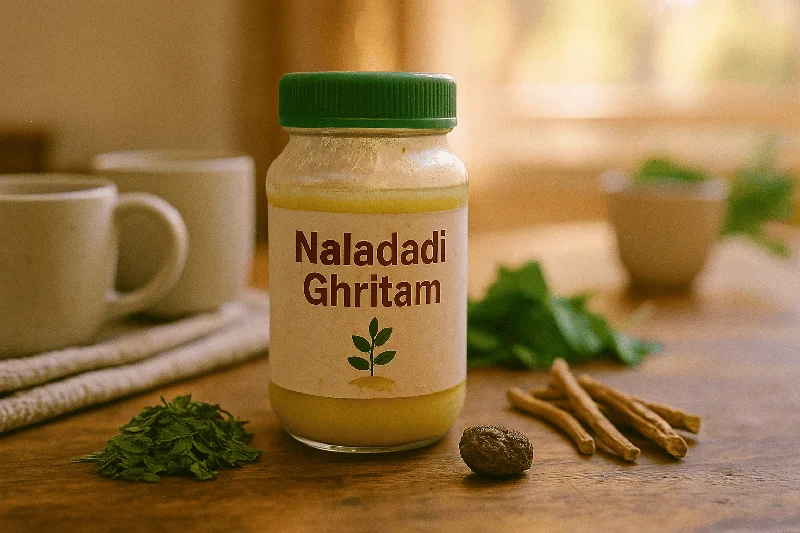
- Naladadi Ghritam is a classical Ayurvedic medicated ghee (ghrita) formulated specifically to enhance intellect, memory, and speech.
- Referenced in the Ashtanga Hridaya — one of the most authoritative texts of Ayurveda — this polyherbal preparation falls under the category of Medhya Rasayana, meaning it is designed to rejuvenate and protect the mind. If you're searching for a time-tested Ayurvedic approach to cognitive conditions like ADHD, age-related memory decline, aphasia, or general mental fatigue, Naladadi Ghritam is one of the most well-documented formulations available.
- But what exactly is in this medicated ghee, how does it work, and is there any modern evidence to support its traditional claims?
- This comprehensive guide covers everything — from the classical reference and full ingredient breakdown to dosage protocols, contraindications, drug interactions, and comparisons with similar Medhya Rasayana formulations. Information that, frankly, no single resource online has brought together until now.
What Is Naladadi Ghritam?
Naladadi Ghritam is a medicated clarified butter (ghrita) prepared by processing cow's ghee with a specific group of herbs known for their neurocognitive and neuroprotective properties. The name "Naladadi" derives from Nalada, a Sanskrit synonym for Jatamansi (Nardostachys jatamansi), which is the principal herb in the formulation.
In Ayurvedic pharmacology, ghrita-based preparations hold a unique position. Ghee is considered the best medium (anupana) for delivering herbal actives to deep tissues, particularly the nervous system and brain. Naladadi Ghritam specifically targets Majja Dhatu (the bone marrow and nervous tissue) and Manas (the mind), making it a specialized formula for mental and neurological health.
Classical Reference: Ashtanga Hridaya, Uttarasthana 39/46-47
- The original reference for Naladadi Ghritam is found in Ashtanga Hridaya, Uttarasthana, Chapter 39, Verses 46-47, within the Rasayana Prakarana (rejuvenation section) authored by Acharya Vagbhata.
- This placement is significant — it positions the formulation not as a mere symptomatic remedy but as a Rasayana, a rejuvenative medicine intended for long-term nourishment and protection of cognitive faculties.
The verse describes Naladadi Ghritam as a preparation that bestows Medha (intellect), Smriti (memory), and Vak (speech), making it particularly relevant for conditions where these faculties are impaired.
Naladadi Ghritam as Medhya Rasayana
Medhya Rasayana is a specialized sub-category of Rasayana therapy in Ayurveda that focuses exclusively on cognitive enhancement and neuroprotection. The term "Medhya" means "that which improves Medha (intellect and cognitive processing)."
What sets Naladadi Ghritam apart from single-herb Medhya Rasayanas (like Brahmi or Shankhapushpi used alone) is its polyherbal synergy. It combines multiple Medhya herbs in a ghee medium, amplifying the individual effects through what Ayurveda calls Samyoga (combination potentiation). The formulation addresses not just memory, but the entire spectrum of higher mental functions — learning, recall, analytical thinking, speech production, and emotional stability.
The Role of Ghrita (Ghee) as a Carrier — Yogavahi Property
This is an aspect that most resources overlook entirely, yet it's fundamental to understanding why Naladadi Ghritam works.
Cow's ghee possesses a unique property called Yogavahi — the ability to carry the therapeutic qualities of substances mixed with it without losing its own intrinsic properties. In modern pharmacological terms, this is analogous to a bioenhancer and lipid-based drug delivery system.
Here's why this matters for brain health specifically:
- Lipophilic transport: The brain is approximately 60% fat. Lipid-soluble compounds in ghee can cross the blood-brain barrier more effectively than water-soluble preparations
- Enhanced bioavailability: Fat-soluble herbal actives (like the terpenoids in Jatamansi and Vacha) achieve better absorption when processed in ghee
- Neuroprotective lipids: Ghee itself contains butyric acid and omega fatty acids that support neuronal membrane integrity
This is precisely why the ancient Acharyas chose ghee — not water or oil — as the base for cognitive formulations.
Naladadi Ghritam Ingredients: Complete Breakdown
The formulation contains 17 herbs processed in cow's ghee, with Shankhapushpi juice and milk as liquid media during preparation. Below is the complete ingredient list as documented in classical texts and standard manufacturing references.
Full Ingredient Table with Botanical Names and Quantities
| # | Sanskrit Name | Botanical Name | Part Used | Quantity (per standard batch) |
|---|---|---|---|---|
| 1 | Nalada (Jatamansi) | Nardostachys jatamansi | Root | 48 g |
| 2 | Shankhapushpi | Convolvulus pluricaulis | Whole plant (juice) | 3.072 L |
| 3 | Vacha (Uragandha) | Acorus calamus | Rhizome | 48 g |
| 4 | Yashtimadhu (Madhuka) | Glycyrrhiza glabra | Root | 48 g |
| 5 | Trivrit | Operculina turpethum | Root | 48 g |
| 6 | Danti | Baliospermum montanum | Root | 48 g |
| 7 | Shankhini | Canscora decussata | Whole plant | 48 g |
| 8 | Nilini (Nili) | Indigofera tinctoria | Whole plant | 48 g |
| 9 | Hingu | Ferula assa-foetida | Resin | 48 g |
| 10 | Kushtha | Saussurea costus | Root | 48 g |
| 11 | Saptala | Acacia sinuata | Bark | 48 g |
| 12 | Haridra | Curcuma longa | Rhizome | 48 g |
| 13 | Daruharidra | Berberis aristata | Stem | 48 g |
| 14 | Patha | Cissampelos pareira | Root | 48 g |
| 15 | Vidanga | Embelia ribes | Fruit | 48 g |
| 16 | Chitraka | Plumbago zeylanica | Root | 48 g |
| 17 | Katuki (Kutki) | Picrorhiza kurroa | Rhizome | 48 g |
| — | Cow's Ghee (Go Ghrita) | — | — | 768 g |
| — | Cow's Milk (Go Ksheera) | — | — | 3.072 L |
Note: Quantities represent a standard classical batch. Commercial manufacturers like Kottakkal Arya Vaidya Sala scale proportionally.
Key Active Herbs and Their Neurocognitive Properties
Most resources simply list the ingredients. Here, we break down how the principal herbs actually work on the brain, both from Ayurvedic and modern pharmacological perspectives.
Shankhapushpi (Convolvulus pluricaulis)
Shankhapushpi is considered the foremost Medhya Rasayana herb in Ayurveda. Its juice serves as the primary liquid medium in Naladadi Ghritam preparation.
- Ayurvedic action: Pacifies all three doshas (Tridoshahara), directly nourishes Majja Dhatu, calms Manas (mind)
- Pharmacological evidence: A 2012 study published in Evidence-Based Complementary and Alternative Medicine demonstrated significant anxiolytic and memory-enhancing effects in animal models. The flavonoids and coumarins in Shankhapushpi show acetylcholinesterase inhibitory activity — the same mechanism targeted by modern Alzheimer's drugs like donepezil
- Specific role in this formulation: Acts as both an active ingredient and a processing medium (Swarasa), ensuring its water-soluble actives are thoroughly integrated into the ghee
Nalada / Jatamansi (Nardostachys jatamansi)
The namesake herb of the formulation and arguably its most important ingredient.
- Ayurvedic action: Medhya (intellect-promoting), Nidrajanana (sleep-inducing), Vata-Pitta shamaka
- Pharmacological evidence: Jatamansi contains sesquiterpenes (jatamansone, nardostachone) that have demonstrated neuroprotective effects. Research published in the Journal of Ethnopharmacology (2015) showed that Jatamansi extract protected against glutamate-induced neurotoxicity in rat cortical neurons. It also modulates GABA-ergic transmission, explaining its calming effects
- Specific role: Provides the primary neuroprotective and anxiolytic action, particularly relevant for ADHD (where dopamine and norepinephrine dysregulation causes hyperactivity)
Vacha (Acorus calamus)
- Ayurvedic action: One of the classical Medhya drugs, renowned for improving Vak (speech), Buddhi (discriminative intellect), and Smriti (memory). Called "Ugragandha" due to its strong aroma
- Pharmacological evidence: The β-asarone compound in Vacha has shown anti-amyloidogenic properties in preclinical studies, suggesting potential relevance in Alzheimer's-type dementia. A 2017 study in Neurochemical Research demonstrated its ability to modulate the cholinergic system
- Specific role: Directly targets speech impairment (aphasia/dysphasia) and works synergistically with Shankhapushpi for memory enhancement
Yashtimadhu (Glycyrrhiza glabra)
- Ayurvedic action: Medhya, Rasayana, Vata-Pitta shamaka, Balya (strength-promoting)
- Pharmacological evidence: Glycyrrhizin and glabridin have demonstrated learning and memory-enhancing effects in multiple animal studies. Research in Phytotherapy Research (2013) showed that Glycyrrhiza glabra extract significantly improved spatial learning in diabetic rats with cognitive deficits
- Specific role: Provides anti-inflammatory neuroprotection and enhances the palatability and Rasayana quality of the formulation
Supporting Herbs — Synergistic Functions
The remaining herbs in Naladadi Ghritam are not just fillers.
They serve specific roles:
- Haridra & Daruharidra: Anti-inflammatory, antioxidant — protect neurons from oxidative stress. Curcumin from Haridra is one of the most researched neuroprotective compounds globally
- Trivrit & Danti: Mild Virechana (purgative) action — in Ayurvedic logic, they help clear Ama (metabolic toxins) that may obstruct Srotas (channels) to the brain
- Vidanga: Anthelmintic and Medhya — traditionally believed to clear parasitic toxins that can affect mental clarity (especially relevant in pediatric cases)
- Hingu (Asafoetida): Deepana-Pachana (digestive stimulant) — ensures proper metabolism and assimilation of the other herbs
- Chitraka & Katuki: Agni-enhancing herbs that support the metabolic transformation of the formulation within the body
Naladadi Ghritam Uses and Benefits
The therapeutic applications of Naladadi Ghritam span a wide range of cognitive and neurological conditions, from childhood developmental disorders to age-related cognitive decline.
ADHD (Attention Deficit Hyperactivity Disorder)
Naladadi Ghritam is one of the most frequently recommended Ayurvedic formulations for managing ADHD symptoms in children and adults. In Ayurvedic understanding, ADHD correlates with Vata Vriddhi (aggravated Vata dosha) affecting Manovaha Srotas (channels of the mind).
The formulation addresses ADHD through multiple mechanisms:
- Calming the hyperactive Vata through ghee's Snigdha (unctuous) quality
- Enhancing attention and focus through Medhya herbs
- Improving impulse control through Jatamansi's GABA-modulating effects
Aphasia, Dysphasia, and Speech Disorders
The classical indication of improving Vak (speech) makes this formulation particularly relevant for:
- Post-stroke aphasia
- Developmental speech delays in children
- Stammering and articulation disorders
Vacha (Acorus calamus) and Shankhapushpi are the primary drivers of this benefit.
Age-Related Cognitive Decline (Jarajanya Medhakshaya)
A 2022 review published in the World Journal of Pharmaceutical Research specifically examined Naladadi Ghrita's role in managing Jarajanya Medhakshaya — age-related deterioration of intellect. The paper highlighted that the polyherbal combination provides multi-target neuroprotection, addressing oxidative stress, neuroinflammation, and cholinergic deficit simultaneously.
Additional Indications
- Memory enhancement in students and professionals
- Post-concussion cognitive recovery
- Anxiety-related cognitive impairment
- Unmada (psychiatric disorders) — as adjunct therapy
- Apasmara (epilepsy) — supportive role in improving cognitive side-effects of the condition
Naladadi Ghritam Dosage: Adults, Children, and Elderly
Standard Dosage Guidelines
| Age Group | Dosage | Frequency | Anupana (Vehicle) |
|---|---|---|---|
| Adults (18-60 years) | 5–10 g (approx. 1–2 tsp) | Once or twice daily | Warm water or warm milk |
| Children (5-12 years) | 2.5–5 g (approx. ½–1 tsp) | Once or twice daily | Warm milk (preferred) |
| Elderly (60+ years) | 5 g (approx. 1 tsp) | Once or twice daily | Warm milk |
Important: These are general guidelines. The exact dosage must be determined by a qualified Ayurvedic physician based on individual Prakriti (constitution), Agni (digestive capacity), and severity of the condition.
When to Take It
- Before meals (empty stomach) — for maximum absorption when used as Medhya Rasayana
- After meals — if the patient has sensitive digestion or is Pitta-predominant
- Typical course duration: 1–3 months, sometimes extended to 6 months for chronic conditions like age-related dementia. Periodic breaks are usually recommended
Pediatric vs Geriatric Protocols
For children with ADHD, Ayurvedic practitioners typically start with the lower dose (2.5 g once daily) and gradually increase based on response. The formulation is often combined with other interventions like Shirodhara, Medhya single herbs, and dietary modifications.
For elderly patients with cognitive decline, the dosage is kept moderate (5 g) because Agni tends to be weaker in old age. Long-term administration (3-6 months) is common, often as part of a broader Rasayana protocol.
Ayurvedic Pharmacology (Dravyaguna) of Naladadi Ghritam
This is an area completely ignored by every other online resource, yet it's essential for Ayurvedic practitioners and students.
| Property | Description |
|---|---|
| Rasa (Taste) | Predominantly Madhura (sweet), with Tikta (bitter) and Kashaya (astringent) secondary tastes |
| Guna (Quality) | Snigdha (unctuous), Guru (heavy), Mridu (soft) |
| Virya (Potency) | Sheeta (cooling) — due to the predominance of ghee, Shankhapushpi, and Yashtimadhu |
| Vipaka (Post-digestive effect) | Madhura (sweet) |
| Doshaghnata (Dosha action) | Primarily Vata-Pitta shamaka; may mildly increase Kapha if used excessively |
| Karma (Action) | Medhya, Smritikara, Vakprada, Rasayana, Balya, Nidrajanana |
| Srotogamitva (Target tissue/channels) | Manovaha Srotas, Majjavaha Srotas |
Don't wait or self medicate. Start chat with Doctor NOW
The Preparation Process: Sneha Paka Vidhi
Naladadi Ghritam is prepared following the classical Sneha Paka (medicated fat processing) method described in Ayurvedic pharmaceutical texts (Sharangdhara Samhita).
Steps of Preparation
- 1.Kalka preparation: The 17 herbs are dried, powdered, and made into a fine paste (Kalka) using a small quantity of water
- 2.Drava Dravya: Shankhapushpi Swarasa (fresh juice) and cow's milk serve as the liquid media
- 3.Sneha Paka: Cow's ghee is heated in a wide-mouthed vessel. The Kalka is added first, followed by the liquid media in the standard ratio — 1 part Kalka : 4 parts Sneha (ghee) : 16 parts Drava (liquid)
- 4.Cooking stages: The mixture is slow-cooked over a controlled flame, passing through three stages:
- Mridu Paka (soft stage): The moisture is still present; the mixture is semi-liquid
- Madhyama Paka (medium stage): The ideal endpoint for Ghrita preparations — the Kalka forms a wick-like shape when rolled (Varti), doesn't stick to fingers, and produces no crackling sound when a drop of water is added. This is the stage at which Naladadi Ghritam is typically finished
- Khara Paka (hard stage): Over-cooking — generally avoided for internal-use ghrita preparations
- 5.Filtration: The ghrita is filtered through clean muslin cloth while still warm. The residue (Kalka) is discarded
- 6.Storage: Stored in clean, dry glass or food-grade containers
Naladadi Ghritam vs Other Medhya Rasayana Ghritams
No competitor has provided this comparison, but it's exactly what practitioners and informed consumers need.
| Feature | Naladadi Ghritam | Brahmi Ghritam | Saraswata Ghritam | Kalyanaka Ghritam |
|---|---|---|---|---|
| Classical Source | Ashtanga Hridaya, Uttarasthana 39 | Charaka Samhita, Chikitsa 10 | Ashtanga Hridaya, Uttarasthana 6 | Ashtanga Hridaya, Uttarasthana 6 |
| Primary Herb | Jatamansi (Nalada) | Brahmi (Bacopa monnieri) | Brahmi + Vacha | Triphala + multiple herbs |
| Primary Focus | Intellect + Speech + Memory | Memory + Epilepsy | Speech + Learning + Psychiatric conditions | Psychiatric disorders + Fertility + Cognitive health |
| Best Suited For | ADHD, Aphasia, Age-related cognitive decline | Memory loss, Epilepsy, Academic performance | Stammering, Learning disabilities, Psychiatric conditions | Unmada (psychosis), Apasmara (epilepsy), General rejuvenation |
| Number of Herbs | 17 | 8-12 (varies by version) | 15-20 | 30+ |
| Dosha Action | Vata-Pitta shamaka | Tridosha shamaka (mainly Pitta) | Vata-Pitta shamaka | Tridosha shamaka |
Key Takeaway: Choose Naladadi Ghritam when the primary concern is combined cognitive-speech impairment or ADHD with attention and speech issues. Brahmi Ghritam is better for pure memory and epilepsy. Saraswata Ghritam overlaps considerably but has a stronger psychiatric application. Kalyanaka Ghritam is the broadest-spectrum option but less targeted for pure cognitive enhancement.
Side Effects, Contraindications, and Drug Interactions
Potential Side Effects
Naladadi Ghritam is generally well-tolerated when taken in recommended doses under medical supervision.
However, potential side effects include:
- Digestive heaviness or reduced appetite — due to the heavy (Guru) quality of ghee, especially in people with weak Agni
- Loose stools — Trivrit and Danti in the formulation have mild laxative properties
- Weight gain — with prolonged use, ghee-based preparations can contribute to weight gain if diet is not managed
- Nausea — rare, usually occurs if taken on a completely empty stomach in Pitta-predominant individuals
Contraindications
This is a critical gap that no other online resource addresses adequately:
- Hyperlipidemia / High cholesterol: Ghee-based preparations should be used cautiously in patients with existing dyslipidemia
- Obesity: The caloric density of ghee makes it unsuitable for overweight patients without dietary adjustments
- Kapha Prakriti with Ama: Individuals with predominant Kapha constitution and signs of Ama (coated tongue, sluggish digestion) should undergo Deepana-Pachana treatment before starting Naladadi Ghritam
- Pregnancy and Lactation: While ghee is generally considered safe in pregnancy, the presence of Trivrit and Danti (purgative herbs) warrants caution. Consult a qualified Ayurvedic doctor before use during pregnancy
- Acute diarrhea or dysentery: The Snigdha (unctuous) quality can worsen these conditions
- Diabetes: Ghee may affect blood sugar management; diabetic patients should use under strict medical supervision
Drug Interactions
Another area completely absent from competitor content:
- Lipid-lowering medications (statins): Ghee-based preparations may theoretically counteract the lipid-lowering effect. Spacing is recommended (2-3 hours apart)
- Anti-epileptic drugs: Since Naladadi Ghritam has mild CNS-modulating effects, simultaneous use with anti-epileptic medications should be monitored
- ADHD medications (methylphenidate, atomoxetine): Naladadi Ghritam can be used as a complementary therapy alongside allopathic ADHD medications, but dosage adjustments of both may be needed. Always inform both your Ayurvedic and allopathic doctor
- Sedatives and anxiolytics: Jatamansi has GABA-modulating effects. Combined use with benzodiazepines or other sedatives could potentiate drowsiness
- Other Ayurvedic Sneha preparations: Avoid taking multiple ghrita preparations simultaneously unless specifically prescribed
Diet and Lifestyle Recommendations During Treatment
Diet to Follow (Pathya)
- Prefer easily digestible, warm, freshly cooked foods
- Include Sattvic foods: milk, rice, moong dal, fruits, almonds, walnuts
- Ghee (small quantities) in regular diet supports the formulation's action
- Stay well-hydrated with warm water throughout the day
- Avoid excessive salt, sugar, and processed foods
Foods to Avoid (Apathya)
- Heavy, deep-fried, and stale (leftover) foods
- Excessive non-vegetarian food, particularly red meat
- Alcohol — directly antagonizes the Medhya effect
- Excessive caffeine — can counteract the calming Jatamansi component
- Cold beverages and ice cream — suppresses Agni
Lifestyle Recommendations
- Maintain a regular sleep schedule (critical for cognitive health)
- Practice Pranayama — particularly Nadi Shodhana and Bhramari, which support brain oxygenation
- Moderate exercise — yoga, walking
- Reduce screen time, especially before bed
- Meditation and mindfulness practices amplify the Medhya Rasayana effect
Storage and Shelf Life
- Shelf life: Typically 2-3 years from the date of manufacture (as per most Ayurvedic pharmacopoeial standards). Some texts suggest properly prepared ghrita can last even longer
- Storage conditions: Store in a cool, dry place away from direct sunlight. Temperature should ideally remain below 30°C
- After opening: Use a clean, dry spoon every time. Do not introduce moisture into the container. If stored properly, opened Naladadi Ghritam remains usable until its expiry date
- Signs of spoilage: Rancid smell, change in color to dark brown/black, mold growth, or sour taste. Discard immediately if any of these are observed
Frequently Asked Questions (FAQ)
Can I take Naladadi Ghritam without a doctor's prescription?
While Naladadi Ghritam is available over-the-counter from Ayurvedic pharmacies, it is strongly recommended to consult a qualified Ayurvedic practitioner before starting. The dosage, duration, and suitability depend on your individual constitution, current health status, and the specific condition being treated. Self-medication with any medicated ghee carries risks, especially for those with metabolic conditions.
How long does it take to see results?
Most patients begin noticing improvements in focus, attention, and mental clarity within 4-6 weeks of regular use. For speech-related conditions, improvement may take 2-3 months. Age-related cognitive decline typically requires the longest treatment duration — 3-6 months or more.
Is Naladadi Ghritam suitable for vegetarians and vegans?
It is suitable for vegetarians — cow's ghee and cow's milk are used in preparation, but no other animal products are involved. It is not suitable for vegans due to the ghee and milk components.
Does Naladadi Ghritam cause addiction or dependency?
No. There is no addictive potential associated with this formulation. It can be safely discontinued after the recommended course without withdrawal symptoms. However, tapering off gradually (rather than abrupt discontinuation) is generally good practice for any long-term Rasayana therapy.
Is Kottakkal Arya Vaidya Sala's Naladadi Ghritam authentic?
- Kottakkal Arya Vaidya Sala is one of the most respected and oldest Ayurvedic pharmaceutical houses in India (established 1902). Their Naladadi Ghritam is prepared following classical methods and GMP standards. It is available in 150g packaging and is widely considered a reliable, authentic product.
- Other reputable manufacturers also produce this formulation — look for GMP certification and adherence to the Ayurvedic Formulary of India.
Can Naladadi Ghritam be used for autism spectrum disorders?
While not a classical indication, some Ayurvedic practitioners use Naladadi Ghritam as part of a broader protocol for autism spectrum disorders, particularly when speech delay and cognitive challenges are prominent symptoms. However, clinical evidence for this specific application is limited, and it should only be used under expert guidance.
What is the difference between Naladadi Ghritam and Vidaryadi Ghritam?
These are fundamentally different formulations. Vidaryadi Ghritam is primarily indicated for respiratory conditions, underweight individuals, and general debility — it is a Brumhana (nourishing) preparation. Naladadi Ghritam is a Medhya Rasayana focused on cognitive health. They target different organ systems and conditions entirely.
Conclusion
Naladadi Ghritam represents one of Ayurveda's most sophisticated answers to the growing global burden of cognitive disorders. From ADHD in children to dementia in the elderly, this classical formulation offers a multi-target approach rooted in centuries of clinical observation and supported by emerging pharmacological evidence for its individual ingredients.
What makes it truly remarkable is the intelligent design — the combination of neuroprotective herbs, speech-enhancing compounds, digestive correctives, and channel-clearing agents, all delivered through the unparalleled bioavailability of medicated ghee. It's not just a supplement; it's a complete therapeutic strategy encoded in a single preparation.
- If you or someone you know is struggling with cognitive challenges, memory concerns, speech difficulties, or attention disorders, consult a qualified Ayurvedic physician to determine whether Naladadi Ghritam is appropriate for your specific situation.
- When used correctly — with proper dosage, diet, and lifestyle support — this ancient formulation continues to demonstrate its relevance in modern healthcare.
Disclaimer: This article is for informational purposes only and should not be considered medical advice. Always consult a qualified healthcare practitioner before starting any new medication or supplement, including Ayurvedic preparations.
Scientific Sources
- Health benefits of ghee: Review of Ayurveda and modern science perspectives — Kataria D et al., 2024, Journal of Ayurveda and integrative medicine
- From tradition to science: Possible mechanisms of ghee in supporting bone and joint health — Falahatzadeh M et al., 2024, Prostaglandins & other lipid mediators
- Panchgavya: A precious gift to humankind — Bajaj KK et al., 2022, Journal of Ayurveda and integrative medicine
- Preparation and physicochemical characterization of ghee and mūrcchita ghŗ̥ta — Lamsal B et al., 2020, Journal of Ayurveda and integrative medicine
- Further observations on ghee as a risk factor for neonatal tetanus — Bennett J et al., 1995, International journal of epidemiology
Questions from users
Is Naladadi Ghritam effective for enhancing mood and reducing anxiety?
Michael
2 days ago
Naladadi Ghritam may assist in enhancing mood and reducing anxiety due to its blend of herbs processed in ghee, which are thought to support neurocognitive and neuroprotective functions. Some users report noticeable changes in mood and focus within 4-6 weeks of consistent use. However, individual responses can vary, and those with metabolic issues should exercise caution. It's crucial to consult an Ayurvedic practitioner alongside a medical doctor to ensure it's appropriate for your specific health needs. Always monitor for any adverse effects and seek medical advice if you experience negative symptoms.
Can I take Naladadi Ghritam if I have a dairy intolerance?
Isabella
12 days ago
Naladadi Ghritam might not be the best choice if you're dairy intolerant since it contains ghee. It could upset your digestion or lead to discomfort. You might wanna consider alternatives that don't include dairy or consult with an Ayurvedic practitioner to find something that fits your needs better.
How should Naladadi Ghritam be stored to maintain its effectiveness?
Paisley
21 days ago
To store Naladadi Ghritam effectively, keep it in a cool, dry place, away from direct sunlight and moisture. Make sure the container is tightly sealed after each use. If you spot any spoilage signs like rancid smell, discoloration, or mold, it's best to not use it, even if it's not expired. Store it properly and it should retain its benefits.
Can Naladadi Ghritam help with memory loss in older adults?
Teagan
39 days ago
Yes, Naladadi Ghritam can be helpful for memory loss in older adults due to its properties that support cognitive function and mental clarity. However, it's important to consider the person's overall constitution and any existing health issues. It's a good idea to consult with an Ayurvedic practitioner to ensure it's a good fit for them. 😊
What is the role of ghee in enhancing the effectiveness of Ayurvedic herbal treatments?
Kendall
48 days ago
Ghee in Ayurveda acts as a medium, helps carry the medicinal properties of herbs deep into brain tissues. It’s used in treatments to boost cognitive functions, memory and treat disorders like ADHD. The fatty nature of ghee aids in absorbing and delivering the herbs' benefits more effectively throughout the body.
Can Naladadi Ghritam help improve speech for those with aphasia?
Paris
58 days ago
Naladadi Ghritam might be useful for improving speech in aphasia due to its herbal component like Brahmi, known for supporting cognitive functions and mental clarity. While it's not a guaranteed fix, it could complement other therapies. Always consult with a healthcare provider before statrting any new treatment!
What happens if I miss a dose of Naladadi Ghritam while managing ADHD?
Robert
68 days ago
If you miss a dose of Naladadi Ghritam, just skip it and continue with your next scheduled dose. It’s usually okay, but try not to make a habit of it. Consistency helps with balancing your doshas and managing symptoms better, ya know? If you keep forgetting, maybe set a reminder or chat with your practicioner for some tips.
Is it safe to use Naladadi Ghritam long-term for cognitive enhancement?
Robert
77 days ago
Using Naladadi Ghritam long-term can be beneficial, but it's always a good idea to check in with an Ayurvedic practitioner. The herbs and ghee nourish the brain and balance doshas, but how ur body responds can depend on your prakriti (constitution) and current balance. Sometimes, overdose can trigger dosha imbalances, so it's best to adjust based on how u feel!
Is it safe to give Naladadi Ghritam to elderly individuals for cognitive support?
Oakley
87 days ago
Absolutely, Naladadi Ghritam can be beneficial for elderly individuals as it contains Brahmi and Ashwagandha, which support cognitive health. However, it's always a good idea to consult an Ayurvedic practitioner first, as they can consider the elderly person's unique constitution and any other health issues. Remember, each person's needs can be slightly different!
What is Naladadi Ghritam made from and how do its ingredients support brain health?
Kayden
97 days ago
Naladadi Ghritam is made from a combination of ghee (clarified butter) and several beneficial herbs like Brahmi, Ashwagandha, and Shankhapushpi. These ingredients help support brain health by nourishing the nervous system, enhancing cognitive function, and balancing the Vata and Pitta doshas which are key for mental clarity and focus.
Related articles

Mental Disorders
Brahmi Drakshadi Kashayam: Improve Mental Clarity with Brahmi Drakshadi Kashayam
Explore Brahmi Drakshadi Kashayam, its benefits, proper dosage, uses, and the scientific evidence supporting this Ayurvedic remedy for cognitive health, stress relief, and overall well-being.
2,970

Mental Disorders
Achieve Body & Mind Balance through Ayurveda
Body and mind balance plays an important role in one’s life. It helps a person to achieve their utmost potential and lead life in an efficient manner.
2,771

Mental Disorders
Sumenta Tablet
Exploration of Sumenta Tablet
3,628

Mental Disorders
Kalyanaka Ghrita for Sleep: Ayurvedic Insights for Restful Nights
Explore how Kalyanaka Ghrita aids sleep, backed by research and Ayurvedic wisdom. Learn evidence-based tips, usage, and safety considerations.
4,725

Mental Disorders
How to Reduce Stress: Ayurvedic Remedies, Practices, and Natural Relief
SEO descr How to reduce stress naturally? Discover Ayurvedic tips, lifestyle practices, and herbal remedies like calming churna to reduce stress and anxiety at home
2,602

Mental Disorders
Manasamitra Vatakam – Benefits, Dosage, Ingredients, Side Effects
Exploration of Manasamitra Vatakam – Benefits, Dosage, Ingredients, Side Effects
5,484

Mental Disorders
OCD Treatment in Ayurveda: Holistic Solutions for Mental Wellness
Discover how Ayurveda addresses OCD with holistic therapies, herbal remedies, lifestyle changes, and mind-body practices. Learn about natural treatments for OCD rooted in ancient Ayurvedic wisdom.
3,565

Mental Disorders
Depression and Ayurveda: A Natural Path
Ayurveda views depression as an imbalance in the body's natural energies, influenced by the doshas, rather than just a mental health issue.
2,421

Mental Disorders
Graha Chikitsa – Ayurvedic Treatment for Spiritual and Mental Well-being
Explore Graha Chikitsa, an ancient Ayurvedic treatment designed to address the effects of planetary influences on health, mental well-being, and emotional balance.
4,144
Mental Disorders
Brahmi Lehyam: Benefits, Dosage & Ayurvedic Insights
Explore the benefits, proper dosage, uses, and Ayurvedic foundations of Brahmi Lehyam, a traditional herbal tonic for cognitive enhancement and overall wellness.
4,207
Related consultations on the topic
Legal
Additional Documents
© 2024 Ask Ayurveda. All rights reserved.