FREE! Ask Ayurvedic Doctors 24/7

 Fast responses
 1000+ verified doctors
Kasisadi Oil for Fissure – Ayurvedic Remedy for Anal Fissures and Pain Relief
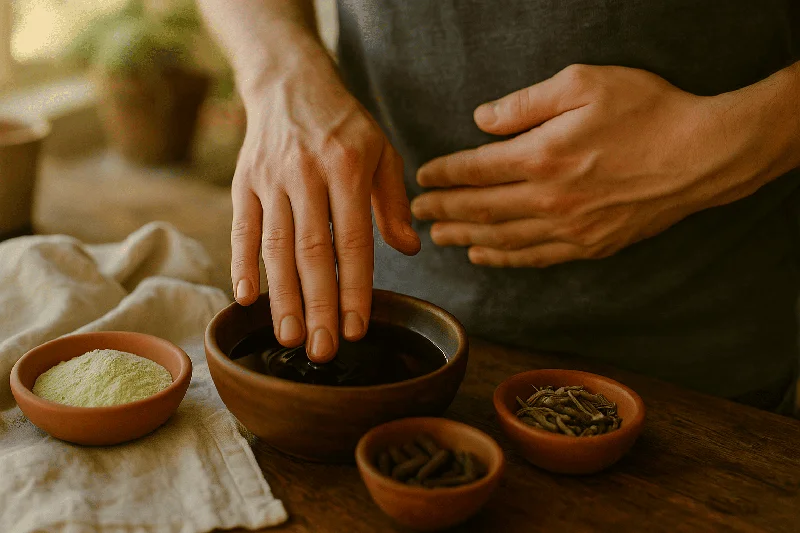
Kasisadi Oil (also known as Kasisadi Tailam, Kashisadi Tel, or Kasisadi Taila) is a classical Ayurvedic medicated oil formulated primarily for the external management of hemorrhoids (piles), warts, and corns. Rooted in the ancient text Bhaishajya Ratnavali (Arsharogadhikara, verses 111–113), this polyherbal oil combines mineral and herbal ingredients infused in a sesame oil base to deliver antiseptic, astringent, and tissue-reducing properties directly to the affected area. If you're searching for an Ayurvedic approach to manage Grade 1 or Grade 2 hemorrhoids — or wondering whether Kasisadi Oil can help with fissures — this comprehensive guide covers everything from its mechanism of action and step-by-step application to safety concerns, clinical evidence, and dietary guidelines during treatment.
What Is Kasisadi Oil?
Kasisadi Oil is a medicated oil (Taila) prepared through a traditional Ayurvedic process called Taila Paka Vidhi, where herbs, minerals and other substances are processed in a base oil — typically sesame oil (Tila Taila) — along with a water-based decoction (Kashaya). This dual-extraction method ensures that both water-soluble and fat-soluble phytochemicals are captured in the final product, making the oil pharmacologically richer than a simple cold-pressed herbal infusion.
Classical Ayurvedic Reference (Bhaishajya Ratnavali)
- The formulation is documented in Bhaishajya Ratnavali, one of the most authoritative Ayurvedic pharmacopoeias, under the chapter on Arsha Roga (hemorrhoidal disease), verses 111–113.
- The text prescribes it specifically for Arsha (piles) — particularly the dry, non-bleeding variety classified under Vata-Kapha dominance. Classical indications also extend to skin outgrowths like warts (Charmakeela) and corns (Kadara).
Other Names — Kasisadi Tailam, Kashisadi Tel, Kasisadi Taila
You might encounter this product under several spellings and transliterations across Indian languages and brands:
- Kasisadi Tailam (Sanskrit/South Indian convention)
- Kashisadi Tel (Hindi commercial name — Baidyanath)
- Kasisadi Taila (classical Sanskrit)
- Kasisadi Oil (English label)
All of these refer to the same formulation. The name derives from its primary ingredient, Kasis (Ferrous Sulphate / Green vitriol), which is the defining mineral component.
Key Ingredients of Kasisadi Oil
Understanding what goes into this oil is critical — especially because it contains certain mineral ingredients that demand awareness. Below is a comprehensive ingredient breakdown based on the classical formulation and the Baidyanath commercial preparation.
| Ingredient | Sanskrit/Common Name | Key Property |
|---|---|---|
| Kasis (Ferrous Sulphate) | Green Vitriol | Astringent, caustic — shrinks hemorrhoidal mass |
| Tila Taila | Sesame Oil (base) | Emollient, wound-healing, carrier medium |
| Gomutra | Cow's Urine | Antimicrobial, bio-enhancer for mineral absorption |
| Saindhava Lavana | Rock Salt | Analgesic, anti-inflammatory, improves tissue penetration |
| Pippali | Piper longum (Long Pepper) | Anti-inflammatory, bio-availability enhancer |
| Shunthi | Zingiber officinale (Ginger) | Analgesic, improves local circulation |
| Danti Moola | Baliospermum montanum root | Purgative (topically: tissue-resolving) |
| Chitraka | Plumbago zeylanica | Digestive fire stimulant, local irritant to reduce mass |
| Thuhar (Snuhi) | Euphorbia neriifolia (latex) | Caustic latex — dissolves abnormal tissue growth |
| Arka (Aak) | Calotropis procera | Anti-inflammatory, analgesic |
| Haratala | Orpiment (Arsenic trisulphide) | Caustic, anti-microbial |
| Manashila | Realgar (Arsenic disulphide) | Caustic, anti-microbial |
| Tuttha | Copper Sulphate | Antiseptic, astringent |
The Role of Arsenic Compounds — Safety Note
One detail that no competitor discusses but is absolutely vital: Kasisadi Oil contains Haratala (Arsenic trisulphide) and Manashila (Realgar / Arsenic disulphide). In Ayurveda, these minerals undergo Shodhana (purification) before incorporation, which classical texts claim reduces their toxicity while retaining therapeutic caustic properties.
However, from a modern toxicological perspective, even purified arsenic compounds carry risk with prolonged or improper use. A 2012 study published in the Journal of Ayurveda and Integrative Medicine confirmed that traditional Shodhana processes significantly reduce bioavailable arsenic, but do not eliminate it entirely.
This is precisely why:
- The oil is strictly for external use only
- Application should be limited to the affected area
- Prolonged use beyond the recommended course requires medical supervision
- It should never be applied on open, actively bleeding wounds or deep fissures
How Does Kasisadi Oil Work? (Mechanism of Action)
This is where most product pages fall short — they list benefits without explaining why the oil works. Let's break down the synergistic mechanism.
Ayurvedic Perspective (Doshic Interpretation)
Hemorrhoids (Arsha) are classified predominantly as a Vata-Kapha disorder in Ayurveda. The hemorrhoidal mass represents an abnormal tissue growth (Mamsa-Ankura) fueled by aggravated Kapha (causing swelling, mucous discharge) and Vata (causing pain, dryness, and prolapse).
Kasisadi Oil's formulation is designed to be:
- Ushna Virya (hot potency) — counters Kapha stagnation and shrinks tissue
- Tikshna (sharp/penetrating) — the caustic minerals and Euphorbia latex penetrate and chemically cauterize the hemorrhoidal mass
- Lekhana (scraping) — promotes gradual erosion of the abnormal growth
Modern Pharmacological Interpretation
From a contemporary pharmacology standpoint, the ingredients work through multiple pathways simultaneously:
- 1.Chemical cauterization — Ferrous sulphate, Copper sulphate, and arsenic compounds act as mild chemical cauterizing agents, causing controlled necrosis of the hemorrhoidal tissue. This is conceptually similar to the "Barron's band ligation" effect but through chemical means.
- 2.Anti-inflammatory action — Ginger (Shunthi), Long Pepper (Pippali), and Calotropis (Arka) contain compounds like gingerols, piperine, and calotropin that inhibit COX-2 and reduce local prostaglandin synthesis.
- 3.Antimicrobial barrier — Cow's urine, Copper sulphate, and the arsenic compounds create an antimicrobial environment that prevents secondary infection of the pile mass.
- 4.Improved local circulation — Sesame oil base combined with Chitraka (Plumbago) increases blood flow to the perianal region, supporting tissue healing and waste removal.
- 5.Astringent tightening — Ferrous sulphate and Rock salt produce an astringent effect, precipitating surface proteins and causing the swollen tissue to contract.
This multi-target approach is what makes Kasisadi Oil particularly effective for Grade 1 and Grade 2 non-bleeding hemorrhoids — the tissue is simultaneously being shrunk, cauterized, protected from infection, and supported in healing.
Benefits of Kasisadi Oil
For Piles (Hemorrhoids) — Primary Indication
This is the flagship use.
Kasisadi Oil helps with:
- Reduction of pile mass — gradual shrinkage of external and internal hemorrhoidal cushions (Grade 1 & 2)
- Pain relief — the analgesic action of ginger and Calotropis provides localized pain reduction
- Itching control — the antiseptic and astringent properties reduce Kandu (pruritus ani), one of the most distressing symptoms
- Prevention of secondary infection — critical in the perianal region where bacterial load is naturally high
- Discharge reduction — astringent action decreases mucous and serous discharge from pile mass
For Warts and Corns
The caustic and Lekhana (scraping) properties make Kasisadi Oil useful for:
- Gradual dissolution of common warts (Charmakeela)
- Softening and eventual removal of corns (Kadara) on feet
- Applied directly on the growth, typically once daily
Kasisadi Oil for Fissure — Can It Help?
This is a frequently asked question and deserves a nuanced answer.
- Kasisadi Oil is not classically indicated for anal fissures.
- Fissures involve a tear or crack in the anal mucosa — an open wound. The caustic ingredients in Kasisadi Oil (Ferrous sulphate, arsenic compounds, Euphorbia latex) can actually irritate and worsen a fresh fissure, causing burning pain and delayed healing.
For fissures, Jatyadi Tailam is the more appropriate Ayurvedic choice — it contains wound-healing herbs like Jati (Jasmine), Neem, and Turmeric without the caustic mineral components.
However, in cases where a patient has both hemorrhoids and a healed or chronic fissure, a practitioner might prescribe Kasisadi Oil for the pile mass while using Jatyadi Oil on the fissure area separately. This should only be done under professional guidance.
Kasisadi Oil vs Jatyadi Oil — Which One to Choose?
This comparison comes up constantly, yet no competitor provides a clear head-to-head breakdown. Here it is.
| Parameter | Kasisadi Oil | Jatyadi Oil |
|---|---|---|
| Primary indication | Hemorrhoids (piles), warts, corns | Wounds, fissures, ulcers, burns |
| Action type | Caustic, astringent, shrinking | Healing, soothing, regenerative |
| Contains minerals | Yes (Ferrous sulphate, Copper sulphate, Arsenic compounds) | No — purely herbal |
| Safe on open wounds | No | Yes |
| Best for fissures | Not recommended | First-line Ayurvedic choice |
| Best for pile mass reduction | First-line choice | Not effective for mass reduction |
| Pain relief mechanism | Counter-irritant + anti-inflammatory | Soothing + anti-inflammatory |
| Classical source | Bhaishajya Ratnavali | Bhaishajya Ratnavali (different chapter) |
| Pregnancy safety | Avoid unless prescribed | Generally safer, but still consult doctor |
- Bottom line: If you have piles without open wounds, Kasisadi Oil is appropriate. If you have fissures or any open wound in the anal area, use Jatyadi Oil instead.
- Don't mix them up — this is a common mistake.
How to Apply Kasisadi Oil on Piles — Step-by-Step Guide
No competitor provides a truly detailed application guide. Here's one based on traditional Ayurvedic practice and clinical guidance.
Step 1: Prepare the Area
- Have a bowel movement before application (ideally in the morning)
- Wash the perianal area gently with lukewarm water — avoid soap directly on pile mass
- Pat dry with a soft cotton cloth. Do not rub.
Step 2: Steam Therapy (Nadi Sweda) — Optional but Recommended
If you're using steam therapy (sitting over herbal steam), do this before applying the oil. According to basic Ayurvedic principles, oil applied before steaming gets washed away, whereas oil applied after steaming penetrates better into relaxed, dilated tissues.
- Boil water with Triphala or Neem leaves
- Sit over the steam for 5–7 minutes (use a commode chair with an opening)
- Pat dry again
Step 3: Apply the Oil
- Take 3–5 drops of Kasisadi Oil on a clean cotton swab or your finger (washed thoroughly)
- Apply directly on the hemorrhoidal mass with gentle pressure
- Do not insert the oil into the anal canal unless specifically instructed by your Ayurvedic physician
- For external piles: dab and leave.
- For prolapsed Grade 2 piles: apply and gently push the mass inward if possible
Step 4: Rest Period
- Lie down on your side for 10–15 minutes after application
- This prevents the oil from being wiped away by movement
- Wear a cotton pad or thin cloth liner to protect clothing
Step 5: Frequency and Duration
- Apply twice daily — morning (after bowel movement) and night (before sleep)
- Typical course duration: 2–4 weeks for Grade 1 hemorrhoids, 4–8 weeks for Grade 2
- Reassess with a practitioner after 4 weeks if no noticeable improvement
What to Do If You Experience Burning
Mild warmth or tingling is normal — the formulation is Tikshna (sharp) by nature. However, if you experience intense burning that doesn't subside in 5–10 minutes, wash the area immediately with cold water and discontinue use. This may indicate a fissure, abrasion, or allergy to one of the components.
Side Effects and Contraindications
Known Side Effects
- Mild burning sensation on initial application — usually subsides within a few minutes
- Skin irritation in sensitive individuals — redness or mild swelling around the application site
- Staining — the oil can stain clothing; use protective liners
- Allergic contact dermatitis — rare, but possible due to Euphorbia latex or mineral components
Contraindications — When NOT to Use
| Condition | Why It's Contraindicated |
|---|---|
| Actively bleeding hemorrhoids | Caustic ingredients can worsen bleeding |
| Grade 3–4 prolapsed hemorrhoids | Requires surgical or para-surgical intervention |
| Anal fissures (acute) | Open wound + caustic oil = intense pain and delayed healing |
| Anal fistula | Complex tract requires different treatment |
| Pregnancy | Insufficient safety data; arsenic compounds are a concern |
| Breastfeeding | Use only if previously prescribed before pregnancy; consult doctor |
| Known arsenic sensitivity | Contains Haratala and Manashila |
| Children under 12 | No established pediatric safety profile |
Pregnancy and Lactation — Detailed Guidance
If you were using Kasisadi Oil before becoming pregnant and it was prescribed by a qualified practitioner, discuss continuation with your obstetrician and Ayurvedic doctor jointly. If you have never used it before, do not start during pregnancy or lactation — the arsenic content, even in purified form, warrants extreme caution.
Diet and Lifestyle During Treatment (Pathya-Apathya)
This is a massive gap in all competing articles. Ayurveda explicitly recommends dietary and lifestyle modifications during Arsha treatment — the oil alone is only part of the protocol.
What to Eat (Pathya)
- High-fiber foods: whole grains (brown rice, oats), leafy vegetables, papaya, figs
- Buttermilk (Takra) — considered the best drink during pile treatment in Ayurveda; Charaka calls it Arshoghna (pile-destroying)
- Warm, cooked, easily digestible meals — soups, khichdi, steamed vegetables
- Adequate water intake — minimum 2.5–3 liters per day to prevent constipation
- Triphala powder (1 tsp with warm water at bedtime) — mild laxative, prevents straining
What to Avoid (Apathya)
- Spicy, fried, and heavy foods — aggravate both Vata and Pitta
- Refined flour products (maida-based breads, pastries) — cause constipation
- Excessive non-vegetarian food — hard to digest, increases Pitta
- Sitting for prolonged periods — increases pelvic congestion
- Straining during bowel movements — the single most important thing to avoid
- Suppression of natural urges (Vega Dharana) — especially the urge to defecate
Lifestyle Recommendations
- Sitz bath with lukewarm Triphala water, 2 times daily
- Regular walking — 20–30 minutes daily to improve circulation
- Avoid heavy weight-lifting during the treatment course
- Elevate legs periodically if your job involves prolonged sitting
Clinical Evidence and Research
This is an area where honesty matters more than hype. As of 2024, there are no large-scale randomized controlled trials (RCTs) specifically evaluating Kasisadi Tailam published in major indexed journals like PubMed.
However, there is supportive evidence worth noting:
- A 2017 case study published in the International Journal of Ayurveda Research documented successful management of Grade 2 hemorrhoids with Kasisadi Tailam in combination with Kshara Karma (alkaline cauterization), showing complete resolution of symptoms in 4 weeks.
- Ferrous sulphate (the primary ingredient, Kasis) has well-documented astringent and sclerosing properties — allopathic medicine also uses iron-based compounds in sclerotherapy for hemorrhoids (e.g., 5% phenol in almond oil contains similar astringent principles).
- A 2019 pharmacognostic analysis of Kasisadi Tailam confirmed the presence of tannins, alkaloids, and flavonoids in the final preparation — all of which have documented anti-inflammatory and wound-modulating activities.
- The concept of Kshara Taila (caustic/alkaline medicated oils) for Arsha has been validated in multiple Ayurvedic clinical studies, with success rates between 70–85% for Grade 1–2 piles in various published case series.
While robust evidence is still developing, the empirical clinical history spanning centuries and the pharmacological rationale of individual ingredients provide a reasonable basis for its continued use under professional supervision.
Differences Between Brands — What to Know
Several manufacturers produce Kasisadi Oil in India.
Here are a few practical points:
- Baidyanath (Jhansi) — One of the most widely available brands, labeled as "Kashisadi Tel." Available in 50 ml bottles.
- Nagarjuna Ayurveda — South Indian manufacturer; follows Kerala Ayurvedic tradition which sometimes varies slightly in proportions.
- Vyas Pharmaceuticals — Available in 100 ml bottles; follows classical formulation.
- Local pharmacy preparations — Some Ayurvedic pharmacies prepare it in-house. Quality control can vary significantly.
Key differences to watch for: The base oil (some use coconut oil instead of sesame in South Indian variants), the concentration of mineral ingredients, and the purification (Shodhana) process for arsenic compounds. Always choose a GMP-certified manufacturer.
Shelf Life and Storage
- Unopened: 3 years from the date of manufacture
- After opening: Use within 12 months
- - Storage: Keep in a cool, dry place away from direct sunlight.
- Temperature range: 15–30°C
- Do not refrigerate unless specifically stated on the label — cold temperatures can cause the oil to thicken and alter consistency
- Keep out of reach of children — this is not a food-grade oil
Frequently Asked Questions (FAQ)
Is Kasisadi Oil only for external use?
Yes, absolutely. Kasisadi Oil is strictly for external application only. It contains caustic minerals including Ferrous sulphate, Copper sulphate, and arsenic compounds that are safe only when applied topically in small amounts. Ingestion can cause serious toxicity. If accidentally swallowed, seek immediate medical attention.
Which Ayurvedic oil is best for piles?
For pile mass reduction (non-bleeding, Grade 1–2), Kasisadi Oil is the classical first choice. For bleeding piles with associated wounds, Jatyadi Tailam is more appropriate. Some practitioners use Nirgundi Oil for pain-dominant presentations. The "best" oil depends on your specific type and grade of hemorrhoids — consult an Ayurvedic practitioner for personalized advice.
Can I use Kasisadi Oil for fissures?
It's not recommended for acute anal fissures. The caustic nature of the oil can aggravate an open wound, causing intense burning and delaying healing. Use Jatyadi Tailam instead for fissures. Only in cases of co-existing chronic fissure with piles might a practitioner recommend cautious, localized use — and never on the fissure itself.
How long does Kasisadi Oil take to show results?
Most patients report noticeable reduction in itching and discomfort within 5–7 days. Visible shrinkage of pile mass typically becomes apparent after 2–3 weeks of consistent twice-daily application. Complete resolution of Grade 1 piles may take 3–4 weeks; Grade 2 piles often require 6–8 weeks. Results vary based on diet, lifestyle compliance, and severity.
Can Kasisadi Oil be used along with allopathic medicines?
There is no known interaction between topically applied Kasisadi Oil and oral allopathic medications for piles (such as Diosmin/Hesperidin tablets or stool softeners). In fact many integrative practitioners combine both approaches. However, avoid using Kasisadi Oil simultaneously with other topical ointments (like Lidocaine gel or steroid creams) on the same area — apply them at different times with at least a 2-hour gap.
What should I do if the oil causes severe burning?
Wash the area immediately with cold water. Mild warmth is expected, but intense burning lasting more than 10 minutes suggests either an underlying fissure, abrasion, or allergic reaction. Discontinue use and consult your practitioner before re-applying. Do not apply any other medicated cream immediately over the irritated area — plain coconut oil can be used as a soothing barrier.
Is Kasisadi Oil safe for long-term use?
Due to the presence of arsenic and copper compounds, long-term continuous use beyond 8 weeks is not advised without medical supervision. If symptoms persist beyond the recommended course, your condition may require a different treatment approach — possibly Kshara Karma or surgical evaluation. Always use it in defined courses, not indefinitely.
Final Thoughts — Is Kasisadi Oil Right for You?
Kasisadi Oil remains one of the most effective classical Ayurvedic formulations for non-bleeding hemorrhoids, backed by centuries of clinical use and a pharmacologically sound ingredient profile. Its unique combination of caustic minerals and anti-inflammatory herbs offers a multi-target approach that few single-ingredient treatments can match.
- That said, it's not a universal solution. It's not for fissures, not for bleeding piles, not for advanced-stage hemorrhoids, and definitely not for unsupervised long-term use.
- The presence of arsenic compounds — even in purified form — demands respect and informed usage.
If you're dealing with Grade 1 or Grade 2 non-bleeding hemorrhoids, Kasisadi Oil combined with proper diet (Pathya), lifestyle adjustments, and possibly supportive internal medications like Arshakuthar Ras or Triphala Guggulu can offer meaningful relief without surgical intervention.
Consult a qualified Ayurvedic physician before starting treatment. Self-medication, even with traditional remedies, carries risks — especially with formulations as potent as this one. Your practitioner can assess your specific Prakriti (constitution), the grade and type of your hemorrhoids, and design a complete treatment protocol rather than relying on the oil alone.
Scientific Sources
- A complex, nonlinear dynamic systems perspective on Ayurveda and Ayurvedic research — Rioux J, 2012, Journal of alternative and complementary medicine (New York, N.Y.)
- In-silico evaluation of Oroxylum indicum vent compounds in the plausible treatment and prevention of nasopharyngeal cancer — Thrigulla SR et al., 2024, Journal of Ayurveda and integrative medicine
- Patient agency revisited: "healing the hidden" in South India — Sieler R, 2014, Medical anthropology quarterly
- [Ocimum sanctum [Tulsi] as a Potential Immunomodulator for the Treatment of Ischemic Injury in the Brain](https://pubmed.ncbi.nlm.nih.gov/36515030/) — Yadav I et al., 2024, Current molecular medicine
- Concept of chronopharmacology in ayurveda — Arora D et al., 2000, Ancient science of life
- Ethnodermatological use of medicinal plants in India: From ayurvedic formulations to clinical perspectives - A review — Anand U et al., 2022, Journal of ethnopharmacology
- Hepatoprotective effect of Lobelia alsinoides Lam. in Wistar rats — Binitha RRV et al., 2020, Journal of Ayurveda and integrative medicine
- Gotu Kola (Centella asiatica): Nutritional Properties and Plausible Health Benefits — Chandrika UG et al., 2015, Advances in food and nutrition research
- Vanga Bhasma and its XRD analysis — Hiremath R et al., 2010, Ancient science of life
- The importance of a pleasant process of treatment: lessons on healing from South India — Halliburton M, 2003, Culture, medicine and psychiatry
- Antiulcerogenic and antiinflammatory studies with shilajit — Goel RK et al., 1990, Journal of ethnopharmacology
- Topical application of Jatyadi Ghrita and Jatyadi Taila accelerates wound healing in Sprague-Dawley rats: a study in gamma-radiation-induced skin wound model — Gupta V et al., 2021, International journal of radiation biology
- Arjunolic acid: a novel phytomedicine with multifunctional therapeutic applications — Hemalatha T et al., 2010, Indian journal of experimental biology
- [[Kanpo traditional medicine nowadays is still a supported therapeutic option in Japan: Kanpo preparations]](https://pubmed.ncbi.nlm.nih.gov/35249002/) — Blázovics A et al., 2022, Orvosi hetilap
- Ayurvedic research, wellness and consumer rights — Chandra S, 2016, Journal of Ayurveda and integrative medicine
- Antiviral Activity of Svarnvir-IV Tablet Assayed for Activity Against SARS-CoV-2 In Vitro — Reddy KR et al., 2023, Cureus
- Effect of "Murcchana samskara" on therapeutic efficacy of BhallatakadiGhrita — Wayal SR et al., 2022, Journal of Ayurveda and integrative medicine
- Enhanced Internalization of Indian Ayurvedic Swarna Bhasma (Gold Nanopowder) for Effective Interaction with Human Cells — Kashani AS et al., 2018, Journal of nanoscience and nanotechnology
- The genus Anogeissus: A review on ethnopharmacology, phytochemistry and pharmacology — Singh D et al., 2016, Journal of ethnopharmacology
- An integrative approach for management of post-traumatic dorsal foot wounds - A case report — Sherkhane R et al., 2024, Journal of Ayurveda and integrative medicine
Ask Ayurvedic doctor a question and get a consultation online on the problem of your concern in a free or paid mode.
More than 2,000 experienced doctors work and wait for your questions on our site and help users to solve their health problems every day.
Related articles