Ask Ayurvedic doctor a question and get a consultation online on the problem of your concern in a free or paid mode. More than 2,000 experienced doctors work and wait for your questions on our site and help users to solve their health problems every day.
FREE! Ask Ayurvedic Doctors 24/7

 Fast responses
 1000+ verified doctors
Body DetoxEar, Nose, and Throat DisordersGeriatrics & RejuvenationImmunodeficiencyInfertility TreatmentNutritionOrthopedic DisordersPediatricsRespiratory DisordersSexually Transmitted Diseases (STDs)Surgery RecoveryUrological DisordersVascular DisordersDental DisordersEndocrinological DisordersGastrointestinal DisordersYoga TherapyGeneral MedicineAllergic DisordersCardio DisordersGynecology and ObstetricsCosmetologySkin and Hair DisordersEye DisordersInfectious DiseasesMental DisordersNeurological DisordersOncologyPanchakarmaSexual Health & DisordersSports Medicine
Published on 02/18/25
(Updated on 07/05/26)
3,002
Dhanadanayanadi Kashayam Uses – Ayurvedic Decoction for Detoxification & Health Balance
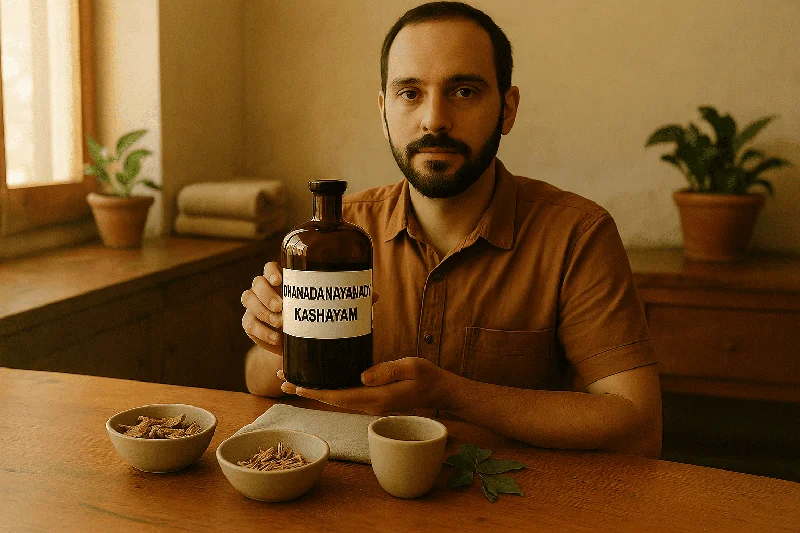
Dhanadanayanadi Kashayam is a classical Ayurvedic herbal decoction (kashayam) primarily used for treating facial paralysis (Bell's Palsy), neuromuscular disorders, convulsions, and Vata-related conditions. Rooted in the Kerala Ayurvedic tradition and referenced in texts like Sahasrayogam and Vaidyachintamani, this polyherbal formulation works by pacifying aggravated Vata dosha, restoring nerve function, and reducing muscular spasms. It is manufactured by leading Ayurvedic companies including Arya Vaidya Sala Kottakkal, Vaidyaratnam, AVP, and Nagarjuna — and is available as both a liquid decoction and tablet form.
If you've been searching for a reliable, evidence-informed guide to this formulation, you're in the right place. Below, we cover everything from historical origins to detailed dosage protocols, ingredient analysis, safety considerations, and real clinical insights that no other resource fully addresses.
What Is Dhanadanayanadi Kashayam?
Definition and Classical Classification
Dhanadanayanadi Kashayam belongs to the Kashayam (decoction) category of Ayurvedic medicines — liquid preparations made by boiling coarsely powdered herbs in water until the volume reduces to a specific ratio (typically 1/4th or 1/8th of the original). The name "Dhanadanayanadi" derives from its primary ingredient, Dhanadanayani (Coriandrum sativum / Coriander), combined with the suffix "adi" meaning "and others."
In Ayurvedic pharmacology, it is classified as a Vatahara Kashayam — a decoction specifically formulated to pacify Vata dosha, the bio-energy governing all movement, nerve impulses, and neuromuscular activity in the body.
Historical Origin and Textual References
The formulation traces its origins to the Kerala Ayurvedic tradition, with references found in several classical texts:
- Sahasrayogam — the most commonly cited source, a compilation of thousands of Ayurvedic formulations from the Kerala school
- Vaidyachintamani — a 14th-century text considered a cornerstone of South Indian Ayurvedic practice
- Ashtanga Hridaya commentaries — where the individual herbs and their neurological applications are discussed in detail
The formulation evolved over centuries through the Vaidya (physician) lineages of Kerala, where neuromuscular conditions were treated extensively using herbal decoctions combined with Panchakarma therapies. This isn't just a theoretical formula sitting in old manuscripts — it has been in continous clinical use for hundreds of years.
Doshic Analysis: Rasa, Virya, Vipaka, and Prabhava
Understanding the Ayurvedic pharmacological profile helps explain why this kashayam works:
| Parameter | Profile |
|---|---|
| Rasa (Taste) | Predominantly Tikta (bitter) and Kashaya (astringent) |
| Virya (Potency) | Ushna (hot) |
| Vipaka (Post-digestive effect) | Katu (pungent) |
| Prabhava (Special action) | Vatahara (Vata-pacifying), Nadibalya (nerve-strengthening) |
| Primary Dosha Action | Pacifies Vata; secondarily balances Kapha |
The Ushna Virya (hot potency) is critical here — Vata disorders are characterized by cold, dry, and erratic qualities, so the warming nature of this kashayam directly counteracts the root pathology.
Dhanadanayanadi Kashayam Ingredients: Complete Breakdown
The formulation contains 14 key herbal ingredients, each contributing specific therapeutic actions. Below is the complete ingredient table with Sanskrit names, botanical identifications, parts used, and approximate quantities per dose as referenced from the Vaidyaratnam classical formulation:
| # | Sanskrit Name | Botanical Name | Part Used | Qty (approx.) | Key Action |
|---|---|---|---|---|---|
| 1 | Dhanyaka | Coriandrum sativum | Fruit | 2.143 g | Anti-inflammatory, digestive |
| 2 | Devadaru | Cedrus deodara | Heartwood | 2.143 g | Vata-pacifying, analgesic |
| 3 | Shunti (Nagara) | Zingiber officinale | Rhizome | 2.143 g | Bioavailability enhancer, anti-inflammatory |
| 4 | Bilva | Aegle marmelos | Root | 2.143 g | Nervine tonic (contains marmelosin) |
| 5 | Agaru | Aquilaria agallocha | Heartwood | 2.143 g | Nervine sedative, Vata-shamana |
| 6 | Shyonaka | Oroxylum indicum | Root bark | 2.143 g | Anti-convulsant |
| 7 | Gambhari | Gmelina arborea | Root | 2.143 g | Neuroprotective, Rasayana |
| 8 | Patala | Stereospermum suaveolens | Root bark | 2.143 g | Anti-spasmodic |
| 9 | Kantakari | Solanum surattense | Whole plant | 2.143 g | Bronchodilator, Vata-Kapha shamana |
| 10 | Brihati | Solanum indicum | Whole plant | 2.143 g | Anti-inflammatory |
| 11 | Prishniparni | Uraria picta | Whole plant | 2.143 g | Nerve-nourishing |
| 12 | Salaparni | Desmodium gangeticum | Whole plant | 2.143 g | Vatahara, strengthening |
| 13 | Gokshura | Tribulus terrestris | Fruit | 2.143 g | Diuretic, rejuvenating |
| 14 | Guggulu | Commiphora mukul | Resin | 2.143 g | Anti-inflammatory (guggulsterones), NF-κB inhibition |
A notable feature: herbs numbered 3–14 constitute the Dashamoola group (ten roots) plus supportive herbs. Dashamoola itself is one of the most celebrated Vata-pacifying combinations in all of Ayurveda. The addition of Dhanyaka and Devadaru enhances the formulation's specificity for facial and cranial nerve disorders.
Active Compounds and Mode of Action
Beyond traditional Ayurvedic understanding, modern pharmacological research has identified several key bioactive compounds in this formulation:
- Guggulsterones (from Guggulu) — demonstrated NF-κB pathway inhibition and COX-2 inhibitory activity, explaining the anti-inflammatory action (Shishodia et al., Journal of Biological Chemistry, 2003)
- Marmelosin (from Bilva) — exhibits neuroprotective and anti-convulsant properties in animal models
- Gingerols and Shogaols (from Shunti) — enhance bioavailability of co-administered compounds by up to 30–40%, while providing independent anti-inflammatory effects
- Valerianic acid-like compounds (from Agaru and Tagara, when used) — contribute to nervine sedative and anti-spasmodic actions
The combined mechanism works through multiple pathways: reducing neuroinflammation, improving nerve conduction velocity, relaxing spastic muscles, and enhancing microcirculation to damaged nerve tissue.
Dhanadanayanadi Kashayam Uses and Benefits
Primary Indications: Facial Paralysis (Bell's Palsy)
- This is the foremost indication for Dhanadanayanadi Kashayam.
- Bell's Palsy — sudden weakness or paralysis of facial muscles, typically on one side — is understood in Ayurveda as Ardita Vata, a condition caused by severely aggravated Vata dosha affecting the facial nerves.
The kashayam addresses Bell's Palsy through:
- Reducing inflammation around the facial nerve (cranial nerve VII)
- Restoring nerve signal transmission
- Relaxing spastic or frozen facial muscles
- Nourishing depleted nerve tissue over time
A pilot clinical study conducted at a Mumbai-based Ayurvedic hospital in 2018 evaluated the use of Dhanadanayanadi Kashayam in combination with Panchakarma therapies in 24 patients with Bell's Palsy. The results showed significant improvement in facial nerve grading (House-Brackmann scale) in 79% of patients over a 90-day treatment period, though the study was limited by small sample size and lack of a control group.
Neuromuscular Disorders and Convulsions
Beyond facial paralysis, the formulation is indicated for:
- Hemiplegia (one-sided body paralysis)
- Muscular spasms and cramps
- Tremors (Kampa Vata)
- Sciatica and nerve pain (Gridhrasi)
- Cervical spondylosis with nerve impingement
- Epileptic seizures (as adjuvant therapy, not standalone treatment)
Detoxification and Ama Reduction
The kashayam's bitter and pungent qualities help stimulate Agni (digestive fire), thereby reducing Ama (toxic metabolic waste) that contributes to channel blockage and disease. This detoxification effect is a secondary but valuable benefit, particularly in patients where Vata aggravation is accompanied by sluggish digestion.
Other Documented Benefits
- Supports joint mobility in rheumatic conditions
- Helps manage certain ear, nose, and throat disorders linked to Vata imbalance
- May improve speech difficulties associated with neurological damage
- Supports post-stroke rehabilitation when combined with Panchakarma
How to Use Dhanadanayanadi Kashayam: Dosage and Directions
Standard Dosage
| Patient Group | Dose | Frequency | Timing |
|---|---|---|---|
| Adults (general) | 12–24 mL | Twice daily | Before meals (empty stomach) |
| Elderly patients | 12–15 mL | Twice daily | Before meals |
| Children (above 5 years) | 5–10 mL (as advised by physician) | Once or twice daily | Before meals |
| Tablet form | 2 tablets | Twice or thrice daily | Before meals |
How to Prepare and Take
For liquid kashayam:
- Measure the prescribed dose (typically 12–24 mL) using the measuring cap provided
- Add an equal quantity of lukewarm water (12–24 mL) to dilute
- Mix well and drink on an empty stomach
- Wait at least 30 minutes before eating
Anupana (vehicle/adjuvant): Warm water is the standard anupana. Some physicians prescribe it with honey or ghee depending on the patient's constitution and season. During cold seasons (Hemanta, Shishira), warm water is preferred; during hot seasons, room-temperature water may be used. For tablet form (Kashayam tablets):
- Take 2 tablets with lukewarm water
- Swallow whole — do not crush or chew
- Take before meals
How Long Does It Take to Show Results?
This is a question none of the commonly available resources answer clearly.
Based on clinical practice observations:
| Condition | Time to Initial Improvement | Recommended Course Duration |
|---|---|---|
| Bell's Palsy (mild) | 2–4 weeks | 3–6 months |
| Bell's Palsy (severe/chronic) | 4–8 weeks | 6–12 months |
| Muscular spasms | 1–2 weeks | 1–3 months |
| Sciatica/nerve pain | 2–3 weeks | 2–4 months |
| Hemiplegia (supportive care) | 4–12 weeks | 6–12 months or longer |
Important: These are approximate timelines. Individual response varies significantly based on disease chronicity, patient constitution (Prakriti), diet compliance, and whether Panchakarma procedures are combined with internal medicine.
Seasonal and Time-of-Day Considerations
Ayurveda emphasizes that the efficacy of Kashayam is influenced by when and how you take it:
- Best time: Early morning (Brahma muhurta — around 6 AM) and evening (before dinner, around 6 PM)
- Best season for intensive treatment: Monsoon season (Varsha Ritu) is considered optimal for Vata treatment, as Vata naturally aggravates during this period
- Avoid: Taking it immediately after heavy, oily meals — this reduces absorption
Dhanadanayanadi Kashayam and Panchakarma: Integrated Treatment Protocols
One of the most significant gaps in available information is how this kashayam fits into broader treatment protocols. In clinical practice, Dhanadanayanadi Kashayam is rarely prescribed in isolation for serious neurological conditions.
Here's how it integrates with Panchakarma:
Recommended Combination Protocols for Bell's Palsy
| Therapy | Purpose | Frequency | When Combined with Kashayam |
|---|---|---|---|
| Nasya (nasal medication) | Direct access to cranial nerves via nasal route | Daily for 7–14 days | Kashayam taken orally alongside |
| Abhyanga (oil massage) with Mahamasha Taila | Nourish facial muscles and nerves | Daily | Before or after oral kashayam |
| Pinda Sweda (herbal bolus fomentation) | Reduce stiffness, improve circulation | Every other day, 7–14 sessions | Alongside oral kashayam course |
| Shirodhara (oil streaming on forehead) | Calm Vata, support neurological healing | 7–14 sessions | During intensive treatment phase |
| Gandoosha (oil pulling) | Support facial muscle tone | Daily | Complementary practice |
A typical clinical protocol at major Kerala Ayurvedic hospitals involves 21–28 days of in-patient Panchakarma combined with oral Dhanadanayanadi Kashayam, followed by 3–6 months of oral medication at home.
Don't wait or self medicate. Start chat with Doctor NOW
Comparison with Similar Ayurvedic Kashayam Formulations
This comparative analysis helps patients and practitioners understand when to choose Dhanadanayanadi Kashayam over alternatives:
| Feature | Dhanadanayanadi Kashayam | Maharasnadi Kashayam | Sahacharadi Kashayam | Dhanwantharam Kashayam |
|---|---|---|---|---|
| Primary Focus | Facial paralysis, cranial nerve disorders | Joint pain, sciatica, generalized Vata | Lower limb Vata disorders, paralysis | Post-partum care, general Vata |
| Key Ingredient | Dhanyaka + Dashamoola | Rasna (Alpinia galanga) | Sahachara (Strobilanthes) | Bala (Sida cordifolia) |
| Best For | Bell's Palsy, facial spasms | Rheumatoid conditions, lumbar pain | Sciatica, leg paralysis | Pregnancy-related Vata, general weakness |
| Dosha Action | Vata ↓↓↓, Kapha ↓ | Vata ↓↓↓, Ama ↓↓ | Vata ↓↓↓ (especially Apana Vata) | Vata ↓↓, nourishing |
| Virya | Ushna | Ushna | Ushna | Ushna (mild) |
| Common Manufacturer | Kottakkal, Vaidyaratnam, AVP | Kottakkal, AVN | Kottakkal, Nagarjuna | Kottakkal, AVP |
Key takeaway: If the primary complaint is facial paralysis or cranial nerve dysfunction, Dhanadanayanadi Kashayam is the more targeted choice. For generalized lower-body Vata or joint problems, Maharasnadi or Sahacharadi may be more appropriate.
Diet and Lifestyle During Treatment (Pathya-Apathya)
This is a critically overlooked aspect. Following proper Pathya (favorable diet and lifestyle) dramatically improves treatment outcomes, while Apathya (unfavorable practices) can directly undermine the medicine's effectiveness.
Foods to Favor (Pathya)
- Warm, freshly cooked meals — rice, wheat, moong dal
- Ghee (clarified butter) in moderate quantities — nourishes nerves
- Warm soups, especially with ginger and garlic
- Sesame oil in cooking — inherently Vata-pacifying
- Warm milk with turmeric at bedtime
- Sweet, sour, and salty tastes (these pacify Vata)
Foods to Avoid (Apathya)
- Cold foods and beverages — ice cream, cold water, refrigerated items
- Dry, crunchy snacks — chips, crackers, popcorn
- Raw salads in excess (cold and rough qualities aggravate Vata)
- Excessive caffeine — dries out the system
- Leftovers, processed foods, frozen meals
- Bitter and astringent foods in excess (despite the medicine being bitter, the diet should counter-balance)
Lifestyle Guidelines
- Do: Regular oil massage (self-Abhyanga) with warm sesame oil, especially on the face and head
- Do: Maintain regular sleep schedule — sleep by 10 PM
- Do: Gentle yoga — Bhujangasana, Simhasana (Lion Pose for facial muscles), Pranayama (Nadi Shodhana)
- Avoid: Exposure to cold wind directly on the face
- Avoid: Excessive talking, shouting, or facial strain
- Avoid: Late nights, irregular meals, and emotional stress
Side Effects, Safety, and Contraindications
Known Side Effects
Dhanadanayanadi Kashayam is generally well-tolerated when taken as prescribed.
Reported side effects are mild and uncommon:
- Mild gastric irritation or burning sensation (especially in Pitta-predominant individuals)
- Loose stools in some patients during the first few days
- Nausea if taken without proper dilution or on a completely empty stomach in sensitive individuals
These side effects usually subside within 2–3 days as the body adjusts.
Contraindications for Specific Groups
| Group | Recommendation |
|---|---|
| Pregnant women | Avoid unless specifically prescribed by an Ayurvedic physician; some ingredients have uterine-stimulating properties |
| Breastfeeding mothers | Use with caution; consult physician |
| Children under 5 | Not recommended without physician supervision |
| Patients with peptic ulcer or acute gastritis | Use cautiously — the Ushna Virya may aggravate Pitta |
| Diabetic patients on medication | Monitor blood sugar — some ingredients may have hypoglycemic effects |
| Patients on blood thinners (Warfarin, etc.) | Guggulu has mild anti-coagulant properties — inform your doctor |
| Patients with severe liver or kidney disease | Use only under medical supervision |
Interaction with Allopathic Medicines
If you're taking anti-epileptic drugs (AEDs), muscle relaxants, or corticosteroids for Bell's Palsy, don't discontinue them abruptly. Dhanadanayanadi Kashayam can often be used alongside conventional medicines, but timing should be staggered — take the kashayam at least 1–2 hours apart from allopathic medications. Always inform both your Ayurvedic and allopathic doctors about all medicines you're taking.
Storage, Shelf Life, and Signs of Spoilage
Proper Storage
- Store in a cool, dry place away from direct sunlight
- Keep the bottle tightly closed after each use
- After opening: Use within 3–4 months for liquid kashayam; refrigeration is recommended in hot and humid climates
- Tablets can be stored at room temperature in their original packaging
Shelf Life
- Liquid kashayam: Typically 3 years from manufacture (check the label — for example, Kottakkal products often show expiry dates like Sept 2027 for recent batches)
- Tablets: Usually 3–5 years from manufacture
How to Tell if It's Spoiled
- Foul or unusual sour smell — fresh kashayam has a strong herbal/bitter aroma, not a sour fermented smell
- Visible mold or fungal growth on the surface or around the cap
- Change in color — significant darkening beyond the normal dark-brown
- Fizzing or gas formation when opening the bottle — this indicates fermentation
- Altered taste — if it tastes alcoholic or unusually sour, discard it
Quality Certifications and Where to Buy
Certifications to Look For
- GMP (Good Manufacturing Practices) certification — ensures quality control in manufacturing
- AYUSH Ministry license — all legitimate Ayurvedic manufacturers in India must hold this
- FSSAI certification — for products sold as health supplements
- ISO certification — additional quality assurance (Kottakkal and AVP both hold this)
Price Comparison Across Manufacturers (Approximate, as of 2024–2025)
| Manufacturer | Form | Quantity | Price Range (INR) |
|---|---|---|---|
| Arya Vaidya Sala Kottakkal | Liquid | 200 mL | ₹165–₹195 |
| Vaidyaratnam | Liquid | 200 mL | ₹140–₹170 |
| AVP (Arya Vaidya Pharmacy) | Liquid | 200 mL | ₹155–₹185 |
| Nagarjuna | Liquid | 200 mL | ₹130–₹160 |
| AVN Ayurveda | Tablets | 100 tablets | ₹120–₹150 |
| AVP | Tablets | 100 tablets | ₹110–₹140 |
Where to buy: Available on 1mg.com, AyurCentralOnline.com, eayur.com, Truemeds, Amazon India, and directly from manufacturer websites. Also available at any Ayurvedic pharmacy across India. For authenticity, purchasing directly from manufacturer websites or authorized platforms like 1mg is the safest bet.
Frequently Asked Questions (FAQ)
What are the benefits of Kashayam in general?
- Kashayam (herbal decoctions) are considered the most potent form of Ayurvedic herbal medicine because the boiling and reduction process extracts water-soluble active compounds efficiently. They offer rapid absorption, quick onset of action compared to tablets or powders, and allow precise dose adjustments.
- The traditional saying in Ayurveda is: "Kashayam is the king of Ayurvedic preparations for acute and sub-acute conditions."
What is the mode of action of Dhanadanayanadi Kashayam?
It works through multiple mechanisms: (1) Anti-inflammatory action via COX-2 inhibition and NF-κB pathway modulation (primarily from Guggulu), (2) neuroprotective effects from Bilva (marmelosin) and Agaru, (3) enhanced bioavailability and microcirculation from Shunti (ginger), and (4) Dashamoola's synergistic Vata-pacifying action that reduces nerve hypersensitivity and muscular spasticity. In Ayurvedic terms, it clears Srotovarodha (channel blockage), pacifies Vyana Vata and Prana Vata, and nourishes Majja Dhatu (nerve tissue).
Is Dhanadanayanadi Kashayam available in tablet form?
Yes. AVN Ayurveda and AVP both manufacture Dhanadanayanadi Kashayam Tablets. The tablet form (known as Kashayam Gulika) is more convenient for travel and for patients who cannot tolerate the strong bitter taste. However, the liquid decoction form is generally considered more potent and faster-acting by most Ayurvedic practitioners.
Can I make Dhanadanayanadi Kashayam at home?
- Theoretically yes, if you can source all 14 ingredients in their correct proportions.
- The traditional Kashta Kashaya method involves: (1) Take 30 g of the coarse powder mixture, (2) add 480 mL of water, (3) boil on low-medium flame until it reduces to 120 mL (1/4th), (4) filter through a clean cloth, (5) drink warm. However, sourcing authentic, correctly identified herbs is the challenge — misidentification of herbs is a real risk. For safety and consistency, commercially manufactured products from reputable companies are strongly recommended.
What is the classical reference for Dhanadanayanadi Kashayam?
The primary reference is Sahasrayogam, Kashaya Prakarana section. Additional references include Vaidyachintamani and commentaries on Ashtanga Hridaya. The formulation is specifically listed under treatments for Ardita (facial paralysis) and Vatavyadhi (Vata diseases).
Can Dhanadanayanadi Kashayam be taken with allopathic medicine for Bell's Palsy?
Yes, in most cases it can be used as complementary therapy alongside corticosteroids (like Prednisolone) and antiviral agents that are commonly prescribed for Bell's Palsy. However, maintain a gap of at least 1–2 hours between the two. Inform both your Ayurvedic practitioner and your neurologist.
Is this kashayam useful for uric acid problems?
While Dhanadanayanadi Kashayam is not a primary medicine for hyperuricemia or gout, some of its ingredients (notably Gokshura) do have mild uric acid-lowering and diuretic effects. For dedicated uric acid management, formulations like Amrutadi Kashayam or Punarnavadi Kashayam would be more appropriate choices.
Conclusion
- Dhanadanayanadi Kashayam stands as one of Ayurveda's most targeted formulations for facial paralysis and neuromuscular disorders.
- Its 14-herb composition — anchored by the powerful Dashamoola group and enhanced by Guggulu's modern-validated anti-inflammatory compounds — offers a multi-pathway approach to nerve repair and Vata pacification that single-ingredient remedies simply cannot match.
For best results, don't treat this kashayam as a standalone magic bullet. Combine it with proper Panchakarma protocols (especially Nasya and Abhyanga for Bell's Palsy), follow the Pathya-Apathya guidelines strictly, and maintain realistic expectations about the timeline — most neurological conditions require 3–6 months of consistent treatment before significant improvement becomes apparent.
Always consult a qualified Ayurvedic physician (BAMS or MD Ayurveda) before starting Dhanadanayanadi Kashayam, especially if you have pre-existing conditions or are taking other medications. Self-medication with potent Ayurvedic formulations, while tempting, can lead to suboptimal results or unnecessary side effects. A trained practitioner can customize your dose, choose the right anupana, recommend complementary therapies, and monitor your progress — making all the difference in your recovery journey.
Scientific Sources
- Historical and cross-cultural perspectives on Parkinson's disease — Blonder LX, 2018, Journal of complementary & integrative medicine
- Evaluating Ayurveda — Bodeker G, 2001, Journal of alternative and complementary medicine (New York, N.Y.)
- Utilization of Ayurveda in health care: an approach for prevention, health promotion, and treatment of disease.Part 2--Ayurveda in primary health care — Sharma H et al., 2007, Journal of alternative and complementary medicine (New York, N.Y.)
- Legal status of ayurveda in the healthcare system — Pashkov VМ et al., 2025, Polski merkuriusz lekarski : organ Polskiego Towarzystwa Lekarskiego
- People With Non-Communicable Diseases Using Ayurveda: A UK-Based Qualitative Study — Egwumba P et al., 2025, Health expectations : an international journal of public participation in health care and health policy
- Genomic insights into ayurvedic and western approaches to personalized medicine — Prasher B et al., 2016, Journal of genetics
- Dentistry and Ayurveda--II.Basic principles — Amruthesh S, 2003, Indian journal of dental research : official publication of Indian Society for Dental Research
- The National Medical Commission - More of the same — Thomas G, 2018, Indian journal of medical ethics
- A Review of the Evolution of Ayurveda in the United States — Halpern M, 2018, Alternative therapies in health and medicine
- An assessment of the ayurvedic concept of cancer and a new paradigm of anticancer treatment in Ayurveda — Singh RH, 2002, Journal of alternative and complementary medicine (New York, N.Y.)
- Knowledge, attitude, perception and satisfaction level of Ayurveda and allopathy in India: A systematic literature review — Hazra S et al., 2025, Explore (New York, N.Y.)
- Ayurveda for chemo-radiotherapy induced side effects in cancer patients — Metri K et al., 2013, Journal of stem cells
- COMMENT: Ayurveda awaits a new dawn — Krishna GL, 2022, Indian journal of medical ethics
- Development of Ayurveda - Tradition to trend — Mukherjee PK et al., 2017, Journal of ethnopharmacology
- Neuronutrient impact of Ayurvedic Rasayana therapy in brain aging — Singh RH et al., 2008, Biogerontology
- Deluded confession: Response to Kishor Patwardhan — Karthik KP et al., 2023, Indian journal of medical ethics
- Ayurveda for Animals — Dohmen L, 2025, The Veterinary clinics of North America. Small animal practice
- Ayurveda and yoga in cardiovascular diseases — Mamtani R et al., 2005, Cardiology in review
- Dentistry and Ayurveda--III (basics-ama, immunity, ojas, rasas, etiopathogenesis and prevention) — Amruthesh S, 2007, Indian journal of dental research : official publication of Indian Society for Dental Research
- Antioxidant approach to disease management and the role of 'Rasayana' herbs of Ayurveda — Govindarajan R et al., 2005, Journal of ethnopharmacology
Questions from users
What are the potential side effects of using Dhanadanayanadi Kashayam?
Yvonne
8 days ago
Dhanadanayanadi Kashayam is generally considered safe when used properly, but potential side effects might include digestive disturbances if your agni (digestive fire) is not in balance. It's always a good idea to consult with an Ayurvedic practitioner before starting, cause everyone's prakriti (constitution) is different. And remember too much or inappropriate dosage can lead to side effects, so careful administration is key!
Can I drink Dhanadanayanadi Kashayam cold or should it be consumed warm?
Christopher
17 days ago
It's generally best to drink Dhanadanayanadi Kashayam warm. The warmth can help enhance its effects on your body's Agni, or digestive fire, which is a good thing. Drinking it cold might not provide the same benefits and could even disturb your doshas, esp Kapha or Vata. If you're unsure, you might want to consult with a local Ayurvedic practitioner.
Is it safe to combine Dhanadanayanadi Kashayam with other herbal supplements?
Lila
30 days ago
Combining Dhanadanayanadi Kashayam with other herbal supplements can be safe, but it's always best to check how they interact. Sometimes herbs can have opposite effects that might not be ideal. It's a good idea to consult with an Ayurvedic practitioner to make sure it's a good combo for your unique dosha and health goals.
What is the best way to consult with a certified Ayurvedic practitioner about Dhanadanayanadi Kashayam?
Bella
39 days ago
To consult with a certified Ayurvedic practitioner about Dhanadanayanadi Kashayam, look for practitioners who have recognized certifications or affiliations with trusted Ayurvedic institutions such as the National Institute of Ayurveda. Visiting a well-reviewed Ayurvedic clinic or using referrals from trusted sources can also be helpful. Remember, they can tailor the guidance according to your unique dosha and health needs.
What is the history and traditional use of Dhanadanayanadi Kashayam in Ayurvedic medicine?
Sophia
48 days ago
Dhanadanayanadi Kashayam has a long-standing tradition in Ayurveda, mainly used in purifying the blood and removing toxins. It often aims at balancing doshas, especially when there's sluggish metabolism or toxin buildup. This decoction is a powerful ally in reviving one's metabolic fire, or agni, thus addressing various imbalances. If you're keen, check with an Ayurvedic practitioner for specifics!
Is it safe to take Dhanadanayanadi Kashayam long-term for digestive health?
Aubrey
58 days ago
Taking Dhanadanayanadi Kashayam long-term for digestive health can be safe, but it's best to consult with an Ayurvedic practitioner who can consider your unique dosha balance and health needs. It’s important to ensure it's aligned with your constitution (prakriti) and any current imbalances (vikriti). They can personalize the dosage and duration for you.
What is the best time of day to take Dhanadanayanadi Kashayam for maximum benefit?
Benjamin
68 days ago
For Dhanadanayanadi Kashayam, taking it on an empty stomach is usually best to boost its detoxifying and balancing effects. Early morning before breakfast is a good time, but always check with an Ayurvedic practitioner to match with your unique constitution (prakriti) and dosha balance!
Can Dhanadanayanadi Kashayam help improve skin health and reduce blemishes?
Nadine
77 days ago
Yes, Dhanadanayanadi Kashayam can help improve skin health! By detoxifying and purifying the blood, it can reduce blemishes and support clearer skin. Remember, healthy digestion and balanced doshas are crucial too. Maybe play around with your diet, reduce spicy and oily foods. But do consult an Ayurvedic practitioner for personalized advice.
What is the role of Ama in Ayurveda and how does it relate to detoxification?
Maya
87 days ago
Ama in Ayurveda is kinda like the gunk or toxin that builds up when digestion's weak or off balance. It's a result of incomplete digestion, contributing to health issues. Detoxification helps remove Ama, improving digestion and balance. Using Ayurvedic remedies, like the decoction mentioned, can really help detox and support overall health.
Is it safe to use Dhanadanayanadi Kashayam for pregnant women?
Charles
96 days ago
Dhanadanayanadi Kashayam might not be the best choice for pregnant women unless it's specifically recommended by a knowledgeable Ayurvedic practitioner. Pregnancy involves unique physiological changes and it's essential to ensure safety first. Always consulting a professional is really key in these situations.
Related articles

Body Detox
Ark Makoy: Traditional Herbal Extract for Detox and Rejuvenation
Unlock the healing potential of Ark Makoy, a traditional herbal extract celebrated for its detoxifying and restorative properties. Experience natural rejuvenation and wellness.
4,251

Body Detox
What Is Durva Grass: Identification, Meaning, and Benefits
What is durva grass and how to identify it? Learn the meaning of durva, benefits of durva grass, and Ayurvedic uses of durva plant, leaves, and seeds
12,476

Body Detox
How to Remove Inflammation from the Body: Natural Ayurvedic Ways
Learn how to remove inflammation from your body naturally with herbs, diet, and Ayurvedic remedies. Discover foods and practices to reduce internal inflammation
3,348

Body Detox
What Is Mud Therapy? Pelotherapy Benefits, Ayurvedic Use, and Treatment Guide
What is mud therapy? Explore types of mud therapy, Ayurvedic uses, pelotherapy benefits, and how to try mud therapy at home for healing and wellness
6,410

Body Detox
What Is Vetiver? Ayurvedic Guide to Vetiver Roots, Oil, and Healing Benefits
What is vetiver? Learn about vetiver roots, grass, oil, and water benefits. Discover how this plant is used in Ayurveda for skin, cooling, and healing
11,103
Body Detox
Sookshma Triphala: A Potent Ayurvedic Blend for Holistic Wellness
Sookshma Triphala is a versatile and potent Ayurvedic remedy that supports holistic health. Its ability to detoxify, rejuvenate, and balance bodily functions makes it a valuable addition to your wellness routine.
2,636
Body Detox
Hirak Bhasm: The Miracle Ayurvedic Medicine for Detoxification & Rejuvenation
Discover the proven benefits, proper dosage, side effects, and scientific research behind Hirak Bhasm, a powerful Ayurvedic mineral preparation for holistic health.
2,479

Body Detox
Steam Bath Benefits: An Ayurvedic Take on Why It’s More Than Just Sweating
So, let’s talk steam baths. Not the spa-pampering kind (well, kind of that too), but the kind where you’re sitting in a room so thick with heat and moisture that your skin feels like it’s melting off—in the best way possible. Now imagine pairing that with
6,417

Body Detox
Prasarini Thailam – Benefits, How to Use, Ingredients and Side Effects
Exploration of Prasarini Thailam – Benefits, How to Use, Ingredients and Side Effects
2,292

Body Detox
Why Being Kapha Dominant Isn’t a Bad Thing (And How Ayurveda Makes It Your Superpower)
So, yeah—if you're Kapha dominant, there’s stuff to watch out for. Weight gain, lethargy, emotional stagnation, over-attachment, all that. But instead of fighting your nature, Ayurveda gives you tools to partner with it. This article is your handbook for
2,081
Related consultations on the topic
Legal
Additional Documents
© 2024 Ask Ayurveda. All rights reserved.