FREE! Ask Ayurvedic Doctors 24/7

 Fast responses
 1000+ verified doctors
Sarivadi Vati Uses – Ayurvedic Remedy for Ear Health & Tinnitus Relief
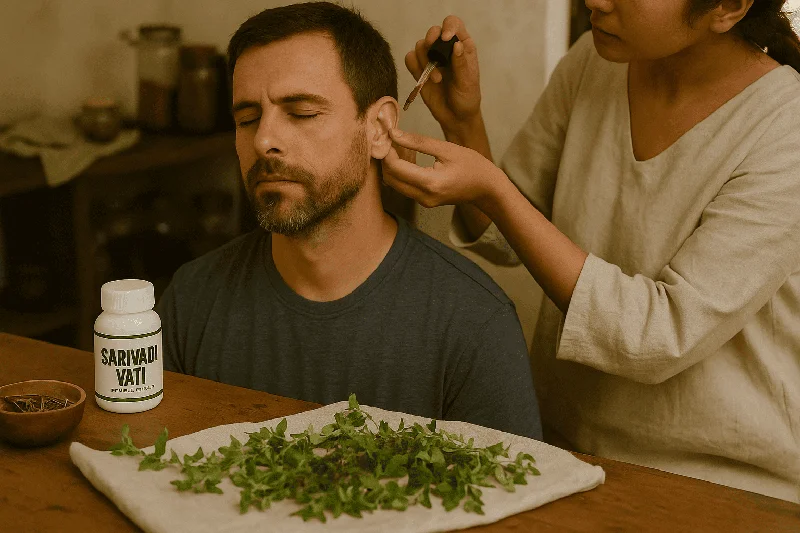
- Sarivadi Vati is a classical Ayurvedic tablet formulation primarily used for ear disorders — including hearing loss, tinnitus, and ear infections — as well as diabetes management, blood purification, and neurological support. Referenced in the ancient text Bhaishajya Ratnavali (Chapter 62, Shlokas 69–74), this polyherbal-mineral preparation combines the anti-inflammatory power of Sariva (Hemidesmus indicus) with potent bhasmas (calcined minerals) and synergistic herbs.
- Below, we break down everything you need to know: from its exact composition and pharmacological mechanism to dosage guidelines, safety profiles, and how it compares to alternatives.
What Is Sarivadi Vati?
Sarivadi Vati is a traditional Ayurvedic vati (tablet) whose name derives from its chief ingredient — Sariva (Hemidesmus indicus), commonly known as Indian Sarsaparilla. The formulation is classified under Karnaroga Chikitsa (treatment of ear diseases) in Ayurvedic pharmacology, though its benefits extend well beyond otology.
Ayurvedic Reference: Bhaishajya Ratnavali 62/69-74
The original Sanskrit shloka describing Sarivadi Vati appears in Bhaishajya Ratnavali, one of the most authoritative Ayurvedic formularies compiled by Govinda Das Sen in the 18th century. In Chapter 62 (Karnaroga Chikitsa Prakarana), shlokas 69 through 74 detail:
- The precise ingredients and their proportions
- The method of preparation (bhavana with specific herbal juices)
- The therapeutic indications, including badhirya (deafness), karnanada (tinnitus), and prameha (diabetes)
This classical textual grounding is significant. Unlike many modern supplements that lack traditional documentation, Sarivadi Vati has a clear, traceable lineage in Ayurvedic scholarship — a key marker of authenticity.
How Sarivadi Vati Works: Mechanism of Action
At a pharmacological level, Sarivadi Vati works through multiple converging pathways:
- 1.Anti-inflammatory action: Hemidesmus indicus contains 2-hydroxy-4-methoxybenzaldehyde, which has demonstrated significant anti-inflammatory activity in preclinical models. A 2012 study published in the Indian Journal of Pharmacology showed that H. indicus root extract reduced paw edema by up to 45% in animal models, comparable to standard anti-inflammatory drugs.
- 2.Antioxidant-mediated neuroprotection: Guduchi (Tinospora cordifolia) is rich in berberine, palmatine, and tinosporin — compounds that scavenge free radicals in neural tissue. This is particularly relevant for sensorineural hearing loss, where oxidative stress damages cochlear hair cells.
- 3.Micronutrient delivery through bhasmas: Loh Bhasma (calcined iron) and Abhrak Bhasma (calcined mica) provide bioavailable trace minerals. The traditional shodhana (purification) and marana (incineration) processes reduce particle size to the nanometer range, enhancing absorption. A 2016 study in Journal of Ayurveda and Integrative Medicine confirmed that properly prepared Loh Bhasma particles measure 28–55 nm — essentially nanoparticles.
- 4.Hypoglycemic activity: Multiple ingredients contribute to blood sugar regulation. Haridra (Curcuma longa) enhances insulin sensitivity via AMPK pathway activation, while Guduchi stimulates beta-cell regeneration. These effects are additive.
Dosha Balance & Ayurvedic Pharmacology
From a traditional Ayurvedic perspective, Sarivadi Vati primarily pacifies Vata and Kapha doshas.
Here's why this matters:
- Vata dosha governs the nervous system and is associated with the ear (shabda tanmatra). Vitiated Vata in the karnendriya (auditory organ) causes tinnitus and hearing loss.
- Kapha dosha when aggravated leads to congestion, fluid accumulation, and infections in the ear canal.
- The formulation acts through the Rasa (plasma) and Rakta (blood) dhatus, and works via the Karna srotas (ear channels) and Raktavaha srotas (blood channels).
Its rasa (taste) is predominantly tikta (bitter) and kashaya (astringent), with ushna virya (hot potency) — making it effective for breaking through Kapha-type blockages while calming Vata-type neurological disturbances.
Key Ingredients of Sarivadi Vati and Their Roles
Understanding why each ingredient is in the formula — not just what's in it — is critical. Below is a detailed composition table followed by a role analysis.
| Ingredient | Latin / Scientific Name | Part Used | Proportion | Primary Role in Formula |
|---|---|---|---|---|
| Sariva | Hemidesmus indicus | Root | Chief ingredient | Anti-inflammatory, blood purifier, ototrophic |
| Guduchi (Giloy) | Tinospora cordifolia | Stem | Equal part | Immunomodulator, neuroprotectant |
| Haridra (Turmeric) | Curcuma longa | Rhizome | Equal part | Anti-inflammatory, hypoglycemic |
| Mushta (Nagarmotha) | Cyperus rotundus | Rhizome | Equal part | Digestive, analgesic, anti-Kapha |
| Madhu (Honey) | — | — | Vehicle (anupana) | Bioavailability enhancer, yogavahi |
| Ghrita (Ghee) | — | — | Vehicle (anupana) | Fat-soluble compound carrier |
| Loh Bhasma | Calcined Iron | — | 1 part | Hemoglobin support, addresses anemia-related hearing loss |
| Abhrak Bhasma | Calcined Mica | — | 1 part | Nervine tonic, rejuvenative, enhances cellular metabolism |
| Pravala Bhasma | Calcined Coral | — | 1 part | Calcium source, Pitta pacifier |
| Sugar | — | — | Excipient | Taste correction, binding agent |
Synergy: Why These Specific Ingredients Work Together
This isn't a random collection of herbs. The formulation follows the Ayurvedic principle of samyoga (combination synergy):
- Sariva + Haridra together amplify anti-inflammatory action while Haridra's curcumin — normally poorly absorbed — gets enhanced bioavailability when combined with the alkaloids in Guduchi.
- Loh Bhasma + Abhrak Bhasma address the mineral deficiency angle. Iron-deficiency anemia is a documented cause of tinnitus (a 2017 study in American Journal of Otolaryngology found that iron-deficiency anemia patients had 1.34x higher risk of sensorineural hearing loss). Abhrak Bhasma supports the nervous system's capacity to transmit auditory signals.
- Mushta serves as the digestive catalyst — ensuring the heavy bhasmas don't impair digestion (agni), which would reduce the bioavailability of the entire formula.
- Honey + Ghee as dual vehicles (anupana) is a classic Ayurvedic technique. Honey is yogavahi (penetrating catalyst) that carries water-soluble compounds deep into tissues, while ghee transports fat-soluble actives. However, Ayurveda strictly warns against using honey and ghee in equal quantities — they should always be in unequal proportion.
Benefits and Uses of Sarivadi Vati
Ear Health: Hearing Loss, Tinnitus, and Ear Infections
This is the primary indication. Sarivadi Vati addresses ear conditions through three distinct mechanisms:
Tinnitus (Karnanada): The antioxidant properties of Guduchi and Sariva protect cochlear hair cells from oxidative damage — one of the leading causes of subjective tinnitus. Patients typically report gradual reduction in ringing intensity over 4–8 weeks of consistent use. A common clinical dosage for tinnitus is 2 tablets twice daily with honey. Hearing Loss (Badhirya): By improving blood circulation to the inner ear (via Haridra's vasodilatory effects) and providing essential micronutrients through bhasmas, the formulation supports auditory nerve function. It's most effective for age-related mild-to-moderate conductive hearing loss — not profound sensorineural deafness. Ear Infections (Karnasrava): The antimicrobial properties of Haridra and the immune-boosting action of Guduchi help the body fight bacterial and fungal ear infections. Sariva's anti-inflammatory effect reduces canal swelling and pain.
> Important note: Sarivadi Vati works best as an adjunct therapy. Acute otitis media with high fever or discharge requires proper medical evaluation first.
Can Sarivadi Vati Cure Tinnitus?
Let's be honest here. "Cure" is a strong word, and no responsible practitioner should promise complete elimination of tinnitus with any single remedy. What Sarivadi Vati can do is significantly reduce the intensity and frequency of tinnitus episodes, particularly when the underlying cause involves:
- Oxidative stress in the inner ear
- Poor blood circulation to the cochlea
- Vata-type nervous system imbalance
- Iron deficiency contributing to auditory nerve dysfunction
For structural causes (acoustic neuroma, perforated eardrum, TMJ disorder), Sarivadi Vati alone won't resolve the issue. Combine it with proper diagnosis.
Diabetes Management (Prameha)
Multiple ingredients in Sarivadi Vati exhibit hypoglycemic activity:
- Guduchi has been shown in a 2011 randomized controlled trial (Journal of Clinical Biochemistry and Nutrition) to reduce fasting blood glucose by approximately 18% over 8 weeks in type 2 diabetic patients.
- Haridra (curcumin) improves insulin sensitivity and reduces HbA1c levels. A 2019 meta-analysis in Phytotherapy Research pooling 11 RCTs with 1,148 participants concluded that curcumin supplementation significantly lowered fasting blood glucose (WMD: −8.88 mg/dL).
- Loh Bhasma addresses iron deficiency, which can falsely lower HbA1c readings, masking poor glycemic control.
Blood Sugar Regulation: How to Use Sarivadi Vati for Diabetes
When used specifically for diabetes support, the traditional recommendation is 1–2 tablets twice daily with warm water or honey (not ghee, as ghee can increase Kapha, which is typically aggravated in prameha). It should be taken as a complementary therapy alongside standard diabetes management — never as a replacement for prescribed antidiabetic medications.
Blood Purification and Skin Health
Sariva is one of the premier raktashodhaka (blood purifying) herbs in Ayurveda. Its ability to detoxify the blood translates to visible improvements in skin conditions including:
- Chronic eczema (vicharchika)
- Acne and boils linked to blood impurity
- Psoriasis (as adjunct therapy)
- Non-specific itching and urticaria
The mechanism involves hepatoprotective action — Hemidesmus indicus has been shown to protect liver cells from toxin-induced damage (a 2010 study in Food and Chemical Toxicology demonstrated significant hepatoprotection in CCl4-induced liver damage models). A healthier liver means better blood filtration and cleaner skin.
Is Sarivadi Vati Good for the Brain?
Yes, and here's why. Several components have documented nootropic and neuroprotective effects:
- Guduchi crosses the blood-brain barrier and has shown neuroprotective activity in models of Parkinson's and Alzheimer's disease. A 2015 study in Neurochemical Research demonstrated its ability to reduce beta-amyloid aggregation.
- Abhrak Bhasma is traditionally classified as a medhya (intellect-promoting) substance in Ayurveda.
- Haridra (curcumin) increases brain-derived neurotrophic factor (BDNF) levels, supporting neuroplasticity and memory.
The formulation is particularly useful for epilepsy (apasmara) as an adjunct therapy — the Bhaishajya Ratnavali itself mentions its applicability in shirah-vata (neurological Vata disorders).
Additional Therapeutic Benefits
Alcohol Addiction Support
An often-overlooked indication from the original Sanskrit text. The combination of liver-protective Sariva, nerve-calming Guduchi, and detoxifying bhasmas provides support during alcohol de-addiction programs. It helps manage withdrawal-related anxiety and repairs hepatic damage. This should only be used under qualified Ayurvedic supervision.
Infertility (Male and Female)
- The blood-purifying and rasayana (rejuvenative) properties support reproductive tissue health. Guduchi is known to improve sperm quality parameters, while Sariva's hormonal-balancing effect supports ovulation regularity.
- Again — this is supportive therapy, not a standalone fertility treatment.
Wound Healing
Hemidesmus indicus has demonstrated significant wound-healing activity. A 2013 study in International Wound Journal showed accelerated wound closure and enhanced collagen deposition with topical and oral administration of H. indicus extracts.
Urinary Health and Immunity
- The formulation supports kidney function through Sariva's mild diuretic action and Mushta's antimicrobial activity in the urinary tract.
- The overall immunomodulatory profile — primarily driven by Guduchi, one of the most well-researched immunostimulants in Ayurveda — contributes to general disease resistance.
Dosage: How to Take Sarivadi Vati
| Population | Dosage | Frequency | Anupana (Vehicle) | Duration |
|---|---|---|---|---|
| Adults (general) | 1–2 tablets (250–500 mg) | Twice daily | Honey + warm water | 1–3 months |
| Adults (diabetes focus) | 2 tablets | Twice daily | Warm water or honey | 2–3 months |
| Adults (ear disorders) | 2 tablets | Twice daily | Honey or as directed | 2–3 months |
| Elderly (65+) | 1 tablet | Twice daily | Warm milk or honey | Start with 1 month, reassess |
| Children (8–14 years) | ½–1 tablet | Once or twice daily | Honey | Only under practitioner guidance |
| Children below 8 | Not recommended without qualified supervision | — | — | — |
Timing: Best taken 30 minutes after meals to avoid potential gastric irritation from bhasma components.
- Important: Classical texts recommend the anupana (vehicle) should match the condition. For ear disorders, honey is preferred. For general debility, ghee + milk. For diabetes, warm water.
- The vehicle is not just a convenience — it actively directs the formulation to specific tissues.
Side Effects and Safety of Sarivadi Vati
Known Side Effects
When taken in recommended doses, Sarivadi Vati is generally well-tolerated.
However, potential side effects include:
- Gastric discomfort: The bhasma content (especially Loh Bhasma) can cause mild stomach upset, nausea, or constipation in sensitive individuals. Taking it after food minimizes this.
- Metallic taste: Some users report a slight metallic aftertaste, attributable to the iron and mica bhasmas.
- Hypoglycemia risk: If combined with potent antidiabetic drugs, blood sugar may drop too low. Monitor carefully.
Who Should Avoid Sarivadi Vati?
- Pregnant and breastfeeding women: Bhasma safety during pregnancy has not been established through modern clinical trials. The precautionary principle applies.
- Patients with hemochromatosis or iron overload: Loh Bhasma adds bioavailable iron to the body.
- Severe kidney disease patients: Impaired mineral excretion could lead to accumulation.
- Children under 5 years: Not enough dosing safety data.
Drug Interactions to Be Aware Of
This is a critical gap that no competitor covers adequately. Sarivadi Vati contains metallic bhasmas that can interact with modern pharmaceuticals:
| Medication Type | Interaction Risk | Details |
|---|---|---|
| Antibiotics (tetracycline, quinolones) | High | Iron in Loh Bhasma chelates these antibiotics, reducing their absorption by up to 75%. Maintain a 2-hour gap. |
| Levothyroxine (thyroid medication) | Moderate | Iron reduces absorption of thyroid hormones. Take 4 hours apart. |
| Antidiabetic drugs (metformin, glimepiride) | Moderate | Additive hypoglycemic effect. Monitor blood glucose closely. |
| Anticoagulants (warfarin) | Low-Moderate | Curcumin in Haridra has mild antiplatelet activity. Watch for excessive bleeding. |
| Antacids / PPIs | Low | May alter bhasma absorption and bioavailability. |
Rule of thumb: Always maintain a minimum 2-hour gap between Sarivadi Vati and any allopathic medication.
When to Consult a Doctor
Seek medical advice before starting Sarivadi Vati if you:
- Have sudden hearing loss (this could indicate a medical emergency)
- Experience ear discharge with blood
- Are currently on anticoagulant or immunosuppressive therapy
- Have diagnosed liver cirrhosis or chronic kidney disease
- Notice any allergic reaction after the first dose (rash, swelling, difficulty breathing)
How Sarivadi Vati Is Manufactured: Step-by-Step Process
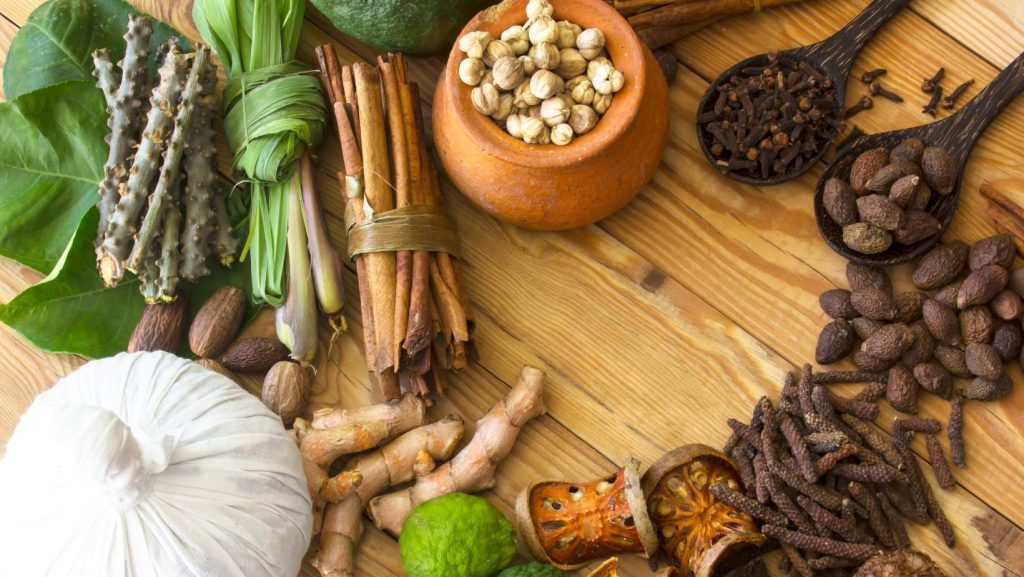
The traditional preparation method described in Bhaishajya Ratnavali involves a meticulous multi-step process:
- 1.Purification (Shodhana) of Bhasmas: Loh Bhasma undergoes 7–21 cycles of heating and quenching in herbal decoctions (Triphala kashaya is commonly used). Abhrak Bhasma requires even more cycles — sometimes 100 or more (shataputi abhrak bhasma) for proper nanoparticle formation.
- 2.Powdering of Herbal Ingredients: Sariva root, Guduchi stem, Haridra rhizome, and Mushta rhizome are individually dried and ground to a fine powder (churna).
- 3.Mixing: All powdered herbs and purified bhasmas are combined in the prescribed proportions.
- 4.Bhavana (Wet Trituration): The mixed powder undergoes bhavana — grinding with specific herbal juices (typically Sariva root juice or Guduchi svarasa) in a stone mortar. This is repeated multiple times (usually 3–7 cycles) over several days. Each cycle allows the liquid medium's active compounds to be absorbed into the powder matrix, increasing potency and bioavailability.
- 5.Tablet Formation (Vati Kalpana): The wet mass is rolled into uniform tablets (typically 250 mg each) and dried in shade — never in direct sunlight, which could degrade heat-sensitive phytocompounds.
- 6.Quality Control: Properly prepared bhasmas should pass the varitara test (float on water due to nano-particle size) and the rekhapurnatva test (fine enough to fill finger-print lines).
Sarivadi Vati vs Alternatives: A Comparison
| Parameter | Sarivadi Vati | Sarivadi Churna | Bilva Tail (Ear Oil) | Kshaar Tail |
|---|---|---|---|---|
| Form | Tablet | Powder | Oil (topical) | Oil (topical) |
| Route | Oral | Oral | Ear drops | Ear drops |
| Primary Use | Ear disorders + systemic benefits | Ear disorders + systemic | Local ear infections, pain | Ear infections, fungal issues |
| Contains Bhasmas | Yes | Yes (same formula) | No | No |
| Systemic Benefits | Diabetes, blood purification, brain health | Similar but less convenient | None (local action only) | None (local action only) |
| Convenience | High (pre-formed tablets) | Lower (needs to be mixed) | Moderate | Moderate |
| Best For | Chronic conditions, tinnitus, systemic approach | Same as Vati; preferred if fresh preparation available | Acute ear pain, wax removal | Fungal ear infections |
| Onset of Action | 2–6 weeks | 2–6 weeks | Immediate local relief | Immediate local relief |
Key insight: For chronic ear conditions with systemic involvement (e.g., tinnitus linked to poor circulation or diabetes-related hearing loss), oral Sarivadi Vati is superior. For acute localized ear pain or infection, topical oils like Bilva Tail provide faster relief. Combining oral Sarivadi Vati with topical Bilva Tail often yields the best outcomes — a strategy many experienced Ayurvedic practitioners recommend.
Brand Comparison: Choosing the Right Sarivadi Vati
Not all commercial preparations are identical.
Here's what to consider:
| Brand | Approximate Price | Tablets per Pack | Notable Features |
|---|---|---|---|
| Patanjali (Divya) | ₹50–70 | 40–80 tablets | Widely available, affordable, mass-produced |
| Baidyanath | ₹90–130 | 80 tablets | Established heritage brand, traditional process claims |
| Dabur | ₹85–120 | 80 tablets | Quality standardization, GMP certified |
| UMA Ayurveda | ₹100–150 | 60 tablets | Smaller batch production, premium positioning |
| Aushadham (Amazon) | ₹150–200 | 60 tablets | Newer brand, marketed specifically for tinnitus |
What to look for: GMP certification, proper bhasma testing documentation, manufacture and expiry date clearly printed. Ayurvedic tablets generally have a shelf life of 5 years from date of manufacture when stored in a cool, dry place away from direct sunlight and moisture. Always check for the lot number.
Storage and Shelf Life
- Shelf life: 5 years from manufacture (as per standard Ayurvedic pharmacopoeia guidelines for vati kalpana containing bhasmas)
- - Storage: Keep in a tightly closed, dry container.
- Avoid humidity — bhasma-containing tablets can absorb moisture and degrade.
- Temperature: Store below 30°C. Do not refrigerate unless in extremely humid climates.
- Signs of degradation: Discoloration, unusual smell, crumbling texture, or visible moisture indicate the product should be discarded.
Lifestyle and Diet Tips to Enhance Sarivadi Vati's Effectiveness
The formulation works best when supported by appropriate lifestyle modifications:
- 1.Stay hydrated: Drink at least 8 glasses of warm or room-temperature water daily. Cold water aggravates Vata dosha and can worsen ear conditions.
- 2.Ear hygiene: Avoid inserting cotton buds deep into the ear canal.
- Use Anu Taila (Ayurvedic nasal oil) as nasya — nasal administration helps clear the Eustachian tube, which directly benefits ear health.
- 3.Dietary adjustments: Favor warm, cooked, mildly spiced foods. Reduce cold, raw, and excessively sweet foods that increase Kapha. Include turmeric milk (haldi doodh) as an evening routine.
- 4.Sound exposure: If treating tinnitus, minimize exposure to loud noises. Use ear protection in noisy environments. This seems obvious but is frequently overlooked.
- 5.Pranayama: Bhramari pranayama (humming bee breath) is specifically recommended in yoga therapy for ear disorders. The vibration stimulates the auditory nerves and calms Vata. Practice 5–10 minutes daily.
- 6.Oil pulling: Gandusha (oil pulling with sesame oil) for 5 minutes each morning strengthens the jaw, ear, and throat region.
Frequently Asked Questions (FAQ)
What is the use of Sarivadi Vati?
Sarivadi Vati is primarily used for ear disorders such as tinnitus (ringing in ears), hearing loss, and ear infections. It is also beneficial for diabetes management, blood purification, skin diseases, and neurological conditions. The formulation works by reducing inflammation, providing essential minerals through bhasmas, and protecting nerve tissue from oxidative damage.
How long does Sarivadi Vati take to show results?
- Most users report noticeable improvements within 4–8 weeks of consistent use. For chronic conditions like long-standing tinnitus or age-related hearing decline, a minimum of 2–3 months is generally needed.
- Acute conditions like mild ear pain may respond faster — sometimes within 1–2 weeks.
Can I take Sarivadi Vati with allopathic medicines?
Yes, but with precautions. Maintain a 2-hour gap between Sarivadi Vati and allopathic medications, especially antibiotics, thyroid medication, and antidiabetic drugs. The iron content in Loh Bhasma can interfere with absorption of certain pharmaceuticals. Always inform both your Ayurvedic practitioner and allopathic doctor about all medications you're taking.
Is Sarivadi Vati safe for long-term use?
When taken in prescribed doses under professional guidance, it can be used for 3–6 months continuously. After that, a 2–4 week break is generally recommended before resuming. Long-term unsupervised use of bhasma-containing formulations is not advisable due to cumulative mineral intake.
Can children take Sarivadi Vati?
Children above 8 years may take ½ to 1 tablet under qualified Ayurvedic supervision. It is not recommended for children below 5 years. For children aged 5–8, only a qualified Vaidya should determine appropriateness and dosage based on the child's prakriti (constitution) and condition severity.
Where can I buy authentic Sarivadi Vati?
Authentic Sarivadi Vati is available at Patanjali stores, Ayurvedic pharmacies, and online platforms such as Amazon India, 1mg, PharmEasy, and the official websites of brands like Baidyanath and Dabur. Always verify GMP certification and check the manufacture date before purchasing.
Does Sarivadi Vati have steroids or heavy metals?
No steroids. The bhasmas (Loh, Abhrak, Pravala) are mineral-based but undergo extensive Ayurvedic purification processes that transform them into biocompatible nanoparticles. Properly manufactured bhasmas from reputed brands pass heavy metal safety limits as per Ayurvedic Pharmacopoeia of India standards. However, buying from unverified sources carries risk of improperly prepared bhasmas.
Final Thoughts
Sarivadi Vati represents one of Ayurveda's most thoughtfully designed formulations — a precision combination of herbs and minerals that addresses ear health, metabolic balance, blood purity and neurological wellbeing simultaneously. Its strength lies not just in individual ingredient potency, but in the synergistic intelligence of the classical formula itself.
- That said, no supplement replaces proper diagnosis. If you're experiencing hearing loss, persistent tinnitus, or uncontrolled blood sugar, consult a qualified Ayurvedic practitioner who can assess your unique constitution and customize your treatment protocol.
- Sarivadi Vati works best as part of a holistic approach — combining the right medicine, diet, lifestyle, and ongoing professional guidance.
Disclaimer: This article is for informational purposes only and does not constitute medical advice. Always consult a qualified healthcare professional before starting any new supplement or medication.
Scientific Sources
- Market Analysis of Medicinal Plants in India — Ravi S et al., 2019, Current pharmaceutical biotechnology
- History of the Growing Burden of Cancer in India: From Antiquity to the 21st Century — Smith RD et al., 2019, Journal of global oncology
- Efficacy and safety of ayurvedic intervention (Sarpgandha Mishran) vs amlodipine for Stage-I primary hypertension- study protocol for a prospective Double-Dummy, Double-Blind, placebo-controlled Randomized Clinical Trial — Yadav B et al., 2025, BMC complementary medicine and therapies
- Withaferin A in the Treatment of Liver Diseases: Progress and Pharmacokinetic Insights — Xia Y et al., 2022, Drug metabolism and disposition: the biological fate of chemicals
- Withania somnifera (L.) Dunal - Modern perspectives of an ancient Rasayana from Ayurveda — Mukherjee PK et al., 2021, Journal of ethnopharmacology
- Application of diet-derived taste active components for clinical nutrition: perspectives from ancient Ayurvedic medical science, space medicine, and modern clinical nutrition — Kulkarni AD et al., 2014, Current pharmaceutical design
- Merger of ayurveda and tissue culture-based functional genomics: inspirations from systems biology — Deocaris CC et al., 2008, Journal of translational medicine
- A systematic review of clinical and laboratory findings of lead poisoning: lessons from case reports — Samarghandian S et al., 2021, Toxicology and applied pharmacology
- Pediatric Residency Training for Integration of Behavior Health: Indian Perspective — Bhave SY et al., 2021, Pediatric clinics of North America
- Plant-based Rasayana drugs from Ayurveda — Balasubramani SP et al., 2011, Chinese journal of integrative medicine
- Contention and collaboration: the tenuous encounter of modern Ayurveda and Western medicine in the twentieth and twenty-first centuries — Katial JM, 2024, Medical humanities
- Terminalia bellirica (Gaertn.) roxb. (Bahera) in health and disease: A systematic and comprehensive review — Gupta A et al., 2020, Phytomedicine : international journal of phytotherapy and phytopharmacology
- Treatment of fibromyalgia at the Maharishi Ayurveda Health Centre in Norway II--a 24-month follow-up pilot study — Rasmussen LB et al., 2012, Clinical rheumatology
- Approaches in fostering quality parameters for medicinal botanicals in the Indian context — Gupta PD et al., 2014, Indian journal of pharmacology
- Reporting an alliance using an integrative approach to the management of lymphedema in India — Ryan TJ et al., 2012, The international journal of lower extremity wounds
- Nootropic potential of Ashwagandha leaves: Beyond traditional root extracts — Wadhwa R et al., 2016, Neurochemistry international
- Food allergies--leads from Ayurveda — Arora D et al., 2003, Indian journal of medical sciences
- Vedic principles of therapy — Boyer RW, 2012, Explore (New York, N.Y.)
- Is ayurveda the key to universal healthcare in India? — Bhandari N, 2015, BMJ (Clinical research ed.)
- Curcumin: the Indian solid gold — Aggarwal BB et al., 2007, Advances in experimental medicine and biology
Ask Ayurvedic doctor a question and get a consultation online on the problem of your concern in a free or paid mode.
More than 2,000 experienced doctors work and wait for your questions on our site and help users to solve their health problems every day.
Related articles