Ask Ayurvedic doctor a question and get a consultation online on the problem of your concern in a free or paid mode. More than 2,000 experienced doctors work and wait for your questions on our site and help users to solve their health problems every day.
FREE! Ask Ayurvedic Doctors 24/7

 Fast responses
 1000+ verified doctors
Body DetoxEar, Nose, and Throat DisordersGeriatrics & RejuvenationImmunodeficiencyInfertility TreatmentNutritionOrthopedic DisordersPediatricsRespiratory DisordersSexually Transmitted Diseases (STDs)Surgery RecoveryUrological DisordersVascular DisordersDental DisordersEndocrinological DisordersGastrointestinal DisordersYoga TherapyGeneral MedicineAllergic DisordersCardio DisordersGynecology and ObstetricsCosmetologySkin and Hair DisordersEye DisordersInfectious DiseasesMental DisordersNeurological DisordersOncologyPanchakarmaSexual Health & DisordersSports Medicine
Published on 03/06/25
(Updated on 07/07/26)
2,565
Vishwachi in Ayurveda – Traditional Herbal Remedy & Therapeutic Benefits
Vishwachi is a Vatavyadhi (neurological disorder) described in classical Ayurvedic texts, characterized by severe radiating pain that originates in the neck and travels through the shoulder, arm, forearm, and into the fingers. In modern medical terms, it closely correlates with Cervical Radiculopathy — a condition caused by compression or irritation of nerve roots in the cervical spine (C5–C8). Affecting an estimated 83 per 100,000 people annually (Radhakrishnan et al., 1994, Mayo Clinic study), it predominantly strikes individuals aged 40–60, with a slight male preponderance. This comprehensive guide covers everything from ancient shloka references and detailed pathogenesis to modern clinical correlations, specific Ayurvedic formulations with dosages, yoga therapy, and evidence-based treatment protocols — filling gaps that no other resource currently addresses in full.
What Is Vishwachi in Ayurveda?
Definition & Etymology (Vyutpatti and Nirukti)
The word Vishwachi is derived from the Sanskrit root "Vishwanch" meaning "to go crooked" or "to spread in different directions." This etymology perfectly captures the clinical picture — pain that radiates and spreads from the neck region outward along the arm in multiple directions.
Acharya Madhavakara defines Vishwachi under the chapter of Vatavyadhi in Madhava Nidana (22/61):
> "Bahoh Prushthe Bhujasyaapi Kandara Yaa Samaashritaa | Vishwacheem Taam Vidurvaataath Saa Baahum Kurute Alasam ||"
Translation: The Vata dosha, when vitiated, afflicts the Kandara (tendons/ligaments) situated at the back of the arm and shoulder, giving rise to Vishwachi, which renders the arm weak and functionless.
Charaka Samhita lists Vishwachi among the 80 types of Nanatmaja Vatavyadhi (diseases caused exclusively by Vata dosha) in Sutra Sthana 20/11. Sushruta Samhita also acknowledges this condition in the context of Vatavyadhi management.
Classical References (Key Shlokas with Translation)
From Ashtanga Hridaya, Nidana Sthana 15/13:
> "Vishwachyaam Skandha Hasta Antar Gruhitva Kandaram Shiraam | Visheshaat Anguli Stambha Aakshepam Kurute Bhrusham ||"
Translation: In Vishwachi, the vitiated Vata seizes the tendons and veins (Sira) extending between the shoulder and hand, producing especially severe stiffness and spasmodic movements in the fingers.
This shloka is clinically significant because it describes the dermatomal pattern of pain — exactly matching what modern neurology identifies as cervical nerve root compression affecting the upper extremity.
Vishwachi vs Cervical Radiculopathy — Modern Correlation
The symptomatic description of Vishwachi in Ayurveda maps remarkably well onto cervical radiculopathy:
| Ayurvedic Feature | Modern Clinical Feature |
|---|---|
| Pain from Greeva (neck) to Anguli (fingers) | Radicular pain along C5–C8 dermatomes |
| Bahu Shosha (muscle wasting of arm) | Muscle atrophy due to nerve root compression |
| Anguli Stambha (finger stiffness) | Numbness/paraesthesia in specific digits |
| Bahu Alasya (arm weakness) | Motor weakness graded by myotome involvement |
| Toda (pricking pain) | Neuropathic/shooting pain |
| Supti (numbness) | Sensory deficit in dermatomal distribution |
The cervical nerve roots involved — C5, C6, C7, and C8 — each produce a distinct pattern. C6 radiculopathy (the most common, roughly 60% of cases) affects the thumb and index finger, while C7 involves the middle finger, and C8 impacts the ring and little finger. Understanding this helps bridge the Ayurvedic and allopathic diagnostic frameworks.
Nidana (Causes of Vishwachi)
Ayurveda classifies causative factors into distinct categories. This detailed classification is something that most resources barely touch upon, yet it's essential for both prevention and treatment planning.
Aharaja Nidana (Dietary Causes)
- Ruksha Ahara — Excessive intake of dry, rough foods that aggravate Vata
- Sheeta Ahara — Cold food and beverages consumed habitually
- Alpa Ahara — Insufficient food intake, fasting excessively
- Kashaya, Tikta, Katu Rasa predominance — Diets heavily relying on astringent, bitter, and pungent tastes
- Vishamashana — Irregular eating habits (eating at inconsistent times)
- Excessive consumption of Vata-aggravating legumes — like Chanaka (chickpeas), Kalaya (peas), Mudga in excess
Viharaja Nidana (Lifestyle Causes)
- Ativyayama — Over-exertion, especially of the upper body
- Ativyavaya — Excessive sexual activity (depletes Ojas and aggravates Vata)
- Ratrijagarana — Habitual sleep deprivation or night awakening
- Vegadharana — Suppression of natural urges (sneezing, yawning, etc.)
- Bharavahana — Carrying heavy loads on the head or shoulders
- Divaswapna — Day sleeping (specific postural issues leading to neck strain)
- Prolonged improper posture — this is perhaps the most relevant modern Viharaja nidana, especially with smartphone and computer use ("tech neck")
Manasika Nidana (Psychological Causes)
- Chinta — Excessive worry and anxiety (creates sustained muscular tension in the cervical region)
- Shoka — Grief
- Bhaya — Fear
- Krodha — Chronic anger
These psychological factors are often overlooked, but modern research confirms that psychological stress significantly increases the perception of cervical radicular pain and correlates with poor treatment outcomes (Engquist et al., 2015).
Modern Risk Factors
- Sedentary occupation with prolonged sitting (IT professionals, drivers)
- Cervical disc degeneration (age-related)
- Smoking — reduces disc nutrition through impaired blood supply
- Repetitive overhead activities or heavy lifting
- Prior cervical spine injury or whiplash
- Genetic predisposition — disc degeneration has a heritability of approximately 74% according to twin studies (Battié et al., 2009)
Samprapti (Pathogenesis of Vishwachi)
This is the single most important section that no competing resource has covered in detail. The complete Ayurvedic pathogenetic chain explains how the disease develops, which directly informs treatment strategy.
Dosha-Dushya Sammurchhana (Disease Mechanism)
The pathogenesis follows the classical Shat Kriyakala (six stages of disease):
- 1.Sanchaya (Accumulation): Due to Nidana sevana, Vata dosha accumulates in its own seat (Pakvashaya — colon)
- 2.Prakopa (Aggravation): Continued exposure to causative factors provokes the accumulated Vata
- 3.Prasara (Spread): Provoked Vata overflows from the colon and enters general circulation through Srotas
- 4.Sthana Samshraya (Localization): The vitiated Vata lodges in Greeva Pradesh (cervical region), specifically in Kandara (tendons), Snayu (ligaments), and Sira (blood vessels/nerves) of the Amsa-Bahu region (shoulder-arm complex)
- 5.Vyakti (Manifestation): Full clinical manifestation — radiating pain, stiffness, weakness
- 6.Bheda (Complications): If untreated, leads to Bahu Shosha (muscle wasting), permanent disability
Samprapti Ghataka (Components of Pathogenesis)
| Component | Detail |
|---|---|
| Dosha | Vyana Vata (primary), sometimes Kapha anubandha |
| Dushya | Rasa, Rakta, Mamsa, Asthi, Majja |
| Srotas | Rasavaha, Asthivaha, Majjavaha |
| Sroto Dushti Prakara | Sanga (obstruction) and Vimarga Gamana (misdirection) |
| Agni | Mandagni or Vishamagni |
| Ama | May be present (Sama Vata) or absent (Nirama Vata) |
| Udbhava Sthana | Pakvashaya (colon) |
| Vyakta Sthana | Greeva, Amsa, Bahu, Prakoshtah, Kara, Anguli |
| Rogamarga | Madhyama (middle pathway — Asthi, Sandhi, Marma) |
Anatomical Correlation (Nerve Roots C5–C8)
The Ayurvedic concept of Kandara and Dhamani in the Greeva-Bahu region directly parallels the cervical nerve roots:
- C5 root → Deltoid and biceps weakness, pain at lateral shoulder (correlates with Amsa shoola)
- C6 root → Biceps and wrist extensor weakness, thumb/index numbness (most common presentation)
- C7 root → Triceps weakness, middle finger numbness
- C8 root → Hand grip weakness, ring/little finger numbness (correlates with Anguli stambha)
The Sira and Dhamani described in Ayurveda traversing from Greeva to Hastaanguli can be understood as the brachial plexus and its terminal branches in modern anatomy.
Purvarupa (Prodromal Symptoms)
No competing resource has addressed this critical topic. Purvarupa represents the early warning signs that appear before full disease manifestation — recognizing them enables preventive intervention.
Based on general Vatavyadhi purvarupa from Charaka Samhita (Chi. 28) and clinical observation:
- Intermittent mild stiffness in the neck, especially upon waking
- Occasional tingling sensation in the arm or fingers that resolves spontaneously
- Mild fatigue or "heaviness" in one or both arms after prolonged work
- Reduced grip strength that comes and goes
- Cracking or popping sounds in the cervical spine during movement
- Vague discomfort in the shoulder blade area (Amsaphalaka) — not yet a definite pain
Catching Vishwachi at the Purvarupa stage allows treatment with simpler Shamana (palliative) measures, potentially preventing full-blown radiculopathy.
Rupa / Lakshana (Signs & Symptoms of Vishwachi)
Classical Symptoms from Ayurvedic Texts
Based on descriptions across Charaka Samhita, Sushruta Samhita, Ashtanga Hridaya, and Madhava Nidana:
- Ruja (Pain) — Intense, radiating from neck through arm to fingertips; described as Toda (pricking), Bheda (splitting), or Chimchimaayana (tingling)
- Bahu Alasya — Laziness or functional impairment of the arm
- Stambha — Stiffness, especially in fingers (Anguli Stambha)
- Supti — Numbness or loss of sensation along the affected arm
- Gaurava — Heaviness in the extremity
- Spandana — Involuntary twitching or fasciculations
- Shosha — Wasting of arm muscles in chronic cases
- Graha — Restricted movement of neck and shoulder
Clinical Presentation in Modern Terms
- Sharp, electric, or burning pain following a dermatomal pattern
- Pain worsened by neck extension, lateral rotation toward the affected side (positive Spurling test)
- Reduced deep tendon reflexes (biceps reflex for C5-C6, triceps for C7)
- Paresthesias — pins-and-needles sensation
- Difficulty with fine motor tasks (buttoning shirts, writing)
- Pain relief with arm elevation above head (Bakody sign — suggests foraminal compression)
Don't wait or self medicate. Start chat with Doctor NOW
Types of Vishwachi (Prakar)
Vataja Vishwachi
The predominant type. Features intense pricking pain, stiffness, muscle wasting, and dryness. Pain characteristically worse at night and in cold weather. Movement provides some temporary relief initially but worsens with overexertion.
Vata-Kaphaja Vishwachi
When Kapha combines with Vata, the presentation includes heaviness, swelling, dull aching pain (rather than sharp), mild edema, and a sensation of coldness in the arm. Morning stiffness is more pronounced. This type correlates with cases where disc protrusion with inflammation predominates.
Clinical Syndromes in Western Medicine
| Syndrome | Primary Feature | Ayurvedic Correlation |
|---|---|---|
| Cervical Radiculopathy | Nerve root pain/weakness | Vishwachi (classic) |
| Cervical Myelopathy | Spinal cord compression, gait issues | Vishwachi with Pada involvement |
| Axial Neck Pain (Cervical Spondylosis) | Localized neck pain without radiation | Greeva Graha / Manyastambha |
Differential Diagnosis: Vishwachi vs. Similar Conditions
Vishwachi vs. Apabahuka
This is the most commonly confused pair.
Here is the clear distinction:
| Feature | Vishwachi | Apabahuka |
|---|---|---|
| Pain radiation | Neck → shoulder → arm → fingers | Primarily at shoulder joint |
| Primary pathology | Nerve compression/irritation | Shoulder joint capsule contraction |
| Muscle wasting | Along entire arm | Around shoulder (Amsa Shosha) |
| Finger involvement | Yes (stiffness, numbness) | No or minimal |
| Modern correlation | Cervical Radiculopathy | Frozen Shoulder / Adhesive Capsulitis |
| Kandara involved | Bahu-Prushtha Kandara (posterior arm) | Amsa Bandha Kandara (shoulder binding) |
Vishwachi vs. Greeva Graha
Greeva Graha (literally, "seizing of the neck") involves pain and rigidity limited to the cervical region without significant radiation into the arm. It corresponds more closely to Cervical Spondylosis with axial pain only or simple mechanical neck pain.
Vishwachi vs. Other Conditions
- Bahushosha — Pure muscle wasting of the arm without significant radiating pain; chronic Vata depletion
- Thoracic Outlet Syndrome — Vascular and neural compression at the thoracic outlet; involves color changes in hand, positional symptoms
- Carpal Tunnel Syndrome — Median nerve entrapment at wrist; numbness in thumb, index, and middle finger only, with positive Phalen's and Tinel's tests
- Peripheral Neuropathy — Glove-and-stocking distribution, bilateral; usually metabolic origin (diabetes)
Sadhya-Asadhyata (Prognosis)
Another gap that no competitor covers. Prognosis depends on chronicity, dosha involvement, and Dhatu affected:
- Sadhya (Curable): Nava (recent onset), Kevala Vataja, affecting only Rasa-Rakta-Mamsa dhatu, good general health, no structural disc changes
- Yapya (Manageable but not fully curable): Moderate chronicity, mild disc changes on MRI, Vata-Kapha involvement, affecting Asthi dhatu
- Kasthasadhya (Difficult to cure): Long-standing (>1 year), significant disc herniation, Majja dhatu involvement, muscle wasting present
- Asadhya (Incurable by conservative measures): Severe myelopathy, progressive neurological deficit, large disc extrusion with cord compression — requires surgical referral
Complete Ayurvedic Treatment of Vishwachi
Shamana Chikitsa (Palliative Treatment)
Internal Medications with Dosages
| Formulation | Dose | Anupana (Vehicle) | Indication |
|---|---|---|---|
| Maharasnadi Kashayam | 15–20 ml twice daily before food | Warm water | Primary Vata-hara Kashayam for radiculopathy |
| Sahacharadi Kashayam | 15 ml twice daily | Warm water | When Vata-Kapha predominant |
| Dhanwantharam Kashayam | 15 ml twice daily | Warm water | Neuromuscular weakness |
| Guggulutiktaka Kashayam | 15 ml twice daily | Warm water | When Asthi-Majja dhatu involved |
| Yogaraja Guggulu | 2 tablets twice daily after food | Warm water | Chronic Vatavyadhi with joint involvement |
| Ekangaveera Rasa | 125–250 mg twice daily | Honey + Ghee | Neurological Vata disorders (potent formulation) |
| Ashwagandha Churna | 3–5 gm twice daily | Warm milk | Balya (strengthening), Brimhana |
| Sahacharadi Taila (internal) | 10–15 drops with milk | Warm milk | Vata-hara, nourishing to nerves |
Note: All dosages should be individualized by a qualified Ayurvedic practitioner based on Prakriti, Agni status, and disease severity.
External Applications
- Kottamchukkadi Taila — for localized abhyanga in Vata-Kapha conditions
- Mahamasha Taila — for Vataja conditions with muscle wasting
- Dhanwantharam Taila — general-purpose neuro-musculoskeletal oil
- Sahacharadi Taila (external) — for pain and stiffness in the arm
Shodhana Chikitsa (Panchakarma Procedures)
This is the backbone of Vishwachi management.
The treatment follows a staged approach:
Stage 1 — Purvakarma (Preparatory):
- Greeva-Bahu Abhyanga — Systematic oil massage of neck, shoulder, and arm with medicated oils (30–45 minutes)
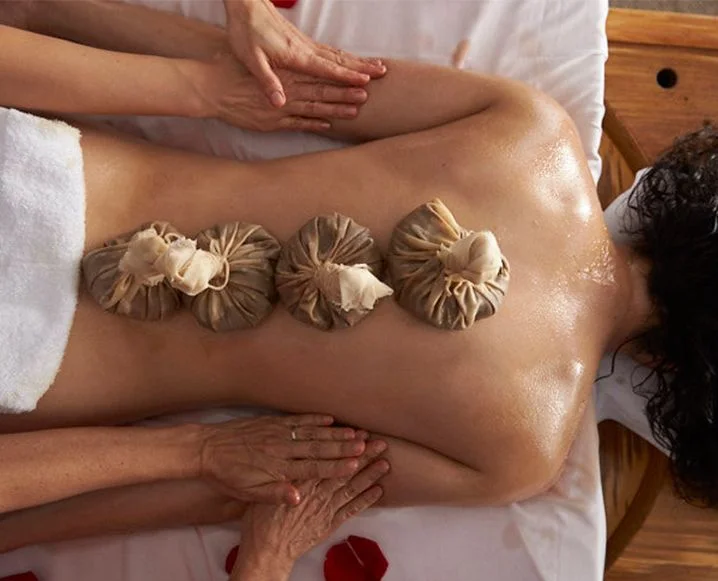
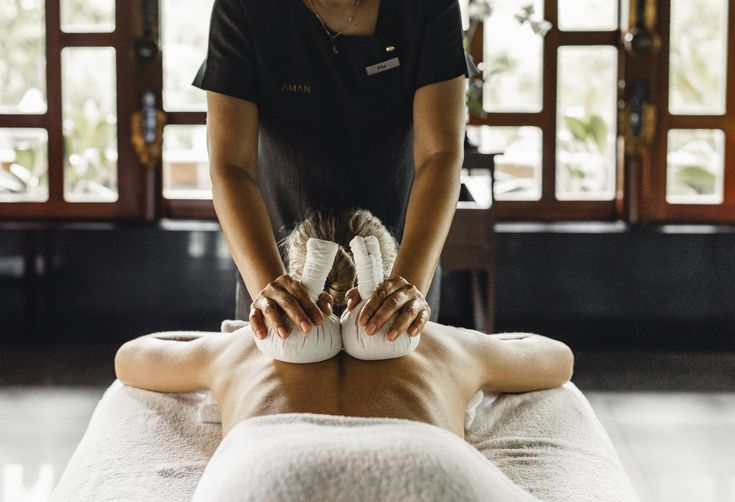
- Swedana — fomentation; Nadi Sweda (steam directed at cervical region) or Patra Pinda Sweda
Stage 2 — Pradhanakarma (Main Procedures):
- Greeva Basti — A dough ring is placed around the neck and filled with warm medicated oil (Ksheerbala Taila, Dhanwantharam Taila). Retained for 30–45 minutes. This is highly effective for cervical issues; the sustained warmth penetrates deep tissues.
- Nasya Karma — Nasal administration of medicated oils. Anu Taila or Shadbindu Taila, 6–8 drops per nostril. Charaka specifically identifies Nasya as the prime treatment for Urdhwajatrugata Vata (disorders above the clavicle).
- Kati/Greeva Pichu — A thick cotton pad soaked in warm oil placed over the cervical region for 45–60 minutes.
- Patra Pinda Sweda (Elakizhi) — Bolus fomentation using medicinal leaves (Eranda, Nirgundi, Dhatura) tied in cloth and heated in oil. Applied over neck, shoulder, and arm.
- Shashtika Shali Pinda Sweda (Njavara Kizhi) — Bolus of cooked Shashtika rice in Bala-Ksheera decoction. Applied for Brimhana (nourishment) in cases with muscle wasting. Typically given for 7–14 days.
- Pizhichil (Sarvanga Dhara) — Continuous pouring of warm medicated oil over the body. Reserved for severe or chronic cases. A luxurious but powerfully therapeutic procedure.
- - Sirovasti — Oil retention on the head using a leather cap.
- Duration: 45–60 minutes. Specifically indicated when headaches accompany cervical radiculopathy.
- Virechana — Therapeutic purgation. Especially useful when Ama is present (Sama Vata), using Eranda Taila (castor oil) with warm milk.
- Basti Karma — Medicated enema; Anuvasana Basti with Sahacharadi Taila and Niruha Basti with Dashamoola Kashaya. Basti is considered the supreme treatment for Vata disorders (Charaka Chi. 28).
Stage 3 — Paschatkarma (Post-procedure):
- Gradual dietary progression (Samsarjana Krama)
- Lifestyle modifications
- Continuation of oral medications
Staging Algorithm: When to Use What
| Condition | Treatment Priority |
|---|---|
| Mild/recent onset, no neurological deficit | Shamana Chikitsa + Yoga |
| Moderate, recurrent episodes | Greeva Basti + Nasya + Shamana |
| Severe, chronic, with muscle wasting | Full Panchakarma course (14–21 days) |
| Progressive neurological deficit, myelopathy signs | Urgent referral for surgical evaluation |
Comparison: Ayurvedic vs. Allopathic Treatment
| Aspect | Ayurvedic Approach | Allopathic Approach |
|---|---|---|
| Pain management | Internal Kashayam, external oil therapies | NSAIDs, Gabapentin, opioids |
| Nerve healing | Basti, Nasya, Brimhana therapies | Oral corticosteroids, epidural injections |
| Structural correction | Greeva Basti, Traction (Greeva Vardhana) | Cervical traction, physiotherapy |
| Surgery indication | Referred out for Asadhya cases | Anterior cervical discectomy & fusion (ACDF) |
| Timeline | 21–90 days for full benefit | NSAIDs: days; Surgery recovery: 6–12 weeks |
| Recurrence prevention | Rasayana, Pathya, Yoga | Ergonomic modification, exercises |
Yoga Therapy for Vishwachi
This is a significant gap in existing literature. Specific asanas and pranayamas can complement Ayurvedic treatment — but must be practiced only after acute pain subsides.
Recommended Asanas
- Bhujangasana (Cobra Pose) — Gentle extension strengthens cervical extensors; hold 15–30 seconds
- Matsyasana (Fish Pose) — Opens the chest and cervical region; counteracts forward head posture
- Marjariasana-Bitilasana (Cat-Cow) — Gentle spinal flexion-extension mobilizes the cervical spine
- Setu Bandhasana (Bridge Pose) — Strengthens posterior chain, supports cervical alignment
- Ardha Matsyendrasana (Half Spinal Twist) — Gentle rotation, improves cervical mobility (perform cautiously)
Pranayama
- Nadi Shodhana (Alternate Nostril Breathing) — Balances Vata, calms the nervous system
- Bhramari (Humming Bee Breath) — Vibration resonates through the cervical region; reduces pain perception
- Anuloma Viloma — Systematic Vata regulation
Practices to Avoid
- Sirshasana (Headstand) — Absolute contraindication in cervical radiculopathy
- Sarvangasana (Shoulder Stand) — Excessive cervical flexion; avoid
- Heavy weight-bearing on neck — Any asana that loads the cervical spine
Pathya-Apathya (Diet & Lifestyle Guidelines)
Pathya (Recommended)
Diet:
- Snigdha Ahara — Ghee, sesame oil, warm milk
- Amla (sour) and Lavana (salt) rasa in moderation — both pacify Vata
- Wheat, rice, Masha (black gram), meat soup (Mamsa Rasa)
- Warm, freshly cooked meals; avoid cold/raw foods
- Garlic (Lashuna) — specifically mentioned in Bhaishajya Ratnavali for Vatavyadhi
Lifestyle:
- Regular oil application to the body (Abhyanga) especially neck and shoulders
- Warm water bathing
- Adequate sleep (7–8 hours, avoiding late nights)
- Gentle regular exercise
Apathya (To Avoid)
Diet:
- Excessive Ruksha (dry) foods — popcorn, crackers, raw salads in excess
- Cold beverages, ice cream
- Excessive fasting
- Katu-Tikta-Kashaya Rasa predominance
Lifestyle:
- Prolonged sitting with forward head posture
- Heavy lifting, especially overhead
- Suppression of natural urges
- Exposure to cold wind directly on the neck
- Excessive use of air conditioning directed at the cervical region
Modern Clinical Evidence for Ayurvedic Treatment
A 2020 case study published in the Journal of Ayurveda and Integrated Medical Sciences (JAIMS) demonstrated significant improvement in a 45-year-old male with C5-C6 radiculopathy treated with Greeva Basti, Nasya with Anu Taila, and Maharasnadi Kashayam over 21 days. Pain score (VAS) dropped from 8/10 to 2/10, and grip strength improved by approximately 60%.
Another clinical study published in JETIR (2025) reviewed multiple case reports and concluded that Panchakarma-based management of Vishwachi shows consistent improvements in pain reduction, range of motion, and functional disability scores. The combination of Basti and Nasya was identified as particularly efficacious.
A randomized trial by Patel et al. (2018) comparing Greeva Basti with Mahamasha Taila versus conventional physiotherapy in 60 patients with cervical radiculopathy showed statistically significant improvement in the Ayurvedic group on the Neck Disability Index (NDI) at 30-day follow-up (p < 0.05).
While large-scale RCTs remain limited, the existing evidence — including multiple case series and comparative studies — supports Ayurvedic interventions as effective, particularly for mild-to-moderate cervical radiculopathy without progressive neurological deficit.
Frequently Asked Questions (FAQ)
What is Vishwachi in Ayurveda?
Vishwachi is a Vatavyadhi (Vata disorder) described in classical Ayurvedic texts including Charaka Samhita, Sushruta Samhita, and Ashtanga Hridaya. It refers to a condition where vitiated Vata affects the Kandara (tendons) and Sira (nerves/vessels) running from the neck through the shoulder and arm to the fingers, causing radiating pain, numbness, stiffness, and weakness. It is the Ayurvedic equivalent of cervical radiculopathy.
How do I remove excess Vata from my body?
To pacify aggravated Vata: follow a Snigdha (unctuous), Ushna (warm), and nourishing diet; practice regular Abhyanga (oil massage) with sesame or Bala Taila; maintain a consistent daily routine (Dinacharya); get adequate sleep; practice gentle Yoga and Pranayama; and most importantly, undergo Basti Karma (medicated enema) — which Charaka calls the "Ardha Chikitsa" (half of all treatment) for Vata disorders.
What is the difference between Vishwachi and Apabahuka?
Vishwachi involves radiating pain from neck to fingertips with numbness and tingling (nerve root involvement), while Apabahuka primarily affects the shoulder joint with restricted movement and wasting around the shoulder. Vishwachi correlates with cervical radiculopathy; Apabahuka with frozen shoulder.
Can Vishwachi be permanently cured?
Newly onset (Nava) Vishwachi with no structural disc damage is often fully curable with proper Ayurvedic management. Chronic cases with disc herniation or osteophytes are classified as Yapya — manageable with periodic treatment but requiring ongoing lifestyle modification. Cases with progressive myelopathy may need surgical intervention.
What are the important Vishwachi shlokas?
The primary references are found in Charaka Samhita Sutra Sthana 20/11 (listing among 80 Nanatmaja Vatavyadhi), Madhava Nidana 22/61 (definition and symptoms), and Ashtanga Hridaya Nidana Sthana 15/13 (detailed symptom description with specific mention of Anguli Stambha).
Is Vishwachi the same as cervical spondylosis?
Not exactly. Vishwachi specifically involves radiating pain into the arm (radiculopathy), while cervical spondylosis is a broader degenerative condition that may or may not produce radicular symptoms. Cervical spondylosis with radiculopathy is the closest modern correlate of Vishwachi. Simple cervical spondylosis without arm pain is more akin to Greeva Graha or Manyastambha.
How long does Ayurvedic treatment for Vishwachi take?
Mild cases may show significant improvement within 14–21 days of Panchakarma treatment. Moderate cases typically require 30–45 days. Chronic or severe cases may need 60–90 days of combined Shodhana and Shamana therapy, followed by maintenance treatment. Most patients report noticeable pain relief within the first week of Greeva Basti and Nasya.
Conclusion
Vishwachi represents one of Ayurveda's most precisely described neurological conditions — a testament to the clinical observation skills of ancient Acharyas who documented radiating cervical pain, dermatomal numbness, and muscle wasting centuries before the discovery of nerve roots. The management approach, combining Shodhana (purification) with Shamana (palliation), Yoga therapy, and strict Pathya (dietary-lifestyle regimen), addresses the condition at multiple levels — from the Dosha imbalance to the Dhatu damage.
If you are experiencing persistent neck pain radiating into your arm with numbness or weakness, consult a qualified Ayurvedic practitioner for proper assessment. Early intervention at the Purvarupa stage can prevent progression to chronic, difficult-to-treat stages. Combine professional Panchakarma treatment with the dietary guidelines, yoga practices, and formulations described in this guide for the most comprehensive approach to managing Vishwachi.
This article is for educational purposes. Always consult a certified Ayurvedic physician (BAMS/MD Ayurveda) before starting any treatment protocol. Do not self-medicate with the formulations listed above without professional guidance.
Scientific Sources
- Ayurveda for Animals — Dohmen L, 2025, The Veterinary clinics of North America. Small animal practice
- Botanical drugs in Ayurveda and Traditional Chinese Medicine — Jaiswal Y et al., 2016, Journal of ethnopharmacology
- Ayurvedic plumbism — Sadler M et al., 2017, Internal medicine journal
- Cancer--an ayurvedic perspective — Balachandran P et al., 2005, Pharmacological research
- Traditional Chinese Medicine and Traditional Indonesian Medicine: A Comparative Review of Herbal Medicines Restricted in Pregnancy — Jun P et al., 2021, Chinese journal of integrative medicine
Questions from users
How does Greeva Graha therapy relieve neck pain effectively?
Tanner
5 days ago
Greeva Graha therapy for neck pain primarily focuses on treating localized discomfort and stiffness in the cervical region, often through a combination of massage, herbal applications, and sometimes specific exercises. Greeva Graha itself is a condition rather than a treatment, characterized by neck pain and rigidity. Management typically includes methods like heat therapy, physical therapy, and certain over-the-counter pain relievers. The timeline for relief varies, with some people experiencing improvement in a few days to weeks. Persistent pain, neurological symptoms, or if the pain radiates into your arms may necessitate a doctor's evaluation to exclude serious conditions like herniated discs. While Ayurveda mentions Greeva Graha, most effective treatments build on evidence-based practices explored in physiotherapy and medicine.
What is Basti Karma in Ayurvedic treatment and how does it work?
Rae
15 days ago
Basti Karma is a medicated enema used in Ayurveda for detoxifying and rejuvenating the body. It's great for balancing Vata dosha and is often used when Vata issues are at play, like pain worse at night or in cold weather. Anuvasana Basti involves oil, while Niruha Basti uses decoctions. It's a powerful way to address deep-rooted imbalances.
What is the role of Vishwachi in balancing doshas according to Ayurveda?
Vanessa
25 days ago
Vishwachi plays a part in balancing the doshas by harmonizing internal energies through its rich bioactive compounds. It's used in rejuvenation and immune support formulations, helping maintain the body's equilibrium. Including it with detox and mindful choices enhances its benefits and supports overall vitality.
What should I do if I experience mild digestive discomfort after taking Vishwachi?
Natalie
34 days ago
If you feel mild digestive discomfort after taking Vishwachi, try sipping on warm water or herbal teas like ginger or fennel, which can soothe digestion. Consider what you ate alongside Vishwachi as diet might play a role too. If it keeps bothering you though, it's a good idea to chat with an Ayurvedic practitioner—they can help tailor remedies specific to your body type or dosha.
What is the best time of day to take Vishwachi for optimal benefits?
Tristan
44 days ago
Taking Vishwachi in the morning with warm water is usually great for digestion and absorption, aligning with your body's natural rhythms. But it can vary depending on your dosha and individual needs! Maybe touching base with an Ayurvedic practitioner could tailor it best for you.
Can Vishwachi be used safely with other dietary supplements or vitamins?
Kennedy
53 days ago
Using Vishwachi with other supplements or vitamins can generally be safe, but it depends on your unique constitution and any imbalances. That said, there could be interactions or maybe mild digestive issues for some folks. It's best to chat with an Ayurvedic practitioner who can really dig into your individual prakriti and help you figure this out.
Is it safe to use Vishwachi while pregnant or breastfeeding?
Isaac
63 days ago
Honestly, it's best to be cautious with Vishwachi during pregnancy or breastfeeding, just because of lack of specific research on it. Ayurvedic herbs can be powerful and complex. Chat with a certified Ayurvedic practitioner who knows your unique situation to guide you right, ok? Better to play it safe.
Can Vishwachi help with stress relief and how should I use it for this purpose?
Daniel
72 days ago
Vishwachi might help with stress due to its adaptogenic properties, which aim to balance body stress responses. For use, consult an Ayurvedic practitioner to understand your dosha and body constitution, as the approach varies. Generally, it may be taken in tablet or tea form, but definitely check what's best for your specific needs.
What is Vishwachi and how is it traditionally used in Ayurvedic medicine?
Hailey
82 days ago
Vishwachi is used in Ayurveda as a remedy to balance doshas, enhance vitality, and support well-being. It's often included in traditional formulations. But it can sometimes cause mild digestive issues too. When considering its use, it's best to consult with an Ayurvedic practitioner for personal advice.
Can I use Vishwachi for energy and vitality enhancement, and how does it work?
Phoenix
92 days ago
Yes, you can use Vishwachi for energy and vitality. It works by balancing your doshas and supporting your overall well-being. Just keep in mind, some people might feel mild digestive discomfort. It’s good to check with an Ayurvedic practitioner to see if it's right for you and how to best incorporate it into your lifestyle!
Related articles

Ear, Nose, and Throat Disorders
Ayurvedic Medicine for Hyperthyroidism – Natural Remedies for Thyroid Balance
Discover Ayurvedic medicine for hyperthyroidism, featuring effective herbs, treatments, and lifestyle changes. Learn natural approaches to manage hyperthyroidism symptoms and promote thyroid health.
3,510
Ear, Nose, and Throat Disorders
Tinnitus Ayurveda – Natural Holistic Approach to Ear Health & Sound Balance
Explore Tinnitus Ayurveda, a natural, holistic method to manage tinnitus through herbal remedies, detoxification, dietary modifications, and lifestyle practices that restore ear health and balance.
3,304

Ear, Nose, and Throat Disorders
Why Is My Ear Ringing All of a Sudden? Ayurvedic and Spiritual Insights
Why is your ear ringing all of a sudden? Discover Ayurvedic and spiritual meanings behind ringing in the left or right ear and natural ways to restore balance
17,958

Ear, Nose, and Throat Disorders
Rhinex Granules: Benefits, Dosage & Science-Backed Insights
Discover the proven benefits, proper dosage, side effects, and scientific research behind Rhinex Granules, an effective treatment for nasal congestion and allergic rhinitis.
3,433

Ear, Nose, and Throat Disorders
Best Ayurvedic Medicine for Tonsil
Explore the best Ayurvedic medicines for tonsils, including their benefits, proper dosage, side effects, and scientific research. Discover natural remedies for tonsil health and infections.
3,926

Ear, Nose, and Throat Disorders
Is Tonsillitis Contagious? Ayurvedic Perspective on Spread and Prevention
Is tonsillitis contagious? Explore how it spreads, common symptoms, bacterial vs viral causes, and Ayurvedic tips for natural prevention and healing
1,668
Ear, Nose, and Throat Disorders
Kamdudha Ras Tablet Benefits: Ayurvedic Secret to Wellness
Discover the benefits of Kamdudha Ras tablets. Learn how this traditional Ayurvedic remedy supports respiratory health, enhances immunity, and provides holistic well-being.
3,814
Ear, Nose, and Throat Disorders
Amodini Tablet Uncovered: The Secret to Boosting Digestion & Gut Health!
Explore the health benefits of Amodini Tablet, an Ayurvedic remedy designed for hormonal balance, menstrual health, and overall wellness in women.
2,303

Ear, Nose, and Throat Disorders
Hearing Loss Treatment in Ayurveda – Natural Remedies for Enhanced Auditory Health
Explore hearing loss treatment in Ayurveda through ancient herbal therapies and holistic practices designed to restore auditory function, balance doshas, and promote overall well-being.
3,980

Ear, Nose, and Throat Disorders
Chronic Cough Treatment in Ayurveda – Natural Holistic Remedies
Discover effective Ayurvedic methods for chronic cough treatment. Learn about herbal remedies, dietary adjustments, and holistic therapies that soothe and heal persistent cough.
3,205
Related consultations on the topic
Legal
Additional Documents
© 2024 Ask Ayurveda. All rights reserved.