आयुर्वेदिक डॉक्टर से प्रश्न पूछें और निःशुल्क या भुगतान मोड में अपनी चिंता की समस्या पर ऑनलाइन परामर्श प्राप्त करें। 2,000 से अधिक अनुभवी डॉक्टर हमारी साइट पर काम करते हैं और आपके प्रश्नों का इंतजार करते हैं और उपयोगकर्ताओं को उनकी स्वास्थ्य समस्याओं को हल करने में प्रतिदिन मदद करते हैं।


Body DetoxEar, Nose, and Throat DisordersGeriatrics & RejuvenationImmunodeficiencyInfertility TreatmentNutritionOrthopedic DisordersPediatricsRespiratory DisordersSexually Transmitted Diseases (STDs)Surgery RecoveryUrological DisordersVascular DisordersDental DisordersEndocrinological DisordersGastrointestinal DisordersYoga TherapyGeneral MedicineAllergic DisordersCardio DisordersGynecology and ObstetricsCosmetologySkin and Hair DisordersEye DisordersInfectious DiseasesMental DisordersNeurological DisordersOncologyPanchakarmaSexual Health & DisordersSports Medicine
पर प्रकाशित 05/29/25
(को अपडेट 08/10/26)
1,736
What Are the 5 Types of Psoriatic Arthritis?

Let’s talk about psoriatic arthritis. You’ve probably heard the term thrown around—maybe your doctor mentioned it in passing, or someone in your family has been dealing with joint issues and psoriasis at the same time. It’s one of those conditions that’s weirdly common, and yet, not nearly as understood as it should be. People usually lump it in with regular arthritis or psoriasis—but it’s really its own beast. And if you've ever caught yourself Googling “what are the 5 types of psoriatic arthritis?” or trying to make sense of your own symptoms, well, you’re in the right place.
This article dives into the five different types of psoriatic arthritis (yes, there are five — not just “mild” or “severe” as many assume), why knowing the type matters, and how Ayurveda sees and treats this condition. We’re also keeping things practical, human, and maybe even a little chatty, because — let’s be real — chronic illness isn’t just clinical; it’s emotional, exhausting, and sometimes… weirdly philosophical. Let’s dig in.
What Is Psoriatic Arthritis According to Ayurveda
Alright, before we hit the science-heavy stuff, let’s take a little detour — or maybe a parallel road — into Ayurveda. Because sometimes, especially with autoimmune stuff like psoriatic arthritis, modern medicine can feel a bit like patchwork. It treats symptoms. It gives you pills. But it doesn’t always explain why.
In Ayurveda, psoriatic arthritis would likely fall under the umbrella of a Vata and Pitta imbalance — dryness, inflammation, joint stiffness, maybe burning sensations or flaky skin. The system doesn’t label it as “psoriatic arthritis” exactly (obviously), but it does speak about arthritic conditions as a result of accumulated Ama (toxins), blocked channels, and dosha imbalances.
You’re probably thinking: cool, but what do I do with that info? We’ll get to that. Just keep it in the back of your mind as we go through the five types.

What Are the 5 Types of Psoriatic Arthritis
Here’s where it gets real. Most people don’t realize psoriatic arthritis types vary a lot. And the type you have can totally change how it affects your daily life—and what kind of treatment might work best.
Symmetric Psoriatic Arthritis
This one’s the trickster. It mimics rheumatoid arthritis in how it affects joints on both sides of the body—like your left and right knees, wrists, or elbows. It’s called “symmetric” because the inflammation shows up in matching joints. Up to half of all people with psoriatic arthritis have this type.
From an emotional standpoint, it’s annoying. You think: “Okay, maybe I sprained something,” but then it shows up on the other side. It’s often painful, and can cause lasting damage if not treated early. But on the plus side, catching it in this symmetric pattern can actually help doctors diagnose it faster.
Asymmetric Psoriatic Arthritis
Now this one — it’s more unpredictable. Asymmetric psoriatic arthritis only affects a few joints and usually just on one side. Think: right knee, left wrist — weird combos. It can come and go, and in early stages, it might even seem mild.
But don’t be fooled. Even though it’s called “asymmetric,” this type can get aggressive over time if left unchecked. The pain isn’t always in the same place, and that inconsistency? It messes with your head. One day you’re fine, the next day you’re limping.
Distal Interphalangeal Predominant (DIP) Psoriatic Arthritis
Ah yes, the fancy-sounding one. Distal interphalangeal predominant psoriatic arthritis—or just DIP for short—targets the small joints closest to your nails. It’s honestly a bit of a creeper. People first notice their fingertips stiffening or swelling. Maybe it’s harder to type, knit, or play the guitar. The fingers might start looking a little… well, sausage-like.
This type is often mistaken for osteoarthritis, which makes sense. The joints look bony and worn down, but what’s really happening is inflammation under the surface. And here’s the kicker—nail changes often show up too. Pitting, ridging, or even nail separation. If you’ve got psoriasis and your nails start acting weird, don’t brush it off. That’s your early warning sign.
Honestly, this one feels especially personal for people who use their hands a lot. Like artists, writers, massage therapists. There's something intimate about losing fine motor control. It’s not just physical—it messes with your identity a bit.
Spondylitis
This one is sneaky. Spondylitis refers to inflammation in the spine and sacroiliac joints (where your spine meets your pelvis). And yeah, it’s every bit as uncomfortable as it sounds. Some people say it feels like having a steel rod where your spine should be. Others describe it as a constant dull ache, especially in the morning, when everything’s stiff and slow.
It can travel, too — the pain might start in your lower back and then creep up between your shoulder blades or even into your neck. And the fatigue? Brutal. Like carrying a wet blanket around your bones.
Unlike other types of psoriatic arthritis, this one’s harder to see — it doesn’t always come with the visible signs like red joints or nail changes. Which makes it frustrating. You feel awful, but the MRI takes months, and blood work is inconclusive.
From an Ayurvedic lens, spondylitis screams Vata gone wild. Dryness, stiffness, achy bones, irregular symptoms — classic signs. It’s where modern diagnostics struggle, but Ayurvedic intuition might pick it up faster.
Arthritis Mutilans
And now, the extreme end of the spectrum. Arthritis mutilans is rare — maybe 5% of cases — but devastating. It’s the most severe type of psoriatic arthritis, and it literally destroys the joints. Like, bones collapse, fingers shorten, toes become deformed. It’s not subtle. It’s not gradual. It’s aggressive and often disabling.
When I first read about this type, I thought: how is this not more widely known? I mean, people know lupus, RA, even fibromyalgia — but arthritis mutilans? Almost never talked about. And yet, the damage it does… it can completely alter someone’s ability to function.
Here’s the part that really sucks: if it’s caught too late, a lot of the damage is permanent. But early detection and psoriatic arthritis treatment — including biologics, physical therapy, and anti-inflammatory care — can halt its progress. So education? Crucial.
In Ayurveda, this level of degeneration and inflammation might be considered a deep imbalance of all three doshas, often needing intensive detox (we’ll get into that next). It's not just a localized problem — it’s systemic.
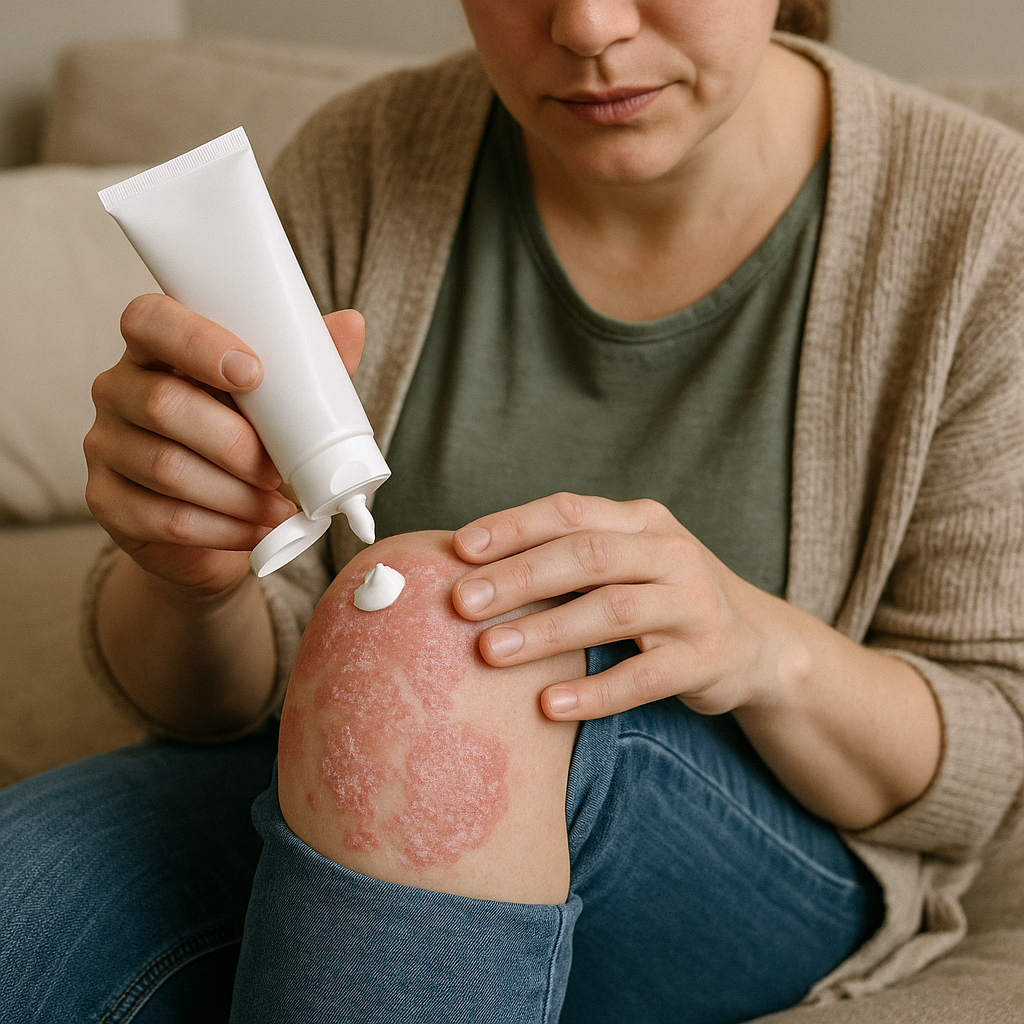
Ayurvedic Approach to Psoriatic Arthritis Treatment
So, we’ve broken down the 5 types of psoriatic arthritis — each with its quirks, frustrations, and complications. But now comes the real question: what can you do about it, especially if you’re looking for more than just pills?
Ayurveda doesn’t treat psoriatic arthritis like a mechanical issue — it sees the whole person. Your constitution (Prakriti), your digestion (Agni), your lifestyle habits, even your unresolved stress. When all those elements go out of whack, that’s when chronic conditions like this take root.
Let’s walk through three foundational Ayurvedic strategies that support psoriatic arthritis treatment.
Herbal Remedies for Inflammation and Pain Relief
First up: herbs. No, not the supermarket kind — I’m talking about deeply anti-inflammatory, immune-modulating botanicals like:
-
Ashwagandha: Calms the nervous system, supports joints, and reduces inflammation — a powerhouse for Vata disorders.
-
Guggulu: Often found in formulas like Yogaraj Guggulu or Kaishore Guggulu, this resin reduces joint swelling and clears toxins.
-
Turmeric (Haridra): Classic. Everyone knows it, but its use in proper dosages — with black pepper or ghee — makes it incredibly effective for chronic pain.
-
Boswellia (Shallaki): Think of this as Ayurvedic ibuprofen — but without the side effects. Excellent for stiffness and pain.
Honestly, herbs won’t "cure" psoriatic arthritis, but they help your body fight inflammation more intelligently, without the burnout of long-term NSAIDs or steroids.
Panchakarma and Detoxification for Chronic Joint Support
This is where Ayurveda gets deep. Panchakarma — the five-fold detox — is not your average juice cleanse. It’s an intensive program involving oil massages (Abhyanga), sweat therapy (Swedana), medicated enemas (Basti), and other customized therapies.
Why does this matter? Because Ama, or toxic build-up, is believed to be a root cause of arthritic conditions. If your digestion is poor and your tissues are clogged, no amount of herbs can fully penetrate. Panchakarma clears the path — literally.
I met someone once who had chronic asymmetric psoriatic arthritis and could barely use his right hand. After three rounds of Panchakarma (spread over a year), he got back 80% function. It's not magic — it’s metabolic reset.
Diet and Daily Practices to Balance Vata and Pitta
Diet is where Ayurveda is both practical and a bit picky.
-
Vata-pacifying foods: Warm, oily, cooked meals. Think kitchari, stews, root veggies.
-
Avoid: Raw salads, dry crackers, caffeine, sugar, nightshades (some say they worsen joint pain).
-
Pitta-pacifying tweaks: Cooling herbs like coriander, cucumber, aloe vera juice. Skip the hot spices and fried stuff.
Also — and this part’s underrated — daily oil massage (Abhyanga). It seems too simple, but lubricating your joints from the outside while healing the inside? Gold.
And don’t underestimate consistent sleep, meditation, and rest. Psoriatic arthritis flares up with stress, no doubt about it.
Conclusion
So there it is: the five types of psoriatic arthritis, broken down in human terms, with an honest look at what they feel like — and how Ayurveda can support your healing journey.
Whether you’ve got symmetric stiffness, mysterious DIP finger pain, or spinal discomfort that no MRI can quite explain, knowing your psoriatic arthritis type gives you power. And when you combine that knowledge with a holistic approach that respects your entire system — not just your joints — healing feels more possible.
Is Ayurveda the answer for everyone? Probably not. But is it worth considering as part of a psoriatic arthritis treatment strategy? Without a doubt.
स्वयं दवा न लें और प्रतीक्षा न करें। अभी डॉक्टर से चैट शुरू करें
FAQs
What does psoriatic arthritis look like?
It often appears as red, swollen joints — sometimes just a few, sometimes many — along with nail changes like pitting or ridging. Fingers can look sausage-like in some types.
What does psoriatic arthritis feel like?
Painful, stiff, and unpredictable. It can be symmetrical or random, come with fatigue, or feel like burning under the skin. Some describe it as “angry joints.”
What are the symptoms of psoriatic arthritis?
Common symptoms include joint pain, stiffness (especially in the morning), swelling, reduced range of motion, nail changes, and sometimes spinal pain.
उपयोगकर्ताओं के प्रश्न
How does distal interphalangeal psoriatic arthritis differ from other types?
Client_12a4b5
3 घंटे पहले
Distal interphalangeal psoriatic arthritis specifically affects the small joints closest to the nails, setting it apart from other forms of psoriatic arthritis that might involve larger joints or a wider distribution. This type can cause significant functional impairment due to joint damage, which can become permanent if not treated early. Symptoms include joint pain, swelling, and nail changes. Unlike osteoarthritis, it's linked with psoriasis. Early medical intervention can prevent serious damage, so seeing a doctor if you have symptoms is crucial.
What are the long-term effects of untreated psoriatic arthritis?
Client_7ba898
5 दिनों पहले
Untreated psoriatic arthritis can lead to significant long-term effects, including irreversible joint damage, decreased mobility, and functional impairment. Over time, the inflammation can cause joints to become swollen and deformed, potentially leading to arthritis mutilans—a severe form of the disease occurring in about 5% of cases. This can result in permanent disability. Patients might also experience extended periods of pain and fatigue, impacting their quality of life. It's crucial to see a doctor for a thorough evaluation and diagnosis as early intervention can help manage symptoms and slow disease progression.
What are common triggers for psoriatic arthritis flare-ups?
Client_90f340
10 दिनों पहले
Common triggers for psoriatic arthritis flare-ups include stress, infections, skin trauma (Koebner phenomenon), and certain medications, especially those affecting the immune system. Changes in weather or climate, dehydration, and hormonal fluctuations can also contribute to flare-ups. Identifying and avoiding specific personal triggers can help manage symptoms. Typically, lifestyle changes and medications can help control flare-ups within a few weeks. If symptoms aggressively worsen or don't improve with treatment, consulting a doctor is advisable. Ayurveda suggests lifestyle modifications for overall health but should complement medical treatment.
What treatments are available for asymmetric psoriatic arthritis inflammation?
Client_7d33b3
15 दिनों पहले
For asymmetric psoriatic arthritis inflammation, treatments typically involve medications, lifestyle changes, and sometimes surgical interventions. Non-steroidal anti-inflammatory drugs (NSAIDs) can help reduce pain and swelling. Disease-modifying antirheumatic drugs (DMARDs) and biologics are effective in controlling inflammation and preventing joint damage. Physical therapy can improve joint function, and regular exercise may help maintain mobility. Be aware of worsening symptoms or new joint involvement and consult a rheumatologist if symptoms persist or worsen. Ayurveda can supplement conventional treatments with practices like meditation for stress management.
What are the signs of inflammation in psoriatic arthritis?
Client_273b0a
20 दिनों पहले
The primary signs of inflammation in psoriatic arthritis include joint pain, swelling, stiffness, and warmth in the affected areas. Often, these symptoms appear in joints on both sides of the body and can lead to fatigue and reduced range of motion. This inflammation can mimic rheumatoid arthritis, so it’s crucial to monitor for symmetrical symptoms in areas like knees or wrists. If you experience persistent joint pain, noticeable swelling, or significant stiffness, it's a good idea to see a healthcare provider. They can offer a proper diagnosis and discuss treatment options.
Can I combine Ayurvedic herbs with conventional treatments for psoriatic arthritis?
Client_f6cd4c
30 दिनों पहले
You can often combine Ayurvedic herbs with conventional treatments for psoriatic arthritis, but this should be done under medical supervision. Herbs like turmeric have anti-inflammatory properties that might complement traditional medications, but they won't cure psoriatic arthritis. Typical treatments for psoriatic arthritis involve NSAIDs, DMARDs, and biologics to manage symptoms and prevent joint damage. Potential interactions exist, so it's crucial to consult your healthcare provider before adding Ayurvedic remedies. Regular follow-ups can help monitor the effectiveness and safety of combined treatments.
What are some effective natural remedies for psoriatic arthritis pain relief?
Client_edd7c3
40 दिनों पहले
For psoriatic arthritis pain relief, some effective natural remedies include applying topical treatments like capsaicin cream or using warm baths to soothe inflammation. Omega-3 fatty acids found in fish oil supplements may reduce joint pain. Regular exercise, especially low-impact activities like swimming or yoga, can improve joint mobility and decrease pain. Diet can also play a role; consider limiting nightshade vegetables like tomatoes and peppers if they exacerbate symptoms. Always consult a healthcare provider for a thorough diagnosis and treatment plan tailored to your needs. In Ayurveda, balancing diet with cooked foods and avoiding inflammatory foods may offer additional support.
How to integrate mindfulness practices to alleviate psoriatic arthritis symptoms?
Client_323957
49 दिनों पहले
To integrate mindfulness practices for alleviating psoriatic arthritis symptoms, start with techniques like meditation, deep breathing exercises, and progressive muscle relaxation, which can help manage stress and reduce inflammation. Stress management is crucial since stress can exacerbate symptoms. Aim to practice these techniques daily for 10-20 minutes. Watch for improvements in symptoms over weeks to months. If symptoms persist despite mindfulness practices, consult a healthcare provider for personalized advice.
How long does it take for Ayurvedic treatments to show results in psoriatic arthritis?
Client_8f1929
59 दिनों पहले
Ayurvedic treatments for psoriatic arthritis can take several weeks to several months to show noticeable results. Individual timelines vary greatly depending on the person's specific condition, consistency in following the treatment plan, and any lifestyle modifications involved. Treatments typically include herbal remedies, dietary changes, and therapies such as oil massages and sweat therapy. While some may experience pain relief or reduced inflammation sooner, it's important to continue monitoring symptoms and consult a healthcare provider if there is no improvement after a reasonable period or if symptoms worsen. Conventional medical treatments should not be discontinued without a doctor's guidance.
What is Panchakarma and how does it help with psoriatic arthritis symptoms?
Client_f87022
68 दिनों पहले
Panchakarma is a comprehensive detox approach in Ayurveda designed to balance doshas and remove toxins from the body. For psoriatic arthritis, it helps by reducing inflammation and improving joint function. It also strengthens agni (digestive fire) which is crucial for nutrient assimilation and tissue health. It’s not overnight magic, but regular treatments can make a difference in symptom relief.
संबंधित आलेख

Orthopedic Disorders
Patanjali Divya Peedantak Vati
Exploration of Patanjali Divya Peedantak Vati
3,544

Orthopedic Disorders
How to Treat Tennis Elbow Naturally with Ayurveda and Exercise
Learn how to treat tennis elbow naturally with Ayurvedic remedies, yoga, and home-based therapies. Discover safe exercises, treatments, and recovery tips
2,772

Orthopedic Disorders
Best Ayurvedic Medicine for Frozen Shoulder
Frozen shoulder, medically known as adhesive capsulitis, is a condition that causes pain, stiffness, and limited mobility in the shoulder joint.
3,703
Orthopedic Disorders
Shringa Bhasma: Ayurvedic Benefits, Uses, and Dosage Guide
Explore the benefits, proper dosage, uses, and scientific research behind Shringa Bhasma, a potent Ayurvedic mineral preparation for enhancing health and vitality.
4,441

Orthopedic Disorders
Joint Pain
According to Ayurveda, joint pain results from an imbalance in Vata, the energy responsible for movement.
3,674

Orthopedic Disorders
Pravala Panchamrita Rasa – Ayurvedic Formulation for Rejuvenation and Balance
Discover Pravala Panchamrita Rasa, a traditional Ayurvedic medicine combining calcined coral and a blend of five potent ingredients for detoxification, rejuvenation, and overall wellness. Learn about its benefits, usage guidelines, and precautions.
2,904

Orthopedic Disorders
How to Cure Rheumatoid Arthritis Permanently with Ayurveda
Learn how to cure rheumatoid arthritis permanently using Ayurvedic herbs, therapies, and diet. Discover root causes and holistic treatments for joint relief
2,464

Orthopedic Disorders
Maha Vishagarbha Taila: Unlocking Ancient Healing Secrets
Discover the therapeutic benefits of Maha Vishagarbha Taila, its uses in Ayurveda, natural remedies, and holistic approaches for well-being using ancient wisdom.
2,715

Orthopedic Disorders
Rasna Saptaka Kashaya: Ayurvedic Decoction Explained
Discover the science, benefits, and usage of Rasna Saptaka Kashaya, an Ayurvedic herbal decoction. Learn how it may support joint health and overall wellness.
3,371

Orthopedic Disorders
Gandharvahasthadi Thailam Benefits, How To Use, Ingredients, Side Effects
Exploration of Gandharvahasthadi Thailam Benefits, How To Use, Ingredients, Side Effects
2,300
विषय से संबंधित परामर्श
अतिरिक्त दस्तावेज़
© 2024 Ask Ayurveda. सर्वाधिकार सुरक्षित।