आयुर्वेदिक डॉक्टर से प्रश्न पूछें और निःशुल्क या भुगतान मोड में अपनी चिंता की समस्या पर ऑनलाइन परामर्श प्राप्त करें। 2,000 से अधिक अनुभवी डॉक्टर हमारी साइट पर काम करते हैं और आपके प्रश्नों का इंतजार करते हैं और उपयोगकर्ताओं को उनकी स्वास्थ्य समस्याओं को हल करने में प्रतिदिन मदद करते हैं।


Body DetoxEar, Nose, and Throat DisordersGeriatrics & RejuvenationImmunodeficiencyInfertility TreatmentNutritionOrthopedic DisordersPediatricsRespiratory DisordersSexually Transmitted Diseases (STDs)Surgery RecoveryUrological DisordersVascular DisordersDental DisordersEndocrinological DisordersGastrointestinal DisordersYoga TherapyGeneral MedicineAllergic DisordersCardio DisordersGynecology and ObstetricsCosmetologySkin and Hair DisordersEye DisordersInfectious DiseasesMental DisordersNeurological DisordersOncologyPanchakarmaSexual Health & DisordersSports Medicine
पर प्रकाशित 12/17/24
(को अपडेट 08/16/26)
2,914
Paddari Malam: Benefits, Uses, and Complete Guide
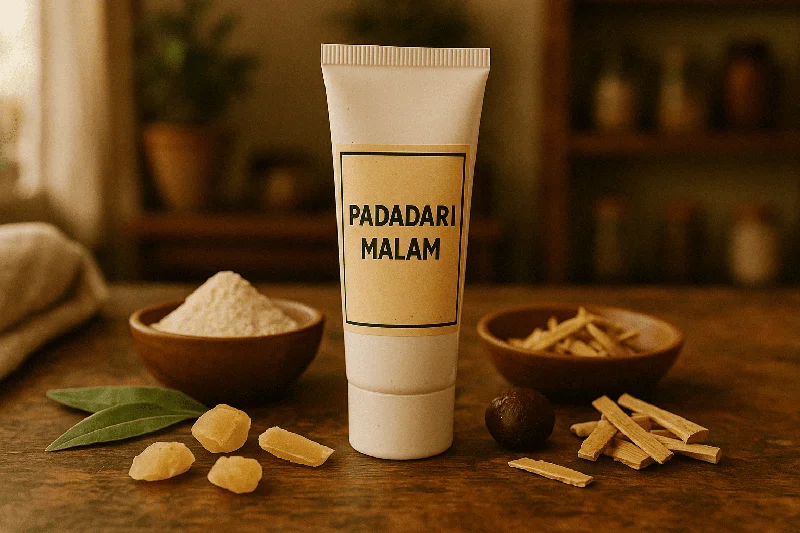
- Paddari Malam (also spelled Padadari Malam) is a classical Ayurvedic ointment specifically formulated to heal cracked heels, dry and fissured skin on the feet, and related dermatological conditions.
- The name itself tells you everything — "Padadari" is a Sanskrit compound where pada means "foot" and dari means "crack" or "fissure." So this is, quite literally, the "foot-crack ointment" of Ayurveda. If you've been struggling with painful heel fissures that bleed, catch on socks, or make walking uncomfortable, this traditional formulation has been used for centuries to address exactly that problem.
But there's more to Paddari Malam than just filling in cracks. In this comprehensive guide, we'll break down every ingredient and explain why it's there, explore the Ayurvedic understanding of cracked feet (hint: it involves Vata dosha), compare formulations from different manufacturers, and give you practical advice that no other resource online currently covers — including dietary recommendations, expected timelines for results, and how this malam stacks up against popular alternatives like Krack Cream or Boroline.
What Is Paddari Malam and Where Does It Come From?
Definition and Core Purpose
Paddari Malam is a topical Ayurvedic ointment (malam = ointment in Ayurvedic pharmacology) designed primarily for the treatment of Padadari — cracked, dry, and fissured skin of the feet and hands. It combines mineral-based ingredients like Jasad Bhasma (calcined zinc) and Shuddha Gairik (purified ochre/hematite) with herbal components such as Yashtimadhu (licorice) and Shaal Raal (sal resin), all set in a petroleum jelly or wax base.
The ointment works through a multi-pronged approach: it creates a protective barrier over cracked skin, delivers anti-inflammatory and antimicrobial agents directly into fissures, and promotes new tissue formation. Most formulations are available in 25g, 30g, 60g, 150g, and 300g packaging, with prices ranging from approximately ₹65 for small tubes to ₹600 for larger jars.
Shelf life: Typically 3 years from date of manufacture. Store in a cool, dry place away from direct sunlight.
Origins in Classical Ayurvedic Texts
The formulation of Padadari Malam draws from classical Ayurvedic pharmaceutical texts. While the exact origin varies by manufacturer, the foundational principles come from works like the Sharangdhara Samhita (13th century CE), which codified many external preparations (Lepa, Malam, etc.), and the Bhaishajya Ratnavali, a later compendium that expanded on dermatological formulations.
The Sharangdhara Samhita specifically categorizes external preparations and outlines how mineral bhasmas (calcined preparations) should be combined with herbal ingredients for skin applications. The concept of using zinc-based preparations for wound healing and skin repair is deeply embedded in Rasa Shastra — the Ayurvedic science of mineral pharmacology.
What's particularly interesting is that different Ayurvedic pharmacies have developed slightly different versions of this formulation over the decades, all rooted in the same classical principles but with proprietary variations. We'll compare these later in the article.
Understanding Padadari Through Ayurveda — The Role of Vata Dosha
This is something none of the product listing pages explain, but it's crucial for understanding why this formulation works the way it does.
In Ayurvedic pathology, Padadari (cracked feet) is primarily a Vata-dominant condition.
Here's the logic:
- Vata dosha is characterized by dryness (Ruksha), roughness (Khara), and lightness (Laghu)
- When Vata becomes aggravated — due to excessive walking on rough surfaces, dry climate, poor hydration, or Vata-provoking diet — the skin of the feet loses its natural moisture and elasticity
- The feet, being the furthest point from the body's core, are particularly vulnerable to Vata accumulation (Vata tends to aggregate in the lower extremities according to Ashtanga Hridaya)
- The Rakta dhatu (blood tissue) and Mamsa dhatu (muscle tissue) in the area become depleted, leading to cracking and sometimes bleeding
This is why Paddari Malam's formulation includes ingredients that are specifically Vata-shamaka (Vata-pacifying): unctuous, heavy, and warming. The petroleum jelly base provides Snigdha (oiliness) quality, the mineral ingredients add Guru (heaviness), and ingredients like Tankan (borax) provide mild Ushna (warming) energy.
Understanding this Ayurvedic framework also helps explain why cracked heels often worsen in winter (a Vata-dominant season) and in individuals with a Vata-predominant constitution.
Paddari Malam Ingredients: What Each Component Does and Why It's There
This is where we go deeper than any other resource. Most websites simply list ingredients. Here, we explain the pharmacological rationale behind each one.
Kharpar (Calamine / Zinc Carbonate Ore)
Kharpar is a naturally occurring zinc carbonate mineral that has been used in Rasa Shastra for centuries. After purification (Shodhana), it becomes a bioavailable form of zinc.
Why it's in the formula: Zinc is essential for wound healing — this isn't just Ayurvedic tradition, it's backed by modern science. A 2018 systematic review published in Wound Repair and Regeneration confirmed that topical zinc accelerates wound closure and reduces bacterial colonization. In Ayurvedic terms, Kharpar is Kashaya (astringent) and Sheeta (cooling), which helps contract open fissures and reduce inflammation.
Jasad Bhasma (Calcined Zinc Oxide)
Different from raw Kharpar, Jasad Bhasma is zinc that has undergone repeated calcination cycles (Puta), rendering it into an extremely fine, bioavailable ash.
Why it's in the formula: Jasad Bhasma provides concentrated zinc in nanoparticle-like form. A 2015 study in the Journal of Ayurveda and Integrative Medicine characterized Jasad Bhasma particles as ranging from 27–60 nanometers, which explains their superior skin penetration compared to crude zinc compounds. It acts as both an antimicrobial agent and a tissue-regenerator (Ropana).
Shuddha Suvarna Gairik (Purified Red Ochre / Hematite)
Gairik is an iron-rich mineral (Fe₂O₃) that undergoes purification by repeated quenching in herbal decoctions.
- Why it's in the formula: Gairik is classified as Ropana (wound healing), Shotha-hara (anti-inflammatory), and Rakta-stambhaka (hemostatic).
- For cracked heels that bleed, Gairik serves double duty — it helps stop minor bleeding and promotes granulation tissue. The iron oxide also provides mild antimicrobial properties. In Ayurvedic classification, Gairik is Madhura-Kashaya (sweet-astringent) in taste and Sheeta (cooling) in potency.
Yashtimadhu (Glycyrrhiza glabra — Licorice Root)
This is one of the most well-researched Ayurvedic herbs in modern pharmacology.
Why it's in the formula: Yashtimadhu contains glycyrrhizin and glycyrrhetinic acid, both demonstrated to have anti-inflammatory effects comparable to mild corticosteroids. A 2003 study in the Journal of Dermatological Treatment showed that topical glycyrrhetinic acid significantly reduced erythema and inflammation in skin conditions. In Ayurvedic terms, Yashtimadhu is the quintessential Vata-Pitta shamaka herb — it's Madhura (sweet), Snigdha (unctuous), and Sheeta (cooling). Perfect for a Vata-driven dry skin condition.
Shaal Raal / Raal (Shorea robusta Resin — Sal Resin)
The resin from the Sal tree, one of India's most important timber species.
Why it's in the formula: Shaal Raal is classified as Grahi (absorbent) and Sandhankara (promotes tissue union). It acts as a natural binding agent in the ointment and creates a protective film over wounds. The resin contains triterpenoid compounds that have shown antimicrobial activity in laboratory studies. Traditional Ayurvedic surgeons (Shalya Vaidyas) have used Sal resin in wound dressings for centuries — Sushruta himself mentions resin-based applications for Vrana Ropana (wound healing).
Tankan (Borax — Sodium Borate)
A mineral compound that serves both pharmaceutical and mechanical purposes.
Why it's in the formula: Tankan is Krimighna (antimicrobial) and Kandu-hara (anti-pruritic/anti-itch). It creates a mildly alkaline environment that discourages fungal and bacterial growth — relevant because deep heel fissures are prone to secondary infections. Tankan also acts as a gentle keratolytic, helping to soften hardened, dead skin around crack edges, which allows the healing agents to penetrate more effectively.
Ointment Base (Petroleum Jelly / Vaseline)
Modern formulations use pharmaceutical-grade petroleum jelly as the vehicle.
Why it matters: The unctuous, occlusive base serves a critical therapeutic function beyond just being a "carrier." It locks in moisture, prevents trans-epidermal water loss (TEWL), and keeps the active ingredients in prolonged contact with the skin. From an Ayurvedic perspective, this Snigdha base directly counteracts the Ruksha (dry) quality of aggravated Vata. Some traditional formulations use beeswax (Madhucchishta) or sesame oil (Tila Taila) instead.
Comparison of Formulations from Different Manufacturers
| Ingredient | Inducare Pharma | Ayurveda Rasashala | Datar Panchabhautik | Sai Pharma |
|---|---|---|---|---|
| Jasad Bhasma (Zinc) | ✅ | ✅ | ✅ | ✅ |
| Kharpar (Calamine) | ✅ | ❌ | ✅ | ✅ |
| Shuddha Gairik (Hematite) | ✅ | ✅ | ❌ | ✅ |
| Yashtimadhu (Licorice) | ✅ | ✅ | ✅ | ❌ |
| Shaal Raal (Sal Resin) | ❌ | ✅ | ✅ | ❌ |
| Tankan (Borax) | ✅ | ❌ | ✅ | ✅ |
| Petroleum Jelly Base | ✅ | ✅ | ✅ | ✅ |
| Beeswax/Madhu. | ❌ | ✅ | ❌ | ❌ |
| Available Sizes | 25g | 30g, 60g | 30g, 150g, 300g | 25g |
| Price Range | ~₹80 | ₹65–₹200 | ₹65–₹600 | ~₹75 |
- Key takeaway: While all manufacturers share the core concept (zinc-based healing ointment for cracked feet), the exact formulations differ. Rasashala's version tends to be more herb-heavy with Sal resin and beeswax base, while Inducare's version leans more on mineral components.
- Both approaches are valid — they simply emphasize different aspects of the classical formulation.
Key Benefits and What Is Paddari Malam Used For?
Healing Cracked Heels (Primary Indication)
This is the core, clinically-intended use. Paddari Malam fills and seals deep heel fissures, reduces pain associated with cracking, and promotes regeneration of healthy skin tissue. The zinc and iron oxide components accelerate epithelial cell migration (the process by which new skin grows across a wound), while the unctuous base prevents further drying and cracking.
For mild to moderate cracking, users can typically expect visible improvement within 5–7 days of consistent twice-daily application. Severe, deep fissures with bleeding may require 2–4 weeks.
Moisturizing and Nourishing Dry Skin on Feet and Hands
Beyond active cracking, Paddari Malam works as a deep-nourishing treatment for chronically dry, rough skin on the heels, soles, palms, and knuckles. The occlusive barrier it creates is significantly more effective than regular moisturizers because it doesn't just add moisture — it prevents existing moisture from escaping.
Anti-Inflammatory and Antiseptic Protection
- The combination of Yashtimadhu (anti-inflammatory), Tankan (antimicrobial), and zinc compounds (both anti-inflammatory and antimicrobial) provides triple-action protection against secondary infections in open fissures.
- This is clinically relevant — a 2016 study in the Indian Journal of Dermatology noted that up to 20% of deep heel fissures develop bacterial complications if left untreated.
Minor Cuts, Abrasions, and Superficial Wounds
While cracked heels are the primary indication, the wound-healing properties of the formulation make it useful for minor cuts, scrapes, and superficial skin injuries. The Gairik component is particularly valuable here for its hemostatic (bleeding-control) properties.
> A note on expanded claims: Some sources claim Paddari Malam helps with joint pain, muscle aches, or respiratory congestion. These claims are not supported by the classical texts for this specific formulation. Padadari Malam is a dermatological preparation. For joint pain, Ayurveda has dedicated formulations like Mahanarayan Taila or Vishgarbha Taila. Don't confuse multi-purpose marketing with actual traditional indications.
How to Use Paddari Malam Effectively: Step-by-Step Guide
Can Paddari Malam Be Used Daily?
Yes. For active cracking, daily application (twice a day) is recommended. For maintenance and prevention, once daily application at bedtime is sufficient.
Here's the detailed method:
Step 1: Clean and Prepare the Affected Area
- Wash feet with lukewarm water and mild soap. If skin is extremely hardened, soak feet in warm water with a tablespoon of rock salt for 10–15 minutes.
- Gently use a pumice stone to remove loose dead skin — but don't be aggressive. The goal is to remove only the superficially dead layer, not to abrade raw skin.
Step 2: Dry Thoroughly
Pat feet completely dry with a clean towel, paying special attention to the spaces between toes and the crack edges. Moisture trapped in fissures can encourage fungal growth.
Step 3: Apply Paddari Malam
Take a pea-sized amount (for one heel) and warm it between your fingers for a few seconds. Apply directly into the cracks first, pressing gently to ensure the ointment fills the fissure. Then spread a thin layer across the entire heel and sole. For hand cracks, apply specifically to the fissured areas.
Step 4: Cover and Allow Absorption
- After application, wear clean cotton socks.
- This serves three purposes — it prevents the ointment from rubbing off, creates a warm microenvironment that enhances absorption, and protects your bedsheets. Leave overnight. For daytime applications, lightweight cotton socks work fine.
Step 5: Morning Routine
In the morning, wash feet normally. You'll notice the ointment has been largely absorbed. Reapply if using twice daily.
How Long Does It Take for Paddari Malam to Work?
| Severity | Expected Timeline | Notes |
|---|---|---|
| Mild dryness / superficial cracks | 3–5 days | Noticeable softening and reduced roughness |
| Moderate fissures (visible but not bleeding) | 7–14 days | Cracks begin closing, pain reduces significantly |
| Severe deep fissures with bleeding | 14–28 days | Gradual healing, bleeding stops within first few days |
| Prevention / maintenance | Ongoing | Apply 2–3 times per week to prevent recurrence |
These timelines assume consistent, twice-daily application. Results will be slower if you continue walking barefoot on rough surfaces or if the underlying Vata imbalance isn't addressed.
Paddari Malam vs. Other Cracked Heel Treatments
No other website currently provides this comparison — and it's probably the most practical information you need when deciding what to buy.
| Feature | Paddari Malam (Ayurvedic) | Krack Cream | Boroline | Regular Petroleum Jelly |
|---|---|---|---|---|
| Primary Active Agents | Zinc Bhasma, Gairik, Yashtimadhu | Urea, Liquid Paraffin | Boric Acid, Zinc Oxide | None (occlusive only) |
| Mechanism | Mineral + herbal healing + barrier | Chemical keratolytic + moisturizing | Antiseptic + barrier | Moisture locking only |
| Antimicrobial Action | Yes (Tankan, Zinc, Gairik) | Minimal | Yes (Boric acid) | No |
| Anti-inflammatory | Yes (Yashtimadhu, Zinc) | No | Mild | No |
| Suitable for Open/Bleeding Cracks | Yes | Not recommended | Mild cases only | No |
| Chemical/Synthetic Ingredients | Minimal (petroleum jelly base) | Multiple synthetic ingredients | Synthetic fragrance, parabens | Fully synthetic but inert |
| Average Price (25–30g) | ₹65–₹80 | ₹50–₹70 | ₹30–₹50 | ₹15–₹40 |
| Ayurvedic Certification | Yes | No | No | No |
Bottom line: If you prefer a natural, multi-action approach that addresses healing, infection prevention, and moisturizing simultaneously, Paddari Malam is a strong choice. If you need aggressive dead-skin removal, urea-based creams like Krack work faster for that specific purpose — but they can sting on open cracks. For mild cases, even plain petroleum jelly with cotton socks can work, but it won't heal deep fissures.
स्वयं दवा न लें और प्रतीक्षा न करें। अभी डॉक्टर से चैट शुरू करें
Precautions, Side Effects, and Compatibility
Are There Any Side Effects?
Paddari Malam is generally well-tolerated.
However:
- Patch test first: Apply a small amount on the inner wrist and wait 24 hours. If redness, itching, or irritation occurs, discontinue use
- Not for deep infected wounds: If fissures show signs of active infection (pus, spreading redness, warmth, fever), consult a doctor. Paddari Malam is not a substitute for antibiotics in established infections
- Pregnancy and breastfeeding: While topical application is generally considered safe, consult your Ayurvedic practitioner or obstetrician before use during pregnancy. Some formulations contain borax (Tankan), which has theoretical concerns with systemic absorption in large quantities
- Children under 5: Use under medical supervision. Children's skin is thinner and more permeable, so mineral-based preparations should be used cautiously
Is Paddari Malam Suitable for All Skin Types?
For external application on the feet and hands — yes, in most cases. People with extremely sensitive skin or known allergies to zinc compounds should exercise caution. The formulation is not designed for facial use, and should be kept away from eyes and mucous membranes.
Compatibility with Other Treatments
- With regular moisturizers: Compatible. Apply Paddari Malam first (directly into cracks), then a general moisturizer over the entire foot if desired
- With pedicure treatments: Wait at least 24 hours after a professional pedicure before applying, especially if any abrasive treatments were done
- With foot scrubs: Use scrubs before application, not after. Scrub → rinse → dry → apply malam
- With diabetic foot care: Diabetics with cracked heels should use Paddari Malam under medical supervision, as impaired wound healing and neuropathy require monitoring
Ayurvedic Diet and Lifestyle for Preventing Cracked Heels (Pathya-Apathya)
This is where the Ayurvedic approach truly differs from the "just apply cream" mindset. Treating Padadari only topically without addressing the root Vata imbalance is like painting over a cracked wall without fixing the foundation.
Dietary Recommendations (Pathya — Favorable)
- Increase healthy fats: Ghee (clarified butter), sesame oil, coconut oil, almonds, and walnuts. These are Snigdha (unctuous) and directly counter Vata's Ruksha (dry) quality
- Hydration: Drink warm water throughout the day (not ice cold — cold water aggravates Vata)
- Favor sweet, sour, and salty tastes: These three Rasas pacify Vata. Include milk, dates, sweet fruits, moderate amounts of lemon and tamarind, and appropriate salt in your diet
- Avoid excess bitter, astringent, and pungent foods: Raw salads, excessive green tea, very spicy food, and dry foods (crackers, plain toast) increase Vata
Lifestyle Practices (Vihara)
- Abhyanga (oil massage): Daily self-massage of the feet with warm sesame oil or coconut oil before bathing. This alone can prevent mild cracking
- Avoid walking barefoot on rough, dry surfaces — especially concrete and tiles
- Wear properly fitting, closed-toe footwear that doesn't expose heels to drying air
- Pada Abhyanga before bed: Apply warm sesame oil or ghee to the soles of the feet and wear cotton socks to bed. This is a classical Ayurvedic practice mentioned in the Ashtanga Hridaya (Sutrasthana, Chapter 2) as beneficial for eye health, sleep, and foot health simultaneously
Seasonal Awareness
Cracked heels typically worsen during Hemanta (early winter) and Shishira (late winter) Ritus, when Vata is naturally aggravated. Preventive application of Paddari Malam 2–3 times per week during these seasons can prevent recurrence in individuals prone to this condition.
Where Can I Buy Paddari Malam?
Paddari Malam is available through multiple channels:
- Online Ayurvedic pharmacies: Websites like Rajved.in, Inducare Pharma's official site, Datar Panchabhautik's store, and general platforms like 1mg.com
- Local Ayurvedic medical stores: Available in most Indian cities, particularly in Maharashtra, Gujarat, and Karnataka where Ayurvedic pharmacies have strong distribution
- Direct from manufacturers: Ayurveda Rasashala (Pune), Datar Panchabhautik (Mumbai), Inducare Pharma, and Sai Pharma all sell directly
Price range: ₹65 (30g, basic packaging) to ₹600 (300g, larger therapeutic pack). For most individual users, a 30g tube lasts approximately 2–3 weeks with twice-daily application to both heels.
Frequently Asked Questions (FAQ)
What are the main ingredients in Paddari Malam (Padadari Malam)?
- The core ingredients across most formulations include Jasad Bhasma (calcined zinc oxide), Kharpar (calamine/zinc carbonate), Shuddha Gairik (purified hematite/red ochre), Yashtimadhu (licorice root extract), Shaal Raal (Sal tree resin), and Tankan (borax), in a petroleum jelly or beeswax base.
- The exact composition varies slightly between manufacturers — see the comparison table above for specifics.
Can I use Paddari Malam for cold or cough?
- No. Despite some online claims, Paddari Malam is a topical dermatological preparation designed for cracked skin. It is not formulated for respiratory conditions. For cold and cough, Ayurveda offers specific preparations like Sitopaladi Churna, Talisadi Churna, or Lakshmi Vilas Ras.
- The name "Padadari" literally means "foot crack" — this is not a multi-system remedy.
What is the Ayurvedic understanding of Padadari?
In Ayurveda, Padadari is classified as a Vataja-Raktaja condition — primarily caused by Vata dosha aggravation leading to dryness, roughness, and cracking of the skin on the soles and heels, sometimes involving Rakta (blood) dhatu when fissures bleed. It is mentioned in dermatological chapters (Kushtha Chikitsa) of classical texts. Treatment involves both external application (Malam) and internal Vata-pacifying measures.
How is Paddari Malam different from regular heel cream?
Regular heel creams typically contain synthetic moisturizers, urea (as a keratolytic), and sometimes artificial fragrances. Paddari Malam uses mineral bhasmas and herbal extracts that not only moisturize but actively promote wound healing, provide antimicrobial protection, and reduce inflammation. It addresses the root cause from an Ayurvedic perspective rather than just softening the surface.
Can I use Paddari Malam on my hands?
Yes. While the name references feet (Pada), the formulation is equally effective on cracked skin of the hands, knuckles, and fingers — especially for people who develop fissures from winter dryness, frequent handwashing, or manual labor.
What is the price of Paddari Malam?
Prices range from ₹65 for a basic 30g pack to ₹600 for a 300g jar. The most common retail sizes are 25g and 30g tubes, priced between ₹65–₹100 depending on the manufacturer and retail platform.
Should I consult a doctor before using Paddari Malam?
For straightforward dry/cracked heels, Paddari Malam can be used as an over-the-counter remedy. However, consult an Ayurvedic practitioner or dermatologist if: you have diabetes and foot problems, cracks are severely infected, you're pregnant, or you've been experiencing cracking chronically despite treatment (which may indicate an underlying thyroid or nutritional deficiency issue).
Conclusion: Is Paddari Malam Worth Using?
Paddari Malam is one of those Ayurvedic formulations that does exactly what it says — no more, no less. It's a well-designed, time-tested topical remedy for cracked heels and dry, fissured skin. Its combination of zinc-based healing agents, anti-inflammatory herbs, and an occlusive moisturizing base addresses the problem from multiple angles simultaneously.
What makes it stand out from conventional heel creams is the depth of its formulation logic. Every ingredient has a specific role rooted in both classical Ayurvedic pharmacology and (as we've shown) validated by modern research. It's affordable, widely available, and has minimal side effects.
However, remember this: topical treatment alone is only half the solution. Address the underlying Vata imbalance through proper hydration, dietary fats, seasonal awareness, and daily foot oiling. Combine external application with internal balance, and you'll not only heal existing cracks — you'll prevent them from coming back.
If you're dealing with cracked heels right now, start with Paddari Malam tonight. Clean, apply, cover with socks, and give it a week. The results will likely speak for themselves.
Scientific Sources
- A complex, nonlinear dynamic systems perspective on Ayurveda and Ayurvedic research — Rioux J, 2012, Journal of alternative and complementary medicine (New York, N.Y.)
- Rabies treatment — Lele RD, 1982, Science (New York, N.Y.)
- Contributions of Indian Council of Medical Research (ICMR) in the area of Medicinal plants/Traditional medicine — Tandon N et al., 2017, Journal of ethnopharmacology
- Herbal Immunomodulators - A Remedial Panacea for Designing and Developing Effective Drugs and Medicines: Current Scenario and Future Prospects — Tiwari R et al., 2018, Current drug metabolism
- Nootropic potential of Ashwagandha leaves: Beyond traditional root extracts — Wadhwa R et al., 2016, Neurochemistry international
- Utilization of Ayurveda in health care: an approach for prevention, health promotion, and treatment of disease.Part 1--Ayurveda, the science of life — Sharma H et al., 2007, Journal of alternative and complementary medicine (New York, N.Y.)
- Safety of Ashwagandha Root Extract: A Randomized, Placebo-Controlled, study in Healthy Volunteers — Verma N et al., 2021, Complementary therapies in medicine
- Transmission modes of COVID-19 disease pandemic in the light of ancient wisdom of Ayurveda medicine: a review — Joshi N et al., 2021, Journal of complementary & integrative medicine
- Rational use of Ashwagandha in Ayurveda (Traditional Indian Medicine) for health and healing — Joshi VK et al., 2021, Journal of ethnopharmacology
- Mind-body medicine.A cautionary note — Mathew RJ, 1998, North Carolina medical journal
- Butea monosperma as a collective phytomedicine and environmentally sustainable, conservative, and beneficial plant — Hiremath KY et al., 2024, Archives of Razi Institute
- Integrated approach to yoga — Bhobe S, 2000, The Nursing journal of India
- Phytochemistry, Food Application, and Therapeutic Potential of the Medicinal Plant (Withania coagulans): A Review — Khan MI et al., 2021, Molecules (Basel, Switzerland)
- Deep meditation as a valid "scientific" method: A flawed argument — Patwardhan K, 2025, Indian journal of medical ethics
- Healthcare the Ayurvedic way — Jayasundar R, 2012, Indian journal of medical ethics
- Application of diet-derived taste active components for clinical nutrition: perspectives from ancient Ayurvedic medical science, space medicine, and modern clinical nutrition — Kulkarni AD et al., 2014, Current pharmaceutical design
- Mechanisms of action of Sri Lankan herbal medicines used in the treatment of diabetes: A review — Samarakoon DNAW et al., 2020, Journal of integrative medicine
- An 'Ayurveda-Biology' platform for integrative diabetes management — Thottapillil A et al., 2021, Journal of ethnopharmacology
- Non-allopathic systems of medicine--time to reflect and act — Gaitonde S et al., 2002, The Journal of the Association of Physicians of India
- Of odysseys and miracles: A narrative approach on therapeutic mobilities for ayurveda treatment — Kaspar H et al., 2023, Social science & medicine (1982)
उपयोगकर्ताओं के प्रश्न
What are the active ingredients in Paddari Malam for wound healing?
Client_c51396
24 दिनों पहले
Paddari Malam contains active ingredients such as Yashtimadhu, Tankan, and zinc compounds. Yashtimadhu provides anti-inflammatory benefits, Tankan offers antimicrobial properties, and zinc compounds deliver both anti-inflammatory and antimicrobial protection. This combination is particularly effective in preventing secondary infections in open wounds, such as heel fissures. For minor cuts, scrapes, and superficial skin injuries, Paddari Malam's formulation can aid in wound healing; however, those with allergies to zinc compounds should avoid using it. If wounds show signs of infection or do not improve, it is important to consult with a healthcare professional.
What lifestyle changes can help manage Vata dosha for Padadari?
Client_83aecb
34 दिनों पहले
Managing Padadari effectively involves both lifestyle changes and targeted treatments. To balance Vata dosha, focus on incorporating more warm, moist, and grounding foods into your diet, such as soups, stews, and healthy fats like ghee or sesame oil. Consuming adequate water and staying hydrated is essential. Opt for regular foot care; moisturizing with rich, emollient creams can help minimize dryness and cracking. As Padadari is linked to skin dryness, wearing supportive shoes and using a pumice stone gently may prevent further fissures. Monitor your symptoms, and if cracking persists or becomes painful, consult a healthcare professional to ensure there's no underlying condition.
What are the storage recommendations for Paddari Malam to maintain potency?
Client_9706a7
43 दिनों पहले
To maintain potency, Paddari Malam should be stored in a cool, dry place away from direct sunlight and moisture, which can degrade the active ingredients. Keeping it at room temperature in a tightly sealed container is advisable to prevent contamination and evaporation of any volatile components. While refrigeration is not typically necessary, avoid exposure to extreme temperatures. Check the expiration date on the packaging and avoid using it past this date, as the effectiveness can diminish over time. If any changes in texture, color, or odor occur, discontinue use and consult a healthcare professional.
Is Paddari Malam effective for preventing skin infections on wounds?
Client_1f2f47
53 दिनों पहले
Paddari Malam can be effective in preventing skin infections on wounds, mainly due to its zinc content, which is essential for wound healing and reducing inflammation. This ointment softens dead skin, allowing better penetration of healing agents. It also forms a protective barrier by trapping moisture and minimizing exposure to bacteria, thanks to its petroleum jelly base. However, if a wound shows signs of infection—like redness, swelling, or pus—it's important to consult a healthcare professional promptly.
How long should I leave Paddari Malam on cracked skin for best results?
Client_f9730e
63 दिनों पहले
You should leave Paddari Malam on cracked skin overnight for the best results. This allows ample time for its active ingredients, such as Shuddha Suvarna Gairik, to provide their wound-healing, anti-inflammatory, and hemostatic effects. Apply a pea-sized amount to the affected area, gently warming it between your fingers before application. While primarily recommended for overnight use, if you notice any irritation or if the condition doesn’t improve in a week, consult a healthcare provider for further advice.
Can I use Paddari Malam for cracked skin caused by diabetes or other health issues?
Client_e7e2d0
72 दिनों पहले
Yes, Paddari Malam can be used for cracked skin, but if you have diabetes, you should definitely consult an Ayurvedic doctor or dermatologist first. They can help check for severe infections or other issues that may need different treatment. Paddari Malam is great for addressing Vata imbalance, but with diabetes, it's key to be extra cautious!
What is Kharpar and how is it used in foot care?
Client_31dae3
82 दिनों पहले
Kharpar is a natural zinc carbonate mineral used in Ayurveda for foot care, especially in cracked or dry feet. You apply Paddari Malam directly into the cracks, then use a moisturizer if needed. Make sure to use any scrubs *before* applying Kharpar, and the best time for application is at bedtime! For effectiveness, just be sure your feet are clean first!
Can Paddari Malam be used for treating eczema or similar skin conditions?
Client_82b130
90 दिनों पहले
Paddari Malam can help soothe eczema because of its deep-nourishing and moisturizing properties, but it's not specifically targeted for conditions like eczema. It’s generally used for dry, cracked skin and might not address inflammation in the same way an anti-inflammatory ointment would. Always best to consult with an Ayurvedic practitioner or dermatologist first!
What is the historical significance of Paddari Malam in traditional medicine?
Client_3dd1fc
104 दिनों पहले
Paddari Malam has a rich historical significance in traditional medicine. It's been relied upon for generations by many communities as a go-to remedy for various ailments due to its multiple healing benefits. Its use reflects the wisdom of incorporating natural ingredients to balance the body's doshas and support holistic wellness, making it a staple in many cultural health practices.
Is it safe to use Paddari Malam on children for minor skin issues?
Client_c2789a
114 दिनों पहले
Paddari Malam can be potentially used for children for minor skin issues, but it's crucial to be cautious. Kids have more sensitive skin, so it'd be wise to do a patch test first to rule out any irritation or reactions. And if there's any discomfort or irritation, stop using it right away. Always a good idea to check in with a pediatrician before trying new remedies on kids.
संबंधित आलेख

Orthopedic Disorders
Best Ayurvedic Medicine for Frozen Shoulder
Frozen shoulder, medically known as adhesive capsulitis, is a condition that causes pain, stiffness, and limited mobility in the shoulder joint.
3,701

Orthopedic Disorders
पतंजलि दिव्य पीड़ांतक तैल
पतंजलि दिव्य पीड़ांतक तेल की खोज
3,349

Orthopedic Disorders
सैंधवाड़ी तेल
सैंधवाड़ी तैल का अन्वेषण
2,406

Orthopedic Disorders
Amavata Home Remedies – Natural Ayurvedic Approaches for Joint Health
Explore amavata home remedies based on Ayurvedic principles. Discover natural treatments to alleviate joint pain, reduce inflammation, and restore balance in rheumatoid arthritis (Amavata) conditions.
3,009
Orthopedic Disorders
Calcaneal Spur Ayurvedic Treatment: Natural Relief for Heel Pain
Explore effective Ayurvedic treatments for calcaneal spur, including natural remedies, lifestyle changes, and scientific evidence to alleviate heel pain.
3,446

Orthopedic Disorders
Coccyx Pain Treatment in Ayurveda: Effective Ayurvedic Solutions for Coccyx Pain
Discover Ayurvedic treatments for coccyx pain, including benefits, proper dosage, uses, and scientific evidence supporting natural remedies for tailbone discomfort and healing.
3,121

Orthopedic Disorders
धुर्धुरापत्रादि तेल के फायदे, उपयोग कैसे करें, सामग्री, संदर्भ
धुर्धुरापत्रादि थैलम के फायदे, उपयोग कैसे करें, सामग्री, संदर्भ की खोज
2,697
Orthopedic Disorders
Kadali Rasayanam - Ayurvedic Supplement for Digestive Wellness and Strong Bones
Discover the advantages, proper dosage, side effects, and scientific research behind Kadali Rasayanam, a powerful Ayurvedic formulation.
3,334

Orthopedic Disorders
ओस्टिकॉट टैबलेट के उपयोग, खुराक, सामग्री, साइड इफेक्ट्स
ओस्टिकोट टैबलेट के उपयोग, खुराक, सामग्री, और साइड इफेक्ट्स की जानकारी
2,626
Orthopedic Disorders
Amritadi Guggulu: Traditional Roots, Modern Evidence
Discover how amritadi guggulu supports holistic well-being, backed by both ancient Ayurvedic wisdom and emerging scientific research.
2,903
विषय से संबंधित परामर्श
अतिरिक्त दस्तावेज़
© 2024 Ask Ayurveda. सर्वाधिकार सुरक्षित।