आयुर्वेदिक डॉक्टर से प्रश्न पूछें और निःशुल्क या भुगतान मोड में अपनी चिंता की समस्या पर ऑनलाइन परामर्श प्राप्त करें। 2,000 से अधिक अनुभवी डॉक्टर हमारी साइट पर काम करते हैं और आपके प्रश्नों का इंतजार करते हैं और उपयोगकर्ताओं को उनकी स्वास्थ्य समस्याओं को हल करने में प्रतिदिन मदद करते हैं।


Body DetoxEar, Nose, and Throat DisordersGeriatrics & RejuvenationImmunodeficiencyInfertility TreatmentNutritionOrthopedic DisordersPediatricsRespiratory DisordersSexually Transmitted Diseases (STDs)Surgery RecoveryUrological DisordersVascular DisordersDental DisordersEndocrinological DisordersGastrointestinal DisordersYoga TherapyGeneral MedicineAllergic DisordersCardio DisordersGynecology and ObstetricsCosmetologySkin and Hair DisordersEye DisordersInfectious DiseasesMental DisordersNeurological DisordersOncologyPanchakarmaSexual Health & DisordersSports Medicine
पर प्रकाशित 12/19/24
(को अपडेट 08/09/26)
4,383
Kalamegha Strong: Benefits, Dosage & Science-Backed Insights
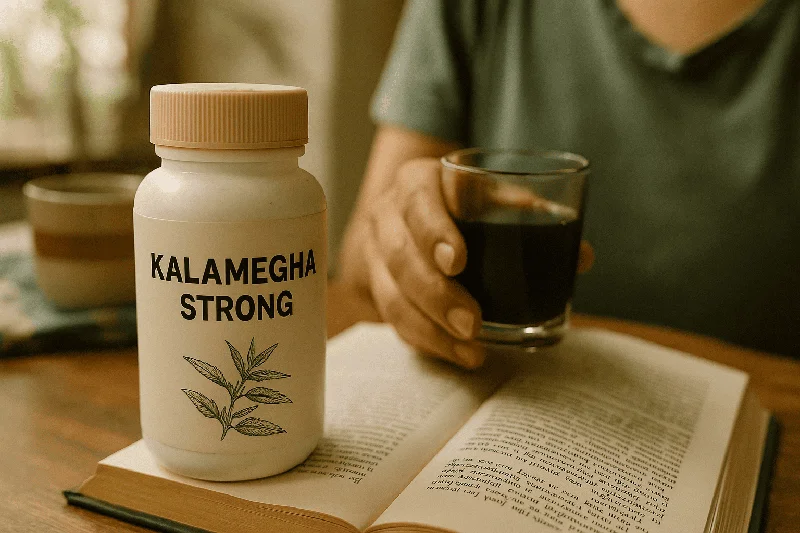
- Kalamegha Strong is a proprietary Ayurvedic liquid formulation manufactured by Swadeshi Ayurved (Swadeshi Udupi) that works primarily as a liver tonic, blood purifier, and digestive support supplement.
- It combines Andrographis paniculata — known as the "King of Bitters" — with several other potent herbs to deliver hepatoprotective, antipyretic, anthelmintic, and immunomodulatory benefits. If you're searching for a natural way to support your liver, improve digestion, or cleanse your blood, this guide covers everything you need to know: from ingredients and mechanism of action to dosage, side effects, drug interactions, and how Kalamegha Strong compares to other popular liver tonics on the market.
What Is Kalamegha Strong?
- Kalamegha Strong is an Ayurvedic herbal liquid (arista/syrup formulation) designed to protect and rejuvenate the liver, purify blood, and strengthen immunity.
- The name itself carries meaning rooted in Sanskrit — "Kalam" translates to powerful or potent, and "Megha" means cloud, symbolizing a formulation as powerful and all-encompassing as a rain cloud nourishing the earth.
- Manufactured by Swadeshi Ayurved, a well-known Ayurvedic company based in Udupi, Karnataka, this product has been a staple in South Indian Ayurvedic practice for decades.
- It is available in liquid form in two variants:
- 200 ml — approximately ₹130
- 450 ml — approximately ₹260
Unlike tablet or capsule-based formulations, the liquid form allows for faster absorption and bioavailability, which is particularly beneficial for individuals with compromised digestive function.
The Ayurvedic Philosophy Behind Kalamegha Strong
From a traditional Ayurvedic perspective, Kalamegha Strong works by balancing all three doshas — Vata, Pitta, and Kapha — though its primary action is on Pitta dosha, which governs metabolism, liver function, and blood quality. When Pitta becomes aggravated (due to poor diet, alcohol consumption, environmental toxins, or stress), it manifests as liver disorders, skin problems, acidity, and inflammatory conditions.
The bitter (Tikta) and astringent (Kashaya) rasa (taste) of the primary ingredients in Kalamegha Strong directly pacify excess Pitta. This is why Ayurvedic practitioners have traditionally prescribed formulations based on Andrographis paniculata for conditions involving Pitta imbalance — jaundice, hepatitis, skin eruptions, and chronic fevers.
The formulation also addresses Kapha-related issues like sluggish digestion and excess mucus, while certain warming ingredients help balance Vata.
Key Ingredients in Kalamegha Strong
Understanding what goes into Kalamegha Strong is crucial for appreciating how it works. Each ingredient has been selected based on centuries of Ayurvedic knowledge and, importantly, many of them have modern scientific validation.
| Ingredient | Botanical Name | Primary Action | Dosha Effect |
|---|---|---|---|
| Kalamegha (Kalmegh) | Andrographis paniculata | Hepatoprotective, antipyretic, immunomodulatory | Pacifies Pitta & Kapha |
| Chiraita (Chirayata) | Swertia chirata | Bitter tonic, febrifuge, digestive stimulant | Pacifies Pitta & Kapha |
| Chitramoola (Kutki) | Picrorhiza kurroa | Liver protective, cholagogue, anti-inflammatory | Pacifies Pitta & Kapha |
| Daruharidra (Indian Barberry) | Berberis aristata | Blood purifier, antimicrobial, anti-diabetic | Pacifies Pitta & Kapha |
| Devadaru (Himalayan Cedar) | Cedrus deodara | Anti-inflammatory, analgesic, diuretic | Pacifies Vata & Kapha |
| Dhamasa (Fagonia) | Fagonia cretica | Blood purifier, antipyretic, cooling | Pacifies Pitta |
Andrographolides: The Active Powerhouse
The star ingredient, Andrographis paniculata, owes its therapeutic power to a class of compounds called andrographolides. These diterpenoid lactones are the primary bioactive molecules responsible for most of the clinical benefits.
Here's what research tells us about andrographolides at the cellular level:
- Hepatoprotection: Andrographolides inhibit lipid peroxidation in liver cells and increase the activity of antioxidant enzymes like superoxide dismutase (SOD) and catalase. A 2012 study published in Evidence-Based Complementary and Alternative Medicine demonstrated that andrographolide significantly reduced liver enzyme levels (SGOT, SGPT) in rats with induced hepatotoxicity.
- Immunomodulation: They stimulate both specific and non-specific immune responses by enhancing the proliferation of lymphocytes and the production of interleukin-2 (IL-2). A 2017 review in Pharmacological Research confirmed andrographolide's ability to modulate NF-κB pathways, which play a central role in immune regulation.
- Anti-inflammatory action: Andrographolides inhibit the COX-2 enzyme and reduce pro-inflammatory cytokines (TNF-α, IL-6), similar in mechanism to conventional NSAIDs but without the gastric side effects.
- Antipyretic properties: A clinical trial published in the Journal of Clinical Pharmacy and Therapeutics (2004) showed that Andrographis paniculata extract was as effective as paracetamol in reducing fever associated with common cold, with fewer side effects.
- The synergistic effect of combining Andrographis with Picrorhiza kurroa and Swertia chirata amplifies the hepatoprotective and detoxification benefits significantly.
- This is not just traditional wisdom — it's backed by pharmacological evidence.
What Is Kalamegha Strong Used For?
Kalamegha Strong has a wide spectrum of therapeutic applications. Based on its formulation, traditional usage, and available clinical evidence, here are the primary indications:
Liver Health and Detoxification
- This is the primary use case. Kalamegha Strong acts as a potent hepatoprotective agent, meaning it shields liver cells from damage caused by toxins, alcohol, medications (particularly paracetamol and antibiotics), and environmental pollutants.
- It also promotes hepatic regeneration — the liver's natural ability to repair itself.
Specific liver-related conditions where it may help:
- Fatty liver disease (both alcoholic and non-alcoholic)
- Hepatitis (as an adjunct therapy)
- Jaundice
- Elevated liver enzymes (SGOT/SGPT)
- Drug-induced liver injury
- General liver sluggishness
Is Kalamegha Strong Good for Fatty Liver?
Yes, and this is probably one of the most common reasons people seek it out. Non-alcoholic fatty liver disease (NAFLD) affects an estimated 9-32% of the Indian population, according to data published in the Journal of Clinical and Experimental Hepatology (2019). The andrographolides in Kalamegha help reduce hepatic fat accumulation by modulating lipid metabolism pathways. Additionally, Picrorhiza kurroa (Kutki), another key ingredient, has shown remarkable results in clinical studies for reversing fatty liver changes. A 2014 study in Phytomedicine demonstrated that Picrorhiza kurroa extract significantly reduced liver fat content and improved histological scores in subjects with NAFLD.
That said — Kalamegha Strong works best for fatty liver when combined with dietary changes, regular exercise, and reduced alcohol intake. It's not a magic bullet on its own.
Blood Purification and Skin Health
In Ayurveda, impure blood (Rakta dushti) is considered a root cause of skin disorders. Kalamegha Strong, with its combination of Daruharidra and Dhamasa, acts as a Rakta Shodhaka (blood purifier).
Users commonly report improvements in:
- Chronic acne and pimples
- Eczema and psoriasis (as supportive therapy)
- Boils and skin eruptions
- Dull or sallow complexion
Digestive Support and Appetite Stimulation
The intensely bitter taste of Kalamegha Strong isn't just an inconvenience — it's actually therapeutic. Bitter substances stimulate the secretion of digestive enzymes and bile, improving overall digestive function.
Specific digestive benefits include relief from:
- Indigestion and dyspepsia
- Abdominal pain and colic
- Loss of appetite
- Flatulence and bloating
- Intestinal worms (anthelmintic action)
Fever and Immune Support
Traditionally used as a Jwarahara (fever-reducing) formulation, Kalamegha Strong can help manage low-grade fevers associated with infections. The immunomodulatory properties of andrographolides also make it useful during cold and flu season as a preventive measure.
Can Kalamegha Strong Help Prevent Common Colds and Coughs?
There's actually decent evidence for this. A 2004 Cochrane-style review evaluated several trials involving Andrographis paniculata for upper respiratory tract infections. The findings suggested that Andrographis preparations, when taken within 36-48 hours of symptom onset, could reduce the severity and duration of colds. Some practitioners also recommend it for mild bronchial congestion and productive cough, though it should not replace conventional treatment for severe respiratory infections, asthma, or bronchitis.
Disorders of the Liver and Spleen
Kalamegha Strong is traditionally indicated for Yakrit-Pliha Vikara (disorders of the liver and spleen), including splenomegaly (enlarged spleen) and hepatosplenomegaly associated with chronic infections or metabolic conditions.
How to Use Kalamegha Strong: Dosage Guidelines
Proper dosage is essential for getting the best results while minimizing any potential side effects.
Here are the general guidelines:
| Age Group | Dosage | Frequency | When to Take |
|---|---|---|---|
| Adults (above 16 years) | 15–20 ml | Twice daily | Before meals, with equal water |
| Children (5–15 years) | 5–10 ml | Twice daily | Before meals, with equal water |
| Children (below 5 years) | Not recommended without physician guidance | — | — |
How Long Does It Take for Kalamegha Strong to Show Results?
This is probably the most common question — and honestly, the answer varies. For general liver support and digestive improvement, most users report noticeable changes within 2–4 weeks of consistent use. For chronic conditions like fatty liver or persistent skin issues, you may need 8–12 weeks before seeing significant results.
Recommended course duration: Most Ayurvedic practitioners suggest a course of 2-3 months, followed by a break of 2-4 weeks before resuming if needed. Continuous long-term use without breaks is generally not recommended, as the potent bitter compounds may affect digestive fire (Agni) differently over extended periods.
Tips for Dealing With the Bitter Taste
Let's be honest — Kalamegha Strong tastes intensely bitter. It's called "King of Bitters" for a reason.
Here are some practical ways to make it more palatable:
- Mix the dosage with an equal amount of warm water and add half a teaspoon of honey
- Follow immediately with a small piece of jaggery
- Chase it with fresh orange or pineapple juice
- Some people prefer mixing it with lukewarm milk, though check with your practitioner first
Remember: in Ayurveda, the bitter taste itself is considered therapeutic. It directly stimulates liver function and helps balance Pitta. So while masking the taste is fine, try not to dilute it excessively.
Side Effects and Safety Precautions
Kalamegha Strong is generally well-tolerated when used at recommended dosages. However, like any potent herbal formulation, it does come with certain precautions.
Known Side Effects
- Gastrointestinal discomfort: Some users experience mild nausea, stomach upset, or loose stools, especially during the first few days. This usually subsides as the body adjusts.
- Hypotension risk: Andrographis paniculata may lower blood pressure. Those already on antihypertensive medication should exercise caution.
- Hypoglycemia risk: The formulation may lower blood sugar levels. Diabetic patients on medication should monitor their blood glucose carefully.
- Allergic reactions: Rare, but possible. Discontinue use if you notice rash, itching, or swelling.
Who Should Not Take Kalamegha Strong?
This is a critical section that most websites gloss over, so let me be thorough:
- Pregnant women: Andrographis paniculata has shown anti-fertility and uterine-stimulant properties in animal studies. Avoid during pregnancy entirely.
- Breastfeeding mothers: Insufficient safety data. Consult physician before use.
- Individuals with autoimmune diseases: Since andrographolides stimulate the immune system, they may worsen conditions like lupus, rheumatoid arthritis, multiple sclerosis, or Crohn's disease.
- People with gallstones or bile duct obstruction: The cholagogue (bile-stimulating) action of Kutki and Andrographis may trigger biliary colic in people with existing gallstones.
- Patients scheduled for surgery: Discontinue at least 2 weeks before surgery due to potential anticoagulant effects.
Drug Interactions You Need to Know About
This is a significant gap in most online resources about Kalamegha Strong.
Here are the documented and theoretical drug interactions:
| Medication Category | Interaction | Risk Level |
|---|---|---|
| Anticoagulants (Warfarin, Aspirin) | May enhance bleeding risk | High |
| Antihypertensive drugs | May cause excessive blood pressure drop | Moderate |
| Immunosuppressants (Cyclosporine, Tacrolimus) | May counteract immunosuppressive effect | High |
| Antidiabetic medications (Metformin, Glimepiride) | May cause hypoglycemia | Moderate |
| Hepatotoxic drugs (Paracetamol in high doses) | May alter drug metabolism | Low-Moderate |
| Antiplatelet drugs (Clopidogrel) | May increase bleeding tendency | Moderate |
- Always inform your physician about taking Kalamegha Strong if you are on any prescription medication.
- This is not optional advice — it's essential.
स्वयं दवा न लें और प्रतीक्षा न करें। अभी डॉक्टर से चैट शुरू करें
Kalamegha Strong vs. Other Ayurvedic Liver Tonics
One question that rarely gets answered elsewhere is: how does Kalamegha Strong stack up against other popular liver supplements? Here's an honest comparison.
| Parameter | Kalamegha Strong | Himalaya Liv.52 | Arogyavardhini Vati | Kumaryasava |
|---|---|---|---|---|
| Form | Liquid | Tablet/Syrup | Tablet | Liquid (Asava) |
| Primary herb | Andrographis paniculata | Capparis spinosa, Cichorium intybus | Shuddha Parada, Kutki | Kumari (Aloe vera) |
| Best for | Liver detox, fever, blood purification | General liver protection, appetite | Liver + skin + metabolism | Liver + digestion + reproductive health |
| Clinical evidence | Moderate (individual herbs well-studied) | Extensive (100+ studies on Liv.52) | Limited modern studies | Limited modern studies |
| Taste | Extremely bitter | Mild | Neutral (tablet) | Sweet-sour |
| Price (approx.) | ₹130 (200 ml) | ₹170 (100 tablets) | ₹80–120 (40 tablets) | ₹140 (450 ml) |
| Availability | Primarily South India, online | Nationwide, international | Nationwide | Nationwide |
The bottom line: Kalamegha Strong excels in acute liver detoxification and fever management due to its high andrographolide content. Liv.52 has more clinical trial backing and wider availability. Arogyavardhini Vati is better suited for combined liver-skin-metabolic issues. Your choice depends on your specific health concern.
Storage, Shelf Life, and Quality Considerations
How Should Kalamegha Strong Be Stored?
- Store in a cool, dry place away from direct sunlight
- Temperature should ideally be below 30°C (86°F)
- Keep the bottle tightly closed after each use
- Do not refrigerate unless specified on the label
- Keep out of reach of children
Shelf Life
The typical shelf life of Kalamegha Strong is 36 months (3 years) from the date of manufacture when stored properly. Always check the expiry date printed on the bottle before purchase and use.
How to Choose a Quality Ayurvedic Supplement
When purchasing Kalamegha Strong or any Ayurvedic product, look for:
- FSSAI license number on the packaging
- GMP (Good Manufacturing Practice) certification — ensures quality manufacturing standards
- Manufacturing and expiry dates clearly printed
- Batch number for traceability
- Purchase from authorized retailers or reputable online pharmacies like AyurCentral, eAyur, or EasyAyurveda to avoid counterfeit products
Swadeshi Ayurved (Udupi) is a reputed manufacturer with decades of history in Ayurvedic formulations. However, always verify the packaging integrity before use.
Real User Experiences and What to Expect
While we can't publish individual patient data, here's a composite picture based on community feedback, practitioner reports, and common patterns observed:
Week 1-2: Most users notice improved appetite and mild digestive improvements. Some experience initial loose stools (this is the body's detoxification response and usually resolves). The bitter taste is the biggest complaint during this phase. Week 3-4: Noticeable reduction in bloating and heaviness after meals. Users with elevated liver enzymes who retest around this time sometimes see modest improvements in SGPT/SGOT levels. Week 6-8: Skin clarity begins to improve for those taking it for blood purification. Energy levels generally increase. Users with fatty liver who maintain dietary discipline report feeling "lighter." Week 8-12: Maximum benefits for chronic conditions are typically observed. Some practitioners recommend liver function tests at this point to objectively assess progress. Important note: Individual results vary significantly based on the severity of the condition, diet, lifestyle, and whether other medications or therapies are being used concurrently.
Frequently Asked Questions (FAQ)
How much does Kalamegha Strong cost?
Kalamegha Strong is available in two pack sizes: 200 ml for approximately ₹130 and 450 ml for approximately ₹260. Prices may vary slightly between online platforms and physical stores. The 450 ml pack offers better value per milliliter.
Can I take Kalamegha Strong alongside other supplements or medications?
You can generally combine it with other Ayurvedic supplements, but exercise caution with pharmaceutical medications — especially blood thinners, blood pressure medications, diabetes drugs, and immunosuppressants. Always consult with a qualified Ayurvedic practitioner or your allopathic doctor before combining. Refer to the drug interactions table above for specifics.
Is Kalamegha Strong safe for everyone?
No. While it's safe for most healthy adults, it is contraindicated during pregnancy, and should be used with caution in people with autoimmune diseases, gallstones, very low blood pressure, or those on immunosuppressive therapy. Children under 5 should only take it under direct medical supervision.
Can children use Kalamegha Strong for health support?
Children aged 5-15 years can take a reduced dose of 5-10 ml twice daily, but always under the guidance of an Ayurvedic physician. The bitter taste can be particularly challenging for children — mixing with honey or diluting with juice can help. For children under 5, consult a pediatrician or Ayurvedic doctor before administering.
What are the key ingredients in Kalamegha Strong?
The primary ingredients include Kalamegha (Andrographis paniculata), Chiraita (Swertia chirata), Chitramoola/Kutki (Picrorhiza kurroa), Daruharidra (Berberis aristata), Devadaru (Cedrus deodara), and Dhamasa (Fagonia cretica). See the detailed ingredients table above for the complete breakdown including botanical names and actions.
What is the difference between Kalamegha syrup and Kalamegha Strong?
Kalamegha Strong specifically refers to the proprietary formulation by Swadeshi Ayurved (Udupi), which contains a concentrated blend of multiple herbs beyond just Andrographis paniculata. Generic "Kalamegha syrup" from other manufacturers may contain only Kalmegh extract or different combinations of supporting herbs. Always check the label for the complete ingredient list and manufacturer details.
Do I need a prescription to buy Kalamegha Strong?
Kalamegha Strong is available as an over-the-counter Ayurvedic formulation and doesn't require a prescription. However, for chronic conditions or if you're on other medications, getting a professional consultation before starting is strongly recommended.
Final Thoughts: Is Kalamegha Strong Worth Trying?
Kalamegha Strong represents a well-formulated Ayurvedic approach to liver health, blood purification, and digestive support. The combination of Andrographis paniculata with synergistic herbs like Picrorhiza kurroa and Berberis aristata creates a formulation that is greater than the sum of its parts.
The evidence base for the individual ingredients is robust — particularly for andrographolides' hepatoprotective and immunomodulatory effects. While large-scale clinical trials on the specific Kalamegha Strong formulation itself are lacking (this is common for most Ayurvedic proprietary products), the pharmacological rationale is sound.
Who will benefit most:
- Individuals looking for natural liver support, especially those with fatty liver or mildly elevated liver enzymes
- People seeking a blood purifier for chronic skin issues
- Those needing digestive stimulation and appetite improvement
- Anyone wanting immune support during seasonal changes
Who should look elsewhere:
- Pregnant or nursing women
- Patients on blood thinners or immunosuppressants
- Individuals seeking instant results (this is a gradual, cumulative therapy)
- If you decide to try Kalamegha Strong, commit to at least 4-6 weeks of consistent use, maintain a healthy diet, and consider periodic liver function tests to objectively track your progress.
- And as always — consult a qualified healthcare professional before starting any new supplement, whether Ayurvedic or otherwise.
Disclaimer: This article is for informational purposes only and does not constitute medical advice. Always consult a qualified healthcare practitioner before starting any new supplement or making changes to your existing treatment plan.
Scientific Sources
- Immunoprotective potential of Ayurvedic herb Kalmegh (Andrographis paniculata) against respiratory viral infections - LC-MS/MS and network pharmacology analysis — Banerjee S et al., 2021, Phytochemical analysis : PCA
- A randomized controlled pilot study of add-on therapy of CIM-MEG19 (standardized Andrographis paniculata formulation) in mild to moderate COVID-19 — Shanker K et al., 2023, Phytomedicine plus : international journal of phytotherapy and phytopharmacology
- Development of Novel Genomic Simple Sequence Repeat (g-SSR) Markers and Their Validation for Genetic Diversity Analyses in Kalmegh Andrographis paniculata (Burm.F.) Nees(https://pubmed.ncbi.nlm.nih.gov/33316874/) — Kumar R et al., 2020, Plants (Basel, Switzerland)
- Design and development of a stable polyherbal formulation based on the results of compatibility studies — Bhope SG et al., 2011, Pharmacognosy research
- Andrographis paniculata transcriptome provides molecular insights into tissue-specific accumulation of medicinal diterpenes — Garg A et al., 2015, BMC genomics
उपयोगकर्ताओं के प्रश्न
What are the primary active ingredients in Kalamegha Strong?
Client_1b2f84
22 घंटे पहले
Kalamegha Strong primarily contains Andrographis paniculata, known for its active compound andrographolide. However, it also includes a concentrated blend of additional herbs designed to enhance its effects beyond those of standard Kalamegha syrup. This formulation aims to support liver health and immunomodulation. Users have reported improvements in liver enzymes like SGPT and SGOT, which is supported by research showing andrographolide's efficacy in reducing liver enzyme levels. If you're considering it for liver issues, look for a product with these key ingredients and consult a healthcare provider for personalized advice.
What dietary changes should I make while using Kalamegha Strong?
Client_b76e1f
5 दिनों पहले
While using Kalamegha Strong, dietary changes can enhance its effects, especially for managing conditions like non-alcoholic fatty liver disease (NAFLD). Focus on a balanced, liver-friendly diet rich in whole grains, fruits, vegetables, and lean proteins. Reduce the intake of saturated fats, sugars, and processed foods to minimize liver fat accumulation. Abstain from alcohol as it can counteract the benefits. It's important to monitor for any side effects such as rash or swelling and consult a doctor if these occur. If managing diabetes, carefully monitor blood glucose levels since dietary changes and supplementation may affect them. Promote overall liver health with regular exercise alongside these dietary modifications.
Is Kalamegha Strong effective for managing high blood sugar levels?
Client_72eb3c
10 दिनों पहले
Kalamegha Strong may help lower blood sugar levels due to its potential hypoglycemic effects. However, the evidence supporting its use for managing high blood sugar is limited compared to conventional treatments for diabetes. Those considering it should be cautious and consult a healthcare provider, as combining it with other glucose-lowering medications may lead to hypoglycemia. Monitor blood sugar levels closely and watch for symptoms such as light-headedness or fatigue. If you experience these or if blood sugar levels change unexpectedly, see a doctor.
What lifestyle changes enhance the effectiveness of Kalamegha Strong?
Client_755281
15 दिनों पहले
To enhance the effectiveness of Kalamegha Strong, prioritize a diet rich in antioxidants and low in saturated fats, which supports liver health and overall wellbeing. Regular exercise aids circulation and metabolic processes, complementing Kalamegha's benefits. Hydration and stress management, like meditation, can support bodily functions and mental health. Be cautious of strong pharmaceutical interactions. Consult a healthcare provider if after 2-3 months results vary.
What are the side effects of taking Kalamegha Strong?
Client_856239
20 दिनों पहले
Kalamegha Strong, often containing the active compound andrographolides, may cause side effects such as gastrointestinal discomfort, nausea, or allergic reactions in some individuals. While generally considered safe for short-term use, it is essential to monitor for any adverse effects. If you experience persistent symptoms or suspect an allergic reaction, consult a healthcare professional promptly. Individuals with liver conditions or those taking concurrent medications should seek medical advice before starting any new supplement to avoid potential interactions.
How long does it take for Kalamegha Strong to show results?
Client_f2e0ea
30 दिनों पहले
You can typically expect Kalamegha Strong to show significant results in approximately 8–12 weeks, particularly for chronic conditions such as fatty liver or persistent skin problems. Most practitioners recommend a course lasting 2–3 months, followed by a break of 2–4 weeks before potentially resuming. Improvements in energy levels are often reported during the course. If other symptoms persist or worsen, it is advisable to consult a healthcare provider. Consider storage instructions and shelf life to ensure product effectiveness.
What is the recommended age for children to start using Kalamegha Strong?
Client_eba034
40 दिनों पहले
The recommended age for children to start using Kalamegha Strong is generally not below 5 years old without consulting a pediatrician or Ayurvedic doctor. This herbal supplement contains potent ingredients like Kalamegha and Chiraita, which may cause gastrointestinal discomfort such as nausea or loose stools. If your child is under 5, seek professional medical advice to evaluate its safety and suitability for them. Always watch for allergic reactions and discontinue use if adverse effects occur.
What should I know about potential interactions of Kalamegha Strong with herbal supplements?
Client_28ca65
50 दिनों पहले
When considering the use of Kalamegha Strong alongside herbal supplements, it is important to be aware of potential interactions. Kalamegha, primarily composed of Andrographis paniculata, may interact with other immune-modulating herbs. Caution is advised when used with supplements that affect liver function, as Andrographis can alter liver enzyme levels. While general guidelines apply, consulting a healthcare professional is crucial for personalized advice, especially if other health conditions are present or if you're taking other medications.
How does Kalamegha Strong support overall metabolic health?
Client_1b4b85
59 दिनों पहले
Kalamegha Strong supports overall metabolic health primarily by promoting liver function and detoxification. The liver plays a key role in metabolic processes, including the breakdown and assimilation of nutrients. By enhancing liver activity, Kalamegha aids in detoxifying the body, thus supporting metabolic efficiency. For some, it may cause mild gastrointestinal discomfort initially, like nausea or upset stomach. These symptoms often subside in a few days. If persistent or severe symptoms occur, or if you have underlying health conditions, consult with a healthcare provider.
Is it safe to take Kalamegha Strong if I have a pre-existing liver condition?
Client_b9a663
69 दिनों पहले
If you've got a pre-existing liver condition, it's best to be careful with Kalamegha Strong. While it supports liver function and pitta balance, it can stimulate the liver. Probably a good idea to consult an Ayurvedic practitioner who can evaluate your dosha and condition before starting, just to be on the safe side.
संबंधित आलेख

Gastrointestinal Disorders
Sooranadi Lehyam: A Comprehensive Guide
Sooranadi Lehyam is a traditional Ayurvedic herbal jam that combines the goodness of natural ingredients to support digestive health.
3,523

Gastrointestinal Disorders
Arka Vati – Traditional Ayurvedic Tablet for Detoxification and Digestive Wellness
Discover Arka Vati, a time-honored Ayurvedic tablet designed to support detoxification, enhance digestive health, and promote overall well-being through natural herbal extracts.
3,423

Gastrointestinal Disorders
Mandur Powder: An Ayurvedic Remedy for Overall Health and Wellness
Mandur Powder is a calcined form of iron oxide that undergoes a meticulous purification process as per Ayurvedic methods. It is combined with herbal ingredients to enhance its therapeutic properties.
2,797

Gastrointestinal Disorders
Ahiphenasava – Traditional Ayurvedic Fermented Formulation for Holistic Wellness
Discover Ahiphenasava, an ancient Ayurvedic fermented remedy that detoxifies, rejuvenates, and balances the doshas. Learn about its potent herbal blend, benefits, and usage guidelines for enhanced overall health.
2,575

Gastrointestinal Disorders
Sthoulyahara Kashaya: The Comprehensive Guide to Benefits, Uses, Dosage, and Ayurvedic Insights
Discover the benefits, proper dosage, uses, and Ayurvedic foundations of Sthoulyahara Kashaya, a traditional herbal decoction for digestive and overall health.
5,307

Gastrointestinal Disorders
Ayurveda for Gas – 5 effective Natural Remedies to Relieve Gas & Bloating
Discover natural remedies and holistic practices with Ayurveda for gas. Learn how Ayurvedic techniques can balance digestion, relieve bloating, and promote overall digestive wellness.
5,267
Gastrointestinal Disorders
Sudha Varga in Ayurveda – Health Benefits and Scientific Insight
Explore the Ayurvedic concept of Sudha Varga, its therapeutic uses, and the latest scientific findings supporting its role in holistic health.
3,300

Gastrointestinal Disorders
Gandharva Haritaki Tablet: Ayurvedic Formula for Enhanced Health and Wellness
Learn about Gandharva Haritaki Tablet, its benefits, uses, ingredients, dosage, and how this Ayurvedic formulation supports digestion, detoxification, and overall health.
5,787

Gastrointestinal Disorders
Madhuyashtyadi Taila – Traditional Ayurvedic Oil for Healing and Rejuvenation
Discover the benefits and uses of Madhuyashtyadi Taila, a potent Ayurvedic herbal oil renowned for its wound healing, rejuvenation, and detoxification properties, enhancing overall wellness.
4,448

Gastrointestinal Disorders
कुटज पर्पटी वटी के फायदे, खुराक, साइड इफेक्ट्स, सामग्री
कुटज पर्पटी वटी के फायदे, खुराक, साइड इफेक्ट्स और सामग्री की जानकारी
3,216
विषय से संबंधित परामर्श
अतिरिक्त दस्तावेज़
© 2024 Ask Ayurveda. सर्वाधिकार सुरक्षित।