आयुर्वेदिक डॉक्टर से प्रश्न पूछें और निःशुल्क या भुगतान मोड में अपनी चिंता की समस्या पर ऑनलाइन परामर्श प्राप्त करें। 2,000 से अधिक अनुभवी डॉक्टर हमारी साइट पर काम करते हैं और आपके प्रश्नों का इंतजार करते हैं और उपयोगकर्ताओं को उनकी स्वास्थ्य समस्याओं को हल करने में प्रतिदिन मदद करते हैं।


Body DetoxEar, Nose, and Throat DisordersGeriatrics & RejuvenationImmunodeficiencyInfertility TreatmentNutritionOrthopedic DisordersPediatricsRespiratory DisordersSexually Transmitted Diseases (STDs)Surgery RecoveryUrological DisordersVascular DisordersDental DisordersEndocrinological DisordersGastrointestinal DisordersYoga TherapyGeneral MedicineAllergic DisordersCardio DisordersGynecology and ObstetricsCosmetologySkin and Hair DisordersEye DisordersInfectious DiseasesMental DisordersNeurological DisordersOncologyPanchakarmaSexual Health & DisordersSports Medicine
पर प्रकाशित 01/01/25
(को अपडेट 08/10/26)
star_border 4.5
3,537
Mushak Tail: Discover the Benefits of Mushak Tail for Wellness
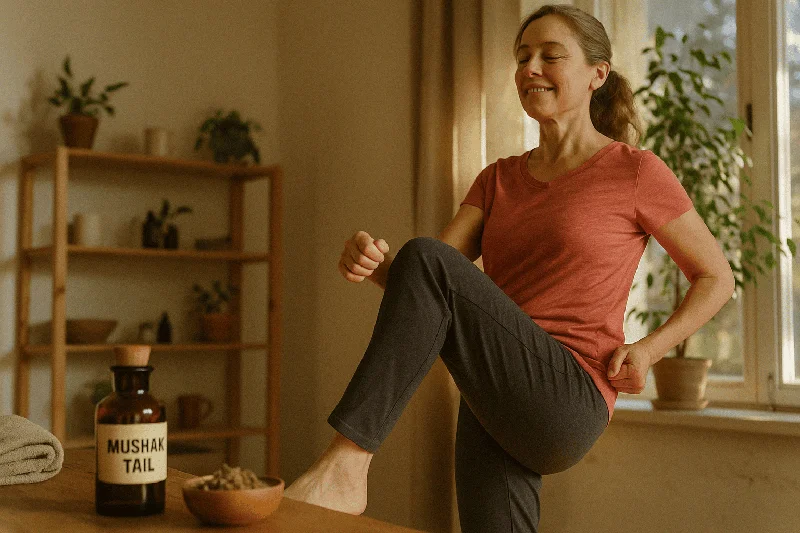
Mushak Tail (also spelled Mushak Taila or Mushika Taila) is a classical Ayurvedic herbal oil used primarily for joint disorders, rectal prolapse, skin conditions, and musculoskeletal pain. Rooted in ancient Sanskrit texts like the Bhaishajya Ratnavali and Sharangdhara Samhita, this polyherbal formulation combines potent anti-inflammatory herbs with a sesame oil base to deliver targeted relief. Whether you're dealing with arthritis, chronic stiffness, or certain dermatological issues — Mushak Tail has been a trusted remedy in Ayurvedic clinical practice for centuries.
- But here's the thing most websites won't tell you: there are actually different formulations sold under the same name, designed for very different conditions.
- In this comprehensive guide, we break down everything — from the full ingredient list and scientific mechanism of action to practical application techniques, dosha compatibility, and where to buy authentic products.
What Is Mushak Tail?
Definition and Ayurvedic Classification
Mushak Tail is a "Taila Kalpana" — a medicated oil preparation in Ayurveda where herbs are processed in a lipid base (usually sesame oil or mustard oil) through a specific decoction method. It falls under the category of Bahya Parimarjana Chikitsa (external therapeutic application) and is classified as a Vranashodhana and Vranaropana agent, meaning it cleanses and heals wounds and inflamed tissues.
In the Ayurvedic pharmacological framework, Mushak Tail is considered:
- Rasa (Taste): Tikta (bitter), Kashaya (astringent)
- Guna (Quality): Snigdha (unctuous), Sukshma (subtle, penetrating)
- Veerya (Potency): Ushna (warm)
- Vipaka (Post-digestive effect): Katu (pungent)
This combination of properties makes it particularly effective for Vata and Kapha disorders — which is precisely why it works so well on joint stiffness, swelling, and inflammatory skin conditions.
Etymology: What Does "Mushak" Mean in Sanskrit?
The word "Mushak" (मूषक) is Sanskrit for "mouse" or "rat." While this might seem strange for a medicinal oil, the name derives from historical Ayurvedic formulations where musk-related animal derivatives or specific herbs with musky properties were incorporated. In some classical references, the term relates to the use of Mushika (a type of shrew musk) as a traditional ingredient, though modern ethical formulations have replaced animal-derived components with herbal alternatives.
The word "Tail" (तैल) simply means "oil" in Sanskrit, derived from "Tila" (sesame), as sesame oil has traditionally been the primary base for Ayurvedic oil preparations.
Historical Origins and Classical Text References
Mushak Tail finds its earliest mentions in several foundational Ayurvedic texts:
- Bhaishajya Ratnavali — describes its use for Guda Bhramsha (rectal prolapse) and Arsha (hemorrhoids)
- Sharangdhara Samhita — provides the standardized preparation methodology (Taila Paka Vidhi)
- Chakradatta — references its application in Vata-Vyadhi (neurological and musculoskeletal disorders)
A notable Sanskrit shloka from classical texts describes the oil's properties:
> "मूषकतैलं वातहरं शोथघ्नं वेदनापहम्"
> (Mushak Tailam is Vatahara [pacifies Vata], Shothghna [anti-inflammatory], and Vedanapaha [pain-relieving])
A 2025 research paper published in the International Journal of Creative Research Thoughts (IJCRT2503309) titled "Unlocking The Secrets Of Mushika Taila: Preparation, Properties And Uses" systematically documented the classical preparation methods and pharmacological properties from these texts, confirming the oil's longstanding role in traditional Indian medicine.
Mushak Tail Ingredients: Full Composition Breakdown
Complete List of Key Components
Unlike what most product listings show — just a generic "herbal blend" — Mushak Tail contains a carefully calibrated combination of ingredients. While exact formulations vary by manufacturer, the classical recipe typically includes:
| Ingredient | Sanskrit/Hindi Name | Key Active Compounds | Primary Role in Formula |
|---|---|---|---|
| Sesame Oil | Tila Taila | Sesamin, sesamolin, lignans | Base oil; deep tissue penetration, Vata pacification |
| Turmeric | Haridra | Curcuminoids (especially curcumin) | Anti-inflammatory, antioxidant, wound healing |
| Boswellia | Shallaki | Boswellic acids (AKBA) | Inhibits 5-LOX enzyme, reduces joint inflammation |
| Indian Bdellium | Guggulu | Guggulsterones | Anti-arthritic, lipid metabolism regulation |
| Castor root | Eranda Moola | Ricinoleic acid derivatives | Analgesic, Vata-shamaka, joint lubrication |
| Nirgundi (Vitex) | Nirgundi | Flavonoids, casticin | Potent anti-inflammatory and analgesic |
| Camphor | Karpura | Borneol, camphene | Counter-irritant, increases local blood circulation |
| Mustard Oil | Sarshapa Taila | Allyl isothiocyanate | Warming agent, enhances absorption |
| Dashamoola | Ten Roots Blend | Multiple alkaloids | Classical Vata-shamaka (ten-root decoction) |
| Musk Mallow | Kasturi Bhendi | Ambrettolide | Aromatic, mild analgesic |
Role of Each Ingredient in the Formula
Curcuminoids from Haridra (Turmeric): A 2016 systematic review in the Journal of Medicinal Food analyzed 8 randomized controlled trials and found that curcumin significantly reduced joint pain scores (measured by WOMAC and VAS scales) compared to placebo. In Mushak Tail, turmeric works synergistically with the sesame oil base — lipid solubility of curcumin increases dramatically when dissolved in oil, improving bioavailability by up to 7-8 fold compared to oral consumption. Boswellic Acids from Shallaki: These compounds specifically inhibit the 5-lipoxygenase (5-LOX) pathway, reducing leukotriene synthesis. A 2020 study in Phytomedicine demonstrated that AKBA (3-O-acetyl-11-keto-β-boswellic acid) reduced TNF-α and IL-1β pro-inflammatory cytokines by 48-65% in osteoarthritis models. This mechanism is what makes Mushak Tail particularly effective for cartilage protection. Dashamoola (Ten Roots): This classical Ayurvedic combination includes Bilva, Agnimantha, Shyonaka, Patala, Gambhari (the five larger roots) and Brihati, Kantakari, Gokshura, Shalaparni, Prishnaparni (the five smaller roots). Together, they create a comprehensive Vata-pacifying and anti-inflammatory profile that no single herb can achieve alone.
Differences in Composition Between Manufacturers
This is something no other guide covers properly. Different brands market products as "Mushak Tail" but with notably different formulations:
| Type | Primary Indication | Key Differentiating Ingredients | Common Brands |
|---|---|---|---|
| Mushak Tail (Joint Formula) | Arthritis, joint pain, stiffness | Shallaki, Guggulu, Dashamoola, Nirgundi | Various Ayurvedic pharmacies |
| Mooshak Taila (Rectal Formula) | Rectal prolapse, hemorrhoids | Mushika-specific ingredients, astringent herbs | DSM, classical pharmacies |
| Mushak Tail (Skin Formula) | Allergies, dermatitis, skin inflammation | Manjistha, Sariva, Khadira, Haridra | Ayucare and similar |
If you're buying Mushak Tail, always check the ingredient list on the label. A product marketed for joint health will have a fundamentally different composition than one designed for rectal prolapse — even though both carry the "Mushak Tail" name. This distinction matters enormously for safety and efficacy.
Key Benefits and Scientific Mechanism of Action
Anti-Inflammatory Action
The primary therapeutic benefit of Mushak Tail is its multi-pathway anti-inflammatory action. Unlike conventional NSAIDs that primarily block COX-2, Mushak Tail's herbal components work on multiple inflammatory cascades simultaneously:
- 5-LOX Inhibition (via boswellic acids) — reduces leukotriene-mediated inflammation
- NF-κB Pathway Modulation (via curcumin) — downregulates transcription of inflammatory genes
- COX-2 Inhibition (via Nirgundi flavonoids) — reduces prostaglandin synthesis
- Cytokine Suppression — TNF-α, IL-1β, IL-6 levels decrease with regular application
This multi-target approach is why many patients report that Mushak Tail provides relief where single-mechanism drugs fail. A clinical case study published in the Journal of Ayurveda and Integrated Medical Sciences (JAIMS, 2024) documented successful management of Guda Bhramsha using Mushak Taila combined with Lodhra Churna Pichu, demonstrating its anti-inflammatory efficacy in clinical settings.
Pain Relief (Vedanasthapana)
The analgesic effect works through two primary mechanisms. First, camphor and mustard oil create a counter-irritant effect — they stimulate superficial nerve endings, which "distracts" the nervous system from deeper pain signals (gate control theory of pain). Second, the deep-penetrating sesame oil base carries anti-inflammatory compounds into the synovial space and periarticular tissues, addressing the root cause of pain rather than just masking symptoms.
Antibacterial and Antifungal Properties
Mushak Tail exhibits broad-spectrum antimicrobial activity, making it valuable for infected wounds, skin ulcers, and fungal skin conditions. Turmeric's curcumin has demonstrated activity against Staphylococcus aureus, E. coli, and Candida species in multiple in-vitro studies. The camphor component adds additional antiseptic properties.
Collagen Stimulation and Skin Healing
For dermatological applications, Mushak Tail supports wound healing through multiple mechanisms:
- Stimulates fibroblast proliferation and collagen synthesis
- Enhances angiogenesis (new blood vessel formation) at the wound site
- Provides antioxidant protection against free radical damage to skin cells
A 2019 study in the Journal of Ethnopharmacology showed that curcumin-containing oil formulations accelerated wound closure by approximately 35% compared to untreated controls in animal models.
Cartilage Protection and Synovial Fluid Enhancement
For joint-related applications, the boswellic acids and guggulsterones in Mushak Tail help protect articular cartilage from degradation by inhibiting matrix metalloproteinases (MMPs) — the enzymes responsible for breaking down cartilage tissue. Additionally, regular massage with the oil stimulates synovial membrane activity, promoting the production of synovial fluid — the natural lubricant that keeps joints moving smoothly.
How to Use Mushak Tail: Directions and Application Techniques
For Joint Pain and Arthritis
Step-by-step application method:
- 1.Warm the oil — Place the bottle in warm water for 3-5 minutes until the oil reaches a comfortable temperature (approximately 40-42°C). Never microwave Ayurvedic oils.
- 2.Apply generously — Take 5-10 ml of oil and apply directly to the affected joint area.
- 3.Massage technique — Use circular motions (clockwise) around the joint. For knee joints, start from above the kneecap, move around it, and work down to the shin. Apply moderate pressure — enough to feel the muscles underneath but not so much that it causes pain.
- 4.Duration — Massage for 10-15 minutes per affected area.
- 5.Post-application — Wrap the area with a warm cotton cloth or use a hot water bottle for 10-15 minutes. This "Swedana" (fomentation) dramatically increases absorption.
- 6.Frequency — Apply twice daily (morning and evening) for acute pain; once daily for maintenance.
Massage Direction for Specific Joints
- Knees: Circular around patella, then longitudinal strokes along quadriceps and calf
- Shoulders: Start from the deltoid, move inward toward the joint capsule
- Spine/Lower back: Upward strokes along paraspinal muscles, then lateral spreading motions
- Wrists and fingers: Gentle rotational strokes around each small joint, then pull along each finger
For Skin Conditions
- For dermatological use, apply a thin layer of Mushak Tail directly to the affected skin area.
- Do not massage vigorously — gentle spreading is sufficient. For chronic skin conditions like eczema or contact dermatitis, apply twice daily after bathing while the skin is still slightly damp. This enhances absorption.
For Rectal Prolapse (Guda Bhramsha)
This is a specialized clinical application and should only be done under the guidance of a qualified Ayurvedic practitioner. The Mushak Taila formulation for this indication is typically applied as a Pichu (a sterile cotton pad soaked in medicated oil and placed on the affected area). As documented in the JAIMS case study, this application is often combined with Lodhra Churna for enhanced astringent and healing effects.
How Long Does It Take for Mushak Tail to Show Results?
Based on clinical observations and patient feedback:
- Acute pain relief: 30-60 minutes after application (temporary, from counter-irritant effect)
- Noticeable improvement in chronic conditions: 2-3 weeks of consistent daily use
- Significant therapeutic benefit: 6-8 weeks of regular application
- Optimal results: 3 months of continued use, especially for degenerative joint conditions
Mushak Tail vs Other Ayurvedic Oils: When to Use What
This is a comparison no other resource provides — and it's actually one of the most common sources of confusion among consumers.
| Oil | Best For | Dosha Affinity | Key Differentiator |
|---|---|---|---|
| Mushak Tail | Joint pain, rectal prolapse, specific skin conditions | Vata-Kapha | Multi-target anti-inflammatory; dual joint + skin use |
| Mahanarayan Tail | General body pain, muscle fatigue, paralysis | Vata | Broader neurological application; 50+ herbs |
| Jatyadi Tailam | Chronic non-healing wounds, ulcers, burns | Pitta | Superior wound-healing; strong antimicrobial |
| Kumkumadi Tailam | Facial skin care, pigmentation, anti-aging | Pitta-Vata | Cosmetic focus; saffron-based |
| Dhanwantharam Tailam | Rheumatic conditions, post-partum care | Vata | Post-natal specialization |
| Kottamchukkadi Tailam | Acute musculoskeletal inflammation | Vata-Kapha | Strong analgesic; sports injuries |
When to choose Mushak Tail specifically:
- You have osteoarthritis or rheumatoid arthritis affecting multiple joints
- You need a formulation that addresses both pain AND underlying tissue degeneration
- You have co-existing skin inflammation along with joint issues
- Your Ayurvedic practitioner has identified a Vata-Kapha imbalance
Dosha Compatibility and Personalized Use
Which Doshas Benefit Most?
Mushak Tail is primarily a Vata-shamaka (Vata-pacifying) formulation due to its warm potency, unctuous quality, and grounding nature. It also addresses Kapha disorders through its bitter, astringent, and penetrating properties.
| Dosha | Suitability | Notes |
|---|---|---|
| Vata | ★★★★★ Excellent | Primary indication — all Vata-related joint and nerve disorders |
| Kapha | ★★★★☆ Very Good | Effective for Kapha-type swelling, stiffness, congestion in joints |
| Pitta | ★★★☆☆ Moderate | Use with caution in Pitta-dominant individuals; warming nature may aggravate Pitta skin conditions |
For Pitta-dominant individuals experiencing joint pain, consider mixing Mushak Tail with a cooling oil like coconut oil in a 2:1 ratio to balance the warming effect.
Complementary Diet and Lifestyle Recommendations
To maximize Mushak Tail's effectiveness, combine external application with these supportive practices:
Anti-inflammatory diet:
- Include turmeric milk (Haldi Doodh), ginger tea, and Ashwagandha supplements
- Avoid nightshade vegetables (tomatoes, eggplant, bell peppers) if you have rheumatoid arthritis — these can exacerbate Vata imbalance
- Consume warm, cooked foods rather than raw salads (especially in cold weather)
Supportive Yoga Asanas:
- Trikonasana (Triangle Pose) — for hip and knee joint mobility
- Virabhadrasana II (Warrior II) — strengthens knee and ankle joints
- Setu Bandhasana (Bridge Pose) — supports lumbar spine health
- Gentle Pawanmuktasana series — specifically designed for joint mobilization in Ayurvedic yoga
Panchakarma Integration:
Mushak Tail application becomes significantly more effective when combined with formal Panchakarma therapies like Janu Basti (oil pooling over knees), Kati Basti (for lower back), or Abhyanga (full-body oil massage). Consult a Panchakarma center for a structured treatment protocol.
Side Effects, Precautions, and Safety Information
Potential Side Effects
Mushak Tail is generally well-tolerated when used as directed.
However, some individuals may experience:
- Skin irritation or redness — particularly if allergic to any herbal component; discontinue if rash develops
- Contact dermatitis — rare, but possible with camphor sensitivity
- Warmth or burning sensation — normal and temporary; indicates increased blood flow
- Staining of clothes — turmeric in the formulation can stain fabrics yellow
Who Should Avoid Mushak Tail?
- Individuals with known allergies to sesame oil, mustard oil, or any listed ingredient
- Open, actively bleeding wounds (wait until bleeding stops)
- Severe burns or broken skin (use only on intact skin unless under medical supervision)
- Pregnant and lactating women should consult an Ayurvedic practitioner before use — while topical application is generally considered safer than oral supplements, certain herbal components may have systemic absorption
Can Mushak Tail Be Used Daily?
Yes, Mushak Tail is safe for daily external use in most adults. For long-term use exceeding 3 months, a brief consultation with an Ayurvedic practitioner is advisable to assess continued necessity and adjust dosage if needed.
Is Mushak Tail Safe for Children?
For children above 5 years, Mushak Tail can be used in diluted form — mix with an equal quantity of plain sesame oil. For children under 5, consult a pediatric Ayurvedic specialist. Never apply near eyes, mouth, or mucous membranes in children.
Drug Interactions
Mushak Tail does not have documented interactions with oral medications when used externally. However, if you are using topical prescription medications (corticosteroid creams, antifungal creams), allow at least 2 hours between applications to avoid potential interactions.
Storage and Shelf Life
- Store in a cool, dry place away from direct sunlight
- Keep the bottle tightly closed after each use
- Shelf life: typically 3 years from manufacturing date (check label)
- Do not refrigerate — cold temperatures can alter the oil's consistency and herbal potency
- Discard if the oil develops an unusual odor or changes color significantly
How to Choose and Where to Buy Authentic Mushak Tail
Quality Criteria to Look For
- GMP Certification — ensures the product was manufactured under Good Manufacturing Practice standards
- AYUSH License Number — mandatory for Ayurvedic products sold in India
- Complete ingredient list — avoid products that list only "proprietary herbal blend" without specifics
- Classical reference — reputable brands mention which classical text their formulation follows
- Organic certification — preferred but not mandatory; ensures herbs are pesticide-free
Where to Buy
Mushak Tail is available through:
- Ayurvedic pharmacies — the most reliable source; pharmacists can verify authenticity
- Online platforms — Amazon India, 1mg, Ayucare, and specialized Ayurvedic e-stores carry multiple brands
- Directly from Panchakarma centers — many prepare fresh batches using classical methods
- Price range: ₹150-400 for a 50 ml bottle, depending on brand and formulation.
- Be cautious of products priced significantly below ₹100 — extremely low prices often indicate compromised ingredient quality.
Frequently Asked Questions (FAQ)
What is the use of Moosk Tailam?
Moosk Tailam (another spelling for Mushak Tailam) is used for joint pain, arthritis, muscular stiffness, rectal prolapse, and certain skin conditions. It is applied externally through massage and works through anti-inflammatory, analgesic, and tissue-healing mechanisms.
Can Mushak Tail help with arthritis?
Yes. Mushak Tail is one of the most commonly recommended Ayurvedic oils for both osteoarthritis and rheumatoid arthritis. Its boswellic acids and curcuminoids target the inflammatory pathways that drive arthritis progression. Clinical improvement is typically seen after 2-3 weeks of consistent use.
Is Mushak Tail suitable for vegetarians and vegans?
Modern formulations from reputable manufacturers are typically vegetarian and vegan-friendly, using only plant-based ingredients. However, some traditional preparations may reference animal-derived musk. Always check the ingredient label, and look for products explicitly marked as "vegetarian" if this is a concern.
Does Mushak Tail interact with other medications or supplements?
When used externally as directed, Mushak Tail has no documented drug interactions. It can be safely used alongside oral medications, physiotherapy, and other Ayurvedic treatments. If you're undergoing chemotherapy or using immunosuppressant drugs, consult your oncologist before use.
What is Changeri Ghrita and how does it relate to Mushak Tail?
Changeri Ghrita is a different Ayurvedic formulation — a medicated ghee (clarified butter) preparation used primarily for Grahani (digestive disorders) and rectal conditions. While both Changeri Ghrita and Mushak Tail may be used in managing rectal prolapse, they have different bases (ghee vs. oil), different ingredients, and are often used in combination rather than as substitutes.
What is Yashtimadhu Taila used for?
Yashtimadhu Taila (Licorice oil) is a different Ayurvedic oil used primarily for hair care, scalp conditions, and Pitta-related skin inflammation. It should not be confused with Mushak Tail, which is formulated for joints and musculoskeletal conditions.
Conclusion: Is Mushak Tail Right for You?
Mushak Tail represents one of Ayurveda's most versatile and scientifically-backed external oil formulations. Its multi-target anti-inflammatory mechanism, combined with tissue-protective and analgesic properties, makes it a valuable tool for anyone dealing with joint pain, arthritis, or specific skin and rectal conditions.
The key to getting real results lies in three factors: choosing an authentic, GMP-certified product; applying it consistently using proper massage technique with post-application warmth; and integrating it into a broader wellness protocol that includes appropriate diet, gentle exercise, and stress management.
If you've been struggling with chronic joint pain or inflammatory conditions and conventional approaches haven't provided lasting relief, Mushak Tail offers a time-tested, evidence-supported alternative worth exploring. Consult with a qualified Ayurvedic practitioner to determine the right formulation and treatment duration for your specific condition — and experience the difference that 3,000 years of herbal wisdom can make.
Scientific Sources
- Immunomodulatory activity of bamboo biosilica from Dendrocalamus longispathus Kurz. - Metabolomics integrated network pharmacology approach — Kar A et al., 2025, Phytomedicine : international journal of phytotherapy and phytopharmacology
- Efficacy of Ayurveda interventions (Pushkar Guggulu and Haritaki) as an adjunct to standard care in stable coronary artery disease: study protocol for a double-blind, randomized controlled study — Sharma S et al., 2026, BMC complementary medicine and therapies
- Ayurvedic Phytochemicals in Oncology: ADP-Ribosylation as a Molecular Nexus — Reddy GSVSR et al., 2025, Cells
- Chyawanprash: A review of therapeutic benefits as in authoritative texts and documented clinical literature — Narayana DB et al., 2017, Journal of ethnopharmacology
- Ayurveda--the people's medicine — 2002, Leprosy review
- A review on the concept of aging in Ayurveda literature — Yamuna Sisupalan A et al., 2022, Journal of complementary & integrative medicine
- Curculigo orchioides: the black gold with numerous health benefits — Chauhan NS et al., 2010, Zhong xi yi jie he xue bao = Journal of Chinese integrative medicine
- Dentistry and ayurveda--1 — Amrutesh S, 2003, Indian journal of dental research : official publication of Indian Society for Dental Research
- Personalized medicine: a confluence of traditional and contemporary medicine — Jafari S et al., 2014, Alternative therapies in health and medicine
- Ayurvedic medicine. Core concept, therapeutic principles, and current relevance — Chopra A et al., 2002, The Medical clinics of North America
- Ayurvedic medicine: An introduction for nurses — Narayanasamy A et al., 2006, British journal of nursing (Mark Allen Publishing)
- A review of immunomodulators in the Indian traditional health care system — Kumar D et al., 2012, Journal of microbiology, immunology, and infection = Wei mian yu gan ran za zhi
- Recapitulation of Ayurveda constitution types by machine learning of phenotypic traits — Tiwari P et al., 2017, PloS one
- Ayurvedic Therapies to Target the Microbiome: Evidence and Possibilities — Vijayanna ST et al., 2024, Alternative therapies in health and medicine
- Integrating modern dermatology and Ayurveda in the treatment of vitiligo and lymphedema in India — Narahari SR et al., 2011, International journal of dermatology
- Psychodermatology: An Indian perspective — Shenoi SD et al., 2018, Clinics in dermatology
- An introduction to Ayurveda — Lad V, 1995, Alternative therapies in health and medicine
- Vedic principles of therapy — Boyer RW, 2012, Explore (New York, N.Y.)
- Lead toxicity from Ayurvedic medicines — Gitelman J et al., 2023, CMAJ : Canadian Medical Association journal = journal de l'Association medicale canadienne
- A Multimodal Ayurveda and Mind-Body Therapeutic Intervention for Chronic Symptoms Attributed to a Postinfectious Syndrome: A Pilot Study — Shere-Wolfe KD et al., 2024, Journal of integrative and complementary medicine
उपयोगकर्ताओं के प्रश्न
What are the historical uses of Mushak Tail in traditional medicine?
Client_47e27e
19 घंटे पहले
Mushak Tail, historically used in traditional medicine, is primarily recognized for its anti-inflammatory properties. It has been applied topically to alleviate pain and inflammation, particularly in joint conditions. Its use has spanned centuries in Ayurveda for supporting joint health and modulating immune responses. While promising, modern scientific evidence connecting these historical uses to clinical outcomes is limited. If you're considering Mushak Tail, consult a healthcare professional, especially if symptoms persist, as serious conditions may require medical evaluation.
What are the potential side effects of using Mushak Tail?
Client_7b6158
5 दिनों पहले
Mushak Tail, an Ayurvedic oil used for anti-inflammatory purposes, can have potential side effects just like any other medicinal preparation. Common side effects might include skin irritation or allergic reactions at the site of application. If you're using this oil topically, observe the area for any unusual redness, swelling, or itching, and discontinue use if these occur. Although it may offer pain relief and assistance in managing rectal conditions, individuals undergoing chemotherapy or taking immunosuppressants should consult their healthcare provider due to possible interactions. If you experience severe or persistent side effects, or if you have underlying medical conditions, it’s important to consult a doctor.
What conditions can Mushak Tail effectively treat apart from joint pain?
Client_5f492d
10 दिनों पहले
Mushak Tail, besides its well-known effectiveness for joint pain, is also used for managing rectal prolapse, due to its anti-inflammatory properties. Improvement generally appears after 2-3 weeks of consistent application. If you experience irritation or no improvement within a month, consult a healthcare professional. While often combined with physiotherapy and other Ayurvedic treatments, any new symptoms or lack of progress warrants seeing a doctor to rule out more serious conditions. Always ensure any herbal treatment aligns with your current medical regimen.
How long should I use Mushak Tail for best results?
Client_31bb1e
15 दिनों पहले
For best results, Mushak Tail should typically be used daily for at least 4 to 6 weeks when addressing joint pain or arthritis symptoms. Consistency in application is key; gently massage warm oil onto the affected areas once or twice daily. The effects vary per individual, but improvements in joint mobility and reduction in pain might be noticeable within weeks. Always ensure the oil doesn't contain ingredients you're allergic to, and consult a healthcare professional if symptoms persist or worsen. Avoid using if you notice skin irritation.
How does the application technique of Mushak Tail impact pain relief?
Client_27f958
20 दिनों पहले
The application technique of Mushak Tail for pain relief involves several key steps that enhance its effectiveness. Applying moderate pressure during the massage, lasting 10-15 minutes per affected area, helps ensure the oil penetrates deeply without causing discomfort. After application, using a warm cotton cloth or a hot water bottle for an additional 10-15 minutes aids in further soothing muscles and allowing active ingredients like boswellic acids to reduce inflammation. Pay attention to skin reactions and consult a healthcare provider if pain persists or worsens.
What are the different forms of Mushak Tail available for skin issues?
Client_bc05b2
30 दिनों पहले
There are several forms of Mushak Tail available, each targeting specific health concerns. For skin issues, Mushak Tail typically contains ingredients like Manjistha, Sariva, Khadira, and Haridra, which are known for their benefits in treating allergies, dermatitis, and skin inflammation. Brands like Ayucare offer this formulation. While many varieties exist, focusing on the ingredient list helps ensure you're selecting the right formulation for skin problems. Consult a healthcare provider if your symptoms persist or worsen despite treatment.
How effective is Mushak Tail compared to other pain relief oils?
Client_1a223a
40 दिनों पहले
Mushak Tail is recognized for its anti-inflammatory and analgesic properties, particularly useful for conditions like osteoarthritis and rheumatoid arthritis. It works by inhibiting the 5-lipoxygenase pathway, reducing inflammation through decreased leukotriene production. While it is effective when applied as a Pichu, directly on the affected area, its efficacy varies based on individual conditions and may not match the fast pain relief provided by some modern pharmacological options. Typically, benefits may be noticeable in a few weeks of consistent use, but results can vary. If pain persists or worsens, it's crucial to consult a healthcare professional for a thorough evaluation and guidance.
What ingredients in Mushak Tail contribute to anti-inflammatory effects?
Client_6b28b1
50 दिनों पहले
The anti-inflammatory effects of Mushak Tail primarily arise from its ingredients such as boswellic acids, curcumin, and Nirgundi flavonoids. Boswellic acids inhibit the 5-LOX enzyme, reducing leukotriene-mediated inflammation. Curcumin modulates the NF-κB pathway, downregulating inflammatory gene transcription. Nirgundi flavonoids inhibit COX-2, reducing prostaglandin synthesis. The combination of these actions reduces pro-inflammatory cytokines like TNF-α, IL-1β, and IL-6. If severe inflammation persists or is accompanied by other symptoms, consulting a doctor is advisable.
Can Mushak Tail be safely used during pregnancy for joint pain?
Client_61877d
59 दिनों पहले
Although Mushak Tail is often used for joint pain relief due to its anti-inflammatory and analgesic properties, its use during pregnancy should be approached with caution. There is limited clinical evidence on the safety of Mushak Tail for pregnant women, and individual responses can vary. It's crucial to consult with a healthcare professional, such as an obstetrician or a qualified Ayurvedic practitioner familiar with pregnancy care, before applying any herbal oil or treatment during this sensitive period. External applications can still have systemic effects, so professional guidance is recommended.
What is the best way to apply Mushak Tail for maximum absorption and effectiveness?
Client_69bddc
69 दिनों पहले
For best results, apply Mushak Tail after a warm bath, when your pores are open and your skin is slightly damp. This helps the oil absorb better. Rub gently until absorbed. Avoid using near eyes or mucous membranes. If you have doubts, especially when on meds, it's always good idea to chat with a healthcare professional first.
संबंधित आलेख

Orthopedic Disorders
Which Oil Is Best for Knee Pain: Ayurvedic Remedies and Relief
Which oil is good for dandruff? Learn the best oils for dandruff and hair fall. Discover Ayurvedic hair oil remedies and essential oils for scalp health
9,900

Orthopedic Disorders
Amavata Home Remedies – Natural Ayurvedic Approaches for Joint Health
Explore amavata home remedies based on Ayurvedic principles. Discover natural treatments to alleviate joint pain, reduce inflammation, and restore balance in rheumatoid arthritis (Amavata) conditions.
3,010

Orthopedic Disorders
Amavatari Ras Benefits, Dosage, Ingredients, Side Effects
Exploration of Amavatari Ras Benefits, Dosage, Ingredients, Side Effects
2,068

Orthopedic Disorders
Best Ayurvedic Oil for Cervical Spondylosis – Natural Remedies for Pain Relief and Mobility
Discover the best Ayurvedic oils for cervical spondylosis, known for their ability to reduce pain, improve mobility, and promote overall spine health through natural healing.
5,506

Orthopedic Disorders
Coccyx Pain Treatment in Ayurveda: Effective Ayurvedic Solutions for Coccyx Pain
Discover Ayurvedic treatments for coccyx pain, including benefits, proper dosage, uses, and scientific evidence supporting natural remedies for tailbone discomfort and healing.
3,123

Orthopedic Disorders
Gandharvahasthadi Thailam Benefits, How To Use, Ingredients, Side Effects
Exploration of Gandharvahasthadi Thailam Benefits, How To Use, Ingredients, Side Effects
2,299

Orthopedic Disorders
रास्नादी गुग्गुलु: उपयोग, खुराक, साइड इफेक्ट्स
रास्नादी गुग्गुलु की खोज: उपयोग, खुराक, साइड इफेक्ट्स
5,688
Orthopedic Disorders
Vishagarbha Taila – A Powerful Ayurvedic Oil for Pain Relief and Joint Health
Discover the benefits and uses of Vishagarbha Taila, a traditional Ayurvedic oil renowned for its effectiveness in alleviating joint pain, muscle stiffness, and improving overall mobility.
4,618

Orthopedic Disorders
Varunadi Ghrita – Ayurvedic Ghee for Joint Health, Detoxification & Rejuvenation
Discover the benefits of Varunadi Ghrita, an Ayurvedic ghee formulation used to promote joint health, detoxify the body, and rejuvenate the mind and body through traditional healing methods.
3,637

Orthopedic Disorders
How to Cure Rheumatoid Arthritis Permanently with Ayurveda
Learn how to cure rheumatoid arthritis permanently using Ayurvedic herbs, therapies, and diet. Discover root causes and holistic treatments for joint relief
2,464
विषय से संबंधित परामर्श
अतिरिक्त दस्तावेज़
© 2024 Ask Ayurveda. सर्वाधिकार सुरक्षित।