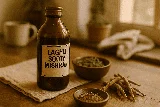
Anda Thailam: An Ayurvedic Solution for Joint and Muscle Pain Relief

Anda Thailam is a classical Siddha medicine — not Ayurvedic, as many websites wrongly claim — prepared exclusively from egg yolk oil (Kozhi Muttai Manjal Karu). It is primarily used for treating childhood neurological conditions such as convulsions, delirium (Sanni), paralysis of the tongue, and fever-related lethargy (Maandham). This single-ingredient formulation has been part of the Tamil Siddha medical tradition for centuries, and it remains one of the most sought-after Siddha remedies for pediatric care in South India.
If you've landed here looking for clear, evidence-based information about what Anda Thailam actually is, how to use it, its real benefits, and what the classical texts say — you're in the right place. This guide covers everything the other articles miss.
What Is Anda Thailam?
Anda Thailam (அண்ட தைலம்) literally translates to "Egg Oil" in Tamil. The word Anda (or Andai) means "egg," while Thailam means "oil." It is a medicated oil preparation belonging to the Siddha system of medicine, one of the oldest traditional medical systems originating in Tamil Nadu, India.
- Unlike many complex polyherbal formulations, Anda Thailam is remarkably simple.
- It contains a single active ingredient: oil extracted from the yolk of a hen's egg (Gallus domesticus).
- Yet this simplicity is deceptive — the pharmacological profile of egg yolk oil is surprisingly rich.
History and Origin in Siddha Medicine
The formulation of Anda Thailam is documented in classical Siddha texts, most notably in the Agathiyar Vaithiya Kaviyam, a foundational pharmacopoeia attributed to the sage Agathiyar (Agastya), one of the 18 great Siddhar masters. This text, written in Tamil verse, describes the preparation and therapeutic application of egg yolk oil specifically for childhood neurological ailments.
What's particularly interesting is that Siddha medicine — unlike Ayurveda — has historically been more open to using animal-derived products including eggs, shells, and even certain metals in its formulations. This philosophical difference is one reason why Anda Thailam exists in the Siddha tradition but has no direct equivalent in classical Ayurvedic texts.
The exact age of the formulation is difficult to pin down. Siddha texts were transmitted orally for centuries before being committed to palm-leaf manuscripts. Conservative estimates place the written documentation of Anda Thailam at least 300–400 years old, though the oral tradition is likely much older.
Siddha vs Ayurveda — Why the Distinction Matters
This is something most competitor websites get completely wrong. They label Anda Thailam as an "Ayurvedic oil" or an "Ayurvedic formulation," which is inaccurate.
Here's why the distinction matters:
| Feature | Siddha Medicine | Ayurveda |
|---|---|---|
| Origin region | Tamil Nadu, South India | Pan-Indian, primarily North India |
| Language of texts | Tamil | Sanskrit |
| Foundational concept | 96 Tattvas (principles) | Tridosha (Vata, Pitta, Kapha) |
| Use of animal products | More prevalent | Less common in oil formulations |
| Regulatory body | Central Council for Indian Medicine (same) | Central Council for Indian Medicine (same) |
| Anda Thailam classification | Classical Siddha medicine ✅ | Not a classical Ayurvedic medicine ❌ |
When a product is classified under Siddha, its manufacturing, quality standards, and indications follow the Siddha Pharmacopoeia of India (SPI) — not the Ayurvedic Pharmacopoeia. This means the clinical indications, dosage guidelines, and safety profile are validated within the Siddha framework. Using it under Ayurvedic guidelines would be, at best, an extrapolation.
Some manufacturers like SKM Siddha and Ayurvedha Company correctly classify it, but many online retailers and health blogs lump everything under "Ayurveda" for SEO purposes. Don't be mislead by that.
Classical Reference and Original Siddha Text
The primary classical reference for Anda Thailam comes from:
- Agathiyar Vaithiya Kaviyam — describes the preparation and indication for Sanni (delirium) and Valippu (convulsions) in children
- Siddha Formulary of India (Part I) — published by the Government of India's Department of AYUSH, which lists Anda Thailam as an official Siddha formulation
The Siddha Formulary entry confirms the single-ingredient composition and standardized dosage, giving this preparation a level of official recognition that many traditional remedies lack.
Ingredients and Composition of Anda Thailam
Kozhi Muttai Manjal Karu — The Single Active Ingredient
Anda Thailam contains only one ingredient: Kozhi Muttai Manjal Karu (கோழி முட்டை மஞ்சள் கரு), which is the yellow yolk of a domestic hen's egg (Gallus domesticus).
That's it. No herbs. No mineral additives. No preservatives in the traditional preparation.
This makes Anda Thailam unusual among traditional medicine formulations, which typically combine multiple ingredients. The therapeutic value comes entirely from the complex biochemistry of egg yolk oil.
Nutritional and Pharmacological Properties of Egg Yolk Oil
Egg yolk oil is far more than a simple fat. Modern biochemical analysis reveals a rich pharmacological profile:
| Component | Amount (per 100g of yolk oil) | Therapeutic Relevance |
|---|---|---|
| Oleic acid | ~47% | Anti-inflammatory, neuroprotective |
| Palmitic acid | ~26% | Cell membrane integrity |
| Linoleic acid | ~16% | Essential fatty acid, brain development |
| Cholesterol | ~5% | Precursor for neurosteroids, brain function |
| Phospholipids (Lecithin) | Significant | Nerve cell membrane repair |
| Choline | ~1.5 mg/g | Neurotransmitter precursor (acetylcholine) |
| Vitamin A (Retinol) | Present | Immune function, cellular growth |
| Vitamin D3 | Present | Bone health, immune modulation |
| Vitamin E (Tocopherols) | Present | Antioxidant, neuroprotective |
| Lutein & Zeaxanthin | Present | Antioxidant carotenoids |
| Folate | Trace | Neural development |
| Immunoglobulins (IgY) | Trace | Passive immune support |
The choline content is particularly noteworthy. Choline is a precursor to acetylcholine, a neurotransmitter critical for muscle control, memory, and nervous system function. A 2018 study published in Nutrients (Zeisel & da Costa, 2009; updated review by Wallace & Fulgoni, 2017) confirmed that choline deficiency during early development is linked to impaired neurological outcomes. This provides a plausible scientific rationale for why Siddha practitioners historically used egg yolk oil for childhood neurological conditions.
The phospholipid fraction — primarily phosphatidylcholine and phosphatidylethanolamine — plays a role in maintaining the integrity of nerve cell membranes. This is relevant to the traditional use in paralysis and convulsion management.
How Anda Thailam Is Prepared (Traditional Method)
The classical Siddha method of extracting egg yolk oil is a fascinating process that differs significantly from modern industrial extraction:
Traditional Method:
- Hard-boil fresh hen's eggs until fully cooked
- Separate the yolks from the whites completely
- Crumble the cooked yolks into fine pieces
- Place the crumbled yolks in a heavy iron pan (kadai)
- Dry-roast over low to medium heat, stirring continuously
- After 15–20 minutes, the yolks turn dark brown and begin releasing oil
- Continue roasting and pressing — the yolks transition from dry and crumbly to a thick paste, then finally release a dark reddish-brown oil
- Strain the oil through clean muslin cloth
- Store in a glass or earthen container away from direct sunlight
One egg yolk yields approximately 3–5 mL of oil, depending on the egg size and technique.
Industrial Method (used by manufacturers like SKM):
Modern manufacturers use solvent extraction or cold-press methods followed by filtration and standardization. The resulting oil is then tested for microbial contamination, heavy metals, and standardized for consistency. SKM Siddha and Ayurvedha Company (based in Erode, Tamil Nadu) is the most well-known commercial producer, holding GMP certification and claiming preservative-free, cruelty-free processing.
> Practical tip: If you're making it at home, the most common mistake is using too high a heat, which burns the yolk and destroys the beneficial fatty acids. Low, patient heat is key. The whole process takes about 25–40 minutes per batch.
How to Use Anda Thailam
- The method of application depends entirely on the condition being treated.
- This is where many websites provide incomplete information — they list the dose but not the specific application protocol for each indication.
Internal Administration (Oral Use)
For internal use, Anda Thailam is administered in drop form:
- Dosage: 1 to 4 drops
- Vehicle (Anupana): Breast milk for infants; cow's milk for older children
- Frequency: 2 to 3 times daily
- Duration: Typically 2 to 3 weeks for initial results; up to 1 month for significant improvement
Internal administration is indicated for:
- Sanni (delirium/altered consciousness)
- Maandham (fever with lethargy/indigestion in children)
- Kuzhandhaigalin Valippugal (childhood convulsions/seizures)
Dosage by Age Group
| Age Group | Dosage | Vehicle | Frequency |
|---|---|---|---|
| Infants (0–1 year) | 1–2 drops | Breast milk | 2 times/day |
| Toddlers (1–3 years) | 2–3 drops | Breast milk or cow's milk | 2–3 times/day |
| Children (3–7 years) | 3–4 drops | Cow's milk | 2–3 times/day |
| Older children (7–12 years) | 4 drops | Cow's milk | 2–3 times/day |
Important: These dosages are based on classical Siddha guidelines. Always consult a qualified Siddha practitioner before administering to children, especially infants.
External Application (Topical Use)
For paralysis of the tongue in children (Naakku Vaadam), Anda Thailam is applied topically:
- Place 1–2 drops of the oil directly on the tongue
- Gently massage the tongue surface using a clean finger
- Apply 2–3 times daily
- Continue for 2–4 weeks
Adjuvants (Saha Marundhu) for Tongue Paralysis
Classical Siddha texts recommend combining tongue application with certain adjuvants for enhanced efficacy:
- Garlic juice (Poondu Saaaru) — a few drops mixed with the oil before application
- Kumkumappu (Saffron) — a tiny pinch dissolved in the oil
- Gorochanam (Cow bezoar/gallstone) — traditionally mixed in minute quantities
These adjuvants are believed to enhance the penetrative and nerve-stimulating properties of the oil. However, sourcing authentic Gorochanam can be difficult today, and its use should be guided by an experienced Siddha physician.
Application on Feet and Body Massage
Some practitioners recommend applying Anda Thailam to the soles of the feet for systemic absorption, particularly in young children. The soles have a rich nerve supply and thin skin, making them an effective site for oil absorption in traditional medicine. This practice is documented anecdotally but lacks specific textual references in the classical Siddha formularies.
For musculoskeletal applications — which some modern practitioners have expanded to include joint pain and muscle stiffness — the oil is massaged into affected areas. However, it's worth noting that this is a modern extrapolation and not a classically documented indication for Anda Thailam.
Anda Thailam Benefits: What It Actually Does
Benefits for Childhood Neurological Conditions
The primary and classically documented benefits of Anda Thailam center on pediatric neurology:
- 1.Anti-convulsant action — Used to manage childhood seizures and convulsions (Valippu). The choline and phospholipid content may support neurotransmitter balance, though clinical trials specific to Anda Thailam are still lacking.
- 2.Management of delirium (Sanni) — In Siddha medicine, Sanni refers to a group of conditions characterized by altered consciousness, delirium, and involuntary movements. Anda Thailam is one of the primary internal medications for this condition category.
- 3.Fever-related complications (Maandham) — Maandham in Siddha pediatrics describes a syndrome where digestive disturbance leads to fever, lethargy, and neurological symptoms. Anda Thailam addresses the neurological component.
- 4.Tongue paralysis (Naakku Vaadam) — Topical application helps restore tongue mobility and supports speech development.
Anda Thailam for Speech Delay
This is a very common modern application that deserves special attention. Many parents seek Anda Thailam for children with speech delay, and several Siddha practitioners do recommend it for this purpose.
The rationale is logical: if Anda Thailam has traditional use for tongue paralysis (a motor-neurological condition), it may also benefit children with delayed speech development, which can sometimes involve oral-motor dysfunction.
However, a few important caveats:
- Speech delay has multiple causes — neurological, developmental, hearing-related, environmental. Anda Thailam addresses only the neuro-muscular component.
- There are no published clinical trials specifically studying Anda Thailam for speech delay.
- It should be used as a complementary approach alongside speech therapy, not as a replacement.
- Improvements, when they occur, typically take 3–4 weeks to become noticeable.
Many parents report positive outcomes anecdotally, particularly when Anda Thailam is combined with speech therapy and oral-motor exercises. But managing expectations is important.
Potential Benefits for Joint and Muscle Pain (Modern Use)
Some practitioners and online sources describe Anda Thailam as beneficial for arthritis, joint pain, and muscle strengthening. This appears to be a modern, expanded use rather than a classical indication.
The fatty acid profile of egg yolk oil — particularly oleic acid and omega-6 fatty acids — does have documented anti-inflammatory properties. A 2016 study in the Journal of Medicinal Food showed that egg yolk-derived phospholipids reduced inflammatory markers in animal models. So the theoretical basis exists, but the traditional Siddha indication was never for joint conditions.
If you're looking for Siddha/Ayurvedic oils specifically formulated for joint pain, there are better-documented options (see comparison section below).
Anda Thailam Capsules vs. Oil Form
Anda Thailam is now available in two forms:
| Feature | Oil Form (Traditional) | Capsule Form |
|---|---|---|
| Primary manufacturer | SKM, Santhigiri, others | SKM (primarily) |
| Packaging | 25 mL / 30 mL bottles | 100 capsules per bottle |
| Ease of administration | Requires dropper; taste may be objectionable | Easier to swallow, no taste |
| Suitability for infants | Yes (drops on tongue/in milk) | No — capsules unsuitable for young children |
| Classical authenticity | Traditional form ✅ | Modern adaptation |
| Price range | ₹60–₹120 for 25-30 mL | ₹100–₹180 for 100 capsules |
| Shelf life | 3–5 years (per manufacturer) | 3–5 years |
Capsules are marketed primarily for adult use — particularly for the expanded indications like joint pain and general wellness. They're essentially the same egg yolk oil in a gelatin or plant-based capsule shell.
For the classical pediatric indications, the oil form is preferred because it allows precise drop-based dosing and topical application.
Side Effects, Safety, and Contraindications
Known Side Effects
Anda Thailam is generally considered safe when used in recommended doses. Classical texts do not report significant adverse effects. However, modern understanding suggests the following precautions:
- Egg allergy: This is the most critical contraindication. Children or adults with a known allergy to hen's eggs must absolutely avoid Anda Thailam, both internally and topically. Egg allergy affects approximately 1.3% of children in India (Dalal et al., 2015, Indian Journal of Pediatrics).
- Mild digestive discomfort: Some children may experience slight nausea or loose stools when first starting internal use. This usually resolves within 2–3 days.
- Taste/odor sensitivity: The oil has a distinctive smell that some children may resist.
Contraindications
- Confirmed egg allergy or sensitivity
- Active gastrointestinal infection (diarrhea, vomiting) — internal use should be paused
- High-grade fever — treat the underlying cause first
Drug Interactions
This is an area no competitor has addressed, and the honest answer is: formal drug interaction studies for Anda Thailam do not exist.
However, based on the pharmacological profile:
- With allopathic anti-convulsants (Phenobarbital, Valproic acid, etc.): No known direct interaction, but always inform your neurologist if you're using Anda Thailam alongside prescription anti-seizure medication. The two should not be seen as interchangeable.
- With other Siddha preparations: Anda Thailam is traditionally used alongside other Siddha medicines. Common combinations include pairing with Anda Legiyam (an egg-based lehyam/confection) for enhanced neurological support, or with specific Chooranam (powders) for Maandham.
- With Ayurvedic formulations: No documented conflicts, but using multiple traditional oils simultaneously without professional guidance is not advisable.
Pregnancy and Lactation
Classical texts do not explicitly address the use of Anda Thailam during pregnancy or by lactating mothers. Given its simple composition (egg yolk oil), it is unlikely to pose risks to pregnant or breastfeeding women who are not allergic to eggs. However, as a precautionary principle, consult a healthcare provider before use during these periods.
Comparison with Similar Traditional Formulations
- Parents and practitioners often wonder how Anda Thailam compares to other traditional medicines used for similar conditions.
- Here's a straightforward comparison:
| Formulation | System | Primary Indication | Key Ingredients | Form |
|---|---|---|---|---|
| Anda Thailam | Siddha | Childhood convulsions, Sanni, tongue paralysis | Egg yolk oil | Oil/Capsule |
| Maha Paisachika Ghrita | Ayurveda | Epilepsy, seizures, psychiatric conditions | Brahmi, Vacha, Jyotishmati + ghee base | Medicated ghee |
| Brahmi Ghritam | Ayurveda | Memory, speech, cognitive development | Brahmi (Bacopa monnieri) in ghee | Medicated ghee |
| Saraswatharishtam | Ayurveda | Speech delay, memory, neurological development | Brahmi, Ashwagandha, Shatavari | Fermented liquid |
| Anda Legiyam | Siddha | Neurological weakness, body strengthening | Egg yolk, herbs, jaggery | Lehyam (confection) |
Key takeaway: Anda Thailam is unique in its simplicity and its specific focus on acute pediatric neurological symptoms. Ayurvedic alternatives like Brahmi Ghritam or Saraswatharishtam have broader cognitive and developmental indications and more clinical research behind them. For acute convulsions and delirium in children, Anda Thailam remains the preferred Siddha choice.
Pathya-Apathya: Diet and Lifestyle During Anda Thailam Use
Siddha medicine places significant emphasis on Pathya (favorable diet/regimen) and Apathya (unfavorable diet/regimen) during treatment.
For Anda Thailam, the following guidelines apply:
Recommended (Pathya)
- Easily digestible foods — rice porridge (kanji), moong dal
- Warm water for drinking
- Breast milk continuation for infants (critical — do not stop breastfeeding)
- Calm, quiet environment for the child
- Regular sleep schedule
To Avoid (Apathya)
- Cold foods and drinks
- Heavy, fried, or difficult-to-digest foods
- Exposure to cold wind or damp environments
- Overstimulation (loud noise, bright lights) — especially for children with convulsions
- Sour and excessively salty foods during acute episodes
These dietary guidelines are not arbitrary — in Siddha theory, digestive fire (Thee/Agni) must be optimal for any medicine to work effectively. Disrupted digestion is itself a contributing factor to Maandham, so dietary care is considered part of the treatment.
Where to Buy Anda Thailam and Price Guide
| Manufacturer | Product | Size | Approximate Price (2024) | Availability |
|---|---|---|---|---|
| SKM Siddha & Ayurvedha | Anda Thailam Oil | 30 mL | ₹70–₹100 | Online (SKM eStore, Amazon, Flipkart) + physical stores |
| SKM Siddha & Ayurvedha | Anda Thailam Capsules | 100 capsules | ₹120–₹180 | Online + physical stores |
| Santhigiri | Anda Thailam Oil | 25 mL | ₹60–₹90 | Santhigiri Online, select pharmacies |
| Viha Online | Anda Thailam Oil | 30 mL | ₹80–₹110 | Online only |
| Ayush Pharmacy | SKM Anda Thailam Capsules | 100 capsules | ₹130–₹170 | Online |
Buying tips:
- Always check for the manufacturing date and expiry date
- Look for GMP certification on the label
- SKM products are the most widely available and recognized
- Store in a cool, dry place away from direct sunlight
- The oil form should be dark amber/reddish-brown — if it's clear or very pale, it may be adulterated
Frequently Asked Questions (FAQ)
How long will Siddha medicine take to work?
- For Anda Thailam specifically, most practitioners report that initial improvements are noticeable within 2 to 3 weeks of consistent use.
- Significant improvement — particularly for conditions like tongue paralysis or speech delay — may take 4 to 6 weeks. However, this varies significantly based on the severity of the condition, the child's age, and whether complementary therapies are being used. Acute conditions like fever-related delirium may respond faster (within days), while chronic conditions require patience.
Which Thailam is best for nerve pain?
Anda Thailam is not traditionally indicated for nerve pain. For nerve pain (neuropathy), better-suited Siddha/Ayurvedic oils include Karpooradi Thailam, Dhanwantharam Thailam, and Mahanarayana Thailam. These contain specific herbs with proven analgesic and nerve-nourishing properties. If your concern is specifically about a child's neurological development, then Anda Thailam is appropriate. For adult nerve pain, look at the alternatives mentioned.
Which is the most powerful Thailam in India?
This is a subjective question that depends entirely on the condition. There is no single "most powerful" Thailam. For pediatric neurology in the Siddha system, Anda Thailam is among the most important. For general body pain, Kottamchukkadi Thailam is highly regarded. For rejuvenation, Dhanwantharam Thailam is considered top-tier. The "best" oil is the one matched to your specific condition.
Can Anda Thailam be used for adults?
Yes, particularly in capsule form. While classical indications focus on children, the nutritional properties of egg yolk oil — including choline, essential fatty acids, and fat-soluble vitamins — can benefit adults as well. Some Siddha practitioners prescribe it for adult paralysis conditions (Pakka Vadham) and general nervous system support. The dosage for adults is typically 1–2 capsules twice daily with milk, but consult a practitioner for personalized guidance.
What is Anda Legiyam and how is it different?
Anda Legiyam is a semi-solid Siddha preparation (lehyam/confection) also made from eggs but combined with herbs, spices, and jaggery or sugar. It is used as a general health tonic and body strengthener, whereas Anda Thailam (oil form) is specifically targeted at neurological conditions. They complement each other but serve different purposes.
Is Anda Thailam vegetarian?
No. Anda Thailam is derived from hen's egg yolk and is not suitable for vegetarians or vegans. For those seeking vegetarian alternatives for similar conditions, Brahmi Ghritam (ghee-based, lacto-vegetarian) is often recommended.
Can I prepare Anda Thailam at home?
Yes, the traditional preparation method is straightforward and requires only hen's eggs and a heavy pan. The process is described in detail in the "How Anda Thailam Is Prepared" section above. Home preparation ensures freshness, but the yield is small (3–5 mL per egg) and the process requires careful temperature control.
Final Thoughts
- Anda Thailam occupies a unique and important place in the Siddha medical tradition.
- It is remarkably simple — a single-ingredient preparation from egg yolk — yet its targeted application for childhood neurological conditions has been trusted by Siddha practitioners for centuries.
- The modern understanding of egg yolk biochemistry — particularly its choline, phospholipid, and essential fatty acid content — provides a credible scientific foundation for its traditional uses.
What remains lacking is rigorous clinical research. No randomized controlled trials have been conducted specifically on Anda Thailam, and this is a gap that the Siddha research community needs to address. Until then, its use should be guided by qualified Siddha practitioners, especially for serious conditions like childhood convulsions and paralysis.
- If you're considering Anda Thailam for your child, consult a registered Siddha physician who can evaluate the specific condition, recommend the correct dosage, and monitor progress.
- It works best as part of a comprehensive treatment plan — not as a standalone miracle cure.
Always inform all your healthcare providers — both traditional and modern — about every medication your child is taking. Safety comes first.
Scientific Sources
- Efficacy of Ayurveda interventions (Pushkar Guggulu and Haritaki) as an adjunct to standard care in stable coronary artery disease: study protocol for a double-blind, randomized controlled study — Sharma S et al., 2026, BMC complementary medicine and therapies
- Ayurvedic medicine and arthritis — Chopra A, 2000, Rheumatic diseases clinics of North America
- Efficacy and Safety of Ayurveda interventions in the management of conjunctivitis: A systematic review and meta-analysis — V KK et al., 2022, Complementary therapies in clinical practice
- [Ayush [Indian System of Medicines] Prophylaxis Against COVID-19: A Living Systematic Review and Meta-Analysis (Second Update)](https://pubmed.ncbi.nlm.nih.gov/38422192/) — Thakar A et al., 2024, Journal of integrative and complementary medicine
- Editorial: complementary and Alternative Medicine (CAM), Ayurvedic medicine, and research into behavioral and mind/body interventions in headache — Tepper SJ, 2014, Headache
- Lead poisoning from an Ayurvedic herbal medicine in a patient with chronic kidney disease — Prakash S et al., 2009, Nature reviews. Nephrology
- Traditional Indian systems of medicine — Lodha R et al., 2000, Annals of the Academy of Medicine, Singapore
- Terminalia bellirica (Gaertn.) roxb. (Bahera) in health and disease: A systematic and comprehensive review — Gupta A et al., 2020, Phytomedicine : international journal of phytotherapy and phytopharmacology
- Dentistry and Ayurveda - IV: classification and management of common oral diseases — Amruthesh S, 2008, Indian journal of dental research : official publication of Indian Society for Dental Research
- An update on Murraya koenigii spreng: a multifunctional Ayurvedic herb — Gupta P et al., 2011, Zhong xi yi jie he xue bao = Journal of Chinese integrative medicine
- Evolution of Triphala research over 2 decades: A comprehensive bibliometric analysis of trends, hotspots, and international collaboration — Zhao Y et al., 2026, Medicine
- The Effects of a Bacopa monnieri Extract (Bacumen(®)) on Cognition, Stress, and Fatigue in Healthy Adults: A Randomized, Double-Blind, Placebo-Controlled Trial — Lopresti AL et al., 2025, Clinical drug investigation
- Navarakizhi and pinda sweda as muscle-nourishing Ayurveda procedures in hemiplegia: double-blind randomized comparative pilot clinical trial — Guruprasad Aggithaya M et al., 2014, Journal of alternative and complementary medicine (New York, N.Y.)
- Gotu Kola (Centella asiatica): Nutritional Properties and Plausible Health Benefits — Chandrika UG et al., 2015, Advances in food and nutrition research
- Bacopa monnieri: Preclinical and Clinical Evidence of Neuroactive Effects, Safety of Use and the Search for Improved Bioavailability — Gościniak A et al., 2025, Nutrients
- Application of diet-derived taste active components for clinical nutrition: perspectives from ancient Ayurvedic medical science, space medicine, and modern clinical nutrition — Kulkarni AD et al., 2014, Current pharmaceutical design
- Ayurvedic interventions for osteoarthritis: a systematic review and meta-analysis — Kessler CS et al., 2015, Rheumatology international
- An overview of CAM: components and clinical uses — Kiefer D et al., 2009, Nutrition in clinical practice : official publication of the American Society for Parenteral and Enteral Nutrition
- Recommendations of the committee on complementary medicine and nutrition in ayurvedic medicine, homeopathy, nutrition and Mediterranean diet (https://pubmed.ncbi.nlm.nih.gov/37212842/) — Keyßer G et al., 2023, Zeitschrift fur Rheumatologie
- Clinical evaluation of Ayush-SS granules in exclusively breastfeeding mothers with insufficient lactation: A randomized, double-blind, placebo-controlled trial — Saxena U et al., 2025, International breastfeeding journal
आयुर्वेदिक डॉक्टर से एक प्रश्न पूछें और मुफ़्त या सशुल्क मोड में अपनी चिंता की समस्या पर ऑनलाइन परामर्श प्राप्त करें।
2,000 से अधिक अनुभवी डॉक्टर हमारी साइट पर काम करते हैं और आपके प्रश्नों की प्रतीक्षा करते हैं और प्रतिदिन उपयोगकर्ताओं को उनकी स्वास्थ्य समस्याओं को हल करने में मदद करते हैं।
संबंधित आलेख