Laghu Soota Mishran
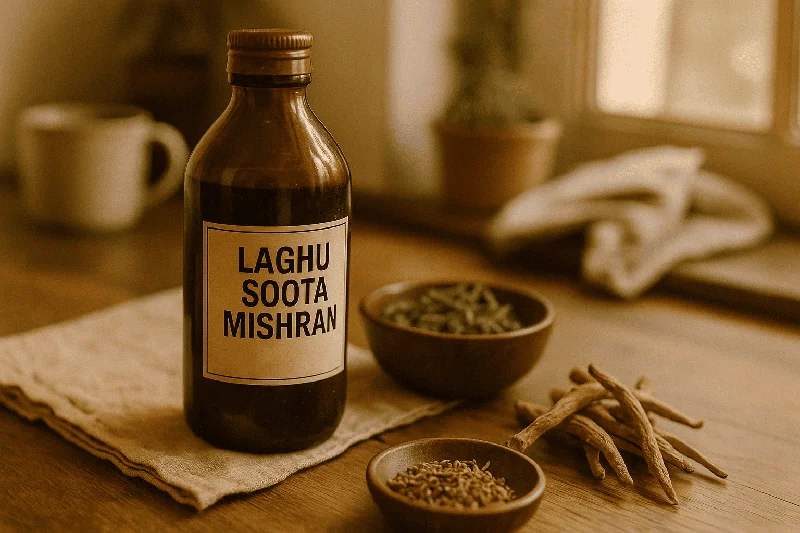
Laghu Soota Mishrana is a classical Ayurvedic herbo-mineral formulation primarily used for treating respiratory disorders such as chronic cough, bronchial asthma, bronchitis, and allergic rhinitis. It combines purified mercury (Shuddha Parada), purified sulfur (Shuddha Gandhaka), and a synergistic blend of herbal ingredients to balance all three doshas — Vata, Pitta, and Kapha. Unlike many modern formulations, Laghu Soota Mishrana also extends its therapeutic reach to neurological complaints, digestive issues, skin health, and even conditions like eosinophilia.
If you've been searching for a single, authoritative resource on this powerful Ayurvedic medicine — covering everything from its classical textual origins to its pharmacological properties, safety profile, and comparison with similar formulations — you're in the right place.
What Is Laghu Soota Mishrana?
Laghu Soota Mishrana (also spelled Laghu Suta Mishran or Laghu Soota Mishran) is a polyherbal-mineral compound rooted in the Rasa Shastra tradition of Ayurveda — the branch that deals with the therapeutic use of metals, minerals, and gemstones after rigorous purification processes. The word "Laghu" means light or simplified, "Soota" (or Suta) refers to mercury (Parada), and "Mishrana" means mixture or combination.
This formulation is available predominantly in powder (Churna) form, though some manufacturers also offer it as tablets (Vati). It is designed to be a lighter, more accessible version of heavier mercurial preparations, making it suitable for a broader patient population including, in some cases, children under medical supervision.
Classical Textual Reference and Origin
One of the most significant gaps in available online information about Laghu Soota Mishrana is the identification of its original textual source. While most websites simply describe it as a "classical formulation," the composition and nomenclature strongly suggest its roots in the Rasa Tarangini by Sadananda Sharma, one of the most authoritative texts on Rasa Shastra, and principles echoed in the Bhaishajya Ratnavali, a comprehensive compendium of Ayurvedic formulations. Some regional pharmacopoeias and state Ayurvedic formularies also reference this formulation under slightly varying names.
The fact that it combines Kajjali (the black sulfide of mercury formed by trituration of purified mercury and sulfur) with respiratory-specific herbs like Talisadi Churna and Swasakutara Rasa ingredients aligns it with the formulation principles outlined in the 8th Taranga (chapter) of Rasa Tarangini, which deals with Parada (mercury) preparations for Shwasa (asthma) and Kasa (cough).
Rasa Panchaka — Pharmacological Properties in Ayurvedic Terms
No competitor has provided the classical pharmacological profile of this formulation.
Here it is:
| Property (Sanskrit) | Description |
|---|---|
| Rasa (Taste) | Madhura (sweet), Katu (pungent), Tikta (bitter) — varies by ingredient dominance |
| Guna (Quality) | Laghu (light), Snigdha (unctuous) |
| Virya (Potency) | Ushna (hot) — owing to Suta, Maricha, and Pippali |
| Vipaka (Post-digestive effect) | Madhura (sweet) |
| Dosha Karma | Tridoshahara — primarily Kapha-Vata shamaka, with Pitta regulation through Godanti Bhasma |
This unique combination of hot potency with sweet post-digestive effect is what makes the formulation effective yet relatively gentle — it clears respiratory congestion without excessively aggravating Pitta dosha.
Key Ingredients of Laghu Soota Mishrana (Laghu Soota Mishrana Content)
Understanding the composition is essential for appreciating why this formulation works. Each ingredient serves a specific therapeutic purpose.
Primary Mineral Ingredients
| Ingredient | Role in Formulation |
|---|---|
| Shuddha Parada (Purified Mercury) | Yogavahi — enhances the bioavailability and potency of all other ingredients; Tridoshahara |
| Shuddha Gandhaka (Purified Sulfur) | Krimighna (anti-microbial), Kushtaghna (skin healing), Deepana (digestive stimulant) |
| Godanti Bhasma (Calcined Gypsum) | Pitta shamaka; specific for Pittaja Kasa (cough due to Pitta aggravation), fever, and headaches |
| Shuddha Gairika (Purified Red Ochre) | Raktastambhana (hemostatic), cooling, anti-inflammatory; supports in eosinophilia-related conditions |
Herbal Ingredients
| Ingredient | Therapeutic Contribution |
|---|---|
| Talisadi Churna | A compound powder containing Talispatra, Maricha, Pippali, Ela, Vamshalochana — specifically indicated for cough, bronchitis, and digestive weakness |
| Swasakutara Rasa components | Classical anti-asthmatic formulation ingredients targeting Shwasa (dyspnea) and Kasa (cough) |
| Triphala (in some formulations) | Detoxification, bowel regulation, antioxidant support, Rasayana (rejuvenative) |
| Guggulu (in certain variants) | Anti-inflammatory, hypolipidemic, supports Ama (toxin) clearance |
The Shodhana Process — How Mercury and Sulfur Are Purified
This is something no competitor has explained, and it's critical for patient confidence. Raw mercury and sulfur are toxic. The Shodhana (purification) process described in classical texts transforms them into therapeutically safe forms.
Mercury purification (Parada Shodhana): According to Rasa Tarangini, Parada undergoes Ashtasamskaras — eight sequential purification steps including Swedana (steaming with herbal decoctions), Mardana (trituration with specific plant juices like Kumari swarasa and Chitraka), Murchhana (rendering mercury "unconscious" or inert to its toxic properties), and Protipalana. Each step removes specific impurities (called Dosha of Parada). Sulfur purification (Gandhaka Shodhana): Involves melting sulfur and pouring it into cow's milk or ghee repeatedly, followed by washing. This removes arsenic and other toxic impurities. Gairika Shodhana: Red ochre is levigated (triturated with liquid media) using herbal decoctions, typically Triphala kashaya, to remove ferrous impurities and render it biocompatible. Kajjali formation: Purified mercury and purified sulfur are triturated together in a stone mortar until a fine, lusterless black powder (Kajjali) forms. This process, called Kajjali Nirmana, can take 6–12 hours of continuous grinding. Properly formed Kajjali should be Nishchandra (without any shiny mercury particles), Varitara (floats on water), and Shlakshna (smooth to touch).
A 2012 study published in the Journal of Ayurveda and Integrative Medicine demonstrated that properly prepared Kajjali contains mercury in the form of black mercuric sulfide (HgS), which has extremely low bioavailability — meaning it passes through the body without causing mercury toxicity when used in prescribed doses.
Laghu Soota Mishrana Uses: Complete Therapeutic Applications
The uses of Laghu Soota Mishrana extend far beyond simple cough relief. Let's break down every documented application.
Respiratory Disorders — The Primary Indication
This is the core therapeutic territory of Laghu Soota Mishrana.
It is indicated for:
- Kasa (Cough) — all types, but especially Pittaja Kasa (dry, irritating cough with burning sensation) and Kaphaja Kasa (productive cough with white/clear mucus)
- Shwasa (Bronchial Asthma) — acts as a bronchodilator and reduces airway inflammation
- Tamaka Shwasa — the Ayurvedic equivalent of nocturnal asthma that worsens at night or in cold weather
- Pratishyaya (Common Cold & Allergic Rhinitis) — reduces nasal congestion and sneezing
- Bronchitis — both acute and chronic forms
- Eosinophilia-related respiratory conditions — the formulation helps normalize elevated eosinophil counts, particularly when the cause is allergic. A clinical observation at SDM College of Ayurveda, Udupi, noted improvement in patients with eosinophilic bronchitis when treated with Laghu Soota Mishrana as part of a comprehensive protocol.
Pittaja Kasa (Allergic Cough) — A Specific Application
Pittaja Kasa deserves special mention. This type of cough is characterized by a burning sensation in the chest, yellowish sputum, bitter taste in the mouth, and aggravation during hot seasons. The presence of Godanti Bhasma (a powerful Pitta-pacifier) in Laghu Soota Mishrana makes it particularly effective for this subtype — something that most generic cough formulations in Ayurveda don't address as precisely.
Neurological and Psychosomatic Benefits
An often-overlooked dimension of this formulation. Due to the Yogavahi property of Parada and the nervine action of certain herbal ingredients, Laghu Soota Mishrana has been used for:
- Shirahshula (Headaches) — tension-type and sinus headaches
- Ardhavabhedaka (Migraine) — especially when triggered by respiratory congestion or Pitta-Kapha imbalance
- Anidra (Insomnia) — mild cases related to respiratory distress or Vata aggravation
- Bhrama (Vertigo/Dizziness) — particularly when associated with nasal or sinus congestion
- Ati Sweda (Excessive Sweating) — through Pitta regulation
- Mental clarity and cognitive support — the Medhya (intellect-promoting) action of certain ingredients
Digestive Health Support
- Laghu Soota Mishrana stimulates Agni (digestive fire) without causing excessive heat.
- It can help with:
- Agnimandya (weak digestion)
- Adhmana (bloating and gas)
- Ajirna (indigestion)
- Ama pachana (metabolization of toxins formed due to incomplete digestion)
The Talisadi Churna component is itself a well-known digestive stimulant, and Kajjali enhances absorption of nutrients across the intestinal wall.
Detoxification and Skin Health
Through the action of Shuddha Gandhaka and Triphala (in formulations that include it), Laghu Soota Mishrana supports:
- Systemic detoxification by promoting elimination through urine, sweat, and stool
- Mild blood purification, which reflects positively on skin health
- Management of certain Kushtha (skin disorders) where internal toxicity is a contributing factor
Weight Management Through Kapha Balance
An interesting application mentioned in traditional practice: by reducing Kapha dominance — which manifests as sluggish metabolism, water retention, and excessive adipose tissue — Laghu Soota Mishrana can support healthy weight management as part of a comprehensive lifestyle protocol. This is not a weight-loss pill; rather, it corrects the underlying doshic imbalance that contributes to unhealthy weight gain.
Dosage of Laghu Soota Mishran
- Dosage should always be determined by a qualified Ayurvedic physician based on the patient's Prakriti (constitution), Vikriti (current imbalance), age, weight, and Agni (digestive capacity).
- The following are general guidelines:
| Patient Category | Dosage | Frequency |
|---|---|---|
| Adults | 125 mg – 250 mg | 2–3 times daily |
| Children (5–12 years) | 60 mg – 125 mg | 1–2 times daily |
| Elderly | 125 mg | 1–2 times daily |
How to Take Laghu Soota Mishrana
Anupana (Vehicle/Adjuvant):
- With honey — for Kapha-dominant conditions (productive cough, congestion, asthma)
- With warm water — for Vata-dominant conditions (dry cough, bloating)
- With Sitopaladi Churna and honey — for enhanced respiratory action
- With Ghee — for Pitta-dominant conditions (burning sensation, Pittaja Kasa)
Timing: Typically administered after meals (Paschat Bhakta) for respiratory conditions and before meals (Pragbhakta) when targeting digestive issues.
Duration of Treatment Course
- This is a crucial detail that no competitor addresses.
- Generally:
- Acute conditions (cold, acute bronchitis): 5–7 days
- Chronic conditions (chronic asthma, recurrent bronchitis): 4–8 weeks, with periodic breaks as advised by the physician
- Eosinophilia management: 6–12 weeks under close monitoring
Long-term use beyond 3 months should only occur under strict medical supervision with periodic blood tests to monitor kidney and liver function, as is standard practice with any Rasa Shastra formulation.
Laghu Soota Mishrana vs. Similar Ayurvedic Formulations
- One of the most common questions is how Laghu Soota Mishrana differs from related preparations.
- Here's a clear comparison:
| Feature | Laghu Soota Mishrana | Suta Shekara Rasa | Swasa Kutara Rasa | Talisadi Churna (standalone) |
|---|---|---|---|---|
| Primary Focus | Respiratory + multi-system | GI + Pitta disorders | Respiratory (asthma/cough) | Respiratory + digestive |
| Contains Mercury | Yes (purified) | Yes (purified) | Yes (purified) | No |
| Dosha Target | Tridosha, esp. Kapha-Vata | Primarily Pitta | Kapha-Vata | Kapha-Vata |
| Use in Eosinophilia | Yes | No | Limited | No |
| Neurological Uses | Yes | Limited | No | No |
| Suitable for Children | Yes (under supervision) | Rarely | With caution | Yes |
| Safety Complexity | Moderate — requires Shodhana | Higher — more mineral-heavy | Moderate | Low — purely herbal |
Difference Between Sutshekhar Ras and Laghu Sutshekhar Ras
Since this is a frequently asked question: Sutshekhar Ras (also called Suta Shekara Rasa) is a more complex formulation with over 20 ingredients, primarily targeting Pitta-dominant GI disorders like acid reflux, gastritis, and bilious headaches. Laghu Sutshekhar Ras is its simplified version with fewer ingredients and milder action. Neither should be confused with Laghu Soota Mishrana, which has a fundamentally different composition and therapeutic focus — though there is some overlap in neurological applications like migraine management.
Safety, Precautions & Contraindications
Who Should NOT Take Laghu Soota Mishrana
Specific contraindications — another area where competitors provide only vague warnings:
- Pregnant women — mercury-based formulations are strictly contraindicated during pregnancy
- Lactating mothers — unless specifically prescribed by an experienced Rasa Shastra specialist
- Patients with renal insufficiency — impaired kidneys cannot handle mineral elimination
- Patients with hepatic disorders — active liver disease compromises detoxification
- Known hypersensitivity to any ingredient in the formulation
- Patients on blood thinners (Warfarin, Aspirin) — potential interaction with Gairika and Guggulu
Interaction with Allopathic (Modern) Medicines
This is virtually never discussed online, yet it's extremely relevant:
- Antacids and PPIs (Omeprazole, Pantoprazole): May reduce absorption of Bhasma components. Maintain at least a 2-hour gap.
- Bronchodilators (Salbutamol, Theophylline): Generally safe to combine, but inform your doctor to avoid dose duplication of bronchodilatory effects.
- Corticosteroids (Prednisolone, inhaled steroids): Can be used alongside, but tapering should be done only under medical guidance.
- Antibiotics: No known direct interaction, but take Laghu Soota Mishrana at a different time to avoid binding with tetracyclines or fluoroquinolones (which chelate metals).
- Anti-epileptic drugs: Caution advised — some formulations may alter drug metabolism.
Always inform both your Ayurvedic practitioner and allopathic doctor about all medications you are taking.
Storage
Store in a cool, dry place away from direct sunlight. Keep in airtight glass or food-grade plastic containers. The powder form is hygroscopic and can absorb moisture if not sealed properly, which may affect potency.
Scientific Research and Evidence
While large-scale randomized controlled trials specifically on Laghu Soota Mishrana are limited, several pieces of evidence support its individual components:
- A 2014 study in the International Journal of Pharmaceutical Sciences and Research evaluated Godanti Bhasma and found significant antipyretic and anti-inflammatory activity in animal models, supporting its use in febrile respiratory conditions.
- Research published in the Journal of Ethnopharmacology (2016) demonstrated that Talisadi Churna exhibits bronchodilatory, anti-tussive, and mucolytic properties comparable to standard pharmacological agents.
- The Central Council for Research in Ayurvedic Sciences (CCRAS), under the Ministry of AYUSH, Government of India, has documented the safety of properly prepared Kajjali-based formulations when used in recommended doses for prescribed durations.
- A 2018 pharmacovigilance study at the Institute of Post Graduate Teaching and Research in Ayurveda, Jamnagar, evaluated patients taking various Rasa Shastra formulations over 6 months and found no clinically significant elevation in blood mercury levels or organ toxicity markers when Shodhana protocols were correctly followed.
These findings collectively support the safety and efficacy profile of Laghu Soota Mishrana's key ingredients, though more formulation-specific clinical trials are certainly needed.
Incorporating Laghu Soota Mishrana Into Your Daily Lifestyle
Taking the medicine is only part of the healing process. Ayurveda emphasises Pathya-Apathya (favorable and unfavorable regimen) alongside medication.
Dietary Recommendations (Pathya)
- Favor: Warm, freshly cooked meals; light soups; ginger tea; turmeric milk; steamed vegetables; old rice (Purana Shali); honey (in small quantities, never heated above 40°C)
- Avoid: Cold beverages, ice cream, yogurt (especially at night), excessively oily food, fermented items, Viruddha Ahara (incompatible food combinations like milk with fish or fruit with milk)
Lifestyle Practices
- Pranayama: Nadi Shodhana (alternate nostril breathing) and Bhastrika (bellows breath) are particularly beneficial for respiratory conditions
- Steam inhalation: With Eucalyptus or Ajwain (carom seeds) water, once daily
- Avoid triggers: Dust, smoke, strong perfumes, cold air exposure, and known allergens
- Adequate hydration: Warm water throughout the day — not cold
- Sleep hygiene: Sleep by 10 PM; avoid sleeping during the day (Divaswapna increases Kapha)
Frequently Asked Questions (FAQ)
What is the use of Laghu Soota Vati?
- Laghu Soota Vati is the tablet form of Laghu Soota Mishrana.
- It has the same therapeutic uses — primarily respiratory disorders including cough, bronchitis, asthma, and allergic rhinitis. The Vati (tablet) form offers convenience in dosing and is sometimes preferred when patients find it difficult to measure the precise quantity of Churna (powder). The therapeutic efficacy remains the same.
Can Laghu Soota Mishrana be used for children?
Yes, but only under the supervision of a qualified Ayurvedic physician. The dosage for children aged 5–12 is typically 60–125 mg, 1–2 times daily. For children under 5, most practitioners avoid mercury-containing formulations and opt for purely herbal alternatives like Sitopaladi Churna or Talisadi Churna instead.
Is Laghu Soota Mishrana safe for long-term use?
Not without medical supervision. As a Rasa Shastra preparation containing processed mercury and sulfur, it is intended for specific therapeutic durations. Acute conditions may require only 5–7 days, while chronic conditions might need 4–12 weeks. Continuous use beyond 3 months requires periodic monitoring of liver and kidney function.
Can I take Laghu Soota Mishrana with my asthma inhaler?
Generally yes, but always inform your pulmonologist and Ayurvedic doctor. The formulation can complement inhaled bronchodilators and corticosteroids. Many patients use Laghu Soota Mishrana as an adjunct therapy with the goal of gradually reducing their dependence on inhalers — this tapering should only be done under professional guidance.
What is the difference between Laghu Soota Mishrana and regular Soota Mishrana?
The "Laghu" (light/simplified) version contains fewer ingredients and is milder in action compared to the full Soota Mishrana. It's designed for broader applicability and better tolerability, especially in patients with moderate symptoms or those new to Rasa Shastra medicines.
Which churna is best for constipation and gas?
While Laghu Soota Mishrana does support digestive health, it is not primarily a laxative formulation. For constipation and gas specifically, Triphala Churna, Avipattikar Churna, or Hingvasthaka Churna are more appropriate first-line choices. If digestive complaints coexist with respiratory issues, Laghu Soota Mishrana can address both simultaneously.
Is Laghu Soota Mishrana available from SDM (Sri Dharmasthala Manjunatheshwara)?
Yes, SDM Ayurveda is one of the reputable manufacturers of Laghu Soota Mishrana. Their products are prepared following traditional Shodhana (purification) protocols and undergo quality testing. Other trusted manufacturers include Kottakkal Arya Vaidya Sala, AVN Ayurveda, and various GMP-certified Ayurvedic pharmacies.
Conclusion: Is Laghu Soota Mishrana Right for You?
Laghu Soota Mishrana stands as a testament to the sophistication of classical Ayurvedic pharmacology — a carefully designed formulation where every ingredient serves a purpose and the whole is genuinely greater than the sum of its parts. Its primary strength lies in respiratory care, but its reach extends meaningfully into neurological support, digestive health, detoxification, and even skin wellness.
- However, this is not an over-the-counter supplement to be self-prescribed.
- It contains processed mercury and sulfur — substances that are therapeutically powerful precisely because they are potent. The safety of this formulation depends entirely on proper Shodhana, correct dosage, appropriate duration, and professional oversight.
If you're dealing with chronic respiratory issues, recurrent cough, bronchial asthma, or eosinophilia — and you're interested in an Ayurvedic approach — consult a qualified Ayurvedic physician (preferably one trained in Rasa Shastra) to determine whether Laghu Soota Mishrana is appropriate for your specific condition. Bring your current medication list, recent blood work, and be transparent about your complete health history.
- Your breath is your life.
- Treat it with the respect — and the expertise — it deserves.
Scientific Sources
- Neuroprotective Herbs for the Management of Alzheimer's Disease — Gregory J et al., 2021, Biomolecules
- The antitumor effects of herbal medicine Triphala on oral cancer by inactivating PI3K/Akt signaling pathway: based on the network pharmacology, molecular docking, in vitro and in vivo experimental validation — Hu S et al., 2024, Phytomedicine : international journal of phytotherapy and phytopharmacology
- Role of Triphala in dentistry — Prakash S et al., 2014, Journal of Indian Society of Periodontology
- Triphala's characteristics and potential therapeutic uses in modern health — Bairwa VK et al., 2025, International journal of physiology, pathophysiology and pharmacology
- The interplay of triphala and its constituents with respect to metabolic disorders and gut-microbiome — Gurjar S et al., 2025, Fitoterapia
- Evaluation of antioxidant profile and activity of amalaki (Emblica officinalis), spirulina and wheat grass — Shukla V et al., 2009, Indian journal of clinical biochemistry : IJCB
- Influence of Amalaki Rasayana on telomerase activity and telomere length in human blood mononuclear cells — Guruprasad KP et al., 2017, Journal of Ayurveda and integrative medicine
- Amalaki rasayana, a traditional Indian drug enhances cardiac mitochondrial and contractile functions and improves cardiac function in rats with hypertrophy — Kumar V et al., 2017, Scientific reports
- Ayurvedic formulations amalaki rasayana and rasa sindoor improve age-associated memory deficits in mice by modulating dendritic spine densities — Verma B et al., 2022, Journal of Ayurveda and integrative medicine
- Therapeutic Uses of Triphala in Ayurvedic Medicine — Peterson CT et al., 2017, Journal of alternative and complementary medicine (New York, N.Y.)
- Evaluation of the anti-hyperlipidemic effects of Triphala in high fat diet fed rats: Studies with two combinations — Rana S et al., 2022, Ayu
- Scientific validation of the ethnomedicinal properties of the Ayurvedic drug Triphala: a review — Baliga MS et al., 2012, Chinese journal of integrative medicine
- Effect of Triphala on dextran sulphate sodium-induced colitis in rats — Rayudu V et al., 2014, Ayu
- Bangladeshi medicinal plant dataset — Borkatulla B et al., 2023, Data in brief
- Extraction, phytochemical characterization and anti-cancer mechanism of Haritaki churna: An ayurvedic formulation — Khan MRUZ et al., 2023, PloS one
- Unique aspect of Tibetan medicine — Dakpa T, 2014, Acupuncture & electro-therapeutics research
- The Ayurvedic medicines Haritaki, Amala and Bahira reduce cholesterol-induced atherosclerosis in rabbits — Thakur CP et al., 1988, International journal of cardiology
- A Systematic Review and Meta-Analysis of Ayurvedic Herbal Preparations for Hypercholesterolemia — Gyawali D et al., 2021, Medicina (Kaunas, Lithuania)
- Complementary and alternative medicine in the (symptomatic) treatment of acute tonsillitis in children: A systematic review — Büttner R et al., 2023, Complementary therapies in medicine
- Ankylosing spondylitis — Edavalath M, 2010, Journal of Ayurveda and integrative medicine
- A comparative study of Kaishora Guggulu and Amrita Guggulu in the management of Utthana Vatarakta — Ramachandran AP et al., 2010, Ayu
- Oral toxicity evaluation of gokshuradi guggulu, an ayurvedic formulation — Wanjari MM et al., 2022, Drug and chemical toxicology
आयुर्वेदिक डॉक्टर से एक प्रश्न पूछें और मुफ़्त या सशुल्क मोड में अपनी चिंता की समस्या पर ऑनलाइन परामर्श प्राप्त करें।
2,000 से अधिक अनुभवी डॉक्टर हमारी साइट पर काम करते हैं और आपके प्रश्नों की प्रतीक्षा करते हैं और प्रतिदिन उपयोगकर्ताओं को उनकी स्वास्थ्य समस्याओं को हल करने में मदद करते हैं।
संबंधित आलेख