आयुर्वेदिक डॉक्टर से प्रश्न पूछें और निःशुल्क या भुगतान मोड में अपनी चिंता की समस्या पर ऑनलाइन परामर्श प्राप्त करें। 2,000 से अधिक अनुभवी डॉक्टर हमारी साइट पर काम करते हैं और आपके प्रश्नों का इंतजार करते हैं और उपयोगकर्ताओं को उनकी स्वास्थ्य समस्याओं को हल करने में प्रतिदिन मदद करते हैं।


Body DetoxEar, Nose, and Throat DisordersGeriatrics & RejuvenationImmunodeficiencyInfertility TreatmentNutritionOrthopedic DisordersPediatricsRespiratory DisordersSexually Transmitted Diseases (STDs)Surgery RecoveryUrological DisordersVascular DisordersDental DisordersEndocrinological DisordersGastrointestinal DisordersYoga TherapyGeneral MedicineAllergic DisordersCardio DisordersGynecology and ObstetricsCosmetologySkin and Hair DisordersEye DisordersInfectious DiseasesMental DisordersNeurological DisordersOncologyPanchakarmaSexual Health & DisordersSports Medicine
पर प्रकाशित 03/20/25
(को अपडेट 08/10/26)
2,785
Kanakasavam Benefits: An Evidence-Based Exploration
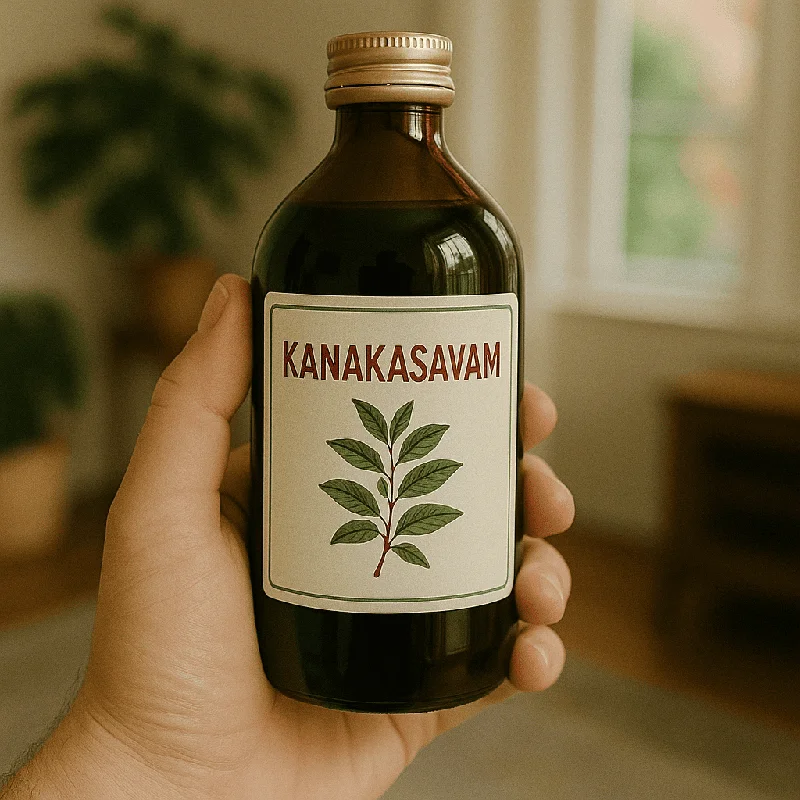
- Kanakasavam is a classical Ayurvedic fermented liquid medicine (Asava) primarily used to treat respiratory conditions like asthma, chronic bronchitis, cough, and breathlessness. Rooted in the ancient texts of Sahasrayogam and Bhaishajya Ratnavali, this polyherbal formulation balances Kapha and Vata doshas, making it one of the most widely prescribed Ayurvedic remedies for lung and airway disorders across India.
- In this guide, we cover everything — from its exact composition and traditional preparation method to modern pharmacological evidence, dosage guidelines, side effects, and how it compares to other Ayurvedic respiratory formulations.
If you've ever struggled with seasonal wheeze, persistent cough that just won't quit, or the kind of chest congestion that makes every breath feel heavy — Kanakasavam is likely one of the first medicines an Ayurvedic physician will consider. But what's actually in it? Does science support its use? And how do you take it safely?
Let's break it all down.
What Is Kanakasavam?
Kanakasavam (also written as Kanakasava) is a self-generated alcoholic Ayurvedic preparation belonging to the Asava-Arishta category of medicines. The term "Asava" indicates that the formulation is prepared through fermentation of fresh herbal juices or decoctions with jaggery or sugar, producing a self-generated alcohol content of approximately 5–10%. This alcohol acts as both a preservative and a medium that enhances the bioavailability of the active herbal compounds.
The primary herb in Kanakasavam is Datura metel (Kanaka, also known as Dhatura or Thorn Apple), which lends the medicine its name. While Datura is well-known as a potentially toxic plant, its careful processing through fermentation and combination with other herbs is believed to neutralize toxic alkaloids while retaining therapeutic bronchodilatory properties.
Kanakasavam has been documented in several classical Ayurvedic texts including Sahasrayogam, Bhaishajya Ratnavali, and Ashtanga Hridaya. It is manufactured by major Ayurvedic pharmaceutical companies such as Kottakkal Arya Vaidya Sala, Vaidyaratnam, Kerala Ayurveda (AVP), Oushadhi, and Nagarjuna, among others.
Kanakasavam vs Kanakasava — The Naming Difference Explained
You'll see both "Kanakasavam" and "Kanakasava" used across different products, websites, and prescriptions. Many people wonder if these are different medicines. They're not.
The difference is purely linguistic. Kanakasava is the Sanskrit form, while Kanakasavam is the Malayalam/Tamil adaptation of the same word — the trailing "-m" is a characteristic phonological feature of Dravidian languages. Since many prominent manufacturers (Kottakkal, Vaidyaratnam, AVP) are based in Kerala, the "-am" suffix has become widespread in product labeling. Both terms refer to the identical formulation.
Ayurvedic Indications (Sanskrit Terminologies)
Classical Ayurvedic texts describe Kanakasavam's therapeutic actions using specific Sanskrit pharmacological terms. Understanding these adds depth to appreciating its broad spectrum of activity:
| Sanskrit Term | Meaning | Clinical Relevance |
|---|---|---|
| Kasahara | Relieves cough | Chronic and productive cough |
| Svasahara | Relieves breathlessness | Asthma, dyspnea |
| Jwarahara | Reduces fever | Fever associated with respiratory infections |
| Deepana | Enhances digestive fire | Improves appetite and metabolism |
| Pachana | Aids digestion | Reduces toxin (Ama) formation |
| Anulomana | Normalizes Vata flow | Corrects upward movement of Vata (Udana Vata) |
| Balya | Strengthens body | Builds immunity, reduces fatigue |
The classical sloka (verse) reference for Kanakasavam is found in Sahasrayogam, Asava-Arishta Prakarana, which details both its composition and indications.
How Kanakasavam Works — Mechanism of Action
From an Ayurvedic perspective, Kanakasavam works primarily by pacifying aggravated Kapha dosha (which causes mucus accumulation, congestion, and heaviness in the chest) and regulating Vata dosha (which governs the movement of air and breathing patterns). When Kapha blocks the channels of respiration (Pranavaha Srotas), and Vata moves erratically, the result is wheezing, coughing, and difficulty breathing.
From a modern pharmacological standpoint, the mechanism involves several active compounds:
- Atropine and scopolamine from Datura metel — These tropane alkaloids have proven bronchodilatory effects. A 2015 review published in the Journal of Ethnopharmacology confirmed that Datura alkaloids relax bronchial smooth muscle, reducing airway resistance.
- Vasicine and vasicinone from Adhatoda vasica (Vasa) — These quinazoline alkaloids exhibit mucolytic and expectorant activity. Research published in Phytomedicine (2017) demonstrated that vasicine increases bronchial secretions and promotes expectoration, making it easier to clear mucus.
- Glycyrrhizin from Glycyrrhiza glabra (Yashtimadhu/Liquorice) — A potent anti-inflammatory compound that reduces airway inflammation. A 2018 study in Scientific Reports showed glycyrrhizin inhibits pro-inflammatory cytokines in respiratory tissue.
- Piperine from Piper longum (Pippali) — Enhances bioavailability of other compounds and has its own anti-asthmatic properties, as documented in a 2016 study in International Immunopharmacology.
The fermentation process itself generates enzymes and bioactive metabolites that may further enhance absorption and therapeutic efficacy — something that simple decoctions or powders cannot achieve.
Key Ingredients of Kanakasavam
Kanakasavam is a complex polyherbal formulation containing multiple categories of ingredients. Below is the detailed breakdown based on classical references and pharmacopoeial standards.
Kwatha Dravyas (Decoction Herbs)
These are the primary herbs that are boiled in water to create the base decoction:
| Ingredient | Scientific Name | Part Used | Approx. Quantity* | Primary Action |
|---|---|---|---|---|
| Kanaka (Dhatura) | Datura metel | Seeds (Sd.) | 48 g | Bronchodilator |
| Vasa | Adhatoda vasica | Leaves (Lf.) | 48 g | Expectorant, mucolytic |
| Yashtimadhu | Glycyrrhiza glabra | Root (Rt.) | 48 g | Anti-inflammatory, demulcent |
| Pippali | Piper longum | Fruit (Fr.) | 48 g | Bioenhancer, anti-asthmatic |
| Draksha | Vitis vinifera | Dried fruit (Fr.) | 48 g | Nutritive, immune support |
| Dashamoola | 10 roots combination | Root (Rt.) | 48 g each | Anti-inflammatory, Vata pacifying |
\Quantities are approximate based on Vaidyaratnam and classical text references for a standard batch preparation.*
Prakshepa Dravyas (Adjuvant Ingredients)
These herbs are added in smaller quantities to enhance the therapeutic effect:
- Nagakeshara (Mesua ferrea) — Flower buds — Anti-hemorrhagic, digestive
- Ela (Elettaria cardamomum) — Seeds — Carminative, improves taste
- Twak (Cinnamomum zeylanicum) — Bark — Antimicrobial, warming
- Priyangu (Callicarpa macrophylla) — Flowers — Hemostatic, cooling
Sandhana Dravyas (Fermentation Base)
- Guda (Jaggery) or Sharkara (Sugar) — Provides the substrate for fermentation
- Dhataki Pushpa (Woodfordia fruticosa) — Flowers — Acts as the natural fermenting agent; contains wild yeasts that initiate and sustain fermentation
- Water — Medium for decoction and fermentation
The Dhataki flower is critical. Without it, the Asava fermentation process simply won't start properly. It's essentially the Ayurvedic equivalent of a starter culture in modern fermentation.

How Is Kanakasavam Prepared? (Traditional Method)
The preparation of Kanakasavam follows the classical Sandhana Kalpana (fermentation technique) outlined in Ayurvedic pharmaceutical texts. This is a time-intensive process that typically takes 30–45 days.
Step-by-Step Preparation Process
- 1.Decoction Preparation (Kwatha): The Kwatha Dravyas are coarsely powdered and boiled in specified quantities of water (usually reduced to one-fourth or one-eighth of the original volume). The decoction is filtered and cooled to room temperature.
- 2.Mixing: Jaggery or sugar is dissolved into the warm (not hot) decoction. The Prakshepa Dravyas are finely powdered and added.
- 3.Adding Dhataki Flowers: Dried Woodfordia fruticosa flowers are spread into the mixture. These flowers carry natural yeasts and enzymes essential for fermentation.
- 4.Sealing in Earthen Vessel: The entire mixture is poured into a clean earthen pot (Sandhana Patra) or, in modern manufacturing, into stainless steel vats. The vessel is sealed with a lid and the rim is plastered with clay or sealed airtight.
- 5.Fermentation: The sealed vessel is kept undisturbed in a cool, dry place for 30 days (some texts specify up to 45 days). During this period, natural fermentation occurs, producing self-generated alcohol and converting raw herbal compounds into more bioavailable forms.
- 6.Filtration & Storage: After the fermentation period, the liquid is filtered through clean muslin cloth. The clear filtrate is Kanakasavam, ready for use.
The Role of Self-Generated Alcohol
The 5–10% alcohol content generated during fermentation serves multiple purposes — it acts as a natural preservative (giving Asavas a remarkably long shelf life), extracts fat-soluble active compounds that water alone cannot dissolve, and enhances absorption in the gastrointestinal tract. This is why Asavas are considered superior to simple decoctions (kashayam) for chronic conditions requiring long-term use.
What Is Kanakasavam Used For? Benefits and Indications
The therapeutic applications of Kanakasavam extend beyond just respiratory care, though that remains its primary domain. Here's a detailed look at each major benefit.
Respiratory Disorders (Primary Indication)
This is where Kanakasavam truly shines.
It is classically indicated for:
- Bronchial Asthma (Tamaka Shvasa): Reduces bronchospasm, decreases mucus production, and improves airflow. A 2019 observational study published in the Journal of Ayurveda and Integrative Medicine (JAIM) found that Kanakasava administered for 8 weeks showed significant improvement in peak expiratory flow rate (PEFR) among 42 asthma patients.
- Chronic Bronchitis (Kasa Roga): Liquefies thick mucus through its mucolytic action and promotes expectoration.
- Productive and Dry Cough: Works both ways — loosens productive cough and soothes irritated airways in dry cough.
- Dyspnea (Breathlessness): The bronchodilatory alkaloids from Datura help open up constricted airways.
- Upper Respiratory Tract Infections: Anti-microbial properties of ingredients like Twak and Pippali help manage recurrent infections.
Can Kanakasavam Help Boost Immunity?
Yes. Several ingredients in Kanakasavam have documented immunomodulatory activity. Glycyrrhiza glabra has been shown to enhance natural killer (NK) cell activity (study in Food Chemistry, 2018). Piper longum stimulates macrophage activity and enhances both innate and adaptive immune responses, as shown in a 2017 study in International Journal of Molecular Sciences. Vitis vinifera (Draksha) provides antioxidants that protect immune cells from oxidative stress.
The combined effect, especially when enhanced by fermentation-derived bioactive metabolites, makes Kanakasavam a useful adjunct for individuals with recurrent respiratory infections or generally compromised immunity.
Digestive Health and Gut Benefits
Though primarily a respiratory formulation, Kanakasavam's Deepana and Pachana properties support digestive function. In Ayurvedic theory, impaired digestion leads to Ama (toxin) formation, which aggravates Kapha and contributes to respiratory congestion. By improving digestive fire (Agni), Kanakasavam addresses the root cause rather than just managing symptoms.
The fermented nature of the preparation itself introduces gut-friendly enzymes. Patients often report improved appetite and reduced bloating alongside respiratory relief.
Bleeding Disorders
This is a lesser-known but classically documented indication. Ingredients like Nagakeshara (Mesua ferrea) and Priyangu have hemostatic (bleeding-stopping) properties. Kanakasavam has been traditionally used in cases of bleeding piles, menorrhagia (heavy menstrual bleeding), and epistaxis (nosebleeds) — though these applications are less common today and require strict physician supervision.
Wards Off Infections
The antimicrobial activity of multiple ingredients — particularly the essential oils in Twak (Cinnamon), the alkaloids in Vasa, and the anti-fungal properties of Dhataki flowers — give Kanakasavam a broad-spectrum anti-infective profile. This is especially relevant for patients with chronic respiratory conditions who are prone to recurrent bacterial or fungal infections.
How to Drink Kanakasavam — Dosage and Administration
Standard Adult Dosage
| Parameter | Recommendation |
|---|---|
| Dose | 15–30 mL (approximately 1–2 tablespoons) |
| Frequency | Twice daily |
| Timing | Immediately after meals |
| Dilution | Mix with an equal quantity of lukewarm water |
| Duration of course | Typically 2–3 months, or as prescribed by an Ayurvedic physician |
Always shake the bottle gently before use, as some natural sediment may settle.
Children's Dosage (By Age Group)
Pediatric dosing of Kanakasavam requires caution due to the presence of Datura-derived alkaloids and the self-generated alcohol content. Never administer to children without an Ayurvedic doctor's prescription.
| Age Group | Approximate Dose | Frequency |
|---|---|---|
| 5–8 years | 5 mL | Twice daily, with equal water |
| 8–12 years | 5–10 mL | Twice daily, with equal water |
| 12–16 years | 10–15 mL | Twice daily, with equal water |
Children below 5 years are generally not given Kanakasavam.
Dosage for Elderly Patients
Elderly patients (above 65) should start with a lower dose of 10–15 mL twice daily and increase gradually based on tolerance. Reduced hepatic metabolism in older adults warrants caution.
Can We Take Kanakasavam Daily?
Yes, Kanakasavam can be taken daily — but only for the prescribed duration of the course. It is not meant for indefinite use without medical review. Most Ayurvedic physicians recommend a course of 8–12 weeks, followed by a reassessment. Long-term use beyond 3 months should only continue under medical supervision due to the Datura content.
Is There Any Diet Rule to Follow While Taking Kanakasava?
Ayurvedic physicians generally recommend avoiding certain foods during the course:
- Cold foods and drinks (ice cream, chilled water) — aggravate Kapha
- Heavy, oily, fried foods — impair digestion and increase Ama
- Curd/yogurt at night — increases Kapha accumulation
- Excessive sweets — contribute to congestion
A warm, light, freshly cooked diet with spices like ginger, black pepper, and turmeric is ideal. Staying well-hydrated with warm water throughout the day supports the medicine's expectorant action.
स्वयं दवा न लें और प्रतीक्षा न करें। अभी डॉक्टर से चैट शुरू करें
Side Effects of Kanakasavam
Kanakasavam is generally well-tolerated when taken in prescribed doses under medical supervision. However, being aware of potential side effects is important.
Known Side Effects
- Mild gastric irritation — Some individuals experience mild burning sensation in the stomach, especially if taken on an empty stomach. Always take after food.
- Drowsiness or dizziness — The tropane alkaloids from Datura can cause mild sedation in sensitive individuals, particularly at higher doses.
- Dry mouth — Atropine-like effects from Datura may cause reduced salivation.
- Increased heart rate — In rare cases at higher doses, due to the anticholinergic effects of Datura alkaloids.
- Allergic reactions — Rare but possible, especially in individuals with known allergies to any of the constituent herbs.

The Datura Safety Question
This is perhaps the most common concern. Datura metel contains tropane alkaloids (atropine, scopolamine, hyoscyamine) which are toxic in isolation.
However, in Kanakasavam:
- The quantity used is very small relative to the total formulation
- The fermentation process partially degrades and transforms some alkaloids
- Other ingredients (like Yashtimadhu) provide a buffering/protective effect
- The final alcohol concentration acts as a controlled delivery medium
A 2016 toxicity study published in the Journal of Ayurveda and Integrative Medicine evaluated Kanakasava and found no significant hepatotoxicity or nephrotoxicity at recommended therapeutic doses in animal models. That said, exceeding the recommended dose is absolutely not advisable.
Full List of Contraindications
No competitor has provided a comprehensive contraindication list.
Here's what you need to know:
- Pregnancy and lactation — Strictly avoid. Datura alkaloids can cross the placental barrier and are excreted in breast milk.
- Diabetes mellitus — Contains jaggery/sugar. Diabetic patients should use only under strict medical guidance; blood sugar monitoring is essential.
- Liver disease — The alcohol content and potential hepatic processing of alkaloids make this unsuitable for patients with hepatic insufficiency.
- Alcoholism or alcohol dependence — The 5–10% alcohol content makes it inappropriate.
- Known allergy to any ingredient — Discontinue immediately if rash, itching, or swelling occurs.
- Children under 5 years — Not recommended.
- Concurrent use of anticholinergic drugs — Risk of additive effects (dry mouth, urinary retention, tachycardia).
Interaction with Allopathic (Modern) Medicines
This is a critical topic that no competitor has adequately addressed. If you're taking modern medicines alongside Kanakasavam, consider the following:
| Drug Class | Potential Interaction | Recommendation |
|---|---|---|
| Bronchodilators (Salbutamol, Ipratropium) | Additive bronchodilatory effect; risk of excessive airway relaxation or tachycardia | Inform your doctor; dose adjustment may be needed |
| Anticholinergic drugs (Tiotropium, Glycopyrrolate) | Additive anticholinergic effects (dry mouth, constipation, urinary retention) | Avoid concurrent use or use under strict supervision |
| Sedatives/Hypnotics (Diazepam, Alprazolam) | Kanakasavam's scopolamine content may enhance sedation | Avoid or use with caution |
| Anti-diabetic drugs (Metformin, Glimepiride) | Jaggery content may counteract blood sugar control | Monitor blood glucose closely |
| Anticoagulants (Warfarin) | Some ingredients may have platelet-modifying effects | Inform your physician |
| Corticosteroids (Prednisolone, Budesonide inhalers) | No significant interaction reported; can be used concurrently | Generally safe combination; commonly prescribed together |
- General rule: Maintain a gap of at least 30–60 minutes between Kanakasavam and any allopathic medicine.
- And always — always — inform both your Ayurvedic and allopathic doctors about all medicines you're taking.
Kanakasavam vs Other Ayurvedic Respiratory Formulations
Understanding how Kanakasavam compares to other popular respiratory remedies helps you and your physician make the right choice.
| Feature | Kanakasavam | Vasarishtam | Talisadi Churna | Sitopaladi Churna |
|---|---|---|---|---|
| Form | Fermented liquid (Asava) | Fermented liquid (Arishta) | Powder (Churna) | Powder (Churna) |
| Primary Action | Bronchodilation + Expectorant | Respiratory + Cardiac tonic | Expectorant + Digestive | Expectorant + Antipyretic |
| Main Herb | Datura metel | Adhatoda vasica | Abies webbiana (Talisa) | Bambusa arundinacea (Vamsha Lochana) |
| Alcohol Content | 5–10% | 5–10% | None | None |
| Best For | Asthma, severe bronchospasm | Cough with cardiac involvement | Mild cough, cold, poor digestion | Cough with fever, sore throat |
| Shelf Life | Very long (years if stored properly) | Very long | 6–12 months | 6–12 months |
| Dosha Action | Kapha-Vata | Kapha-Vata-Pitta | Kapha-Vata | Kapha-Pitta |
- Kanakasavam and Vasarishtam are frequently prescribed together by Ayurvedic doctors.
- This combination is considered synergistic — Kanakasavam provides strong bronchodilation while Vasarishtam enhances expectoration and provides additional respiratory support. The typical combination dose is 15 mL each, mixed together with equal water, taken twice daily after food.
Storage, Shelf Life & Differences Between Brands
How to Store Kanakasavam
- Store in a cool, dry place away from direct sunlight
- Keep the bottle tightly closed after each use
- Do not refrigerate — Asava preparations are stable at room temperature due to their alcohol content
- Use a clean, dry measuring cup each time to avoid contamination
- Keep away from children
Shelf Life
One of the unique advantages of Asava-Arishta preparations is their exceptionally long shelf life. Kanakasavam, if stored properly, can remain potent for several years — some classical texts even suggest that Asavas improve with age (Purana Asava is considered more efficacious). However, commercially manufactured bottles typically carry an expiry date of 3–5 years from the date of manufacture, as per regulatory requirements.
Differences Between Major Brands
| Brand | Location | Approx. Price (450 mL) | Notable Feature |
|---|---|---|---|
| Kottakkal Arya Vaidya Sala | Kerala | ₹130–160 | Most widely trusted; strict classical preparation |
| Vaidyaratnam | Kerala | ₹110–140 | Detailed quantitative composition available |
| Kerala Ayurveda (AVP) | Kerala | ₹130–165 | Widely available online (Amazon, 1mg) |
| Oushadhi | Kerala (Govt.) | ₹80–100 | Government-manufactured; most affordable |
| Nagarjuna | Kerala | ₹120–150 | Good availability in South India |
All these manufacturers follow the same classical reference formula. The differences are mainly in sourcing of raw materials, fermentation environment, and quality control processes. Price variations are marginal. If your Ayurvedic doctor hasn't specified a brand, any of the above are reliable choices.
Frequently Asked Questions (FAQ)
What are the synonyms of Kanakasava?
Kanakasavam is also referred to as Kanakasava, Kanaka Asavam, and in some texts as Dhaturasava (after its primary ingredient Datura). The term "Kanaka" itself means "golden" in Sanskrit, potentially referencing the golden-yellow flowers of Datura metel.
What is the source of Kanakasava?
The primary classical source is Sahasrayogam (Asava-Arishta Prakarana), a widely referenced Ayurvedic formulary especially popular in the Kerala tradition of Ayurveda. It is also mentioned in Bhaishajya Ratnavali (Kasa Chikitsa chapter).
What is Drakshasava used for?
Drakshasava is a different Ayurvedic Asava preparation made primarily from Draksha (grapes/raisins). It is mainly used as a general health tonic, for improving digestion, enhancing appetite, and managing mild respiratory conditions. It is considerably milder than Kanakasavam and does not contain Datura. Think of Drakshasava as a general wellness tonic and Kanakasavam as a targeted respiratory medicine.
Can Kanakasavam be taken during pregnancy?
No. Kanakasavam is strictly contraindicated during pregnancy and breastfeeding due to the presence of Datura alkaloids and self-generated alcohol.
How long does it take for Kanakasavam to show results?
Most patients begin noticing improvement in cough and breathing within 1–2 weeks of regular use. However, significant and sustained improvement in chronic conditions like asthma typically requires a full 8–12 week course. Individual response varies based on the severity of the condition and adherence to dietary guidelines.
Can Kanakasavam cure asthma permanently?
Ayurveda does not typically frame treatment in terms of "permanent cure" for chronic conditions like asthma. Kanakasavam can provide significant symptomatic relief, reduce frequency and severity of attacks, and improve overall lung function. Many patients achieve long-term remission with proper Ayurvedic management including Kanakasavam, Panchakarma therapies (like Vamana), and lifestyle modifications. However, calling it a "permanent cure" would be misleading.
Is Kanakasavam safe for diabetic patients?
It can be used with caution. The jaggery content does contribute some sugar. Diabetic patients should only use it under medical supervision, preferably with regular blood glucose monitoring. Some physicians adjust the dose or combine it with anti-diabetic Ayurvedic formulations to offset the sugar load.
Final Thoughts
Kanakasavam remains one of the most effective and time-tested Ayurvedic formulations for respiratory disorders. Its unique combination of bronchodilatory, expectorant, anti-inflammatory, and immunomodulatory herbs — delivered through a fermentation-enhanced liquid medium — gives it a therapeutic edge that few single-herb remedies can match.
That said, self-medication with any formulation containing Datura is unwise. Always consult a qualified Ayurvedic physician (BAMS or MD Ayurveda) before starting Kanakasavam, especially if you have comorbid conditions, are on allopathic medications, or are considering it for a child.
When used correctly — with the right dose, proper dietary support, and appropriate medical supervision — Kanakasavam can be a powerful ally in managing respiratory health naturally.
Disclaimer: This article is for informational purposes only and does not constitute medical advice. Always consult a qualified healthcare professional before starting any new medication or supplement.
Scientific Sources
- Steroidal saponins from Datura metel — Mai NT et al., 2017, Steroids
- Mechanism of Datura metel on sinus bradycardia based on network pharmacology and molecular docking — Yang F et al., 2022, Medicine
- Total withanolides ameliorates imiquimod-induced psoriasis-like skin inflammation — Su Y et al., 2022, Journal of ethnopharmacology
- New steroids from the pericarps of Datura metel L — Liu Y et al., 2024, Natural product research
- Datura Metel L. Ameliorates Imiquimod-Induced Psoriasis-Like Dermatitis and Inhibits Inflammatory Cytokines Production through TLR7/8-MyD88-NF-κB-NLRP3 Inflammasome Pathway — Yang BY et al., 2019, Molecules (Basel, Switzerland)
- Adhatoda vasica: a critical review of ethnopharmacological and toxicological data — Claeson UP et al., 2000, Journal of ethnopharmacology
- Exploring the pharmacological and chemical aspects of pyrrolo-quinazoline derivatives in Adhatoda vasica — Khandelwal P et al., 2024, Heliyon
- A systematic ethnobotanical review of Adhatoda vasica (L.), Nees — Shoaib A, 2022, Cellular and molecular biology (Noisy-le-Grand, France)
- Multifunctional analysis and antimicrobial activity of Adhatoda vasica: a traditional medicinal plant — Fatima M et al., 2023, Drug metabolism and personalized therapy
- Adhatoda vasica rescues the hypoxia-dependent severe asthma symptoms and mitochondrial dysfunction — Gheware A et al., 2021, American journal of physiology. Lung cellular and molecular physiology
- Piperine promotes PI3K/AKT/mTOR-mediated gut-brain autophagy to degrade α-Synuclein in Parkinson's disease rats — Yu L et al., 2024, Journal of ethnopharmacology
- Piper longum L.: A comprehensive review on traditional uses, phytochemistry, pharmacology, and health-promoting activities — Biswas P et al., 2022, Phytotherapy research : PTR
- Sesquiterpenes from the fruits of Piper longum L. and their anti-inflammatory activity — Gou G et al., 2024, Fitoterapia
- A systematic review on Piper longum L.: Bridging traditional knowledge and pharmacological evidence for future translational research — Yadav V et al., 2020, Journal of ethnopharmacology
- Efficacy of Iranian traditional medicine in the treatment of epilepsy — Abdollahi Fard M et al., 2013, BioMed research international
- An overview of herbal alternatives in androgenetic alopecia — Dhariwala MY et al., 2019, Journal of cosmetic dermatology
- Liquorice (Glycyrrhiza glabra): A phytochemical and pharmacological review — Pastorino G et al., 2018, Phytotherapy research : PTR
- Herb-drug interactions — Fugh-Berman A, 2000, Lancet (London, England)
- Toxicological Effects of Glycyrrhiza glabra (Licorice): A Review — Nazari S et al., 2017, Phytotherapy research : PTR
- Traditional Uses, Bioactive Chemical Constituents, and Pharmacological and Toxicological Activities of Glycyrrhiza glabra L. (Fabaceae) — El-Saber Batiha G et al., 2020, Biomolecules
उपयोगकर्ताओं के प्रश्न
How does Kanakasavam support liver health and detoxification?
Client_a62c86
5 घंटे पहले
Kanakasavam primarily supports respiratory health and is not specifically formulated for liver health or detoxification. While Kanakasavam's fermented preparation may indirectly benefit digestion and thus, by extension, liver function, it is not a liver tonic. For liver health, substances like milk thistle, turmeric, and dandelion root are often more directly effective. Consulting a healthcare provider is crucial for liver issues. Ayurveda's holistic approach may help some individuals, but it shouldn't replace medical treatment for liver conditions.
What are the side effects of using Datura in herbal remedies?
Client_3d74e0
5 दिनों पहले
The side effects of using Datura in herbal remedies primarily arise from its tropane alkaloids, which can cause drowsiness, dizziness, dry mouth, and increased heart rate, especially at higher doses. Some individuals may experience mild sedation or reduced salivation due to atropine-like effects. Rarely, allergic reactions can occur. It's crucial to monitor for these symptoms, and if they appear, consult with a healthcare provider immediately. Due to its potent effects, use Datura only under professional guidance to avoid serious health risks.
How effective is Kanakasavam for relieving cough symptoms?
Client_723278
10 दिनों पहले
Kanakasavam can be effective for relieving cough symptoms, especially in the context of chronic bronchitis and respiratory infections. This Ayurvedic tonic has mucolytic properties that help liquefy thick mucus, making it easier to expel in productive coughs, and it soothes irritated airways in dry coughs. Over a typical 4 to 8-week period, users might notice improved breathing and reduced cough frequency, as shown by its effect on peak expiratory flow in asthma patients. However, its efficacy can vary based on specific conditions and individual responses. Always consult a healthcare provider if symptoms persist or worsen, particularly in cases of severe or chronic respiratory issues.
What precautions should I take before using Kanakasavam?
Client_2c658f
15 दिनों पहले
Before using Kanakasavam, consult a qualified Ayurvedic physician, especially if you have other health conditions, are taking conventional medications, or plan to use it for a child. This is crucial as its ingredients might interact with other treatments. It's also advisable to monitor for mild gastric irritation, a known side effect when taken on an empty stomach. Start with a small dose to observe your body's reaction and ensure dietary support complements its use. If you notice adverse effects or if the irritation persists, consult a healthcare professional promptly.
What are the historical uses of Kanakasavam in traditional medicine?
Client_dcc3f5
20 दिनों पहले
Kanakasavam has traditionally been used in Ayurvedic medicine primarily to manage respiratory conditions, such as asthma, chronic cough, and bronchitis. It is known for containing ingredients like Datura metel, which offers bronchodilatory properties when part of the formulation, despite its toxic potential in isolation. The fermentation process in Kanakasavam is believed to alter these alkaloids to safer forms. While evidence suggests it is safe at recommended doses, consult a healthcare professional if you have underlying conditions or are taking other medications.
What are the main ingredients in Kanakasavam and their effects?
Client_b33bf9
30 दिनों पहले
Kanakasavam primarily includes ingredients such as Datura metel, Pippali (long pepper), and Vasaka (Adhatoda vasica). These components are traditionally used in Ayurvedic medicine to manage respiratory conditions like bronchial asthma by reducing bronchospasm and mucus production, which can improve airflow. It can take several weeks to notice significant improvements. While Kanakasavam is mostly safe when taken as directed, due to the presence of Datura, potentially toxic in high doses, one should consult a healthcare provider before starting, especially if also managing conditions such as diabetes. Always seek professional advice for persistent symptoms.
What are the potential risks of long-term use of Kanakasavam?
Client_a35c4a
40 दिनों पहले
Long-term use of Kanakasavam can lead to potential risks such as mild gastric irritation, especially if taken on an empty stomach. Users might experience a burning sensation in the stomach, although some report improved appetite as a side effect. While Kanakasavam is traditionally used for respiratory disorders, those with bleeding disorders should be cautious due to potential exacerbation. It's advisable to consult an Ayurvedic practitioner or healthcare professional if side effects are persistent or if you have pre-existing health conditions. If you experience any severe or unusual symptoms, seek medical advice promptly.
How long does it take for Kanakasavam to start working for asthma?
Client_dbd1a7
49 दिनों पहले
Kanakasavam typically takes a few weeks to start showing noticeable effects for asthma. Most Ayurvedic practitioners recommend continuing it for 8–12 weeks to assess its full impact on respiratory symptoms like breathlessness and chronic cough. Its action may vary depending on the severity of your asthma and consistency in usage. If symptoms persist or worsen, it's essential to consult a healthcare professional for further evaluation and management. Be aware of potential side effects like dizziness or nausea, particularly due to the presence of Datura metel.
How does Kanakasavam aid in managing appetite and bloating?
Client_8bc157
59 दिनों पहले
Kanakasavam may help manage appetite and bloating due to its herbal formulation, which often includes ingredients traditionally used to support digestion. Patients have reported improved appetite and reduced bloating, alongside its primary use for respiratory issues. However, consistent scientific evidence supporting these specific benefits is limited. If symptoms persist, it's crucial to consult a healthcare professional, particularly if you are considering using it alongside other medical treatments. Monitoring interactions, especially if you have conditions like diabetes, is important, as Kanakasavam contains naturally fermented herbs.
Can Kanakasavam be used to improve overall digestion and what are its benefits for gut health?
Client_9573ec
68 दिनों पहले
Kanakasavam is more famous for respiratory health, but its blend of herbs can indeed support digestion. It helps enhance agni (digestive fire) and may improve appetite. It’s like a little gut booster but always best to consult an Ayurvedic doctor, especially cuz it contains Datura. Just be mindful of the sugar if that's a concern for you.
संबंधित आलेख

Respiratory Disorders
Tribhuvan Kirti Ras Benefits, Dosage, Ingredients, Side Effects
Exploration of Tribhuvan Kirti Ras Benefits, Dosage, Ingredients, Side Effects
5,432

Respiratory Disorders
How to Prevent Cold and Flu with Ayurveda?
In the battle against the annual influenza epidemic, Ayurveda, the ancient system of holistic healing originating in India, offers a unique and time-tested approach to both prevention and treatment.
3,538

Respiratory Disorders
Rasnadi Choornam – Benefits, How To Use, Dosage, Ingredients
Exploration of Rasnadi Choornam – Benefits, How To Use, Dosage, Ingredients
3,168

Respiratory Disorders
व्योशादि वटकम के फायदे, खुराक, साइड इफेक्ट्स, उपयोग कैसे करें, सामग्री
व्योशादि वटकम के फायदे, खुराक, साइड इफेक्ट्स, उपयोग कैसे करें, सामग्री की जानकारी
2,177

Respiratory Disorders
विल्वादी गुलिका के फायदे, खुराक, सामग्री और साइड इफेक्ट्स
विल्वादी गुलिका के फायदे, खुराक, सामग्री और साइड इफेक्ट्स की खोज
4,769

Respiratory Disorders
वसारिष्टम के उपयोग, सामग्री, खुराक, और साइड इफेक्ट्स
वसारिष्टम के उपयोग, सामग्री, खुराक और साइड इफेक्ट्स की खोज
2,369

Respiratory Disorders
त्रिन पंचमूल क्वाथ: फायदे, खुराक, सामग्री, साइड इफेक्ट्स
त्रिन पंचमूल क्वाथ की खोज: फायदे, खुराक, सामग्री, साइड इफेक्ट्स
4,372

Respiratory Disorders
Khadiradi Vati
खदिरादि वटी की खोज
3,483

Respiratory Disorders
मेरीटन सिरप के उपयोग, खुराक, सामग्री
मेरिटन सिरप के उपयोग, खुराक, और सामग्री की खोज
2,690
विषय से संबंधित परामर्श
अतिरिक्त दस्तावेज़
© 2024 Ask Ayurveda. सर्वाधिकार सुरक्षित।