हमारी आयुर्वेदिक विशेषज्ञों की टीम
सुविधाजनक खोज आपको निम्नलिखित मापदंडों के आधार पर अच्छे विशेषज्ञों को खोजने की अनुमति देती है: डॉक्टर की रेटिंग, कार्य अनुभव, रोगी समीक्षाएँ, विशेषज्ञता, शैक्षणिक डिग्री, और ऑनलाइन उपस्थिति।
पृष्ठ पर, आप किसी डॉक्टर के साथ व्यक्तिगत परामर्श प्राप्त कर सकते हैं। कई डॉक्टर कॉन्सिलियम प्रारूप में ऑनलाइन परामर्श प्रदान करते हैं (कई डॉक्टरों से प्रश्न और उत्तर)।
वर्तमान में ऑनलाइन
केवल समीक्षाओं के साथ
आयुर्वेदिक डॉक्टर
3
परामर्श:

Dr. M.Sushma
star_border
5
236,631
944 समीक्षाएँ
I am Dr. Sushma M and yeah, I’ve been in Ayurveda for over 20 yrs now—honestly still learning from it every day. I mostly work with preventive care, diet logic, and prakriti-based guidance. I mean, why wait for full-blown disease when your body’s been whispering for years, right? I’m kinda obsessed with that early correction part—spotting vata-pitta-kapha imbalances before they spiral into something deeper. Most ppl don’t realize how much power food timing, digestion rhythm, & basic routine actually have… until they shift it.
Alongside all that classical Ayurveda, I also use energy medicine & color therapy—those subtle layers matter too, esp when someone’s dealing with long-term fatigue or emotional heaviness. These things help reconnect not just the body, but the inner self too. Some ppl are skeptical at first—but when you treat *beyond* the doshas, they feel it. And I don’t force anything… I just kinda match what fits their nature.
I usually take time understanding a person’s prakriti—not just from pulse or skin or tongue—but how they react to stress, sleep patterns, their relationship with food. That whole package tells the story. I don’t do textbook treatment lines—I build a plan that adjusts *with* the person, not on top of them.
Over the years, watching patients slowly return to their baseline harmony—that's what keeps me in it. I’ve seen folks come in feeling lost in symptoms no one explained… and then walk out weeks later understanding their body better than they ever did. That, to me, is healing. Not chasing symptoms, but restoring rhythm.
I believe true care doesn’t look rushed, or mechanical. It listens, observes, tweaks gently. That's the kind of Ayurveda I try to practice—not loud, but deeply rooted.

Dr. Surya Bhagwati
star_border
5
22,210
1359 समीक्षाएँ
I am a Senior Ayurveda Physician with more than 28 years in this field — and trust me, it still surprises me how much there is to learn every single day. Over these years, I’ve had the chance to treat over 1 lakh patients (probably more by now honestly), both through in-person consults and online. Some come in with a mild cough, others with conditions no one’s been able to figure out for years. Each case brings its own rhythm, and that’s where real Ayurveda begins.
I still rely deeply on classical tools — *Nadi Pariksha*, *Roga-Rogi Pariksha*, proper *prakriti-vikriti* mapping — not just ticking symptoms into a list. I don’t believe in ready-made cures or generic charts. Diagnosis needs attention. I look at how the disease behaves *inside* that specific person, which doshas are triggering what, and where the imbalance actually started (hint: it’s usually not where the pain is).
Over the years I’ve worked with pretty much all age groups and all kinds of health challenges — from digestive upsets & fevers to chronic, autoimmune, hormonal, metabolic and degenerative disorders. Arthritis, diabetes, PCOD, asthma, thyroid... but also things like unexplained fatigue or joint swelling that comes and goes randomly. Many of my patients had already “tried everything else” before they walked into Ayurveda, and watching their systems respond slowly—but surely—is something I don’t take lightly.
My line of treatment usually combines herbal formulations (classical ones, not trendy ones), Panchakarma detox when needed, and realistic dietary and lifestyle corrections. Long-term healing needs long-term clarity — not just short bursts of symptom relief. And honestly, I tell patients that too.
I also believe patient education isn’t optional. I explain things. Why we’re doing virechana, why the oil changed mid-protocol, why we pause or shift the meds after a few weeks. I want people to feel involved, not confused. Ayurveda works best when the patient is part of the process, not just receiving instructions.
Even now I keep learning — through texts, talks, patient follow-ups, sometimes even mistakes that taught me what not to do. And I’m still committed, still fully into it. Because for me, this isn’t just a job. It’s a lifelong responsibility — to restore balance, protect *ojas*, and help each person live in tune with themselves. That’s the real goal.
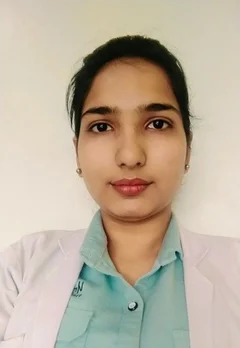
Dr. Anjali Sehrawat
star_border
5
2,389
478 समीक्षाएँ
I am Dr. Anjali Sehrawat. Graduated BAMS from National College of Ayurveda & Hospital, Barwala (Hisar) in 2023—and right now I'm doing my residency, learning a lot everyday under senior clinicians who’ve been in the field way longer than me. It’s kind of intense but also really grounding. Like, it makes you pause before assuming anything about a patient.
During my UG and clinical rotations, I got good hands-on exposure... not just in diagnosing through Ayurvedic nidan but also understanding where and when Allopathic tools (like lab reports or acute interventions) help fill the gap. I really believe that if you *actually* want to heal someone, you gotta see the whole picture—Ayurveda gives you that depth, but you also need to know when modern input is useful, right?
I’m more interested in chronic & lifestyle disorders—stuff like metabolic imbalances, stress-linked issues, digestive problems that linger and slowly pull energy down. I don’t rush into giving churnas or kashayams just bcz the texts say so... I try to see what fits the patient’s prakriti, daily habits, emotional pattern etc. It’s not textbook-perfect every time, but that’s where the real skill grows I guess. I do a lot of thinking abt cause vs symptom—sometimes it's not the problem you see that actually needs solving first.
What I care about most is making sure the treatment is safe, ethical, practical, and honest. No overpromising, no pushing meds that don’t fit. And I’m always reading or discussing sth—old Samhitas or recent journals, depends what the case demands. My goal really is to build a practice where people feel seen & understood, not just “managed.” That's where healing actually begins, right?
नवीनतम समीक्षाएँ

Sofia
4 घंटे पहले
Thanks a ton for the detailed advice! Your explanation made things a lot clearer and the combo approach makes sense. Really appreciate it!
Thanks a ton for the detailed advice! Your explanation made things a lot clearer and the combo approach makes sense. Really appreciate it!
FAQ
आयुर्वेदिक डॉक्टर से प्रश्न कैसे पूछें?
keyboard_arrow_down
साइट पर परामर्श के लिए क्या करना चाहिए?
keyboard_arrow_down
डॉक्टर की रेटिंग किस पर निर्भर करती है?
keyboard_arrow_down
अतिरिक्त दस्तावेज़
© 2024 Ask Ayurveda. सर्वाधिकार सुरक्षित।