हमारी आयुर्वेदिक विशेषज्ञों की टीम
सुविधाजनक खोज आपको निम्नलिखित मापदंडों के आधार पर अच्छे विशेषज्ञों को खोजने की अनुमति देती है: डॉक्टर की रेटिंग, कार्य अनुभव, रोगी समीक्षाएँ, विशेषज्ञता, शैक्षणिक डिग्री, और ऑनलाइन उपस्थिति।
पृष्ठ पर, आप किसी डॉक्टर के साथ व्यक्तिगत परामर्श प्राप्त कर सकते हैं। कई डॉक्टर कॉन्सिलियम प्रारूप में ऑनलाइन परामर्श प्रदान करते हैं (कई डॉक्टरों से प्रश्न और उत्तर)।
वर्तमान में ऑनलाइन
केवल समीक्षाओं के साथ
आयुर्वेदिक डॉक्टर
6
परामर्श:

Dr. Ayush Varma
star_border
4.95
532,052
20 समीक्षाएँ
I am an Ayurvedic physician with an MD from AIIMS—yeah, the 2008 batch. That time kinda shaped everything for me... learning at that level really forces you to think deeper, not just follow protocol. Now, with 15+ years in this field, I mostly work with chronic stuff—autoimmune issues, gut-related problems, metabolic syndrome... those complex cases where symptoms overlap n patients usually end up confused after years of going in circles. I don’t rush to treat symptoms—I try to dig into what’s actually causing the system to go off-track. I guess that’s where my training really helps, especially when blending classical Ayurveda with updated diagnostics.
I did get certified in Panchakarma & Rasayana therapy, which I use quite a lot—especially in cases where tissue-level nourishment or deep detox is needed. Rasayana has this underrated role in post-illness recovery n immune stabilization, which most people miss.
I’m pretty active in clinical research too—not a full-time academic or anything, but I’ve contributed to studies on how Ayurveda helps manage diabetes, immunity burnout, stress dysregulation, things like that. It’s been important for me to keep a foot in that evidence-based space—not just because of credibility but because it keeps me from becoming too rigid in practice.
I also get invited to speak at wellness events n some integrative health conferences—sharing ideas around patient-centered treatment models or chronic care via Ayurvedic frameworks. I practice full-time at a wellness centre that’s serious about Ayurveda—not just the spa kind—but real, protocol-driven, yet personalised medicine. Most of my patients come to me after trying a lot of other options, which makes trust-building a huge part of what I do every single day.
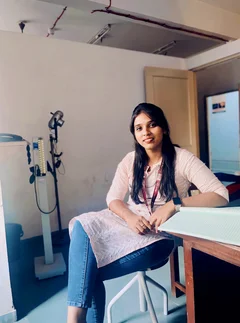
Dr. Karthika
star_border
5
2,378
237 समीक्षाएँ
I am currently a PG 2nd yr student in the dept of Shalakya Tantra at Parul Institute of Ayurveda and Research, batch 2024. I joined right after UG—no break—straight into PG (regular batch). I did my undergrad from Rajiv Gandhi Ayurveda Medical College (2017 batch, CCRAS syllabus under Pondicherry Univ). Somehow managed to secure 2nd rank university-wide back then, which I didn’t totally expect.
Right now, my core interest lies in the Ayurvedic and integrative management of eye disorders. I’ve got decent exposure to both classical texts and clinical practice. From anatomy to pathology, I try to stay grounded in both the traditional Ayurvedic view and also the modern opthalmic understanding, especially with conditions related to the cornea, retina, and anterior segment. During PG deputation in 2nd year, I handled like 200+ OPD patients daily within 1–2 hrs (felt crazy at first but got used to the pace).
I’m also trained hands-on in cataract and cornea surgeries under supervision. Not calling myself a surgeon yet, but I did get a good amout of surgical exposure in the PG postings. In terms of academics, I got 82% in the first-year PG exams—distinction score—secured department 1st and university topper at Parul Institute.
Sometimes I do wonder if all this speed actually lets me go deep into each case but I’m learning to balance efficiency with proper patient care. Honestly I think that’s the biggest challenge in clinical ayurveda today—staying rooted in shastra while also being practically useful in today's overloaded OPDs. Anyway, still got a lot to learn, but I try to show up with clarity, humility and the will to keep improving every day.
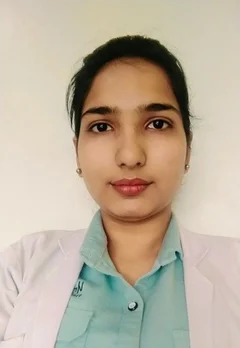
Dr. Anjali Sehrawat
star_border
5
2,167
425 समीक्षाएँ
I am Dr. Anjali Sehrawat. Graduated BAMS from National College of Ayurveda & Hospital, Barwala (Hisar) in 2023—and right now I'm doing my residency, learning a lot everyday under senior clinicians who’ve been in the field way longer than me. It’s kind of intense but also really grounding. Like, it makes you pause before assuming anything about a patient.
During my UG and clinical rotations, I got good hands-on exposure... not just in diagnosing through Ayurvedic nidan but also understanding where and when Allopathic tools (like lab reports or acute interventions) help fill the gap. I really believe that if you *actually* want to heal someone, you gotta see the whole picture—Ayurveda gives you that depth, but you also need to know when modern input is useful, right?
I’m more interested in chronic & lifestyle disorders—stuff like metabolic imbalances, stress-linked issues, digestive problems that linger and slowly pull energy down. I don’t rush into giving churnas or kashayams just bcz the texts say so... I try to see what fits the patient’s prakriti, daily habits, emotional pattern etc. It’s not textbook-perfect every time, but that’s where the real skill grows I guess. I do a lot of thinking abt cause vs symptom—sometimes it's not the problem you see that actually needs solving first.
What I care about most is making sure the treatment is safe, ethical, practical, and honest. No overpromising, no pushing meds that don’t fit. And I’m always reading or discussing sth—old Samhitas or recent journals, depends what the case demands. My goal really is to build a practice where people feel seen & understood, not just “managed.” That's where healing actually begins, right?

Dr. Prasad Pentakota
star_border
5
19,943
929 समीक्षाएँ
I am Dr. P. Prasad, and I’ve been in this field for 20+ years now, working kinda across the board—General Medicine, Neurology, Dermatology, Cardiology—you name it. Didn’t start out thinking I’d end up spanning that wide, but over time, each area sort of pulled me in deeper. And honestly, I like that mix. It lets me look at a patient not just through one lens but a whole system-wide view... makes more sense when treating something that won’t fit neatly in one category.
I’ve handled everything from day-to-day stuff like hypertension, diabetes, or skin infections to more serious neuro and cardiac problems. Some cases are quick—diagnose, treat, done. Others take time, repeated check-ins, figuring out what’s really going on beneath those usual symptoms. And that’s where the detail matters. I’m pretty big on thorough diagnosis and patient education—because half the problem is ppl just not knowing what’s happening inside their own body.
What’s changed for me over years isn’t just knowledge, it’s how much I lean on listening. If you miss what someone didn’t say, you might also miss their actual illness. And idk, after seeing it play out so many times, I do believe combining updated medical practice with basic empathy really shifts outcomes. Doesn’t have to be complicated... it just has to be consistent.
I keep up with research too—new drugs, diagnostics, cross-specialty updates etc., not because it’s trendy, but cuz it’s necessary. Patients come in better read now than ever. You can’t afford to fall behind. The end goal’s the same tho—help them heal right, not just fast. Ethical practice, evidence-based, and sometimes just being there to explain what’s going on. That’s what I stick to.

Dr. Sumi. S
star_border
5
1,137
80 समीक्षाएँ
I am an Ayurvedic doc trained mainly in Shalakya Tantra—basically, I work a lot with issues of the eyes, ears, nose, oral cavity, head... all that ENT zone. It’s a really specific branch of Ayurveda, and I’ve kind of grown to appreciate how much it covers. I deal with all kinds of conditions like Netra Abhishyanda (kinda like conjunctivitis), Timira and Kacha (early or full-on cataract), Adhimantha (glaucoma stuff), Karna Srava (ear discharge), Pratishyaya (chronic colds n sinus), Mukhapaka (mouth ulcers), and even dental stuff like Dantaharsha (teeth sensitivity) or Shirashool (headaches & migraines).
I use a mix of classic therapies—Tarpana, Nasya, Aschyotana, Karna Purana, even Gandusha and Dhoomapana when it fits. Depends on prakriti, the season, and where the person’s really struggling. Rasayana therapy and internal meds are there too of course but I don’t just throw them in blindly... every plan’s got to make sense to that individual. It’s kind of like detective work half the time.
But honestly, my clinical work hasn't been just about Shalakya. I’ve got around two yrs of broader OPD experience where I’ve also handled chronic stuff like diabetes, thyroid issues, arthritis flares, PCOS, IBS-type gut problems, and some hormonal imbalances in women too. I kind of like digging into the layers of a case where stress is playing a role. Or when modern bloodwork says one thing, but the symptoms are telling me something else entirely.
I use pathology insights but don’t let reports override what the patient's body is clearly saying. That balance—between classical Ayurvedic drishtis and modern diagnostic tools—is what I’m always aiming for. I also try to explain things to patients in a way they’ll get it. Because unless they’re on board and actually involved, no healing really works long-term, right?
It’s not all picture-perfect. Sometimes I still re-read my Samhitas when I'm stuck or double check new case patterns. And sometimes my notes are a mess :) But I do try to keep learning and adapting while still keeping the core of Ayurveda intact.

Dr. Anirudh Deshmukh
3,591
0 समीक्षाएँ
I am Dr Anurag Sharma, done with BAMS and also PGDHCM from IMS BHU, which honestly shaped a lot of how I approach things now in clinic. Working as a physician and also as an anorectal surgeon, I’ve got around 2 to 3 years of solid experience—tho like, every day still teaches me something new. I mainly focus on anorectal care (like piles, fissure, fistula stuff), plus I work with chronic pain cases too. Pain management is something I feel really invested in—seeing someone walk in barely managing and then leave with actual relief, that hits different.
I’m not really the fancy talk type, but I try to keep my patients super informed, not just hand out meds n move on. Each case needs a bit of thinking—some need Ksharasutra or minor para surgical stuff, while others are just lifestyle tweaks and herbal meds. I like mixing the Ayurved principles with modern insights when I can, coz both sides got value really. It’s like—knowing when to go gentle and when to be precise.
Right now I’m working hard on getting even better with surgical skills, but also want to help people get to me before surgery's the only option. Had few complicated cases where patience n consistency paid off—no shortcuts but yeah, worth it.
The whole point for me is to actually listen first, like proper listen. People talk about symptoms but also say what they feel—and that helps in understanding more than any lab report sometimes. I just want to stay grounded in my work, and keep growing while doing what I can to make someone's pain bit less every day.
नवीनतम समीक्षाएँ

Presley
4 घंटे पहले
Thanks a ton for the advice! Really clear and straight to the point. I feel more confident about managing this naturally now :)
Thanks a ton for the advice! Really clear and straight to the point. I feel more confident about managing this naturally now :)
FAQ
आयुर्वेदिक डॉक्टर से प्रश्न कैसे पूछें?
keyboard_arrow_down
साइट पर परामर्श के लिए क्या करना चाहिए?
keyboard_arrow_down
डॉक्टर की रेटिंग किस पर निर्भर करती है?
keyboard_arrow_down
अतिरिक्त दस्तावेज़
© 2024 Ask Ayurveda. सर्वाधिकार सुरक्षित।