Our Team of Ayurvedic Experts
Convenient search allows you to find good specialists based on the following parameters: doctor’s rating, work experience, patient reviews, specialization, academic degree, and online presence.
On the page, you can get an individual consultation with a doctor. Many doctors provide online consultations in a consilium format (questions and answers from multiple doctors).
Currently online
With reviews only
Ayurvedic doctors
7
Consultations:

Dr. Snehal Tasgaonkar
star_border
5
1,553
169 reviews
I am an Ayurvedic physician with around 7 yrs clinical experience, though honestly—feels like I’ve lived double that in patient hours. I studied from a govt. medical college (reputed one) where I got deep into classical Ayurvedic texts n clinical logic. I treat everything from chronic stuff like arthritis, IBS, eczema... to more sudden conditions that just pop up outta nowhere.
I try to approach each case by digging into the *why*, not just the *what*. I mean—anyone can treat pain, but if you don’t catch the doshic imbalance or metabolic root, it just comes bak right? I use Nadi Pariksha a lot, but also other classical signs to map prakriti-vikruti, dhatu status n agni condition... you know the drill. I like making people *understand* their own health too. Doesn’t make sense to hand meds without giving them tools to prevent a relapse.
My Panchakarma training’s been a core part of my work. I do Abhyanga, Swedana, Basti etc regularly—not just detox but also as restorative therapy. Actually seen cases where patients came in exhausted, foggy... and post-Shodhana, they're just lit up. That part never gets old.
Also I always tie diet & lifestyle changes into treatment. It’s non-negotiable for me, bcs long-term balance needs daily changes, not just clinic visits. I like using classical formulations but I stay practical too—if someone's not ready for full-scale protocol, I try building smaller habits.
I believe healing’s not just abt treating symptoms—it’s abt helping the body reset, then stay there. I’m constantly refining what I do, trying to blend timeless Ayurvedic theory with real-time practical needs of today’s patients. Doesn’t always go perfect lol, but most times we see real shifts. That’s what keeps me going.
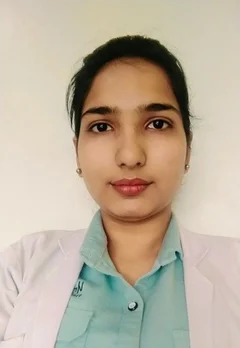
Dr. Anjali Sehrawat
star_border
5
1,941
383 reviews
I am Dr. Anjali Sehrawat. Graduated BAMS from National College of Ayurveda & Hospital, Barwala (Hisar) in 2023—and right now I'm doing my residency, learning a lot everyday under senior clinicians who’ve been in the field way longer than me. It’s kind of intense but also really grounding. Like, it makes you pause before assuming anything about a patient.
During my UG and clinical rotations, I got good hands-on exposure... not just in diagnosing through Ayurvedic nidan but also understanding where and when Allopathic tools (like lab reports or acute interventions) help fill the gap. I really believe that if you *actually* want to heal someone, you gotta see the whole picture—Ayurveda gives you that depth, but you also need to know when modern input is useful, right?
I’m more interested in chronic & lifestyle disorders—stuff like metabolic imbalances, stress-linked issues, digestive problems that linger and slowly pull energy down. I don’t rush into giving churnas or kashayams just bcz the texts say so... I try to see what fits the patient’s prakriti, daily habits, emotional pattern etc. It’s not textbook-perfect every time, but that’s where the real skill grows I guess. I do a lot of thinking abt cause vs symptom—sometimes it's not the problem you see that actually needs solving first.
What I care about most is making sure the treatment is safe, ethical, practical, and honest. No overpromising, no pushing meds that don’t fit. And I’m always reading or discussing sth—old Samhitas or recent journals, depends what the case demands. My goal really is to build a practice where people feel seen & understood, not just “managed.” That's where healing actually begins, right?

Dr. Prasad Pentakota
star_border
5
19,631
828 reviews
I am Dr. P. Prasad, and I’ve been in this field for 20+ years now, working kinda across the board—General Medicine, Neurology, Dermatology, Cardiology—you name it. Didn’t start out thinking I’d end up spanning that wide, but over time, each area sort of pulled me in deeper. And honestly, I like that mix. It lets me look at a patient not just through one lens but a whole system-wide view... makes more sense when treating something that won’t fit neatly in one category.
I’ve handled everything from day-to-day stuff like hypertension, diabetes, or skin infections to more serious neuro and cardiac problems. Some cases are quick—diagnose, treat, done. Others take time, repeated check-ins, figuring out what’s really going on beneath those usual symptoms. And that’s where the detail matters. I’m pretty big on thorough diagnosis and patient education—because half the problem is ppl just not knowing what’s happening inside their own body.
What’s changed for me over years isn’t just knowledge, it’s how much I lean on listening. If you miss what someone didn’t say, you might also miss their actual illness. And idk, after seeing it play out so many times, I do believe combining updated medical practice with basic empathy really shifts outcomes. Doesn’t have to be complicated... it just has to be consistent.
I keep up with research too—new drugs, diagnostics, cross-specialty updates etc., not because it’s trendy, but cuz it’s necessary. Patients come in better read now than ever. You can’t afford to fall behind. The end goal’s the same tho—help them heal right, not just fast. Ethical practice, evidence-based, and sometimes just being there to explain what’s going on. That’s what I stick to.

Dr. Hemanshu Mehta
star_border
5
2,165
241 reviews
I am Dr. Hemanshu—right now a 2nd year MD scholar in Shalya Tantra, which basically means I’m training deep into the surgical side of Ayurveda. Not just cutting and stitching, btw, but the whole spectrum of para-surgical tools like Agnikarma, Viddhakarma, and Kshara Karma... these aren’t just traditional, they’re super precise when done right. I’m not saying I know everything yet (still learning every day honestly), but I do have solid exposure in handling chronic pain issues, muscle-joint disorders, and anorectal conditions like piles, fissures, fistulas—especially where modern treatments fall short or the patient’s tired of going through loops.
During clinical rounds, I’ve seen how even simple Kshara application or well-timed Agnikarma can ease stuff like tennis elbow or planter fasciatis, fast. But more than the technique, I feel the key is figuring what matches the patient’s constitution n lifestyle... like one-size-never-fits-all here. I try to go beyond the complaint—looking into their ahar, sleep, stress levels, digestion, and just how they feel in general. That part gets missed often.
I honestly believe healing isn’t just a “procedure done” kind of thing. I try not to rush—spend time on pre-procedure prep, post-care advice, what diet might help the tissue rebuild faster, whether they’re mentally up for it too. And no, I don’t ignore pathology reports either—modern diagnostic tools help me stay grounded while applying ancient methods. It’s not this vs that, it’s both, when needed.
My aim, tbh, is to become the kind of Ayurvedic surgeon who doesn't just do the work but understands why that karma or technique is needed at that point in time. Every case teaches me something new, and that curiosity keeps me moving.

Dr. Ravi Chandra Rushi
star_border
5
2,016
299 reviews
I am working right now as a Consultant Ayurvedic Ano-Rectal Surgeon at Bhrigu Maharishi Ayurvedic Hospital in Nalgonda—and yeah, that name’s quite something, but what really keeps me here is the kind of cases we get. My main focus is managing ano-rectal disorders like piles (Arsha), fistula-in-ano (Bhagandara), fissure-in-ano (Parikartika), pilonidal sinus, and rectal polyps. These are often more complex than they look at first, and they get misdiagnosed or overtreated in a lotta places. That’s where our classical tools come in—Ksharasutra therapy, Agnikarma, and a few other para-surgical techniques we follow from the Samhitas...they’ve been lifesavers honestly.
My work here pushes me to keep refining surgical precision while also sticking to the Ayurvedic core. I do rely on modern diagnostics when needed, but I won’t replace the value of a well-done Nadi Pariksha or assessing dosha-vikruti in depth. Most of my patients come with pain, fear, and usually after a couple of rounds of either incomplete surgeries or just being fed painkillers n antibiotics. And I totally get that frustration. That’s why I combine surgery with a whole support plan—Ayurvedic meds, diet changes, lifestyle tweaks that actually match their prakriti. Not generic stuff off a handout.
Over time, I’ve seen that when people follow the whole protocol, not just the procedure part, the recurrence drops a lot. I’m quite particular about follow-up and wound care too, ‘cause we’re dealing with delicate areas here and ignoring post-op can ruin outcomes. Oh and yeah—I care a lot about educating folks too. I talk to patients in OPD, sometimes give community talks, just to tell people they do have safer options than cutting everything out under GA!
I still study Shalya Tantra like it’s a living document. I try to stay updated with whatever credible advancements are happening in Ayurvedic surgery, but I filter what’s fluff and what’s actually useful. At the end of the day, my aim is to offer respectful, outcome-based care that lets patients walk out without shame or fear. That’s really what keeps me grounded in this field.

Dr. Sara Garg
star_border
5
884
44 reviews
I am someone who believes Ayurveda isn’t just some old system — it’s alive, and actually still works when you use it the way it's meant to be used. My practice mostly revolves around proper Ayurvedic diagnosis (rogi & roga pariksha types), Panchakarma therapies, and ya also a lot of work with herbal medicine — not just prescribing but sometimes preparing stuff myself when needed. I really like that hands-on part actually, like knowing where the herbs came from and how they're processed... changes everything.
One of the things I pay a lot of attention to is how a person's lifestyle is playing into their condition. Food, sleep, bowel habits, even small emotional patterns that people don't even realize are affecting their digestion or immunity — I look at all of it before jumping to treatment. Dietary therapy isn’t just telling people to eat less fried food lol. It’s more about timing, combinations, seasonal influence, and what suits their prakriti. That kind of detail takes time, and sometimes patients don’t get why it matters at first.. but slowly it clicks.
Panchakarma — I do it when I feel it's needed. Doesn’t suit everyone all the time, but in the right case, it really clears the stuck layers. But again, it's not magic — people need to prep properly and follow instructions. That's where strong communication matters. I make it a point to explain everything without dumping too much Sanskrit unless they’re curious.
I also try to keep things simple, like I don’t want patients feeling intimidated or overwhelmed with 10 things at once. We go step by step — sometimes slow, sometimes quick depending on the case. There’s no “one protocol fits all” in Ayurveda and frankly I get bored doing same thing again and again.
Whether it’s a fever that won’t go or long-term fatigue or gut mess — I usually go deep into what's behind it. Surface-level fixes don’t last. I rather take the time than rush into wrong herbs. It’s more work, ya, but makes a diff in long run.

Dr. Gursimran Jeet Singh
star_border
5
1,063
186 reviews
I am Dr. Gursimran Jeet Singh, born and raised in Punjab where culture and traditions almost naturally guided me toward Ayurveda. From very early days I felt more drawn to natural ways of healing, and this curiosity finally led me to pursue Bachelor of Ayurvedic Medicine and Surgery (BAMS) at Shri Dhanwantry Ayurvedic College, Chandigarh—an institution known for shaping strong Ayurvedic physicians. During those years I learned not only the classical texts and treatment methods, but also how to look at health through a very practical, human lense.
For the past five years I worked in clinical practice, where patients come with wide range of concerns—from chronic digestion troubles to autoimmune illness—and I try to integrate both Ayurveda and modern medical knowledge to give them the most complete care I can. Sometimes western diagnostics help me to understand the stage of disease, while Ayurveda helps me design treatment that address root cause. This bridging approach is not always easy, but I believe it’s necessary for today’s health challanges.
Currently I am also pursuing higher studies in Panchakarma therapy. Panchakarma is an area I feel very strongly about—it is not just detox, it is a whole system of cleansing, rejuvenation, rebalancing, and I want to deepen my expertise here. In practice, I combine Panchakarma with lifestyle guidance, diet planning, herbal remedies, yoga and mindfulness practices depending on what a patient actually needs at that moment. No two cases are same, and Ayurveda reminds me daily that healing must be personal.
My approach is always focused on root-cause management rather than temporary relief. Diet, herbs, therapeutic oils, meditation routines, and simple daily habits—they all work together when chosen rightly. Sometimes results come slow, sometimes faster, but I try to keep care sustainable and compassionate. Helping someone regain energy, sleep better, or reduce pain, that is the real achievement in my journey. And I continue learning, because Ayurveda is deep, it doesn’t finish with one degree or one training, it grow with every patient and every experiance.My specialties lie in treating a range of chronic and lifestyle-related conditions using Ayurveda’s time-tested principles, tailored to each individual’s unique constitution (Prakriti). I have significant expertise in managing digestive disorders, such as irritable bowel syndrome (IBS), acid reflux, constipation, diabetes, obesity and inflammatory bowel diseases.
I also specialize in addressing stress-related and mental health conditions, including anxiety, depression, insomnia, and burnout, which are increasingly common in today’s fast-paced world. By integrating therapies like Shirodhara (oil pouring on the forehead) to calm the nervous system, Abhyanga (herbal oil massages) to balance Vata dosha, and adaptogenic herbs like Ashwagandha and Brahmi, I help patients achieve mental clarity and emotional resilience.
In the field of musculoskeletal and joint health, I excel in treating conditions like arthritis (rheumatoid and osteoarthritis), back pain, sciatica, and sports injuries. Using therapies such as Kati Basti (localized oil retention on the lower back) and potent anti-inflammatory herbs like Guggulu and Shallaki, I focus on reducing inflammation, improving joint mobility, and strengthening tissues. My treatments have helped many patients, particularly those seeking non-invasive alternatives, regain mobility and reduce pain through a blend of internal medications and external therapies.
Skin disorders are another key area of my practice, where I address conditions like eczema, psoriasis, acne, and pigmentation issues holistically. By focusing on blood purification and balancing Pitta dosha and detoxifying Panchakarma techniques like Raktamokshana (bloodletting). My approach targets dietary and lifestyle triggers, offering sustainable results for clients who previously relied on temporary solutions like topical steroids.
My dual expertise in Ayurveda and modern medicine allows me to create integrative treatment plans that are both effective and safe.
I am deeply committed to patient education, empowering individuals to embrace Ayurvedic principles for sustainable health. Through this online platform, I am excited to offer virtual consultations, making the profound benefits of Ayurveda accessible to all. Whether you seek relief from a specific condition or aim to enhance overall vitality, I look forward to guiding you on your journey to balance and well-being with compassion and expertise.
Latest reviews

Evelyn
2 hours ago
Thanks so much! Your answer was really clear and detailed. Appreciate the step by step suggestions. Definitely feel more at ease now!
Thanks so much! Your answer was really clear and detailed. Appreciate the step by step suggestions. Definitely feel more at ease now!
FAQ
How to ask ayurvedic doctor a question?
keyboard_arrow_down
What should be done to consult on the site?
keyboard_arrow_down
What does the doctor’s rating depend on?
keyboard_arrow_down
© 2024 Ask Ayurveda. All rights reserved.