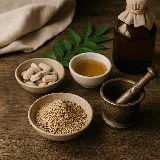
Mrityunjaya Rasa: Benefits, Dosage, Ingredients, Side Effects

Introduction
Welcome to this deep dive on Mrityunjaya Rasa: Benefits, Dosage, Ingredients, Side Effects—you know, that legendary Ayurvedic formulation nicknamed the “elixir of life.” This article is crafted to give you practical, not-so-dry insights on this time-honored remedy. We’ll keep it lively, sometimes even chatty, because let’s face it, dense Ayurvedic texts can be a snooze-fest. Here, we’ll unpack: what it is, where it came from, why folks swear by it, and yes, how to actually take it safely.
Origins and Historical Footprint
So, what’s the backstory of Mrityunjaya Rasa? The name itself means “Conqueror of Death.” Legend has it, sages and yogis used it for enhancing life-force (prana) and combating serious illnesses centuries ago. You’ll find references in classical texts like Rasaratna Samuccaya and Sharangadhara Samhita—though, honestly, most of us would rather hear a story than memorize Sanskrit verses, right?
This rasashastra marvel combines ancient metallurgy and herbal medicine—a fusion of bhasmas (incinerated minerals) and potent Ayurvedic herbs. Over time, it evolved from being an esoteric alchemical brew to a more standardized Ayurvedic tonic, widely available at pharmacies that specialize in classical formulations.
What Exactly Is Mrityunjaya Rasa?
At its core, Mrityunjaya Rasa is a metallopharmaceutical preparation—meaning it includes purified metals like mercury (in its safest form, as mercuric sulfide/mineral form), processed through rigorous purification techniques (shodhana), and then combined with herbs. Before you freak out about mercury, know that proper Ayurvedic processing transforms these metals into bioavailable, detoxified bhasmas that are believed to be gentle on the body when prepared correctly by experts.
Think of it as a time-tested, multi-ingredient concoction designed to strengthen immunity, boost digestion (agni), and support vital organ functions (especially heart and liver). It’s not your everyday supplement that you grab off Amazon without a second thought—this one demands respect, experience, and caution.
Benefits of Mrityunjaya Rasa
There’s no shortage of headline-grabbing claims around Mrityunjaya Ras (another shorthand some practitioners use). Below, we break down the most commonly cited benefits (backed by traditional text and some emerging modern research).
Physical Health Benefits
- Immune Support: Traditionally used to enhance overall immunity (vyadhikshamatva). Many users report fewer infections, less frequent colds, and better resistance to seasonal flu.
- Cardio Protection: It is reputed to strengthen the heart (hridya). Though modern clinical trials are limited, anecdotal evidence suggests improved circulation and reduced palpitations.
- Digestive Fire (Agni) Booster: The potent mix is said to optimize metabolism, promoting better appetite, digestion and nutrient absorption—particularly useful for chronic sluggish digestion.
- Rejuvenation (Rasayana) Effect: In Ayurveda, rasayanas are formulations that slow aging, improve vitality, and support longevity. Mrityunjaya Rasa is considered a top-tier rasayana.
- Anti-inflammatory Action: Some herbs in the formulation may help reduce inflammation—so it’s used in joint disorders, chronic pain, and general stiffness.
Mental and Emotional Benefits
- Stress Relief: While not a “happy pill,” it’s used to pacify Vata dosha imbalances that often manifest as anxiety, restlessness, and insomnia. Many folks report calmer sleep patterns.
- Cognitive Support: Believed to sharpen memory and concentration—traditionally recommended for students or professionals under heavy mental load.
- Emotional Balance: By grounding excessive Vata and Pitta, it can bring a sense of emotional steadiness, helping with irritability and mood swings.
Ingredients and Preparation
Remember, making Mrityunjaya Rasa at home is not a DIY kitchen project—it needs specialized equipment, Rasa Shastra expertise, and strict quality control. Here’s an overview of what goes in and how it’s traditionally prepared.
Key Ingredients
- Purified Mercury (Parada Shuddha): Carefully detoxified to convert it into safe, non-toxic bhasma.
- Purified Sulphur (Gandhaka Shuddha): Combined with mercury to form the sulfide bhasma (shuddha ras shastra).
- Herbal Juices/Decoctions: Typically include Guduchi (Tinospora cordifolia), Brahmi (Bacopa monnieri), Shilajit, and other rejuvenating herbs.
- Mukta Pishti: Pearl calcium used for its cooling, nutritive properties.
- Swarn Bhasma (Gold Ash): In some classical recipes for additional Rasayana effect.
- Pippali (Long Pepper), Maricha (Black Pepper): For bioavailability enhancement.
- Kesar (Saffron): Adds subtle nutritive quality (and color!).
Traditional Preparation Steps
(Warning: This is informational—please don’t attempt this without a certified Rasashastra practitioner!)
- Shodhana (Purification): Mercury and sulfur are purified through multiple cycles of heating, quenching in herbal decoctions, and filtration to remove impurities and toxic fractions.
- Mardana (Trituration): The purified metals are ground with herbal juices in a stone mortar for 1–7 days (depending on the recipe).
- Bhavana (Levigation): Continuous mixing with decoctions transforms the mixture into a homogenous paste.
- Marana (Incineration): The paste is shaped into pellets, dried, and subjected to several cycles of calcination (Puta)—each cycle reaching precise temperature profiles to convert it into bhasma.
- Final Sieving: The finished product is powdered and passed through fine sieves to ensure consistency.
Each step takes days to weeks. Skilled hands, detailed protocols, and precise temperature controls are non-negotiable!
Dosage and Administration
Okay, here’s the part where many get confused—dosage. Keep in mind that Ayurvedic dosage depends on one’s constitution (prakriti), age, current health status, and co-administered medicines. Always consult a qualified Ayurvedic practitioner who’ll tailor the dose for you. Below is a general guideline.
Standard Dosage
- Adults: 30–125 mg (around 1/10 to 1 pinch), once or twice daily. Some practitioners start low (30 mg) and gradually increase if needed.
- Elderly: Lower end of dosage, maybe 30–60 mg, to account for slower metabolism.
- Children: Not generally recommended unless under strict pediatric Ayurvedic supervision.
- Duration: Courses usually span 2–4 weeks, with weekly monitoring. Longer use requires professional follow-up.
Note: Weighing the powder with a micro-scale gives the best accuracy—pinch measurements are super rough!
Timing and Method of Intake
- Take Mrityunjaya Rasa on an empty stomach or 30 minutes before meals (to maximize absorption).
- Wash down with warm water, herbal tea, or honey water. Some swear by a teaspoon of ghee or honey immediately before or after.
- Avoid cold drinks or dairy immediately with it, as that may hinder assimilation.
- Track your sleep, digestion, and mood daily—small diaries help you and your practitioner adjust dose.
Side Effects and Precautions
While Mrityunjaya Rasa has a stellar safety record in classical Ayurveda when properly prepared, we can’t ignore potential side effects if misused—or if one purchases substandard products. Always choose reputable brands or certified practitioners.
Potential Side Effects
- Gastrointestinal Upset: Nausea, mild cramping, or diarrhea if taken on a very full or very empty stomach.
- Allergic Reactions: Rare, but some individuals may react to certain herbal binders (e.g., saffron, black pepper).
- Metal Sensitivity: If the bhasma isn’t properly incinerated, trace unpurified metals could cause toxicity—symptoms include headaches, mouth ulcers, or metallic taste.
- Imbalance of Doshas: Overdosing can aggravate Pitta (heat signs: acidity, rashes) or Vata (dryness, insomnia), so stick to recommended levels.
Precautions and Contraindications
- Pregnancy and Breastfeeding: Generally contraindicated due to heavy metal content unless specifically approved by an Ayurvedic OB/GYN specialist.
- Children: As said earlier, avoid unless under pediatric Ayurvedic guidance.
- Liver/Kidney Disorders: Use caution; always get baseline liver and kidney function tests if you’re doing a multi-week course.
- Quality Assurance: Only buy from GMP-certified, licensed Ayurvedic manufacturers. Sketchy street stalls? Big no-no.
- Drug Interactions: Could interact with modern pharmaceuticals—especially blood thinners and antihypertensives. Talk to both your MD and Ayurvedic doc.
Conclusion
So, wrapping up our journey into the world of Mrityunjaya Rasa: Benefits, Dosage, Ingredients, Side Effects—we’ve covered the origin myths, the key ingredients and how they’re prepared, the spectrum of benefits, dosage guidelines, and the necessary precautions. It’s truly an incredible example of Ayurveda’s profound understanding of metals and minerals, transformed through alchemical wisdom into medicines that are believed to boost immunity, sharpen the mind, and rejuvenate the body.
But remember—this isn’t candy. Mrityunjaya Rasa demands respect, proper sourcing, and professional guidance. If you’re curious to try it, set up a consultation with a trusted Ayurvedic practitioner. They’ll assess your constitution, current health, and tailor a regimen that fits. Have patience—these are classical remedies that work subtly over time, not like rapid-fire pharmaceuticals.
FAQs
- 1. Can I buy Mrityunjaya Rasa online?
You can, but caution: verify the seller’s certifications, check for GMP logos, and read reviews. Ideally, get a prescription from an Ayurvedic practitioner.
- 2. How quickly will I feel the effects?
It varies—some notice subtle improvements (better sleep, mild energy boost) within a week; for full Rasayana effects, 3–4 weeks is common.
- 3. Is it safe long-term?
Long-term use requires medical oversight and periodic blood work. Short courses (2–4 weeks) are generally safer initial steps.
- 4. Are there vegetarian alternatives?
Purely herbal rasayanas like Chyawanprash or Brahma Rasayana exist, but they don’t replace the unique mineral component of Mrityunjaya Rasa.
- 5. What’s the best way to store it?
Keep it in an airtight glass jar, away from moisture, direct sunlight, and high heat. A cool cupboard is ideal.
Feeling inspired? Book that Ayurvedic consultation, explore more Rasayana therapies, and share this guide with someone who’d find it life-changing!
Ask Ayurvedic doctor a question and get a consultation online on the problem of your concern in a free or paid mode.
More than 2,000 experienced doctors work and wait for your questions on our site and help users to solve their health problems every day.
Related articles