Ask Ayurvedic doctor a question and get a consultation online on the problem of your concern in a free or paid mode. More than 2,000 experienced doctors work and wait for your questions on our site and help users to solve their health problems every day.


Body DetoxEar, Nose, and Throat DisordersGeriatrics & RejuvenationImmunodeficiencyInfertility TreatmentNutritionOrthopedic DisordersPediatricsRespiratory DisordersSexually Transmitted Diseases (STDs)Surgery RecoveryUrological DisordersVascular DisordersDental DisordersEndocrinological DisordersGastrointestinal DisordersYoga TherapyGeneral MedicineAllergic DisordersCardio DisordersGynecology and ObstetricsCosmetologySkin and Hair DisordersEye DisordersInfectious DiseasesMental DisordersNeurological DisordersOncologyPanchakarmaSexual Health & DisordersSports Medicine
Published on 07/23/26
(Updated on 08/07/26)
149
Diet for IBS: A 30-Day Plan That Actually Works

Most people with IBS have already tried removing foods. They cut dairy, then gluten, then onions, then whatever the last article told them to cut, and end up eating twelve safe things and still bloating.
The reason is that the standard approach only edits the ingredient list. It never touches the three variables that matter at least as much: temperature, form and timing. Ayurveda has organised digestive treatment around those three for two thousand years, and they are the fastest lever most IBS patients have never pulled.
This is a structured thirty-day diet for IBS. It starts by taking pressure off your digestion, rebuilds capacity, then reintroduces food deliberately so you finish with a real list of your own triggers rather than an inherited one.
How Can Diet Help Treat the Symptoms of IBS?
IBS is a disorder of function, not of structure. Your bowel looks normal on a scope; it behaves abnormally. Motility is dysregulated, the gut is hypersensitive to normal amounts of gas and stretch, and the gut-brain signalling loop is noisy.
Diet reaches all three. Food determines how much fermentable material arrives in the colon, how fast the bowel is asked to move, and how irritated the lining is when it gets there.
The Ayurvedic Reading: Grahani
Ayurveda calls this pattern grahani — a disorder of the organ that holds and processes food, driven by disturbed agni, the digestive fire. When agni is weak or erratic, food is only partly broken down. The residue is ama: sticky, heavy, incompletely digested material that irritates the gut and feeds the fermentation you experience as bloating.
That gives a different treatment goal from the Western one. Western dietetics asks which food is causing this? Ayurveda asks why has your digestion stopped being able to handle ordinary food? Both questions are worth answering, but only the second one gives you your diet back.
Why "Healthy Eating" Often Makes IBS Worse
Kale smoothie, raw salad, overnight oats, iced water, protein bar, a big dinner at nine. Every item there is marketed as healthy and every item is difficult for a compromised digestion: cold, raw, dry, high in fermentable fibre, or badly timed.
People with IBS routinely report that they feel worse the "healthier" they eat. They're not imagining it, and it's not a psychological problem. It's a mismatch between food that requires strong digestion and digestion that currently isn't strong.
What Is the Low FODMAP Diet, and Should You Do It?
FODMAP stands for fermentable oligosaccharides, disaccharides, monosaccharides and polyols — short-chain carbohydrates that are poorly absorbed in the small intestine, draw water into the bowel, and are fermented rapidly by colonic bacteria. In a hypersensitive gut, that combination produces pain, distension and urgency.
The evidence is genuinely good. Low FODMAP is one of the better-supported dietary interventions in IBS and helps a substantial proportion of people who try it properly.
The Three Phases Most People Never Finish
| Phase | Duration | What happens |
|---|---|---|
| Elimination | 2–6 weeks | High-FODMAP foods removed. Symptom relief is assessed. |
| Reintroduction | 6–8 weeks | One FODMAP group at a time, in escalating doses, with a symptom diary. |
| Personalisation | Ongoing | A permanently liberalised diet built from what you actually reacted to. |
Phase one is the famous part. Phases two and three are where the value is, and most people never reach them — they get relief, get frightened of losing it, and stay in elimination for a year.
That is the real problem with low FODMAP. It was never designed as a long-term diet. Prolonged restriction narrows the range of plants you eat, which reduces the diversity of your gut microbiota, and diversity is protective. It's also socially exhausting.
Our Honest Verdict
Use low FODMAP as a diagnostic tool, ideally with a dietitian, and commit in advance to reintroducing. Don't use it as a way of life.
The plan below achieves much of the same symptomatic relief through form and temperature rather than exclusion, which is why it's sustainable. Many people find they tolerate foods on the low FODMAP "avoid" list perfectly well once those foods are cooked properly, spiced, and eaten at the right time of day.
What Foods Are Good for IBS?
Build every meal from four components.
A soft, cooked carbohydrate base. White or basmati rice, well-cooked oats, semolina, quinoa, polenta, potato. Rice is the easiest grain for a compromised gut and there is no shame in eating it daily during a flare.
A gently cooked vegetable. Carrot, courgette, pumpkin, squash, green beans, spinach, beetroot. Cooked until genuinely soft, not al dente. The same vegetable raw and cooked are two different foods as far as your colon is concerned.
An easy protein. Split mung dal, eggs, white fish, chicken, tofu. Split mung dal is the most digestible legume in the Ayurvedic materia medica and is the reason kitchari exists.
A fat and a spice. A teaspoon of ghee or olive oil, plus cumin, coriander, fennel, ginger, turmeric or a pinch of hing (asafoetida). Hing is the classical anti-flatulent and gives you savoury depth without the fructans in onion and garlic.
Four components, warm, at a fixed time. That's the whole architecture.
Kitchari: the Reset Meal
Split mung dal and rice simmered together with cumin, coriander, turmeric, ginger and ghee until soft. It supplies complete protein and carbohydrate in a form that asks almost nothing of your digestion, which is exactly what a struggling gut needs — nourishment without workload.
Two to three days of kitchari settles most flares. It is the single most useful recipe in this article.
Best Diet for IBS With Diarrhoea vs IBS With Constipation
The same diagnosis needs opposite diets depending on your subtype. This is the reason generic IBS advice has such a poor hit rate.
| IBS-C (constipation) | IBS-D (diarrhoea) | |
|---|---|---|
| Ayurvedic pattern | Vata — dry, cold, irregular | Pitta — hot, sharp, urgent |
| Fat | More. Ghee, olive oil, avocado | Moderate. Avoid fried and very rich food |
| Fibre priority | Soluble fibre plus fluid; psyllium | Soluble fibre only; reduce insoluble |
| Fluids | Warm water through the day | Room-temperature water, oral rehydration if losses are high |
| Fruit | Stewed prune, fig, pear, cooked apple | Ripe banana, stewed apple, pomegranate |
| Spices | Ginger, cumin, fennel, hing | Coriander, fennel, cardamom. Go easy on ginger and chilli |
| Helpful herbs | Triphala, isabgol (psyllium) | Amla, aloe vera juice, kutaja |
| Avoid | Dry crackers, cold food, skipped meals | Coffee, alcohol, chilli, very fatty meals |
Mixed-type IBS alternates between the two, and the honest answer is that it needs assessment rather than a table — you're aiming at whichever pattern is currently dominant, and that changes.
If Your Symptoms Are Cyclical
Many women find symptoms track the menstrual cycle, worsening in the days before a period. That isn't a separate condition. Progesterone slows transit and prostaglandins around menstruation speed it up, which is why the same person can be constipated for two weeks and then have three days of urgency. Plan for it rather than being surprised by it: more soluble fibre and fat in the luteal phase, blander and cooler food during the bleed.
What Is the Best Fiber for IBS?
Fibre is where most IBS diets go wrong, because "eat more fibre" is given as one instruction when there are two very different substances involved.
Soluble fibre dissolves into a gel. It softens hard stool and firms loose stool — genuinely useful in both directions. Sources: psyllium (isabgol), oats, barley, cooked carrot, pumpkin, stewed apple and pear, linseed.
Insoluble fibre adds bulk and roughage. Wheat bran, raw salad leaves, skins, seeds, most raw vegetables. In a hypersensitive gut, a large load of insoluble fibre often increases pain and bloating rather than relieving it.
Psyllium is the one to start with. It has the best evidence base of any fibre supplement in IBS and works for both subtypes. Begin at half a teaspoon in a full glass of warm water once daily, take a second glass of water afterwards, and increase over two weeks. Starting at a full dose is the most common reason people conclude psyllium "doesn't agree with them."
Ayurveda has used isabgol for centuries for precisely this and the modern evidence has landed in the same place. It's a rare and useful agreement.
Don't wait or self medicate. Start chat with Doctor NOW
The 30-Day IBS Diet Plan
Four weeks, four jobs. Don't skip ahead — the reintroduction phase is worthless if the first two weeks weren't done.
| Week | Goal | What you do |
|---|---|---|
| 1 | Stop making ama | Warm cooked food only. Fixed meal times. No snacking, no raw salad, no cold drinks. Kitchari for at least two dinners. |
| 2 | Rebuild agni | Add ginger before meals and CCF tea after. Introduce psyllium at a low dose. Short walk after eating. |
| 3 | Reintroduce | One suspect food every three days, in a normal portion, in the morning. Record symptoms for 72 hours. |
| 4 | Stabilise | Keep what you tolerated. Widen the vegetable range. Establish the routine you'll actually live with. |
Week 1 in Detail
Three meals, no snacks. Breakfast around 7–8 a.m., the largest meal at midday when digestive capacity peaks, a light early dinner before 7 p.m.
Everything warm and soft. Everything spiced. Nothing straight from the fridge. Water warm or at room temperature, sipped, not gulped with meals.
Most people notice a change in bloating within four to five days from this alone, before any herb or supplement is involved.
A Sample Day
- On waking: a cup of warm water, plain or with a slice of fresh ginger.
- Breakfast: oat porridge cooked soft with cinnamon and a stewed apple, or rice porridge with ghee.
- Midday (main meal): kitchari, or rice with cooked vegetables and a small portion of fish or chicken, sautéed in ghee with cumin.
- Afternoon: CCF tea — a teaspoon of cumin, coriander and fennel seeds steeped in hot water. No snack unless genuinely hungry.
- Dinner (early, light): vegetable soup with soft-cooked rice, or a small bowl of kitchari.
- Evening: triphala in warm water if constipation is your pattern.
Week 3: How to Reintroduce Properly
One food at a time. Three days each. A normal portion, not a heroic one. Eaten in the morning so you can observe the whole day.
Reintroducing six things in a week tells you nothing, and it's how people end up believing they react to everything.
Order matters too. Start with the foods you most want back — usually coffee, bread, dairy or onion — because knowing where you stand with those determines whether the diet is liveable.
What Over-the-Counter Medicine Is Good for IBS?
Worth knowing, and worth using honestly.
- Peppermint oil capsules (enteric-coated) are the best-evidenced over-the-counter option for IBS pain and bloating. The coating matters — uncoated peppermint releases in the stomach and can cause reflux.
- Psyllium for stool form in both subtypes.
- Loperamide for diarrhoea, situationally. Useful before a long journey; not a daily solution.
- Simethicone for gas, which helps some people and does nothing for others.
- Antispasmodics such as hyoscine or mebeverine for cramping.
- Laxatives: an osmotic agent is preferable to a stimulant for IBS-C. Stimulant laxatives used regularly make the bowel progressively less responsive.
None of these change the underlying picture. They manage symptoms while the diet does the actual work, and that's a reasonable role for them.
Where the Ayurvedic Herbs Fit
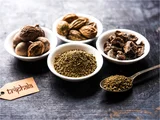
Triphala at night for the constipation pattern — it regulates rather than purges, so it can be taken long term. Hing and ginger before meals for gas and weak appetite. Amla or aloe vera juice for the burning, urgent pattern. Takra — thin spiced buttermilk at lunch — as the traditional and best-tolerated way to reintroduce live cultures once things have settled.
Introduce herbs one at a time, in week two at the earliest. Adding four herbs on day one makes the reintroduction phase uninterpretable.
How to Calm IBS Quickly, and When Diet Isn't the Answer
For an acute flare: stop solid food for one meal, drink warm water and CCF or fennel tea, then eat kitchari or plain rice for a day or two. Apply heat to the abdomen. Breathe slowly for ten minutes — the gut-brain axis is not a metaphor, and parasympathetic activation genuinely changes bowel tone.
But some symptoms are not IBS and need investigation before any diet:
- Blood in the stool, or black tarry stools
- Unexplained weight loss
- Symptoms starting for the first time after age 50
- Fever, or pain that wakes you at night
- Anaemia
- A family history of bowel cancer, coeliac disease or inflammatory bowel disease
IBS is a diagnosis of exclusion. If you have not actually had coeliac serology and basic bloods done, get that first. Adjusting your diet around an undiagnosed condition wastes months.
Frequently Asked Questions
What are the worst foods for IBS?
Across all subtypes: alcohol, deep-fried food, coffee on an empty stomach, sugar alcohols such as sorbitol and xylitol, large raw salads, and heavy late dinners. But form and timing matter as much as the food itself — the same ingredient cooked, spiced and eaten at midday is often tolerated when the raw, cold, late version is not.
How long until I see results?
Bloating and stool form usually shift within one to two weeks. Pain and food tolerance take longer, typically six to twelve weeks, because they depend on the gut lining and the sensitivity of the gut-brain loop settling.
Do I have to give up coffee?
Not necessarily. Move it to after food rather than before, keep it to one, and reassess after two weeks off during the reset. For the diarrhoea-predominant subtype, coffee is usually the single highest-value removal.
Is a gluten-free diet worth trying?
Get tested for coeliac disease first, while still eating gluten — testing after removal gives a false negative. If coeliac is excluded, many people react to fructans in wheat rather than gluten itself, which is why properly fermented sourdough is often tolerated when standard bread is not.
Should I take probiotics?
For some people, particularly after a gut infection or a course of antibiotics. Introduce them after your digestion has steadied rather than during a flare, and give any single product four weeks before judging it.
Can I ever eat normally again?
Most people end up with a diet that is broader than the elimination phase and narrower than what they ate before. The point of week three is to make that final list accurate.
Does stress really cause IBS flares?
It doesn't cause IBS, but it modulates it powerfully through the gut-brain axis. Ten minutes of daily breathing work, regular sleep and eating without a screen do more for many people than a further round of food restriction.
Why is my IBS worse when I travel?
Irregular hours, dehydration, unfamiliar food and disrupted sleep all destabilise the vata pattern that governs motility. Fixed meal times, warm food and extra fluid on travel days help more than anything you can take.
The Bottom Line
The best diet for IBS is not a list of forbidden foods. It's warm instead of cold, cooked instead of raw, spiced instead of plain, and regular instead of whenever — with a deliberate reintroduction at the end so you finish holding real information about your own gut.
Run the four weeks properly. Most people know by day ten whether they're on the right track, and by day thirty they have a diet they can live inside.
Where it gets individual is the subtype. Whether your IBS is the dry, irregular vata pattern or the hot, urgent pitta pattern decides whether you need more fat or less, ginger or coriander, triphala or amla — and getting that backwards is why so many people conclude that diet doesn't work for them. Book a consultation with an Ask Ayurveda practitioner to have your pattern assessed, your herbs matched to it, and anything you're already taking checked for interactions. Thirty days is enough to change this, provided you spend them going in the right direction.
Scientific Sources
- Efficacy of a low FODMAP diet in irritable bowel syndrome: systematic review and network meta-analysis — Black CJ et al., 2022, Gut
- Efficacy of a low-FODMAP diet in adult irritable bowel syndrome: a systematic review and meta-analysis — van Lanen AS et al., 2021, European journal of nutrition
- Low-FODMAP Diet for Irritable Bowel Syndrome: Insights from Microbiome — Zhang H et al., 2025, Nutrients
- Low-FODMAP Diet Improves Irritable Bowel Syndrome Symptoms: A Meta-Analysis — Altobelli E et al., 2017, Nutrients
- ACG Clinical Guideline: Management of Irritable Bowel Syndrome — Lacy BE et al., 2021, The American journal of gastroenterology
- The low-FODMAP diet — Lucas Zapata P et al., 2024, Anales de pediatria
Questions from users
What are the key steps for reintroducing foods after an elimination diet for IBS?
Client_7c3a4a
17 hours ago
To reintroduce foods after an elimination diet for IBS, you should gradually reintroduce one food at a time to monitor your body's response and identify any specific triggers. Start with small amounts and wait about three days between each new food to check for symptoms like bloating, pain, or changes in bowel habits. Foods that might be reintroduced include those from the low FODMAP diet that are better tolerated when cooked or consumed at specific times. If you experience persistent symptoms, consult a healthcare provider.
Can I eat raw vegetables if I have IBS?
Client_6793e4
5 days ago
If you have IBS (Irritable Bowel Syndrome), eating raw vegetables can be challenging as they are often high in insoluble fiber, which may exacerbate symptoms like bloating and discomfort. It is generally recommended to begin with well-cooked vegetables and gradually reintroduce raw ones to see how your body reacts. Start with small portions of easily digestible vegetables like zucchini or carrots. Monitor your symptoms and adjust your diet accordingly. If symptoms persist or worsen, consult a doctor or a dietitian for personalized advice.
How long does it take to feel better on a low FODMAP diet?
Client_a8be9f
10 days ago
Most people start to feel noticeable improvements in symptoms like bloating, gas, and abdominal pain within 2 to 6 weeks of strictly following a low FODMAP diet. The diet involves eliminating high-FODMAP foods, allowing the gastrointestinal tract to reset, and then gradually reintroducing them to identify triggers. If symptoms persist beyond this period, consult a healthcare professional. Proper diagnosis of conditions like irritable bowel syndrome (IBS) is essential before starting the diet. While Ayurveda may suggest balancing digestion, scientific guidelines focus on specific food triggers and personalized reintroduction.
What foods should I avoid with IBS to prevent discomfort?
Client_cb95c3
15 days ago
To manage IBS and prevent discomfort, avoid foods like high-FODMAP items, which include certain fruits, vegetables, and legumes known to cause bloating and gas. Also steer clear of gluten if you're sensitive, and consider reducing dairy products. Cold, raw, or dry foods and those with high fermentable fiber can irritate the gut, so try warm, cooked meals instead. Other potential triggers are spicy foods, artificial sweeteners, and caffeine. Track your symptoms and food intake, and consult a doctor if symptoms persist to rule out other conditions.
How can I manage IBS symptoms without medication?
Client_66e6c4
20 days ago
To manage IBS symptoms without medication, focus on dietary adjustments, such as increasing fiber intake with psyllium for stool regulation, and applying targeted heat to the abdomen to ease discomfort. Identify trigger foods through an elimination diet and consider reducing coffee if you have diarrhea-predominant IBS. A gluten-free diet might help but rule out celiac disease first. Uncoated peppermint oil can worsen symptoms due to reflux. Monitor symptom changes and consult a doctor for persistent issues, especially when over-the-counter solutions like loperamide provide only situational relief.
What are the best fats to use for IBS?
Client_96bb65
30 days ago
The best fats to use for IBS are generally ghee, olive oil, and avocado oil. These fats are easily digestible and less likely to trigger IBS symptoms compared to other fats like butter or certain vegetable oils. Ghee is praised for its ability to soothe the digestive tract, whereas olive oil provides anti-inflammatory benefits. It is advisable to start with small amounts, gradually increasing if tolerated well. Pay attention to individual responses, as some may find even these fats bothersome. If IBS symptoms worsen, consult a healthcare provider.
Related articles

General Medicine
Mediterranean Diet for Inflammation: Food List & Plan
Mediterranean diet for inflammation: the full food list, a meal plan, what is not allowed, how long it takes, and the Ayurvedic changes that matter.
116
General Medicine
Triphala 1 2 4 – Natural Ayurvedic Digestive & Detox Formula
Discover the benefits and uses of Triphala 1 2 4, a traditional Ayurvedic formulation renowned for its digestive, detoxifying, and rejuvenating properties. Enhance your well-being with this potent blend of three powerful fruits.
5,213

General Medicine
Neurological
The brain, spinal cord, and nerves make up the nervous system – together they control the whole body.
228,866

General Medicine
Trishun Tablet
Exploration of Trishun Tablet
3,458

General Medicine
Anda Thailam: An Ayurvedic Solution for Joint and Muscle Pain Relief
Discover the uses, benefits, proper dosage, and scientific research behind Anda Thailam, a potent Ayurvedic oil formulation for enhancing health and vitality.
3,545

General Medicine
Vidaryadi Leham: Benefits, Ingredients, Side Effects
Exploration of Vidaryadi Leham: Benefits, Ingredients, Side Effects
3,210

General Medicine
Signs of Liver Detox Working: How to Tell It's Doing Something
The real markers of a working liver cleanse week by week, what stool colour means, and which symptoms mean stop rather than continue.
131

General Medicine
Swarjika Kshar Sajjikhar
Exploration of Swarjika Kshar Sajjikhar
3,659

General Medicine
Triphaladi Thailam Benefits, How To Use, Ingredients, Side Effects
Exploration of Triphaladi Thailam Benefits, How To Use, Ingredients, Side Effects
3,233

General Medicine
Colon Cleanse Natural: Herbs and Foods That Work
A natural colon cleanse done properly: triphala, haritaki, isabgol and castor oil dosed by bowel type, plus the foods that keep elimination regular.
140
Related consultations on the topic
Legal
Additional Documents
© 2024 Ask Ayurveda. All rights reserved.