Marichyadi Oil: Benefits, Uses & Science-Based Insights
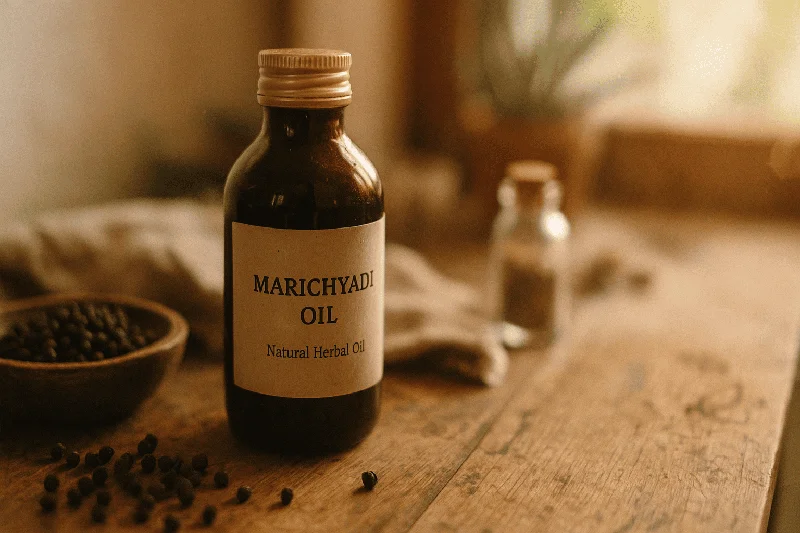
- Marichyadi Oil is a classical Ayurvedic medicated oil formulated primarily with black pepper (Maricha), neem, turmeric, and other potent herbs in a mustard oil base. It is traditionally used for skin disorders like eczema, psoriasis, dermatitis, fungal infections, and scabies — but its therapeutic scope extends far beyond skin care.
- This comprehensive guide covers everything you need to know: full ingredient breakdown, mechanism of action, usage instructions, side effects, brand comparisons, and the scientific evidence behind each component.
Whether you're dealing with chronic itching, stubborn ringworm, joint stiffness, or even respiratory congestion, Marichyadi Oil offers a time-tested Ayurvedic solution. Let's dive deep into what makes this oil so effective and how to use it properly.
What Is Marichyadi Oil?
Definition and Ayurvedic Classification
Marichyadi Oil (also called Marichyadi Taila, Marichadi Thailam, or Maha Marichyadi Taila) is a polyherbal medicated oil classified under "Taila Kalpana" — the Ayurvedic pharmaceutical branch dealing with oil-based preparations. The name derives from its primary ingredient, "Maricha" (Piper nigrum / black pepper), combined with the suffix "-adi" meaning "and others."
In Ayurvedic pharmacology, it is categorized as a Bahya Parimarjana Chikitsa (external therapeutic agent) — meaning it's designed for topical application. However, certain traditions also employ it for Nasya therapy (nasal administration) in respiratory conditions.
The oil is predominantly Kapha-shamaka (reduces Kapha dosha), but when formulated correctly, it helps balance all three doshas — Vata, Pitta, and Kapha. This tridoshic balancing property is what makes it versatile across such a wide range of conditions.
Historical Origins in Ancient Texts
Marichyadi Oil is not a modern commercial invention. Its formulation appears in classical Ayurvedic texts, most notably:
- Sharangdhara Samhita (Madhyamakhanda 9/148-152) — one of the most referenced sources for this formulation, detailing the exact proportions and preparation method
- Charaka Samhita — references to Maricha-based oil preparations for skin diseases and Kushtha (dermatological disorders)
These texts date back several centuries, giving Marichyadi Oil a lineage of traditional use that spans at least 700-800 years. The Sharangdhara Samhita, composed around the 13th century CE, provides what many Ayurvedic practitioners consider the authoritative recipe.
Mustard Oil Base and the Taila Paka Process
A detail most competitors overlook: the base oil matters enormously. Marichyadi Oil traditionally uses Sarshapa Taila (mustard oil) as its base, not sesame oil (which is more common in many other Ayurvedic formulations).
- Why mustard oil? It has inherent Ushna (heating) and Tikshna (penetrating) properties, which enhance the bioavailability of active herbal compounds through the skin.
- Mustard oil also possesses its own antimicrobial qualities — a 2014 study published in the Journal of Preventive Medicine and Hygiene confirmed that allyl isothiocyanate in mustard oil demonstrates significant antibacterial activity against gram-positive bacteria.
The Taila Paka (oil cooking) process involves:
- 1.Kalka preparation — herbs are ground into a fine paste
- 2.Drava Dravya addition — herbal decoctions or water extracts are prepared separately
- 3.Cooking — the paste, decoctions, and base oil are combined and boiled on a controlled flame
- 4.Moisture evaporation — heating continues until all water content evaporates completely (tested by dropping a small amount on fire — it should not crackle)
- 5.Filtration — the final oil is filtered through clean cloth to remove all solid residue
- 6.Maturation — some manufacturers allow a brief maturation period before packaging
This process, known as Sneha Paka Vidhi, ensures that fat-soluble phytochemicals from each herb are fully extracted into the oil medium. The entire procedure can take 6-12 hours depending on batch size.
Marichyadi Oil Ingredients: Full Composition with Botanical Names
Understanding what goes into this oil is crucial. While formulations vary slightly between manufacturers, the classical recipe includes 15-25 herbal ingredients.
Here's a comprehensive breakdown:
| Ingredient (Sanskrit) | Botanical Name | Key Active Compounds | Primary Role in Formula |
|---|---|---|---|
| Maricha (Black Pepper) | Piper nigrum | Piperine | Bioenhancer, anti-inflammatory, antimicrobial |
| Haridra (Turmeric) | Curcuma longa | Curcumin | Anti-inflammatory, wound healing, antioxidant |
| Nimba (Neem) | Azadirachta indica | Azadirachtin, nimbidin | Antifungal, antibacterial, antiparasitic |
| Karanja | Pongamia pinnata | Karanjin, pongamol | Antifungal, anti-dermatosis |
| Chakramarda | Cassia tora | Chrysophanol, emodin | Antifungal (especially ringworm) |
| Sarshapa (Mustard Oil base) | Brassica juncea | Allyl isothiocyanate | Penetrating carrier, antimicrobial |
| Kustha | Saussurea costus | Costunolide | Anti-inflammatory, antipruritic |
| Daruharidra | Berberis aristata | Berberine | Antibacterial, anti-inflammatory |
| Vidanga | Embelia ribes | Embelin | Antiparasitic, antihelminthic |
| Haritaki | Terminalia chebula | Chebulic acid, tannins | Wound healing, astringent |
| Sarala (Pine) | Pinus roxburghii | Terpenes, resin acids | Antimicrobial, analgesic |
| Devadaru (Cedar) | Cedrus deodara | Himachalol | Anti-inflammatory, decongestant |
| Sarja Rasa (Sal resin) | Shorea robusta | Dammarane triterpenoids | Wound healing, skin protection |
| Tuttha (Copper sulfate) | CuSO₄ (purified) | Copper ions | Antiseptic, antifungal |
| Gandhaka (Sulfur) | Purified sulfur | Elemental sulfur | Antiparasitic, keratolytic |
Note: Some manufacturers add or omit certain herbs. The Nagarjuna brand, for instance, may include additional Kerala-specific ingredients. Always check the label of your specific product.
How Each Key Ingredient Works — The Pharmacological Mechanisms
Here's what no other guide tells you — the actual science behind why these ingredients work:
Piperine from Black Pepper: Far more than just a spice compound. A 2012 study in Planta Medica demonstrated that piperine enhances the dermal absorption of other bioactive compounds by up to 30-200%. In Marichyadi Oil, piperine essentially acts as a bioenhancer — it makes every other ingredient in the formula more effective by increasing their penetration through the skin barrier. It also inhibits prostaglandin synthesis, providing direct anti-inflammatory action. Curcumin from Turmeric: A 2016 systematic review in Phytotherapy Research analyzed 18 studies and confirmed curcumin's efficacy in psoriasis, eczema, and wound healing. Curcumin downregulates NF-κB and TNF-α pathways, which are central to chronic inflammatory skin conditions. Azadirachtin from Neem: Neem's antifungal mechanism works by disrupting ergosterol biosynthesis in fungal cell membranes — essentially the same mechanism as pharmaceutical antifungals like ketoconazole. A 2017 study in Asian Pacific Journal of Tropical Medicine confirmed neem oil's efficacy against dermatophytes responsible for ringworm and athlete's foot. Berberine from Daruharidra: This alkaloid has been shown in multiple studies to inhibit biofilm formation by Staphylococcus aureus, the bacteria most commonly responsible for secondary skin infections in eczema patients.
What Is Marichyadi Oil Used For? Benefits and Therapeutic Applications
Marichyadi Oil for Skin Conditions
This is the primary traditional application. The oil demonstrates efficacy across a remarkable range of dermatological conditions:
Eczema and Dermatitis: The combination of anti-inflammatory herbs (turmeric, Kustha) with antimicrobial agents (neem, Tuttha) addresses both the inflammation and the secondary infections that typically complicate eczema. Apply twice daily to affected patches after gentle cleansing. Psoriasis: While not a cure, Marichyadi Oil can significantly reduce scaling and itching. The sulfur content provides keratolytic action (helps shed excess skin cells), while curcumin modulates the hyperactive immune response that drives psoriatic plaques. A treatment duration of 6-8 weeks is typically needed for visible improvement. Fungal Infections and Ringworm: This is perhaps where the oil excels most. The triple antifungal action of neem, Karanja, and Chakramarda — combined with sulfur's fungistatic properties — creates a formidable anti-dermatophyte formula. Most patients see significant improvement within 2-4 weeks of consistent application. Scabies: The antiparasitic properties of Vidanga and sulfur make this oil traditionally valuable for scabies treatment. Apply generously to the entire body (neck down) at night, wash off in the morning. Continue for 3-5 consecutive days, then repeat after one week. Acne: The antibacterial and anti-inflammatory properties help with inflammatory acne. However, note that the mustard oil base is comedogenic for some skin types — use cautiously on acne-prone facial skin.
Marichyadi Oil for Respiratory Conditions (Nasya Therapy)
An application many guides completely miss. In traditional Ayurvedic practice, Marichyadi Oil is used as Nasya (nasal oil administration) for:
- Chronic sinusitis
- Nasal polyps
- Allergic rhinitis and nasal congestion
- Chronic catarrh
- Certain types of headache (Kapha-dominant)
How Nasya works: 2-3 drops of slightly warmed oil are instilled into each nostril while the patient lies supine with the head tilted back. The oil penetrates the nasal mucosa, where the heating properties of black pepper and mustard oil help break up Kapha congestion. Devadaru (cedar) provides additional decongestant action.
⚠️ Important: Nasya therapy should ideally be administered under the guidance of a qualified Ayurvedic practitioner, at least for the first few sessions.
Marichyadi Oil for Joint Pain and Muscle Stiffness
The warming properties of this oil make it effective for:
- Arthritic joint pain — particularly Ama-vata (rheumatoid arthritis in Ayurvedic terms)
- Morning stiffness — massage into affected joints 20-30 minutes before bathing
- Sports-related muscle soreness — the counter-irritant effect of piperine and mustard oil increases local blood flow
For joint applications, warm the oil slightly and massage in circular motions for 10-15 minutes. The combination of piperine's penetrating action with the inherent heat of mustard oil creates a therapeutic warming effect that is distinctly stronger than many other Ayurvedic massage oils.
Marichyadi Taila for Hair and Scalp Health
A lesser-known but valuable application. The antifungal and antimicrobial properties make Marichyadi Oil effective for:
- Dandruff (especially fungal dandruff caused by Malassezia)
- Scalp psoriasis
- Seborrheic dermatitis of the scalp
Apply to the scalp, massage thoroughly, leave for 30-60 minutes, then wash with a mild shampoo. Use 2-3 times per week. The sulfur content can leave a slight odor, so plan accordingly.
How to Use Marichyadi Oil — Detailed Application Guide
General External Application
- Cleanse the affected area with lukewarm water and mild soap
- Dry the area gently with a clean towel
- Apply a thin layer of oil using clean fingertips or cotton
- Massage gently for 2-3 minutes in circular motions
- Leave on for minimum 30 minutes; overnight application works best for chronic conditions
- Wash off if desired, though many practitioners recommend leaving it on
Frequency: Twice daily for active conditions; once daily for maintenance.
Condition-Specific Duration Guidelines
| Condition | Expected Duration | Application Frequency |
|---|---|---|
| Ringworm / Fungal Infection | 2-4 weeks | Twice daily |
| Eczema / Dermatitis | 4-8 weeks | Twice daily |
| Psoriasis | 6-12 weeks | Twice daily |
| Scabies | 1-2 weeks (with repeats) | Once daily (overnight) |
| Joint Pain (chronic) | Ongoing as needed | Once daily |
| Dandruff | 3-4 weeks | 2-3 times per week |
| Acne | 3-6 weeks | Once daily |
These are general guidelines — individual response varies. Consult an Ayurvedic practitioner for persistent conditions.
Precaution When Applying on Feet
A practical detail worth mentioning: when applying Marichyadi Oil to the soles of feet (for cracked heels or fungal issues), the oil can make floors extremely slippery. Wear cotton socks after application or apply only before bedtime.
Is Marichyadi Oil Safe for Facial Use?
Yes, but with caveats. The mustard oil base and black pepper content can be irritating for sensitive facial skin.
If you plan to use it on the face:
- Always perform a patch test behind the ear first
- Dilute with an equal amount of coconut oil for sensitive skin
- Avoid the eye area completely
- Start with once every other day, then increase frequency if tolerated
Can Marichyadi Oil Be Used for Children?
For children above 5 years, the oil can generally be used externally in diluted form (mix with equal parts coconut oil). For children under 5, consult an Ayurvedic pediatrician before use. Nasya therapy is not recommended for children under 7 years.
Side Effects, Precautions & Contraindications
Known Side Effects
Marichyadi Oil is generally well-tolerated when used externally.
However, potential side effects include:
- Burning or stinging sensation on application — especially on broken skin, open wounds, or highly inflamed areas. This is primarily due to the piperine and mustard oil content.
- Skin reddening — temporary erythema at the application site is common and usually subsides within 30-60 minutes
- Allergic contact dermatitis — rare but possible, particularly in individuals allergic to mustard or any component herb
- Staining of clothes — the turmeric content will stain fabrics yellow. Use old clothing or designated towels
Specific Contraindications Nobody Else Mentions
- Open wounds or deep ulcers — do not apply to broken skin with active bleeding
- Diabetic foot ulcers — the irritant properties may worsen diabetic neuropathic wounds
- Known mustard allergy — individuals with IgE-mediated mustard allergy should avoid this oil entirely
- Severe burns — never apply to burn injuries
- During pregnancy — external application on the abdomen is generally considered safe, but Nasya therapy is contraindicated during pregnancy. Consult your doctor before use during pregnancy and lactation.
Drug Interactions
While topical application has minimal systemic absorption, be aware that:
- If you're using topical corticosteroids, apply them at different times (not simultaneously) to avoid unpredictable absorption
- Blood thinners (warfarin, aspirin) — piperine can theoretically enhance absorption of co-applied medications, though clinically significant interactions via topical route are unlikely
- If undergoing phototherapy for psoriasis, the oil may increase photosensitivity — use sunscreen on treated areas
Marichyadi Oil vs Other Ayurvedic Oils: How Does It Compare?
This comparison helps you choose the right oil for your specific condition:
| Feature | Marichyadi Oil | Kumkumadi Oil | Pure Neem Oil | Karanja Oil |
|---|---|---|---|---|
| Primary Use | Skin diseases, infections | Complexion, anti-aging | Antimicrobial, insect repellent | Skin infections |
| Base Oil | Mustard oil | Sesame oil | Neem oil (cold-pressed) | Karanja oil (cold-pressed) |
| Heating/Cooling | Heating (Ushna) | Mildly cooling | Cooling | Mildly heating |
| Best For | Eczema, ringworm, scabies | Pigmentation, fine lines | Acne, lice, general antiseptic | Ringworm, leucoderma |
| Dosha Balance | Kapha ↓, Vata ↓ | Pitta ↓, Vata ↓ | Pitta ↓, Kapha ↓ | Kapha ↓ |
| Joint Pain Relief | ✅ Excellent | ❌ Not indicated | ❌ Not indicated | ❌ Not indicated |
| Respiratory Use (Nasya) | ✅ Yes | ❌ No | ❌ No | ❌ No |
| Price Range (100ml) | ₹120-250 | ₹400-2000+ | ₹150-300 | ₹200-400 |
| Number of Herbs | 15-25 | 20-30 | Single herb | Single herb |
| Staining Potential | High (turmeric) | Moderate (saffron) | Mild | Low |
Bottom line: If your primary concern is infectious or inflammatory skin disease (fungal, bacterial, parasitic), Marichyadi Oil is the strongest option. For cosmetic concerns and anti-aging, Kumkumadi is superior. For simple antimicrobial needs, pure neem oil is more straightforward.
Comparing Marichyadi Oil Brands: Which Manufacturer to Choose?
No existing guide compares brands — here's what we know:
| Brand | Volume | Approximate Price | Notable Features |
|---|---|---|---|
| Baidyanath (Maha Marichyadi Taila) | 50ml, 100ml | ₹80-180 | Widely available, GMP certified, consistent quality |
| Basic Ayurveda | 50ml | ₹90-150 | Transparent ingredient listing, available on Amazon |
| Nagarjuna (Kerala) | 200ml | ₹180-350 | Kerala Ayurvedic tradition, may include region-specific herbs |
| Vyas Pharmaceuticals | 100ml | ₹100-200 | Established Jaipur-based manufacturer |
| Vaidyaratnam (Marichadi Kera Thailam) | 200ml | ₹200-400 | Uses coconut oil base instead of mustard — milder formulation |
Key consideration: Vaidyaratnam's version uses a coconut oil (Kera) base instead of mustard oil, making it cooler and milder. This may be preferable for Pitta-dominant individuals or those with sensitive skin, but it sacrifices some of the penetrating heating action that makes the traditional mustard oil version effective for Kapha conditions.
Look for manufacturers with GMP certification and AYUSH ministry licensing — these ensure standardized manufacturing practices.
Diet and Lifestyle Recommendations While Using Marichyadi Oil (Pathya-Apathya)
Ayurveda emphasizes that external treatment alone is insufficient. What you eat and how you live significantly impacts treatment outcomes.
Foods to Favor (Pathya)
- Bitter vegetables: bitter gourd, neem flowers, methi (fenugreek)
- Light grains: old rice, barley, green gram (moong dal)
- Warm water throughout the day
- Fresh turmeric milk at bedtime
- Seasonal fruits (avoid citrus if Pitta is aggravated)
Foods to Avoid (Apathya)
- Fermented foods: idli, dosa batter left overnight, vinegar-based items
- Excessive salt and sour foods
- Dairy products (especially curd/yogurt) — they aggravate Kapha and can worsen skin conditions
- Fried and heavy foods
- Incompatible food combinations (Viruddha Ahara): fish with milk, fruit with meals
Lifestyle Tips
- Avoid suppressing natural urges (especially sweating and urination)
- Wear loose cotton clothing over treated skin areas
- Avoid excessive sun exposure immediately after oil application
- Regular gentle exercise promotes circulation and enhances the oil's therapeutic effects
Storage, Shelf Life & How to Tell If the Oil Has Gone Bad
Shelf Life: 3 years from the date of manufacture (as per Ayurvedic pharmacopoeia standards for Taila preparations). Storage Guidelines:
- Store in a cool, dark place away from direct sunlight
- Keep the cap tightly sealed after each use
- Do not store in the refrigerator — cold temperatures can cause precipitation of herbal compounds
- Keep away from children
- Use a clean, dry spoon or dropper — never introduce water or moisture into the bottle
Signs of spoilage:
- Rancid or unusually foul smell (distinct from the normal pungent herbal odor)
- Change in color to significantly darker or presence of visible mold
- Separation that doesn't resolve with gentle shaking
- Irritation where none existed before
Frequently Asked Questions (FAQ)
How often can I use Marichyadi Oil?
For active skin conditions, apply twice daily — morning and evening. For maintenance or mild conditions, once daily is sufficient. For scalp application, 2-3 times per week is ideal. There's no strict upper limit for external use, but if you notice excessive dryness or irritation, reduce to once daily.
Does Marichyadi Oil stain clothes?
Yes, it does. The turmeric (Haridra) content causes yellow staining, and the mustard oil base can leave oily marks. Use old towels and dark-colored clothing during treatment periods. Stains can be partially removed with lemon juice and sunlight exposure, but prevention is easier than removal.
Can Marichyadi Oil be used for dandruff and hair problems?
- Yes. Its antifungal properties make it effective against dandruff, particularly fungal dandruff. Apply to the scalp, massage for 5-10 minutes, leave for 30-60 minutes, then wash with a mild herbal shampoo.
- However, the pungent smell of mustard oil base may linger — some users mix it with a few drops of tea tree or lavender essential oil to mask the odour.
Is Marichyadi Oil effective for fungal infections?
- Highly effective.
- The multi-herb antifungal approach — combining neem (ergosterol disruption), Chakramarda (chrysophanol-mediated fungistatic action), Karanja (karanjin), and purified sulfur — attacks fungal organisms through multiple pathways simultaneously. This multi-target approach may reduce the likelihood of fungal resistance compared to single-agent treatments.
What's the difference between Marichyadi Oil and Maha Marichyadi Oil?
"Maha Marichyadi" typically indicates a larger or more complex formulation with additional ingredients compared to the standard Marichyadi Oil. The prefix "Maha" (great) suggests a more potent version. In practice, many manufacturers use the terms interchangeably, so check the actual ingredient list rather than relying solely on the name.
Can I use Marichyadi Oil alongside allopathic medications?
For external conditions, yes — but stagger the application. Apply the oil at least 2 hours before or after any topical pharmaceutical medication (antifungal creams, corticosteroid ointments, etc.). The piperine content can potentially alter the absorption rate of co-applied medications. Internal medications are generally not affected by external oil application.
How should I perform a patch test?
Apply a small amount of oil to the inner forearm or behind the ear. Wait 24 hours. If you experience no redness, itching, swelling, or burning beyond mild warmth, the oil is likely safe for broader application. If any adverse reaction occurs, wash off immediately with soap and water and do not proceed with use.
Final Thoughts: Is Marichyadi Oil Worth Using?
Marichyadi Oil stands out in the Ayurvedic pharmacopeia as a genuinely versatile formulation. Its multi-target antimicrobial, anti-inflammatory, and penetration-enhancing properties — backed by centuries of traditional use and increasingly supported by modern pharmacological research on individual ingredients — make it a strong choice for anyone dealing with inflammatory or infectious skin conditions.
That said, it's not a magic cure-all. Chronic conditions like psoriasis and eczema require a holistic approach: proper diet, stress management, possibly internal Ayurvedic medications, and consistent external application over weeks to months.
Start with a patch test. Be patient. Follow the dietary guidelines. And if your condition doesn't improve within 4-6 weeks, consult a qualified Ayurvedic practitioner who can assess your Prakriti (constitution) and customize a complete treatment protocol — not just an oil. Disclaimer: This article is for informational purposes only and does not constitute medical advice. Always consult a qualified healthcare practitioner before starting any new treatment regimen.
Scientific Sources
- A systematic review on black pepper (Piper nigrum L.): from folk uses to pharmacological applications — Takooree H et al., 2019, Critical reviews in food science and nutrition
- Piper nigrum and piperine: an update — Meghwal M et al., 2013, Phytotherapy research : PTR
- Identification and characterization of piperine synthase from black pepper, Piper nigrum L — Schnabel A et al., 2021, Communications biology
- Volatiles of Black Pepper Fruits (Piper nigrum L.) — Dosoky NS et al., 2019, Molecules (Basel, Switzerland)
- Phytochemical and pharmacological attributes of piperine: A bioactive ingredient of black pepper — Shityakov S et al., 2019, European journal of medicinal chemistry
- Rosemary and neem: an insight into their combined anti-dandruff and anti-hair loss efficacy — Hashem MM et al., 2024, Scientific reports
- Bangladeshi medicinal plant dataset — Borkatulla B et al., 2023, Data in brief
- Phytotherapy in periodontics as an effective and sustainable supplemental treatment: a narrative review — Gawish AS et al., 2024, Journal of periodontal & implant science
- Formulation and Evaluation of Turmeric- and Neem-Based Topical Nanoemulgel against Microbial Infection — Giri S et al., 2024, Gels (Basel, Switzerland)
- Medicinal plants with traditional use: Ethnobotany in the Indian subcontinent — Rupani R et al., 2018, Clinics in dermatology
- Ulcerative colitis: molecular insights and intervention therapy — Liang Y et al., 2024, Molecular biomedicine
- Turmeric and Curcumin: From Traditional to Modern Medicine — Akaberi M et al., 2021, Advances in experimental medicine and biology
- Curcumin (Turmeric) and cancer — Unlu A et al., 2016, Journal of B.U.ON. : official journal of the Balkan Union of Oncology
- The Essential Medicinal Chemistry of Curcumin — Nelson KM et al., 2017, Journal of medicinal chemistry
- Neuroprotective Herbs for the Management of Alzheimer's Disease — Gregory J et al., 2021, Biomolecules
Ask Ayurvedic doctor a question and get a consultation online on the problem of your concern in a free or paid mode.
More than 2,000 experienced doctors work and wait for your questions on our site and help users to solve their health problems every day.
Related articles