Ask Ayurvedic doctor a question and get a consultation online on the problem of your concern in a free or paid mode. More than 2,000 experienced doctors work and wait for your questions on our site and help users to solve their health problems every day.


Body DetoxEar, Nose, and Throat DisordersGeriatrics & RejuvenationImmunodeficiencyInfertility TreatmentNutritionOrthopedic DisordersPediatricsRespiratory DisordersSexually Transmitted Diseases (STDs)Surgery RecoveryUrological DisordersVascular DisordersDental DisordersEndocrinological DisordersGastrointestinal DisordersYoga TherapyGeneral MedicineAllergic DisordersCardio DisordersGynecology and ObstetricsCosmetologySkin and Hair DisordersEye DisordersInfectious DiseasesMental DisordersNeurological DisordersOncologyPanchakarmaSexual Health & DisordersSports Medicine
Published on 10/09/24
(Updated on 08/06/26)
star_border 5
6,977
Ayurvedic Hair Growth Tips and Remedies for Hair Fall
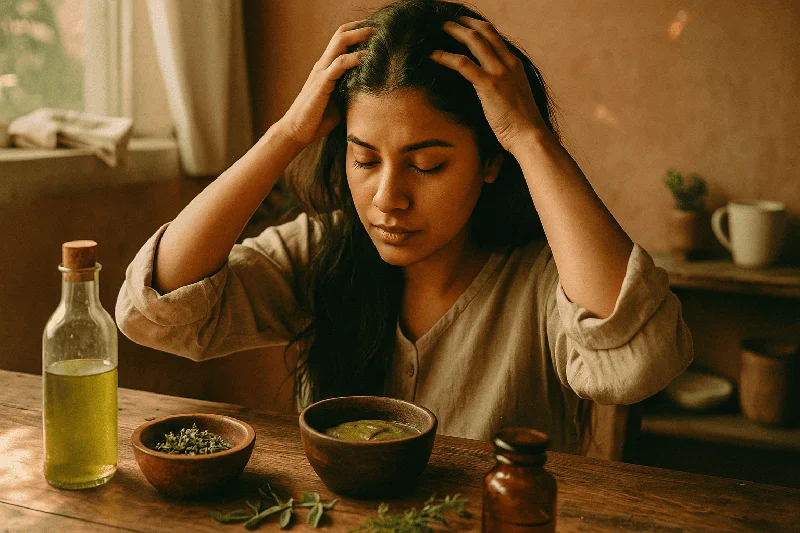
Ayurvedic hair growth isn't just about applying oils — it's a whole-body approach that treats the root cause of hair loss by balancing your internal constitution (doshas), nourishing the scalp with time-tested herbs like Bhringraj and Amla, and aligning your daily routine with nature's rhythms. If you've been disappointed by chemical treatments or wondering whether ancient Indian medicine can genuinely regrow hair, this guide covers everything: the herbs that work, the science behind them, realistic timelines, exact recipes, and mistakes you absolutely need to avoid.
Let's get straight to it.
Why Does Hair Fall Happen According to Ayurveda?
Ayurveda doesn't treat hair loss as an isolated cosmetic issue. Instead, it views your hair (called Kesha in Sanskrit) as a byproduct (Mala) of bone tissue (Asthi Dhatu). When your body's metabolism or tissue nourishment is impaired, hair is one of the first things to suffer.
The classical texts — Charaka Samhita and Ashtanga Hridaya — describe hair loss conditions like Khalitya (baldness) and Indralupta (alopecia areata) as disorders primarily caused by aggravated Pitta dosha, though Vata and Kapha imbalances contribute too.
How Each Dosha Affects Your Hair
| Dosha | Hair Characteristics When Balanced | Signs of Imbalance |
|---|---|---|
| Vata (Air + Ether) | Thin, slightly wavy, light-colored | Dry, frizzy, brittle hair; split ends; flaky scalp |
| Pitta (Fire + Water) | Medium thickness, straight, reddish tinge | Premature greying, receding hairline, inflammation, burning scalp |
| Kapha (Earth + Water) | Thick, lustrous, dark, slightly oily | Excessive oiliness, dandruff, slow-growing but dense hair, scalp congestion |
- Most hair fall cases in Ayurveda are linked to excess Pitta — which makes sense, since Pitta governs metabolism and heat. Too much internal heat literally "burns" the hair follicle.
- But here's what most articles miss: many people have dual-dosha imbalances (like Pitta-Vata), which require a combined approach.
Modern Causes That Aggravate Doshas
Beyond constitutional factors, Ayurveda recognizes several external triggers:
- Stress and poor sleep → aggravates Vata and Pitta
- Spicy, acidic, fried foods → directly increases Pitta
- Hormonal changes (PCOS, thyroid, menopause, postpartum) → disrupts Rasa and Rakta Dhatu
- Medications — steroids, antidepressants, retinoids, blood thinners, and chemotherapy drugs are known to trigger hair shedding (this is called Anagen or Telogen Effluvium in modern dermatology)
- Seasonal shifts — hair fall often peaks during late summer and autumn, which Ayurveda's Ritucharya framework explains as Pitta accumulation during Grishma Ritu (summer)
Top 10 Ayurvedic Herbs for Hair Growth
Not all herbs work the same way. Some stimulate follicles, some reduce scalp inflammation, others strengthen the hair shaft. Here's a structured comparison that you won't find in most guides.
Comparative Table: Ayurvedic Herbs for Hair Growth
| Herb | Sanskrit Name | Primary Action | Best For | How to Use | Time to See Results | Research Evidence |
|---|---|---|---|---|---|---|
| Bhringraj | Bhringaraja | Stimulates follicle regeneration | Hair fall, premature greying | Oil massage, powder paste | 4–8 weeks | A 2008 study in Journal of Ethnopharmacology showed Bhringraj extract promoted hair growth comparable to 2% minoxidil in animal models |
| Amla | Amalaki | Rich in Vitamin C, strengthens follicles | Thinning hair, weak roots | Oil infusion, juice intake | 6–10 weeks | High antioxidant content; supports collagen synthesis around follicles |
| Brahmi | Brahmi | Nourishes scalp, calms Pitta | Stress-related hair loss, dry scalp | Oil massage, oral supplements | 6–12 weeks | Known adaptogenic properties; a 2014 study confirmed improved hair follicle size |
| Neem | Nimba | Antifungal, antibacterial | Dandruff, scalp infections | Paste, water rinse | 2–4 weeks (for scalp issues) | Well-documented antimicrobial activity |
| Hibiscus | Japapatti | Stimulates blood flow to scalp | Thinning, dull hair | Petal paste, oil infusion | 4–8 weeks | In vitro studies show follicle-stimulating activity |
| Indigo | Neeli | Anti-inflammatory, promotes new growth | Alopecia, bald patches | Oil (Neelibringadi) | 8–12 weeks | Traditional use supported by Kottakkal clinical practice |
| Fenugreek | Methi | Protein-rich, strengthens shaft | Breakage, thinning | Seed paste, soaked seeds | 4–6 weeks | Rich in nicotinic acid, known to stimulate hair growth |
| Ashwagandha | Ashwagandha | Reduces cortisol, balances hormones | Stress-related hair fall | Oral tablets/powder | 8–12 weeks | A 2019 randomized study showed significant cortisol reduction in stressed adults |
| Licorice | Yashtimadhu | Soothes scalp, opens pores | Dry, irritated scalp | Paste with milk | 4–8 weeks | Anti-inflammatory and emollient properties documented |
| Curry Leaves | Kaidarya | Rich in beta-carotene, prevents thinning | Premature greying, hair fall | Infused oil, dietary use | 6–10 weeks | Traditional evidence; rich in antioxidants |
Can Ayurvedic Medicine Actually Regrow Hair?
- Yes — but with realistic expectations.
- Ayurvedic herbs can:
- Reactivate dormant follicles (miniaturized but not dead)
- Extend the anagen (growth) phase of the hair cycle
- Reduce inflammation that causes follicle damage
- Improve scalp circulation, bringing more nutrients to roots
- What Ayurveda cannot do is regrow hair where follicles have been completely destroyed (as in long-standing scarring alopecia or advanced androgenic baldness).
- This is important to understand — no treatment, Ayurvedic or otherwise, can resurrect a dead follicle.
A 2017 review published in the Journal of Ayurveda and Integrative Medicine noted that herbs like Bhringraj, Amla, and Brahmi showed "significant hair growth-promoting activity in both in vitro and in vivo studies," though the authors called for larger human clinical trials.
Ayurvedic Hair Oils and How to Use Them
Oil application (Shiro Abhyanga) is perhaps the most iconic Ayurvedic hair care practice. But there's a right way and a wrong way.
Best Ayurvedic Oils by Hair Concern
Neelibringadi Tailam — The gold standard in Kerala Ayurveda for hair fall and premature greying. Contains Neeli (Indigo), Bhringraj, and a coconut oil base. Recommended by Kottakkal Arya Vaidya Sala practitioners. Bhringraj Oil — Pure Bhringraj infused in sesame or coconut oil. Best for Pitta-type hair loss with scalp heat. Kesini Oil — A lighter formulation often recommended for Kapha-type hair (oily scalp, dandruff-related fall). Coconut Oil (plain, cold-pressed) — The simplest and most accessible base. Ayurveda considers it inherently cooling (Pitta-pacifying), making it ideal for the Indian climate.
How to Do a Proper Ayurvedic Head Massage
- Warm the oil slightly — it should be comfortably warm, not hot
- Part your hair into sections
- Apply oil directly to the scalp using fingertips (not nails)
- Massage in circular motions for 10–15 minutes, covering the crown, temples, and nape
- Leave on for minimum 30 minutes — ideally 1–2 hours
- Wash with a mild herbal shampoo or shikakai
Frequency: 2–3 times per week for active hair fall. Once weekly for maintenance.
Should You Leave Oil Overnight?
- This is one of the biggest myths. While overnight oiling is deeply ingrained in Indian culture, Ayurvedic physicians generally recommend against it for most people. Leaving oil overnight can clog follicles (especially for Kapha types), attract dust, and sometimes worsen dandruff.
- The exception: very dry Vata-type hair can benefit from overnight oiling once a week, but always wash it out the next morning.
How to Grow Hair Fast With Ayurveda: A Realistic Timeline
Nobody talks about this — and it's probably the information you need most. Here's what to genuinely expect.
Month-by-Month Progress
Week 1–2: Scalp Reset
- Reduced itching and flaking
- Scalp feels less irritated
- No visible hair growth yet — and that's normal
Week 3–4: Shedding May Increase Slightly
- This alarms people, but it's often a sign that weak, damaged hairs are making way for new growth
- Scalp oil production begins to normalize
Month 2: Early Signs
- Baby hairs may appear along the hairline
- Hair feels stronger to touch
- Reduced hair fall count (from ~100+ strands/day to 50–70)
Month 3: Visible Improvement
- Noticeable reduction in hair fall
- New growth visible, especially at temples and crown
- Hair texture improves — more shine, less breakage
Month 4–6: Significant Results
- Fuller appearance
- Growth rate may increase from the average 0.5 inch/month to 0.7–1 inch/month
- Premature greying may slow down (reversal of grey is rare but reported with consistent Bhringraj use)
Month 6–12: Consolidation
- Results stabilize
- Continued improvement if lifestyle changes are maintained
- This is where Ayurveda outperforms quick fixes — the results tend to be lasting
> Important: These timelines assume consistent daily/weekly practice, dietary changes, and stress management. Skipping weeks or only doing oil massage without internal remedies will significantly slow progress.
- Ayurveda vs Modern Hair Loss Treatments: An Honest Comparison
| Factor | Ayurvedic Approach | Minoxidil (2–5%) | Finasteride (Oral) | PRP Therapy |
|---|---|---|---|---|
| How it works | Balances doshas, nourishes follicles via herbs & oils | Vasodilator; increases blood flow to follicles | Blocks DHT (dihydrotestosterone) | Platelet-rich plasma injected into scalp |
| Effectiveness | Moderate to good for mild-moderate hair loss | Clinically proven; ~40% see significant regrowth | Very effective for male pattern baldness | Good results for early-stage thinning |
| Time to results | 2–6 months | 3–6 months | 3–12 months | 3–6 months (multiple sessions) |
| Side effects | Minimal (rare allergic reactions to specific herbs) | Scalp irritation, unwanted facial hair, initial shedding | Sexual side effects, mood changes, birth defects risk | Pain at injection site, mild swelling |
| Cost (India) | ₹200–800/month | ₹500–1,500/month | ₹800–2,000/month | ₹4,000–15,000/session |
| Long-term safety | Excellent track record over centuries | Generally safe; requires ongoing use | Concerns about long-term hormonal effects | Relatively new; long-term data limited |
| Works after stopping? | Benefits tend to persist longer due to holistic approach | Hair fall resumes within 3–6 months | Hair fall resumes within months | Maintenance sessions needed |
The takeaway? Ayurveda works best for mild to moderate hair loss, especially when the cause is lifestyle, stress, nutrition, or hormonal fluctuation. For advanced androgenic alopecia, a combination approach (Ayurveda + modern treatment) often gives the best results.
DIY Ayurvedic Hair Remedies With Exact Recipes
Here are three proven recipes with precise measurements — not vague "mix some herbs together" instructions.
Recipe 1: Bhringraj-Amla Hair Growth Oil
Ingredients:
- 100 ml cold-pressed coconut oil
- 2 tablespoons (20g) Bhringraj powder
- 2 tablespoons (20g) Amla powder
- 1 tablespoon (10g) Brahmi powder
- 5–6 curry leaves (fresh)
Method:
- Heat coconut oil on low flame in a heavy-bottomed pan
- Add all herb powders and curry leaves
- 3.
- Stir continuously on lowest heat for 15–20 minutes — the oil will darken to a greenish-brown color
- Remove from heat when you see tiny bubbles and the herbs start settling
- Let it cool completely, then strain through a muslin cloth
- Store in a dark glass bottle
Application: Apply warm to scalp, massage for 10 mins, leave for 1–2 hours before washing. Use 2–3 times weekly. Shelf life: 30 days at room temperature, 60 days if refrigerated.
Recipe 2: Protein-Rich Fenugreek Hair Mask
Ingredients:
- 3 tablespoons fenugreek (methi) seeds — soaked overnight in water
- 2 tablespoons fresh yogurt (curd)
- 1 tablespoon honey
- 1 teaspoon Amla powder
Method:
- Grind the soaked fenugreek seeds into a smooth paste
- Mix in yogurt, honey, and amla powder
- Apply section by section to scalp and hair length
- Cover with a shower cap
- 5.
- Leave on for 30–45 minutes (no longer — yogurt can dry out hair if left too long)
- Rinse with lukewarm water first, then shampoo
Frequency: Once a week
Recipe 3: Neem-Hibiscus Scalp Detox Paste
Ingredients:
- 10–12 fresh neem leaves (or 1 tablespoon neem powder)
- 5–6 hibiscus petals and 2 leaves
- 2 tablespoons aloe vera gel
- 1 teaspoon lemon juice
Method:
- Grind neem leaves and hibiscus together with a little water into a fine paste
- Add aloe vera gel and lemon juice, mix well
- Apply to scalp only (not hair length — lemon can be drying)
- Leave for 20–25 minutes
- Wash with lukewarm water and a mild shampoo
Best for: Dandruff, fungal infections, oily scalp, Kapha-type hair issues.
Don't wait or self medicate. Start chat with Doctor NOW
Diet and Lifestyle for Ayurvedic Hair Growth
Topical treatment is only half the story. Ayurveda insists that what you eat and how you live matters just as much as what you put on your scalp.
Foods That Promote Hair Growth
Pitta-pacifying foods (most important for hair fall):
- Sweet fruits — pomegranate, grapes, sweet apples, coconut
- Green leafy vegetables — spinach, moringa leaves, fenugreek greens
- Healthy fats — ghee (clarified butter), almonds, walnuts
- Iron-rich foods — sesame seeds, dates, raisins, beetroot
- Protein sources — moong dal, milk, paneer (cottage cheese)
Foods to avoid or minimize:
- Excessive spicy, sour, and salty foods (aggravate Pitta)
- Deep-fried snacks
- Refined sugar
- Excess caffeine and alcohol
- Very hot beverages
The Role of Stress and Sleep (Dinacharya)
Here's something no competitor article covers properly: the Ayurvedic daily routine (Dinacharya) is critical for hair health.
Sleep: Ayurveda recommends sleeping by 10 PM and waking before 6 AM. Disrupted sleep directly aggravates Vata and Pitta, which elevates cortisol — a hormone clinically proven to push hair follicles into the resting (telogen) phase. A 2021 study in Sleep Medicine Reviews confirmed that chronic poor sleep was significantly associated with increased hair loss. Stress management through Ayurvedic practices:
- Shirodhara — warm oil poured continuously on the forehead; profoundly calming for the nervous system
- Abhyanga (self-massage with warm oil) — reduces cortisol by up to 31% according to a 2011 study
- Nasya (nasal oil application) — 2 drops of Anu Tailam in each nostril every morning nourishes the channels connected to the head
- Pranayama — Nadi Shodhana (alternate nostril breathing) for 10 minutes daily balances both Vata and Pitta
Seasonal Hair Care Based on Ritucharya
Ayurveda teaches that your hair care routine should change with the seasons:
| Season (Ritu) | Months (approx.) | Dosha Dominant | Hair Care Adjustments |
|---|---|---|---|
| Grishma (Summer) | May–July | Pitta aggravated | Use cooling oils (coconut, Neelibringadi); avoid sun exposure on scalp; drink cooling herbs like Shatavari |
| Varsha (Monsoon) | July–Sept | Vata aggravated | Warm sesame oil massage; avoid getting drenched in rain; eat warm, cooked foods |
| Sharad (Autumn) | Sept–Nov | Pitta at peak | Most critical period for hair fall; intensify Pitta-pacifying diet; Amla juice daily |
| Hemanta/Shishira (Winter) | Nov–Feb | Kapha building | Rich oil massage with Bhringraj; protein masks; warmer oils |
| Vasanta (Spring) | March–May | Kapha aggravated | Lighter oils; scalp detox with neem; dry powder shampoos (shikakai, reetha) |
Panchakarma Therapies for Severe Hair Loss
When home remedies aren't enough, Ayurveda offers clinical-grade treatments through Panchakarma — the five detoxification procedures.
Key Therapies for Hair Fall
- Shirodhara — Continuous pouring of medicated oil on the forehead for 30–45 minutes. Deeply relaxes the nervous system, reduces stress-related hair fall
- Shiro Abhyanga — Professional head massage with specific medicated oils chosen based on your dosha
- Nasya Karma — Medicated nasal drops that nourish the channels (srotas) connected to the scalp. Particularly effective for premature greying
- Virechana — Therapeutic purgation to expel excess Pitta from the body. Often recommended as the first step in treating severe hair fall
These treatments are typically administered over 7–21 day programs at Ayurvedic clinics and hospitals. Reputed institutions like Kottakkal Arya Vaidya Sala, Kerala Ayurveda centers, and Sreedhareeyam offer specialized hair care programs.
Ayurvedic Tablets and Internal Medicines for Hair Growth
| Medicine | Form | Key Benefits | Typical Dosage | Best For |
|---|---|---|---|---|
| Narasimha Rasayanam | Lehyam (paste) | Promotes hair and beard growth, improves hair density | 1 teaspoon twice daily with warm milk | Men with thinning hair and beard growth concerns |
| Bhringrajasava | Liquid | Liver detox + hair growth | 15–20 ml with equal water, after meals | Pitta-type hair fall with digestive issues |
| Thikthakam Kashayam | Decoction tablet | Blood purifier, anti-inflammatory | 2 tablets before meals with warm water | Hair fall associated with skin conditions |
| Kayyunyadi Tailam | Oil (for external use) | Scalp infections, dandruff | Apply to scalp 2–3 times/week | Infectious or fungal scalp conditions |
- Note: Always consult a qualified Ayurvedic physician (BAMS or MD Ayurveda) before starting internal medicines.
- Self-medication with Ayurvedic formulations can be risky — more on this below.
Myths and Mistakes About Ayurvedic Hair Care
This section exists because misinformation is rampant. Let me address the most harmful myths.
Myth 1: "Natural Means Safe for Everyone"
Not true. Amla can aggravate Vata in excess. Bhringraj should be used cautiously during pregnancy. Neem taken internally can lower blood sugar dangerously for diabetics on medication. Every potent herb has contraindications.
Myth 2: "Ayurveda Can Cure Complete Baldness"
If your scalp is smooth and shiny with no follicle activity for years, no amount of Bhringraj oil will bring it back. Ayurveda is most effective in the early to moderate stages of hair loss.
Myth 3: "More Oil = Better Results"
Drenching your hair in oil doesn't help. A thin, evenly distributed layer that reaches the scalp is all you need — typically 1–2 tablespoons for the whole head.
Myth 4: "Any Ayurvedic Hair Product is Authentic"
Many commercial "Ayurvedic" products contain synthetic fragrances, preservatives, and even SLS. Check for the AYUSH certification mark on products sold in India.
Safety: Side Effects and Contraindications
| Herb/Product | Potential Side Effect | Contraindication |
|---|---|---|
| Bhringraj | May cause cold in excess | Pregnancy (internal use); extreme Kapha conditions |
| Amla | Excessive dryness if used alone topically | Those with hyperacidity (internal use in excess) |
| Neem | Skin irritation in sensitive individuals | Pregnancy; autoimmune conditions; diabetes medications |
| Shikakai | Dry hair if overused | Very dry or damaged hair (use with conditioning) |
| Ashwagandha | May cause drowsiness | Hyperthyroidism; pregnancy; immunosuppressant medications |
Ayurvedic Hair Care for Special Groups
Children and Teenagers
For children under 12, stick to gentle approaches — plain coconut oil massage, Amla-infused oil, and dietary improvements. Avoid strong herbal formulations unless prescribed by a pediatric Ayurvedic doctor. Teenage hair fall is often Pitta-driven (hormonal changes) and responds well to cooling diets and Brahmi oil.
Hair Care by Texture Type
- Curly hair: Needs extra moisture. Use coconut oil with Hibiscus infusion.
- Avoid shikakai alone (too drying) — combine with reetha (soapnut).
- Fine, thin hair: Lightweight oils like Brahmi in sesame oil. Avoid heavy Kapha-increasing oils. Fenugreek masks once weekly add volume.
- Coarse, thick hair: Can handle richer oils and longer application times. Bhringraj oil in sesame base works beautifully.
- Chemically treated or colored hair: Start with plain coconut or almond oil. Avoid acidic rinses (Amla water can strip color). Focus on internal supplementation rather than topical herbs.
Frequently Asked Questions
How to grow hair fast in Ayurveda?
The fastest results come from combining three approaches simultaneously: external (oil massage with Bhringraj or Neelibringadi oil 2–3 times weekly), internal (herbs like Ashwagandha and Amla taken orally), and lifestyle (stress management, proper sleep, Pitta-pacifying diet). Most people see noticeable improvement within 8–12 weeks with consistent practice.
What are the best Ayurvedic tablets for hair growth?
Narasimha Rasayanam, Bhringrajasava, and Dhatri Lauh are among the most commonly prescribed. However the right tablet depends entirely on your dosha imbalance and the underlying cause of hair fall. A Pitta-dominant person needs a different formulation than a Vata-dominant person. Consult a qualified practitioner.
Can I use Ayurvedic remedies alongside minoxidil or finasteride?
Generally yes, but with medical supervision. Topical Ayurvedic oils can typically be used alongside minoxidil (apply at different times of day). Internal Ayurvedic medicines should be discussed with both your dermatologist and Ayurvedic physician to avoid interactions.
What Ayurvedic hair growth powder is most effective?
A combination powder of Bhringraj + Amla + Brahmi in equal parts (1:1:1 ratio) is the most versatile and widely effective formulation. Mix 2 tablespoons with water or yogurt to form a paste, apply to the scalp for 30 minutes, then wash off. Use once weekly.
Is Ayurvedic treatment for hair loss effective for women with PCOS or thyroid issues?
Ayurveda treats hormonal hair loss by adressing the underlying hormonal imbalance rather than just the hair fall symptom. Herbs like Shatavari, Ashoka, and Lodhra help balance female hormones, while Guggulu supports thyroid function. Clinical improvement is often seen within 3–6 months when combined with dietary and lifestyle modifications. However, never discontinue prescribed hormonal medication without your endocrinologist's approval.
Can Ayurveda help manage menopause-related hair loss?
Yes. Menopausal hair loss is primarily a Vata-Pitta imbalance in Ayurvedic terms. Shatavari Kalpa (as a daily tonic), regular Shirodhara sessions, and calcium-rich Pitta-pacifying diets can significantly reduce menopausal hair thinning. A 2018 clinical observation at an Ayurvedic hospital in Jamnagar showed improvement in hair density among 68% of perimenopausal women following a 90-day Panchakarma-based regimen.
How do I know which dosha is causing my hair fall?
Quick self-assessment: If your hair is falling out and becoming dry and brittle → likely Vata. If falling out with scalp redness, heat, or premature greying → likely Pitta. If falling out with excessive oiliness and thick dandruff → likely Kapha. For a proper assessment, consult an Ayurvedic practioner who will evaluate your Prakriti (constitution) and Vikriti (current imbalance).
Take the First Step Today
- Ayurvedic hair growth is not an overnight miracle — it's a systematic, evidence-informed approach that has been refined over thousands of years.
- The beauty of it lies in its personalization: what works for your friend's hair might not work for yours, because your doshas, diet, stress levels, and hair type are unique.
- Start simple. Choose one oil recipe from this guide, commit to a scalp massage routine, clean up your diet, and give it an honest 90 days.
- Track your progress — count the hairs in your drain, take monthly photos of your hairline under the same lighting.
If you're dealing with severe or sudden hair loss, don't rely on home remedies alone. Consult a qualified Ayurvedic physician (look for BAMS or MD Ayurveda credentials) who can design a personalized protocol including diet, herbs, and Panchakarma therapies suited to your specific imbalance.
Your hair didn't thin overnight. It won't recover overnight either. But with patience and the right Ayurvedic approach, lasting results are absolutely within reach.
Scientific Sources
- Identification and evaluation of anti hepatitis C virus phytochemicals from Eclipta alba — Manvar D et al., 2012, Journal of ethnopharmacology
- Green approach for the synthesis of zinc oxide nanoparticles and their enhanced sun protection factor in the presence of octocrylene — Pasupathi M et al., 2025, Cutaneous and ocular toxicology
- Green-synthesized Tio₂ Nanoparticles for Sunscreen: Eco-Friendly Approach to Spf Enhancement — Murugesan P et al., 2026, Applied biochemistry and biotechnology
- Enhanced sun protection factor of octocrylene with green tea and bhringraj extracts — M P et al., 2024, Cutaneous and ocular toxicology
- LC-MS/MS method for the simultaneous quantification of luteolin, wedelolactone and apigenin in mice plasma using hansen solubility parameters for liquid-liquid extraction: Application to pharmacokinetics of Eclipta alba chloroform fraction — Cheruvu HS et al., 2018, Journal of chromatography. B, Analytical technologies in the biomedical and life sciences
- Traditional uses, bioactive composition, pharmacology, and toxicology of Phyllanthus emblica fruits: A comprehensive review — Saini R et al., 2022, Journal of ethnopharmacology
- Herbal Remedies for Hair Loss: A Review of Efficacy and Safety — Ahmed A et al., 2025, Skin appendage disorders
- A Canadian Consensus on Androgenetic Alopecia: Approach and Management — Landells I et al., 2025, Journal of cutaneous medicine and surgery
- Therapeutic potential of Phyllanthus emblica (amla): the ayurvedic wonder — Krishnaveni M et al., 2010, Journal of basic and clinical physiology and pharmacology
- Phytotherapy in periodontics as an effective and sustainable supplemental treatment: a narrative review — Gawish AS et al., 2024, Journal of periodontal & implant science
- Depression and Its Phytopharmacotherapy-A Narrative Review — Dobrek L et al., 2023, International journal of molecular sciences
- Neuroprotective Herbs for the Management of Alzheimer's Disease — Gregory J et al., 2021, Biomolecules
- Pharmacological attributes of Bacopa monnieri extract: Current updates and clinical manifestation — Fatima U et al., 2022, Frontiers in nutrition
- Meta-analysis of randomized controlled trials on cognitive effects of Bacopa monnieri extract — Kongkeaw C et al., 2014, Journal of ethnopharmacology
- Bacopa monnieri — Walker EA et al., 2026
- Integration of molecular docking, molecular dynamics and network pharmacology to explore the multi-target pharmacology of fenugreek against diabetes — Luo W et al., 2023, Journal of cellular and molecular medicine
- Dietary supplements and bleeding — Hatfield J et al., 2022, Proceedings (Baylor University. Medical Center)
- Herbal Products Used in Menopause and for Gynecological Disorders — Kenda M et al., 2021, Molecules (Basel, Switzerland)
- Herbal Teas and their Health Benefits: A Scoping Review — Poswal FS et al., 2019, Plant foods for human nutrition (Dordrecht, Netherlands)
- Examining the Effects of Herbs on Testosterone Concentrations in Men: A Systematic Review — Smith SJ et al., 2021, Advances in nutrition (Bethesda, Md.)
Questions from users
What is the best time of day to apply Ayurvedic hair oils for optimal results?
Client_db7f42
1 day ago
The best time of day to apply Ayurvedic hair oils is typically in the evening before bed, allowing the treatment to work overnight. For optimal absorption and effectiveness, gently massage the oil into your scalp, leave it on for at least 30 minutes, and then wash it out or leave it overnight for deeper conditioning. If you're using Ayurvedic hair oils like Bhringraj or Amla, you might want to apply them 2-3 times per week for best results. Always conduct a patch test to avoid allergic reactions. See a doctor if you experience irritation or unexpected hair loss.
How to effectively track hair growth progress over time?
Client_225a4c
6 days ago
To effectively track hair growth progress over time, take monthly photos of your hairline and scalp under consistent lighting conditions. Regularly counting the hair in your drain after showering can also help monitor changes. It's crucial to couple these tracking methods with consistent routines, such as regular scalp massages and dietary improvements, maintained for at least 90 days to notice potential growth changes. If you experience severe or rapid hair loss, consult a healthcare professional rather than relying solely on home remedies.
What dietary changes can enhance Ayurvedic hair growth treatments?
Client_458be1
11 days ago
To enhance Ayurvedic hair growth treatments through dietary changes, prioritize a balanced, nutrient-rich diet focusing on whole foods. Incorporate plenty of fruits, vegetables, whole grains, lean proteins, and healthy fats to support hair health. Specifically, consuming foods high in vitamins A, C, D, E, as well as iron, zinc, and omega-3 fatty acids can be beneficial for promoting strong hair growth and reducing hair loss. Drinking plenty of water and minimizing processed foods and sugars can also aid in maintaining optimal scalp and hair health. If you experience persistent hair loss, consult a healthcare professional for a personalized assessment.
What herbal remedies promote scalp health in Ayurveda?
Client_ac2257
16 days ago
To promote scalp health using Ayurveda, herbal remedies like bhringraj, amla, neem, and brahmi are commonly recommended. These herbs are believed to support hair growth, reduce dandruff, and soothe the scalp. Bhringraj oil is often applied directly to the scalp, while amla can be used in powder form or as a part of hair oil. Neem has antifungal properties which can help with dandruff, but caution is advised for diabetics, as it might affect blood sugar levels. Improvement can typically be seen over a few months. If you experience severe hair loss or scalp issues, consult a healthcare professional.
What is the impact of stress on hair loss according to Ayurveda?
Client_8a99c8
21 days ago
Stress can significantly contribute to hair loss by disrupting the natural hair growth cycle, increasing the likelihood of conditions such as telogen effluvium, where hair prematurely enters a resting phase. While Ayurvedic approaches may highlight stress as a cause for hair loss related to imbalances, the primary focus should be on reducing stress through methods like mindfulness, regular exercise, and a balanced diet. Typical improvement might be seen in 3–6 months with these lifestyle changes, but if hair loss is accompanied by symptoms such as scalp irritation, it's advisable to consult a healthcare professional.
What lifestyle changes can support Ayurvedic treatments for hair loss?
Client_46d4d9
31 days ago
To support Ayurvedic treatments for hair loss, incorporate stress-reduction practices like yoga and meditation, as stress can exacerbate hair thinning. Adopt a balanced diet that includes nutrient-rich foods, particularly focusing on calcium and iron, which are vital for hair health. Limit the use of commercial hair products with synthetic ingredients. It may take several months to notice changes in hair thickness. If hair loss persists or worsens, consult a healthcare provider to check for underlying conditions like hormonal imbalances or nutritional deficiencies.
What are the key benefits of using coconut oil for hair health according to Ayurveda?
Client_fb4403
40 days ago
Coconut oil is lauded in many hair care routines for its ability to moisturize and protect hair, improving overall hair health. In Ayurveda, coconut oil is specifically valued for cooling the scalp, and promoting hair growth and strength, particularly for those with pitta imbalances, which may cause premature graying or hair thinning. Regular use can reduce protein loss in hair, help with scalp conditions, and act as a barrier against damage. Typically applied 2-3 times weekly, results may be seen after 4-6 weeks but vary based on individual hair type and conditions. Persistent or severe hair issues should be discussed with a healthcare professional.
How to create a personalized hair care routine using Ayurvedic principles?
Client_2f54fa
50 days ago
To create a personalized hair care routine using Ayurvedic principles, consider your hair type, current issues, and any underlying imbalances. Use lightweight oils like Brahmi in sesame oil for fine, thin hair, and heavier oils for curly hair to retain moisture. Coconut oil infused with Hibiscus can add strength and luster. Avoid using shikakai alone due to its drying nature; instead, mix it with reetha for better cleansing. If experiencing teenage hair fall, consider cooling diets and Brahmi oil, as it may be driven by hormonal changes. Consult a qualified Ayurvedic physician for a comprehensive and personalized plan, especially if symptoms include scalp redness or premature greying. Always see a doctor if you experience significant or sudden hair loss.
How long does it typically take to see results from Ayurvedic hair treatments?
Client_d747dc
60 days ago
Ayurvedic hair treatments typically require a commitment of 3 to 6 months to see noticeable results, particularly when combined with dietary and lifestyle changes. These treatments focus not only on applying specific oils like Bhringraj and Amla but also on improving overall health, which can influence hair growth. Consistent application of treatments, scalp massages, and a balanced diet are crucial. If you experience severe or sudden hair loss, consult a healthcare professional to rule out underlying medical conditions. Remember to track progress and adjust your routine as needed.
Is it safe to use topically applied Ayurvedic oils every day for hair health?
Client_35c4ef
69 days ago
Yeah, generally Ayurvedic oils are safe for daily use but it's best to consider your hair type and dosha. If you've got oily hair (Kapha), using heavy oils every day might not be ideal. For balanced hair health, check if your hair likes daily oiling or if 2-3 times a week is better. Trust your instincts, and maybe consult with an ayurvedic practitioner for personalized advice.
Related articles

Skin and Hair Disorders
How to Apply Egg White on Hair: Ayurvedic Use, Benefits, and Hair Mask Tips
How to apply egg white on hair? Discover its benefits for hair growth, shine, and strength. Learn how to use egg white as a natural Ayurvedic hair treatment
11,217

Skin and Hair Disorders
How to Rejuvenate Skin Naturally: Ayurvedic Guide for a Healthy Glow
How to rejuvenate skin naturally? Discover Ayurvedic treatment for skin rejuvenation, how to rejuvenate skin overnight, at home, and restore glow on your face
2,464
Skin and Hair Disorders
Tuvaraka Taila – Ayurvedic Oil for Skin & Joint Health
Explore the benefits and uses of Tuvaraka Taila, an Ayurvedic herbal oil for skin health, joint pain relief, and holistic healing using ancient wisdom.
2,835
Skin and Hair Disorders
What is Treatment of Warts in Ayurveda?
Warts are a prevalent skin condition that can affect people of all ages.
7,537

Skin and Hair Disorders
How to Cure White Hair at Young Age Naturally with Ayurveda
White hair at a young age solution: learn how to cure white hair naturally, stop premature greying, and explore Ayurvedic treatment for grey or white hair
5,467

Skin and Hair Disorders
Does Dandruff Cause Hair Fall? Ayurvedic Insights and Remedies
Does dandruff cause hair fall or hair loss? Learn the connection, Ayurvedic solutions, best shampoos, and home remedies to reduce flakes and strengthen roots
2,055
Skin and Hair Disorders
Mathan Thailam: Ayurvedic Remedy for Skin Disorders
Discover how Mathan Thailam treats skin disorders like eczema, inflammation, and redness. Learn its benefits, usage guidelines, and Ayurvedic insights for achieving healthy, radiant skin.
4,146
Skin and Hair Disorders
Dushta Vrana – Ayurvedic Management of Chronic & Infected Wounds
Explore the benefits and uses of Dushta Vrana management in Ayurveda, a natural approach to healing chronic wounds, promoting detoxification, balancing doshas, and encouraging tissue regeneration.
3,513
Skin and Hair Disorders
Marichadi Taila: Benefits, Dosage & Science-Backed Insights
Discover the benefits, proper dosage, side effects, and scientific research behind Marichadi Taila, an Ayurvedic oil for skin health, joint pain, and respiratory wellness.
4,336

Skin and Hair Disorders
Which Oil Is Best for Hair Growth and Thickness?
Looking for the best oil for hair growth and thickness? Discover Ayurvedic oils like castor, rosemary, almond, and more to boost hair strength and scalp health
5,507
Related consultations on the topic
Legal
Additional Documents
© 2024 Ask Ayurveda. All rights reserved.