Ask Ayurvedic doctor a question and get a consultation online on the problem of your concern in a free or paid mode. More than 2,000 experienced doctors work and wait for your questions on our site and help users to solve their health problems every day.


Body DetoxEar, Nose, and Throat DisordersGeriatrics & RejuvenationImmunodeficiencyInfertility TreatmentNutritionOrthopedic DisordersPediatricsRespiratory DisordersSexually Transmitted Diseases (STDs)Surgery RecoveryUrological DisordersVascular DisordersDental DisordersEndocrinological DisordersGastrointestinal DisordersYoga TherapyGeneral MedicineAllergic DisordersCardio DisordersGynecology and ObstetricsCosmetologySkin and Hair DisordersEye DisordersInfectious DiseasesMental DisordersNeurological DisordersOncologyPanchakarmaSexual Health & DisordersSports Medicine
Published on 12/23/24
(Updated on 08/09/26)
star_border 3
4,942
Pittashamak Vati: Balance Your Pitta with Effective Ayurvedic Remedies
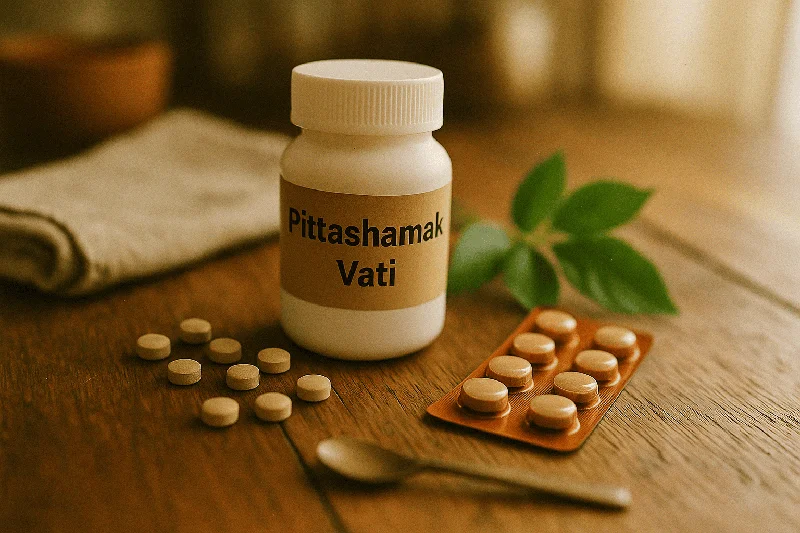
Pittashamak Vati is a classical Ayurvedic formulation specifically designed to pacify aggravated Pitta dosha — the biological energy responsible for digestion, metabolism, and body heat. If you're dealing with hyperacidity, heartburn, nausea, skin inflammation, or that burning sensation that just won't quit, this tablet-based medicine works by cooling the system, neutralizing excess acid, and restoring digestive harmony. Originally referenced in traditional Ayurvedic pharmacopoeia and commercially produced since 1935 by Ayurveda Rasashala (Pune), Pittashamak Vati combines mineral bhasmas with herbal extracts processed through a unique Bhavana technique that enhances bioavailability and therapeutic potency.
This comprehensive guide covers everything you need to know — from ingredients, mechanism of action, and dosage to diet recommendations, comparison with similar formulations, and the clinical evidence that supports its use.
What Is Pittashamak Vati?
- Pittashamak Vati (also written as "Pittashamaka Vati" — the spelling variation simply reflects transliteration differences from Sanskrit/Devanagari, and both refer to the same formulation) is a polyherbal-mineral Ayurvedic tablet.
- The name breaks down as: Pitta (the fire-water dosha), Shamak (pacifying/calming), and Vati (tablet form).
Definition & Classical Ayurvedic Reference
The formulation draws from principles outlined in classical texts such as the Bhavaprakash Nighantu, which extensively categorizes herbs and minerals according to their Rasa (taste), Guna (qualities), Virya (potency), and Vipaka (post-digestive effect). Each ingredient in Pittashamak Vati is selected for its Sheeta Virya (cooling potency) and Madhura or Tikta Rasa (sweet or bitter taste) — qualities that directly oppose Pitta's inherently hot, sharp, and acidic nature.
Pittashamak vs Pittashamaka — Spelling Clarification
You'll find both spellings across different sources. "Pittashamak" is the more commonly used commercial spelling, while "Pittashamaka" follows a more precise Sanskrit transliteration. There is absolutely no difference in formulation or efficacy between products using either spelling — it's purely a linguistic variation. When searching online, try both spellings to find the best deals and most complete information.
Legacy of Ayurveda Rasashala
The most well-known manufacturer is Ayurveda Rasashala, established in 1935 in Pune, Maharashtra. This institution has maintained traditional manufacturing processes for over 85 years, following classical Rasashastra (Ayurvedic pharmaceutical chemistry) methods. Their Pittashamak Vati remains the benchmark formulation that other manufacturers reference.
Pittashamak Vati Ingredients: A Complete Breakdown
Understanding what goes into Pittashamak Vati helps you appreciate why it works. Unlike many competing articles that merely list ingredients, here's a full monographic analysis of each component.
| Ingredient | Sanskrit/Hindi Name | Latin/Scientific Name | Key Ayurvedic Properties | Primary Action |
|---|---|---|---|---|
| Shankha Bhasma | Shankha | Turbinella pyrum (conch shell calcined ash) | Rasa: Kashaya; Virya: Sheeta; Vipaka: Madhura | Antacid, digestive stimulant |
| Sootashekhar Ras | Sootashekhar | Compound mineral formulation (contains purified mercury, sulphur, Tamra Bhasma) | Sheeta Virya | Anti-emetic, Pitta pacifier |
| Shuddha Gairik | Gairik | Red Ochre (purified iron oxide, Fe₂O₃) | Rasa: Kashaya, Madhura; Virya: Sheeta | Astringent, cooling, anti-inflammatory |
| Guduchi / Giloy | Guduchi | Tinospora cordifolia | Rasa: Tikta, Kashaya; Virya: Ushna; Vipaka: Madhura | Immunomodulator, hepatoprotective, adaptogenic |
| Vasa / Adulsa | Vasa | Adhatoda vasica | Rasa: Tikta, Kashaya; Virya: Sheeta | Anti-inflammatory, bronchodilator, Pitta pacifier |
| Ringani | Ringani | Solanum xanthocarpum / Solanum surattense | Rasa: Katu, Tikta; Virya: Ushna; Vipaka: Katu | Digestive, carminative |
What Is Bhavana and Why Does It Matter?
- This is something no competitor explains properly. Bhavana is a classical pharmaceutical process where tablet ingredients are repeatedly triturated (ground) with specific herbal decoctions or juices.
- In Pittashamak Vati, the base powder undergoes:
- Ringani Kwath Bhavana — trituration with decoction of Solanum xanthocarpum
- Adulsa Kwath Bhavana — trituration with decoction of Adhatoda vasica
This process does several critical things. First, it reduces particle size to nano-level, dramatically improving bioavailability. Second, it infuses the mineral components with phytochemical properties from the herbal decoctions. Third, it reduces potential toxicity of mineral bhasmas through repeated purification cycles. A 2017 study published in the Journal of Ayurveda and Integrative Medicine demonstrated that Bhavana-processed bhasmas showed significantly higher biological activity compared to un-processed counterparts, with particle sizes reduced to 50-100 nanometers.
Detailed Ingredient Pharmacology
Shankha Bhasma — The calcined conch shell is primarily calcium carbonate in its aragonite form. After the Shodhana (purification) and Marana (incineration) process, it becomes a potent natural antacid. A 2019 study in Ancient Science of Life showed Shankha Bhasma reduced gastric acid secretion by approximately 41% in experimental models, comparable to standard antacid medications. Guduchi (Tinospora cordifolia) — Often called "Amrita" (the divine nectar), this is one of Ayurveda's most versatile herbs. Research published in the Journal of Ethnopharmacology (2020) identified berberine, tinosporin, and columbin as active compounds with demonstrated anti-inflammatory and hepatoprotective properties. Guduchi's unique characteristic is that despite having Ushna Virya (hot potency), its post-digestive effect (Vipaka) is Madhura (sweet), making it a Tridosha-balancer with special affinity for Pitta. Sootashekhar Ras — This is itself a compound formulation within the formula, containing purified mercury and sulfur compounds. It's specifically indicated in classical texts for Amlapitta (hyperacidity), Chardi (vomiting), and Parinaama Shoola (duodenal pain).
Benefits of Pittashamak Vati: Beyond Just Acidity
While most people know Pittashamak Vati for acid reflux relief, its benefits extend across multiple body systems.
Digestive System Benefits
The primary indication remains gastrointestinal.
Pittashamak Vati addresses:
- Hyperacidity (Amlapitta) — Shankha Bhasma and Shuddha Gairik directly neutralize excess HCl production
- Heartburn and acid reflux (GERD symptoms) — The cooling properties reduce esophageal inflammation
- Nausea and vomiting (Chardi) — Sootashekhar Ras is classically specific for anti-emetic action
- Gastritis — Anti-inflammatory action of Vasa and Guduchi on gastric mucosa
- Improving Agni (digestive fire) — Paradoxically, by removing Pitta-aggravated toxins (Ama), the medicine actually strengthens healthy digestion
Skin Health and Anti-Inflammatory Action
Pitta imbalance frequently manifests on the skin.
Pittashamak Vati can help with:
- Acne and inflammatory skin rashes
- Urticaria (hives)
- Pitta-type eczema characterised by redness, burning, and oozing
The mechanism here involves reducing systemic inflammation. A 2018 review in Phytotherapy Research showed that Tinospora cordifolia inhibits pro-inflammatory cytokines including TNF-α, IL-1β, and IL-6 — the same inflammatory mediators involved in inflammatory skin conditions.
Liver Support and Detoxification
Guduchi and Vasa both have documented hepatoprotective effects. The liver is considered the primary seat of Ranjaka Pitta in Ayurveda, and its health directly correlates with Pitta balance. A study published in the Indian Journal of Pharmacology (2015) demonstrated that Tinospora cordifolia extract showed significant hepatoprotective activity against carbon tetrachloride-induced liver damage in animal models, with liver enzyme levels (ALT, AST) reducing by 35-48%.
Stress Reduction and Mental Clarity
- This is an often-overlooked benefit.
- Pitta imbalance doesn't just cause physical symptoms — it manifests as irritability, anger, impatience, and mental burnout. Guduchi's adaptogenic properties help modulate the HPA (hypothalamic-pituitary-adrenal) axis, reducing cortisol levels and promoting mental clarity. Clinical practitioners often report that patients on Pittashamak Vati notice improved sleep quality and reduced irritability within 2-3 weeks.
Application in Pregnancy (Hyperemesis Gravidarum)
Some classical references and practitioners recommend Pittashamak Vati for managing severe pregnancy-related nausea and vomiting (Hyperemesis Gravidarum). However, this should strictly be done under qualified Ayurvedic physician supervision due to the presence of mineral bhasmas including Sootashekhar Ras. Never self-medicate during pregnancy.
Headache, Vertigo, and Neurological Symptoms
Pitta-type headaches — typically burning, throbbing, and concentrated in the temporal region — can respond well to Pittashamak Vati. The formulation's cooling action on Sadhaka Pitta (the subdosha governing emotions and neural processing) helps with vertigo and migraine-like symptoms associated with Pitta aggravation.
How to Use Pittashamak Vati: Dosage & Anupana
Standard Dosage
| Patient Group | Dosage | Frequency | Duration |
|---|---|---|---|
| Adults | 1–2 tablets | 2–3 times daily | 4–8 weeks |
| Children (above 5 years) | ½–1 tablet | 2 times daily | As directed by physician |
| Elderly | 1 tablet | 2 times daily | 4–6 weeks |
Take the tablets after meals unless your Ayurvedic doctor advises otherwise.
Specific Anupana (Vehicle) for Different Conditions
This is where Pittashamak Vati's versatility really shines, something most sources don't explain.
The Anupana — the substance you take the medicine with — can dramatically alter and focus its action:
- For hyperacidity: Take with cold milk — milk's cooling and buffering properties enhance the antacid effect
- For nausea and vomiting: Take with fresh lime juice mixed with a little sugar — the combination of sour-sweet taste helps settle the stomach while directing the medicine to Kledaka Kapha in the stomach
- For skin conditions: Take with Neem decoction or Sariva (Indian sarsaparilla) decoction
- For general Pitta balance: Take with plain water at room temperature
How Long Does It Take for Pittashamak Vati to Show Results?
Based on practitioner experience and classical guidelines, here's a realistic timeline:
- Week 1–2: Noticeable reduction in acidity, heartburn frequency decreases, better sleep
- Week 2–4: Significant improvement in digestive comfort, skin inflammation begins reducing, mental irritability decreases
- Week 4–6: Stabilization of benefits, Pitta dosha approaching balance
- Week 6–8: Full therapeutic course completion for chronic conditions
Acute conditions like sudden hyperacidity or nausea may show relief within 30-60 minutes of the first dose.
Pittashamak Vati Side Effects & Safety Profile
This is a critical section that most competitors completely ignore. While Ayurvedic medicines are generally well-tolerated, responsible usage requires understanding potential risks.
Known Side Effects
When taken in recommended doses, Pittashamak Vati rarely causes adverse effects.
However, possible side effects include:
- Constipation — due to the astringent (Kashaya) properties of Shankha Bhasma and Gairik
- Metallic taste — some users report this, likely from mineral bhasma components
- Heaviness in stomach — typically resolves within a few days as the body adjusts
Contraindications
- Pregnancy and lactation — not recommended without explicit physician guidance (Sootashekhar Ras contains heavy metal-derived compounds)
- Children under 5 years — insufficient safety data
- Severe kidney disease — mineral bhasmas may place additional load on compromised kidneys
- Known allergy to any ingredient
Drug Interactions
Pittashamak Vati may interact with:
- Antacids and PPIs (Omeprazole, Pantoprazole) — overlapping mechanism may cause excessive alkalinity
- Iron supplements — Gairik (iron oxide) may interfere with absorption
- Immunosuppressant drugs — Guduchi's immunomodulatory action could potentially conflict
- Anticoagulant medications — Vasa has mild blood-thinning properties
Always inform your healthcare provider about all supplements you're taking.
Storage and Shelf Life
Store in a cool, dry place away from direct sunlight. Keep the container tightly closed. Most manufacturers indicate a shelf life of 3-5 years for properly stored tablets, owing to the stable mineral bhasma components. However, always check the expiry date on your specific product.
Don't wait or self medicate. Start chat with Doctor NOW
Diet & Lifestyle (Pathya-Apathya) While Taking Pittashamak Vati
No Ayurvedic medicine works in isolation. Your diet and lifestyle choices either amplify or undermine the therapeutic effect. Here's what practitioners recommend.
Foods to Favor (Pathya)
- Cooling foods: Cucumber, watermelon, coconut water, mint, coriander, fennel
- Bitter vegetables: Bitter gourd (karela), methi (fenugreek) leaves, drumstick
- Sweet and astringent fruits: Pomegranate, sweet grapes, ripe banana, amla (Indian gooseberry)
- Whole grains: Barley, rice (especially aged Basmati), wheat
- Dairy: Cold milk, ghee (clarified butter), fresh buttermilk with cumin and coriander
- Proteins: Moong dal, masoor dal — easy to digest and cooling
Foods to Avoid (Apathya)
- Spicy foods: Chili, excessive garlic, raw onion, mustard
- Sour and fermented: Vinegar, pickles, excessive tomatoes, tamarind, fermented foods like idli/dosa in excess
- Fried and oily foods: Deep-fried snacks, excessive oil
- Stimulants: Coffee (limit to 1 cup morning only), alcohol, tobacco
- Heating meats: Red meat, seafood in excess
Yoga and Pranayama for Pitta Balance
Complementary practices that enhance Pittashamak Vati's effects:
- Sheetali Pranayama (cooling breath) — curl the tongue, inhale through it, exhale through nose. 10-15 rounds daily
- Sheetkari Pranayama — clench teeth gently, inhale through teeth gaps, exhale through nose
- Chandranadi Pranayama (left nostril breathing) — the left channel (Ida Nadi) is cooling
- Asanas: Supta Baddha Konasana, Paschimottanasana, Ardha Matsyendrasana — forward bends and gentle twists that massage abdominal organs
- Avoid Bikram/hot yoga and excessively vigorous practices during Pitta aggravation
Seasonal Recommendations
- Pitta naturally aggravates during Grishma Ritu (summer) and the early part of Sharad Ritu (autumn). Practitioners often recommend starting a preventive course of Pittashamak Vati in late spring, before peak summer heat arrives.
- After consuming spicy or heavy meals — especially during festivals or social gatherings — a short 1-week course can help reset digestion.
Pittashamak Vati vs Other Pitta-Pacifying Formulations
This comparison helps you (and your practitioner) choose the right medicine for your specific situation.
| Parameter | Pittashamak Vati | Avipattikar Churna | Kamadudha Ras | Praval Panchamrit |
|---|---|---|---|---|
| Form | Tablet | Powder | Tablet/powder | Tablet |
| Primary Action | Pitta pacifier + antacid | Laxative + Pitta pacifier | Pitta pacifier + anti-emetic | Pitta pacifier + calcium supplement |
| Best For | Hyperacidity with nausea, burning sensation | Acidity with constipation | Severe Pitta aggravation, bleeding disorders | Mild acidity, calcium deficiency, Pitta in bones |
| Contains Bhasmas | Yes (Shankha, Gairik, Sootashekhar) | No (purely herbal) | Yes (Mukta, Praval, Shankha) | Yes (Praval, Mukta) |
| Pregnancy Safe | Consult physician | Generally safer | Consult physician | Relatively safe with guidance |
| Speed of Action | Moderate-fast | Moderate | Fast | Slow-moderate |
| Cost Range | ₹80–₹180 | ₹100–₹250 | ₹150–₹400 | ₹120–₹300 |
| Ideal Season | Summer/Autumn | All seasons | Summer | All seasons |
Key takeaway: Pittashamak Vati excels when acidity co-presents with nausea, vomiting, or burning sensation. If constipation is your primary complaint alongside acidity, Avipattikar Churna may be more appropriate. For severe Pitta conditions with bleeding tendencies, Kamadudha Ras is often preferred.
How to Choose a High-Quality Pittashamak Vati Product
Not all Pittashamak Vati products are created equal.
Here's what to look for:
Manufacturing Standards
- GMP Certification — Mandatory for any Ayurvedic manufacturer in India under AYUSH Ministry guidelines
- FSSAI License — Ensures food safety compliance
- Heavy Metal Testing — Critical for bhasma-containing products; look for certificates showing mercury, lead, and arsenic within permissible limits
- Batch Number and Expiry Date — Always visible on packaging
Where to Purchase
- Directly from Ayurveda Rasashala (the original manufacturer)
- Licensed Ayurvedic pharmacies and clinics
- Reputable online platforms — verify seller authenticity
- Avoid unbranded or loose-packed products without proper labelling
Price Expectations
Authentic Pittashamak Vati typically costs between ₹80–₹180 for a standard pack (varies by manufacturer and quantity). Extremely cheap products may indicate compromised manufacturing processes, while excessive pricing doesn't necessarily guarantee superior quality.
Frequently Asked Questions (FAQ)
What is Pittashamak Vati used for?
Pittashamak Vati is primarily used for hyperacidity, heartburn, acid reflux, nausea, vomiting, and general Pitta dosha imbalance. It also supports skin health, liver function, and helps reduce Pitta-related irritability and stress.
Can Pittashamak Vati be taken with other supplements or medications?
Yes, but with caution. It can generally be combined with other Ayurvedic supplements. However, avoid combining with allopathic antacids or PPIs without medical guidance, as the overlapping mechanisms may cause excessive alkalinity. Maintain a 2-hour gap between Pittashamak Vati and any allopathic medication.
Is Pittashamak Vati safe for children?
Children above 5 years can take half to one tablet twice daily under qualified practitioner supervision. It's not recommended for children under 5 years due to the presence of mineral bhasmas. Some manufacturers do list it under pediatric care categories, but parental discretion and professional guidance are essential.
Can Pittashamak Vati help with weight loss?
Pittashamak Vati is not a weight loss medication. However, by improving digestive efficiency and reducing Ama (metabolic toxins), it can indirectly support a healthy metabolism. Pitta imbalance often leads to emotional eating and sugar cravings — addressing this root cause may help with weight management as a secondary benefit.
Are there any clinical studies on Pittashamak Vati?
Direct clinical trials specifically on the Pittashamak Vati formulation are limited. However, substantial research exists on individual ingredients: Tinospora cordifolia has over 300 published studies on PubMed, Shankha Bhasma has documented antacid properties in multiple pharmacological studies, and Adhatoda vasica has well-established anti-inflammatory evidence. A 2016 observational study at a Pune-based Ayurvedic hospital reported that 78% of patients with chronic hyperacidity showed significant symptom improvement after 6 weeks of Pittashamak Vati, though this was not a randomized controlled trial.
Which Ayurvedic medicine is best for Pitta dosha?
There's no single "best" medicine — it depends on your specific symptoms. Pittashamak Vati is excellent for acidity-dominant Pitta aggravation. For Pitta-related skin issues, Mahamanjishthadi Kadha may be more appropriate. For Pitta-type bleeding disorders, Kamadudha Ras is often preferred. Consult an Ayurvedic practitioner for personalized recommendations.
How to remove Pitta from body naturally?
- Beyond medication, you can reduce Pitta through: cooling diet (as described in the Pathya section above), avoiding excessive sun exposure, practicing Sheetali pranayama, applying sandalwood or rose water topically, drinking coconut water daily, and maintaining regular meal times.
- Skipping meals aggravates Pitta significantly — never skip lunch, as it coincides with peak Pitta time (10 AM – 2 PM).
Conclusion: Is Pittashamak Vati Right for You?
Pittashamak Vati stands as a time-tested Ayurvedic solution for anyone struggling with Pitta-dominant conditions — from everyday acidity and heartburn to more complex presentations involving skin inflammation, liver stress, and emotional irritability. Its carefully designed formulation, enhanced through the traditional Bhavana process, offers a multi-target approach that addresses root causes rather than just masking symptoms.
The key to getting results lies in three things: choosing a quality product from a reputable manufacturer, following proper dosage with the right Anupana, and supporting the medicine with appropriate diet and lifestyle modifications.
If you've been relying solely on antacids and PPIs for chronic acidity, Pittashamak Vati offers a holistic alternative worth exploring — ideally under the guidance of a qualified Ayurvedic practitioner who can tailor the approach to your unique constitution (Prakriti) and current imbalance (Vikriti).
Consult a certified Ayurvedic doctor today to find out if Pittashamak Vati is the right fit for your health needs.
Scientific Sources
- Chronic arsenic poisoning following ayurvedic medication — Pinto B et al., 2014, Journal of medical toxicology : official journal of the American College of Medical Toxicology
- Whole Medical Systems the Rehabilitation Setting (Traditional Chinese Medicine, Ayurvedic Medicine, Homeopathy, Naturopathy) — Drake DF et al., 2020, Physical medicine and rehabilitation clinics of North America
- The landscape of Ayurveda education in India: Current status and prospects — Kumar S et al., 2025, The National medical journal of India
- Of odysseys and miracles: A narrative approach on therapeutic mobilities for ayurveda treatment — Kaspar H et al., 2023, Social science & medicine (1982)
- Rise of Siddha medicine: causes and constructions in the Madras Presidency (1920-1930s) — Kanagarathinam DV et al., 2023, Medical history
- Withaferin A in the Treatment of Liver Diseases: Progress and Pharmacokinetic Insights — Xia Y et al., 2022, Drug metabolism and disposition: the biological fate of chemicals
- The scientific value of Ayurveda — Hankey A, 2005, Journal of alternative and complementary medicine (New York, N.Y.)
- Nootropic potential of Ashwagandha leaves: Beyond traditional root extracts — Wadhwa R et al., 2016, Neurochemistry international
- Murraya koenigii (L.) Spreng. as a Natural Intervention for Diabesity: A Review — Jachak SM et al., 2024, Current pharmaceutical design
- Ayurgenomics and Modern Medicine — Wallace RK, 2020, Medicina (Kaunas, Lithuania)
- A Systematic Review and Meta-Analysis of Ayurvedic Herbal Preparations for Hypercholesterolemia — Gyawali D et al., 2021, Medicina (Kaunas, Lithuania)
- Genomic insights into ayurvedic and western approaches to personalized medicine — Prasher B et al., 2016, Journal of genetics
- Ayurvedic Ingredients in Dermatology: A Call for Research — Singh N et al., 2025, Journal of cosmetic dermatology
- "Confessions of an Ayurveda professor" - A wake up call — Lakhotia SC, 2023, Indian journal of medical ethics
- A test of the systems analysis underlying the scientific theory of Ayurveda's Tridosha — Hankey A, 2005, Journal of alternative and complementary medicine (New York, N.Y.)
- A review on the concept of aging in Ayurveda literature — Yamuna Sisupalan A et al., 2022, Journal of complementary & integrative medicine
- Contributions of Indian Council of Medical Research (ICMR) in the area of Medicinal plants/Traditional medicine — Tandon N et al., 2017, Journal of ethnopharmacology
- Botanical drugs in Ayurveda and Traditional Chinese Medicine — Jaiswal Y et al., 2016, Journal of ethnopharmacology
- Why the "sugars" in traditional Unani formulations are a pivotal component: A viewpoint perspective — Fazil M et al., 2022, Journal of integrative medicine
- Culture and complementary therapies — Engebretson J, 2002, Complementary therapies in nursing & midwifery
Questions from users
How does Pittashamak Vati affect sleep quality in adults?
Client_a58b6c
4 days ago
Pittashamak Vati may affect sleep quality in adults by helping to reduce irritability and potentially promoting a more relaxed state, often noticed within 2-3 weeks of regular use. This herbal formulation is traditionally used for balancing Pitta dosha, which when elevated, may contribute to sleep disturbances. While some users report improved sleep, there are no large-scale clinical studies proving this effect. If sleep issues persist or worsen, or if there are any adverse reactions, it is advisable to consult with a healthcare provider.
What lifestyle changes can support Pitta balance alongside Pittashamak Vati?
Client_3b2d34
9 days ago
Lifestyle changes that can support Pitta balance alongside Pittashamak Vati include eating a diet that is cooling and hydrating, such as incorporating fresh fruits and vegetables while avoiding spicy, fried, and overly sour foods. Regular exercise with moderate intensity, such as swimming or walking, can help, as overheating should be avoided. Stress management is crucial, so practices like yoga or meditation may be beneficial. It's important to avoid combining Pittashamak Vati with allopathic antacids without medical advice, as excessive alkalinity can arise. If symptoms of Pitta imbalance persist despite these changes, consulting a healthcare professional is advisable.
What are the key ingredients in Pittashamak Vati?
Client_aac240
14 days ago
Pittashamak Vati typically contains key ingredients such as Guduchi (Tinospora cordifolia) and Vasa (Adhatoda vasica), both of which are known for their hepatoprotective properties, supporting liver function and detoxification. Guduchi, in particular, has been shown to inhibit pro-inflammatory cytokines, which may benefit inflammatory skin conditions. When considering any supplement, it's important to use it under the guidance of a healthcare professional, especially if you experience adverse effects or have underlying health conditions.
What are the storage conditions for Pittashamak Vati?
Client_36d858
19 days ago
Store Pittashamak Vati in a cool, dry place, away from direct sunlight and moisture, to ensure it remains effective throughout its shelf life of 3-5 years. Make sure the container is tightly closed to prevent exposure to air, which can degrade the active ingredients. If you notice any changes in color, smell, or tablet integrity, discontinue use and consult a healthcare provider. While Ayurveda supports herbal remedies like Pittashamak Vati for managing Pitta dosha, always see a doctor for persistent symptoms or if you're considering using it alongside other medications.
Is it effective to use Pittashamak Vati for weight management?
Client_217445
29 days ago
Pittashamak Vati is primarily intended to balance the Pitta dosha, which can influence digestion and metabolism. It may indirectly support weight management by addressing underlying Pitta-related issues such as emotional eating and sugar cravings, but its effectiveness for weight management is not well-documented in clinical studies. If you consider it for weight loss, consult a qualified Ayurvedic physician, especially since it contains mineral bhasmas. Be cautious about interactions with allopathic medications like antacids. Contact a healthcare provider if considering any alternative treatments.
How can dietary changes help manage Pitta-related issues?
Client_e453d2
39 days ago
Dietary changes can significantly help manage Pitta-related issues by incorporating cooling and hydrating foods into your meals. Focus on consuming foods like cucumbers, melons, leafy greens, and coconut water, which naturally help to cool the body. Avoid spicy, oily, or fried foods, as well as alcohol and caffeine, which can exacerbate Pitta imbalances. Typical timelines for seeing improvements can vary, but some individuals notice changes in a few weeks. If issues like skin inflammation or heartburn persist, consult a healthcare provider to explore additional treatments.
Can Pittashamak Vati help reduce heartburn symptoms effectively?
Client_23d23f
49 days ago
Pittashamak Vati can be effective in reducing heartburn symptoms, mainly due to its cooling and soothing properties that counteract the hot, acidic nature of excessive Pitta. The formulation includes ingredients known for their Sheeta Virya (cooling potency) and Rasa (taste), which help to alleviate digestive acidity. While some find it beneficial, responses can vary, and it typically takes a few weeks to assess its effectiveness. Avoid using it in combination with allopathic antacids or PPIs without consulting your doctor, as this can cause excessive alkalinity in your gut. If heartburn persists or worsens, consult with a healthcare professional to explore other treatment options.
What should I consider before starting Pittashamak Vati for chronic acidity?
Client_0b05bd
58 days ago
Before starting Pittashamak Vati for chronic acidity, consult with a healthcare professional to ensure it's suitable for your condition, especially if you are taking other medications or have underlying health issues. This Ayurvedic formulation targets aggravated Pitta dosha, but its effectiveness varies among individuals. Observe any side effects such as nausea or gastrointestinal discomfort, and seek medical advice if symptoms persist beyond a few weeks or worsen. While the 2016 observational study suggested benefits within 6 weeks, further evidence from randomized controlled trials is needed.
Can Pittashamak Vati help with nausea and vomiting during pregnancy?
Client_250c3a
68 days ago
Yes, Pittashamak Vati might help with nausea and vomiting during pregnancy, especially in cases like Hyperemesis Gravidarum. But it's super important to talk to a doctor before using it, since pregnancy can be tricky. Just be careful not to mix it with certain allopathic meds without guidance! If you're dealing with both nausea and constipation, Avipattikar Churna could be another option to consider.
Is it safe to store Pittashamak Vati in a bathroom or should it be kept in a cooler place?
Client_db5c1c
77 days ago
It's best to store Pittashamak Vati in a cool, dry place rather than a bathroom. Bathrooms can get humid, which might reduce the tablet's effectiveness over time. A cupboard or pantry away from heat and moisture would be ideal. Just keep the container tightly sealed!
Related articles

Gastrointestinal Disorders
Livokot Tablet Uses, Dose, Ingredients, Side Effects
Exploration of Livokot Tablet Uses, Dose, Ingredients, Side Effects
3,197

Gastrointestinal Disorders
Viruddhahara: Understanding Incompatible Foods in Ayurveda
Learn about Viruddhahara, the Ayurvedic concept of incompatible foods. Discover scientific insights, examples, and how to apply these principles for better health.
7,189

Gastrointestinal Disorders
Jatiphaladi Churna – Traditional Ayurvedic Powder for Digestive & Systemic Health
Discover the benefits and uses of Jatiphaladi Churna, a traditional Ayurvedic powder known for promoting digestive health, detoxification, and overall vitality through a blend of potent herbs.
3,083

Gastrointestinal Disorders
Sthoulyahara Kashaya: The Comprehensive Guide to Benefits, Uses, Dosage, and Ayurvedic Insights
Discover the benefits, proper dosage, uses, and Ayurvedic foundations of Sthoulyahara Kashaya, a traditional herbal decoction for digestive and overall health.
5,302

Gastrointestinal Disorders
Agnitundi Vati Benefits, Dosage, Side Effects, Ingredients
Exploration of Agnitundi Vati Benefits, Dosage, Side Effects, Ingredients
13,913

Gastrointestinal Disorders
How to Cure IBS Permanently: Ayurvedic Approach to Digestive Relief
How to cure IBS permanently? Learn Ayurvedic approaches to irritable bowel syndrome, including diet, lifestyle and herbal remedies for lasting digestive balance
2,817

Gastrointestinal Disorders
Kutajarishta Uses, Dose, Side Effects, And Ingredients
Exploration of Kutajarishta Uses, Dose, Side Effects, And Ingredients
2,653

Gastrointestinal Disorders
Virechana Dravya: A Comprehensive Ayurvedic Detox Guide
Discover the benefits of Virechana Dravya for Ayurvedic detoxification, backed by scientific insights, safety guidelines, and expert tips.
3,175

Gastrointestinal Disorders
Ulset Tablet: Effective Ayurvedic Treatment for Ulcers
Learn about Ulset Tablet, an Ayurvedic remedy for ulcers. Discover its benefits, usage guidelines, dosage, and scientific insights for effective ulcer management.
3,517
Gastrointestinal Disorders
Dhanyaka Hima: A Comprehensive Guide to the Cooling Ayurvedic Infusion
Explore Dhanyaka Hima, a coriander-based Ayurvedic infusion, backed by research and tradition. Learn its health benefits, uses, and scientific insights.
4,872
Related consultations on the topic
Legal
Additional Documents
© 2024 Ask Ayurveda. All rights reserved.