Ulset Syrup: Ayurvedic Relief for Gastric Issues
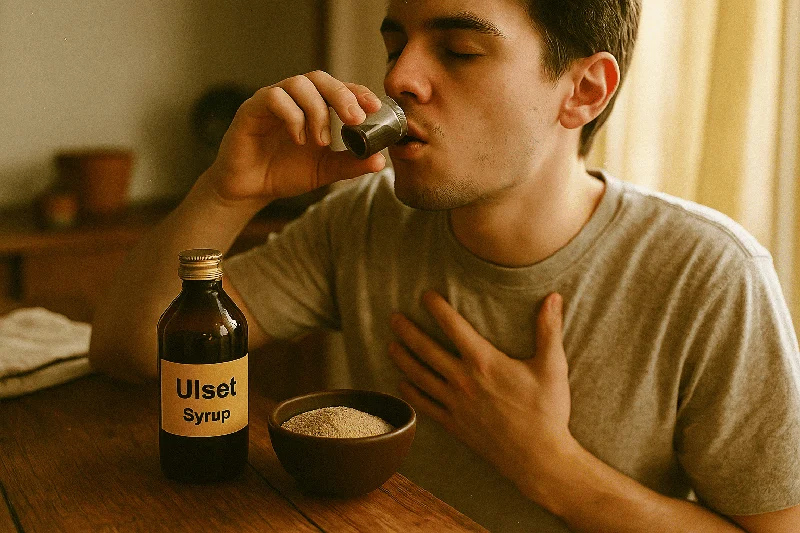
- Ulset Syrup is a polyherbal Ayurvedic formulation manufactured by Shankar Pharmacy, designed to treat acidity, gastric ulcers, heartburn, indigestion, and a range of acid peptic disorders naturally.
- If you've been dealing with persistent stomach discomfort — that burning sensation after meals, sour belching, or a gnawing pain in your upper abdomen — this syrup works by neutralizing excess gastric acid, healing ulcerative lesions, and restoring the digestive fire (Agni) that Ayurveda considers essential for gut health.
In this comprehensive guide, we break down everything you need to know: what Ulset Syrup actually contains, how each ingredient works, the correct dosage, potential side effects, contraindications, and practical dietary tips to maximize its effectiveness. We also cover questions like whether diabetics can take it, when to expect results, and how it compares to other Ayurvedic and allopathic alternatives — topics that, surprisingly, no other resource has fully addressed.
What Is Ulset Syrup?
Ulset Syrup is a proprietary Ayurvedic medicine classified as a digestive tonic and gastroprotective formulation. It's manufactured by Shankar Pharmacy, a well-established Ayurvedic pharmaceutical company based in India with decades of experience in traditional formulations. The product is designed to tackle the root causes of digestive disturbances rather than simply masking symptoms.
Manufacturer & Product Overview (Shankar Pharmacy)
Shankar Pharmacy has been producing classical and proprietary Ayurvedic medicines for several decades, and Ulset remains one of their flagship products. The company claims that Ulset Syrup has undergone clinical trials — a notable claim in the Ayurvedic industry where many products rely solely on traditional textual references. Their manufacturing follows GMP (Good Manufacturing Practice) standards, which is a baseline requirement for Ayurvedic drug manufacturing under India's AYUSH guidelines.
- Product Name: Ulset Liquid / Ulset Syrup
- Manufacturer: Shankar Pharmacy
- Form: Liquid oral syrup
- Bottle Size: 100 ml and 200 ml
- Shelf Life: Typically 3 years from manufacturing date
- Approximate Price: ₹140–₹170 for 100 ml (varies by retailer)
- Availability: Amazon India, Netmeds, Flipkart, Prakruti Online, select Ayurvedic stores
Available Forms: Syrup, Capsules & Kids Variant
- One thing many people don't realize is that Ulset isn't just available as a syrup.
- Shankar Pharmacy offers three distinct forms:
| Form | Best For | Key Difference |
|---|---|---|
| Ulset Syrup (Liquid) | Adults with acute acidity, gastritis, ulcers | Fastest absorption; liquid coats the stomach lining directly |
| Ulset Capsules | Adults who prefer pill form or need portability | Convenient for travel; same core formula |
| Ulset Kids | Children with digestive issues | Age-appropriate dosage; milder formulation |
The liquid form is generally preferred for conditions like gastritis and ulcers because it provides direct contact with the gastric mucosa, offering quicker symptomatic relief. Capsules are better suited for maintenance therapy or for people who find the syrup's taste unpleasant.
Key Ingredients & Their Roles
This is where Ulset Syrup stands apart from generic antacids. It's a polyherbal formulation, meaning multiple herbs work synergistically. While Shankar Pharmacy's official product page lists the ingredients, no competitor resource actually explains what each ingredient does in the context of this specific formulation. Let's fix that.
Yashtimadhu (Glycyrrhiza glabra — Licorice)
- Arguably the star ingredient. Yashtimadhu has been extensively studied for its gastroprotective properties. A 2012 study published in the Journal of Ethnopharmacology demonstrated that glycyrrhizin compounds in licorice root increase mucus secretion in the stomach lining, creating a protective barrier against hydrochloric acid.
- It also inhibits H. pylori growth — the bacterium responsible for a significant percentage of peptic ulcers.
In Ayurvedic terms, Yashtimadhu is classified as Madhura Rasa (sweet taste) and has Pitta-pacifying properties, making it ideal for conditions involving excess acid production.
Shatavari (Asparagus racemosus)
Shatavari is a renowned adaptogenic herb with significant anti-ulcerogenic activity. Research published in the Indian Journal of Experimental Biology (2009) showed that Shatavari root extract reduced gastric acid output and increased the protective mucus layer in animal models. It also has cooling (Sheeta Virya) properties that help soothe inflamed gastric tissue.
Amalaki (Emblica officinalis — Indian Gooseberry)
- Amalaki is one of the richest natural sources of vitamin C and a potent antioxidant.
- It plays a dual role in the formulation: first, it helps repair damaged mucosal tissue through its antioxidant action; second, it enhances digestive enzyme secretion, improving overall digestion without increasing acid production. It's also a key ingredient in Triphala and has been referenced in the Charaka Samhita as a Rasayana (rejuvenative).
Guduchi (Tinospora cordifolia)
Guduchi acts as an immunomodulator and anti-inflammatory agent in this formulation. A 2015 study in Phytomedicine found that Tinospora cordifolia extracts significantly reduced inflammatory markers in gastrointestinal tissue. For patients with gastritis (stomach lining inflammation), this ingredient is particularly valuable.
Bhringraj (Eclipta alba)
While commonly known for hair health, Bhringraj has notable hepatoprotective and digestive properties. It supports liver function, which is intrinsically linked to digestive health in Ayurveda. Healthy liver function ensures proper bile secretion, which in turn regulates fat digestion and prevents the "heavy stomach" sensation many patients describe.
Kapardika Bhasma (Processed Cowrie Shell Ash)
- This is a classical Ayurvedic mineral preparation.
- Kapardika Bhasma acts as a natural antacid — it's essentially calcium carbonate in a biologically processed form. It rapidly neutralizes excess stomach acid and provides almost immediate relief from heartburn and sour eructation. Unlike synthetic antacids, the bhasma form is believed to be more biocompatible when processed according to traditional methods.
Other Supporting Ingredients
Additional herbs typically included in the formulation contribute to carminative (gas-relieving), spasmolytic (anti-cramping), and appetizer actions. These create a comprehensive digestive support system rather than addressing just one symptom.
| Ingredient | Primary Action | Ayurvedic Property |
|---|---|---|
| Yashtimadhu | Mucosal protection, anti-H. pylori | Madhura Rasa, Pitta Shamaka |
| Shatavari | Anti-ulcerogenic, acid reduction | Sheeta Virya, Madhura Rasa |
| Amalaki | Antioxidant, tissue repair | Tridosha Shamaka |
| Guduchi | Anti-inflammatory, immunomodulator | Tikta Rasa, Ushna Virya |
| Bhringraj | Hepatoprotective, digestive support | Tikta-Katu Rasa |
| Kapardika Bhasma | Acid neutralization | Sheeta Virya |
Ayurvedic Significance & Mechanism of Action
To truly understand why Ulset Syrup works the way it does, you need to look at it through the Ayurvedic lens — specifically the concepts of Agni, Ama, and Pitta.
The Concept of Agni (Digestive Fire) and Ama (Toxins)
- In Ayurveda, Agni refers to the digestive fire responsible for breaking down food and assimilating nutrients. When Agni is functioning properly, digestion is smooth, appetite is healthy, and the body receives proper nourishment.
- When Agni becomes impaired — either too high (Tikshna Agni) or too low (Manda Agni) — it produces Ama, a toxic residue that accumulates in the digestive tract and eventually spreads to other tissues.
The condition Ayurveda calls Agnidoshana (corruption of digestive fire) maps closely to what modern medicine identifies as acid peptic disease, gastritis, and functional dyspepsia. Ulset Syrup aims to correct this imbalance rather than just suppressing acid.
How Ulset Syrup Restores Digestive Balance
The formulation works through five distinct but interconnected mechanisms:
- 1.Acid Neutralization: Kapardika Bhasma and other alkaline components directly neutralize excess HCl in the stomach, providing quick relief from burning and heartburn.
- 2.Mucosal Healing & Tissue Regeneration: Yashtimadhu and Shatavari stimulate mucus production and promote the regeneration of damaged epithelial cells in the stomach lining. This addresses the root pathology of ulcers.
- 3.Anti-Inflammatory Action: Guduchi and other anti-inflammatory herbs reduce mucosal inflammation (Shotha), which is the underlying process in gastritis.
- 4.Digestive Enzyme Stimulation: Amalaki and carminative herbs enhance the secretion of digestive enzymes without increasing acid output — a delicate balance that synthetic drugs often struggle to achieve.
- 5.Detoxification (Ama Pachana): Several herbs in the formula work to digest and eliminate accumulated Ama, clearing the way for Agni to function normally again.
This multi-target approach is fundamentally different from proton pump inhibitors (PPIs) like omeprazole, which simply shut down acid production. While PPIs are effective short-term, long-term use has been linked to nutrient malabsorption, bone density loss, and kidney issues — concerns documented in a 2017 meta-analysis published in JAMA Internal Medicine.
Uses & Indications
Acidity & Heartburn
The most common reason people reach for Ulset Syrup. It provides relief from that characteristic burning sensation in the chest and upper abdomen caused by excess acid production or acid reflux. The syrup's liquid form coats the esophageal and gastric mucosa, offering soothing relief that's often faster than tablet-based antacids.
Gastritis & Gastric Ulcers
Chronic gastritis (inflammation of the stomach lining) and peptic ulcers are conditions where Ulset Syrup shows particular promise. By combining acid neutralization with mucosal healing, it addresses both the symptom and the pathology. Patients with endoscopy-confirmed gastritis may use it as a complementary therapy alongside prescribed medications.
Irritable Bowel Syndrome (IBS)
While IBS is a complex condition with multiple triggers, the anti-spasmodic and carminative properties of Ulset Syrup's herbal ingredients can help manage symptoms like bloating, gas, and irregular bowel movements — especially in the IBS subtype associated with upper GI symptoms.
Loss of Appetite & Indigestion
Poor appetite often stems from impaired Agni. Ulset Syrup's digestive-stimulating herbs help reignite the appetite naturally. For general indigestion (Ajirna), the formulation helps optimize the breakdown of food, reducing that uncomfortable "food sitting in the stomach" feeling.
Gas Trouble, Bloating & Sour Eructation
Excessive belching with a sour or bitter taste is a classic sign of acid imbalance. The carminative herbs in Ulset Syrup help expel trapped gas while the acid-neutralizing components address the sour eructation. Most patients notice improvement in these symptoms within the first 3-5 days of regular use.
Dosage: How and When to Take Ulset Syrup
Standard Adult Dosage
The generally recommended dosage for adults is:
- 10-15 ml (approximately 2-3 teaspoons) twice daily
- Timing: 30 minutes before meals or as directed by an Ayurvedic physician
Taking it before food allows the syrup to coat the stomach lining before food-triggered acid secretion begins, maximizing its protective effect.
Should You Take Ulset Syrup Before or After Food?
This is one of the most frequently searched questions. The standard recommendation is before food for acidity and ulcers. However, if you're taking it primarily for indigestion or loss of appetite, some practitioners recommend taking it after food to assist with digestion. When in doubt, follow your practitioner's advice or stick with the before-food protocol.
Dosage for Children
For pediatric use, Shankar Pharmacy offers Ulset Kids — a dedicated formulation with dosage adjusted for children. As a general guideline for the regular syrup, children aged 5-12 may take 5 ml twice daily, but always consult a qualified Ayurvedic doctor before giving any medication to a child. Do not self-prescribe the adult formulation for children under 5.
How Long Does It Take for Ulset Syrup to Show Results?
This is a question no competitor has adequately answered, so let's be specific:
- Symptomatic relief (heartburn, sour belching): Usually within 1-3 days of regular use
- Gastritis improvement: 2-4 weeks of consistent use
- Ulcer healing support: 4-8 weeks minimum, often used as an adjunct to prescribed therapy
- Overall digestive optimization: 6-8 weeks for full benefits
Individual results vary based on severity, diet, lifestyle, and compliance. Chronic conditions naturally take longer to respond than acute episodes.
Side Effects & Safety Profile
Are There Any Side Effects of Ulset Syrup?
Ulset Syrup is generally considered safe when taken as directed. Being a pure herbal product with no synthetic chemicals, the incidence of adverse effects is low. However, "herbal" does not automatically mean "zero risk." Possible concerns include:
- Mild nausea in some individuals when taken on an empty stomach (rare)
- Loose stools initially, particularly if the dosage is higher than recommended
- Allergic reactions to specific herbal components (extremely rare but possible)
- Licorice-related effects: Yashtimadhu, if consumed in very large quantities over extended periods, can potentially cause water retention and elevated blood pressure due to its glycyrrhizin content. At standard Ulset Syrup doses, this is unlikely but worth monitoring in hypertensive patients.
Contraindications — Who Should Avoid Ulset Syrup?
No competitor has published a clear contraindications list.
Here's what you need to know:
| Condition | Recommendation |
|---|---|
| Pregnancy | Consult your doctor before use. Some ingredients (particularly bhasmas) may not be suitable |
| Breastfeeding | Generally considered safe, but medical advice recommended |
| Hypertension | Use with caution due to licorice content; monitor blood pressure |
| Diabetes | The syrup base may contain sugar/honey — check the label; consult your doctor |
| Chronic kidney disease | Avoid without medical supervision |
| Children under 5 | Not recommended; use Ulset Kids under medical guidance |
| Known allergy to any ingredient | Discontinue immediately |
Can Diabetics Take Ulset Syrup?
- This question appeared in competitor comment sections without ever receiving a proper answer.
- The concern is valid: many Ayurvedic syrups use sugar, jaggery, or honey as a base. If you're diabetic, check the product label carefully for sugar content. Some formulations use sugar-free bases. When in doubt, Ulset Capsules may be a better alternative since they bypass the sugar-base issue entirely. Always inform your doctor about all supplements you're taking.
Can Ulset Syrup Be Taken with Other Medications?
Compatibility with Allopathic Medicines
If you're currently taking PPIs (omeprazole, pantoprazole), H2 blockers (ranitidine), or other GI medications, you can generally take Ulset Syrup alongside them — but maintain a gap of at least 30-60 minutes between the Ayurvedic and allopathic medications. This prevents potential interactions and ensures optimal absorption of both.
Compatibility with Other Ayurvedic Medicines
Ulset Syrup is often used in combination with other Shankar Pharmacy products like Amrita Bindu (a digestive tonic) for enhanced results. It can also be taken alongside Ayurvedic supplements for related conditions. However, avoid stacking multiple formulations containing licorice or bhasma preparations without professional guidance — this can inadvertently increase the intake of specific active compounds beyond safe levels.
Ulset Syrup vs. Other Ayurvedic & Allopathic Alternatives
No existing resource provides this comparison, which is surprising given how often patients ask "which one should I choose?"
| Parameter | Ulset Syrup | Avipattikar Churna | Sutshekhar Ras | PPIs (Omeprazole) |
|---|---|---|---|---|
| Form | Liquid | Powder | Tablet | Capsule/Tablet |
| Primary Action | Mucosal healing + acid neutralization | Digestive stimulant + mild laxative | Pitta pacification + acid relief | Complete acid suppression |
| Onset of Relief | 1-3 days | 3-7 days | 2-5 days | Within hours |
| Long-term Safety | Generally safe | Generally safe | Requires metal content monitoring | Concerns after prolonged use (>8 weeks) |
| Addresses Root Cause | Yes | Partially | Yes | No — symptom management only |
| Best For | Ulcers, gastritis, chronic acidity | Indigestion, constipation-related acidity | Pitta-dominant acidity with nausea | Severe GERD, acute ulcers |
| Approximate Cost | ₹140-170 / 100ml | ₹100-200 / 100g | ₹80-150 / 30 tabs | ₹30-80 / 10 caps |
Key takeaway: Ulset Syrup occupies a unique position as a comprehensive gastroprotective formulation. For mild, occasional acidity, simple remedies may suffice. For chronic or ulcerative conditions, Ulset Syrup's multi-mechanism approach offers advantages over single-action formulations.
Diet & Lifestyle Tips to Maximize Results (Pathya-Apathya)
Taking Ulset Syrup without addressing dietary and lifestyle triggers is like mopping the floor while the tap is still running. Ayurveda emphasizes Pathya (favorable) and Apathya (unfavorable) guidelines:
Foods to Favor (Pathya)
- Cooling foods: coconut water, cucumber, ash gourd, bottle gourd
- Well-cooked rice, moong dal, and bland khichdi during acute phases
- Ripe bananas (not raw) — they contain natural antacids
- Fennel seeds (saunf) after meals — a simple carminative
- Room-temperature or slightly warm water throughout the day
Foods to Avoid (Apathya)
- Spicy, oily, and deep-fried foods — direct Pitta aggravators
- Citrus fruits on an empty stomach
- Tea and coffee on an empty stomach — stimulate acid production
- Carbonated beverages
- Fermented foods in excess (pickle, idli batter left too long)
- Late-night eating — maintain at least a 2-hour gap between dinner and sleep
Lifestyle Modifications
- Eat at regular intervals — skipping meals worsens acidity
- Don't lie down immediately after eating — wait 30-45 minutes minimum
- Manage stress — cortisol directly increases acid secretion. Even 10 minutes of pranayama (breathing exercises) or meditation daily can make a measurable difference
- Avoid smoking and alcohol — both damage the gastric mucosa directly
- Elevate the head of your bed by 6-8 inches if you experience night-time reflux
Where to Buy Ulset Syrup & Price Information
Ulset Syrup is available both online and in select Ayurvedic retail stores across India.
| Retailer | Approximate Price (100 ml) | Availability |
|---|---|---|
| Shankar Pharmacy (official website) | ₹150 | Direct purchase |
| Amazon India | ₹140-₹170 | Usually in stock |
| Netmeds | ₹150-₹165 | Usually in stock |
| Flipkart | ₹145-₹160 | Intermittent availability |
| Prakruti Online | ₹150 | Usually in stock |
| Local Ayurvedic medical stores | ₹140-₹160 | Varies by region |
Tip for choosing quality product: Verify that the product has a valid AYUSH license number on the packaging. Check the manufacturing and expiry date. Authentic Shankar Pharmacy products will have their company details, batch number and GMP certification clearly printed on the label. If purchasing online, buy from authorized sellers to avoid counterfeit products.
Frequently Asked Questions (FAQ)
What is Ulset Syrup used for?
Ulset Syrup is used for acidity, heartburn, gastritis, gastric and duodenal ulcers, acid peptic disease (APD), irritable bowel syndrome (IBS), loss of appetite, indigestion, gas trouble, bloating, and sour eructation. It functions as both a therapeutic agent and a digestive tonic.
Is Ulset Syrup safe for children?
The standard adult formulation is not recommended for children under 5 years. For children aged 5-12, a reduced dose of 5 ml twice daily may be used under medical supervision. Shankar Pharmacy also manufactures Ulset Kids, specifically formulated for pediatric use.
Can Ulset Syrup help with weight loss?
- Ulset Syrup is not a weight loss product. However, by improving digestion and metabolism (correcting Agni), it may indirectly support healthy weight management as part of a balanced diet.
- Do not use it primarily for weight loss purposes — that's not its intended function.
How long does it take for Ulset Syrup to show results?
Symptomatic relief from heartburn and acidity typically occurs within 1-3 days. For gastritis, expect improvement over 2-4 weeks. Ulcer healing support requires 4-8 weeks of consistent use. Complete digestive optimization may take 6-8 weeks.
Can I take Ulset Syrup long-term?
For chronic conditions, many practitioners recommend courses of 2-3 months followed by reassessment. Long-term continuous use without medical supervision is not advisable, primarily due to the cumulative effects of certain ingredients like licorice. Always take it under the guidance of a qualified Ayurvedic physician for extended periods.
Where can I purchase high-quality Ulset Syrup?
You can buy it from Shankar Pharmacy's official website, Amazon India, Netmeds, Flipkart, Prakruti Online, or your local Ayurvedic medical store. Always check for a valid AYUSH license number, proper packaging, and expiry date.
What is the difference between Ulset Syrup and Amrita Bindu?
Both are Shankar Pharmacy products, but they serve different purposes. Ulset Syrup is specifically formulated for acidity, ulcers, and gastritis with mucosal healing properties. Amrita Bindu is a broader digestive tonic that addresses general indigestion. They can be used together for comprehensive GI care, but consult your practitioner for the right combination.
Conclusion
Ulset Syrup represents a thoughtfully formulated Ayurvedic approach to managing gastric disorders — one that goes beyond symptom suppression to address underlying digestive imbalances. Its polyherbal composition works through multiple mechanisms simultaneously: neutralizing acid, healing damaged tissue, reducing inflammation, and restoring healthy digestive function.
While it's not a replacement for emergency medical care or a substitute for endoscopy and diagnosis in severe cases, it offers a viable complementary therapy for millions of Indians dealing with chronic acidity, gastritis, and peptic disorders. Combined with appropriate dietary modifications and lifestyle changes, Ulset Syrup can be a valuable part of your digestive health toolkit.
Important: Always consult a qualified Ayurvedic practitioner or healthcare provider before starting any new medication, especially if you are pregnant, nursing, diabetic, hypertensive, or taking other medications. Self-medication, even with herbal products, carries risks that proper medical guidance can help you avoid.
- *Have you tried Ulset Syrup?
- Share your experience or ask questions in the comments below — our team of certified Ayurvedic doctors is available to provide personalized guidance.*
Scientific Sources
- Nano-ayurvedic medicine and its potential in cancer treatment — Lopus M, 2023, Journal of integrative medicine
- Ayurveda Rasayana as antivirals and immunomodulators: potential applications in COVID-19 — Singh R et al., 2021, Environmental science and pollution research international
- Herbal medicines for the treatment of nonalcoholic steatohepatitis: current scenario and future prospects — Jadeja R et al., 2014, Evidence-based complementary and alternative medicine : eCAM
- An In-vitro evaluation of a polyherbal formulation, against SARS-Cov-2 — Kanchibhotla D et al., 2022, Journal of Ayurveda and integrative medicine
- Utilization of Ayurveda in health care: an approach for prevention, health promotion, and treatment of disease.Part 1--Ayurveda, the science of life — Sharma H et al., 2007, Journal of alternative and complementary medicine (New York, N.Y.)
- Strategies and techniques for multi-component drug design from medicinal herbs and traditional Chinese medicine — Wang Y et al., 2012, Current topics in medicinal chemistry
- Indian Ayurvedic medicine: Overview and application to brain cancer — Newton HB, 2024, Journal of Ayurveda and integrative medicine
- Herbal Therapeutics for Alzheimer's Disease: Ancient Indian Medicine System from the Modern Viewpoint — Kushwah S et al., 2023, Current neuropharmacology
- Traditional medicine herbs as natural product matrices in cancer chemoprevention: A trans pharmacological perspective (scoping review) — Kalachaveedu M et al., 2023, Phytotherapy research : PTR
- Medicinal plants of genus Curculigo: traditional uses and a phytochemical and ethnopharmacological review — Nie Y et al., 2013, Journal of ethnopharmacology
- Review of Pharmacotherapeutic Targets in Alzheimer's Disease and Its Management Using Traditional Medicinal Plants — Tripathi PN et al., 2024, Degenerative neurological and neuromuscular disease
- Examining the effect of Withania somnifera supplementation on muscle strength and recovery: a randomized controlled trial — Wankhede S et al., 2015, Journal of the International Society of Sports Nutrition
- Mechanistic role and potential of Ayurvedic herbs as anti-aging therapies — Raina K et al., 2023, Drug metabolism and personalized therapy
- Dementia in Ayurveda — Manyam BV, 1999, Journal of alternative and complementary medicine (New York, N.Y.)
- Anticancer potential of andrographolide from Andrographis paniculata (Burm.f.) Nees and its mechanisms of action — Malik Z et al., 2021, Journal of ethnopharmacology
- Shatavari (Asparagus racemosus Willd) root extract for postpartum lactation: A randomised, double-blind, placebo-controlled study — Ajgaonkar A et al., 2025, Journal of obstetrics and gynaecology : the journal of the Institute of Obstetrics and Gynaecology
- Preserving neural retina through re-emerging herbal interventions — Anand A et al., 2014, Journal of cellular biochemistry
- Brahmi (Bacopa monnieri): An ayurvedic herb against the Alzheimer's disease — Dubey T et al., 2019, Archives of biochemistry and biophysics
- Ayurvedic drug discovery — Balachandran P et al., 2007, Expert opinion on drug discovery
- A Review on Natural Products and Herbs Used in the Management of Diabetes — Patle D et al., 2021, Current diabetes reviews
Ask Ayurvedic doctor a question and get a consultation online on the problem of your concern in a free or paid mode.
More than 2,000 experienced doctors work and wait for your questions on our site and help users to solve their health problems every day.
Related articles