Punarnavashtak Kwath Churna: Benefits, Dosage & Scientific Insights
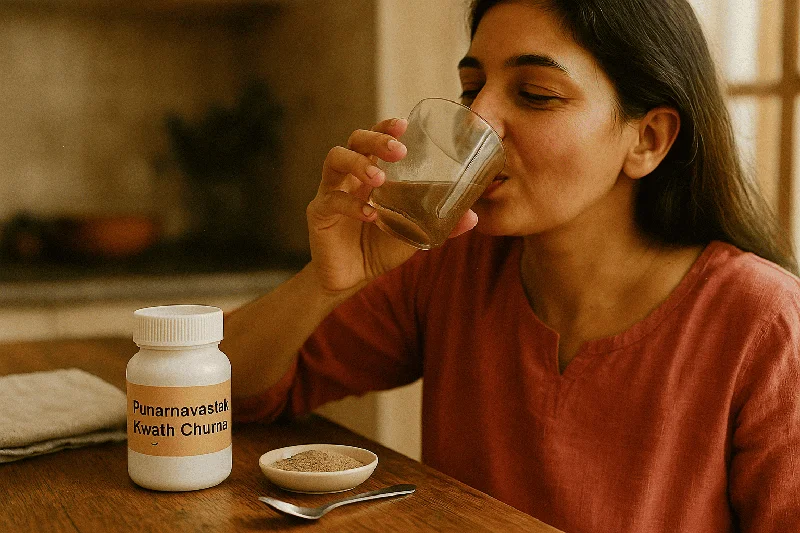
Punarnavashtak Kwath Churna is a classical Ayurvedic polyherbal formulation made from eight medicinal herbs, with Punarnava (Boerhavia diffusa) as its principal ingredient. It's traditionally prescribed for kidney disorders, liver conditions, edema, and systemic detoxification. The formula works primarily as a natural diuretic and anti-inflammatory agent, helping the body eliminate excess fluid while protecting vital organs from oxidative damage.
If you've been searching for clear, evidence-based information about this time-tested remedy — what it contains, how it works, how to prepare it, and what science actually says — you're in the right place. This guide goes deeper than anything else available online, covering classical references, dosha-specific effects, herb-by-herb analysis, phased dosage protocols, and drug interactions that no one else is talking about.
What Is Punarnavashtak Kwath Churna?
Punarnavashtak Kwath Churna is a powdered blend of eight herbs designed to be boiled in water to prepare a therapeutic decoction (kwath).
The name itself tells the whole story when you break it down:
- Punarnava — the lead herb, meaning "one that renews" (punar = again, nava = new)
- Ashtak — eight (referring to the total number of herbs)
- Kwath — decoction prepared by boiling
- Churna — fine powder form
So literally, it's a "powder of eight herbs headed by Punarnava, meant for making a decoction."
Classical Ayurvedic Reference: Sharangdhara Samhita & Bhaishajya Ratnavali
Unlike many commercial Ayurvedic products that are modern inventions, Punarnavashtak Kwath has solid roots in classical texts. The formulation is described in the Bhaishajya Ratnavali, specifically in the Shotha Rogadhikara (chapter on edema/swelling disorders). It is also referenced in the Sharangdhara Samhita, Madhyam Khanda, which deals with kwath (decoction) preparations.
The classical shloka lists the eight ingredients in equal parts and prescribes the formulation primarily for Shotha (edema), Udara Roga (abdominal disorders including ascites), and Pandu (anemia associated with hepatosplenic conditions).
This classical backing is important — it means the formula has been tested across centuries of clinical practice, not just a few years of marketing.
How It Differs from Other Forms: Kwath Churna vs Liquid Kwath vs Tablets
This is a distinction most sellers completely ignore, but it matters for efficacy:
| Form | Preparation | Bioavailability | Shelf Life | Convenience |
|---|---|---|---|---|
| Kwath Churna (Powder) | You boil the powder in water at home, reduce to 1/4th | Highest — fresh preparation preserves volatile compounds | 12–24 months (dry powder) | Moderate — requires 15–20 min preparation |
| Ready Liquid Kwath | Pre-prepared decoction in bottles | Moderate — some degradation over time; preservatives may be added | 6–12 months | High — ready to drink |
| Tablets / Vati | Compressed powder, sometimes with binder | Lower — solid form takes longer to absorb, some active compounds may degrade during compression | 24–36 months | Highest — pop a tablet |
The takeaway: Kwath Churna (the powder you boil yourself) is considered the most potent form by traditional Ayurvedic practitioners. The process of boiling extracts water-soluble alkaloids, flavonoids, and tannins more efficiently than simply swallowing a tablet. If you want maximum therapeutic benefit, especially for serious conditions like nephrotic syndrome or hepatomegaly — churna form is the way to go.
Complete Ingredient List — All 8 Herbs Explained
One of the biggest gaps in existing information online is that nobody actually breaks down all eight herbs with their proper identifications and individual roles. Let's fix that.
All eight herbs are used in equal proportion (Samabhaga) in the classical formulation:
| # | Sanskrit Name | Botanical Name | Part Used | Primary Role in Formula |
|---|---|---|---|---|
| 1 | Punarnava | Boerhavia diffusa | Root | Chief diuretic; reduces edema, renews kidney tissue |
| 2 | Gokshura | Tribulus terrestris | Fruit | Supports urinary tract function; mild diuretic |
| 3 | Nimba Twak | Azadirachta indica | Bark | Anti-inflammatory; blood purification |
| 4 | Patola | Trichosanthes dioica | Leaf | Digestive support; Pitta pacification |
| 5 | Haridra | Curcuma longa | Rhizome | Anti-inflammatory; hepatoprotective (curcumin) |
| 6 | Guduchi | Tinospora cordifolia | Stem | Immunomodulatory; Rasayana (rejuvenative) |
| 7 | Haritaki | Terminalia chebula | Fruit | Mild laxative; promotes Anulomana (downward movement of toxins) |
| 8 | Katuki | Picrorhiza kurroa | Rhizome | Potent hepatoprotective; cholagogue (bile flow stimulant) |
Punarnava (Boerhavia diffusa) — The Star Ingredient
Punarnava is the anchor of this formulation. Its name literally means "that which makes new again," reflecting its capacity to rejuvenate tissues — particularly kidney and liver cells. A 2004 study published in the Journal of Ethnopharmacology demonstrated that Boerhavia diffusa root extract exhibited significant diuretic activity comparable to furosemide in animal models, but without the dangerous electrolyte depletion.
The herb contains punarnavine, an alkaloid with demonstrated anti-inflammatory and diuretic properties. It also has boeravinones, which show hepatoprotective activity by scavenging free radicals in liver tissue.
Gokshura (Tribulus terrestris)
Gokshura complements Punarnava's renal action by supporting the entire urinary tract. It's particularly useful for conditions involving painful or obstructed urination. The saponins in Gokshura (primarily protodioscin) have shown nephroprotective effects in a 2012 study in Pharmaceutical Biology, reducing creatinine and BUN levels in nephrotoxicity models.
Neem Bark (Azadirachta indica)
- While Neem leaf gets all the attention, it's specifically the bark (Nimba Twak) used here.
- Neem bark contains nimbidin and nimbin — compounds with potent anti-inflammatory activity. It acts as a blood purifier (Raktashodhaka) and helps address the Pitta-aggravated inflammatory component of edematous conditions.
Patola (Trichosanthes dioica)
Often overlooked, Patola serves a critical digestive function in this formula. Edematous conditions in Ayurveda are linked to impaired Agni (digestive fire). Patola's bitter taste (Tikta Rasa) helps kindle Agni while pacifying Pitta and Kapha — exactly what's needed when fluid is accumulating in tissues.
Haridra / Turmeric (Curcuma longa)
Turmeric needs little introduction. Its curcumin content provides broad-spectrum anti-inflammatory and antioxidant action. In this formulation, Haridra specifically targets liver inflammation and supports bile production — crucial for patients with hepatomegaly or fatty liver driving their edema.
Guduchi / Giloy (Tinospora cordifolia)
Guduchi is classified as a Rasayana (rejuvenative) in Ayurveda. It modulates immunity, protects the liver, and has demonstrated anti-diabetic properties. A 2010 study in Fitoterapia showed that Tinospora cordifolia stem extract significantly reduced liver enzyme levels (SGOT, SGPT) in hepatotoxicity models. In this formula, it addresses the root-cause immune dysfunction behind many chronic inflammatory conditions.
Haritaki (Terminalia chebula)
Called the "King of Medicine" in Tibetan tradition, Haritaki provides gentle Virechana (purgation) activity. It ensures that toxins mobilized by the other herbs are effectively eliminated through the GI tract. Its gallic acid and chebulagic acid content also contribute antioxidant protection.
Katuki (Picrorhiza kurroa)
- Katuki is arguably the most potent hepatoprotective herb in the formula. Picroside II, its primary active compound, has been shown in multiple studies — including a notable 2011 study published in Phytomedicine — to protect liver cells against carbon tetrachloride-induced damage.
- A 2011 study indexed on PubMed (PMID: 21391842) specifically investigated the hepatoprotective activity of Punarnavashtak Kwath and found significant reductions in liver enzymes and bilirubin levels, confirming the traditional claims.
Key Health Benefits of Punarnavashtak Kwath Churna
Kidney Health & Natural Diuretic Properties
This is the primary indication. Punarnavashtak Kwath acts as a gentle yet effective diuretic that promotes urination without aggressively depleting potassium and sodium the way loop diuretics (furosemide) do.
It supports kidney function at multiple levels:
- Increases glomerular filtration rate (GFR) naturally
- Reduces proteinuria in early-stage nephrotic syndrome
- Helps dissolve and flush small urinary calculi (with Gokshura's action)
- Reduces serum creatinine and blood urea nitrogen over sustained use
Clinical practitioners have reported improvements in renal parameters within 4-8 weeks of consistent use, particularly when combined with dietary modifications.
Liver Detoxification & Hepatoprotection
The Katuki-Guduchi-Haridra trio in this formula creates a powerful hepatoprotective axis.
Benefits for the liver include:
- Protection of hepatocytes against toxic damage
- Enhanced bile production and flow (cholagogue effect)
- Reduction in elevated SGPT and SGOT levels
- Support in managing hepatomegaly and early-stage cirrhotic changes
The PubMed-indexed study (2011) on Punarnavashtak Kwath's hepatoprotective activity confirmed significant dose-dependent protection against chemically-induced liver damage in experimental models.
Reduction of Edema & Water Retention
Edema (Shotha) is the condition this formula was literally designed for in the classical texts.
Whether it's:
- Peripheral edema — swelling in ankles and legs
- Ascites — fluid accumulation in the abdominal cavity
- Generalized anasarca — widespread tissue swelling
- Premenstrual water retention
Punarnavashtak Kwath addresses the root cause (not just the symptom) by improving renal excretion, strengthening vascular integrity, and reducing capillary permeability. Some users have reported noticeable reduction in ankle swelling within the first 2 weeks.
Joint Health & Anti-Inflammatory Support
The combined anti-inflammatory action of Punarnava, Neem bark, Haridra, and Guduchi makes this formulation useful for inflammatory joint conditions — particularly those aggravated by Vata-Kapha imbalance. It can help with joint stiffness, mild to moderate swelling, and inflammatory pain in conditions like early-stage Amavata (rheumatoid arthritis).
Respiratory System Support
This is an underappreciated benefit. The Kapha-pacifying nature of most herbs in this formula makes it useful for conditions involving fluid and congestion in the respiratory tract — including bronchial asthma, allergic bronchitis, and recurrent respiratory infections. Guduchi's immunomodulatory action adds another layer of protection here.
How Punarnavashtak Kwath Churna Affects the Three Doshas
This is something no other resource covers properly, yet it's fundamental to Ayurvedic practice.
Primary action: Kapha-Pitta Shamaka (pacifies Kapha and Pitta)
| Dosha | Effect | Explanation |
|---|---|---|
| Kapha | Strongly reduces | The diuretic and drying (Ruksha) qualities directly counter Kapha's water-retentive, heavy nature. This is why it excels at edema. |
- | Pitta | Moderately reduces | Bitter herbs (Katuki, Patola, Neem) cool and detoxify Pitta.
- Supports liver — Pitta's primary organ. |
| Vata | Mildly increases | The Ruksha (dry) and Laghu (light) properties may aggravate Vata if taken excessively. Vata-dominant individuals should use with caution and add Anupana like warm milk. |
|---|
Best suited for: Kapha-Pitta Prakriti individuals, or anyone with Kapha-Pitta aggravation (fluid retention, inflammation, sluggish metabolism, liver congestion). Use with caution in: Vata-dominant individuals, elderly with Vata aggravation, or those with dry skin and constipation tendencies. Seasonal considerations (Ritucharya): Most effective during Varsha Ritu (monsoon season) and Shishira Ritu (late winter), when Kapha naturally accumulates. Reduce or avoid during peak Grishma Ritu (summer) when Vata is already elevated and the body tends toward dehydration.
How to Use Punarnavashtak Kwath Churna — Preparation & Dosage
Standard Preparation Method (Traditional Kwath Vidhi)
The classical method described in Sharangdhara Samhita for Kwath preparation:
- Take 10–15 grams (approximately 1 tablespoon) of Punarnavashtak Kwath Churna
- Add it to 200 ml (about 1 cup) of water
- Bring to a boil on medium flame
- Reduce the liquid to approximately 50 ml (1/4th of the original volume)
- Strain through a clean cotton cloth or fine strainer
- Allow to cool to a drinkable temperature (lukewarm, not hot)
- Drink on an empty stomach, ideally 30 minutes before meals
Frequency: Twice daily — morning and evening — for most conditions.
Anupana — What to Take It With (Based on Condition)
This is critical information that's missing everywhere else. In Ayurveda, Anupana (the vehicle or accompanying substance) dramatically influences how a medicine works:
| Condition | Recommended Anupana | Rationale |
|---|---|---|
| Kidney disorders / Edema | Plain lukewarm water | Enhances diuretic action |
| Liver disorders | Lukewarm water with a few drops of honey | Honey is Lekhana (scraping) — aids hepatic detox |
| Joint inflammation | Warm milk (cow's milk) | Milk's Snigdha (oily) quality prevents Vata aggravation from the drying herbs |
| Respiratory conditions | Warm water with a pinch of Pippali (long pepper) | Pippali enhances bioavailability and opens Shrotas (channels) in lungs |
| General detox / maintenance | Plain lukewarm water | Standard vehicle |
Phased Dosage Protocol
- Nobody talks about this, but Ayurvedic treatment is always phased.
- Here's a practical protocol:
Phase 1 — Initiation (Week 1–2):
- Start with 5–7 grams churna per dose (half the standard amount)
- Once daily (morning only)
- Purpose: Assess tolerance, observe for excessive diuresis or GI upset
Phase 2 — Therapeutic Dose (Week 3–12):
- Full dose: 10–15 grams per dose
- Twice daily (morning and evening)
- This is where the real therapeutic benefits manifest
Phase 3 — Maintenance (After Week 12):
- Reduce to once daily or every alternate day
- Continue for 4–8 weeks
- Purpose: Consolidate gains, prevent rebound
Phase 4 — Rest Period:
- Take a break of 2–4 weeks before repeating the cycle if needed
- During the break, lighter formulations or single herbs can be continued
> Important: This protocol is a general guideline. Individual dosing should always be determined by a qualified Ayurvedic practitioner based on your Prakriti, Vikriti, Agni status, and the specific condition being treated.
Side Effects, Precautions & Drug Interactions
Known Side Effects
- Punarnavashtak Kwath Churna is generally well-tolerated when used in recommended doses.
- However, the following side effects have been noted:
- Increased frequency of urination — This is actually the intended action, but can be inconvenient. Best to take the evening dose early enough to avoid disrupted sleep.
- Mild GI discomfort — Some individuals experience loose stools or mild cramping initially, usually due to the bitter herbs (Katuki, Neem bark). This typically resolves within 3–5 days.
- Excessive dryness — In Vata-dominant individuals, prolonged use can cause dry skin, constipation, or feelings of lightness/weakness. Adding ghee to the diet or using warm milk as Anupana can help.
Contraindications
- Pregnancy and lactation — The strong diuretic and some Virechana (purgative) properties make it unsuitable during pregnancy. Nursing mothers should consult an Ayurvedic doctor before use.
- Severe dehydration — Do not use if already dehydrated or experiencing diarrhea.
- Children under 12 — Not recommended without specific pediatric guidance.
- Post-surgical patients — Avoid for at least 2 weeks after major surgery due to its effects on fluid balance.
Interactions with Allopathic Medications
This is a critically important section that no competitor has addressed. If you're taking conventional medications, please read carefully:
| Medication Class | Interaction Risk | Details |
|---|---|---|
| Loop diuretics (Furosemide, Torsemide) | High | Additive diuretic effect — risk of dehydration and electrolyte imbalance (especially hypokalemia) |
| Thiazide diuretics (Hydrochlorothiazide) | High | Same as above — can cause dangerous fluid and electrolyte loss |
| ACE inhibitors / ARBs (Enalapril, Losartan) | Moderate | May enhance hypotensive effect — monitor blood pressure closely |
| Antidiabetic drugs (Metformin, Glimepiride) | Moderate | Guduchi and Punarnava have hypoglycemic properties — monitor blood sugar to avoid hypoglycemia |
| Hepatotoxic drugs (Acetaminophen in high doses, Statins) | Low-Moderate | The formula's hepatoprotective action may be beneficial, but don't use it as a substitute for liver monitoring |
| Immunosuppressants (Cyclosporine, Tacrolimus) | Moderate | Guduchi's immunomodulatory action may interfere — consult your doctor |
Bottom line: If you are on any prescription medication — especially diuretics or blood pressure drugs — consult both your allopathic doctor and an Ayurvedic practitioner before starting Punarnavashtak Kwath Churna. This is not optional.
Application in Specific Clinical Conditions
Nephrotic Syndrome
Punarnavashtak Kwath is one of the most frequently prescribed Ayurvedic formulations for nephrotic syndrome, particularly in cases with significant proteinuria and edema.
The protocol typically involves:
- Full therapeutic dose (10–15g twice daily) for 8–12 weeks
- Combined with Gokshuradi Guggulu tablets for enhanced renal support
- Strict low-salt diet is mandatory alongside
- Regular monitoring of urine protein and serum albumin levels
Ascites & Hepatomegaly
For fluid accumulation in the abdomen secondary to liver disease:
- Combine with Arogyavardhini Vati (a classical hepatoprotective tablet)
- Use honey-water as Anupana
- Add Katuki powder separately if liver enzymes are significantly elevated
- Course duration: typically 12–16 weeks with monitoring
Chronic Peripheral Edema
For persistent ankle/leg swelling:
- Standard dose twice daily
- Combine with mild Virechana (purgation) therapy at the start for faster results
- Leg elevation and compression alongside herbal therapy
- Most patients notice significant improvement within 2–4 weeks
How to Choose a Quality Product
Not all Punarnavashtak Kwath Churna products are created equal.
Here's what to look for:
- GMP Certification — The manufacturing facility should be GMP (Good Manufacturing Practice) certified under AYUSH Ministry guidelines
- FSSAI License — Mandatory for any ingestible product sold in India
- Classical formulation adherence — Check that the product contains all 8 herbs in equal proportion. Some manufacturers substitute or omit ingredients
- No added fillers or flow agents — The churna should contain only the eight herbs. Period.
- Batch testing records — Reputable manufacturers test each batch for heavy metals (lead, mercury, arsenic) and microbial contamination
- Expiry date and manufacturing date — Kwath Churna is best used within 12–18 months of manufacture for maximum potency
Frequently Asked Questions (FAQ)
How long does it take to see results from Punarnavashtak Kwath Churna?
- For edema and water retention, many users report initial changes within 1–2 weeks (increased urination, reduced swelling). For deeper conditions like liver disorders or chronic kidney issues, meaningful improvements typically take 6–12 weeks of consistent use.
- Don't expect overnight miracles — this is a gradual, root-cause approach.
Can Punarnavashtak Kwath Churna be taken with other supplements?
Yes, in most cases. It's commonly combined with other Ayurvedic formulations like Gokshuradi Guggulu, Chandraprabha Vati, or Arogyavardhini Vati depending on the condition. However, avoid combining it with other strong diuretic supplements (herbal or otherwise) without professional guidance, as this can lead to excessive fluid loss.
Is Punarnavashtak Kwath Churna safe for long-term use?
When used in appropriate doses with periodic breaks (as described in the phased protocol above), it is considered safe for extended periods. However, continuous use beyond 3 months without a break is not recommended. The break allows the body to recalibrate its fluid balance naturally.
Can Punarnavashtak Kwath Churna help with weight loss?
It's not primarily a weight loss formula, but it can support weight management indirectly. By reducing water retention, improving metabolism (through Agni-enhancing bitter herbs), and supporting liver function (which is central to fat metabolism), some users do experience weight reduction. However, for targeted weight loss, more specific formulations like Triphala Guggulu or Medohar Vidangadi Loha would be more appropriate.
Does Punarnavashtak Kwath Churna improve skin health?
Yes, to some extent. The blood-purifying (Raktashodhaka) action of Neem bark and Turmeric, combined with the detoxifying action of Guduchi and Katuki, can improve skin conditions — particularly those driven by liver toxicity or Pitta aggravation (acne, inflammatory rashes, mild eczema). It's not a primary skin treatment, but patients often report clearer skin as a positive side effect.
Is Punarnavashtak Kwath Churna suitable for vegetarians and vegans?
- Absolutely.
- The formulation contains only plant-based ingredients — roots, stems, barks, fruits, and rhizomes. No animal-derived products are used. It is suitable for vegetarians, vegans, and those following Sattvic diets.
What is the shloka (verse) for Punarnavashtak Kwath?
The classical reference verse lists the eight ingredients: Punarnava, Gokshura, Nimba (Neem bark), Patola, Haridra, Guduchi, Haritaki, and Katuki — all in equal parts. The shloka appears in Bhaishajya Ratnavali's Shotha Rogadhikara chapter. The exact verse numbering can vary by edition, but the formulation composition remains consistent across all classical commentaries.
Conclusion — Is Punarnavashtak Kwath Churna Right for You?
Punarnavashtak Kwath Churna stands as one of Ayurveda's most well-designed polyherbal formulations — eight herbs working synergistically to address fluid imbalance, protect the liver and kidneys, reduce inflammation, and support the body's natural detoxification pathways. It has classical textual backing, centuries of clinical use, and emerging scientific validation.
But like any potent medicine — Ayurvedic or otherwise — it works best when used appropriately. That means correct preparation (boil it properly), right dosage (start low, build up), proper Anupana (choose based on your condition), and medical supervision (especially if you have pre-existing conditions or take other medications).
If you're dealing with edema, kidney concerns, liver issues, or chronic inflammation and want to explore an evidence-backed Ayurvedic approach, Punarnavashtak Kwath Churna deserves serious consideration. Consult a qualified Ayurvedic practitioner to determine if this formulation matches your Prakriti, current health status, and treatment goals.
- Have specific questions about Punarnavashtak Kwath Churna for your condition?
- Ask our verified Ayurvedic doctors for personalized guidance — responses typically come within hours.
Scientific Sources
- Ayurvedic drug induced liver injury — Dalal KK et al., 2017, World journal of hepatology
- Effective management Alopecia totalis by Ayurveda - A case report — Patil SB et al., 2023, Journal of Ayurveda and integrative medicine
- Clinical efficacy of Gokshura-Punarnava Basti in the management of microalbuminuria in diabetes mellitus — Ramteke RS et al., 2012, Ayu
- Suspected Cutaneous Allergic Reactions with Ayurveda Medicine Punaranava Mandura: A Case Report — Roseleena S et al., 2025, Current drug safety
- Ethnomedicinal values of Boerhaavia diffusa L. as a panacea against multiple human ailments: a state of art review — Das S et al., 2023, Frontiers in chemistry
Ask Ayurvedic doctor a question and get a consultation online on the problem of your concern in a free or paid mode.
More than 2,000 experienced doctors work and wait for your questions on our site and help users to solve their health problems every day.
Related articles