Ask Ayurvedic doctor a question and get a consultation online on the problem of your concern in a free or paid mode. More than 2,000 experienced doctors work and wait for your questions on our site and help users to solve their health problems every day.


Body DetoxEar, Nose, and Throat DisordersGeriatrics & RejuvenationImmunodeficiencyInfertility TreatmentNutritionOrthopedic DisordersPediatricsRespiratory DisordersSexually Transmitted Diseases (STDs)Surgery RecoveryUrological DisordersVascular DisordersDental DisordersEndocrinological DisordersGastrointestinal DisordersYoga TherapyGeneral MedicineAllergic DisordersCardio DisordersGynecology and ObstetricsCosmetologySkin and Hair DisordersEye DisordersInfectious DiseasesMental DisordersNeurological DisordersOncologyPanchakarmaSexual Health & DisordersSports Medicine
Published on 12/26/24
(Updated on 08/09/26)
3,155
Kuberaksh Vati: Benefits, Dosage & Science-Backed Insights
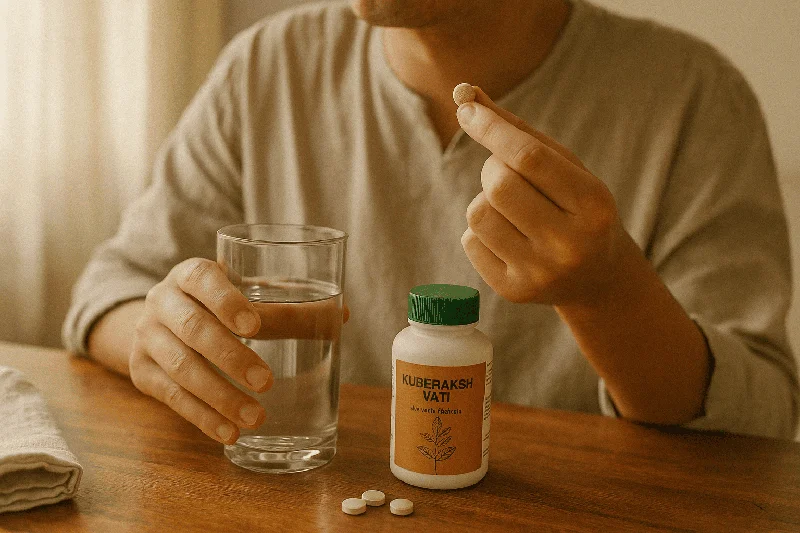
- Kuberaksh Vati is a classical Ayurvedic formulation (Shastrokt Yog) primarily used for managing PCOD (Polycystic Ovarian Disease), ovarian cysts, menstrual irregularities, and various digestive disorders.
- The medicine derives its name from its key ingredient — Kuberaksha (Caesalpinia bonduc), also known as Lata Karanj — a thorny climbing shrub recognized in Ayurveda for centuries for its anti-inflammatory, hormone-balancing, and digestive properties. Available as tablets (typically 250 mg each, in packs of 60), Kuberaksh Vati combines five potent natural ingredients that work synergistically to balance Vata and Kapha doshas, support ovarian health, and improve gut function.
If you've been searching for a natural, time-tested remedy for hormonal imbalance or chronic digestive complaints, this comprehensive guide covers everything you need to know — from the exact composition and mechanism of action to dosage, side effects, drug interactions, diet recommendations, and how it compares to other popular Ayurvedic alternatives.
What Is Kuberaksh Vati?
Kuberaksh Vati is a polyherbal Ayurvedic tablet formulation classified as a "Shastrokt Yog" — meaning it originates from classical Ayurvedic texts rather than being a proprietary modern creation. The word "Kuberaksh" itself refers to the seed of Caesalpinia bonduc (also called Caesalpinia crista in some taxonomic references), which serves as the primary active ingredient.
Classical Ayurvedic Reference (Shastrokt Yog)
While several manufacturers label Kuberaksh Vati as a classical formulation, the specific textual reference is often not clearly cited. Based on available Ayurvedic literature, formulations containing Kuberaksha seeds combined with Hingu, Sunthi, Lasun, and rock salt find mention in treatises dealing with Gulma (abdominal tumors/masses) and Udara Roga (abdominal disorders). The combination aligns closely with principles outlined in texts like Bhaishajya Ratnavali (Chapter on Gulma Chikitsa) and Yogaratnakara, where Kuberaksha is described as a potent Gulma-hara (mass-dissolving) and Shoolahara (pain-relieving) drug.
It's worth noting that the exact formulation name "Kuberaksh Vati" as marketed today may represent a standardized version of these classical principles rather than a verbatim reproduction of a single shloka. If you're a practitioner looking for the precise reference, consulting the Gulma and Yonivyapad (uterine disorders) chapters in Bhaishajya Ratnavali is a good starting point.
Kuberaksha (Lata Karanj) — The Key Herb
Kuberaksha, botanically identified as Caesalpinia bonduc (Family: Caesalpiniaceae), is a large prickly climbing shrub found across tropical regions of India. The plant has a long history of use in both Ayurvedic and folk medicine systems.
Key facts about the plant:
- Common Names: Lata Karanj (Hindi), Kantkarej (Gujarati), Gajjaga (Kannada), Kalichchi (Tamil), Fever Nut or Bonduc Nut (English)
- Part Used: Primarily the seed kernel (beej)
- Historical Use: The seeds have been used for centuries to treat intermittent fevers (hence the English name "Fever Nut"), abdominal masses, worm infestations, and menstrual disorders
- Active Compounds: Research has identified bonducin, caesalpin, furanoditerpenes, and various flavonoids as key bioactive constituents. A 2017 review published in the Journal of Ethnopharmacology documented significant anti-estrogenic, anti-inflammatory, and anthelmintic activities of Caesalpinia bonduc seed extracts.
The seed has a distinctive hard, grey-colored shell and is traditionally considered Tikta (bitter) and Kashaya (astringent) in taste — properties that make it particularly useful for conditions involving excess Kapha and Ama (metabolic toxins).
Kuberaksh Vati Ingredients (Composition)
The formulation contains five ingredients in equal proportions. Each 250 mg tablet typically contains 62.50 mg of each component, though slight variations exist between manufacturers.
| Ingredient | Botanical / Chemical Name | Common Name | Quantity per Tablet |
|---|---|---|---|
| Kuberaksha | Caesalpinia bonduc (Seed) | Lata Karanj, Fever Nut | 62.50 mg |
| Hingu (Hing) | Ferula assa-foetida (Resin) | Asafoetida | 62.50 mg |
| Sunthi | Zingiber officinale (Rhizome) | Dry Ginger | 62.50 mg |
| Lasun | Allium sativum (Bulb) | Garlic | 62.50 mg |
| Saindhav Lavan / Kala Namak | Rock Salt / Black Salt | — | 62.50 mg |
> Important Note on Manufacturer Differences: Not all brands use the identical composition. For instance, some formulations listed on 1mg.com mention Saindhav Lavan (rock salt) but omit Sunthi, while others include both Kala Namak and Sunthi. Always check the label of the specific product you purchase, and consult an Ayurvedic practitioner if you're unsure about ingredient variations.
Role of Each Ingredient in the Formula
Understanding why each ingredient is included helps appreciate the intelligence behind this classical formulation:
Kuberaksha (Caesalpinia bonduc): The primary therapeutic agent. Its bitter and astringent taste helps scrape away Kapha and Ama accumulations, particularly in the lower abdomen and pelvic region. Its documented anti-estrogenic activity is likely the mechanism behind its effectivness in PCOD and ovarian cysts. Hingu (Asafoetida): A powerful Vata-shamak (Vata-pacifying) ingredient known for its carminative and antispasmodic properties. It helps relieve bloating, flatulence, and colicky pain. In the context of menstrual disorders, Hingu helps relax uterine smooth muscle and reduce cramping. Sunthi (Dry Ginger): Acts as a bioavailability enhancer (Yogavahi) — it improves the absorption and efficacy of other ingredients. Sunthi is also a potent Agni-deepak (digestive fire enhancer) and helps counter the heaviness of Kapha dosha. Research published in Phytotherapy Research (2015) confirmed ginger's anti-inflammatory effects comparable to ibuprofen in dysmenorrhea. Lasun (Garlic): Contributes significant Vata-Kapha shamak properties. Garlic contains allicin and other organosulfur compounds with documented anti-inflammatory, lipid-lowering, and mild hormonal-modulating effects. In the formula, it supports circulation in pelvic tissues and aids in breaking down cystic formations. Saindhav Lavan / Kala Namak (Rock/Black Salt): Acts as an Anulomak — it promotes the downward movement of Vata (Apana Vayu), which is critical for normal menstruation and bowel movements. It also enhances taste, improves appetite, and aids in the absorption of the other ingredients through the GI tract.
Kuberaksh Vati Benefits & Uses
For PCOD (Polycystic Ovarian Disease)
This is arguably the most significant modern application of Kuberaksh Vati. PCOD involves the formation of multiple small cysts on the ovaries, hormonal imbalance (elevated androgens), irregular periods, and metabolic disturbances.
From an Ayurvedic perspective, PCOD is understood as a Kapha-Vata disorder involving accumulation of Ama in the Artava Vaha Srotas (reproductive channels).
Kuberaksh Vati addresses this through:
- Lekhana (scraping) action of Kuberaksha that helps reduce cystic formations
- Vata Anulomana through Hingu and Saindhav Lavan that regularizes Apana Vayu — the subdosha governing menstruation and ovulation
- Agni Deepana through Sunthi and Lasun that improves metabolic function and reduces Ama
A review article published in the International Journal of Advanced Research in Science, Communication and Technology (IJARSCT, 2023) examined the role of Kuberaksha-based formulations in PCOD management and noted that the anti-estrogenic and anti-androgenic properties of Caesalpinia bonduc seed extracts make it a promising agent for addressing the hormonal imbalance characteristic of PCOD.
For Ovarian Cysts & Uterine Disorders
Beyond PCOD, Kuberaksh Vati is used in the management of:
- Functional ovarian cysts
- Uterine fibroids (as an adjunct therapy)
- Granthi (abnormal tissue growths in the pelvic region)
The Lekhana and Bhedana (penetrating) properties of the formulation help in gradually reducing the size of such masses when taken consistently over an appropriate duration.
For Amenorrhea & Dysmenorrhea
Amenorrhea (absence of menstruation): Kuberaksh Vati helps restore menstrual flow by correcting Apana Vayu dysfunction and removing obstructions (Sanga) in the reproductive channels. It is particularly useful in secondary amenorrhea caused by PCOD or Kapha-predominant conditions. Dysmenorrhea (painful periods): The antispasmodic properties of Hingu combined with the anti-inflammatory effects of Sunthi and Lasun provide relief from menstrual cramps. Many practitioners report that patients experience noticable improvement within 2-3 menstrual cycles of regular use.
For Digestive Disorders
The original classical indication for this formulation was likely Gulma (abdominal masses) and digestive complaints.
Kuberaksh Vati remains effective for:
- Chronic constipation — through Vata Anulomana
- Indigestion and bloating — through Agni Deepana action of Sunthi and Hingu
- IBS-like symptoms — alternating constipation and diarrhea with abdominal pain
- Colic pain (Shoola) — the antispasmodic combination provides rapid relief
For Flatulence and Abdominal Distension
The combination of Hingu and Saindhav Lavan is particularly effective for Adhmana (flatulence). Patients dealing with chronic gas, bloating after meals, and abdominal distension often respond well to this formulation.
For Hormonal Imbalance
Kuberaksh Vati's hormone-modulating properties extend beyond just reproductive hormones.
Some practitioners also report benefits in:
- Thyroid-related menstrual irregularities (as an adjunct)
- Hormonal acne and skin breakouts
- Mood swings and irritability associated with PMS or PCOD
Other Reported Benefits
Some Ayurvedic practitioners and sources (notably Vedhascare) mention additional therapeutic applications, though these are less well-documented:
- Hair fall associated with hormonal imbalance
- Filariasis (traditional use of Kuberaksha seeds)
- Liver disorders — the bitter principles of Kuberaksha support hepatic function
- Abnormal uterine bleeding — in specific clinical contexts under practitioner guidance
How Does Kuberaksh Vati Work? (Mechanism of Action)
Ayurvedic Pharmacology (Rasa, Guna, Virya, Vipaka)
Understanding the Dravyaguna (pharmacological properties) of the overall formulation helps practitioners and informed consumers appreciate its therapeutic logic:
| Property | Predominant Quality | Clinical Significance |
|---|---|---|
| Rasa (Taste) | Tikta (Bitter), Katu (Pungent), Lavana (Salty) | Kapha-Vata Shamak; stimulates Agni |
| Guna (Attributes) | Laghu (Light), Tikshna (Penetrating), Ushna (Hot) | Counteracts heaviness and stagnation |
| Virya (Potency) | Ushna (Hot) | Increases metabolic fire; clears channels |
| Vipaka (Post-digestive) | Katu (Pungent) | Reduces Kapha; promotes Apana Vayu |
| Dosha Karma | Vata-Kapha Shamak | Balances the two doshas most involved in PCOD and Gulma |
| Karma (Actions) | Deepana, Pachana, Lekhana, Shoolahara, Anulomana | Digestive, scraping, pain-relieving, channeling |
Effect on Doshas and Srotas
The formulation primarily targets Apana Vayu (the downward-moving aspect of Vata) and Kapha dosha in the lower abdomen and pelvis.
Here's how the mechanism unfolds:
- 1.Agni Deepana (Igniting Digestive Fire): Sunthi, Lasun, and Hingu collectively strengthen Jatharagni (central digestive fire) and Dhatvagni (tissue-level metabolic fires). This reduces Ama formation at the root level.
- 2.Ama Pachana (Digesting Toxins): The Tikshna (penetrating) and Ushna (hot) qualities of the formulation help digest already-formed Ama, particularly in the Rasa and Rakta dhatus (plasma and blood tissues).
- 3.Srotoshodhana (Channel Cleansing): The Lekhana (scraping) action of Kuberaksha, enhanced by the bioavailability-boosting property of Sunthi, helps clear Artava Vaha Srotas (reproductive channels) and Annavaha Srotas (digestive channels) of obstructions.
- 4.Apana Vayu Anulomana: Hingu and Saindhav Lavan specifically normalize the direction and function of Apana Vayu, restoring normal menstruation and bowel movements.
Modern Pharmacological Perspective
From a modern pharmacological standpoint, the key mechanisms include:
- Anti-estrogenic activity of bonducin from Caesalpinia bonduc — may help correct the estrogen-androgen imbalance seen in PCOD
- Anti-inflammatory action — multiple ingredients (ginger, garlic, asafoetida) contain compounds that inhibit COX-2 and NF-κB pathways
- Antispasmodic effects — Hingu's coumarin derivatives relax smooth muscle, reducing uterine and intestinal cramping
- Lipid-modulating effects — garlic's allicin helps address the dyslipidemia often associated with PCOD
Kuberaksh Vati Dosage & How to Take
Standard Dosage
| Population | Dosage | Frequency | Anupana (Vehicle) |
|---|---|---|---|
| Adults (general) | 1–2 tablets (250–500 mg) | Twice daily | Warm water or as directed |
| For PCOD/Ovarian Cysts | 2 tablets (500 mg) | Twice daily | Warm water, after meals |
| For Digestive Disorders | 1–2 tablets | Twice daily | Warm water or buttermilk |
| Children (above 12) | 1 tablet | Once or twice daily | Only under practitioner guidance |
| Children (below 12) | Not recommended | — | Consult Ayurvedic physician |
Best time to take: After meals (Paschat Bhakta) for digestive complaints; before meals with warm water for gynecological conditions, though your practitioner may adjust this.
Recommended Duration of Treatment
This is a critical detail that none of the competing sources adequately address.
Based on clinical practice patterns:
- For PCOD and Ovarian Cysts: A minimum of 3–6 months of consistent use is typically recommended to observe meaningful results. Some practitioners continue for up to 9–12 months in stubborn cases, often with periodic assessments via ultrasound.
- For Menstrual Irregularities: 3–4 menstrual cycles (approximately 3–4 months)
- For Digestive Disorders: 1–3 months, depending on chronicity
- For Acute Colic Pain: Short courses of 1–2 weeks may suffice
> Important: Do not self-medicate for extended periods. Regular follow-ups with a qualified Ayurvedic practitioner are essential, especially for PCOD and cyst-related conditions where monitoring via ultrasound is necessary.
Don't wait or self medicate. Start chat with Doctor NOW
Side Effects & Safety Profile of Kuberaksh Vati
Known Side Effects
Kuberaksh Vati is generally well-tolerated when taken in recommended doses under professional guidance.
However, potential side effects may include:
- Gastric irritation or acidity — due to the Ushna Virya (hot potency) of multiple ingredients; more common in Pitta-predominant individuals
- Loose stools or mild diarrhea — particularly during the initial days of use, owing to the Anulomana (channeling) effect
- Burning sensation — some individuals may experience a mild burning sensation in the stomach or during urination
- Allergic reactions — rare, but possible in individuals sensitive to asafoetida or garlic
- Nausea — occasionally reported, especially when taken on an empty stomach
Contraindications
- Pregnancy: Strictly avoid. The Ushna Virya and Garbhashaya Sankochak (uterus-contracting) properties of several ingredients make it potentially harmful during pregnancy.
- Lactation: Use with caution and only under medical supervision. Garlic and asafoetida may alter the taste of breast milk and cause colic in the infant.
- Active gastric ulcers or hyperacidity: The hot potency of the formulation can aggravate these conditions.
- Known allergy to any of the ingredients.
- Active bleeding disorders: Unless specifically prescribed by a qualified practitioner.
Storage
Store in a cool, dry place away from direct sunlight. Keep the container tightly closed. Shelf life is typically 3–5 years from the date of manufacture for classical Ayurvedic formulations, but always check the packaging.
Drug Interactions
This is an area that virtually no source on Kuberaksh Vati addresses, yet it's clinically important.
| Concurrent Medication | Potential Interaction | Recommendation |
|---|---|---|
| Anticoagulants (Warfarin, Aspirin) | Garlic has blood-thinning properties; may enhance anticoagulant effect | Use with caution; monitor INR |
| Antidiabetic drugs (Metformin, Sulfonylureas) | Kuberaksha seeds may lower blood sugar | Monitor blood glucose closely |
| Oral Contraceptives | The anti-estrogenic properties of Kuberaksha may theoretically reduce efficacy | Discuss with your doctor |
| Antihypertensive medications | Garlic may enhance the blood pressure-lowering effect | Monitor BP regularly |
| Other Ushna Virya Ayurvedic medicines | Additive heating effect; may increase Pitta | Adjust doses under practitioner guidance |
Always inform both your allopathic doctor and Ayurvedic practitioner about all medications and supplements you are taking.
Kuberaksh Vati vs. Other Ayurvedic Alternatives
If you're considering Kuberaksh Vati for PCOD or digestive issues, you might wonder how it compares to other popular Ayurvedic formulations.
Here's a practical comparison:
| Parameter | Kuberaksh Vati | Kanchanar Guggulu | Pushyanug Churna | Rajapravartini Vati |
|---|---|---|---|---|
| Primary Focus | PCOD, ovarian cysts, digestive disorders | Thyroid, cysts, tumors, lymph swellings | Excessive bleeding, leucorrhea | Amenorrhea, delayed periods |
| Dosha Action | Vata-Kapha Shamak | Kapha-Vata Shamak | Pitta-Kapha Shamak | Vata-Kapha Shamak |
| Best For | Cystic ovaries + digestive issues | Any type of Granthi (mass/cyst) | Asrigdara (menorrhagia) | Inducing delayed menses |
| Potency | Ushna | Ushna | Sheeta-Ushna | Ushna (strong) |
| Pregnancy Safe? | No | No | No | Absolutely No |
| Duration of Course | 3–6 months | 3–6 months | 1–3 months | Short courses only |
Key Takeaway: Kuberaksh Vati is uniquely positioned because it addresses both the gynecological and digestive aspects of PCOD simultaneously. Kanchanar Guggulu is often used alongside it for more stubborn cystic formations, while Pushyanug Churna is preferred when heavy bleeding is the dominant symptom. An experienced Ayurvedic practitioner may combine two or more of these formulations based on your individual Prakriti and symptom profile.
Diet & Lifestyle Recommendations During Treatment (Pathya-Apathya)
Taking Kuberaksh Vati without addressing diet and lifestyle is like filling a bucket with a hole in it.
For best results, follow these guidelines:
Pathya (Favorable)
- Warm, freshly cooked meals — supports Agni and reduces Ama
- Include bitter and astringent vegetables: Bitter gourd (karela), drumstick (moringa), fenugreek leaves, green leafy vegetables
- Whole grains: Old rice (Purana Shali), barley (Yava), ragi, jowar
- Spices: Turmeric, cumin, coriander, fennel — all support digestion and reduce inflammation
- Adequate hydration: Warm water or herbal teas (ginger, cinnamon)
- Regular exercise: At least 30–45 minutes of moderate physical activity daily; yoga asanas like Baddha Konasana, Supta Baddha Konasana, and Bhujangasana are particularly beneficial for pelvic health
- Consistent sleep schedule: Aim for 7–8 hours; sleep before 10 PM
Apathya (Unfavorable)
- Cold, heavy, processed foods — ice cream, refrigerated leftovers, deep-fried items
- Excessive dairy — especially cold milk, cheese, and paneer (increases Kapha)
- Refined sugar and maida — directly aggravates hormonal imbalance
- Sedentary lifestyle — worsens Kapha accumulation and Apana Vayu dysfunction
- Excessive stress — practice Pranayama (Nadi Shodhana, Bhramari) to manage cortisol levels
- Viruddha Ahara (incompatible food combinations) — such as fruit with milk, fish with dairy
Frequently Asked Questions (FAQ)
What is the price of Kuberaksh Vati?
The price varies by manufacturer and pack size. A bottle of 60 tablets typically costs between ₹100–₹250 in India. Brands like Amrita, Bais Ayurveda, and Manas Ayurved offer this product online through platforms like 1mg, Amazon India, and their own websites. Larger packs (e.g., 450 tablets from Manas Ayurved) are more cost-effective for long-term use.
Is Kuberaksh Vati available from Dhootapapeshwar?
As of the most recent available information, Dhootapapeshwar does not appear to manufacture a product specifically named "Kuberaksh Vati." However, several other reputable manufacturers produce this classical formulation. Since it's a Shastrokt (classical) preparation, any GMP-certified Ayurvedic pharmacy can manufacture it following the standard reference composition.
Can Kuberaksh Vati cure PCOD permanently?
PCOD is a complex metabolic and hormonal condition, and no single medicine — Ayurvedic or allopathic — can guarantee a permanent "cure" in every case. However, Kuberaksh Vati, when used as part of a comprehensive treatment plan (including diet, lifestyle, and possibly other supportive formulations), has shown clinically meaningful improvement in regulating menstrual cycles, reducing ovarian cysts on ultrasound, and alleviating associated symptoms like acne, hair fall, and weight gain. Long-term management and periodic evaluation are key.
Can I take Kuberaksh Vati with allopathic medicines for PCOD?
In many cases, yes — but only under the supervision of both your allopathic gynecologist and Ayurvedic practitioner. There are potential interactions with oral contraceptives and metformin (commonly prescribed for PCOD) that need to be accounted for. Never self-combine treatments without professional guidance.
Is there a PDF reference for Kuberaksh Vati?
A research article titled "Critical Review of Kuberaksha and Its Therapeutic Applications" is available through the Kerala Journal of Ayurveda. Additionally, a review on its role in PCOD management was published in IJARSCT (2023). These can serve as academic references for practitioners and students.
Which Ayurvedic medicine is best for PCOD?
There's no single "best" medicine — it depends on the individual's Prakriti (constitution), predominant dosha imbalance, and specific symptom profile. Kuberaksh Vati is an excellent choice when PCOD presents with digestive issues, Kapha-Vata imbalance, and cystic formations. Other commonly used formulations include Kanchanar Guggulu, Shatavari, Pushyanug Churna, and Chandraprabha Vati. A skilled Ayurvedic practitioner will create a personalized protocol.
How to remove Pitta from liver?
While this question isn't directly about Kuberaksh Vati, it's frequently asked alongside it. For Pitta-related liver issues, formulations like Arogyavardhini Vati, Kumaryasava, and Kutki (Picrorhiza kurroa) are more appropriate. Kuberaksh Vati's bitter constituents do offer mild hepatoprotective support, but it's not the primary choice for liver detoxification.
Conclusion
- Kuberaksh Vati stands out as a remarkably well-designed classical Ayurvedic formulation that bridges the gap between digestive health and reproductive wellness.
- Its unique composition — anchored by the anti-estrogenic and Lekhana properties of Kuberaksha seeds and supported by the carminative, anti-inflammatory power of Hingu, Sunthi, Lasun, and Saindhav Lavan — makes it a go-to choice for PCOD, ovarian cysts, menstrual irregularities, and chronic digestive complaints.
However, like any potent therapeutic agent, it works best when used correctly: under professional guidance, for an adequate duration, and alongside appropriate dietary and lifestyle modifications.
Ready to start your healing journey? Consult a qualified Ayurvedic practitioner who can evaluate your individual constitution and design a comprehensive treatment plan that includes Kuberaksh Vati where appropriate. Don't self-prescribe for serious conditions like PCOD or ovarian cysts — proper diagnosis and monitoring are essential for safe, effective outcomes. Disclaimer: This article is for educational and informational purposes only and should not be considered medical advice. Always consult a qualified Ayurvedic practitioner or healthcare provider before starting any new medication or supplement.
Scientific Sources
- Research, biomedicine and Ayurveda: From evidence-based medicine to evidence-informed healthcare — Chaturvedi S et al., 2021, Indian journal of medical ethics
- The Ayurvedic Pharmacopoeia of India, development and perspectives — Joshi VK et al., 2017, Journal of ethnopharmacology
- Exploring scientific validation of Triphala Rasayana in ayurveda as a source of rejuvenation for contemporary healthcare: An update — Ahmed S et al., 2021, Journal of ethnopharmacology
- Mind-body medicine.A cautionary note — Mathew RJ, 1998, North Carolina medical journal
- Therapeutic potential of Terminalia arjuna in cardiovascular disorders — Maulik SK et al., 2012, American journal of cardiovascular drugs : drugs, devices, and other interventions
- Aging research in India — Ashok BT et al., 2003, Experimental gerontology
- Tinospora cordifolia (Giloy): Phytochemistry, Ethnopharmacology, Clinical Application and Conservation Strategies — Kumar P et al., 2020, Current pharmaceutical biotechnology
- An introduction to Ayurveda — Lad V, 1995, Alternative therapies in health and medicine
- Neuronutrient impact of Ayurvedic Rasayana therapy in brain aging — Singh RH et al., 2008, Biogerontology
- Public Health Approach of Ayurveda and Yoga for COVID-19 Prophylaxis — Tillu G et al., 2020, Journal of alternative and complementary medicine (New York, N.Y.)
- Comparing the concept of "Removing Worms" between traditional Chinese medicine and Ayurveda -- An example of Qiye Qingnian Powder(https://pubmed.ncbi.nlm.nih.gov/39394793/) — Zhang RS et al., 2024, Zhonghua yi shi za zhi (Beijing, China : 1980)
- Glimpses of the advancement of medical science as depicted in the Mahäbhärata — Mitra J, 1995, Bulletin of the Indian Institute of History of Medicine (Hyderabad)
- Ayurveda and gynecological disorders — Jadhav AN et al., 2005, Journal of ethnopharmacology
- Do Ayurveda students need a course in Medical Astrology? — Krishna GL, 2023, Indian journal of medical ethics
- Can Ayurveda medicine supplement modern medical treatments in chronic disease management? — Ravindran V et al., 2024, The journal of the Royal College of Physicians of Edinburgh
- Metabolomics of Withania somnifera (L.) Dunal: Advances and applications — Tetali SD et al., 2021, Journal of ethnopharmacology
- Keeping abreast about ashwagandha in breast cancer — Vashi R et al., 2021, Journal of ethnopharmacology
- Ayurpharmacoepidemiology en Route to Safeguarding Safety and Efficacy of Ayurvedic Drugs in Global Outlook — Debnath P et al., 2017, Journal of evidence-based complementary & alternative medicine
- Research in Ayurveda: where do we go from here? — Hardy ML, 2001, Alternative therapies in health and medicine
- Ayurgenomics and Modern Medicine — Wallace RK, 2020, Medicina (Kaunas, Lithuania)
Questions from users
How does Kuberaksh Vati interact with metformin?
Client_72de46
3 days ago
Kuberaksh Vati has potential interactions with the diabetes medication metformin, so it is important to consult a healthcare provider before combining them. This herbal remedy, which includes the seed of Caesalpinia bonduc, can have effects on blood sugar levels, possibly enhancing or altering the effect of metformin, which is used to manage diabetes and polycystic ovary syndrome (PCOS). If you experience unusual symptoms such as hypoglycemia, dizziness, or gastrointestinal issues, seek medical attention. Always seek professional advice before starting or combining herbal supplements with prescription medications.
How long does it take to see results from Kuberaksh Vati?
Client_a808f9
8 days ago
Expect to see results from Kuberaksh Vati within several weeks to a few months, particularly for issues like secondary amenorrhea due to PCOD or Kapha-related conditions. However, individual results can vary substantially. Factors such as the underlying health condition, severity, adherence to the recommended dosage, and lifestyle habits can all influence how quickly you see changes. Watch for any side effects or unusual symptoms and check with a healthcare provider if you do not notice improvement or if you have concerns, especially if combined with other treatments like Kanchanar Guggulu or Shatavari. Always consult a healthcare practitioner before beginning any new herbal supplementation.
What are the side effects of Kuberaksh Vati?
Client_d49a22
18 days ago
The side effects of Kuberaksh Vati are not well-documented, which means it’s important to approach this Ayurvedic supplement with caution. While it is noted for aiding digestive issues like bloating and pain, potential interactions particularly for those using treatments for Polycystic Ovarian Disease (PCOD), such as oral contraceptives and metformin, warrant attention. Watch for allergic reactions, digestive disturbances, or any unusual symptoms when taking Kuberaksh Vati. If you experience adverse reactions or are pregnant or nursing, consult a healthcare professional for guidance.
What should I know before combining Kuberaksh Vati with other supplements?
Client_681b39
28 days ago
Before combining Kuberaksh Vati with other supplements, it's crucial to consult a healthcare professional. Kuberaksh Vati contains ingredients that can interact with other medications or supplements, particularly those affecting hormonal balance due to its application in managing PCOD. General interactions to consider include supplements or drugs with similar anti-inflammatory or lipid-lowering effects. Monitor for any adverse reactions such as digestive issues or hormonal imbalances. If you experience any side effects, such as increased cramping or changes in your menstrual cycle, seek medical advice promptly.
How does Lasun contribute to hormonal balance in women?
Client_e007ed
38 days ago
Lasun, or garlic, can support hormonal balance in women primarily by improving blood circulation and potentially aiding in the management of polycystic ovary syndrome (PCOS), which can disrupt hormonal levels. Its ability to enhance circulation may help break down cystic formations, addressing secondary amenorrhea often linked with PCOS. Always consult a healthcare provider to determine appropriate use and combinations, particularly since garlic may interact with medications or medical conditions. If you're experiencing irregular periods or other hormonal issues, seeking professional medical advice is crucial.
What are the recommended dietary practices to support liver health alongside Kuberaksh Vati?
Client_8d78a0
47 days ago
To support liver health alongside Kuberaksh Vati, follow a balanced diet rich in whole foods. Focus on consuming plenty of fruits and vegetables, whole grains, and lean proteins. Incorporate foods high in antioxidants like berries, nuts, and green leafy vegetables to help protect liver cells from damage. Stay hydrated, limit alcohol intake, and avoid processed foods high in sugars and unhealthy fats. If you experience symptoms like jaundice or persistent fatigue, consult a healthcare provider to rule out or manage serious liver conditions effectively.
What is the role of Sunthi in Kuberaksh Vati and how does it enhance other ingredients?
Client_fd0223
57 days ago
Sunthi, or dry ginger, in Kuberaksh Vati acts as a bioavailability enhancer, meaning it helps your body better absorb and use the other ingredients. It also brings its own warming, digestive-supporting qualities, which can help harmonize the formula. Its role as Yogavahi really amplifies the effect by working on boosting the absorption rate of those aktive ingredients in the body! If you wanna dive deep into it, seeing an Ayurvedic doc might be helpful.
Is it normal to experience digestive changes when taking Kuberaksh Vati?
Client_59c8fc
66 days ago
It's quite normal to experience some digestive changes when starting Kuberaksh Vati. It's known for affecting digestion due to its bitter taste and its action on Kapha and Ama. If discomfort persists, you might want to check in with a practitioner to make sure it's balancing your doshas properly. Sometimes the body just needs time to adjust, you know?
Is Kuberaksh Vati safe to use while taking oral contraceptives?
Client_db4c62
75 days ago
It's a bit tricky. Kuberaksh Vati may interact with oral contraceptives, so it's best to consult your Ayurvedic practitioner who can look at your individual constitution and conditions. They’d consider how it fits into your overall treatment plan, taking into account your unique balance of doshas and voi la!
What are the potential benefits of Kuberaksh Vati for overall wellness?
Client_3217c9
86 days ago
Kuberaksh Vati can be super helpful for overall wellness! It's mainly known for supporting liver function, which in turn helps in detoxification and maintaining energy levels. The blend of herbs like Guduchi and Amalaki are great for boosting immunity and digestion, too. Also, it's a good fit for folks looking for sustainable energy and balance!
Related articles

Body Detox
How to Make Green Juice: Recipes, Ingredients and Ayurvedic Benefits
Learn how to make green juice with easy recipes, ingredients, and Ayurvedic tips. Discover green juice for weight loss, glowing skin, detox, and daily wellness
6,176
Body Detox
Vimliv Syrup: Benefits, Dosage & Science-Backed Insights
Discover the proven benefits, proper dosage, side effects, and scientific research behind Vimliv Syrup, the powerful Ayurvedic liver tonic.
3,224

Body Detox
How to Do Anulom Vilom: Step-by-Step Guide and Benefits
Learn how to do Anulom Vilom step by step. Discover the benefits of this yogic breathing technique, when to practice, and the correct procedure for best results
9,770

Body Detox
What Is the Use of Isabgol: Benefits and Ayurvedic Applications
Discover what is the use of isabgol, its benefits and safe usage tips. Learn how to use isabgol powder, seeds, and psyllium husk for better health
11,444

Body Detox
Rakthamokshana – Ayurvedic Blood Purification for Detox and Healing
Discover the benefits and uses of Rakthamokshana, a traditional Ayurvedic treatment known for blood purification, detoxification, and balancing doshas to promote overall wellness.
3,591

Body Detox
How to Clean Rudraksha Beads and Mala: Ayurvedic Guide
How to clean rudraksha properly? Learn how to clean rudraksha mala, cleanse rudraksha beads at home before wearing, and preserve their spiritual power
9,153

Body Detox
Krimisodhini Gulika: Ayurvedic Medicine for Gut Health and Parasite Cleansing
Explore Krimisodhini Gulika, its benefits, proper dosage, side effects, and scientific research supporting its use as an effective Ayurvedic treatment for parasitic infections.
5,531

Body Detox
How to Make Abhyanga Oil at Home: Ayurvedic Massage Guide
How to make abhyanga oil at home? Learn abhyanga oil ingredients, benefits, uses, and discover a simple Ayurvedic massage oil recipe for daily self-care rituals
7,877

Body Detox
Panchakarma for Stress Relief: Ayurvedic Therapy for Emotional Healing
Discover how Panchakarma therapy helps relieve stress and calm the mind. Explore Ayurvedic treatments for mental clarity, emotional balance, and inner peace
2,539
Related consultations on the topic
Legal
Additional Documents
© 2024 Ask Ayurveda. All rights reserved.