Chandanbala Lakshadi Taila: Ayurvedic Oil for Strength and Wellness
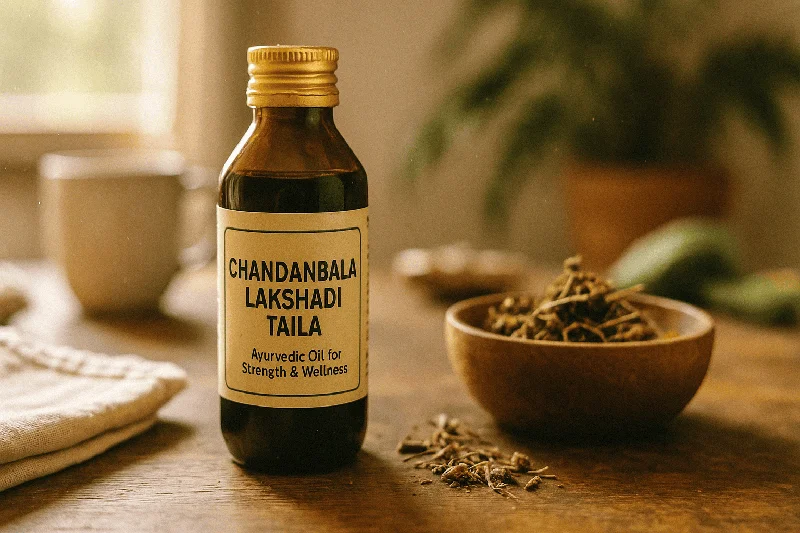
Chandanbala Lakshadi Taila is a classical Ayurvedic medicated oil formulated primarily with Chandana (sandalwood), Bala (Sida cordifolia), and Laksha (lac resin) in a sesame oil base. It is referenced in the ancient text Yogaratnakara and is traditionally used for body massage, head application, and internal use to address conditions like burning sensations, chronic fever, weakness, cough, and musculoskeletal disorders. The oil pacifies aggravated Pitta and Kapha doshas, making it especially valuable for inflammatory and debilitating conditions.
If you've been searching for a comprehensive, evidence-informed guide on this classical formulation — what it contains, how it works, who should use it, and how it compares to similar Ayurvedic oils — you're in the right place. This article covers everything from the original Sanskrit shloka to modern pharmacological insights, practical massage techniques, and real-world usage tips for adults, children, and pregnant women.
What Is Chandanbala Lakshadi Taila?
Chandanbala Lakshadi Taila (also spelled Chandanabala Lakshadi Thailam or Chandan Bala Lakshadi Tailam) is a polyherbal medicated oil (Taila) belonging to the Sneha Kalpana category of Ayurvedic pharmaceutics. It is a cooling, nourishing, and strength-promoting oil used both externally and — in certain clinical contexts — internally.
The name itself reveals the three hero ingredients: Chandana (sandalwood), Bala (country mallow), and Laksha (lac/shellac resin). Together, these herbs, along with over a dozen supporting botanicals, create a synergistic formulation that addresses a remarkably wide range of conditions.
Classical Reference (Yogaratnakara)
The primary textual reference for Chandanbala Lakshadi Taila is the Yogaratnakara, a 17th-century Ayurvedic compendium that compiles formulations from older texts. Some manufacturers also cite the Ayurved Saar Sangrah as a reference. The formulation falls under the Taila Prakarana (oil preparations chapter) and is indicated for Daurbalya (weakness), Jwara (fever), Kasa (cough), and Daha (burning sensation), among other conditions.
Shloka (Sanskrit Verse with Translation)
The original Sanskrit shloka from Yogaratnakara describes the formulation as follows:
> Chandanabala Laksha cha Ushiradi samanvitam
> Tailam Ksheerasamayuktam Daha Jwara Kasa Nashnam
Translation: The oil prepared with Chandana, Bala, Laksha, Ushira, and other herbs, combined with milk, destroys burning sensations, fever, and cough.
This verse establishes the foundational therapeutic claim of the formulation and guides practitioners in understanding its primary clinical application.
Dosha Balancing Action (Pitta & Kapha)
Chandanbala Lakshadi Taila primarily pacifies Pitta dosha due to its cooling and soothing properties — largely attributable to Chandana and Ushira. It also addresses Kapha dosha through the warming and channel-clearing actions of certain ingredients like Ashwagandha and Devadaru. This dual-dosha action makes it uniquely suitable for conditions where both Pitta (inflammation, burning) and Kapha (congestion, heaviness, mucus) are simultaneously vitiated.
Individuals with a predominant Vata imbalance may also benefit, especially when the oil is used for Abhyanga (massage), since the sesame oil base is inherently Vata-pacifying.
Key Ingredients of Chandanbala Lakshadi Taila
The formulation involves a careful combination of decoction herbs, paste herbs, a base oil, and milk. Understanding each group is essential for appreciating why this particular combination works so effectively.
Decoction Herbs (Kwatha Dravya)
These herbs are boiled in water to create a kashaya (decoction), which forms the aqueous medium for oil processing:
| Herb (Sanskrit) | Botanical Name | Key Property |
|---|---|---|
| Chandana | Santalum album | Cooling, anti-inflammatory |
| Bala | Sida cordifolia | Strength-promoting, analgesic |
| Laksha | Laccifer lacca (resin) | Bone-healing, hemostatic |
| Ushira | Vetiveria zizanioides | Cooling, antipyretic |
| Nagakeshara | Mesua ferrea | Anti-hemorrhagic, digestive |
| Manjistha | Rubia cordifolia | Blood-purifying, anti-inflammatory |
| Sariva | Hemidesmus indicus | Detoxifying, cooling |
| Yashtimadhu | Glycyrrhiza glabra | Demulcent, immunomodulatory |
| Padmaka | Prunus cerasoides | Cooling, complexion-enhancing |
| Devadaru | Cedrus deodara | Anti-inflammatory, analgesic |
Paste Herbs (Kalka Dravya)
These herbs are ground into a fine paste and added during the oil cooking process:
| Herb (Sanskrit) | Botanical Name | Key Property |
|---|---|---|
| Ashwagandha | Withania somnifera | Adaptogenic, strength-promoting |
| Shatavari | Asparagus racemosus | Nourishing, galactagogue |
| Meda | Polygonatum cirrhifolium | Nutritive, cooling |
| Jivanti | Leptadenia reticulata | Rejuvenative, vitalizing |
| Payasya | Ipomoea digitata | Nutritive, milk-promoting |
Base Oil and Milk
The base oil is Tila Taila (sesame oil), which is the most commonly used base in Ayurvedic oil preparations due to its ability to penetrate deep into tissues (Sukshma and Vyavayi properties). Sesame oil itself is rich in antioxidants like sesamol and sesaminol.
Cow's milk (Go-Ksheera) is added during the preparation process, which contributes cooling and nourishing qualities. The fat-soluble active compounds from the herbs dissolve into the oil, while the water-soluble compounds transfer through the milk medium.
Detailed Herb Profiles: Why This Combination Works
- Understanding the synergy is what sets this guide apart from simple ingredient lists.
- Here's how the key herbs complement each other:
Chandana (Sandalwood): A 2017 study published in Planta Medica confirmed sandalwood oil's anti-inflammatory properties through inhibition of COX-2 and 5-LOX pathways. In this formulation, it provides the primary cooling and Pitta-pacifying action. Bala (Sida cordifolia): Known as "the strength-giver," Bala contains ephedrine alkaloids and has demonstrated analgesic and anti-inflammatory effects in animal studies (Indian Journal of Pharmacology, 2011). It addresses the Daurbalya (weakness) indication. Laksha (Lac resin): Traditionally considered a bone-healing agent (Asthi Sandhana Kara). Modern research has identified antioxidant and anti-osteoporotic properties in lac extracts, which partly explains its traditional use in treating rickets and bone weakness. Ashwagandha: Perhaps the most well-researched Ayurvedic herb globally. A 2019 systematic review in the Journal of Ethnopharmacology analyzed 41 clinical trials and confirmed its adaptogenic, anti-stress, and strength-promoting effects. In this formulation, it supports systemic rejuvenation. Ushira (Vetiver): The cooling counterpart to Ashwagandha's warming energy. Research in the Journal of Advanced Pharmaceutical Technology (2014) showed vetiver's significant antipyretic activity in rat models, supporting its traditional use against fever.
The synergy principle here is what Ayurveda calls Samyoga — the combination effect. Cooling herbs (Chandana, Ushira, Sariva) manage the Pitta component, strength-promoting herbs (Bala, Ashwagandha, Laksha) address Dhatu Kshaya (tissue depletion), and blood-purifiers (Manjistha, Sariva) handle the toxin component. No single herb could achieve what this combination does together.
Method of Preparation (Taila Paka Vidhi)
The classical preparation follows the Sneha Paka method described in Ayurvedic pharmaceutics:
- 1.Kwatha preparation: The decoction herbs are coarsely powdered and boiled in 16 parts of water, reduced to one-fourth. This produces the kashaya.
- 2.Kalka preparation: The paste herbs are finely ground with a small quantity of water to form a smooth paste.
- 3.Oil cooking: One part sesame oil is combined with four parts decoction, one-fourth part kalka paste, and an equal quantity of cow's milk. This mixture is heated on a controlled flame.
- 4.Testing for completion: The oil is cooked until all moisture evaporates. Three classical tests determine readiness:
- Shabda Pareeksha — no crackling sound when a drop of water is added
- Varti Pareeksha — the kalka rolls into a clean wick without sticking
- Gandha Pareeksha — a characteristic pleasant aroma develops
- 5.Filtration: The finished oil is filtered through a clean cloth while still warm.
This process typically takes 6-8 hours with traditional methods. The slow cooking ensures maximum extraction of fat-soluble phytochemicals into the sesame oil base.
Medicinal Properties of Chandanbala Lakshadi Taila
Pharmacological Actions
Based on the combined pharmacological profiles of its constituent herbs, Chandanbala Lakshadi Taila exhibits the following properties:
| Property | Ayurvedic Term | Primary Contributing Herbs |
|---|---|---|
| Analgesic (pain-relieving) | Vedanasthapana | Bala, Devadaru, Ashwagandha |
| Antipyretic (fever-reducing) | Jwarahara | Chandana, Ushira, Sariva |
| Anti-inflammatory | Shothahara | Chandana, Manjistha |
| Coolant | Sheeta Veerya | Chandana, Ushira, Padmaka |
| Antispasmodic | Vata Shamaka | Bala, Ashwagandha |
| Antiseptic | Krimighna | Laksha, Nagakeshara |
| Bone-strengthening | Asthi Poshaka | Laksha, Bala |
| Nervine tonic | Balya, Medhya | Ashwagandha, Bala |
| Immunomodulatory | Ojovardhaka | Ashwagandha, Shatavari |
Synergy of Ingredients — Why This Combination Works
The formulation operates on multiple levels simultaneously, which is rare even among Ayurvedic oils:
Tissue level (Dhatu): Bala, Ashwagandha, and Laksha nourish Mamsa (muscle), Asthi (bone), and Majja (marrow) dhatus respectively. This multi-dhatu nourishment is why the oil is indicated for generalized weakness and wasting conditions. Srotas level (Channels): Manjistha and Sariva clear Raktavaha Srotas (blood channels), while Devadaru opens Mamsavaha Srotas. This channel-clearing action ensures that the nourishing herbs can actually reach their target tissues. Agni level (Metabolic): The sesame oil base supports Dhatvagni (tissue-level metabolism), ensuring proper assimilation of the herbal compounds at cellular level.
This three-tier action — nourishing the tissues, clearing the channels, and supporting metabolism — is what makes Chandanbala Lakshadi Taila more than just another massage oil.
Health Benefits and Indications
What Is the Use of Chandanbala Lakshadi Oil?
The oil is indicated for a broad spectrum of conditions. Unlike many Ayurvedic oils that specialize in either Vata or Pitta conditions, this formulation bridges both categories:
Musculoskeletal conditions: Joint pain, muscular weakness, post-fracture recovery (due to Laksha's bone-healing property), and generalized body aches. The combination of Bala's analgesic action with Chandana's anti-inflammatory effect makes it effective for conditions where both pain and inflammation coexist.
- Burning sensations and fever: Chronic low-grade fever (Jwara), burning in the palms and soles (Daha), and excessive body heat.
- The cooling herbs — Chandana, Ushira, Padmaka, and Sariva — work synergistically to reduce Pitta-type heat.
Respiratory conditions: Chronic cough (Kasa), tuberculosis (as an adjunct therapy), and chest congestion. Yashtimadhu and Bala provide demulcent and bronchodilatory actions respectively. Neurological conditions: Headache, nerve pain, and mental restlessness. The oil's cooling action on the nervous system, particularly when applied to the scalp, helps manage Pitta-aggravated neurological symptoms. Reproductive health: Oligospermia (low sperm count) and general reproductive weakness. Ashwagandha and Shatavari are well-documented reproductive tonics. A 2013 study in Evidence-Based Complementary and Alternative Medicine showed Ashwagandha significantly improved sperm parameters in infertile men.
Chandanbala Lakshadi Oil for Baby Massage
One of the most searched applications of this oil is for infant massage.
Here's what you need to know:
The oil is traditionally considered safe for baby massage due to its gentle, cooling nature.
It is particularly recommended for:
- Rickets and bone weakness in infants: Laksha's bone-strengthening property makes this a preferred choice over plain sesame or coconut oil for babies showing signs of delayed bone development
- General nourishment: The oil promotes healthy weight gain and muscle development in underweight babies
- Skin health: Chandana and Manjistha help maintain clear, healthy baby skin
Dosage for Children
For external massage in infants and children:
- Newborns to 6 months: 5–10 ml, gentle application on limbs and back (avoid the face)
- 6 months to 2 years: 10–15 ml, full body massage
- 2 to 8 years: 15–20 ml, full body Abhyanga
Always perform a patch test on a small area of the baby's forearm 24 hours before first full-body application. If any redness or irritation occurs, discontinue use.
Chandanbala Lakshadi Oil for Hair Growth
While not its primary classical indication, the oil's ingredient profile supports scalp and hair health in several ways:
- Bala nourishes hair follicles and strengthens roots
- Chandana cools the scalp and reduces dandruff-causing inflammation
- Manjistha improves blood circulation to the scalp
- Sesame oil base is rich in vitamin E and penetrates the hair shaft
For hair application, warm 10–15 ml of oil slightly and massage into the scalp using circular motions. Leave on for at least 30 minutes (or overnight for deeper conditioning) before washing with a mild herbal shampoo.
Chandanbala Lakshadi Tail Uses for Skin
The oil can be beneficial for various skin conditions, particularly those with Pitta involvement:
- Eczema with burning and redness
- Dry, cracked skin
- Post-inflammatory hyperpigmentation
- General complexion improvement
Padmaka and Chandana are specifically known as Varnya (complexion-enhancing) herbs in Ayurveda. Manjistha's blood-purifying action addresses skin issues at their root cause rather than just surface-level symptoms.
How to Use Chandanbala Lakshadi Taila
External Application (Abhyanga)
The primary route of administration is topical application through massage.
Here's a detailed technique guide:
Full body massage (Sarvanga Abhyanga):
- Warm the oil to slightly above body temperature (about 40°C) by placing the bottle in warm water
- Begin at the scalp — apply oil to the crown and massage in circular motions
- Move to the face and ears with gentle strokes
- For limbs, use long strokes (Deergha) along the length of the bones
- For joints, use circular motions (Vrittakara)
- For the abdomen, massage in a clockwise direction
- For the back, use upward strokes along the spine
- Duration: 15–20 minutes minimum, ideally 30–45 minutes
- Leave the oil on for at least 20 minutes before bathing with warm water
Important practical tip: When applying oil to the soles of the feet, be very careful about slippery surfaces. Wear cotton socks or sit down after application to avoid falls — this might sound obvious but it's a surprisingly common issue.
Nasya (Nasal Administration)
For headache, sinusitis, and neurological conditions, the oil can be administered as nasal drops:
- Dosage: 4–8 drops in each nostril
- Frequency: Once daily, preferably in the morning
- Position: Lie down with head tilted back, instill drops, and remain in position for 2–3 minutes
This should only be done under the guidance of a qualified Ayurvedic practitioner.
Oral Administration
In specific clinical scenarios, the oil may be taken internally:
- Dosage: 2–3 ml (approximately half a teaspoon) twice daily
- Timing: Before meals
- Anupana (vehicle): Warm water or warm milk
Internal use is primarily reserved for conditions like oligospermia, chronic fever, and deep-seated weakness where external application alone may be insufficient. Always consult a practitioner before oral use.
Connection with Steam Therapy
When combining oil application with Swedana (steam therapy), the oil should be applied before the steam session, not after. The heat from the steam opens the Srotas (channels) and drives the medicated oil deeper into the tissues. Applying oil after steam defeats this purpose and reduces absorption.
Seasonal Considerations (Ritucharya)
The oil's cooling nature makes it particularly beneficial during specific seasons:
- Grishma Ritu (Summer): Ideal season — the cooling herbs counter seasonal Pitta aggravation
- Sharad Ritu (Autumn): Also excellent — naturally accumulated Pitta gets pacified
- Hemanta/Shishira Ritu (Winter): Use in moderation; may need to combine with warming oils in extremely cold climates
- Varsha Ritu (Monsoon): Beneficial for monsoon-related joint pains and skin issues
Comparison with Similar Ayurvedic Oils
This is an area no other guide adequately covers. Here's how Chandanbala Lakshadi Taila differs from frequently confused alternatives:
| Feature | Chandanbala Lakshadi Taila | Kshirbala Taila | Dhanwantharam Taila | Bala Taila |
|---|---|---|---|---|
| Primary action | Cooling + Strengthening | Nourishing + Vata-pacifying | Vata-pacifying + Anti-rheumatic | Strengthening + Analgesic |
| Dosha focus | Pitta-Kapha | Vata-Pitta | Vata | Vata |
| Key unique herb | Laksha (bone-healing) | Ksheera (milk-dominant) | Dhanwanthari combination (25+ herbs) | Bala-focused |
| Best for | Weakness with burning, children's bone health | Neurological Vata conditions, paralysis | Rheumatoid arthritis, postpartum care | Muscular pain, general weakness |
| Baby massage | Excellent, especially for bone health | Good for neurological development | Not typically first choice for infants | Good general option |
| Temperature | Cooling | Mildly cooling | Warming | Mildly warming |
When to choose Chandanbala Lakshadi Taila over others: When the condition involves both weakness (Daurbalya) AND heat/inflammation (Daha/Jwara). If the condition is purely Vata-related without any Pitta component, Kshirbala or Dhanwantharam may be more appropriate.
Side Effects, Safety & Contraindications
Chandanbala Lakshadi Taila is generally considered safe when used as directed.
However, some considerations apply:
External use:
- Rarely causes adverse effects
- Possible allergic reaction in individuals sensitive to sesame oil or any constituent herb
- May stain light-colored clothing due to the natural color of the herbs
Internal use:
- Should be taken only under medical supervision
- May cause mild loose stools in some individuals due to the oily nature
- Not recommended for people with severe Kapha conditions, obesity, or high cholesterol without practitioner guidance
Pregnancy and Lactation
- External application during pregnancy is generally considered safe, especially for back pain and skin care during the second and third trimesters
- Internal use during pregnancy should be strictly under medical supervision
- During lactation, external application is safe and may be beneficial; Shatavari in the formulation traditionally supports milk production
- Always inform your obstetrician about any Ayurvedic products you're using
Drug Interactions
While no specific drug interactions have been clinically documented for the complete formulation, be cautious if you are taking:
- Anticoagulant medications (some ingredients like Manjistha have blood-thinning properties)
- Immunosuppressant drugs (Ashwagandha has immunomodulatory effects)
- Sedative medications (Ashwagandha may potentiate sedation)
Storage Guidelines
- Shelf life: 3 years from the date of manufacture (when stored properly)
- Storage: Keep in a cool, dry place away from direct sunlight, ideally below 30°C
- Container: Store in glass or food-grade plastic; avoid metal containers as the herbs may react
- Signs of spoilage: If the oil develops a rancid smell, changes color significantly, or shows any mold growth, discard it immediately
- After opening: Use within 12 months for best potency
Available Brands and Buying Guide
Several reputable Ayurvedic manufacturers produce Chandanbala Lakshadi Taila. While formulations follow the same classical reference, minor variations in herb sourcing, processing methods, and quality control exist:
| Brand | Available Sizes | Approximate Price Range (INR) | Notes |
|---|---|---|---|
| Sitaram Ayurveda | 200 ml | ₹250–350 | Kerala-based, traditional processing |
| Nagarjun Pharma | 100 ml, 500 ml | ₹150–500 | Widely available across India |
| Baidyanath | 100 ml, 200 ml | ₹120–280 | Large-scale production, easy availability |
| Kottakkal (AVS) | 200 ml | ₹280–400 | Premium quality, GMP certified |
Tip: Check for GMP certification, batch number, manufacturing date, and expiry date on the label. Authentic preparations should list all ingredients with their Sanskrit and botanical names.
Frequently Asked Questions
What is the difference between Chandanbala Lakshadi Taila and regular sandalwood oil?
Regular sandalwood oil (Chandana Taila) contains only sandalwood — either as essential oil or infused oil. Chandanbala Lakshadi Taila is a complex polyherbal formulation with 15+ ingredients processed through the classical Sneha Paka method. The therapeutic range of the compound formulation is significantly broader than single-herb sandalwood oil.
Which Thailam is best for nerve pain?
For nerve pain (Vataja Shoola), Chandanbala Lakshadi Taila can be helpful when the nerve pain is accompanied by burning or inflammatory symptoms. However, for pure Vata-type nerve pain without heat, Kshirbala Taila or Dhanwantharam Taila may be more appropriate. Sahacharadi Taila is another strong option specifically for sciatica and lower limb nerve pain. Consult an Ayurvedic doctor for condition-specific recommendations.
Can I use Chandanbala Lakshadi Taila daily?
Yes, for external application, daily use is not only safe but actually encouraged as part of Dinacharya (daily routine). Ayurveda recommends daily oil massage (Abhyanga) as one of the foundational health practices. Using a medicated oil like Chandanbala Lakshadi Taila makes this daily ritual even more therapeutically valuable.
How long does it take to see results?
For external massage benefits like muscle relaxation and skin improvement, many users report noticeable effects within 1–2 weeks of regular use. For deeper conditions like bone weakness, chronic fatigue, or oligospermia, expect 2–3 months of consistent use. Ayurvedic oils work gradually by nourishing tissues at a deep level — they are not quick fixes.
Can this oil be used in all weather conditions?
While usable year-round, the oil is most beneficial in summer and autumn due to its cooling nature. In winter, you can blend it with a small amount of warming oil like Mahanarayan Taila to balance the cooling effect, especially if you live in a cold climate.
Is Chandanbala Lakshadi Taila suitable for Abhyanga before Panchakarma?
Yes, it is commonly used as the preparatory oil (Poorvakarma Snehana) before certain Panchakarma procedures, particularly Virechana (purgation therapy) and Nasya. The choice of oil for pre-Panchakarma Abhyanga depends on the patient's Prakriti and Vikruti, so your Panchakarma therapist will make the final decision.
Final Thoughts
Chandanbala Lakshadi Taila stands out among classical Ayurvedic oils for its unique ability to simultaneously cool, strengthen, and nourish. Whether you're a parent looking for a safe baby massage oil, someone dealing with chronic weakness accompanied by burning sensations, or a practitioner seeking a versatile formulation for your clinic — this oil deserves a place in your Ayurvedic toolkit.
The key to getting the most out of this formulation is consistency. Daily application, even in small amounts, yields better results over time than occasional heavy use. Combine it with appropriate dietary and lifestyle modifications for comprehensive results.
Important disclaimer: While this article provides detailed information based on classical Ayurvedic texts and available research, it is not a substitute for professional medical advice. Always consult a qualified Ayurvedic practitioner before starting any new treatment regimen, especially for children, pregnant women, or individuals on medication.
Scientific Sources
- Efficacy of a Multimodal Ayurveda Regimen in the Management of Primary Knee Osteoarthritis: Protocol for an Open-Label Randomized Controlled Trial — Rai AK et al., 2025, JMIR research protocols
- Role of Laksha Churna and Madhu Pratisarana after ultrasonic scaling in the management of Dantasharkara (dental calculus): An open-label, standard controlled randomized clinical trial — Kathad D et al., 2020, Ayu
- Vranaropaka effect of Laksha Churna with Madhu on wound after removal of Danta Sharkara — Maurya M et al., 2012, Ayu
Ask Ayurvedic doctor a question and get a consultation online on the problem of your concern in a free or paid mode.
More than 2,000 experienced doctors work and wait for your questions on our site and help users to solve their health problems every day.
Related articles